What’s a visit to Sri Lanka without a safari in its iconic game reserves? Blessed with a rich heritage and oodles of natural beauty, the tropical island’s game reserves offer a peek into its third charm: a teeming wildlife. But which one should you go to? Here is a rundown of Sri Lanka’s four most famous ones, and what to expect from each, in no specific order. For not all game reserves are ever the same. 🙂
1. Udawalawe National Park
If elephants are what you are seeking, and that too in plenty, then head straight to the Udawalawe National Park. With a head count of around 500 and herds of 50-or-so roaming the grasslands, sighting of the wild Asian elephant is guaranteed in all its glory, all year round. In fact, be prepared to have multiple close encounters with the gigantic mammals who will oftentimes come right up to your safari vehicle. Smaller than their African counterparts, the Sri Lankan subspecies of the Asian Elephant you see is characterised by patches of depigmentation on its ears, face, trunk, and belly.
The 30,821-hectare park set up in 1972 is located just south of the Central Highlands and spreads around Udawalawe Reservoir. The catchment area provides water for both agriculture and hydropower needs, as well as serves as a gathering place for the park inhabitants. In addition to the Asian Elephants, these include large numbers of toque macaques, gray langurs, water buffaloes, sambar deer, spotted deer, jackals, foxes, and albeit fewer numbers of leopards and jungle cats.
Travel tip: The park is best explored on an afternoon game drive and can be clubbed together with a visit to Ella.
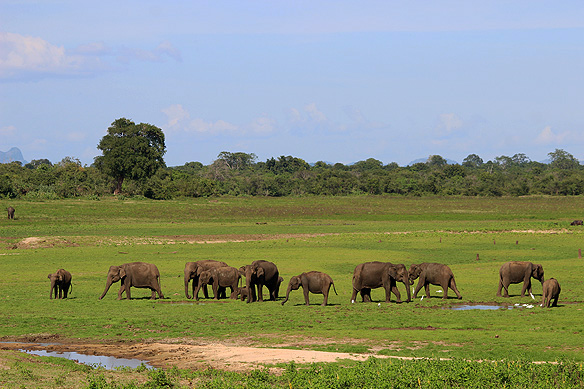
Herd of Sri Lankan Elephants, Udawalawe National Park.
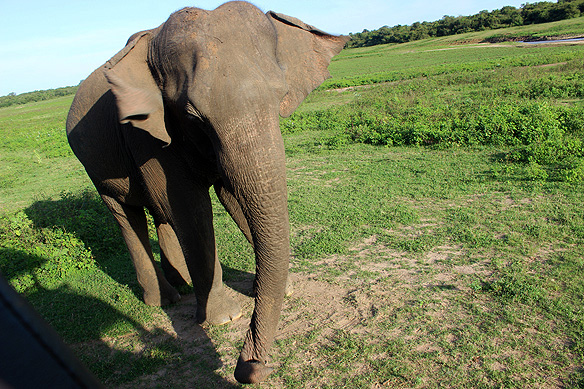
Up close and personal, Sri Lankan Elephant, Udawalawe National Park.
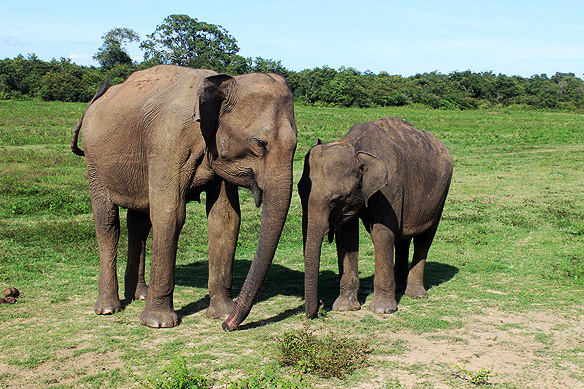
Grandmother and grandchild, Sri Lankan Elephants, Udawalawe National Park.
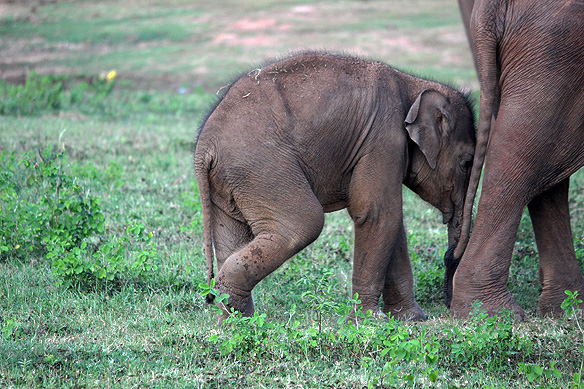
Just born, Sri Lankan Elephant, Udawalawe National Park.
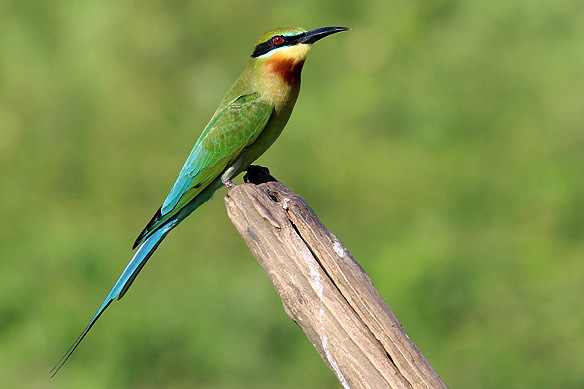
Blue-tailed Bee-eater, Udawalawe National Park.
2. Wilpattu National Park
For a truly unique safari experience, Wilpattu National Park wins hands down. Sidelined for almost three decades because of the civil war [the park is situated in the north-west of the country and was part of the disputed area], its lush landscape houses abundant game and birdlife. It is also the country’s largest reserve with a protected area of 131,693 hectares comprising red cliffs, dry lowland forest and clusters of water bodies called ‘Villu.’ Villus are exclusive to the area and shaped like shallow saucers surrounded with sand dunes and filled with rainwater.
Together with Yala National Park in the south-east of the country, it is the oldest game reserve to have been established in Sri Lanka; Both were founded in 1938. Some 40 Sri Lankan leopards along with endemic elephants and sloth bears call the park their home, and treat it like home. The lack of tourist traffic has led these animals to feel confident enough to walk in the open spaces without ducking and diving!
Travel tip: The park is best explored on a morning game drive. Recommended stay—Green Sapphire Holiday Resort, Wilpattu.
NOTE:
You may also like to read Global Travel Shot: Seeing eye-to-eye with the Sri Lankan Leopard at Wilpattu
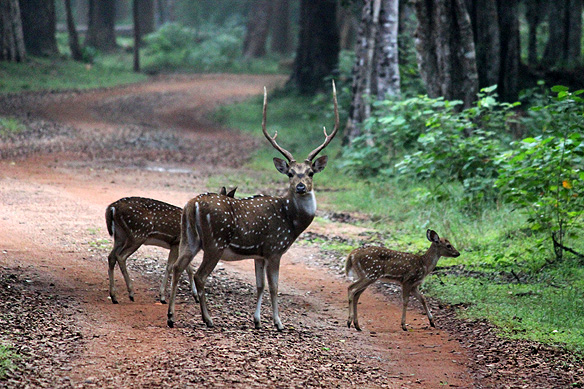
Spotted Deer, Wilpattu National Park.
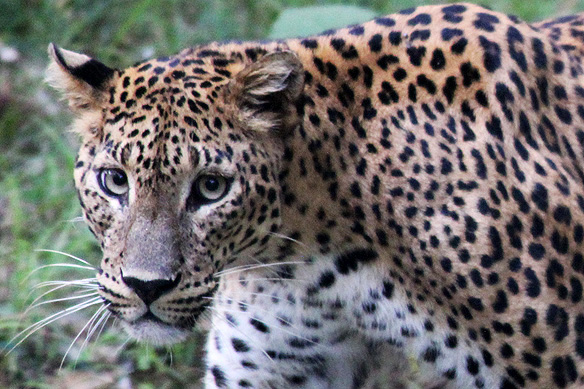
Sri Lankan Leopard, Wilpattu National Park.
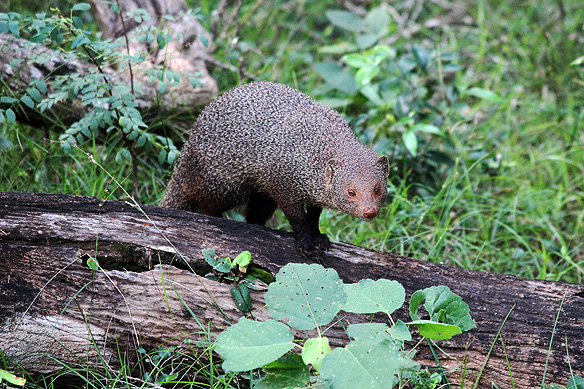
Ruddy Mongoose, Wilpattu National Park.
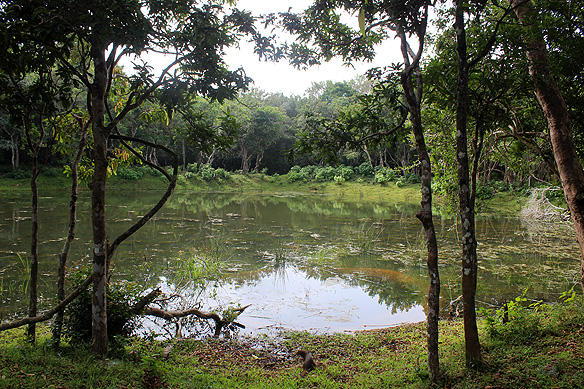
Villu, saucer-shaped depressions filled with rainwater, at Wilpattu National Park.
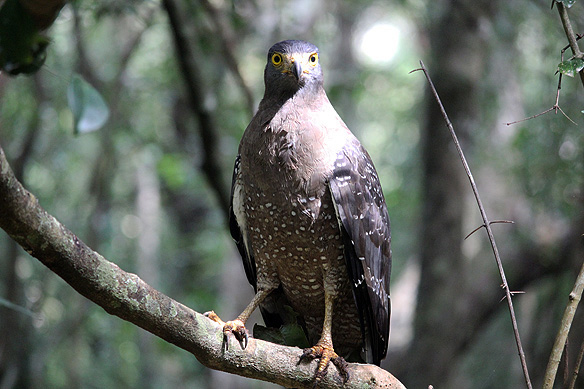
Golden Eagle, Wilpattu National Park.
3. Minneriya National Park
Not till too long ago Minneriya National Park was Sri Lanka’s most popular choice to view the Asian Elephant. A ranking which has dropped over time due to rising water levels in its tank [especially as of 2024] and the subsequent migration of its wildlife to adjoining ‘Eco Parks.’ But it is still an incredibly beautiful reserve comprising of canopy forests, scrub, and wetlands, where elephants frolic in the large water tank, endemic monkeys scramble over dense forest canopy, and deer play hide and seek in the groves.
Located a short distance from Sigiriya, the 8,890-hectare area started off as a wildlife sanctuary in 1938, and was granted national park status in 1997. Life in the park revolves around the 3rd Century King Mahasena’s water tank [wewa] which becomes a focal point for elephants in the dry season. Mahasena had built 16 such water tanks during his reign; however, it was the Minneriya tank that earned him the title Minneri deviyo, meaning ‘God of Minneriya,’ in the eyes of his subjects.
Travel tip: A safari in Minneriya National Park is best clubbed with a visit to Sigiriya.
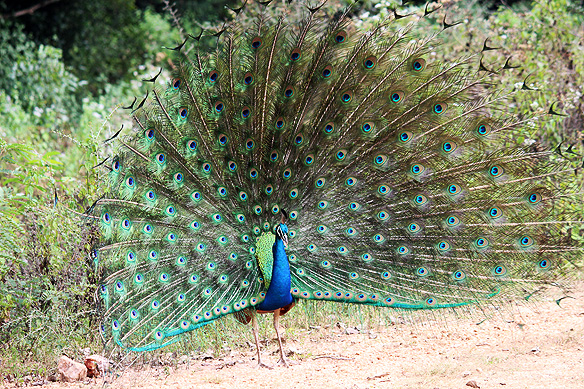
Dancing Indian Peafowl, Minneriya National Park.
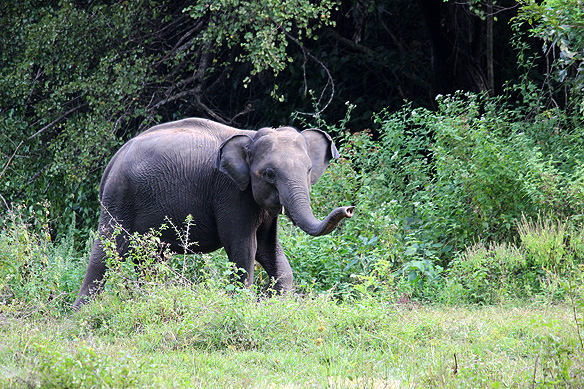
A happy young male Sri Lankan Elephant, Minneriya National Park. Notice the tusks. Only male elephants of the species have tusks.
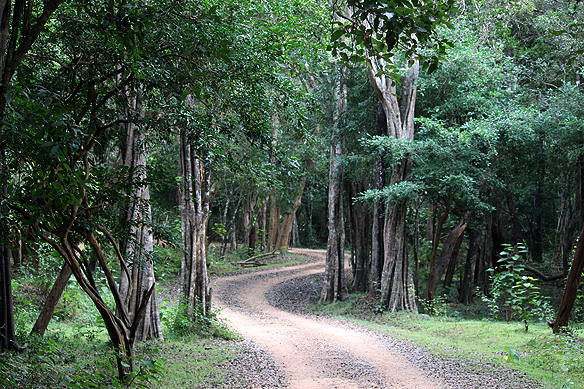
Canopy Forests, Minneriya National Park.
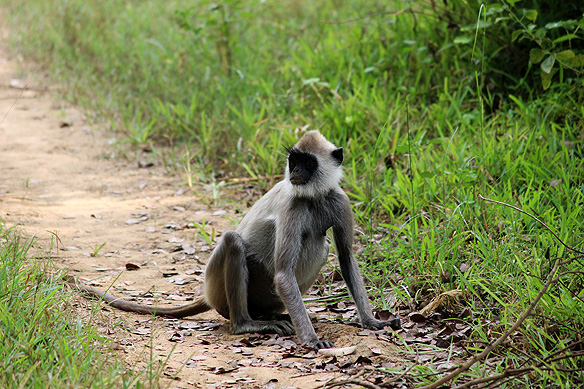
Gray Langur/ Hanuman Langur, Minneriya National Park.
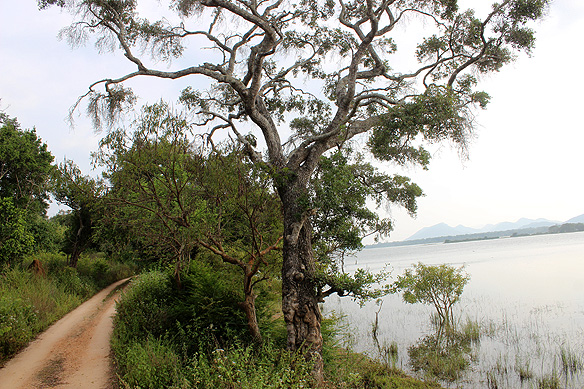
Minneriya Wewa, Minneriya National Park.
4. Yala National Park
Yala National Park, Sri Lanka’s most famous game reserve bang on the island’s south-east coast has always been an all-time favourite for both tourists and locals alike. And this is no recent phenomenon. Even when I was a child and living in Kandy, a stayover in Yala was a given part of holidays. After all, the country’s entire animal kingdom is here along with a bird species count of 215. The cherry on the cake: 130,000 hectares of grasslands, lagoons, and scrub eventually merging into sand dunes to face the iridescent blue of the Indian Ocean.
To further add to its lure are two ancient Buddhist pilgrimage sites inside, including caves with rock paintings, and the belief that Yala was the Kingdom of Ravana, the antagonist in the Hindu epic Ramayana. The downside of all this amassed fame is that Yala gets extremely crowded. And that is an understatement.
Tasked with protecting the island’s wildlife since 1900, first as a sanctuary and from 1938 onward as a national park, Yala functioned on a completely opposite tangent prior to this—it used to be a hunting ground for the elite during British rule!
Travel tip: The park is best explored at sunrise. Recommended nearby stay—Blue Turtle Hotel, Tissamaharama.
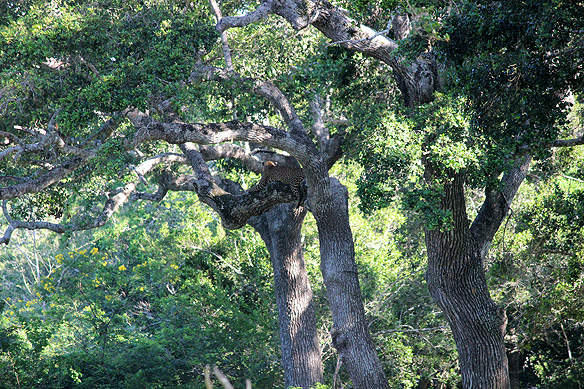
Sri Lankan Leopard resting on a tree branch, Yala National Park.
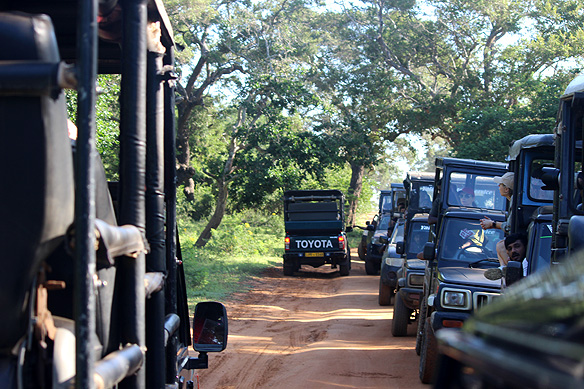
Safari jeeps lined up for a view of the leopard, Yala National Park.
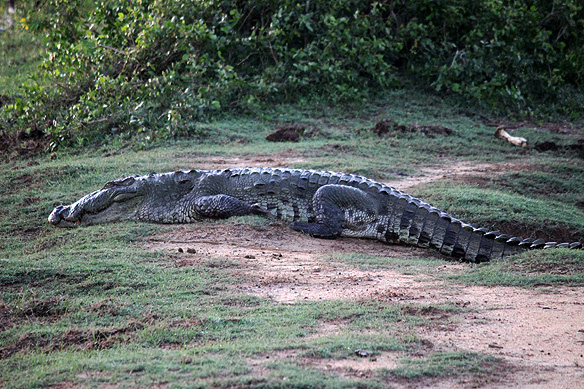
Mugger Crocodile, Yala National Park.
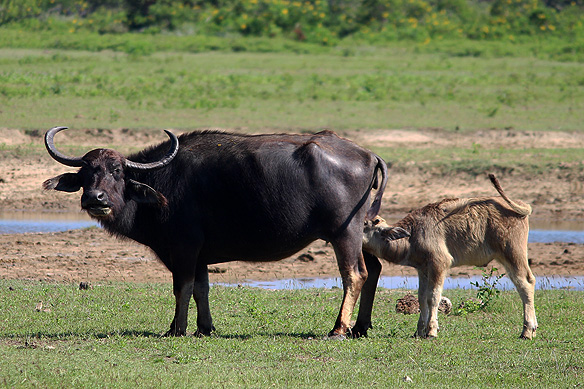
Asian Water Buffalo with calf, Yala National Park.
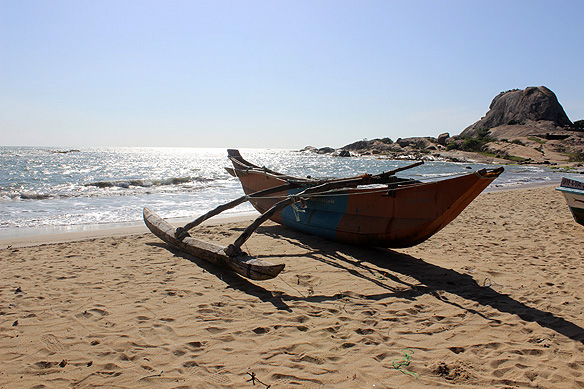
Southern edge of Yala National Park.
On an endnote, and this is inspired from fellow blogger Bama’s comment below: if you are unable to experience Sri Lanka’s fabulous game reserves, for whatever reason, fret not. You will most likely come across at least one magnificent male Sri Lankan elephant [even one perhaps sporting a majestic pair of tusks], right next to you on the highway in the Habarana-Sigiriya area. The male species are solitary wanderers. Once they cross puberty they leave the herd, and their male egos don’t exactly support male bonding. Alpha male, did I hear someone say. 😀
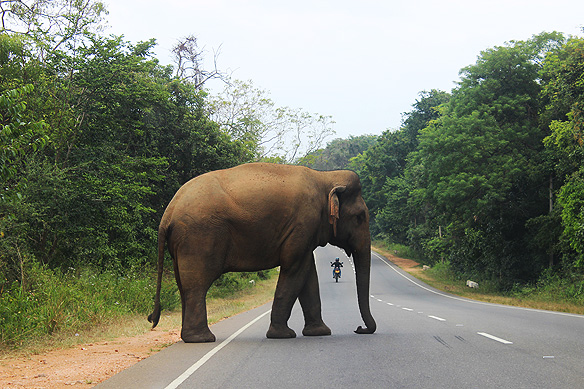
Young male Sri Lankan Elephant taking a stroll on a highway, Habarana-Sigiriya area.
– – –
P.S. All my safari bookings and transport to and from the parks were arranged by Sanjeewa of Sanara Travels. He can be contacted on WhatsApp at +94 76 941 5579. I booked my hotels directly.
[Note: This blog post is part of a series from my solo independent travels to Sri Lanka. To read more posts in my Sri Lanka series, click here.]
 rama toshi arya's blog
Amazing pictures of the wildlife in the Sri Lankan national parks and you’re so lucky to see leopards in the wild!
LikeLiked by 2 people
Thank you, Aadil. Yes, I was lucky. 🙂
LikeLiked by 1 person
I guess I’d never thought of game preserves in Sri Lanka before — one always thinks of Africa. But it makes sense given that the Indian subcontinent has Indian elephants (duh) and that there would be game parks for many of them to live in. Your pictures are beautiful , especially the closeup of the leopard, such a gorgeous animal. Do you know if they have any kind of poaching problems in these parks?
LikeLiked by 2 people
Thank you, June. Sri Lanka’s game reserves are very atmospheric and it was interesting to see how, though they were all in one small island, they were so different from each other! I understand there are poaching issues, and that it is mainly focussed around killing for animal meat and ivory tusks.
LikeLiked by 1 person
Love your photos of the animals, Rama! I must admit I have never been to any of Sri Lanka’s game reserves. But the closest thing I got to seeing the country’s famous wildlife was during my first trip there back in 2012. My driver and I were cruising along the highway in the central region (probably after visiting Polonnaruwa, I can’t remember exactly) when suddenly an elephant crossed the road. It was truly a magical moment.
LikeLiked by 3 people
Many thanks, Bama. 🙂 I too had seen a few male elephants, who I was told are solitary wanderers, sporting some stunning tusks on the highway in that area. Hehe. I think I got an idea. I will include one of the pics I took of them on this post, as an endnote!
LikeLiked by 2 people
💯♥️
LikeLiked by 3 people