1864. The British Crown was now directly in control of the Indian subcontinent. Five years had passed since they had squashed the Indian Mutiny. It had been a tough fight lasting nearly two years and two months, but they’d won in the end.
Summers in their new capital, Calcutta, were, however, brutal. Oh, how they longed for the grey overcast days back home, bathed in gentle drizzle.
Since the 1820s, the earlier British East India Company officers stationed in India had been escaping from the sun-baked plains to a hamlet in the middle hills of the Himalayas during such summers. The hamlet, comprising some 50 houses, was called Shayamala after a local Hindu goddess.
India’s new rulers decided to make this association more permanent. They renamed the hamlet ‘Shimla,’ and set up the British Raj’s ‘Summer Capital’ on its seven hills.
Every year, just before the sweltering heat clamped down on the Gangetic plains, the entire administrative machinery would move here, replete with traders, restaurateurs, and socialites. Once the heat cooled down, and snow started to peck its slopes, they would all move back again south-eastwards.
A mini-Britain was created in Shimla’s hills. Timber-strapped Tudor houses, soaring neo-Gothic churches, grand town halls, and a theatre for concerts and plays. On the Ridge, which offered rather splendid views, a bandstand was thrown in where military bands could play music and the gentry could indulge in leisurely strolls. Not too shabby now, perhaps they whispered to each other in relief.
Though it is now 77 years since the British have left, their summer capital’s remnants still dot Shimla, and more so on its main commercial pedestrian artery—Mall Road.
Here is a self-guided walk on what to watch out for should you ever be in the vicinity, with suggestions for eating and staying dating back to the colonial days. Take your time and savour its charms. After all, Shimla was always for the long haul. ❤
PS. Take the lift up to Mall Road, and on exiting the lift turn left towards Christ Church.
NOTE:
You may also like to read A Travel Guide to Colonial Delhi
Starting point: Christ Church

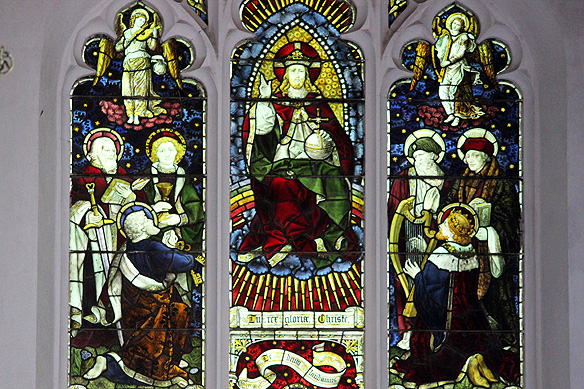
One of the very first buildings to come up in Shimla under the British Raj was the neo-Gothic Christ Church. Painted a soft buttercup yellow, it has become synonymous with the hill station popularly known as the ‘Queen of the Hills.’ The church was consecrated in 1857, and contains evocative memorial tablets and stunning stained-glass windows handcrafted by the famed writer Rudyard Kipling’s father. Senior Kipling used to be an art teacher and illustrator. Sunday services are held at the church at 9 AM in English and at 11 AM in Hindi.
Stop 1: State Library
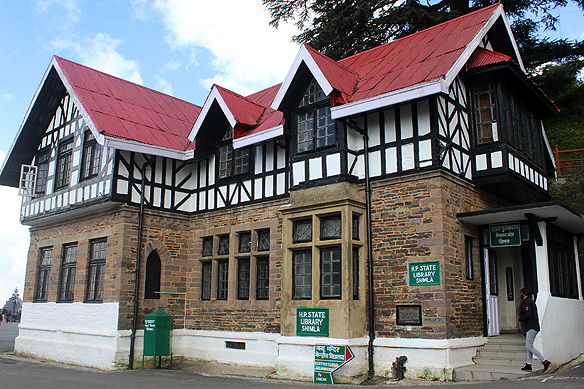
Right next to Christ Church is the neo-Tudor State Library. Dating to 1860, it has been put to multiple uses before ending up as a library, from housing the Shimla Volunteer Corps to being the Health Department. Please note you may not be allowed to enter it.
Stop 2: Bandstand on the Ridge
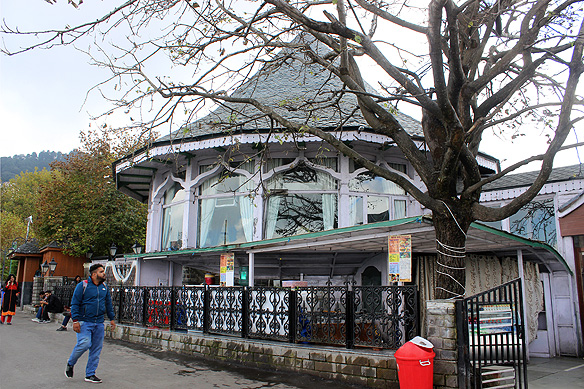
This is where all the action was for Shimla’s colonial residents—the music, and the fun and games. Before 1947, military bands used to play music to rapt audiences in the round edifice with a conical roof. The building was converted into a state-run restaurant [Ashiana and Goofa Restaurants] in the 1970s.
Stop 3: Gaiety Theatre

Completed in 1888, Gaiety Theatre was designed by the acclaimed architect Henry Irwin in the Gothic Revival style. It was originally five storeys high and part of the Town Hall complex. The theatre was renovated recently and continues to run plays, both Indian and international, as it has done for the past 136 years since its inception.
Stop 4: Town Hall
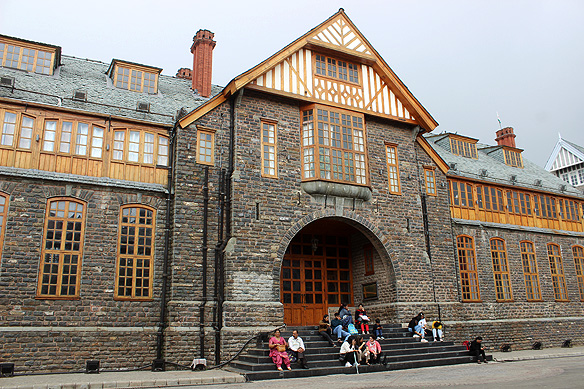
What’s a town without a Town Hall! And the grander it is, the better, which Shimla’s stone and timber version wins hands down on. Built in 1908, it sits between the Ridge and Mall Road and has always been the centre of Shimla’s administration, as well as a venue for public meetings and banquets. Post independence, it became the seat of the city’s municipal corporation.
Stop 5: General Post Office and St. Andrews Kirk


Shimla’s General Post Office is housed in Conny Cottage which dates to 1883 and built in the British Colonial Hill architecture style. Next to it is St. Andrews Kirk. Made of red bricks, the church, dated 1914, ceased to function as a place of worship post-independence and was turned into the other half of the State Library. [The first half is on the Ridge, Stop 1]
Stop 6: Scandal Point
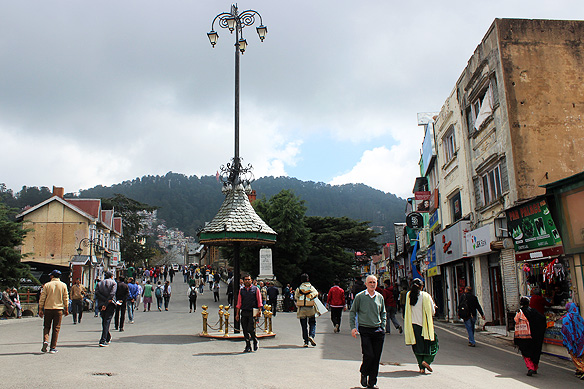
Across the road is Scandal Point. It marks the rumoured spot where the Viceroy’s daughter and Maharaja Bhupinder Singh of Patiala eloped from in 1893. The Indian gentleman was, thereafter, banned from Shimla. Not one to give up easily, he built a new summer retreat for himself close-by at Chail.
Well, that is how the story goes. Which was debunked by Khushwant Singh in a very interesting article. Bhupinder was apparently only a year old in 1893, it was his father who had an Irish wife, and they had eloped in Patiala. Sorry, Shimla.
Stop 7: Walk down Mall Road to Indian Coffee House
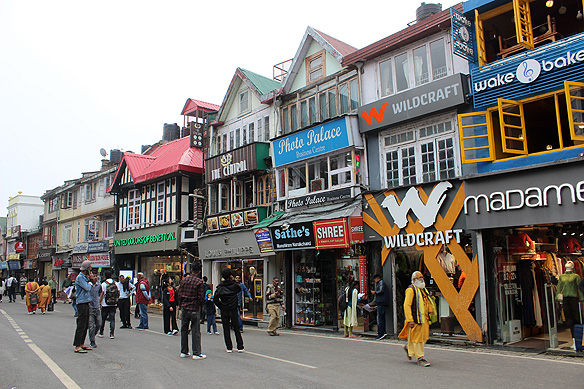

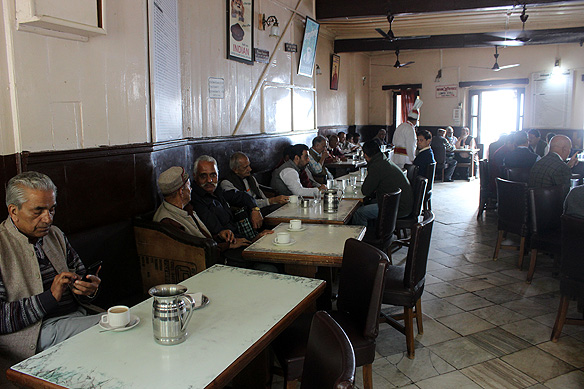
Shimla’s 1-kilometre-long pedestrian-only Mall Road starts at Christ Church and runs one level below the Ridge. The two, which fan out from the church, meet again at Scandal Point. Mall Road was the first road constructed in Shimla; the British called it ‘Thandi Sarak’ [meaning cold road] because of the chilly winds that blew over it.
Shops and cafes fill the street’s half-timbered buildings. Many have changed ownership, whilst some have been around for 67 years such as the iconic left-leaning Indian Coffee House. Do have a coffee when there. It is freshly brewed. Plus, you get to see a slice of local life.
Stop 8: Central Telegraph Office
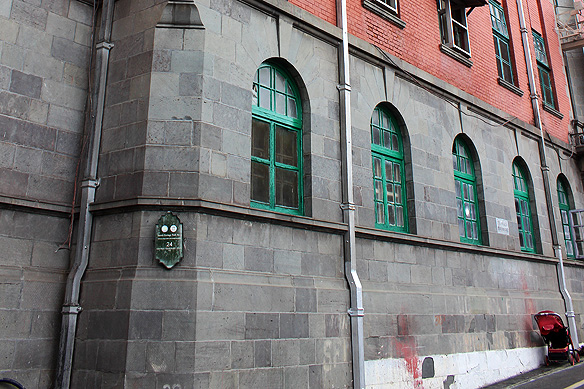
Made of grey Ashlar stone, the 1922 Central Telegraph Office was back then one of the world’s first automatic telephone exchanges, and could handle 2,000 lines at one go. Earthquake-proof, the Indian government-owned telecommunications provider BSNL has its offices here now.
Stop 9: St. Michael’s Cathedral Catholic Church
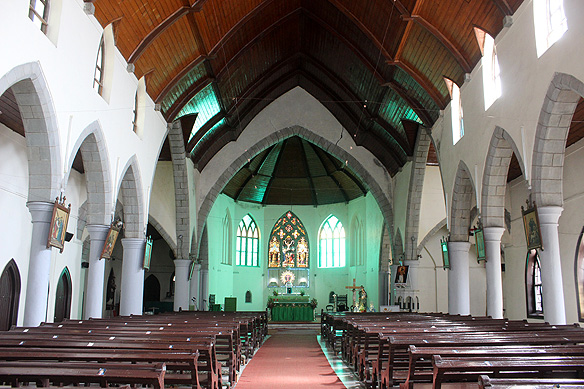

You will need to take the steps one level down from Mall Road to reach Henry Irwin’s 1885 dressed grey stone church. Painted a fabulous emerald green on the inside framing fine stained-glass windows, Shimla’s first Roman Catholic church does not see many tourists. It is dedicated to St. Michael and St. Joseph and was built under the patronage of Lord Ripon, the then Viceroy who was a Roman Catholic. Once done exploring it, climb the steps up back to Mall Road.
Stop 10: Railway Board Building
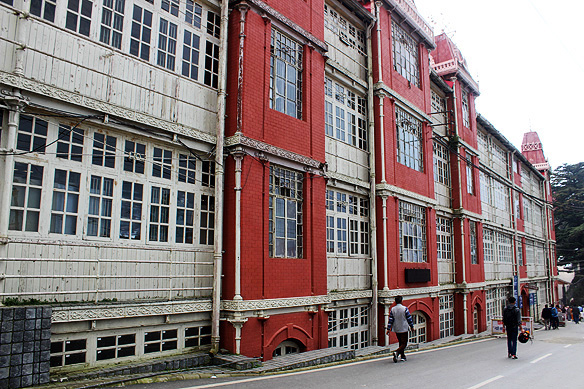
By this point, the pedestrian section of Mall Road would have ended and the vehicular section begun with the imposing Railway Board Building extending along the left curb; its large size a testament to the important role railways played during colonial rule. Made of cast iron and steel in 1896-97, the red and cream-coloured seven-floor building with four storeys above the ground and three basements, was also designed to be fire-resistant. A feature that passed the test in 2001, a hundred years later, when the top floor burst into flames, but caused no significant damage to the structure.
Stop 11: Turn around and walk back to The Embassy Restaurant near the lift
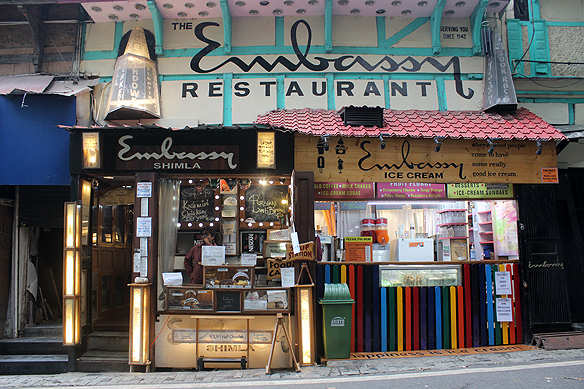
If you are from Delhi, you would be familiar with The Embassy restaurant in Connaught Place. It is something of an institution which came up in 1948 to cater to the tastes of newly-independent India. The one in Shimla, close to the lift, is the summer version of it and even older. It came up in 1942 during the British Raj as a bakery and ice cream shop. Its online reviews are rather cruel. Still, do take a picture from outside for posterity’s sake.
Stop 12: Keep walking straight towards Clarkes Hotel

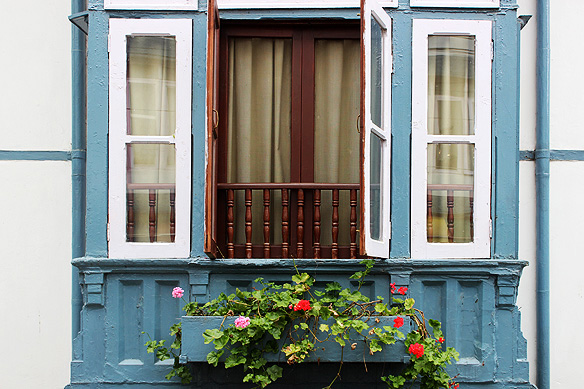
Rai Bahadur Mohan Singh Oberoi’s life story is what movies are made of. Founder of India’s Oberoi Group of Hotels which has five-star properties across the world, his rags to riches tale started in Shimla as a front desk clerk in The Cecil hotel [1884]. In 1934 he bought his first property, the Clarkes Hotel [1898], by mortgaging all his assets including his wife’s jewellery and named it after his mentor-boss. There was no looking back for him after this. A few years later, he bought The Cecil too.
Ending point: Viceregal Lodge

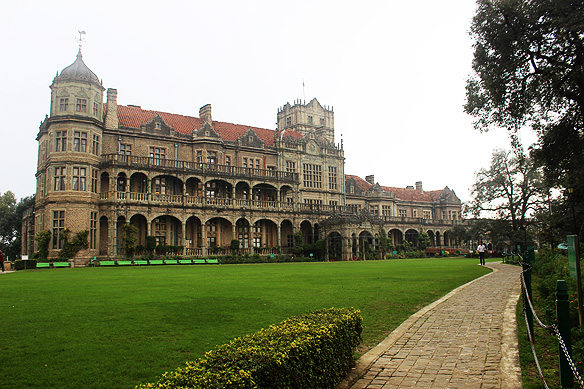
Shimla’s most impressive building, the sprawling Viceregal Lodge [Rashtrapati Niwas] on Observatory Hill resembles a Scottish castle. You could either choose to continue walking down Mall Road after the Railway Board Building [Stop 10], over some steep slopes, or come back to the lift and take a cab from the main road below to get to it. On the way, you will pass grand colonial buildings such as the Vidhan Sabha [Council Chamber, 1925] and Raj Bhawan [Barne’s Court, 1865]. Entry and photography are prohibited at both.
Irishman Henry Irwin’s masterpiece, the Viceregal Lodge, was built in 1888 in grey sandstone especially for Lord Dufferin. After Dufferin left India, it was used as the Viceroys’ residence in the summer months till WWII.
Two crucial conferences on India’s partition were held within its walls, in 1945 and 1946, during which India and Pakistan’s borders were drawn. Since 1965, it is the address of the Indian Institute of Advanced Study. In keeping with its new role, the old ballroom has been converted into a library. A particularly innovative feature of the building is its fire extinguishing system made of wax-covered pipes which the tour guides, with valid reason, like to gush about.
Travel tips: 30-minute tours are held throughout the day for a nominal fee to three of the historical rooms and main hallway. Tickets are available from the cafe on the grounds. The last tour is at 4.30 PM. Photography is not allowed inside.
NOTE:
You may also like to read India Travel Shot: Shimla’s Toy Train
– – –
I hope you enjoyed this self-guided walk and it helps you in your explorations of the ‘Queen of the Hills.’ 🙂
To read more posts on my travels to Himachal Pradesh, please click here.
 rama toshi arya's blog
When we were in Shimla the government was planning to change the name to Shyamala (I think). Did that happen? Wonderful tour of the cute city. Maggie
LikeLiked by 1 person
Thanks, Maggie. Am happy you enjoyed the virtual tour. 🙂 Nope, the city is still very much ‘Shimla.’
LikeLiked by 1 person
Another great post – thanks Rama for helping me re-live my memories of another journey back in time. I loved the place and the toy train ride to get there. Stayed in the Woodville Palace Hotel – so comfy and refined (unlike me!). At the Jakhu Temple devoted to Hanuman a monkey pinched someone’s glasses and returned them for 2 bags of peanuts! Amazing. Only in India …
LikeLiked by 1 person
Hehe. Yes, only in India. Even our monkeys are experts in wheeling and dealing. 😀 Glad you liked the read. 🙂
LikeLike
It’s amazing to see such European inspiration in architecture so far from its roots.
LikeLiked by 1 person
The British transformed most of the cities they used extensively and lived in, in the Indian sub-continent, into mini-Londons. Hence, you will find the down-towns in Chennai, Kolkata, and even South Bombay to be quintessentially British.
LikeLiked by 1 person
I laughed at what you said about how the Brits must have missed the gray skies back home, hence choosing Shimla as the summer capital of their colonial administration in India. Thank you for this tour, Rama. Despite the gloomy weather, I must say it is such a photogenic city, thanks to those British-era structures.
LikeLiked by 1 person
Hehe. Glad you liked my tongue-in-cheek humour. You will well agree there is no accounting for homesickness. :), Jokes aside, it is a very pretty town. And also unusual.
LikeLiked by 1 person
Another excellent post. I think you need to approach a TV company to film and broadcast your journeys.
LikeLiked by 2 people
Thank you! It is very kind of you to say so. But then I won’t be able to take photographs and scribble away–two things I so enjoy doing and which make me keep blogging, year in and year out. 🙂
LikeLike
You can incorporate photographs into the script, so viewers can see what you wanted to photograph, how you set up the shot, what angle, etc. Make it a travel photography programme as well. Regarding the scribbling – you can chat to the camera, of course (might need a bit of scripting). Your blogs are not like regular travel blogs. They delve into the minutiae of travelling. Which roadside restaurant makes the best dishes, where to get great coffee, as well as a bit of geography, history and chatting to locals. That’s why they would be great television. Have you seen Simon Reeve (BBC) or Michael Palin’s travel shows?
LikeLiked by 1 person
Yes, I have seen Simon Reeve. But I really don’t think I would be good at it. I am an introvert, and camera-shy. The quiet types. Thank you, nonetheless, for your faith in my skills. Means a lot. 🙂
LikeLike
Amazing reading as usual, Rama 🙂
I visited Shimla two years ago in summer, we experienced a hail storm, when it became completely night at 2 pm. When it finished, the pavements were covered by hails. This fusion of England and India has its charm, I would have never imagined to see the monkeys running over the roofs of classic Tudor houses or big Hanuman statue on the hill just behind the Neogothic church. I hope I manage to visit again, this time to come by the train 🙂
LikeLiked by 2 people
Thank you, Jana, for your kind words. When I see things like the ones you mentioned, I just tell myself, ‘only’ in India! 😀 Do take the toy train if you get the opportunity. It is a fabulous rail journey. Very scenic.
LikeLike