An eight-month pregnant young woman grabbed my phone from my hands, spoke to the cab driver at the other end in Kazakh, stood with me till he arrived, and left only after bundling me into the gleaming white vehicle.
I will never forget her and her serene warm face. I had been struggling to communicate my pickup location across language barriers with my cab driver on a massive multi-lane street in Astana. It was dark. I was clueless. And then she came along. Out of the blue.
That is Kazakhstan for you where people are so helpful, you do not even need to ask for help.
If you ever wondered what a modern city would look like, if created from scratch, where hearts such as hers are a common occurrence, then make your way to Astana, Kazakhstan’s capital since December 1997. Astana literally means ‘Capital City.’
And if like me, you had read that Kazakhstan’s capital was Nur-Sultan, and were a bit confused what was its correct current name. It is still Astana.
For around four years, from 2019 to 2022, Astana was renamed Nur-Sultan in honour of the country’s first President Nursultan Nazarbayev [1991 – 2019].
The city, located in the north-centre of the country in the middle of nowhere, has been around since 1830 when it went by the name Akmoly. It, however, really came into its own when the empty area adjoining it was transformed into a futuristic capital by Japanese architect Kisho Kurokawa in 1998. All those fantastically fabulous buildings one sees in the city-centre are government offices, including the supreme court.
Selected through a competition that was thrown open to the finest, most talented urban planners and architects in the world, his ‘new’ capital on the banks of Ishim River is meant to epitomize Kazakhstan’s vision for the future and its mythical past.
Three architectural masterpieces serve as its nuclei, around which the city’s sights and sounds gather. One is Baiterek, or Tree of Life, dedicated to the ancient nomadic empires which shaped the history of Central Asia’s golden steppes. The second is the Grand Mosque, an ode to Kazakhstan’s Pre-Soviet Islamic era. And the third is Independence Square celebrating independent Kazakhstan.
Add to this mix, a turquoise blue expanse, borrowed from Kazakhstan’s skies which was transposed into the country’s flag, and now finds its way into Astana’s multiple massive airy edifices.
Closest to Moscow of all the stans, it is only 34 years since the country has stepped out of Soviet atheism and back into Islam. No surprises then that religion takes on a slightly different mantle here. Islam and the Kazakh people are still re-finding each other with the latter’s mix of Russianized atheist parents and a westernized Muslim youth.
This does not make the country insular or closed though. Far from it. According to official records, over 130 different ethnicities call Kazakhstan home. Part of this is also because of the forced mass deportations carried out during the Stalin period from across the Soviet Union and Soviet borders into Kazakhstan. But instead of insisting on homogeneity post-Independence, Kazakhstan has chosen to celebrate its diversity as is evident by the world’s only Palace of Peace and Reconciliation in Astana. Every three years, leaders of various faiths convene inside its glass walls to discuss world peace beyond politics.
Both, Astana’s architecture and people, are also adept at taking the city’s extreme and unpredictable weather in their stride. From -40 degrees Celsius in winter to 40 degrees Celsius in summer, even a typical summer day often swings from translucent blue skies to overcast drizzling cloud cover in a matter of few minutes.
Finally, a little fun fact. Astana holds a Guiness World Record for being a 20th Century capital city with the most name changes: Akmoly [1830], Akmolinsk [1832], Tselinograd [1961], Akmola [1991], Astana [1997], Nur-Sultan [2019 – 2022], and Astana again.
Here are ten sights that are quintessentially Astana. Promise, you will not find them elsewhere. Wishing you happy travels, always. Because we live in a very beautiful and interesting world. ❤
1. Nurzhol Boulevard, Astana’s city-centre
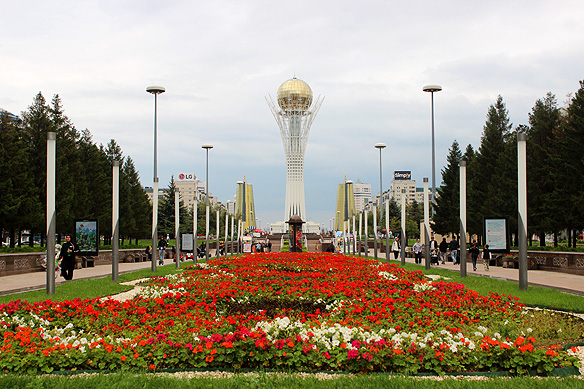
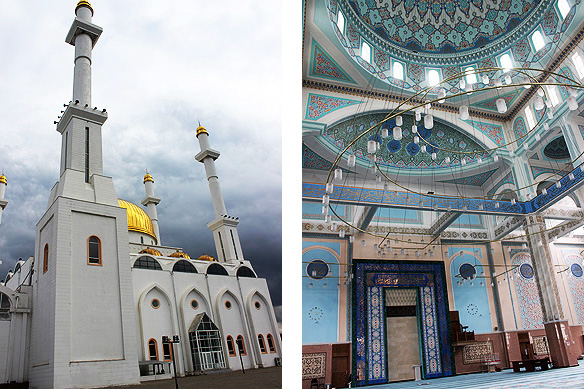
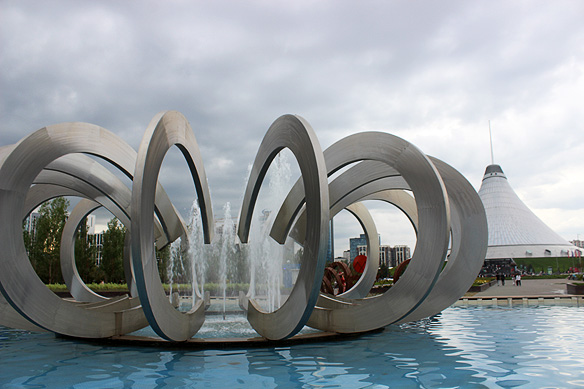

The centrepiece of Kisho Kurokawa’s city-plan is also Astana’s most famous landmark: Nurzhol Boulevard. 3.1 kilometres long, the pedestrian zone runs from Akorda, Kazakhstan President’s residence at one end to Khan Shatyr, the Norman Foster-designed shopping and entertainment complex in the shape of a mega-tent at the other end. In-between, are flower-filled squares, fountains, and snack booths, whilst government offices and state-owned companies housed in Avant Garde steel and glass extravaganzas tower above. A short detour mid-way takes one to the gold-domed Nur-Astana Mosque, Central Asia’s third largest mosque and a gift from the Emir of Qatar. Nurzhol Boulevard is especially striking in the evening when it is all lit up.
Travel tip: Khan Shatyr’s 5th level contains an indoor beach replete with deck chairs.
2. Baiterek, a symbol of post-independent Kazakhstan
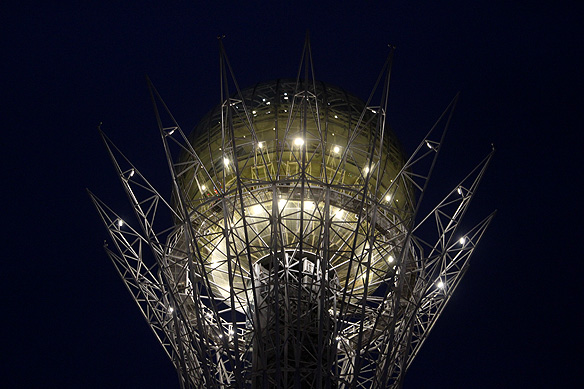
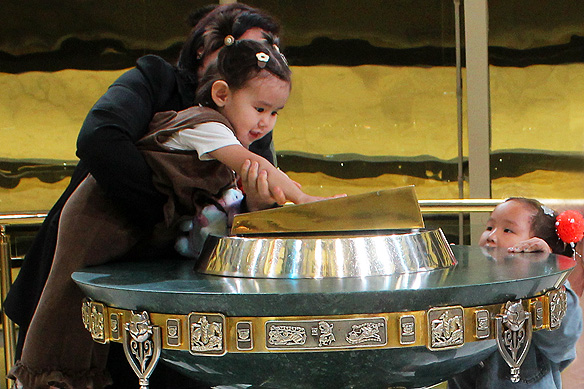
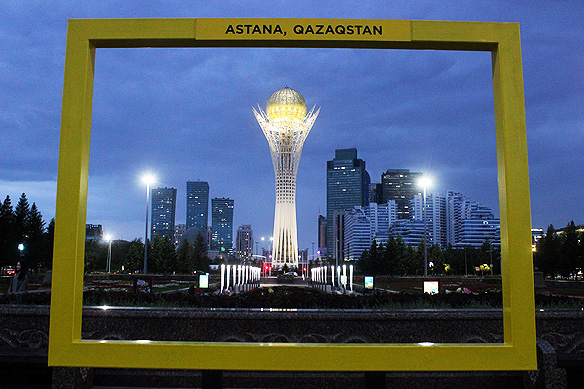
Symbolism abounds in Baiterek, Nurzhol Boulevard’s glittering magnum opus. The 105-metre-tall ‘Tree of Life’ with a 22-metre-wide ‘Golden Egg’ laid by Samruk, the mythical bird of happiness, is not just a recreation of an ancient Central Asian folktale. Through the myth, it also is Astana and post-independent Kazakhstan’s emblem. Of new happy beginnings. Placed at a height of 97 metres, the observation deck and imprint of former President Nursultan Nazarbayev’s right hand recall 1997—the year the country’s capital moved from Almaty to Astana. Visitors are urged to place their hand on the gilded handprint and make a wish.
Travel tip: The ticketed Baiterek observation tower is open from 9 am to 9 pm.
3. Astana Grand Mosque, Central Asia’s largest mosque
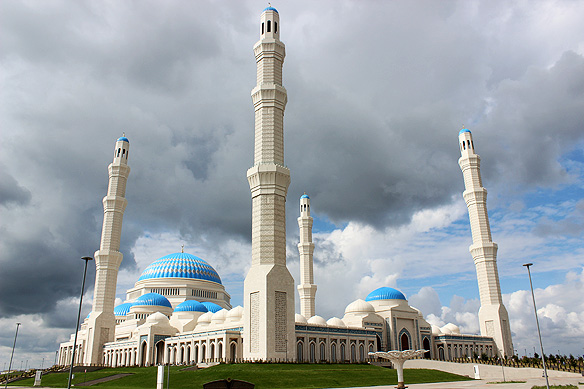
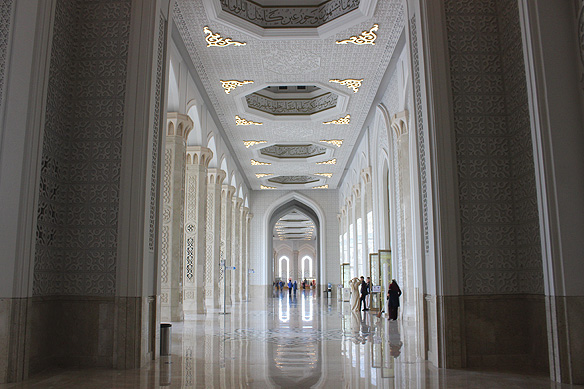
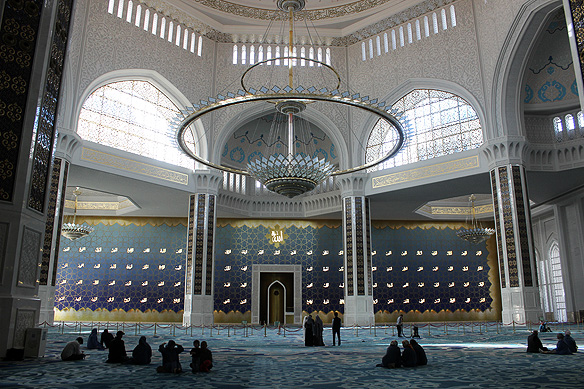
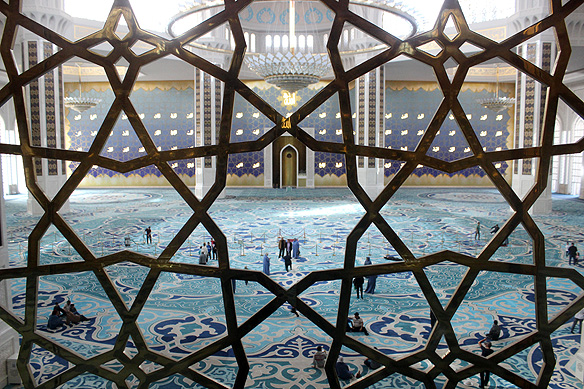
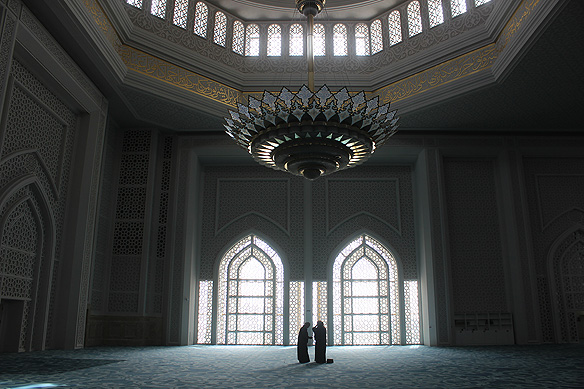
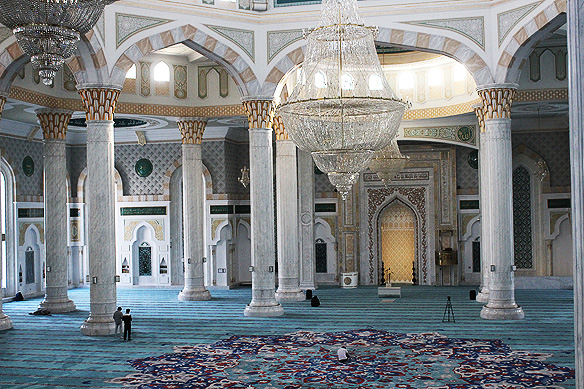
Central Asia’s largest mosque on the outskirts of Astana is a poetic concoction of glistening white marble, powdery blues, and regal gold finishing. 235,000 worshippers can pray at one go in the 130-metre-high edifice completed in 2022. There is no dearth of global toppers within the Grand Mosque’s expanse. These include the largest dome of its kind surrounded with 72 smaller domes, the world’s largest handmade carpet, the world’s longest calligraphic manuscript encircling the dome, and a qibla wall with the 99 names of Allah made of 25 million pieces of crystal. Inside the colossal edifice are gift shops, a museum, and cafe as well.
Travel tips: 1) A ticketed elevator next to the cafe whizzes visitors up one of the minarets for incredible aerial views. 2) This one is for the ladies. For best views of the main hall, make your way up to the women’s prayer hall upstairs.
4. Nur-Alem, the Future Energy Museum
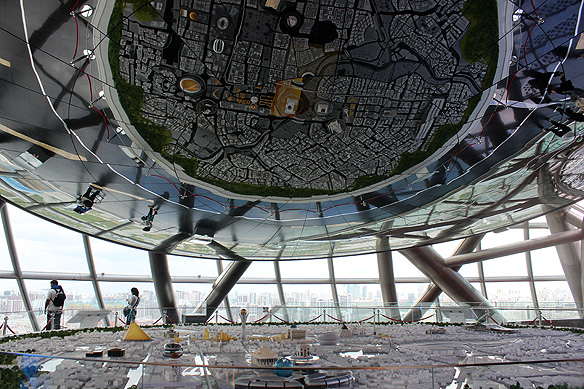
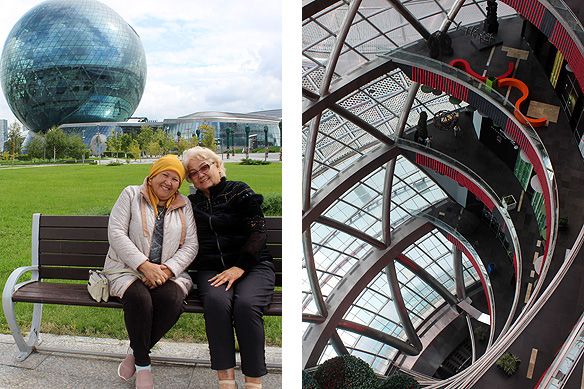
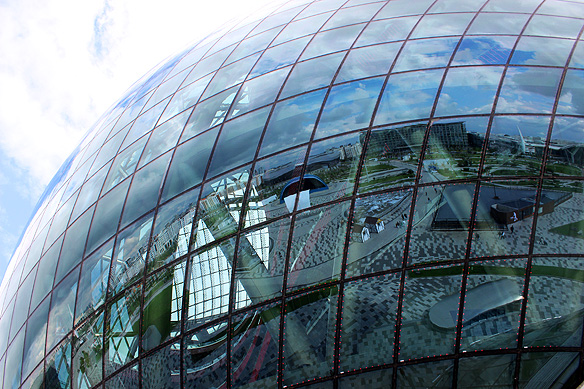
A remnant of EXPO 2017, Nur-Alem offers a fabulous insight into energy, its origins, and uses. Spread over eight levels, these range from water, kinetic, biomass, wind, solar, and space energy using innovative installations and multimedia. What is even more remarkable is the structure of the museum itself. It is the only sphere-shaped building in the world. 100 metres tall, 80 metres in diameter, and weighing 13,000 tons; each piece of the glass facade weighs up to 800 kilograms. Visits commence on the 8th floor with the Future Astana in 2050 exhibition, and make their way down. If perchance you are peckish along the way, there is a cafe midway.
Travel tip: Try out the interactive section on gale speeds in the Wind Energy level.
5. National Museum of the Republic of Kazakhstan, Central Asia’s largest museum
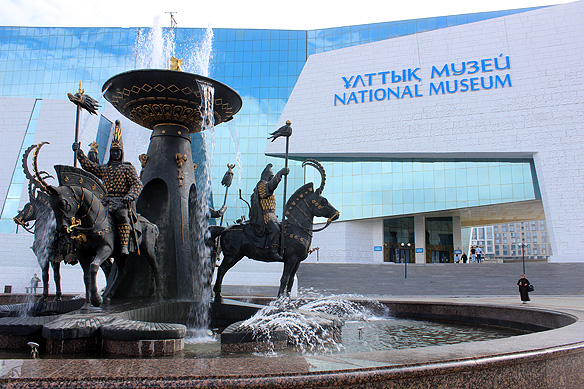
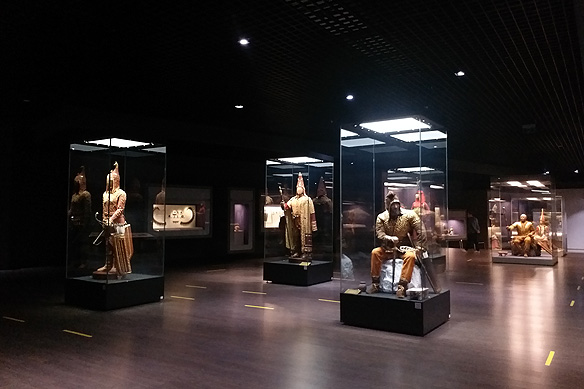
14,000 sq. metres across 11 halls can make a visit to Astana’s National Museum [Central Asia’s largest museum] rather overwhelming. The best place to start is the Hall of Gold, and that too with one of the museum’s official historian guides. Dedicated to Kazakhstan’s Golden Man, Men, and Women, it recounts this enigmatic Bronze Age chapter in Kazakh history through impressive state-of-the-art displays. Once you have had your fill of its golden treasures, take a wander through the Ethnography Hall, followed by the Hall of Ancient and Medieval History. Oh, and do not forget to look up in the high-ceilinged foyer where an enormous giant golden eagle floats above.
Travel tips: 1) There is a surcharge for visiting the Hall of Gold. 2) The museum is closed on Mondays.
NOTE:
You may also like to read Kazakhstan’s ‘Golden Man,’ Stories Told and Untold
6. Palace of Peace and Reconciliation, for global harmony
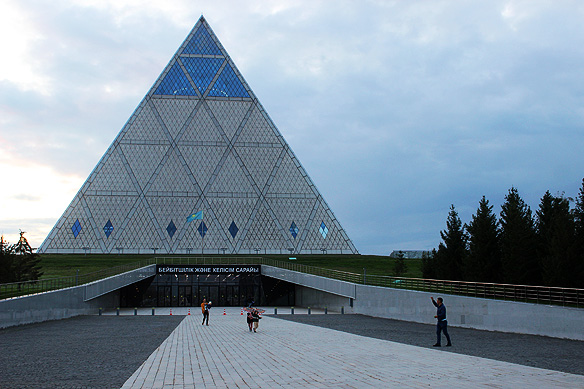
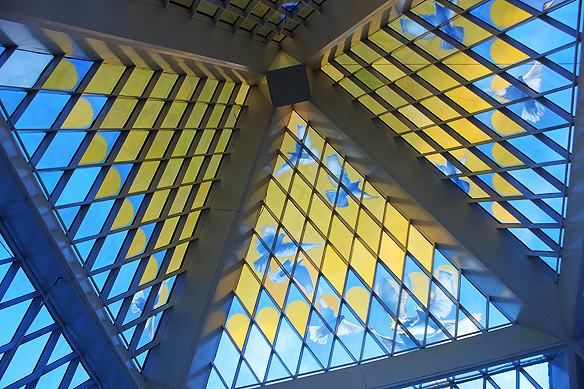
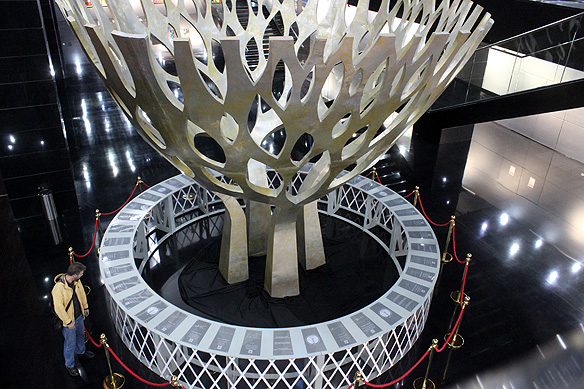
Astana’s second Norman Foster architectural marvel [the first is Khan Shatyr] is its Palace of Peace and Reconciliation. A towering granite and glass pyramid rising 62 metres high from a 62 x 62 metres square base, the ‘palace’ was custom-built to serve as a permanent venue for the Congress of Leaders of World and Traditional Religions. Once every three years, its members gather under the turquoise blue and golden yellow glass apex, screen-printed with pigeons in flight, to discuss peace, equality, and understanding. In the art gallery [lower level] is a sculptured ‘Tree of Life’ with messages of peace from global spiritual leaders.
Travel tip: Free guided tours are included in the entry ticket fee.
7. Assumption Cathedral, Central Asia’s largest orthodox church
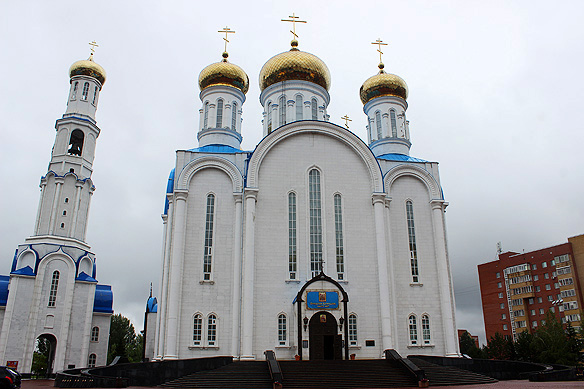
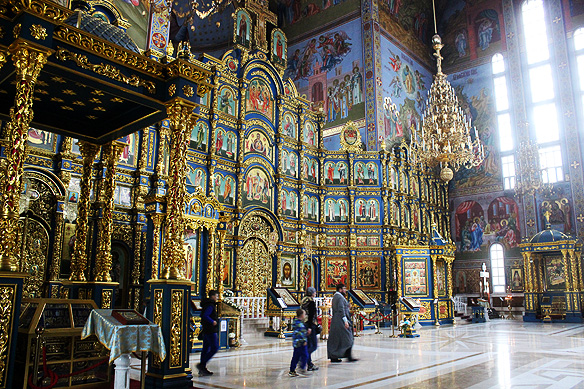
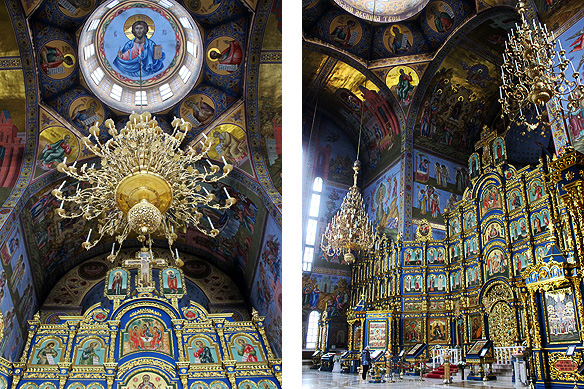
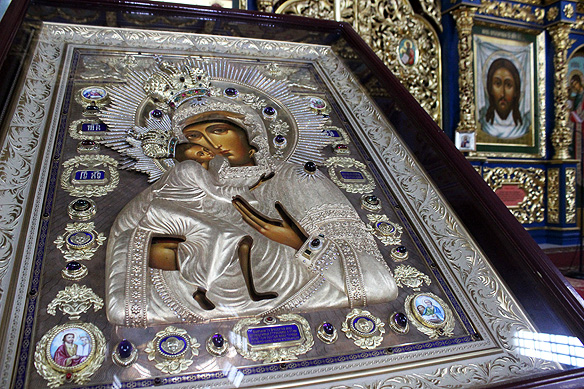
By now you would have figured that Astana is home to most of Central Asia’s grandest buildings. Here is one more to add to the list: the Assumption Cathedral, Central Asia’s largest orthodox church. At 68 metres high, the cathedral, completed in 2010, is dedicated to the Assumption of the Blessed Virgin and can hold up to 4,000 worshippers. Five years in the making, the richly decorated gilded interiors belie the simplicity of the snow-white facade whose only adornment are its blue roofs and golden domes. Expert iconographers were specially brought in from Russia to make the intricate tripartite iconostasis in the 18th Century Moscow Baroque style and paint the soaring blue and gold murals.
Travel tip: Open daily from 8 am to 7 pm.
8. Capital Circus, for the circus
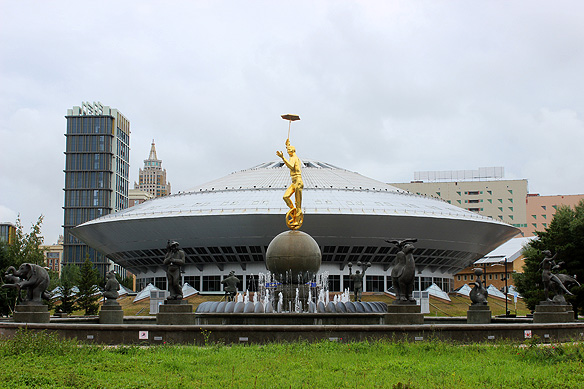
Nope. This is not a spaceship and neither have aliens dropped by at Astana to say hello. The otherworldly flying saucer is Astana’s Capital Circus to host, you guessed right, the circus. A troupe of around 300, comprising both young artists and seasoned professionals perform regularly in the transforming arena inside, surrounded by 2,000 seats. Performances include acrobatics, gymnastics, trapeze shows, animal shows, clownery, illusions and tricks, amongst others. Outside, sculptures of characters from Kazakh folktales, a golden clown, and animals carrying out circus acts welcome the intrepid traveller.
Travel tips: 1) Circus performances are held only on weekends. 2) The ticket office is open on Saturdays and Sundays from 10 am to 7 pm.
9. Atyrau Bridge, the Fish bridge
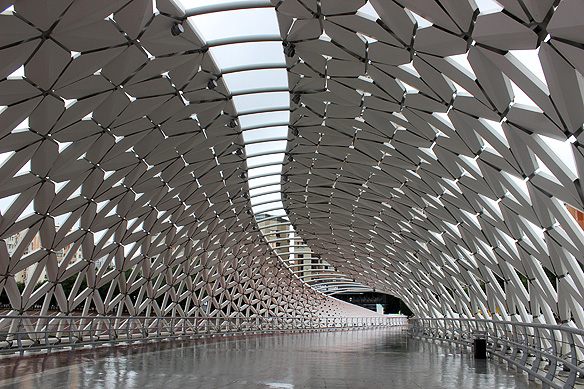

I first saw Atyrau Bridge in an Air Astana in-flight safety video, and was instantly besotted by it. Synonymous with the city, the pedestrian bridge designed by local young architects for Astana’s 20th anniversary as the country’s capital is not yet a ‘tourist’ site; it is used more by locals as part of their commute and walks. Which is bizarre. Because it is stunning. 2,500 pieces envelop the 314-meter-long and 10.5-metre-wide bridge through which Astana’s sky peeps through. Inspired by the endemic endangered Caspian Sturgeon’s scales, the architectural spectacle snakes across the wide placid Ishim River, connecting Central Park with the Ishim River Embankment.
Travel tip: Do not miss the Caspian Sturgeon bronze sculpture halfway down the bridge. It is customary to rub its nose for good luck.
10. Kazakh Eli Monument and Hazrat Sultan Mosque in Independence Square
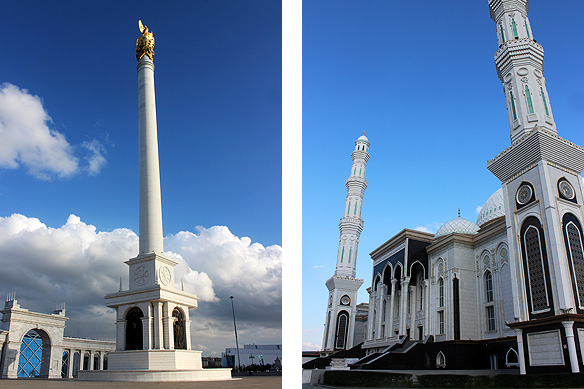
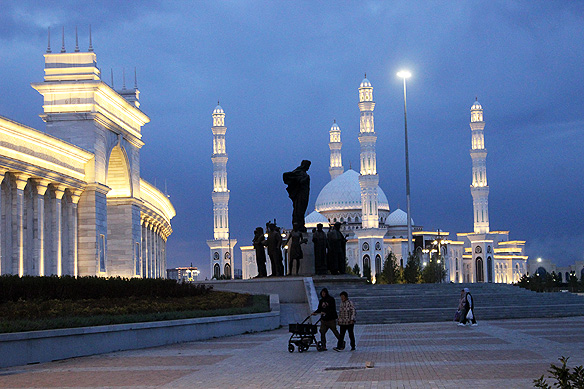
Kisho Kurokawa’s central axis for Astana, starting at Khan Shatyr and then passing through Baiterek and Akorda, culminates in the Independence Square on the other side of Ishim River. It is a grand celebratory square flanked by the National Museum, Palace of Peace and Reconciliation, Palace of Independence, Kazakh Eli Monument, and Hazrat Sultan Mosque. 91 metres tall, in honour of Kazakhstan’s independence in 1991, the Kazakh Eli Monument is topped with a golden Samruk, the mythical bird of happiness. The same bird who laid the golden egg in Baiterek. Meanwhile, Hazrat Sultan Mosque in classical Islamic style and 10,000-capacity is named after the 12th Century Sufi Sheikh Khoja Ahmed Yasavi buried in Turkestan, southern Kazakhstan.
Travel tip: Take a stroll in the square at night when it is lit up. It is magical. This is also where I met the lady I mention at the beginning of the post. 😊
– – –
Travel tips:
- Getting there: I flew in and out with Air Astana.
- Staying there: I stayed at the Best Western Plus Astana Hotel in Nurzhol Boulevard.
- My favourite cafe: Coffee Boom in Nurzhol Boulevard, next to the hotel.
- How many days: I stayed for 3 full days.
- I explored Astana’s sights on Nurzhol Boulevard by foot, and the further away ones by Yandex taxis. Their cabs are spotless and economical. To download the app, you may need a local Kazakh number [I had gotten one].
[This blog post is part of a series from my 14-day solo independent travels across Kazakhstan in August–September, 2024. To read more posts in my Kazakhstan series, click here.]
 rama toshi arya's blog
After your previous post, this one further convinced me that I really should visit Astana too when I go to Kazakhstan. Your photos and stories really whet my appetite for the country’s capital, more than any other article about this city that I have come across before.
LikeLiked by 2 people
Thank you, Bama! I really liked Astana. It’s easily one of my favourite cities. What I especially liked was that it was so easy to get around and explore on my own, at my own pace. No tours needed. It is a huge city with fantastic infrastructure, and even more fantastic architecture and people. 🙂
LikeLiked by 1 person
Beautiful Astana ! Well shared with beautiful photos and description. I think Kazakhstan is a great place for tour
LikeLiked by 3 people
Thank you, Priti! Am happy you enjoyed the post. Kazakhstan currently offers 14-day visa-free entry to Indian passport holders. I wish I could have stayed longer in the country, but I had to make do with 14 days. 🙂
LikeLiked by 1 person
💐
LikeLike
Incredible place! Thanks for putting a description and pictures in my mind. I am unlikely to forget it. 🕊️
LikeLiked by 3 people
Glad you enjoyed it. 🙂 Thank you for stopping by.
LikeLike
Pingback: 36 hours in almaty | rama toshi arya's blog
Pingback: travel guide: the six untold treasures of kazakhstan’s silk road heritage | rama toshi arya's blog
Beautiful ❤️
LikeLiked by 2 people
Thank you. Astana is very beautiful.
LikeLike