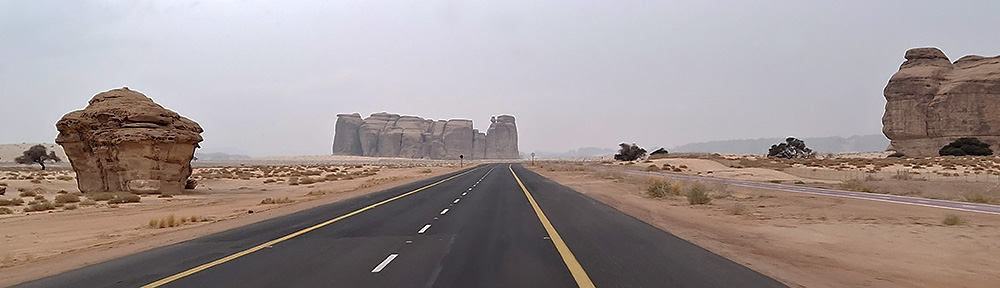
What’s there in Saudi Arabia for the traveller? Aah, you’d be surprised.
Hidden deep inside the desert which covers 95 percent of its terrain are historical and natural wonders which are all the more extraordinary because one could not access them till recently. It is only on 27 September, 2019, that the Kingdom launched its tourist visa.
These treasures span the nation’s very essence—spread across a wide arc, both geographical and in time. From plentiful prehistoric petroglyphs in Jubbah, to impressive remnants of Saudi Arabia’s earliest civilizations from the 1st millennium BC in Dadan. From Hegra’s mystical windswept 2,000-year-old Nabataean tombs, to the medieval town of AlUla steeped in stories. Jump to more recent times, and one gets to explore Adobe forts from the Saudi States in Ha’il to its vision for the future through the ‘Mirror’ aka Maraya Concert Hall nestled in the vast Arabian Desert.
Interesting? Mind-boggling is more the word. Let me take you on the road from Ha’il to AlUla’s Maraya and the secrets the desert guards oh so zealously. ❤️
– – –
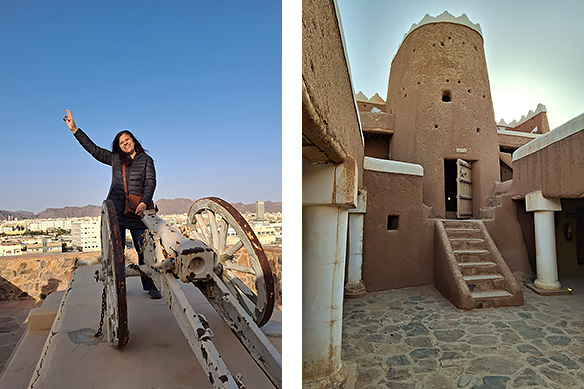
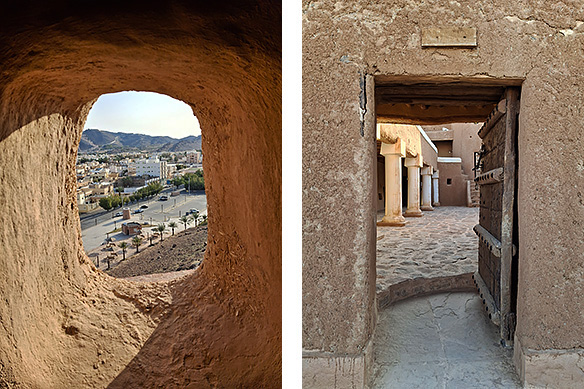
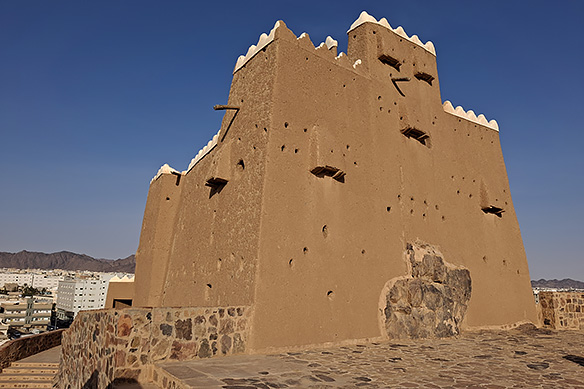
Ha’il in north-central Saudi Arabia was the capital of the Rashidi dynasty from 1836 to 1921. Historical rivals of the current ruling family, the House of Saud, they built a military stronghold on the city’s highest point in 1840 and called it A’arif Fort. The adobe crenelated structure served as a multitasker—it was a place for sighting of the Ramadan moon and firing cannon shots to announce prayer times during the holy month as well. When the Sauds reclaimed Ha’il, they continued the tradition.
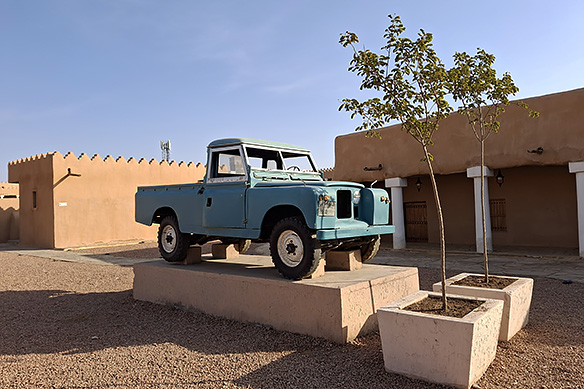
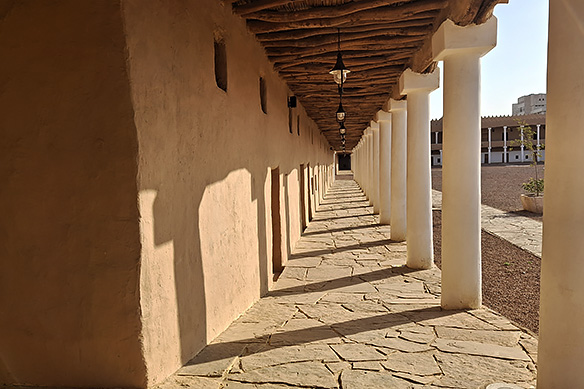
A hundred years later, in the 1940s, the Sauds, after whom the Kingdom of Saudi Arabia is named, built the enormous double-storeyed Al Qishlah Palace in the heart of the city they now ruled. Comprising 8.5-meter-high walls, eight watch-towers and 143 rooms, the mud-brick palace in Ha’il was their soldiers’ arms depot-cum-barracks. If you wondering about the blue bakkie, it is courtesy of the site’s onetime vehicle maintenance workshop.
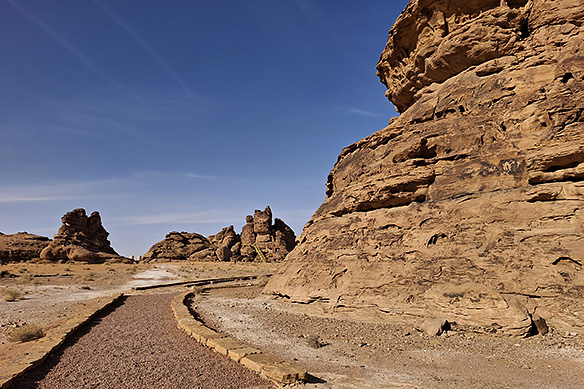
Let’s start from the beginning of Saudi Arabia’s story. 🙂
Ninety kilometres north-west of Ha’il is the UNESCO-listed site of Jabal Umm Sinman at Jubbah. Petroglyphs and inscriptions spanning 10,000 years fill the moonlike landscape which in prehistoric times overlooked a now disappeared freshwater lake.
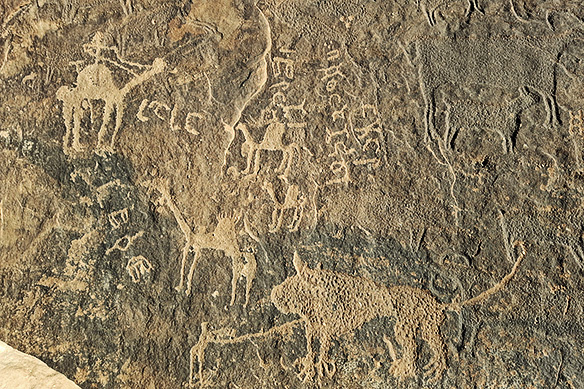
There are nearly 2,000 animal figures including 1,300 camels, 260 human depictions going about Neolithic life, and 5,400 Thamudic [8th Century BC to 5th Century AD] inscriptions in the Jubbah site. It is a rare compilation of life across millennia on a single set of stone canvases.
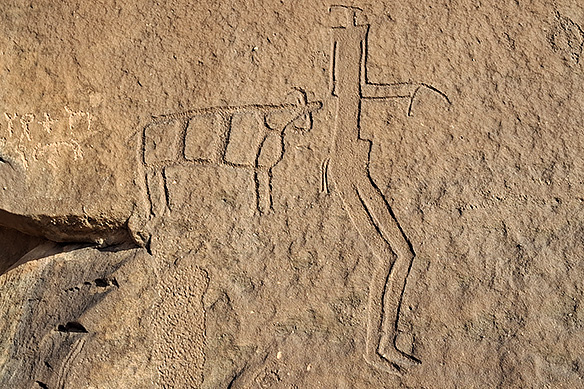
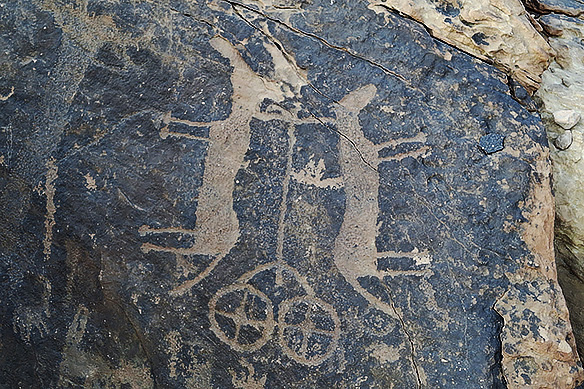
Two of Jubbah’s most iconic petroglyphs: Man with Animal [top], and Chariot and Horses [above]. The latter, in plan view, is unique for Saudi Arabia.
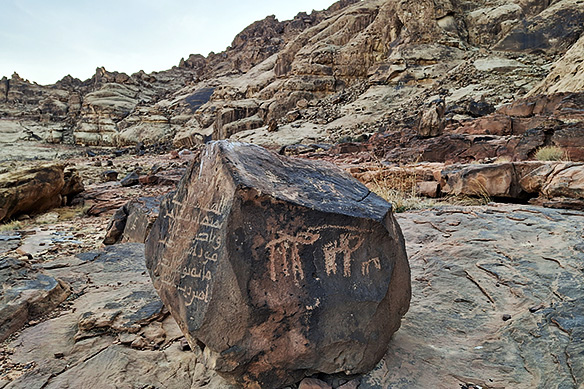
Behind the Chariot and Horses petroglyph is a rock with an inscription in medieval Arabic on one face and stick figures from an earlier era on another. An inadvertent, yet perfect synopsis of Saudi Arabia’s story.
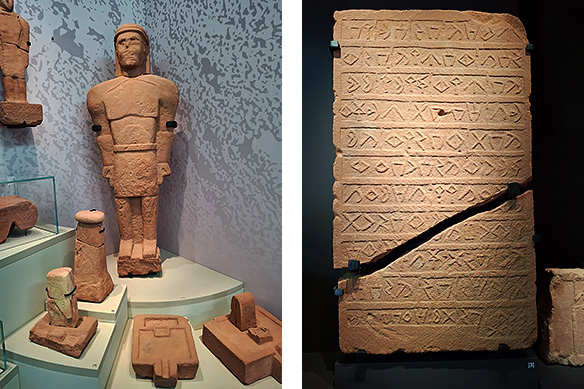
Fast forward from Jubbah’s 7th millennium BC Stone Age petroglyphs to Dadan, capital of the ancient Dadanites, and later Lihyanites, in the 1st millennium BC. With its very own languages and scripts, one of Dadan’s most remarkable finds has been the life-size effigies of kings and priests in an Egyptian style.
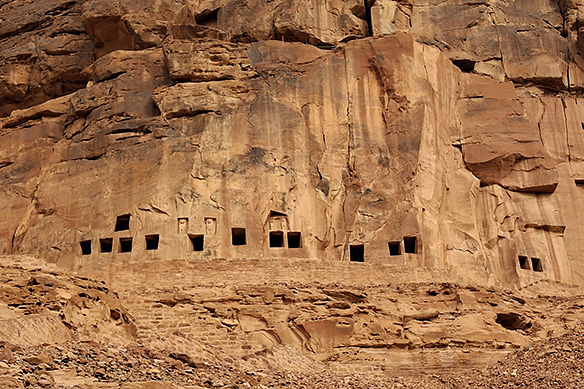
The Lihyanites buried their dead in scores of tombs scalloped as high as 50 metres above ground on red rocky escarpments. Carved lions guard two of the most important of these.
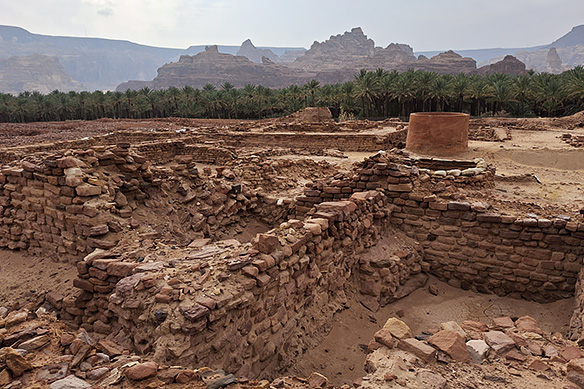
Dadan’s ruins continue to reveal secrets of a city which profiteered from its location on incense trade routes connecting Saudi Arabia with Egypt, the Mediterranean, and Mesopotamia. The city was also deeply religious, with a large temple dedicated to Dhu Ghaybah, the main god of the Lihyanites. Scholars believe the enormous circular basin at the site, carved from a single block of sandstone, was used for religious ceremonies.
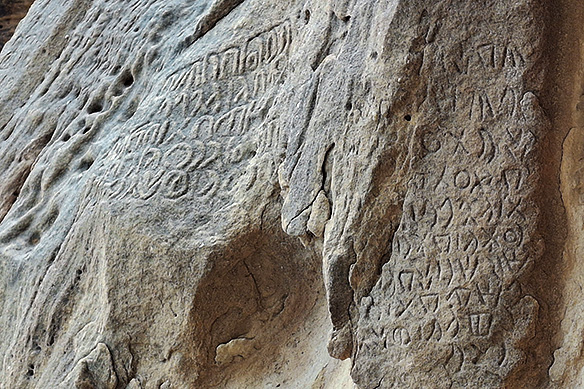
Both the Dadanites and Lihyanites left behind copious amounts of inscriptions in nearby Jabal Ikmah, a narrow valley slicing through the mountains. Most of them are public records of offerings to deities etched in by visiting traders and local residents, with a splash of ancient graffiti and royal announcements thrown into the mix. In 2023, the open-air library was inducted in UNESCO’s Memory of the World Register.

2,000 years ago, the Nabataeans who’d built the iconic tombs in Petra decided to expand their territories further south into Hegra in Saudi Arabia. Like Petra, the residents carved over 100 monumental unidimensional tombs out of the scattered sandstone outcrops. Unlike Petra, they inscribed them with details of its occupants, along with a curse or two should anyone fiddle with the corpses.
Carved from top down, the most iconic of these tombs is the unfinished Tomb of Lihyan, son of Kuza aka Qasr Al Farid, the Lonely Castle. In 2008, Hegra became Saudi Arabia first UNESCO-listed site.
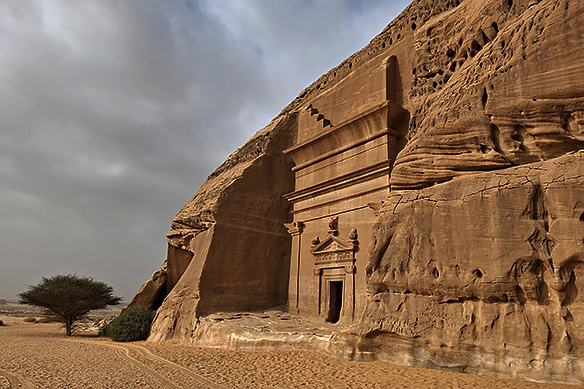
The Nabataeans were renowned for their architectural achievements and expertise in hydraulic engineering. Hegra, their second capital, flourished from the 1st Century BC to the 1st Century AD. Look closely, and Hegra’s tombs, including those at Jabal AlBanat, reveal the many cultures the Nabataeans were in contact with: Greek columns, Roman pediments, Egyptian sphynxes, the Mesopotamian god Humbaba, along with lions, snakes, vases, and rosettes.
Peep inside the tombs, and they tell that while some were meant for a single occupant, others were multi-generational.
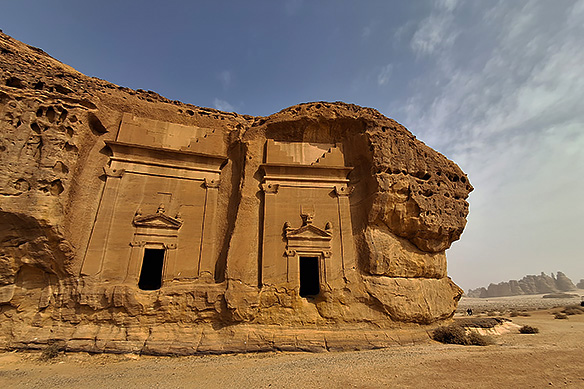
By the 7th Century AD Hegra was abandoned and forgotten, partly by sand and partly by a myth. The locals now knew it as Mada’in Saleh. According to an Islamic legend, when the Prophet Saleh came to Hegra, its arrogant citizens [the Thamud] asked him for a miracle. He created a she-camel and told them to treat it with care. Instead, they killed the animal. The ensuing earthquakes destroyed the tribe and their city. For the longest time, Muslims refrained from going to Hegra in fear of god’s wrath.
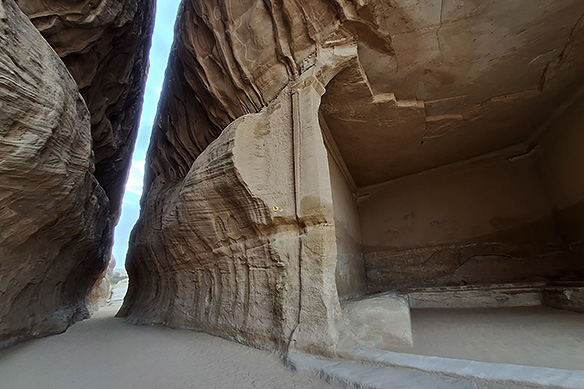
All of Hegra soon froze into a time capsule including Jabal Ithlib, the 40-metre-long corridor slicing through high rocks. It is lined with multiple niches containing Betyls, rectangular slabs likened to the ‘House of God,’ and a Diwan for brotherhood congregations where scholars believe there was wine and music.
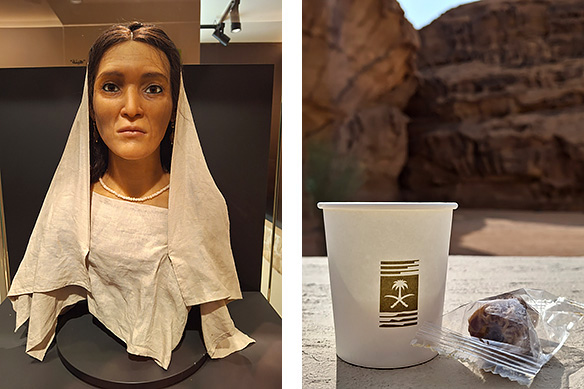
Meet Hinat, daughter of Wahbu, in Hegra’s Visitor Centre Museum. She died in 60/61 AD. Her skeleton was found in Hegra’s Jabal AlAhmar wrapped in wool, linen, and leather along with around 80 other family members from different generations. An inscription records her name and dates her death. In 2022, her face was carefully reconstructed—humanizing the Nabataeans, stripping them of mystery, making them just like you and me.
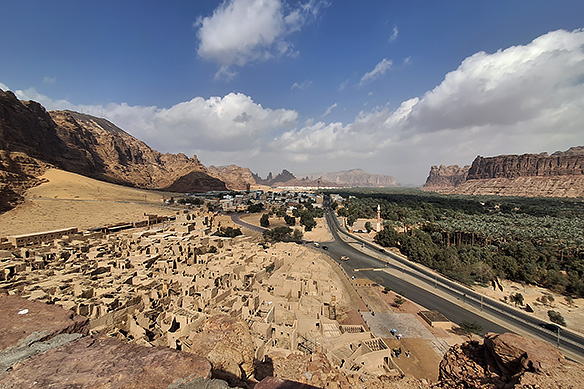
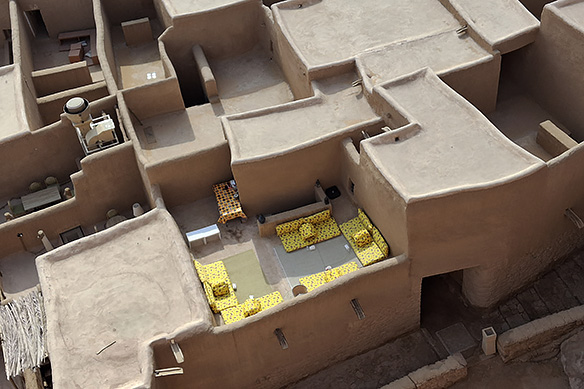
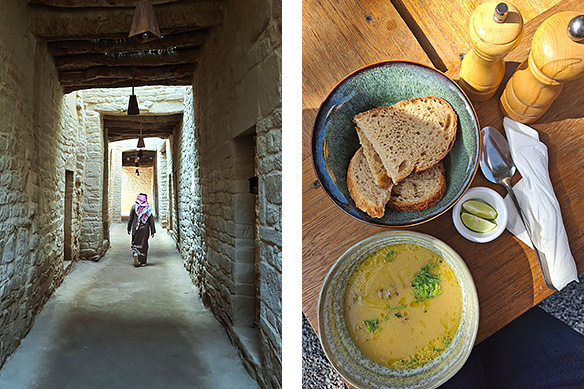
Another time leap. This time, one thousand years. The Old Town of AlUla, dated 12th Century AD, is topped with a 45-metre-high 10th Century AD fort from which a crier used to announce lost-and-found items. Stories such as this and countless others abound in the 900 tightly packed interconnected mud-brick houses which were occupied right till the 1980s.
Medieval AlUla straddled the frankincense trade and Damascus to Mecca pilgrimage route, resulting in a melting pot of cultures and people. Just like today, in its newly restored avatar filled with high-end eateries and boutique shops.
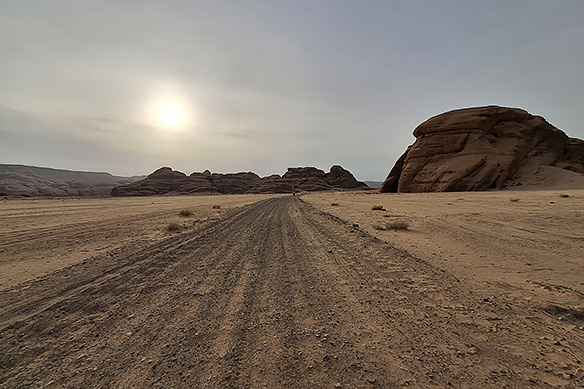
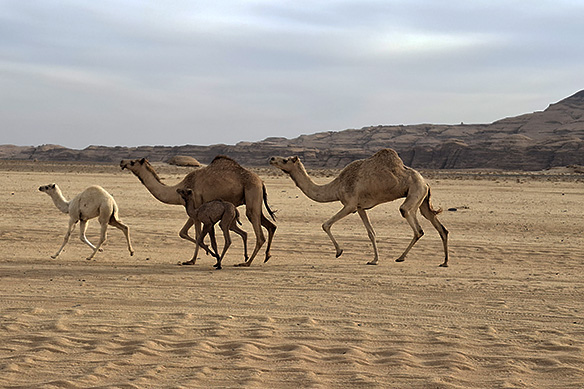
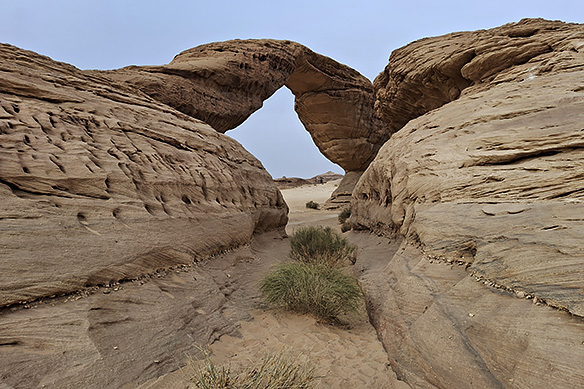
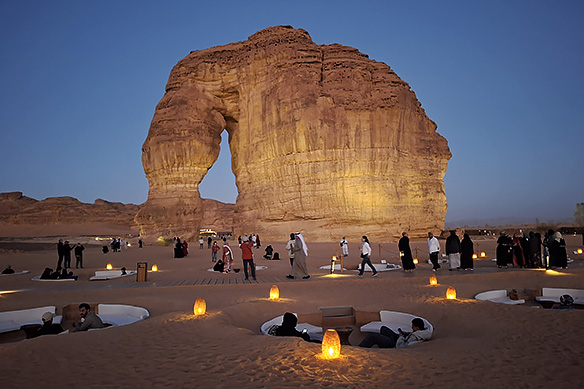
Nowhere is the Saudi Arabian Desert at its most dramatic than around AlUla. Weathered over millions of years, rocky sandstone outcrops rise over dunes, gravel, and rivers of sand, punctuated with prancing camels. Many of these fantastically shaped monoliths stand in remote splendour such as the Rainbow Rock, also known as The Arch. Others like the Elephant Rock have been turned into tourist hotshots.
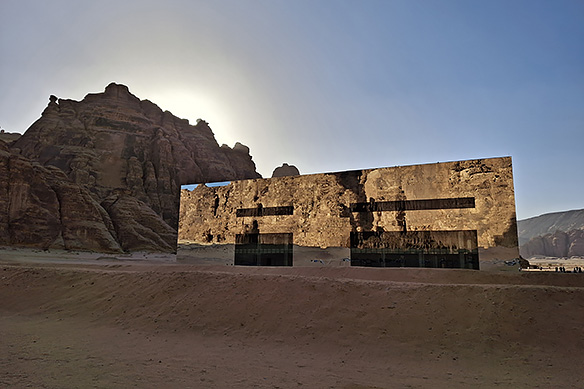
Guess what happens when 9,740 mirrored panels are placed in this Arabian Desert? Maraya Concert Hall happens. Designed by Milan-based Giò Forma, the world’s largest mirrored building built at a cost of USD120 million needs to be seen to be believed.
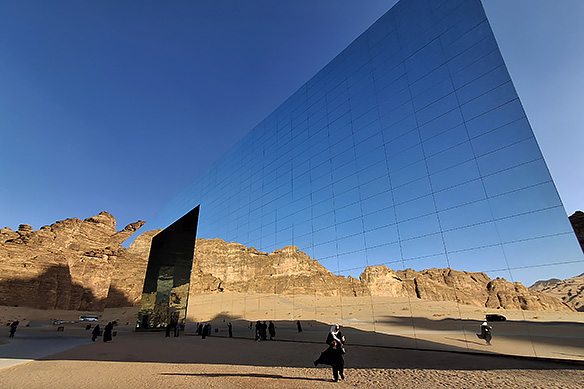
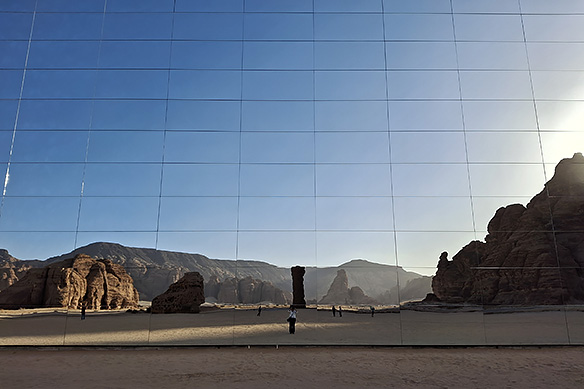
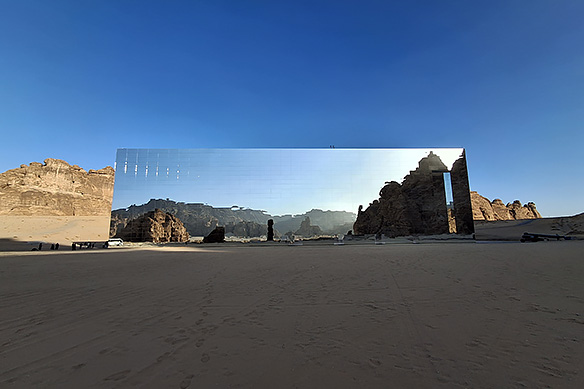
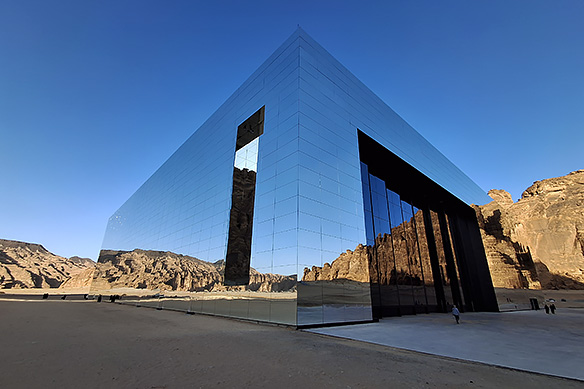
Mirror in Arabic is ‘Maraya.’ The aesthetic brief given to the designers was they combine Saudi Arabia’s rich history and surreal landscapes with modern built-up heritage. The result was a cube in AlUla with 360-degree reflections of the Ashar Valley’s canyons, and the desert as the eternal mirage.
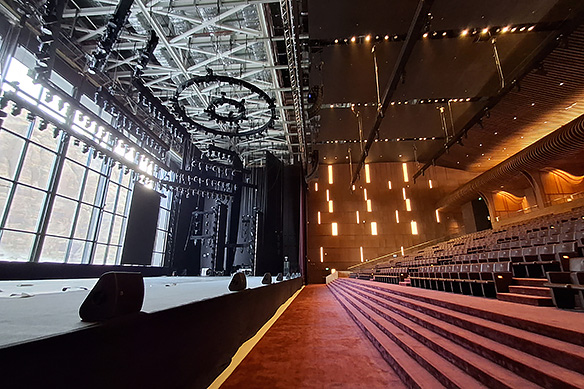
Inside, Maraya Concert Hall’s state-of-the-art 500-seat auditorium has played host to the likes of Andrea Bocelli, Alicia Keys and John Legend, as well as local and regional stars. The massive glass wall behind the stage can collapse if needed to provide an in-and-outdoor experience.
This is the Saudi Arabia of the future.
– – –
Hope you enjoyed travelling with me through the country’s rich historical and visual spectacle. Next week’s post is on something more mundane—camels at the world’s largest camel market?
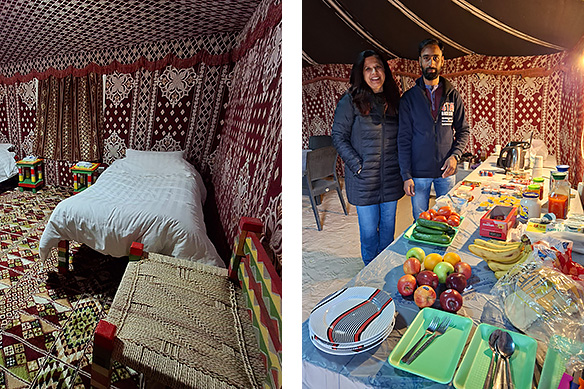
Left: My ensuite tent at the Arch Mountain Camp; Right: With Shahadat, from Bangladesh, who singlehandedly ran the camp and his incredible breakfast-spread in the middle of the Arabian Desert.
Travel tips:
- Staying in Ha’il: I stayed at the Holiday Villa.
- Staying in AlUla: I stayed in an ensuite tent in Arch Mountain Camp. It was a little far from AlUla, but in a very scenic location bang in the middle of the desert.
- On the road: ABCT-KSA—Iqbal Rahim, their driver was incredibly professional and helpful.
- Uber is readily available throughout Saudi Arabia.
Useful links:
[Please note there are NO affiliate links or contacts in this post, or in any of my posts. They are provided only to help with your plans or for you to get extra information. Neither is any of the content in this post or any other post sponsored. The services mentioned in this post are what I used and I am simply sharing them with you.]
 rama toshi arya's blog
You must be logged in to post a comment.