
Tucked away in the remote wind-swept folds of southern Kazakhstan are the ruins of a string of medieval Silk Road cities. A thousand years ago, these crumbling remains with their grand Sufi shrines were flourishing centres of trade, attracting merchants from far and wide; their glories held in awe across the golden steppes.
Welcome to Kazakhstan’s Silk Road heritage and its evocative treasures: The lost cities of Otrar and Sauran, and the cities of Turkestan, Taraz, and Shymkent which resolutely stood their ground.
The Silk Road, parts of which are UNESCO World Heritage Sites, was a trade route that operated from 114 BC to 1450 AD. Named after the primary product traded, the route comprised of a network of trails which cut across Central Asia, connecting the Far East with the Mediterranean. During its 1,600 years of existence, Chinese silk, along with spices, porcelain, and tea from the East were exchanged for horses, honey, and wine from the West.
It was a harsh terrain. Relentless. Fortified cities sprung up throughout the 6400-kilometre-long stretch to counter the bandits and uncertainty. Inside them, the traded goods changed hands, many times over, before reaching their destinations.
These cities were not just centres of trade, but also hubs of cultural exchange. A melting pot of ideas, philosophies, language, and faith. It is through the gatherings within their walls that Buddhism travelled from India to make a permanent home for itself in the Far East and Islamic science and knowledge fed into the western Renaissance.
Come along with me as I take you on a visual tour of this less visited, medieval side of Kazakhstan. On a journey back into time. 🙂
1. Mausoleum of Khoja Ahmed Yasawi, the jewel in Medieval Kazakhstan’s crown

Mausoleum of the 12th Century Sufi saint Khoja Ahmed Yasawi is Tamerlane’s labour of love and the prototype for Timurid architecture.
![The completed rear entrance [left] and incomplete front entrance [right] of the mausoleum.](https://ramaarya.blog/wp-content/uploads/2025/04/turkestan-khoja-ahmed-yasawi-2.jpg)
The completed rear entrance [left] and incomplete front entrance [right] of the mausoleum.
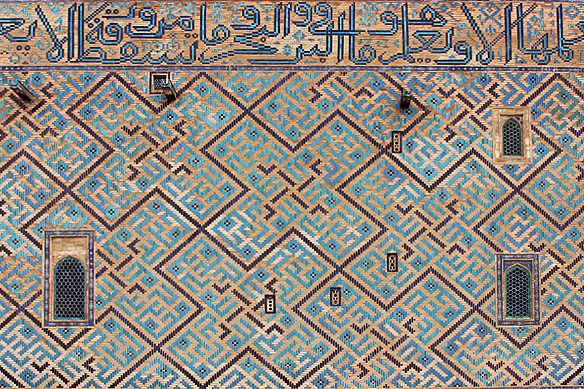
Those are not geometric patterns, but the word ‘Allah’ repeated across the outer wall. A Quranic verse trims the top.
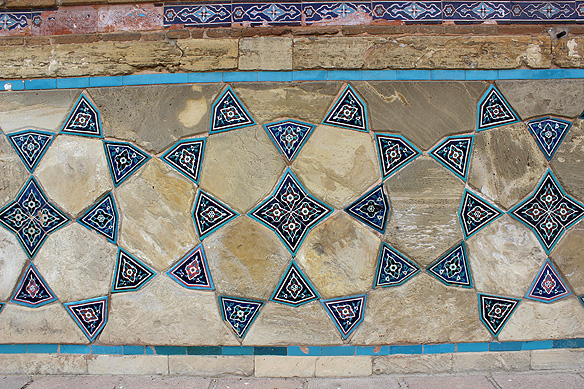
Detail, outer wall.
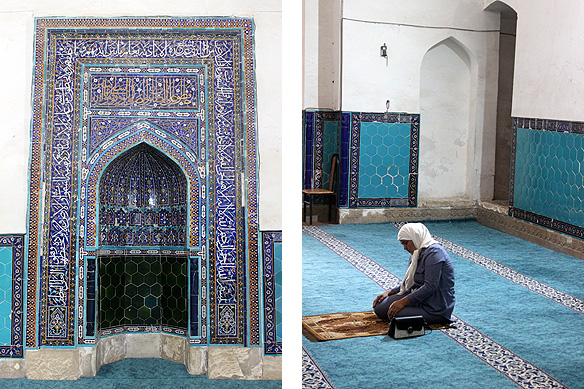
Tamerlane’s mosque inside the mausoleum is decorated with exquisite Persian tile-work.
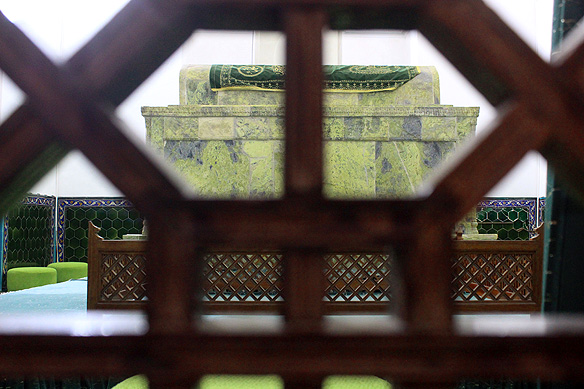
Tombstone of the Sufi saint Khoja Ahmed Yasawi inside the mausoleum.
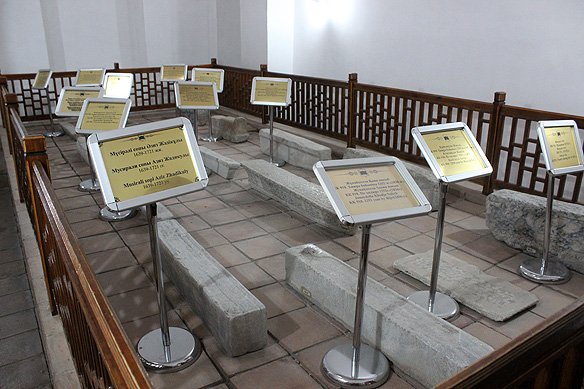
Gravestones of Kazakh Khans in the palace section of the mausoleum. From the 15th to 18th Century the Kazakh Khans used the mausoleum as their residence.
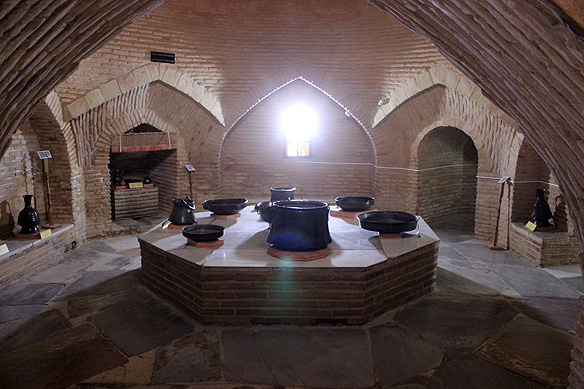
Museum in the Turkestan archaeological site.
The colossal, albeit incomplete, UNESCO-listed mausoleum of 12th Century Turkic poet and Sufi saint Khoja Ahmed Yasawi is Medieval Kazakhstan’s most spectacular treasure. Timurid ruler Tamerlane [also known as Temur or Timur] had it personally built over a smaller 12th Century structure. Construction, however, came to an abrupt halt after his death in 1405 and was never resumed.
Prototype to the wonders of Samarkand, the 35-roomed fired-brick mausoleum which doubled up as a khanqah, and later as the Kazakh Khans’ palace [15th to 18th Century] stands in the Turkestan archaeological site. Blue glazed tiles, the Timurid trademark, embellish its outer and inner walls, painstaking created by the finest Persian craftsmen. Alabaster muqarnas crowd inside the mosque whilst Quranic verses encircle the towering 38.7-metre-high dome above, the largest in Central Asia.
Travel tip: Visit the 12th Century Hilvet Semi-underground Mosque [where Khoja Ahmed Yasawi preached] and the cell [where he wrote in isolation].
2. Arystan Bab, the 12th Century Sufi mystic who had lived for 400 years
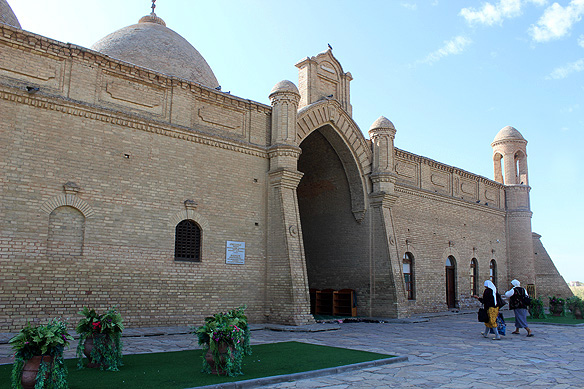
Arystan Bab’s mausoleum attracts pilgrims from across the country.
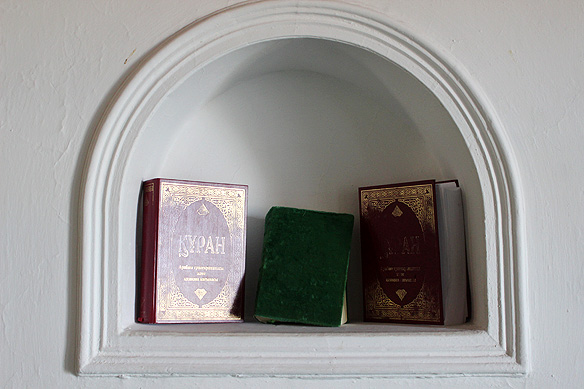
Copies of the Quran translated into the Kazakh language.
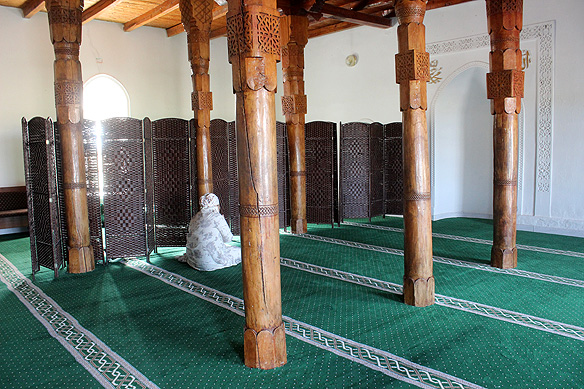
Mosque inside Arystan Bab’s mausoleum.
![Tombstones of Arystan Bab [behind the screen] and three of his students.](https://ramaarya.blog/wp-content/uploads/2025/04/arystan-bab-mausoleum-4.jpg)
Tombstones of Arystan Bab [behind the screen] and three of his students.
The second is more fantastical. It states Arystan Bab was a companion of the Prophet Muhammad. One day as they all sat seated, eating dates in the 7th Century, one of the fruits fell to the ground. At that instant the Prophet had a revelation: “This date is for the Muslim Ahmed, who will be born 400 years later than You.” Muhammad asked his companions who would like to volunteer for this task to which Arystan Bab replied “If you beg Allah to give me 400 years of life, then I will pass on this date.”
Travel tip: The brackish water from the well in the mausoleum complex is said to have healing properties.
3. The lost city of Otrar that stood up to Genghis Khan
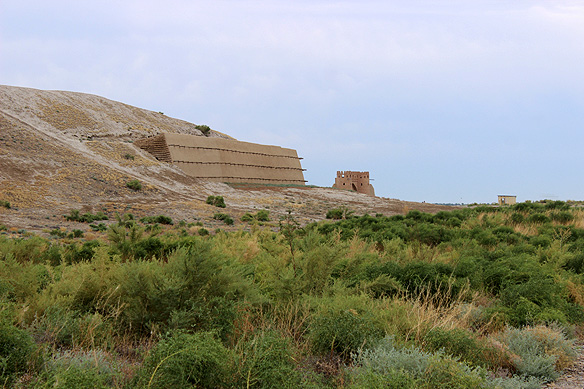
The lost city of Otrar lies at a distance of 50 kilometres from Turkestan.
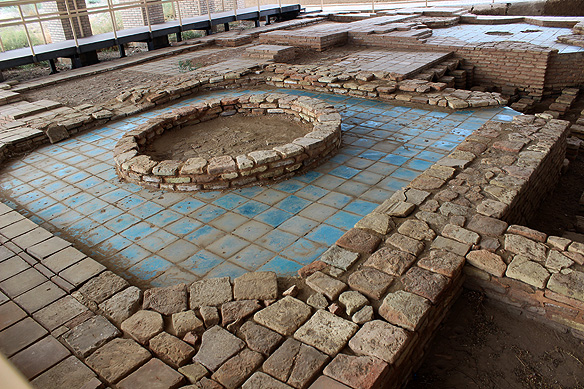
Bathhouses in Otrar, dated between the 13th and 15th Centuries, comprised a dressing room, restroom, mosque, treatment rooms, and vapour rooms around a large central hall.

Dwellings flanked the main road which cut through the city.
![Zharakty [Armoured] Gate, one of the three city gates, was a complex fortified structure built outside the fortress walls.](https://ramaarya.blog/wp-content/uploads/2025/04/otrar-city-3.jpg)
The restored Zharakty [Armoured] Gate, one of the three city gates, was a complex fortified structure built outside the fortress walls.
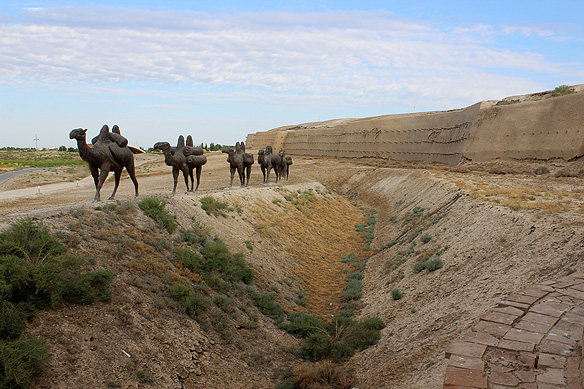
Perched on an 18-metres-high hill, the city was surrounded by a fortified wall and deep moat.
Otrar, also spelt Otyrar, first finds mention in historical records in the 9th Century. It was an important Silk Road trading post and centre for ceramic production, minting its own coins. The city’s residents lived in clustered brick homes, bathed in plush public bathhouses with warm floors, and crafted beautiful pottery in their workshops. Arystan Bab, mentor of Medieval Kazakhstan’s most famous Sufi saint Khoja Ahmed Yasawi, preached here.
Such was Otrar’s economic and political clout, that it dared to defy Genghis Khan not once, but twice, inviting the latter’s wrath. In 1219, Genghis Khan attacked Otrar and massacred both its ruler and populace. But Otrar bounced back. Stronger and richer for another four hundred years, even after the end of the Silk Road trade, until it was attacked again and its irrigation system destroyed. This time the antagonists were Genghis Khan’s descendants, the Dzungar Khans. And this time it was the end.
4. The lost city of Sauran: Kazakhstan’s largest Silk Road trading post
![Northern Gate [restored], Sauran.](https://ramaarya.blog/wp-content/uploads/2025/04/sauran-city-1.jpg)
Northern Gate [restored], Sauran.
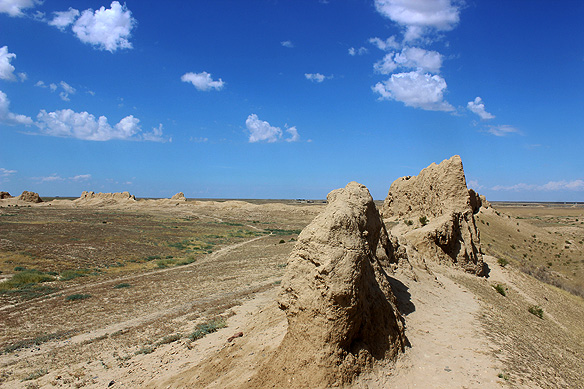
These fortified walls once encircled Medieval Kazakhstan’s largest city. Sauran’s clay, believed to be the finest in the region, was also used for building the Khoja Ahmed Yasawi mausoleum.
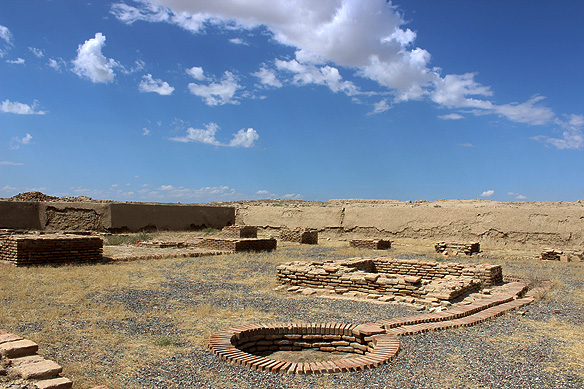
In 2011, Sauran’s northern gate, central street, madrasah, mosque, and khanaqah were restored.
Surrounded by desert, Sauran was fed by the kyaris water system, a web of subterranean clay pipes which carried water from the Karatau Mountains. It was one of the few cities to escape Mongol onslaught—its survival more to do with political savviness than military prowess. Perhaps taking a que from Otrar’s brashness and its subsequent razing, Sauran decided to adapt to regional political dynamics instead. Which worked to its advantage. Not only did Genghis Khan and his men bypass it on their marauding sprees, but the Mongol White Horde made it their capital, and Tamerlane turned it into a military fortress.
But it was not enough. When the overland Silk Road was replaced with maritime routes and the water sources in the mountains dried up, Sauran fell into oblivion and dust. The city was eventually abandoned in 1515. All that remains of the lost city are its walls, and ruins of homes, a central mosque, madrasah, and wells.
Travel tip: Combine Sauran with a visit to the Arpauzen Bronze Age petroglyphs.
5. Ancient Taraz with 40,000 artifacts and 3,000 monuments
![Both Aisha Bibi's Mausoleum and her maid Babaji Khatun's Mausoleum [to its right] date to 11th-12th Century.](https://ramaarya.blog/wp-content/uploads/2025/04/taraz-aisha-bibi-mausoleum-1.jpg)
Both Aisha Bibi’s Mausoleum and her maid Babaji Khatun’s Mausoleum [to its right] date to 11th-12th Century.
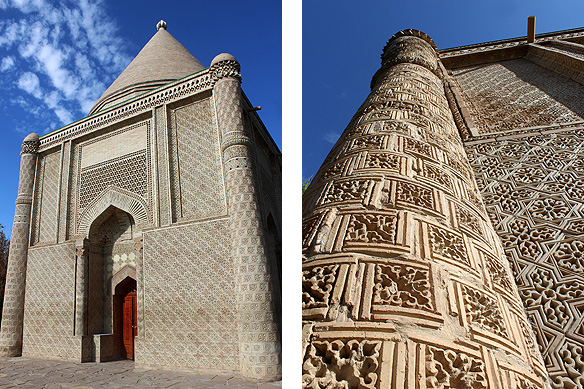
Terracotta tiles with over 60 different design motifs cover the entire facade of Aisha Bibi’s Mausoleum giving it an ethereal lace-like quality.

Kazakhstan’s first mosque built by the Karakhanids in the 10th Century. Some scholars, however, believe it was originally a 7th Century Nestorian church which they converted to a mosque.

Ancient Taraz that lay under Modern Taraz’s centuries-old market.
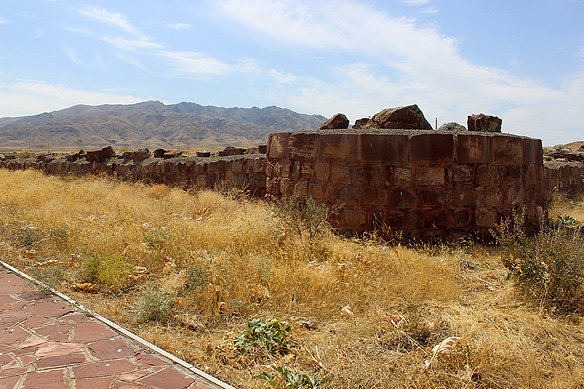
According to historians, Akyrtas Palace’s 70 rooms, 15 colonnaded galleries, entrance gates, and central open area mark the site of the Silk Road city of Kasribas.
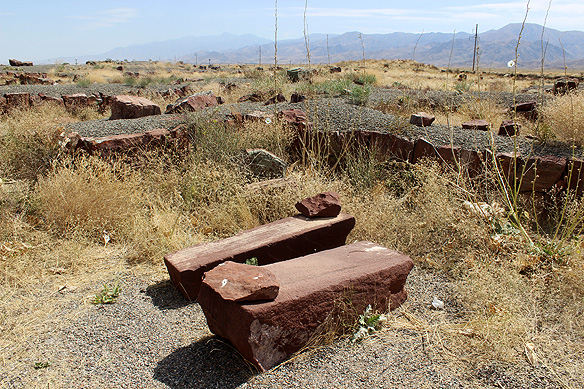
The incomplete Akyrtas Palace is shrouded in mystery with many questions unanswered.
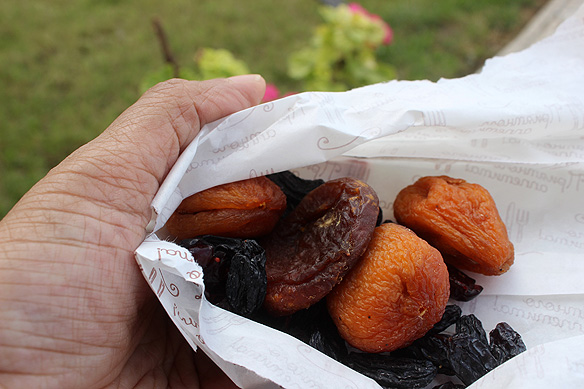
Picnic time at Akyrtas Palace.
When archaeologists stripped apart Modern Taraz’s centuries-old market in 2011, they were searching for a two-millennia-old Silk Road city by the same name buried underneath. They were not disappointed. 40,000 artifacts dated from the 6th to 12th Centuries, along with religious and secular buildings flanking paved streets and a network of clay water pipes were soon revealed. Today, the ancient city’s ruins form part of Kazakhstan’s largest archaeological park.
Named after the Talas River, and mispronounced to Taraz by the Arabs, the city reached great heights in the 10th-12th Century as the capital of the Karakhanids, the first to embrace Islam in Kazakhstan. A hundred years later, Taraz was set ablaze by the Mongols. Over the subsequent centuries it was resettled by various people and empires, none of whom knew what treasures lay beneath their feet. That is, till 2011.
Taraz and its surrounds have over 3,000 monuments of which two are especially impressive. One is the lace-like 11th-12th Century Aisha Bibi Mausoleum with its story of love and loyalty. The second is the 8th-12th Century ruins of the incomplete Akyrtas Palace made of red sandstone blocks weighing up to several tons each.
6. Shymkent, the Silk Road caravanserai that grew into Modern Kazakhstan’s third largest metropolis
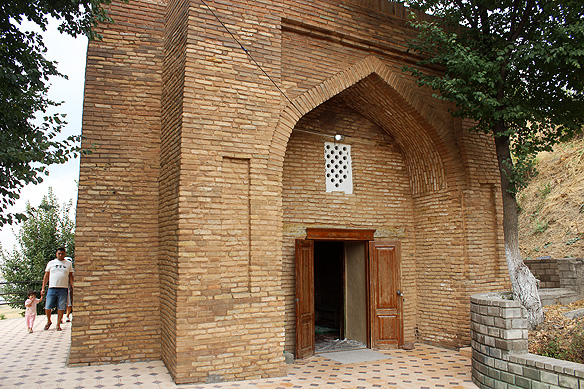
Mausoleum of Ibrahim Ata, Sufi saint Khoja Ahmed Yasawi’s father, in Sayram.

11th Century Shymkent Citadel, birthplace of the city, served as a caravanserai and military base to protect the older nearby Sayram during the Silk Road period.

Ceramic jug and plate unearthed at the citadel, 12th Century, Shymkent Citadel Museum.
Though Shymkent has surged ahead in recent years as an industrial and economic hub, it is also indelibly tied up with its Silk Road past. One is never far from a spattering of Sufi tombs, while the [largely restored] Citadel-cum-Museum lies perched atop a hill. The latter a reminder of the role the city played from the 11th Century onward in the form of a bustling caravanserai on the medieval trans-continental trade route. Though captured by Genghis Khan in 1219, followed by Tamerlane and a bevy of foreign rulers, Shymkent kept evolving. Today, it is Kazakhstan’s third largest city.
In addition to the citadel, the city’s historical treasures include the mausoleums of Sufi saint Khoja Ahmed Yasawi’s parents—Ibrahim Ata and Karashash-Ana, and of Abdel-Aziz Bab, an 8th Century standard-bearer during the Arab Conquest of Central Asia. All three stand in Sayram, a 3,000-year-old continuously inhabited settlement on the outskirts of the city.
Travel tips:
- Getting there: I flew in and out of Shymkent with Air Astana.
- Staying there: Making Shymkent my base, I stayed in an apartment at the Tauke Khan Plaza Hotel in the city centre.
- My favourite cafe: Madlen on Tauke Khan Avenue, next to the hotel.
- How many days: I stayed for 5 days/ 4 nights.
- I explored Kazakhstan’s Silk Road cities through private day tours from Shymkent with Islam Kalanov, SilkTrip, WhatsApp No. +7 707 439 0099.
– – –
Thank you for accompanying me on my journey through Kazakhstan. ❤
I hope you found this travel guide useful. In case you missed any of my earlier posts on Kazakhstan, here they are:
- Travel guide: The six untold treasures of Kazakhstan’s Silk Road heritage [this post]
- 36 hours in Almaty
- Astana aka Nur-Sultan, the brand new capital for an ancient heritage
- Kazakhstan’s ‘Golden Man,’ stories told and untold
- Kazakhstan’s natural wonders where lakes, canyons, and a dune meet
- Travel shorts: Kazakhstan’s bronze age gallery with 5,000 petroglyphs
- Secrets of USSR’s Polygon nuclear test site
[Note: This blog post is part of a series from my 14-day solo independent travels across Kazakhstan in August–September, 2024.]
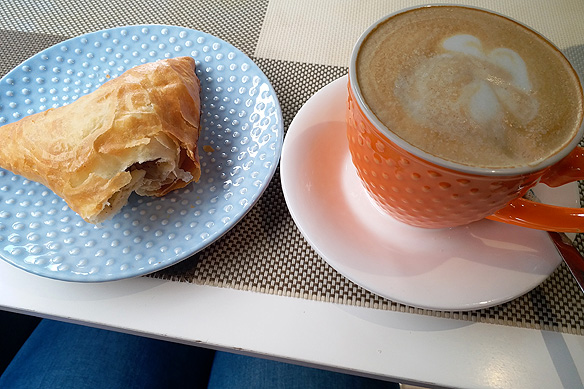
Shymkent has the best samosas I have ever had! One of the most visible remnants of the Silk Road trade, the humble samosa can be found across the route.


Absolutely stunning post! Your journey through Kazakhstan’s Silk Road heritage is both informative and captivating. The rich history, especially the stories of Otrar, Sauran, and the majestic mausoleums, truly brings the past to life. Thank you for uncovering these hidden gems!
LikeLiked by 2 people
Thank you for your kind words! The southern Silk Road heritage of Kazakhstan is a world in itself. Very different from Almaty and Astana, and I believe are necessary to fully understand the country. 🙂
LikeLiked by 1 person
You’re so right—there’s a whole other side to Kazakhstan that often goes unnoticed, and your post does such a great job of highlighting that. It’s inspired me to look beyond the cities and really explore the country’s deeper cultural roots. Looking forward to more of your insights!
LikeLiked by 1 person
I really don’t know why I stupidly thought that the Silk Road and these types of architecture would only be found more south in Uzbekistan. As a lover of this region I will definitely have to go to Kazakhstan now!!! Great to see this country also has its own Silk Road history!!!
LikeLiked by 2 people
I too was taken by surprise. By the grandeur of Khoja Ahmed Yasawi’s mausoleum and the sheer beauty of Aisha Bibi’s tomb. Whilst Uzbekistan’s Silk Road treasures are fabulously packaged, Kazakhstan’s are more raw. And perhaps because of that, more poignant in a ‘forgotten world’ context.
LikeLiked by 1 person
More excellent pictures and information about many lesser known treasures. Its ironic that one of the greatest killers of history – Tamerlane – was responsible for the construction of so many magnificent mosques, minarets and mausoleums and that the Soviets – who slaughtered and imprisoned millions of their own citizens – produced so many brilliant archaeologists (and educated their successors) who discovered and restored so much in the Stans and across Russia. No answer as to why they were so brutal to people in both cases but gratitude and thanks to the builders for their work particularly as many of them lost their lives in doing it.
LikeLiked by 1 person
That was very insightful, Vic! It is indeed an irony. The way manslaughter and piety went hand in hand with one, and with another it was combined with razer sharp intelligence. And if it wasn’t for these two, we may not be scrambling for Silk Road monuments in the 21st Century. 🙂
LikeLike
Thanks Rama. Its been said of the Soviets (communists) that they care greatly for ‘the people’ in the abstract but for no one of them in particular. Maybe its the same with Tamerlane with regards to the souls of the faithful in general but not their particular bodies … who knows?
LikeLiked by 1 person
Yup, who knows what went on in their minds and how they justified their own actions to themselves. Or maybe they were so convinced they were right, they did not feel the need to question themselves. 🙂
LikeLike
Spot on! And the world has its share of narcissist leaders today and followers who don’t question them. But they don’t build minarets like they used to! (SAD) as one of them might tweet!
LikeLiked by 1 person
I echo what Anna said. When it comes to great Silk Road cities, I always think of Uzbekistan, and to some extent Turkmenistan. But with Kazakhstan it’s the images of the snow-capped mountains of Almaty, and the steppes, and the ultramodern capital of Astana that often come to mind, not its Timurid heritage buildings.
LikeLiked by 2 people
I first heard of Turkestan in the Hindu Kush Mountains. In Afghanistan. The name stuck and when I was putting together my Kazakhstan itinerary I read up more about it. Needless to say it got added to my bucket list. 🙂
LikeLiked by 1 person
Now I wish we gave a few more days to Kazakhstan on our Central Asia trip, there seems to be more to see than we thought. I guess we’ll have to plan a more extensive trip next time. Maggie
LikeLiked by 2 people
Am glad this post has inspired you to plan a more extensive trip to Kazakhstan. 🙂
LikeLiked by 1 person
Rich in beauty as well as history, the place still oozes pleasant, old world charm. Reading about it here makes me want to go see it! thanks much for this lovely virtual tour 🙂 great info and shots!
LikeLiked by 2 people
Am truly happy you liked the post. Kazakhstan is an incredible country with many different sides to it!
LikeLiked by 1 person
Pingback: George & Amal Clooney at King Charles' Reception – Archyde
Pingback: Thursday Thoughts: Kazakhstan’s Cultural Tapestry Awaits Your Soul 🏔️ – Voyage JTravels