Of all the cities that has survived the annals of time, Balkh, the capital of ancient Bactria [6th Century BC to 6th Century AD] in northern Afghanistan, is perhaps the most evocative.
Volumes have been written on its wars when it was the capital of Bactria, and thereafter, a part of post-Bactrian empires. Art and literature have had a constant muse in its colourful personalities, Alexander the Great and Roxanna, and their marriage which paved the course of history. One of the oldest religions in the world, Zoroastrianism, was founded by one of Balkh’s very own citizens, Zoroaster.
But its greatest claim to fame, and subsequently its greatest legacy, came from its simultaneous role as Silk Road’s fabled city. For 1,600 years, from 130 BC – 1453 AD, Balkh was not just a confluence of commodities, but also of religions, ideas, and knowledge.
Indigenous Zoroastrianism and imported Buddhism, both flourished, dotting its landscape with fire temples and stupas. When Islam replaced the two religions in the 9th Century, it transformed Balkh into a centre of learning and extended the city boundaries to a vast expanse encircled by a 10-kilometre-long wall. Inside this wall were scores of madrasas, mosques, caravanserais, and Sufi shrines, and very many wise men and women. The poets Rumi, Firdausi and Rabia were all from Balkh, and so was the philosopher-physician Ibn Sina or Avicenna as the West knows him.
Even in its ruined state, after being razed to the ground by the Mongol conqueror Genghis Khan, Balkh was described by the 13th Century explorer Marco Polo as ‘a noble city and great.’
Travelling through Balkh offers the visitor a unique opportunity to time-travel through two-and-a-half millennia, into a world of poetry in word and stone.
This travel guide aims to unravel the magic of its ruins, and shed a ray of light on why the Arabs called Balkh the ‘mother of all cities’ when they arrived on its doorstep in the 7th Century. I hope you find it useful, and it inspires you to explore Balkh for yourself, in person, someday soon. ❤
Table of Contents
[This is a long blog post. If you would like to go straight to any particular section, please click on the links below.]
- Part 1. Exploring Balkh
- Afghanistan’s Oldest Mosque: the 8th Century Noh Gumbad Mosque
- Childhood Home of the Sufi Poet Jalal ad-Din Muhammad Rumi
- Balkh’s Old Citadel and Watch Tower: Bala Hisar and Ayaran Tower
- In memory of Balkh’s Sufis: Khwaja Abu Nasr Parsa and Rabia Balkhi’s Tombs
- Part 2. Sites around Balkh
- En-route to Samangan
- Afghanistan’s Buddhist Heritage: a 1,500-year-old Stupa and Monastery at Samangan
- A 19th Century Emir’s Summer Palace: Bagh-e Jahan Nama
- Travel tips for exploring Balkh
PART 1. EXPLORING BALKH
AFGHANISTAN’S OLDEST MOSQUE: THE 8TH CENTURY NOH GUMBAD MOSQUE
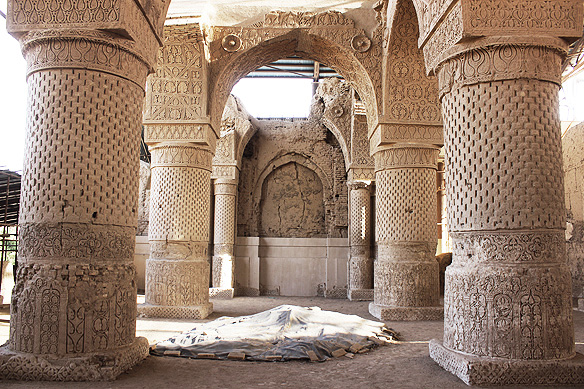
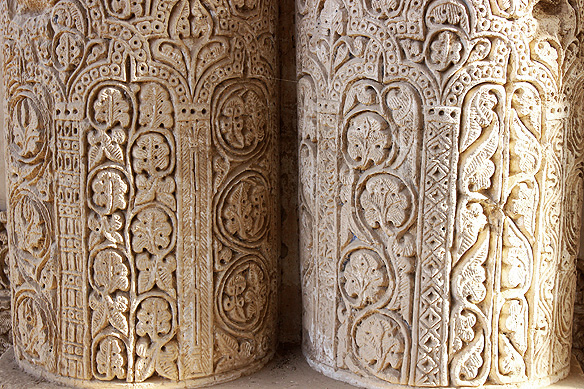
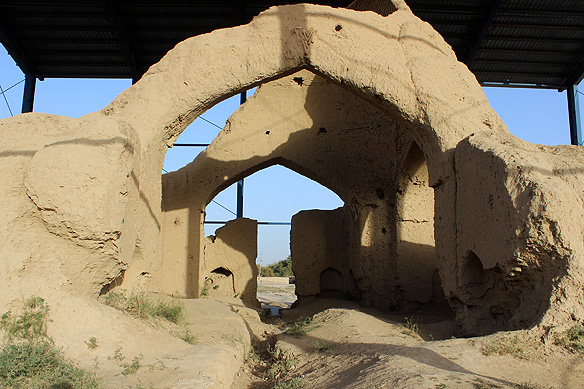
Noh Gumbad Mosque originally had nine domes topping a 20×20 metre square edifice. Two arches and three columns are all that’s left of Afghanistan’s oldest mosque, which is still sheer poetry.
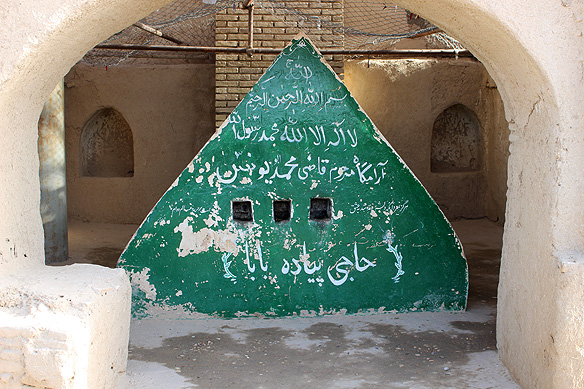
The Tomb of Haji Piyadah, ‘the walking pilgrim’ who walked all the way to Mecca, lies near Noh Gumbad Mosque’s northern wall.
Your first stop on Balkh’s historical circuit will most likely be the Noh Gumbad Mosque. As its Dari [Afghan Persian] name suggests, it originally comprised of nine [noh] domes [gumbad]. These were supported by 15 soaring arches in a perfectly symmetrical 20-metre-wide square; the whole structure encrusted with sparkling lapis lazuli, and painted a wonderful red.
All that remains today of this magnificent masterpiece are two arches and three columns. Yet of such exquisite workmanship that one can only wonder what the entire edifice must have been like when it was built in 794 AD, over the remains of a Buddhist monastery.
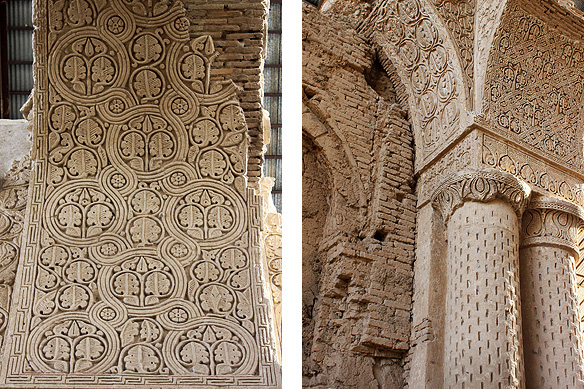
Noh Gumbad Mosque is one of Islamic architecture’s earliest examples, and is believed to be the oldest mosque in Afghanistan. Deep incised stuccoes in swirling vine motifs, in the then prevailing early-Abbasid style, cover every inch of it.
Unfortunately, due to its construction in an area prone to seismic activity, the mosque turned into an early ruin in 819 AD, merely a few decades after it was built, by an earthquake. It is remarkable that what little was left, even still stands!
Locals refer to the mosque complex as Haji Piyadah after the ‘walking pilgrim’ who walked all the way from Afghanistan to Mecca. His pyramidal-shaped tomb, dating back to the 15th Century, lies in the mosque’s northern wall.
The site has been meticulously restored in recent years by the Aga Khan Trust for Culture. It has also been placed, along with Balkh’s other treasures, on the UNESCO World Heritage Sites’ Tentative List in recognition of its unique historical value and amalgamation of Islamic and Irano-Sassanid design.
CHILDHOOD HOME OF THE SUFI POET JALAL AD-DIN MUHAMMAD RUMI
Rumi. Perhaps one of the most famous Sufi Persian poets ever to have lived was born in Balkh in 1207. Commonly known as Molana Jalal ad-Din Muhammad Rumi, Rumi meant ‘from Rum [Rome]’ which is what Anatolia was called back then in reference to its Byzantine Roman Empire days. When Rumi was five, he and his family left Balkh to spend the next two decades moving through Central Asia. He finally settled in Konya, Anatolia [in present-day Turkey] where he was to live till his death in 1273.
Rumi’s Sufi poetry is marked by a deep love for God, and a yearning to merge with the creator. He achieved much success within his lifetime itself and was mourned deeply by people across faiths and creeds when he died.
It is an eerie feeling wandering around the ruins of his childhood home in Balkh, where he took birth and spent the first five years of his life, knowing that 800 years ago Rumi was in these very rooms, under these same arches.
His legacy lives on in the form of Konya’s Order of the Whirling Dervishes founded by his son and followers, and 65,000 verses translated into multiple languages and still recited across the world.
Masnavi-yi Maʿnavi meaning ‘Spiritual Couplets’ is his most famous work. My personal favourite is the Guesthouse. What do you think?
This being human is a guest house.
Every morning a new arrival.
A joy, a depression, a meanness,
some momentary awareness comes
as an unexpected visitor.
Welcome and entertain them all!
Even if they’re a crowd of sorrows,
who violently sweep your house
empty of its furniture,
still, treat each guest honourably.
He may be clearing you out
for some new delight.
The dark thought, the shame, the malice,
meet them at the door laughing,
and invite them in.
Be grateful for whoever comes,
because each has been sent
as a guide from beyond.
~ Rumi
BALKH’S OLD CITADEL AND WATCH TOWER: BALA HISAR AND AYARAN TOWER
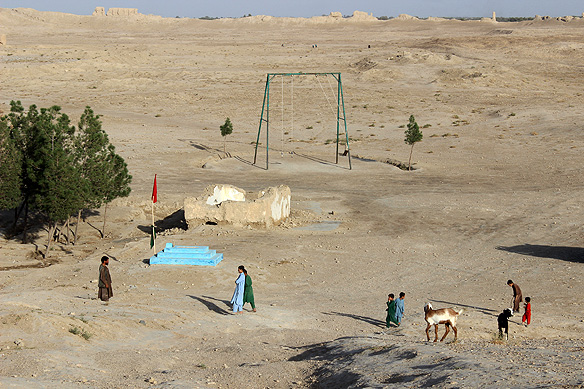
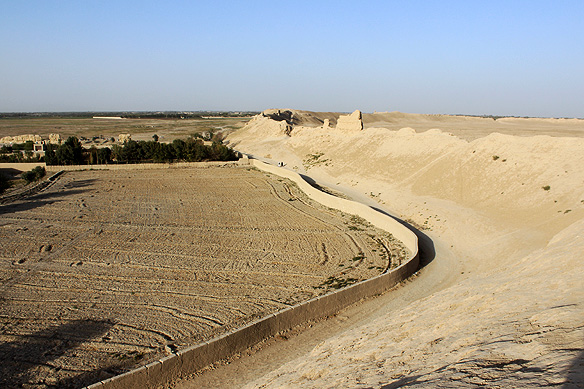
Bala Hisar’s sun-bleached walls encircle Old Balkh, the capital of Bactria.
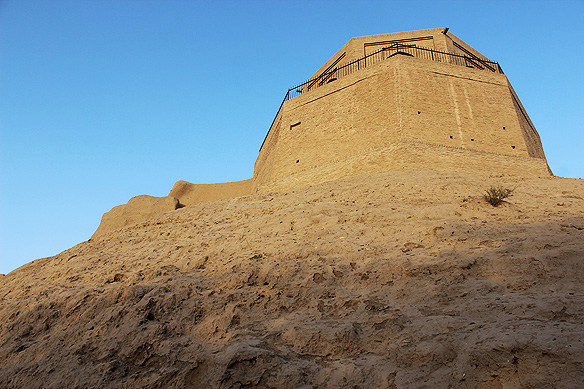

Ayaran Tower, much restored by the Timurids, and again in the 21st Century, sits atop 2,300-year-old Greco-Bactrian/ Kushan-era walls.
Bala Hisar is Balkh’s oldest site, and its history—Balkh’s history.
Sun-bleached, and for the large part deserted, the fortified citadel is a rare remnant of ancient Bactria and its capital city, Balkh. Of a time before the Greeks, Kushans and Abbasid Caliphate. This was where it all started.
Alexander the Great sealed his political alliance with Bactria by marrying Roxana, the Bactrian princess, right here in 327 BC, paving the way for him to move deeper into Asia. Later centuries saw victories by one empire after the other celebrated within its walls, with the Mongols razing it to the ground in the 13th Century, only for it to be resurrected by the Timurids in the late-14th Century.
Nothing much remains now except for the towering walls and restored towers. But when one stands atop the Greco-Bactrian/ Kushan-era 25-metre-high, 100-metre-thick walls straddled by the equally ancient Ayaran Tower, the scale of ancient Balkh hits home. It was no small city, spread over a large circular expanse 1.5 kilometres in diameter, and referred to as the ‘mother of all cities’ by the Arabs who were overawed by its wealth.
IN MEMORY OF BALKH’S SUFIS: KHWAJA ABU NASR PARSA AND RABIA BALKHI’S TOMBS
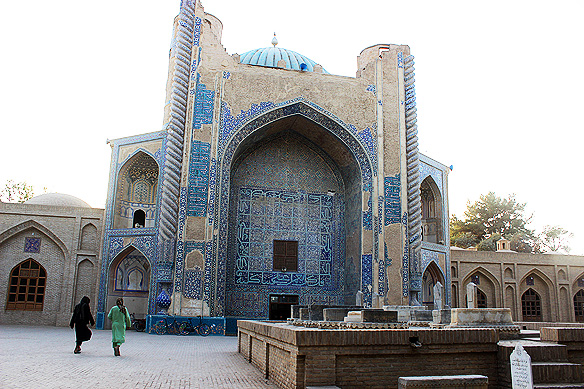
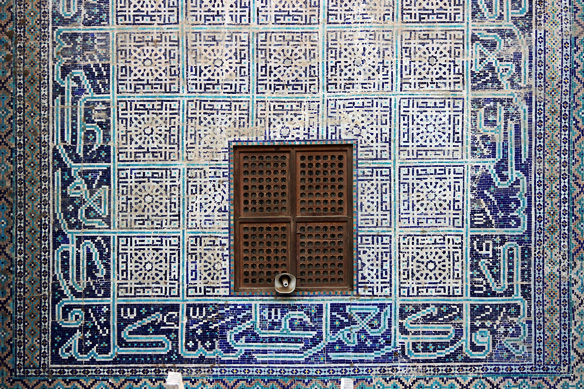
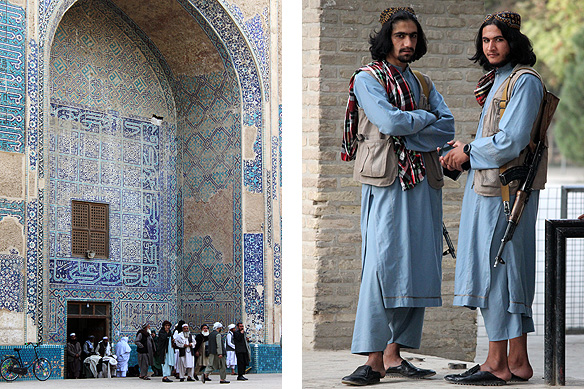
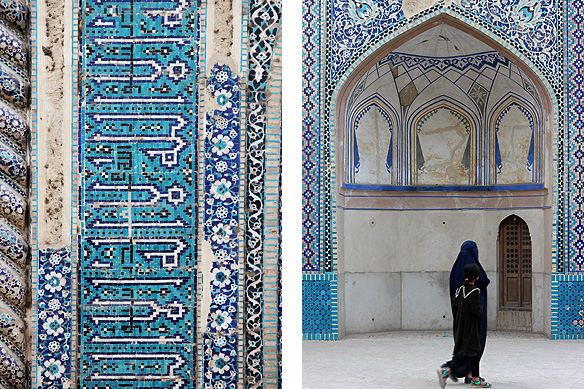
The 15th Century Sufi saint Khwaja Abu Nasr Parsa’s mausoleum.
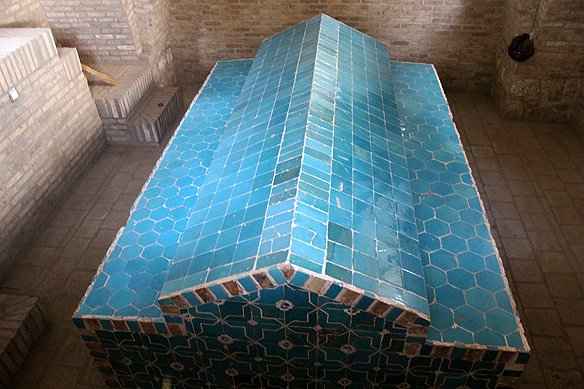
Rabia Balkhi, Afghanistan’s first and most famous Persian poetess, lies buried next to the mausoleum. She lived in Balkh in the 10th Century.
Balkh has been a hub for Sufism, a mystic religious practice in Islam, since the introduction of Islam to the region. Shrines of Sufi saints fill its terrain. None is, however, as grand as the Shrine of Khwaja Abu Nasr Parsa, a mausoleum dedicated to a Sufi saint of the Naqshbandi order.
After Khwaja Abu Nasr Parsa’s death in 1491, the Timurids built a massive mausoleum over his grave, though there is some confusion about whether it was a general or ruler who commissioned it. The subsequent years and recent wars saw the mosque fall into despair. It was recently restored, along with the Noh Gumbad Mosque [see above], by the Aga Khan Trust for Culture.
Part of the Green Mosque Complex, the mausoleum is a stunning leftover of Timurid glory with its ribbed dome, exquisite blue-tiled decoration, and massive Ivan.
Within the complex is the tomb of another Sufi—Rabia Balkhi, Afghanistan’s first Persian poetess. A semi-legendary figure, Rabia lived in the 10th Century in Balkh, and was imprisoned in a hammam because of her love affair with her brother’s Turkish slave, Bektash. Her love poems, which have not lost one bit of their popularity in Afghanistan even after a thousand years, were all dedicated to him.
Oh, the absent and present one where are you
If you are not with me then where are you
My eyes are illuminated by you
My heart is acquainted by you
Come and invite my eyes and soul
Otherwise take a sword and end my life
~ Rabia Balkhi
Whilst imprisoned in the hammam, Rabia slit her wrists and bled to death. Before dying, she wrote one final love poem for Bektash on its walls in her blood:
I wish my body was aware of my heart
I wish my heart was aware of my body
I wish I could escape from you in peace
Where can I go regretfully
~ Rabia Balkhi
PART 2. SITES AROUND BALKH
EN-ROUTE TO SAMANGAN
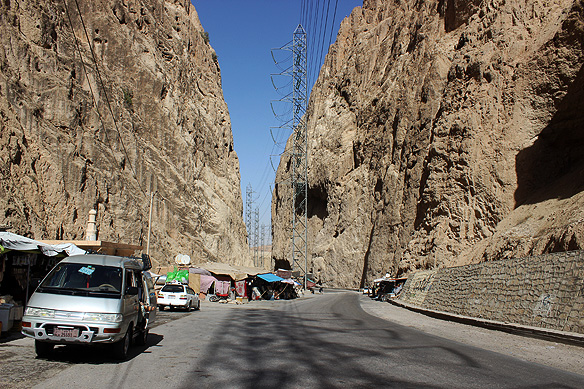
Enroute to Buddhist Samangan.
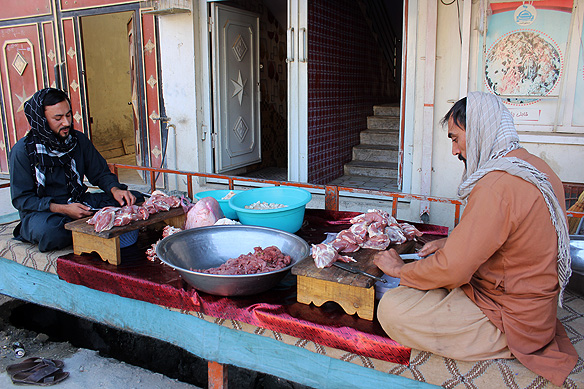
Lunch being cooked …
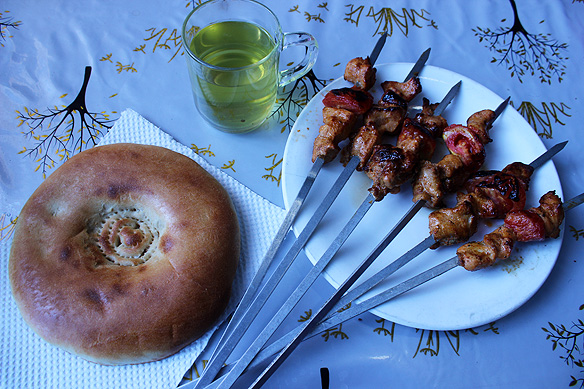
… and lunch being served.
AFGHANISTAN’S BUDDHIST HERITAGE: A 1,500-YEAR-OLD STUPA AND MONASTERY AT SAMANGAN
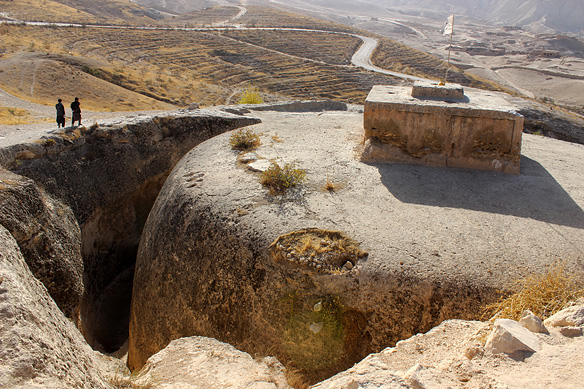
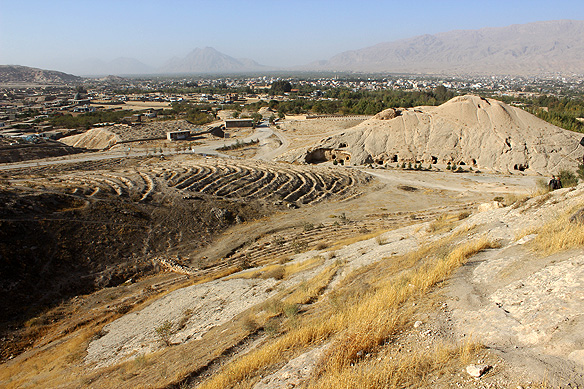
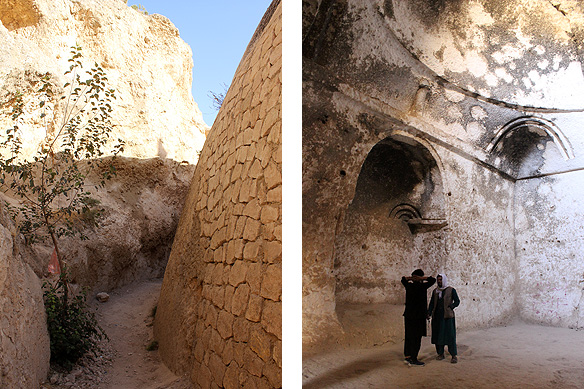
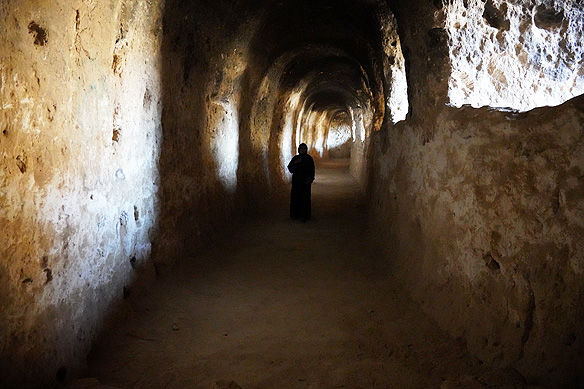
Samangan’s 1,500-year-old stupa and monastery recall a time when Buddhism was Afghanistan’s primary religion.
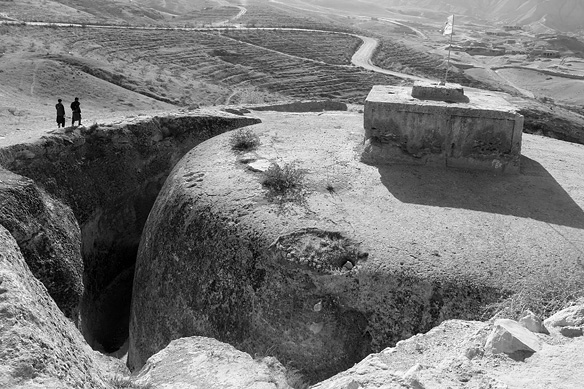
One of ancient Balkh’s most magnificent sites is the rock-cut Buddhist stupa and monastery complex, two kilometres from Aibak in Balkh’s neighbouring province, Samangan.
Although most researchers date the stupa to the 5th Century AD, some predate it to the 3rd-4th Centuries AD during the Kushano-Sasanian Kingdom.
Carved completely out of the limestone bedrock, the polished dome-shaped stupa, measuring a massive 8 metres in height and 28 metres wide, is unusual for multiple reasons.
For starters, it is cut deep into the bedrock [like the Lalibela churches in Ethiopia] and is encircled by a 2-metre-wide passageway at its base for pilgrims to circumambulate. Secondly, whereas relic chambers usually tend to be inside a stupa, in this case it sat above the stupa in the square harmika. Lastly, the harmika would originally have been topped with a chhatri. Samangan’s stupa is topped with a black and white Taliban flag.
Down the hill, a few hundred metres away, are a string of five chambers which the monks used for chanting and meditation. One of the chambers still has lotus pattern carvings on its ceiling.
When travelling through Afghanistan, or reading up about Samangan, you will most likely hear the stupa referred to as Takht-e Rostam [Throne of Rostam] which can be a bit confusing. You may well ask, what is the connection between an ancient Buddhist site and a Persian legendary hero. Well, when you are in Afghanistan, at the crossroads of multiple cultures, such medleys are inevitable.
Rostam was one of the heroes of Firdausi’s Persian epic, the Shahnama [Book of Kings] written in 1010 AD in Ghazni. According to it, Rostam married Tahmina, the daughter of the King of Samangan. Local legend does the rest, by stating Rostam built the stupa [his throne] in half a day and celebrated his marriage by drinking wine from the basin on top. 🙂
A 19TH CENTURY EMIR’S SUMMER PALACE: BAGH-E JAHAN NAMA
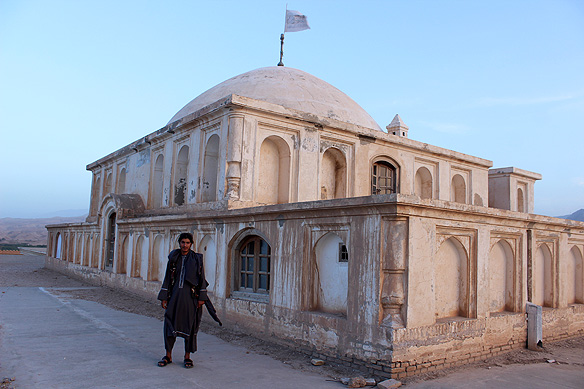
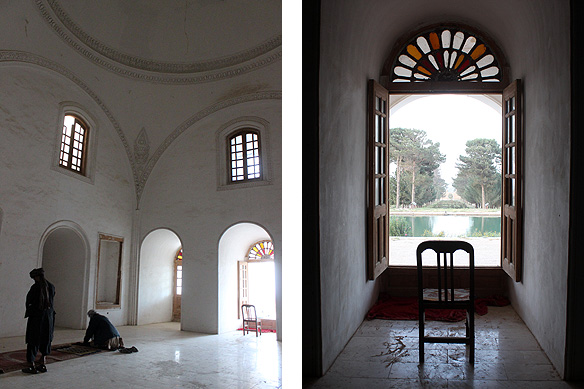
Bagh-e Jahan Nama is a fascinating blend of colonial architecture, and Islamic domes and arches.
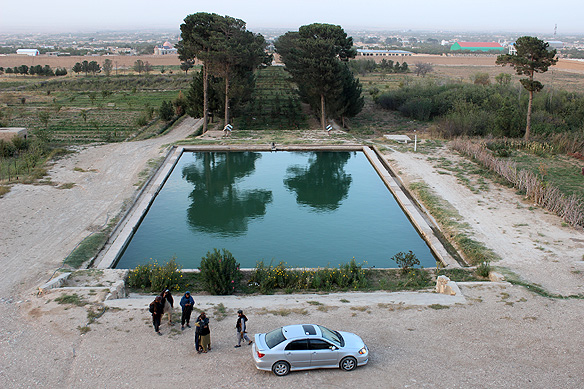
The palace swimming pool attracts locals over the weekend who come over for a picnic. On other days, the Taliban soldiers use it as a meeting place.
The ‘newest’ site on Balkh’s historical circuit is the Summer Palace Bagh-e Jahan Nama, built by Abdur Rahman Khan, a 19th Century Emir.
Abdur Rahman Khan ruled Afghanistan from 1880 till his death in 1901. His 21-year rule earned him the nickname ‘The Iron Emir’ for holding a country together rattled by rebellions and ensuring neither the British nor Russians occupied Afghanistan either. He was also responsible for drawing out Afghanistan’s border with Russia, as well as Pakistan.
Often known as the King’s Hunting Lodge, the palace, encircled by a turreted fortified wall, is a run-down edifice nowadays because of decades of neglect and wars. Despite this, it is both beautiful and poignant.
Fronted by a swimming pool, the colonnaded facade leads into majestic party halls with soaring ceilings, a string of basements to escape Afghanistan’s brutal summers from, and a rooftop which offers jaw-dropping views of the surrounding countryside.
TRAVEL TIPS FOR EXPLORING BALKH
- Staying there: I based myself in Mazar-e Sharif at the Arsalan Hotel and Guest House—comfortable en-suite rooms with basic breakfast and free laundry, Cell: +93 78 661 4000.
- Getting to Balkh: I flew into Mazar-e Sharif from Kabul by Kam Air.
- Getting around in Balkh: You’ll need a guide. In addition, you will be accompanied with Taliban security when visiting the historical sites.
- How many days?: I stayed for 3 days.
- WhatsApp contact details of my local tour operator: Obaid [+93 77 842 6816] and Tamim [+93 70 804 5886].
- Note: I explored Balkh and Samangan as two separate day trips from Mazar-e Sharif. Balkh is 24 kilometres west of Mazar-e Sharif, and Samangan is 120 kilometres south-east of Mazar-e Sharif.
[Note: This blog post is part of a series from my solo travel to Afghanistan for 18 days in October 2023. To read more posts in my Afghanistan series, click here.]
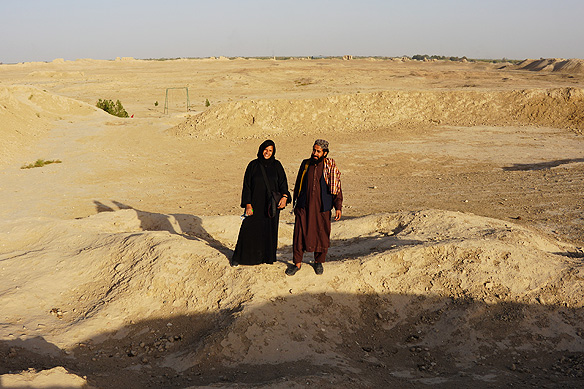
That is me on the left with the Taliban security for Balkh.
 rama toshi arya's blog
I had vaguely heard of Balkh before, but it wasn’t until I read this blog post when I realized that it was once an important city along the ancient Silk Route. It’s incredible that a lot of important figures in history trace their roots to this place. Noh Gumbad Mosque looks stunning, and those tombs remind me of the photos of Shah-i-Zinda in Uzbekistan, although the latter looks like it is in a much better state of preservation. But that ancient stupa in Samangan really caught my attention for its sheer size.
LikeLiked by 1 person
Balkh is fascinating, Bama. What makes it even more so is that since there are no other tourists, one often has the sites to oneself, or shares it with locals. The stupa is definitely the eye stopper. It is huge. And the monastery downhill has these really interesting honeycombed corridors.
It was humbling to walk where so many greats through history had come from. I had no idea Rumi or Zoroaster were Balkhis! Travel is the best classroom, for sure. 🙂
LikeLiked by 1 person
Architecture is impeccable … I wonder how they could have carved the stupa out of gaint rock
LikeLiked by 2 people
I think they must have used the same technique as that used in the Ellora caves in Maharashtra. In Ellora they carved out the temples from top downwards, and this is especially clear when one sees the Kailash Temple from the surrounding hills.
LikeLiked by 1 person
Yeah thats right.. Ellora caves is known for the its carving from top of the rock and excavated down. thanks for sharing the info.
LikeLike
Pingback: taliban afghanistan, a solo indian woman traveller, and help from unexpected quarters | rama toshi arya's blog
Pingback: photo essay: in search of kandahar, the taliban’s former capital | rama toshi arya's blog
Pingback: a guide to solo travel in afghanistan for the indian traveller | rama toshi arya's blog
Wow that’s great 👍 thankful 🫂🫂
LikeLiked by 3 people
Thank you for stopping by. Glad you enjoyed the post. Happy New Year! 🙂
LikeLike
Pingback: travel diaries: from bamyan to herat via the minaret of jam | rama toshi arya's blog
Pingback: time-travel and dinosaur plateaus in remote north-east turkmenistan | rama toshi arya's blog