Right up to 15 August, 2021, it was impossible for foreign tourists to visit Kandahar, least of all by road. The city, a Taliban stronghold in southern Afghanistan, was labelled the ‘kidnapping capital’ and lethal land mines infested the road to it every few metres. You had a far greater chance of being blown alive en-route than getting in. And if perchance you did make it in, the odds of staying alive were slim. But a lot has changed since then. I went by car to Kandahar this year in October and spent two nights in the city. And I live to write this post. 🙂
Kandahar, founded by Alexander the Great in 330 BC, has been the spiritual headquarters of the Taliban since its inception in 1994. From 1996 to 2001, when the Taliban were first in control, it served as the capital of Afghanistan. Though Kabul is now the seat of government, the Taliban’s senior-most officials, including its supreme leader Hibatullah Akhundzada and his spiritual advisors, are based in Kandahar. All decisions that affect the lives of Afghans are made right here.
So, what’s Kandahar really like now? Let me take you on a visual journey of this much touted city as I went in search of it.


The road from Kabul to Kandahar was inaccessible till 15 August, 2021, riddled with landmines, bombs, and kidnappings. Today, the route allows for stops at tiny villages where I met playful Afghan children.
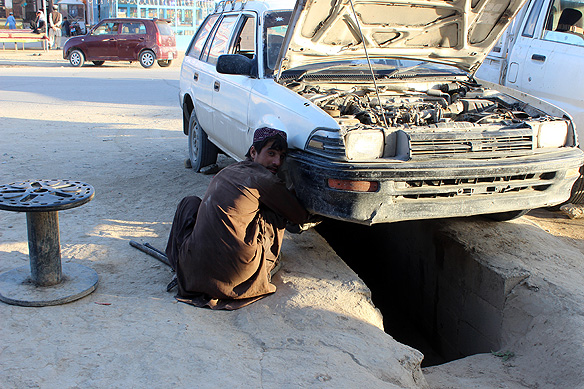
I found this to be pretty innovative: a trench in a garage to repair the underside of a vehicle. The Kabul-Kandahar highway is brutally mutilated and most vehicles need some tender loving care on the way. Nope, that is not my car.
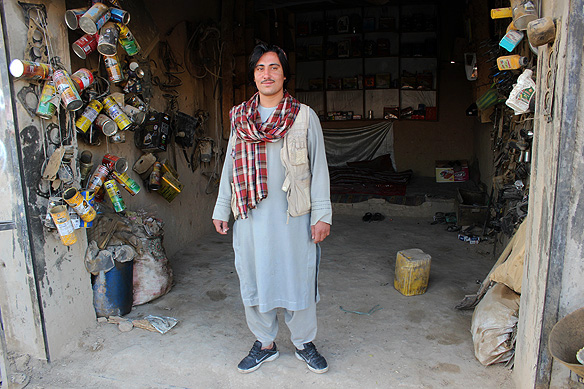
The garage owner and his garage.


My first impressions of Kandahar were of deserted streets lined with blast walls emblazoned with Taliban slogans. Sombre and desolate. Just like the media showed it.
An impression which, however, did a flip-over as I went deeper into the city …
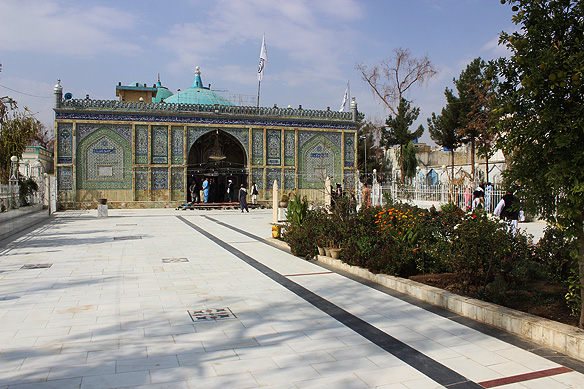
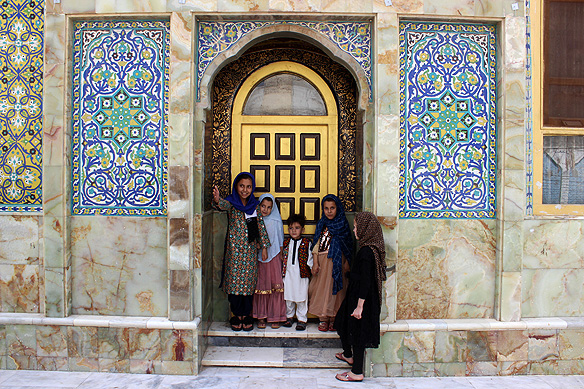
My first stop was Kirka Sharif, Shrine of the Cloak, which contains the cloak believed to have been worn by the Prophet Muhammad during his night journey in 621 AD. It was brought to Kandahar in the 18th Century by Ahmed Shah Durrani, architect of the Afghanistan nation, from Balkh via Kabul.
The last time the cloak was displayed to the public was when Mullah Muhammad Omar, the founder of the Taliban, held it in front of his followers in 1996, sealing his fate as the ‘Commander of the Faithful.’
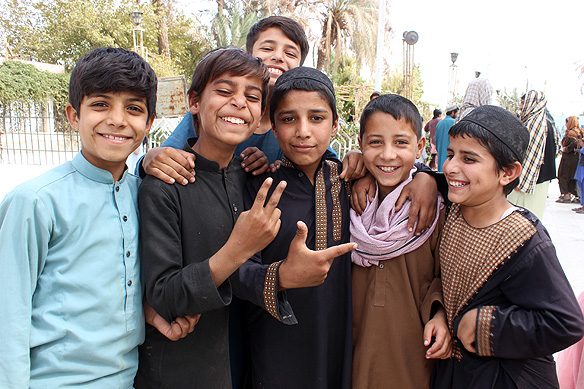
Afghan kids must be the friendliest kids under the sun.
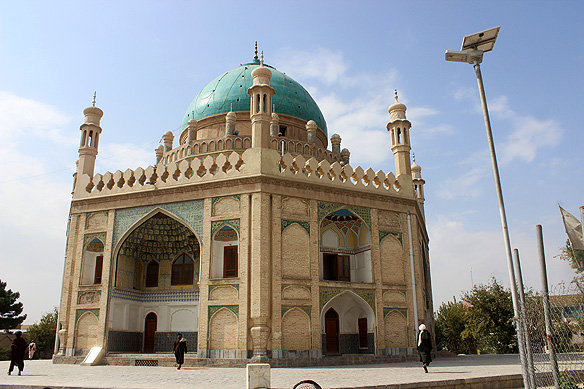
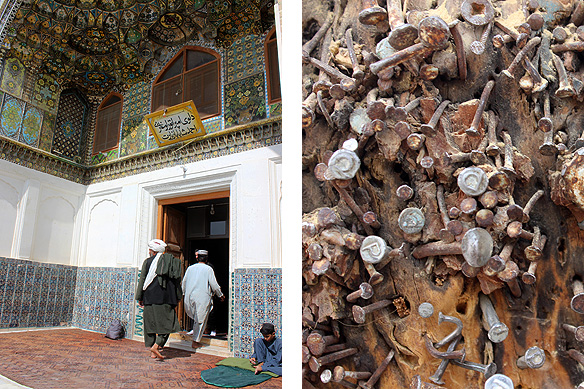
Right behind the Shrine of the Cloak is the Tomb of Ahmed Shah Durrani [r. 1747–1772] who brought the relic to Kandahar. The image to the right with the protruding nails is of a wish tree in the complex. Afghans believe that hammering a nail into the tree will make their wishes come true.
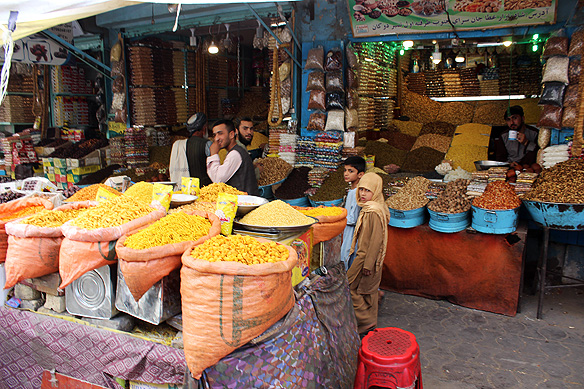
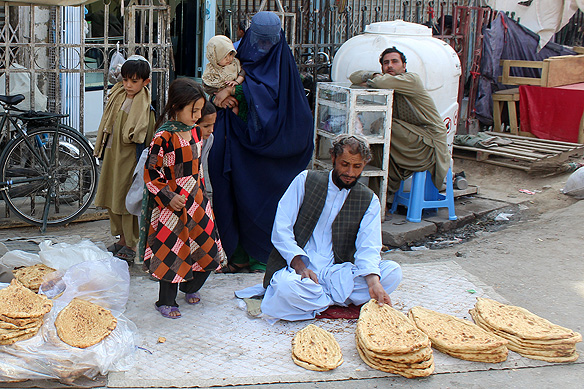
Dry fruits and bread. I found them everywhere.
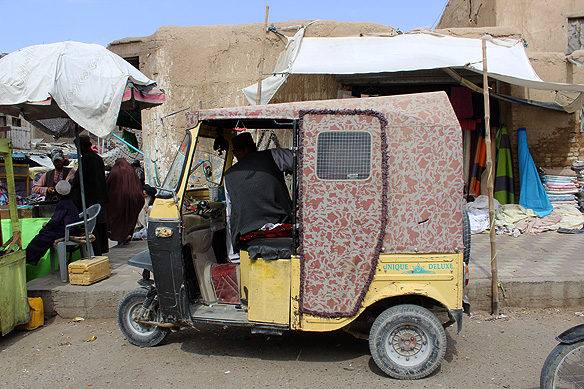
India’s tuk-tuk in an Afghan hijab.


On to Kandahar’s second most sacred relic: a strand of the Prophet Muhammad’s hair housed in the Mosque of the Hair of the Prophet.

Pilgrims at the Mosque of the Hair of the Prophet. Ok, let me correct this: A pilgrim and a very mischievous boy.
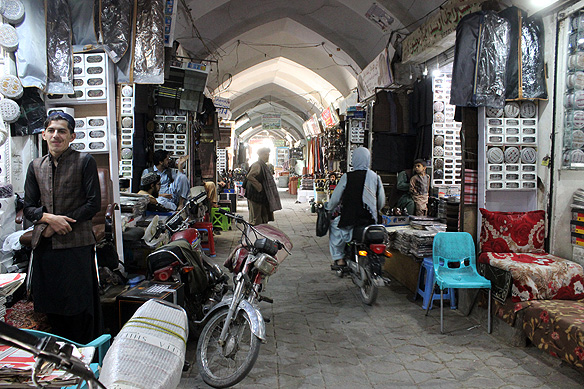
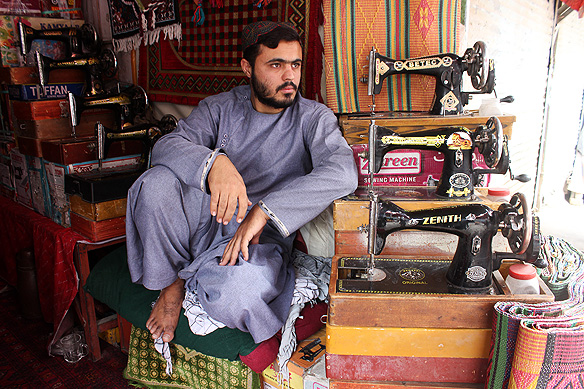
Sarposh Bazaar [Covered Bazaar], Kandahar’s historical market is especially famous for Afghan men’s clothing and hats. Did you know every ethnic group in Afghanistan has their own special hat!
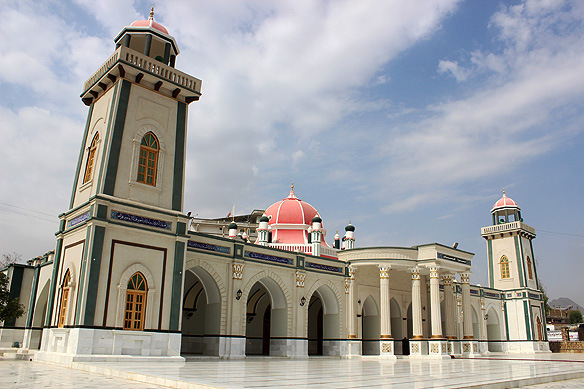
Sra Jama Mosque [Red Mosque] is where Mullah Muhammad Omar, founder of the Taliban in 1994, used to pray right till his death in 2001.
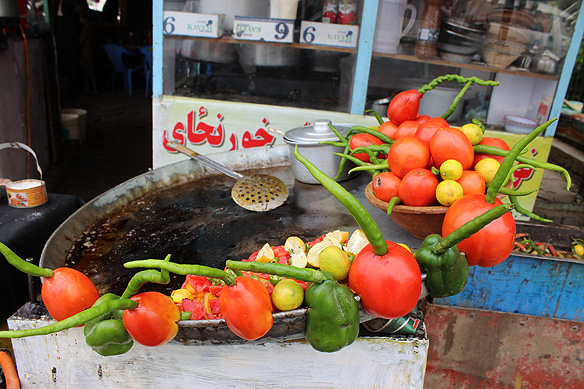
Snack time.
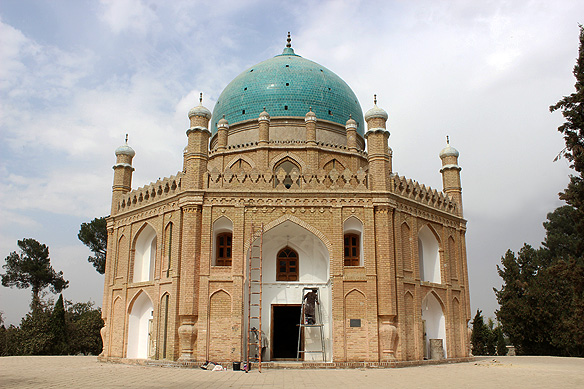
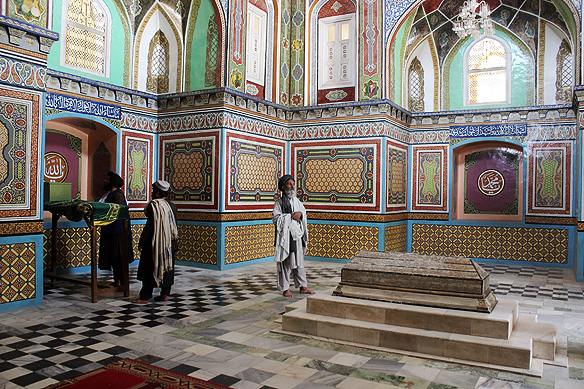
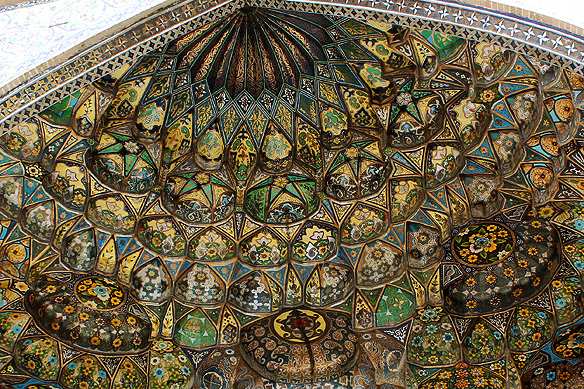
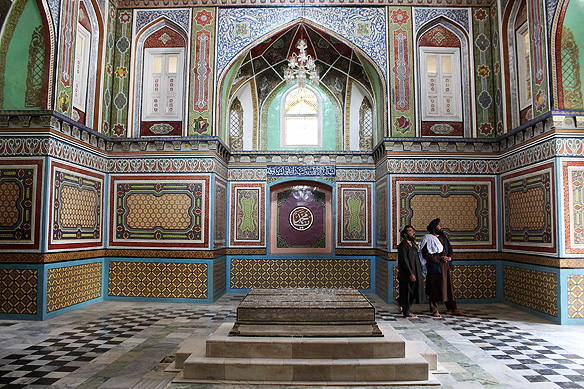
And finally, the Mausoleum of Mirwais Khan Hotak, the jewel in Kandahar’s crown. Mirwais Khan Hotak [r. 1709–1715] is Afghanistan’s national hero who freed the country from Persian Safavid rule and established Afghan self-rule.
His gravestone lies inside the mausoleum, surrounded by a riot of beautifully painted ceilings and walls, and hushed reverence.
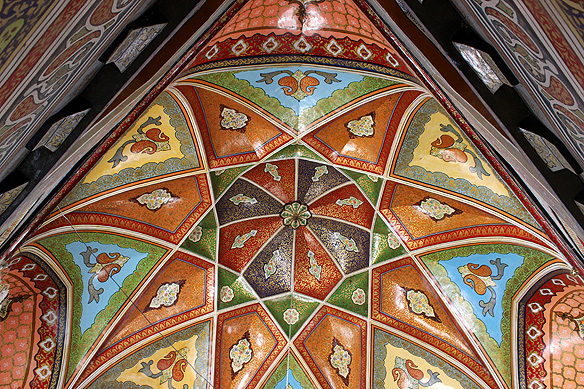
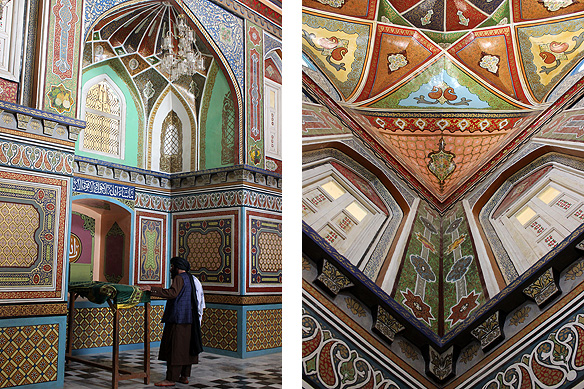
Afterword: I went looking for the Kandahar I had heard and read about. Dangerous and bigoted. Instead, I found a Kandahar brimming with painted shrines, bustling markets, and smiling children. It is also where when I was in trouble, due to reasons that had nothing to do with Afghanistan, it came to my rescue and gave me dignity and security.
Often times, what we search for and find are two completely different things. ❤
Travel tips:
- Staying there: Afghan Continental Guesthouse offers comfortable en-suite rooms inclusive of breakfast, WhatsApp: +93 70 000 4655.
- Getting to Kandahar: I went by road from Kabul to Kandahar via Ghazni and flew back to Kabul by air.
- Getting around in Kandahar: You’ll need a guide. In addition, you will be accompanied with Taliban security when visiting the sites.
- How many days?: I stayed for 3 days.
- WhatsApp contact details of my local tour operator: Obaid [+93 77 842 6816] and Tamim [+93 70 804 5886].
[Note: This blog post is part of a series from my solo travel to Afghanistan for 18 days in October 2023. To read more posts in my Afghanistan series, click here.]
 rama toshi arya's blog
You are an incredible writer! The words paint pictures. Even more beautiful are the photographs, especially the ones of children. Touched my heart. Hope one day we have a world connected with love and kindness.
LikeLiked by 2 people
Thank you. 🙏 All the Afghan kids I met were a super happy bunch, especially the little girl in the second picture. She made my heart melt. 💕
LikeLike
Smiling kids makes us all beleive that Afganistan is not the place what most of the world think of.. I will add this place in my trvael bucket list.
LikeLiked by 2 people
Yes. 🙂 Next Monday I will be publishing a post on how to travel to Afghanistan with an Indian passport. Logistics, insurance, internet, visas, etc. All based on personal experience. Hope you find it useful.
LikeLiked by 2 people
That would be really helpful, plz do mention the right time/season to visit Afganistan.
LikeLiked by 1 person
It is like North India. March and October are the best months. The summers are too hot, and the winters too cold. 🙂
LikeLiked by 1 person
Noted Rama, will wait for ur next post.
LikeLike
It’s hard to believe that the Taliban’s stronghold could be brimming with colors 🙂 Through the media, I thought of a grey, dust-covered city (like the first few photos). Your post is indeed eye-opening, Rama! As you said every coin has two sides.
LikeLiked by 2 people
I was equally surprised how lovely its monuments were and how lively its people. The Hotak mausoleum is a photographer’s delight. I was lucky to be there when the 3 Afghans were also visiting. I think their presence made the compositions so much more interesting. 🙂
LikeLike
It’s such a beautiful historic place – I hope it can continue to rise and improve for the people who live there!
LikeLiked by 2 people
I hope so too. The world needs more of peace and kindness rather than war and hate …
LikeLiked by 1 person
Excellent as usual
LikeLiked by 2 people
Thank you. 🙂 I must confess my camera and pen were especially very happy in Kandahar!
LikeLike
Hi Rama. The disparity you describe between the “kidnapping capital” of 2021 and the “”Kandahar brimming with painted shrines, bustling markets, and smiling children“ you so beautifully show in the photos of your recent visit is heartening. One can only hope that for the Taliban – with power comes responsibility and humanity – and that they move forward rather than backward. Just as you engaged with them and thankfully benefited after luckily, as it turns out, being removed from the tour you were on, so one hopes that the rest of the world can also positively engage for the benefit of all the people of that amazing country but especially for the women. I just loved the pictures of the people: did you show them the images on your camera and if so what was the response? Vic
LikeLiked by 2 people
It’s only been two years, and the change has been immense. As you rightfully said, power comes with responsibility and humanity. The Taliban this time around are very different from their previous avatar for sure. I was lucky I got to interact with them and see a side to them few foreigners get to see. I believe there are two reasons for the gap. The western media’s narrative and how western tour companies, including the one I was on, kept describing the Taliban as ‘dangerous.’ My group and tour leaders were both terrified of the Taliban and anti-Taliban, and were on a high seeing themselves indulging in ‘dangerous tourism.’
Yes, I showed the pics to the kids. Their response: lots of giggles and wanting to get lots more pics taken. 🙂 I showed the pics to the men also. Their responses were less exuberant, but still full of smiles.
LikeLiked by 1 person
Couldn’t agree with you more but understanding different narratives and changing attitudes is hard. I hope maybe some of those on the trip get to read your posts and reflect. Thanks for the heart warming images – something to cheer you up!
LikeLiked by 1 person
I echo everyone’s sentiment here. You managed to beautifully capture the other side of Kandahar most people outside Afghanistan know very little about. I love your close-up shots of the locals, and those colors are definitely not something most of us associate this city with.
LikeLiked by 2 people
Every coin has two sides. Is that not why we travel? To better understand our world. I know you travel for that very reason. 🙂 Am happy you liked the closeups. Afghans are very photogenic.
LikeLiked by 1 person
I, also. echo the sentiments of your other commentators. Let’s hope things gradually improve – this post does give some hope that is so. It’s a place I’d also love to visit, although as a Westerner I think I would still be very reluctant.
LikeLiked by 2 people
Things are surely improving. And I hope one day your desire to see it will be bigger than your reluctance. Or maybe the reason for your reluctance would have ceased to be. 🙂
LikeLiked by 1 person
I do hope so.
LikeLike
I’m so glad you shared your experience in Kandahar which as you say, is so different from our expectations. I love the smiling children. I would love to see the ceiling of Mausoleum of Mirwais Khan Hotak. Maggie
LikeLike
Kandahar was completely different from what I expected. 🙂 It also gave me a lot of hope that the country will heal and move forward. The mausoleum is an absolute gem. I hope you get to see it some day. And the Afghans are fabulously friendly. So warm and kind. I found it inspiring that the war could not dent their intrinsic spirit.
LikeLiked by 1 person
Pingback: taliban afghanistan, a solo indian woman traveller, and help from unexpected quarters | rama toshi arya's blog
Unlike what we may believe based on past events and the image created by the news in the media, your picture conveys something else. The city is home to many kind-hearted people. Thanks for sharing beautiful visuals from Afghanistan, Rama.
LikeLiked by 2 people
Glad you enjoyed the photo essay, Arvind. 🙂 I had very similar experiences when I went to Iran in 2007. The media painting it as an extremely dangerous place and instead I saw a beautiful country with warm kind people. Afghanistan is still finding its feet and I hope that in a few years’ time more people will be willing to visit it, not for a twisted dark tourism thrill, but to see the country’s many treasures and enjoy its rich history and culture.
LikeLiked by 1 person
I can agree for Iran. I hope things change for better for the people of Afghanistan, Rama.
LikeLiked by 1 person
Pingback: a guide to solo travel in afghanistan for the indian traveller | rama toshi arya's blog
Pingback: ghazni and its indomitable sultans | rama toshi arya's blog
Pingback: travel diaries: from bamyan to herat via the minaret of jam | rama toshi arya's blog
Pingback: travel guide to the american war | rama toshi arya's blog