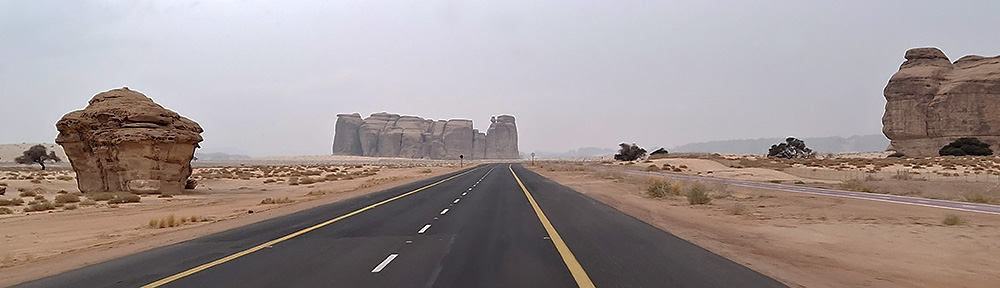
Right at the very end of the battered and bruised road, cutting across the country from east to west, is the Persian historical city of Herat. Not many travellers come this far. It is way too out, perched near Afghanistan’s western border with Iran. Yet, it has always been of great importance, as is revealed by its architectural and cultural treasures to those who take the trouble to reach it.
Herat’s been around for a long time; 6th Century BC records describe it as a Persian city which went by the name Aria. Yes, the same pronunciation as my surname. 🙂
Its strategic location on the Great Silk Road and the banks of the Hari River made it particularly appealing to conquerors and rulers. Alexander the Great defeated Herat’s Persian Achaemenids in 330 BC and put up a majestic citadel to celebrate his victory. He was followed by the Abbasid Caliphs in the 8th Century, Ghurids in 1175, the Mongol Genghis Khan who destroyed everything in 1221, the Kartids who then rebuilt it, and the Timurid Tamerlane who destroyed it once again in 1380.
When Tamerlane’s favourite son Shahrukh Mirza decided to move his capital from Samarkand to Herat, he was determined to make Herat the grandest city in the region. A vision shared by his wife Gawhar Shad and later descendent Husayn Bayqara.
The result was a city of much beauty and grace whose praise was extolled far and wide. Of its many buildings, 830 ‘cultural sites’ are still believed to survive today, warranting it a place in UNESCO’s tentative list in 2004.
It is a difficult combination. War and conservation. However, despite all the odds, both UNESCO and the Aga Khan Trust for Culture have consistently worked on Herat, ensuring its treasures, hidden from the world at large, manage to survive.
Come along with me on a virtual tour of Timurid Herat, the city on the Hari River, to see why it was called the ‘Pearl of the Khorasan’ for the longest time!
1. Great Blue Mosque, the jewel in Herat’s crown
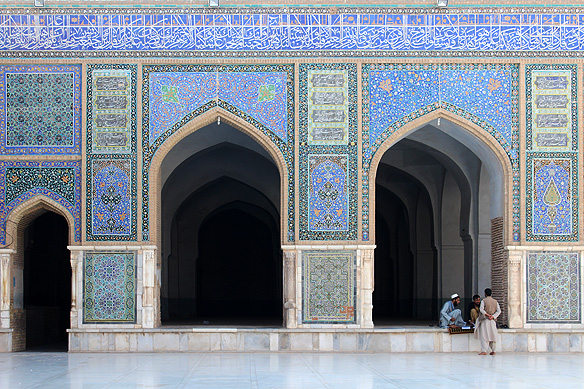
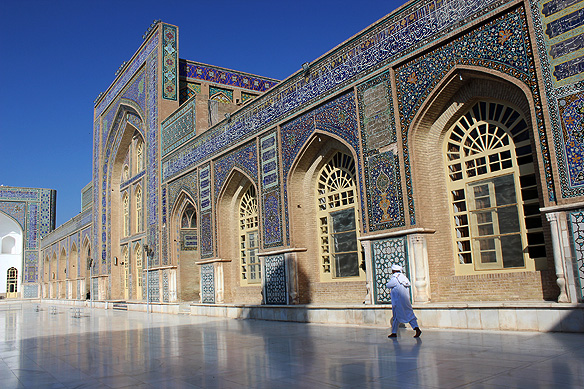
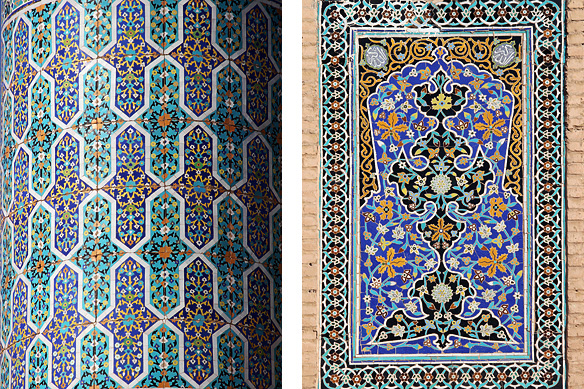
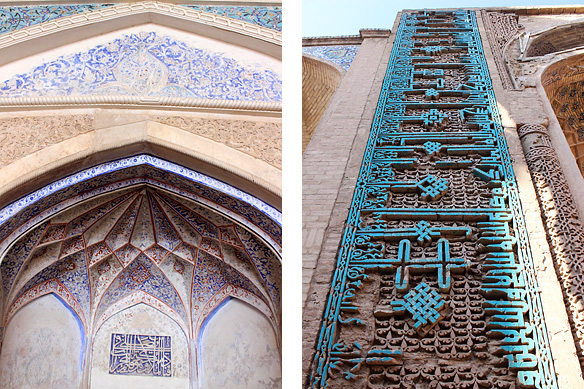
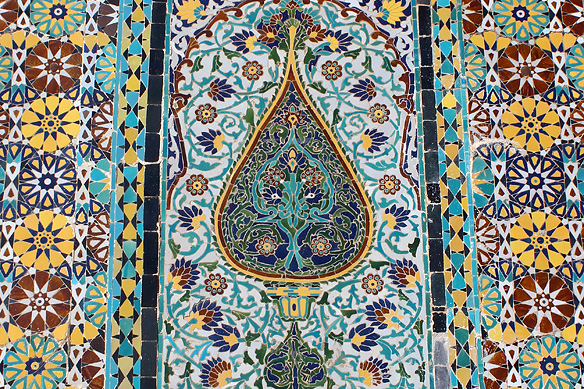
Jami Masjid, popularly known as the Great Blue Mosque, deserves its moniker fully—it is a resplendent concoction of blue tile-work. Built on the site of an ancient 7th Century Zoroastrian temple, subsequent centuries saw it morphed into a mosque by Ghiyassuddin Ghori in the 12th Century [his tomb lies abutted in one of the walls], and then covered with exquisite tiles by the Timurids in the 14th and 15th Centuries. Vestiges of its Ghurid ancestry can still be seen in a stunning portal, south of the main entrance, where Ghurid fired mud-brick embellishments peek through the blue Timurid glazed tiles.
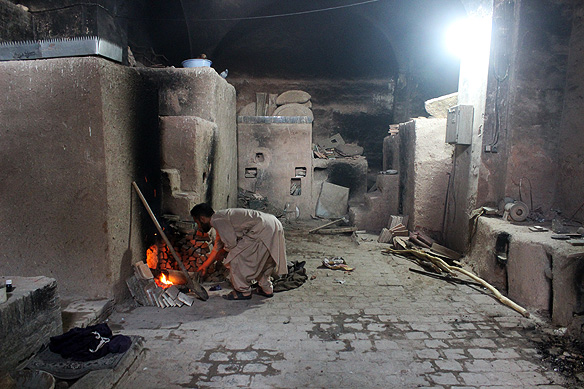
Do not miss the centuries-old tile-making factory within the complex. Tiles for the mosque have been handmade here using techniques and materials unchanged from the day the mosque was first draped in its blue finery.
2. Colourful markets replete with caravanserais
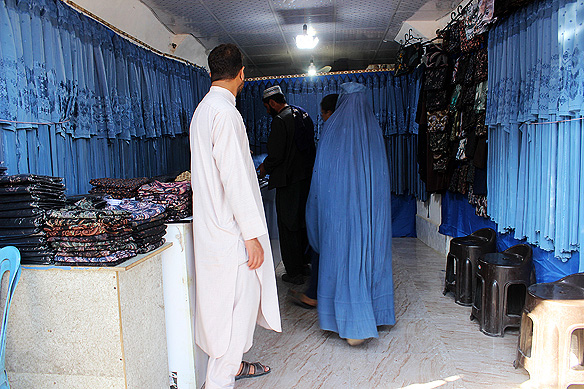
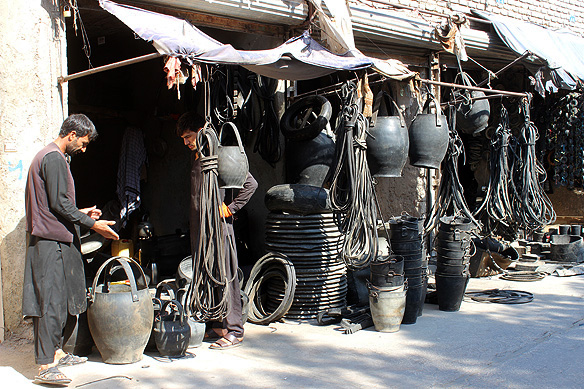
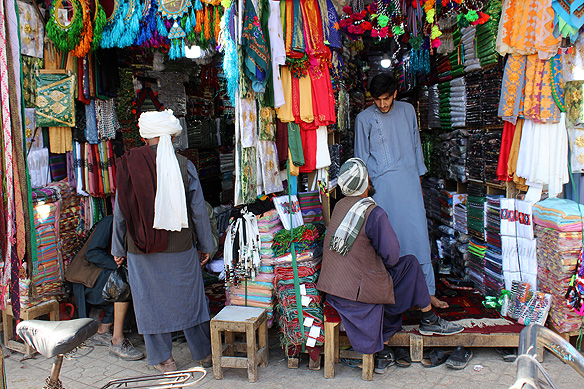
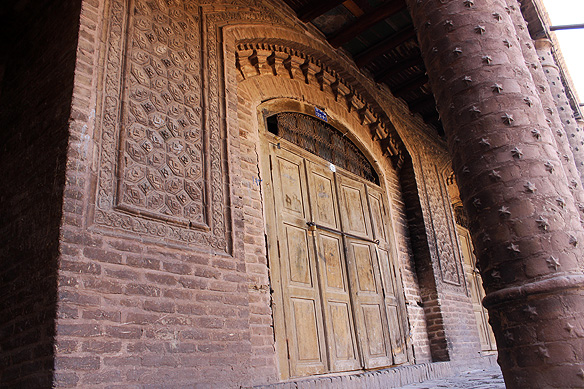
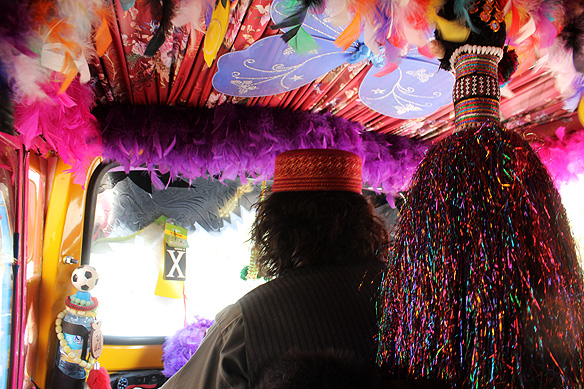
Herat’s markets seem to be frozen in time. The tiny outlets brim with local merchandise steeped in some distant past. From shops selling neat rows of cloned blue chadors, to workshops stacked with black rubber water carriers and miles of tubes, they buzz with crowds and bling-covered tuk-tuks whirling past. Hidden behind all these are cavernous double-storeyed caravanserais which housed travelling merchants and their wares in the late-19th/ early 20th Century; the European detailing a fascinating insight into the city’s eclectic past.
3. Pul-i Malan, a Seljuk-era 22-arched bridge

South of Herat, straddled across the now often dry riverbed of Hari River is a poetic 22-arched bridge. If you have been to neighbouring Iran, you might well be reminded of Esfahan’s Si-o-Seh bridge on the Zayandeh River. According to popular legend, two beautiful Zoroastrian princess sisters, Bibi Nur and Bibi Hur, made Pul-i Malan with their bare hands, mixing egg shells with clay, way back in the year 900. Historical records are more pragmatic. Its construction is credited to the Seljuk great, Sultan Ahmed Sanjar from Merv in 1110.
4. Alexander the Great’s 330 BC Citadel
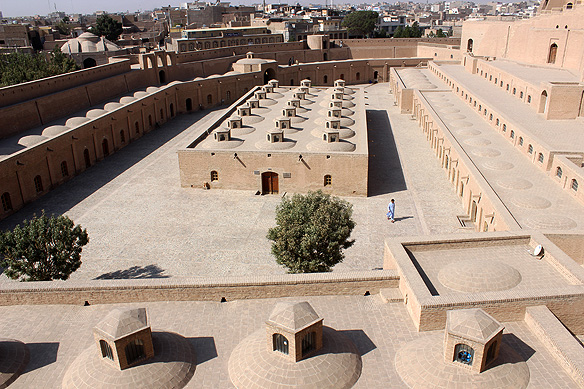
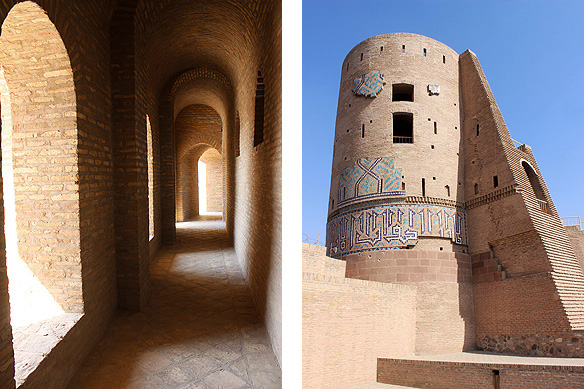
Ikhtyaruddin Citadel is Herat’s oldest surviving structure—2,354 years to be exact. Since the time it was built by Alexander the Great in 330 BC when he captured the city, it has been used by many an empire in Afghanistan. The Abbasid Caliphs, Ghurids, Kartids, and Timurids have all ruled from within its heavily fortified walls and added to the edifice. It has also been destroyed just as many times by these very same people, and particularly the Mongols, in their quest for power. Much of what you see today is a 2011-restored version by the Aga Khan Trust for Culture, with the National Museum of Herat within the premises. Make sure you walk around to the back of the citadel to see the restored Timurid Tower in its full glory.
5. Musalla Complex, Afghanistan’s largest Timurid ensemble
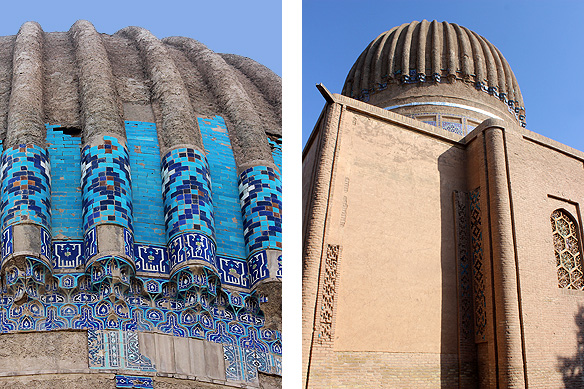
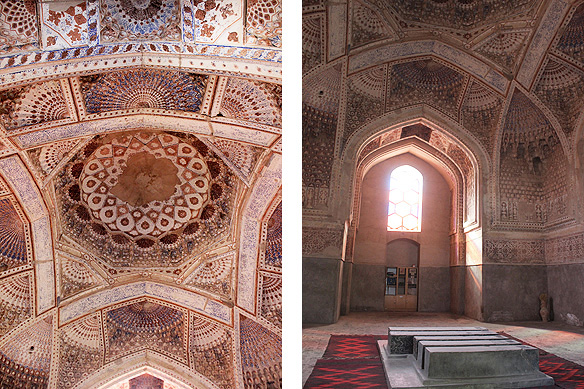
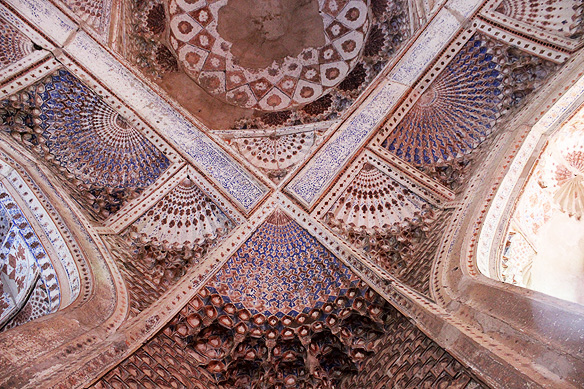
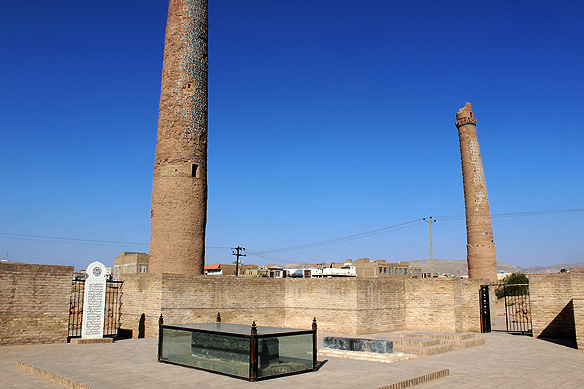
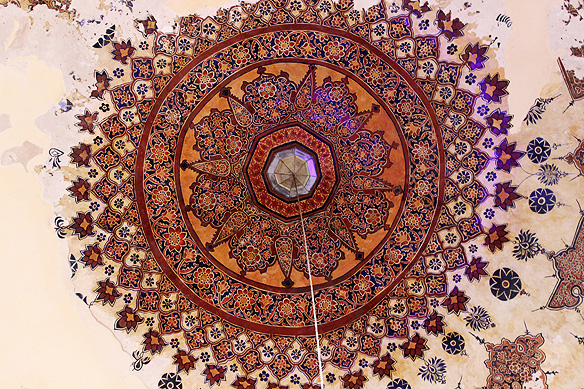
If the Great Blue Mosque is the jewel in Herat’s crown, Musalla Complex is what establishes Herat’s status as a Timurid showpiece. When Shahrukh moved his capital from Samarkand to Herat, there was a dramatic revival in the city’s fortunes and architecture. One of the most magnificent was an Islamic religious complex started by his wife Gawhar Shad in 1417. Comprising of mosques, madrasas, and mausoleums, it originally had 20 tile-encrusted minarets piercing the sky. Most of these structures were destroyed by the British in 1885 during the Great Game against the Russians. Five minarets are all that remain, a bit wobbly and bent over the centuries, along with Gauhar Shad’s exquisitely painted, ribbed double-domed mausoleum in which she lies buried with her family members.
6. Tombs of the two Shahzade [Princes]
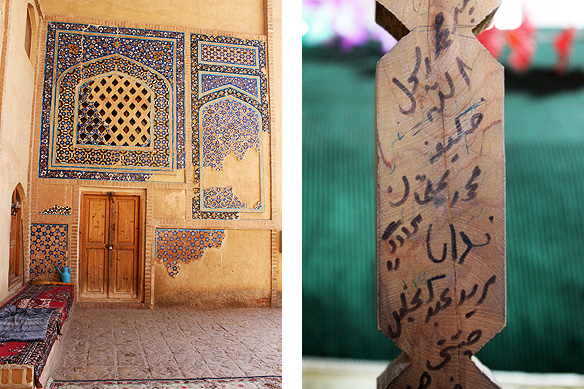
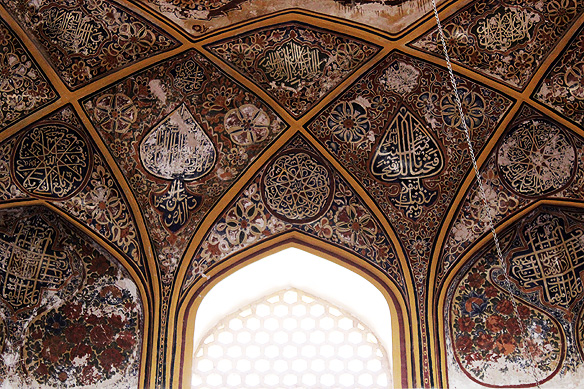
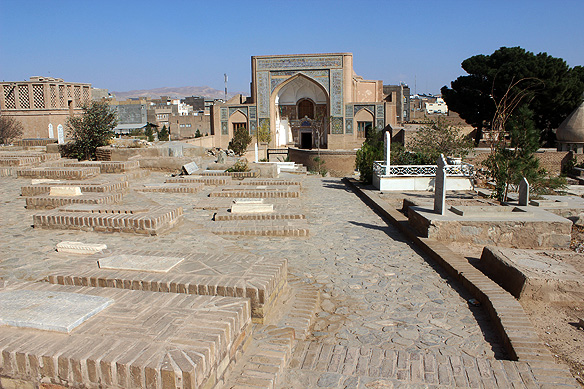
Next to the Musalla Complex are the graves of two 8th Century princes: Abdullah and Qasim. In keeping with the Timurid vision of beautifying their capital Herat, Sultan Husayn Bayqara built grand mausoleums over the two graves in the late-15th Century in the typical Timurid style of colourful tile-work and intricate frescoes. The UNESCO-restored tombs, deeply venerated by the local populace for centuries, are surrounded with a sea of grave-markers in a walled enclosure. Whilst the Tomb of Abdullah near the road is a riot of Koranic inscriptions inside floral motifs and still has some Medieval-era tiling on its front porch, the Tomb of Qasim is engulfed in white walls and [much renovated] decorations on the inside and a splendid tiled ivan on the outside.
7. Khwaja Galtan Shrine where a rollover defines fortunes
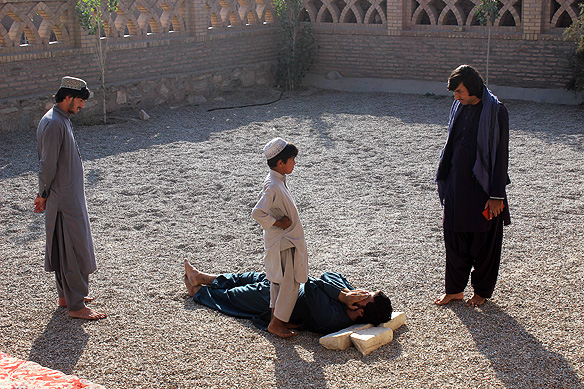
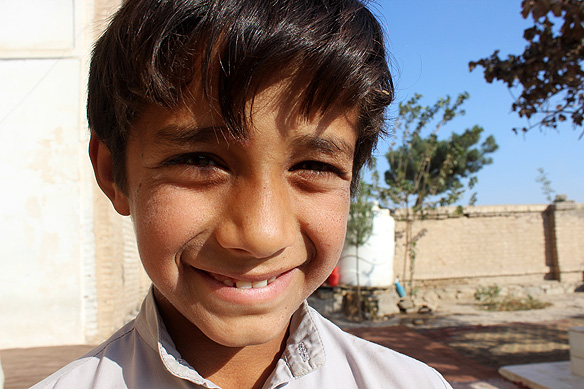
On the outskirts of Herat is the Khwaja Galtan Shrine where some serious prophesying has taken place for centuries. It all starts off with the pilgrim making his way to a courtyard hemmed in by a simple mosque and pistachio tree with the tomb of the saint at one end. Once seated on the ground with his legs outstretched, he covers his eyes with his palms, makes a wish, lies down, and tries to roll. If he can roll in one straight line and touch the adjacent wall, his wish will come true. If he is not able to turn [and it does happen] or rolls at an angle, God has other plans for him. This entire exercise is carried out under the supervision of a 10-year-old boy with one cheeky grin!
8. Jihad Museum, a celebration of the Jihadi
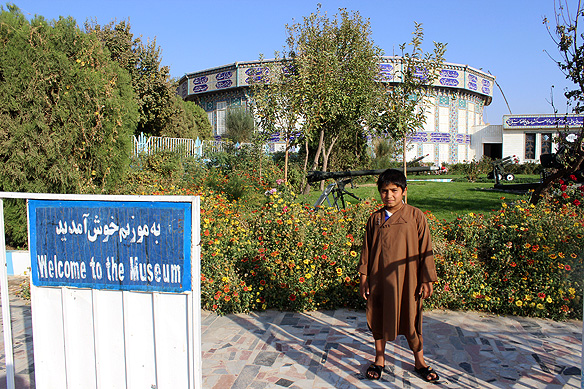
Although Herat’s main claim to fame is its Timurid legacy, could its recent tumultuous past be incognito? Definitely not, as there is an entire museum dedicated to Afghanistan’s Jihad [holy war] against the Soviets and, after August 2021, the US and NATO forces. So, why is it in Herat? The reason is that its founder, Ismail Khan, a mujahideen-turned-politician, was a Herati. Lined with portraits of martyrs, life-sized dioramas of key mujahideen conflicts, and cabinets filled with weapons of all kinds, it is an unusual museum. The ticket is steep—10 USD entry plus an additional 10 USD for photography. I decided against the photography fee, hence the only photo I have of this Herati attraction is the entrance and little boy-guard before I entered the museum.
9. Mausoleum complex of Herat’s patron saint
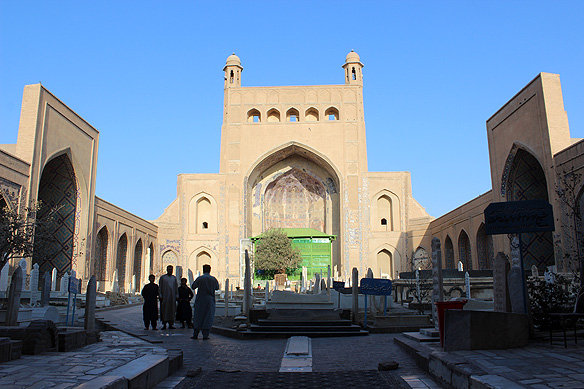
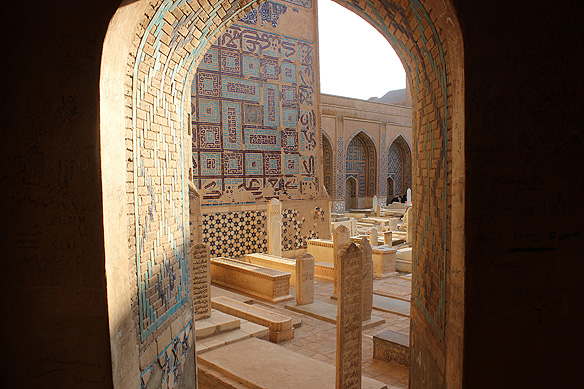
Khwaja Abdullah Ansari, also known as Pir-i Herati, was a Sufi poet-saint who lived in 11th Century Herat. The ornate, tile-covered mausoleum complex you see today was built by Timurid ruler Shahrukh as part of his construction drive in the early-15th Century. Considered one of Herat’s most sacred sites, there are grave markers spanning a millennium laid out throughout the serene complex. These belong to the saint’s rich and powerful followers who wished to be buried near him—no commoners here—and include the tombs of Sultan Husayn Bayqara (r. 1469 – 1506), under whose reign Herat enjoyed its ‘golden age’ and Dost Mohammad Khan, a 19th Century Emir of Afghanistan.
– – –
With this I reach the end of my post. Next time you hear the city’s name, I hope you will be reminded of its incredible, and some quirky, hidden treasures. ❤
Travel tips:
- Staying there: Amiri Hotel has comfortable en-suite rooms inclusive of a basic room-service breakfast.
- Getting around: I had a local Persian Herati, Ehsan Rahmatian, as my city guide. He was fabulous, showing me not just the main sights, but also hidden treasures and where the locals hung out, ate, and had pretty awesome coffee. We used colourful tuk-tuks to travel around the city. He can be contacted by Whatsapp on +93 79 662 6164.
- WhatsApp contact details of my Afghanistan local tour operator: Obaid [+93 77 842 6816] and Tamim [+93 70 804 5886].
[Note: This blog post is part of a series from my solo travel to Afghanistan for 18 days in October 2023. To read more posts in my Afghanistan series, click here.]
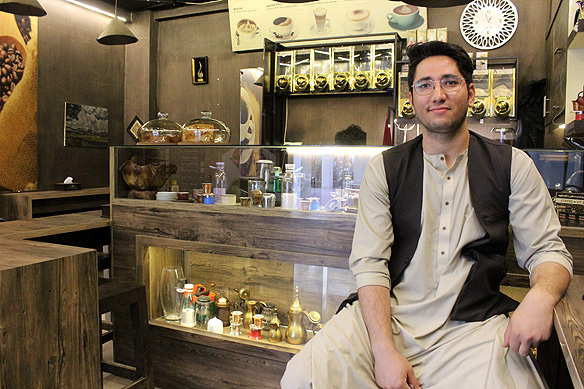
Ehsan Rahmatian, my fabulous city guide in Herat. This picture was taken at Afghan Coffee, a coffee shop serving fantastic coffee.
 rama toshi arya's blog
When I first stumbled upon an online article on Herat, the city’s historical monuments immediately reminded me of the countless images I’ve seen of Samarkand and Isfahan. In this post I got the answer as to why they look similar. It looks like a fascinating place steeped in so much history.
LikeLiked by 2 people
Herat is a fascinating city. I was lucky to have a fantastic city guide. I also found Herat to be a pretty liberal city. Perhaps it is the Persian legacy. I met a number of young ladies who spoke impeccable English and were working as English tutors in the many private coaching centres that are run throughout the country. Regarding the similarity with Samarkand and Esfahan, there’s a common history binding all these now saperate countries together. The more I travel, the more I learn how connected our world is. Am glad this post helped answer some questions. 🙂
LikeLiked by 1 person
Great post with some amazing pictures. I’d love to be there to experience it myself someday soon!
LikeLiked by 2 people
You would love Herat! All that wonderful history, culture, and scenery. I would say now is the best time to go to Afghanistan. It is safe. There is peace, and very few tourists. The bonus is Afghanistan/ Taliban hold India and Indians with much regard and affection. Makes the journey very heartwarming. Am happy you liked the post. 🙂
LikeLike
I’m learning a lot from you about Afghanistan, Rama! Beautiful pictures, and I loved seeing the tile factory as well as the shop with nothing but blue chadors. Is blue required to be worn by Afghani women? Evidently, travelers can wear other colors since you were in black, but can Afghani women also wear black? I reckon blue is more of a religious color? And is a face covering still required?
LikeLiked by 2 people
The chador is a more conservative dress, worn by the more traditional women. I only saw blue chadors in Afghanistan. These outfits have a screen over the eye area. But abayas, which is what I wore, can be any colour. Though I found Afghan women tended to stick to solids and dark/ dull colours. It is interesting because their traditional dresses which they wear under the abayas and chadors are a riot of colour, decorated with stunning embroidery and mirrorwork! I did not find face coverings compulsory. At times my fixer/ translator would make me cover my face when we entered a mosque only to find women with no face covering inside. 🙂
LikeLike
After so much destruction over the millennia it is heartening to see from your superb photos how much beauty remains of the architecture of Herat. Much credit as you say to UNESCO and the Aga Khan Trust. But how sad to see the dried up river under the bridge of Pul-I Malan. You compare it to the magnificent Si-o Seh bridge in Esfahan Iran which we saw in 2007 with fountains and even I remember goose pedalos – but did you know that today the Zayandeh river is also dried up! What a tragedy. We were lucky to see it when we did – one of my favourite places in the world.
LikeLiked by 2 people
It is so sad to hear that the Zayandeh river has dried up. I still remember walking on its banks, crisscrossing over the bridges, and having chai at the chaikhana under the Si-o-Seh bridge. I believe we went to Iran at just the right time. All those smiling faces, peace, and so few tourists. Another wonderful memory that is close to my heart is walking through the ruins of Persepolis. I was able to take so many photographs of the 10,000 immortals, closeup. Now everything, I see, is covered up in glass in the archaeological site out of fear of vandalization. 😦
LikeLike
and I should add to my previous comment – even more credit to the workers in the tile making factory you show and the un-named people who built these places centuries ago – probably for a pittance and under duress – we only seem to remember those who commissioned and financed these monuments and restorations because they have names ….
LikeLiked by 3 people
So true. Much like all the large corporates today. 🙂 The tile-making factory was very atmospheric. The moment I crossed the threshold I felt I had stepped back a few centuries.
LikeLiked by 1 person
When we visit a ruin in the desert or at the top of a mountain for few hours we return ‘exhausted’ to our air-conditioned hotel to eat a meal in the restaurant. We can barely conceive of what it must have been like to live and work on that site for months or years, probably until death, to carry out the backbreaking and dangerous jobs of cutting and erecting the stones in all weathers, or decorating the building and return really exhausted to a hovel to make your meal and sleep! Maybe all historical sites of importance should have a plaque commemorating the workers and the estimated number of worker-years they took to complete them.
LikeLiked by 1 person
Interesting that you bring this up. It is a very valid point. When we study about the Taj Mahal in school, yes, the love story is recounted. But also that 20,000 labourers worked for 22 years. The website for the Taj Mahal [https://www.tajmahal.gov.in/creation-history-of-taj-mahal.aspx] states it as well, including even the head mason’s name. We often forget it is people that make a country and its sites. Common ordinary people. 🙂
LikeLiked by 2 people
It is all absolutely magnificent! I hope to get to Uzbekistan this year and see similar styles of architecture. I love blue tiles!
LikeLiked by 2 people
True, there is something so serene, almost heavenly, about blue tiles. Uzbekistan is beautiful. You will love it. And since it is a popular tourist destination, it is not so raw as Afghanistan. 🙂 I have written quite a bit about Uzbekistan. Perhaps these posts could be of some use to you. The series can be accessed here: https://ramaarya.blog/category/exploring-our-world/asia/uzbekistan/
LikeLiked by 1 person
Hahaha I just went to your Uzbek pages and I have already commented on them back in 2022. I think i probably discovered your blog via looking for Uzbekistan posts! Lol. I will revisit them though and take notes. Thanks x
LikeLiked by 1 person
You welcome. 🙂
LikeLike
I can definitely see the connection to Samarkand in the buildings. I actually didn’t realize that they were still standing. I though I had read that they were destroyed too. Thanks for the tour of them today! Maggie
LikeLiked by 1 person
They definitely standing. 🙂 The last four decades of war did not touch Herat as much as it affected the other cities such as Kabul and Kandahar. Perhaps because Herat was too far away. Most of Herat’s monuments were in fact destroyed by the British army in the 19th Century during the Great Game with the Russians. Herat’s susceptibility to earthquakes has not helped either. What little that is left, UNESCO and the Aga Khan Trust have been diligently trying to keep alive.
LikeLiked by 1 person
Pingback: taliban afghanistan, a solo indian woman traveller, and help from unexpected quarters | rama toshi arya's blog
Pingback: a guide to solo travel in afghanistan for the indian traveller | rama toshi arya's blog
NICE POST 💚💖💓
Blessed and Happy Sunday 🌞
Greetings 👋🇪🇸🫂
🌞💯🌞💯🌞💯
LikeLiked by 2 people
Thank you! Wishing you a fabulous Sunday too, and a great week ahead. 🙂
LikeLike
Pingback: travel diaries: from bamyan to herat via the minaret of jam | rama toshi arya's blog
It’s great to see such a gem like the Blue Mosque remains unharmed from all those conflicts. Those blue tiles are simply amazing!
LikeLiked by 4 people
It is a beautiful mosque, indeed! Places of worship are lucky; they often get to be saved from the brutalities of war. Not always, but often. 🙂 That being said, the Blue Mosque has also been constantly renovated through the centuries, using the same material and techniques as those that were used when the mosque was built.
LikeLiked by 1 person