
Be still, dear wild dancing heart! I chide it that it’s being ridiculous. I am no novice traveller. I have travelled all my life, been to countless countries, places many have not even heard of.
“But this is the first time to the Minaret of Jam,” it whispers gleefully.
Yes, true. And I let it dance away, and smile at it fondly. If it were not for this crazy heart of mine, I would be leading a pretty dull life.
Dear reader, I am about to start a 7-day road trip across Afghanistan’s remote heartland to see its most glorious treasures, including the 12th Century Minaret of Jam. The latter, the very reason why I had travelled all the way to Afghanistan in the first place.
It will take me one-and-a-half days through nothingness to reach the minaret, and then another one-and-a-half days off-road driving to reach civilization, namely Herat.
Here’s to once-in-a-lifetime journeys! ❤
DAY 1: MONDAY, 23 OCTOBER 2023: BUDDHIST BAMYAN IN THE HINDU KUSH
I had heard of the Hindu Kush Mountains all my life. Those glorious towering granite, diorite, and schist masses which spread for 800 kilometres, with its core in Afghanistan.
And here I am today, standing on these very same mountains on a high pass, just like many others have. Alexander the Great, Mahmud of Ghazni, Genghis Khan, Tamerlane, Babur … and Ibn Battuta, the 14th Century Moroccan travel writer.
I like to think of Ibn Battuta and myself as kindred spirits. He is also credited for giving this mountain range its name. Battuta dubbed them Hindu Kush, meaning Hindu Killer, because the slaves from the Indian subcontinent, who were on their way to Turkestan, died here from the freezing cold.
UNESCO-listed Bamyan, the 6th Century Buddhist centre nestled in the Hindu Kush Mountains and home to the Hazara people, is not far from here. Hazaras are an Afghan ethnic minority [9 percent] with oriental features. They have always been forward-thinking; their women enjoying more rights and freedom than their Pashtun sisters.
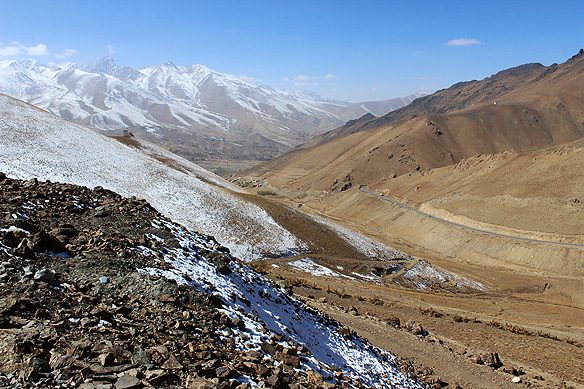
The Hindu Kush Mountain Range, at an average elevation of 4,500 metres, cuts across central and eastern Afghanistan.
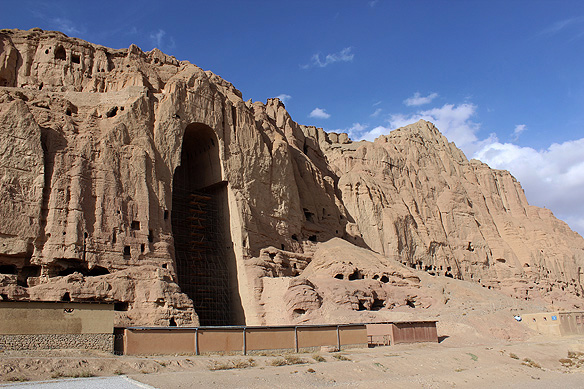
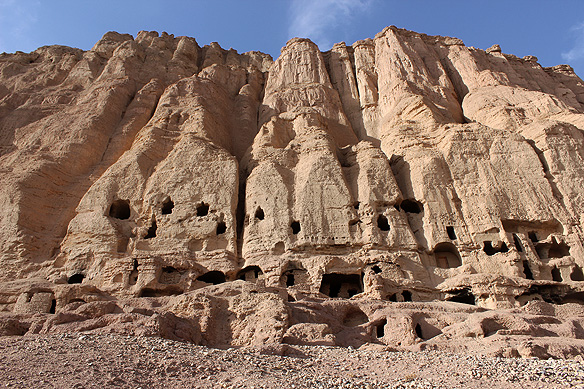
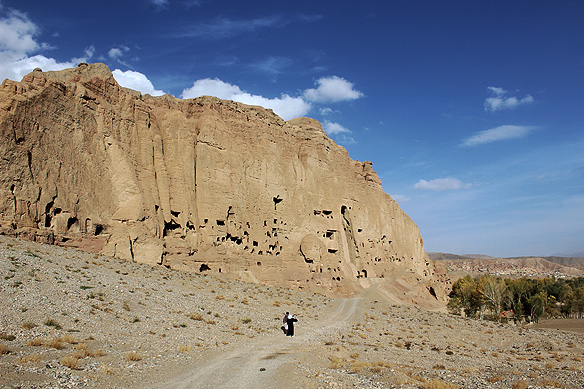
Bamyan Niches, a 6th Century Buddhist site, along with the other archaeological remains in Bamyan Valley, is Afghanistan’s second UNESCO World Heritage Site. It was listed in 2003, a year after the Minaret of Jam.
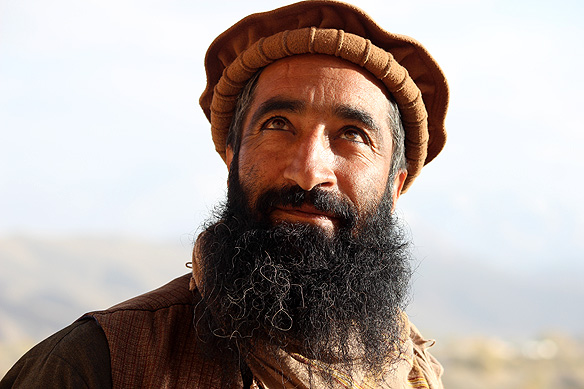
An Afghan tourist exploring the Bamyan valley.
We all know Bamyan as the site of the gigantic Buddhas [38 metres and 55 metres high] which the Taliban blew up in March 2001. Truth be told, the effigies had been vandalised before as well. Mughal emperor Aurangzeb smashed their faces in the 17th Century and the Persian ruler Nadir Shah chopped off the large Buddha’s legs in the 18th Century. Genghis Khan, for all his brutality in the region, chose to leave this Buddhist site unscathed.
It is very quiet as I walk alone by the sun-drenched mountain face pockmarked with hundreds of caves; the two empty Buddha niches towering over me. Despite the desecration, it is not difficult to imagine how it must have been like 1,500 years ago.
The 7th Century Chinese pilgrim-traveller Xuan Zang describes the site vividly in his ‘Great Tang Records on the Western Regions.’ He writes that the Buddhas’ robes were painted red, their faces covered in gilded masks, and over 1,000 monks looked after the complex which included some 10 convents and 50 temples.
Those little caves up on the mountain wall were once used as meditation cells. When the site ceased to function as a Buddhist centre in the 10th Century, the locals turned them into their homes.
Across the valley from me are the ruins of Shahr-e Gholghola, the City of Screams, a 12th Century Ghurid citadel. In 1221, Genghis Khan’s favourite grandson was killed by a spear. In a fit of rage, Khan slashed every living being in the city, and their screams could be heard for miles around.
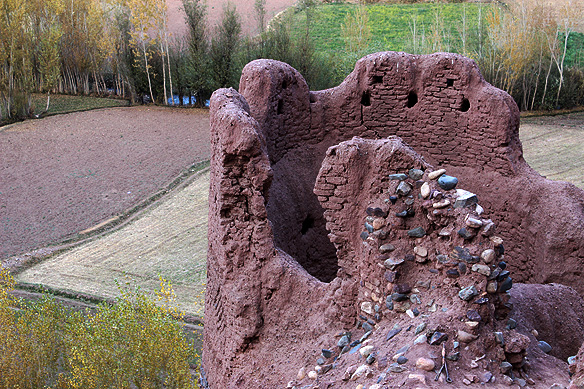
There is another Ghurid city overlooking mud-brick houses and potato farms that I climb over as well. Shahr-e Zohak, the Red City, named after the Persian serpent-haired hero Zohak used to be a key trading post on the Silk Road. Locals tell me its soil is red because it is smeared with the blood of the endless wars that have racked these mountains since time immemorial.
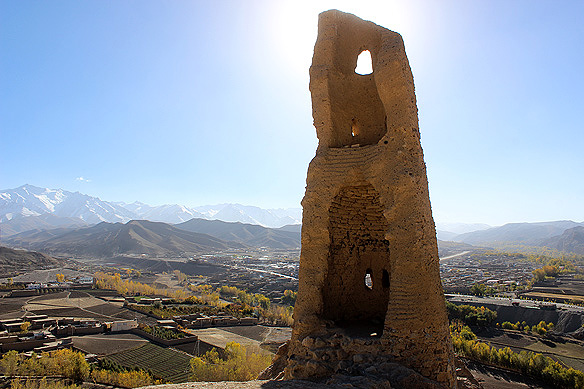
The Ghurid cities Shahr-e Gholghola across the Bamyan niches [above] and Shahr-e Zohak [below] were both razed to the ground by the marauding armies of Genghis Khan in 1221.
DAY 2: TUESDAY, 24 OCTOBER 2023: DARIYA AJDAHAR AND BAND-E AMIR—HAZRAT ALI AND NATURE AT WORK
It gets cold at night in the Hindu Kush Mountains, even under three thick blankets. I can see snow on the distant peaks from my window. Winter is not too far away, I guess.
There is no electricity in Bamyan province. One manages with solar power which operates on limited hours to ensure availability.
I tear myself out of bed and make my way to Dariya Ajdahar, a massive fossil hillock, in a setting so raw, yet so stunning I can only gasp in awe. There is more gasping in store for me. This time over the turquoise blue lakes of Band-e Amir.
Both the sites are associated with Hazrat Ali, Prophet Mohammed’s son-in-law and the fourth Caliph. According to legend, Ali first put-up barriers to create six lakes high up in the mountains. Thereafter, he slayed a cruel dragon who gobbled virgins and camels, and was making the residents’ lives miserable. The wounded dragon turned into a petrified mound, Ali’s slash showed up as a slit across its length, and the dragon’s tears gushed from that moment on in the form of a spring.
Band-e Amir is beautiful. The haunting type of beauty intrinsic to remote mountain deserts.
I find myself a bench, put my camera away, and look out at the still blue waters. There is not a soul around, once again, other than the chirping of a lone bird.
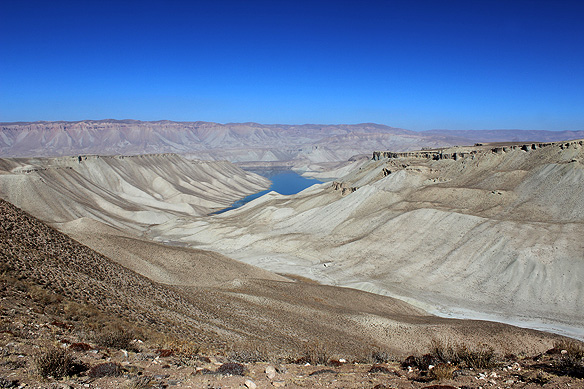
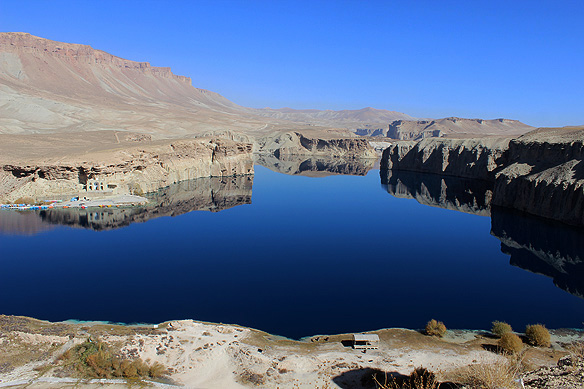
Band-e Amir, Afghanistan’s first national park, comprises of six mountain lakes in the Hindu Kush Mountains. Band-e Haibat [Lake of Grandiose] is the biggest, deepest, and most accessible of these lakes.
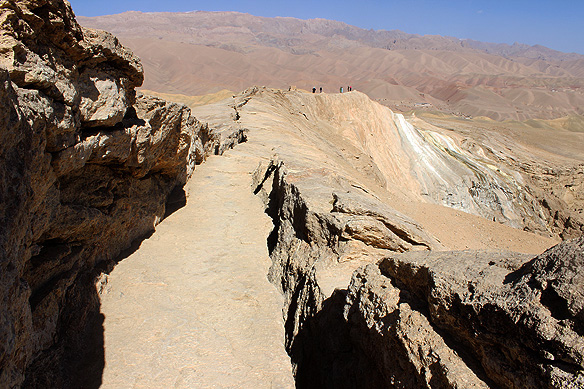
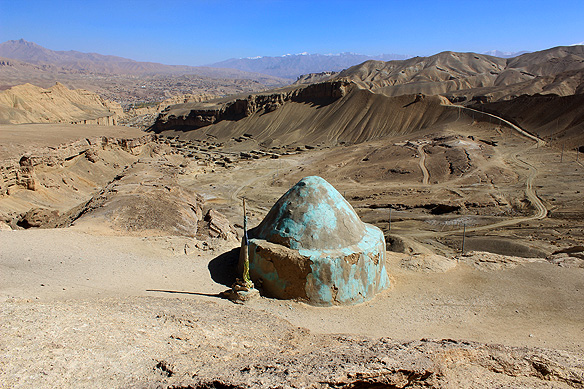
Dariya Ajdahar, the colossal fossilized remains of a legendary evil dragon. Hazrat Ali slayed the dragon after he finished creating Band-e Amir [the Ruler’s Dam].
DAY 3: WEDNESDAY, 25 OCTOBER 2023: I ONLY NEED TO TRAVEL TO SLEEP WELL
It has been a long bumpy day on the road today, up and down high mountain passes, over serpentine roads which clung to golden splintered cliffs.
By the time I reach Ghor in the evening, the capital of Ghor province, my legs are happy simply to be on still ground.
There is a heavy stench of blood and raw meat in the only hotel in the city into which I check in. My room is on the second floor. The floor is ironically labelled VIP and has two rooms in addition to mine. One is for my driver and fixer/ translator. The third room, with a huge pile of bedraggled shoes outside, is where the entire hotel staff sleep.
I am the only woman in the hotel. And most likely, the only Indian the staff have ever seen.
Like most of rural Afghanistan deep in the mountains, there is no electricity, it is freezing, and no one speaks English or Hindi. It also appears that the bed-sheets in my room have not been changed for a while. After much sign language I manage to at least get fresh sheets.
Down the corridor is the bathroom, sans light or bathing facilities, with squat toilets. It gets tricky at night. I have to use my phone torch to reach it, draped in my dusty long black abaya so I do not transgress any local etiquette.
Strangely enough, I sleep like a log cuddled inside the much used by very many, blankets.
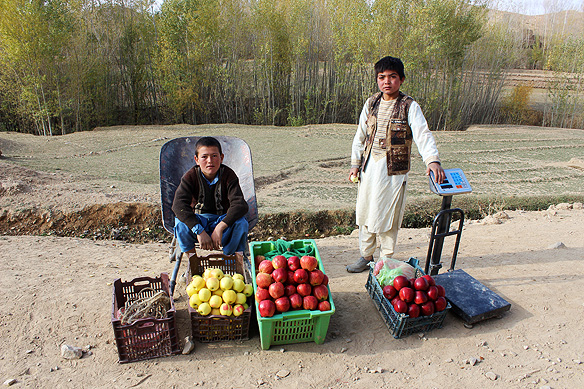
It’s the season of apples.
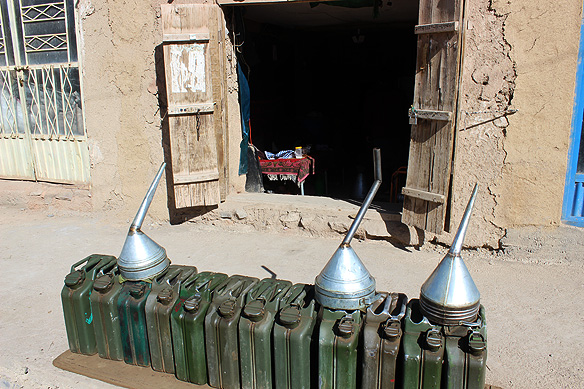
Petrol station en-route to Ghor.
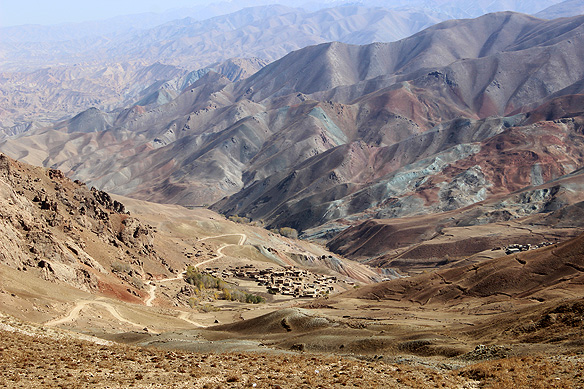
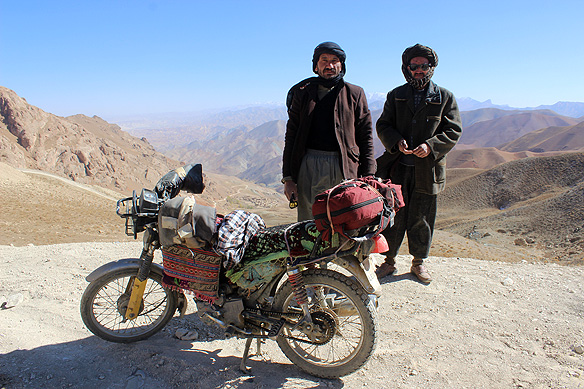
One traveller meets another two travellers on the Hindu Kush Mountains.
DAY 4: THURSDAY, 26 OCTOBER 2023: MINARET OF JAM, THE RAISON D’ETRE FOR IT ALL
After some four hours on the road, the last bit through deep dark narrow gorges, I know I am close to the Minaret of Jam. I stare out of the window, my heart in my mouth, for that first glimpse of it.
So, what is the big deal about this minaret? I was asked this all the time when I decided on this journey.
Apart from being an essential part of an intrepid traveller’s bucket-list for its sheer beauty and inaccessible location, it is the minaret’s intriguing history that warranted its listing as Afghanistan’s first UNESCO World Heritage Site in 2002.
Not much remains of the powerful Ghurid dynasty which ruled Afghanistan in the 12th Century and made the first significant inroads into the Indian subcontinent. Except for a portal in the Great Blue Mosque in Herat, Qutub Minar in India, and this wondrous minaret that once stood in the middle of the Ghurid summer capital Firozkoh, meaning Turquoise Mountain.
Eight hundred years ago this valley, where the Hari River and Jam River meet, was a bustling town in which the visual and literary arts, and theology flourished. Sultan Ghiyasuddin and his younger brother Muhammad Ghori, two of the most powerful men in Central Asia at that time, ruled from here in the summers.
But in 1223, like the rest of Central Asia, it fell to the Mongols and was razed to the ground by Genghis Khan’s son Tolui. Everything was destroyed, but by some miracle, this one single 65-metre-high minaret survived the siege, the subsequent abandonment of the city, and centuries of being lost to history and the world.
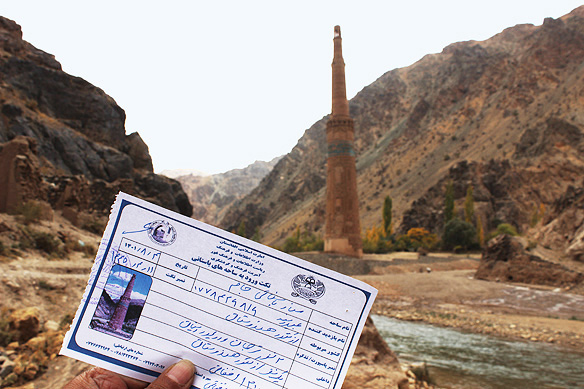
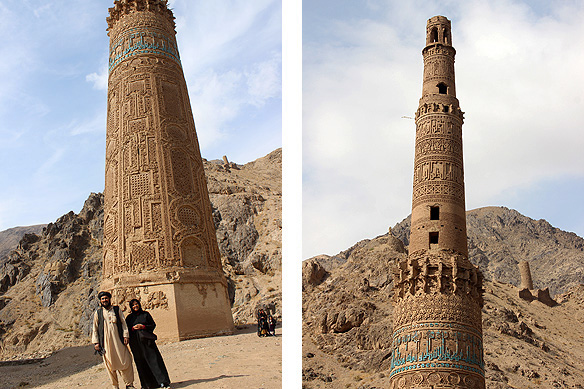
With the entry ticket for foreigners, and the Taliban security at Minaret of Jam.
When historians were trying to figure out the purpose of Qutub Minar in Delhi, the existence of the Minaret of Jam, built in 1194 as a Victory Tower, came to light. Their research revealed that while the Minaret of Jam celebrated Ghurid Victory over Hindustan in Afghanistan, five years later in 1199, the laying of the foundation stone of Qutub Minar celebrated that same victory, on the conquered lands.
Built of fired mud-brick, the 3-storeyed cylindrical Minaret of Jam atop an octagonal 9-metre-wide base, is a high point in Ghurid architecture, decorated in exquisite calligraphy and geometric motifs. The only colour on the edifice is the band of glazed turquoise tiles in the first section with Sultan Ghiyasuddin’s name in Kufic script.
Scholars are doubtful how many more years the minaret will survive. It is already leaning at a precarious angle. Recent wars have not helped UNESCO’s conservation efforts.
So, this is why I am here, on an October afternoon, in the middle of nowhere.
Barring a group of brightly-clad Pashtun girls and a handful of Taliban soldiers, I have the place all to myself, as usual. There are demands to be photographed and shy retreats followed by peals of laughter. Meanwhile, the autumn sun wraps the towering minaret in a golden glow, and turns the blue glazed tiles into glittering jewels. It is surreal, to say the least.
Neither I, nor my camera, seem to tire of the minaret. In these few hours that I am here, in a rare remnant of medieval Firozkoh, I am back in time, back in another world. “Happy, dear heart?” I whisper to it, in case my voice breaks the spell.
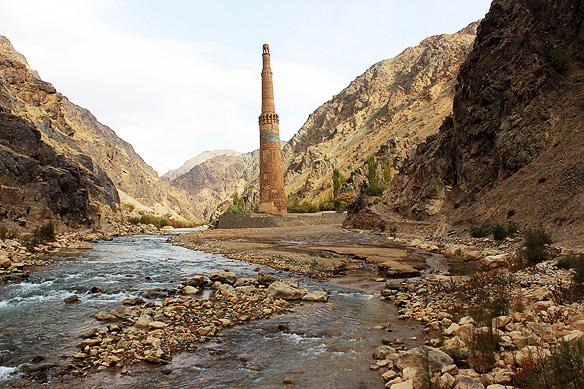
Minaret of Jam is all that remains of the 12th Century Ghurid summer capital Firozkoh, meaning Turquoise Mountain.
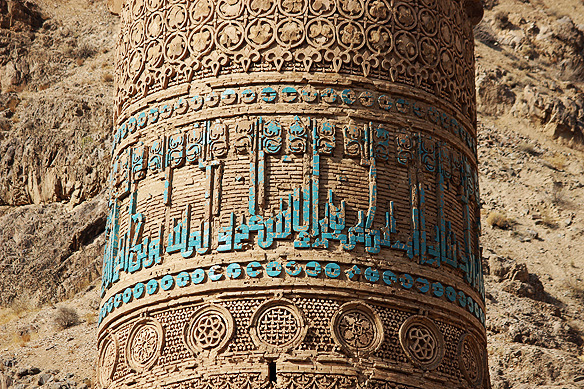
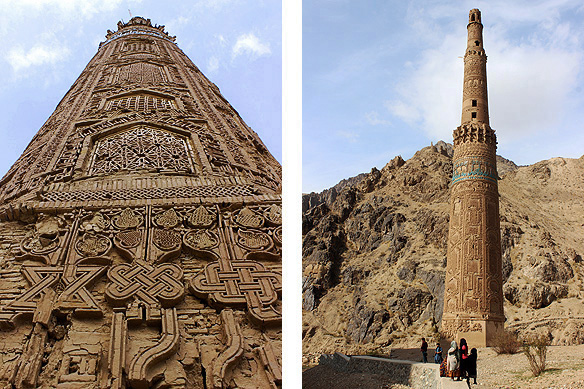
Made of fired mud-brick, the 65-metre-high minaret is covered with geometric and floral motifs typical of the Ghurid style. Sultan Ghiyasuddin’s name is etched out in glazed blue tiles in Kufic script, the only colour on the minaret.
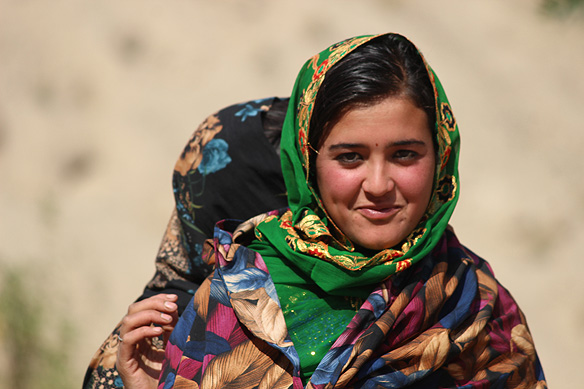
Pashtun woman at the Minaret of Jam.
DAY 5: FRIDAY, 27 OCTOBER 2023: FROM DARKNESS TO THE LIGHT OF CHISHT
I arrived late last night in Chisht. My driver Sher Aga had to be hypervigilant over the slippery desert-sand cliffs which dropped straight to the Hari River far below. The dirt roads were bereft of any kind of barriers.
Unlit as far as the eye could see, the darkness was broken only by a sole moon shimmering in the sky and its twin in the river, and the occasional headlights of an unregistered shared taxi. By the way, registration of vehicles is not mandatory in Afghanistan.
My lodging this time is a three-roomed inn with mud walls and an outhouse loo, flanking a windy highway. By now, bathrooms have become immaterial. My priority is blankets which my room has the warmest so far.
When I wake up with the sun, I cannot believe how well I am sleeping, or how healthy I feel. My tummy, bladder, throat, and head are all at their best behaviour, even though there is no comfort as such or fancy meals. In fact, some days, there are no meals. Only a staple breakfast of fried eggs, Afghan bread, and black tea.
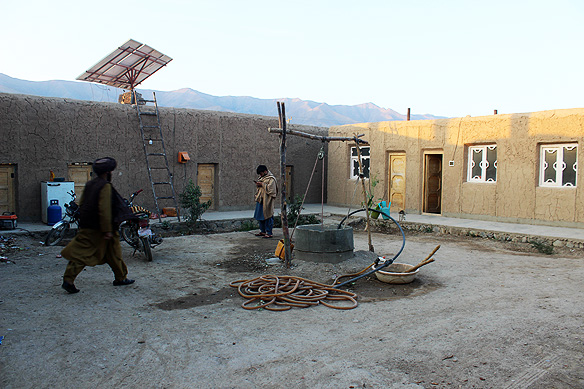
Khoistan Shariq, my inn in Chisht.
Chisht is the hometown of the Chishti Sufi saints who settled in Ajmer, Delhi, and Agra [in India] from the 12th Century onward. My fixer/ translator Obaid has never heard of the Chishtis and is clueless about any site associated with them. This morning, I am the guide. We soon learn the Chishti complex [10th – 12th Century], comprising the mausoleums of Khwaja Abu Ahmad Abdal Chishti, Khwaja Abu Muhammad Chishti, Khwaja Naseeruddin Abu Yusuf Chishti, and Khwaja Qutubuddin Maudood Chishti, along with their khanqahs is not far; just next to the bazaar.
A lone lanky Taliban guard walks over to me, asking me where I am from. “Hindustan.” His bony face immediately breaks into a warm smile; he nods his permission for me to wander around.
I wonder if Chisht’s Sufi saints’ descendants ever made their way back from their new homes and lives in India. I wonder if I will ever find my way to where my ancestors lived across the Indus River. For now, nothing matters. Except being here, in this moment.
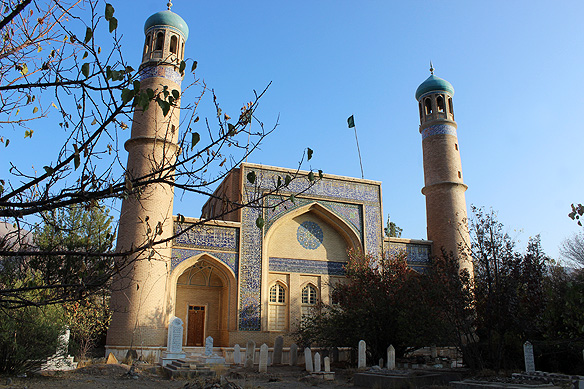
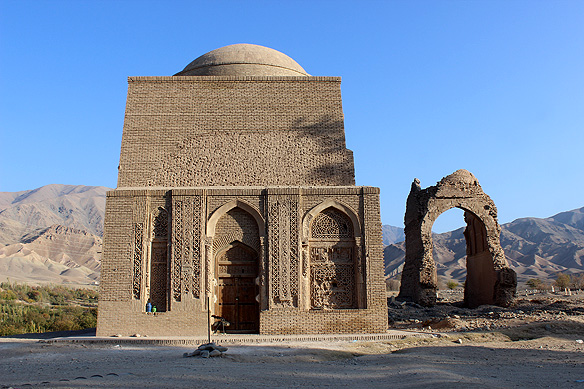
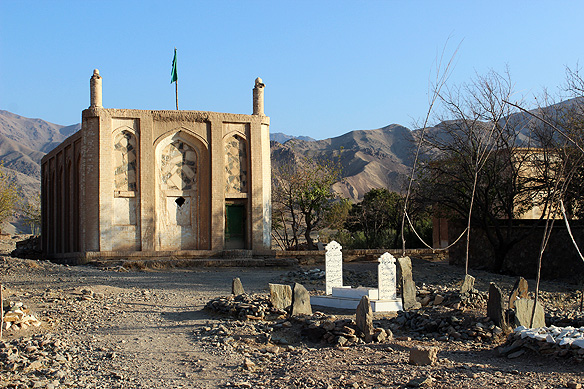
Tombs and khanqahs of the Chishti Sufi saints [10th to 12th Century]. From top to bottom: Khwaja Qutubuddin Maudood Chishti’s mausoleum, Khanqahs of the Chishti saints, and Khwaja Abu Ahmad Abdal Chishti’s mausoleum.
DAY 6: SATURDAY, 28 OCTOBER 2023: FROM EARTHQUAKES TO TIMURID GLORY AND BACK TO EARTHQUAKES IN HERAT
It is 4:57 AM. Everything in my room in Herat city is shaking. My bed, the table next to it, and my phone on it. I tell myself it is just a dream, but everything is still shaking. It is an earthquake 3.2 on the Richter Scale.
I have a busy day ahead of me. Very different from the past five days of roughing it out on an offroad trip through the Hindu Kush and remote mountain desert villages, exploring Afghanistan’s only two UNESCO World Heritage Sites, first national park, and Chishti Sufi centre.
With a suave Persian Herati as my city guide, the day is about 15th Century Timurid opulence, courtesy the Timurid Sultan Shahrukh Mirza, his wife Gawhar Shad, and Sultan Husayn Bayqara. Having decided to shift the capital from Samarkand to Herat, the Timurids left no stone unturned in beautifying the city recently devastated by first Genghis Khan, and then Tamerlane.
Up came the stunning Musalla Complex, Shahzade Tombs, and Khwaja Abdullah Ansari Complex. Jami Masjid, aka the Great Blue Mosque and Ikhtyaruddin Citadel got a splendid makeover. The royal family covered the whole city in exquisite tilework, befitting its role as not just their capital, but a centre of Persian arts and culture. They seemed to be determined to make it glorious enough for a traveller after 500 years to be still captivated with the city.
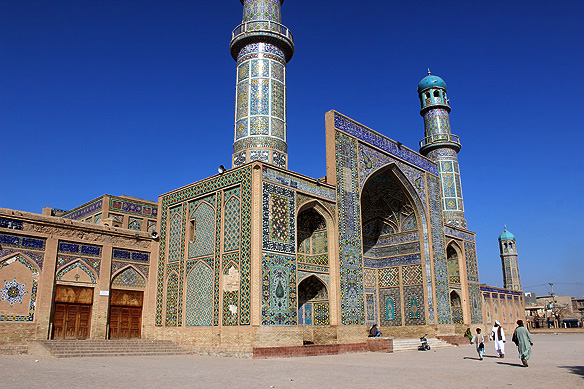
Herat’s Great Blue Mosque or Jami Masjid was built by the Ghurids in the 12th Century. The stunning tile-work on it is the legacy of the 15th Century Timurids.
My ‘sightseeing’ is interspersed with a stroll through exotic bazaars, an aluminium foil-wrapped burger, and some incredible coffee. In-between there is also one more earthquake. This time one of 4.5 in which life simply carries on, unperturbed. We are at the Great Blue Mosque. In front of it are rows of tents from the catastrophic four earthquakes measuring 6.3 each which took place just two weeks ago.
Late at night, 11.57 PM to be exact, there is another earthquake. It is also the strongest I experience in Herat at 5.0.
It does not last for more than a few seconds, but they seem to be the longest seconds I have ever lived through. I get out of bed, pack my luggage, wear my abaya, and then lie down again. In case I need to evacuate the hotel, I am ready.
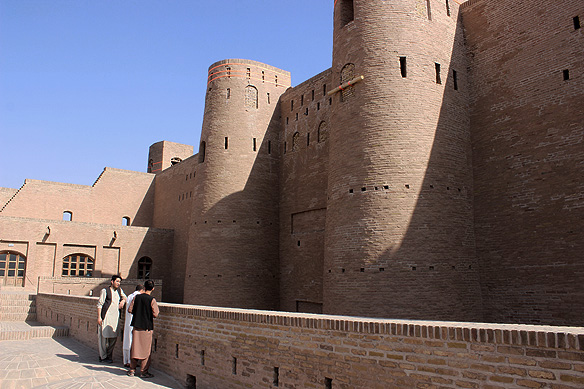
The gigantic Ikhtyaruddin Citadel traces itself back to 330 BC and Alexander the Great’s victory over the region.
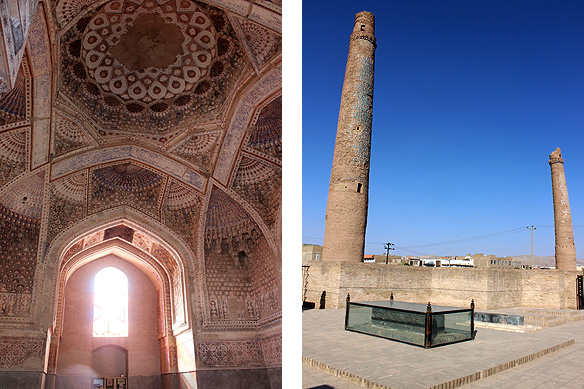
Gawhar Shad’s Musalla Complex originally comprised of madrasas, mosques, and mausoleums with 20 minarets piercing the sky. All that remains now is her own impressive mausoleum and five, albeit wobbly, minarets.
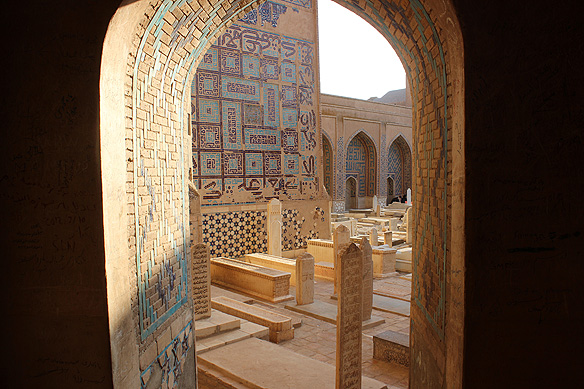
An ensemble of poetic Timurid tile-clad buildings, the Khwaja Abdullah Ansari Complex is dedicated to Herat’s 11th Century patron poet-saint.
DAY 7: SUNDAY, 29 OCTOBER 2023: BACK TO KABUL WITH A PARADIGM SHIFT
It turns out there is no need to evacuate the hotel. When I peep out of my room in the morning, I see the hotel staff busy going about their tasks as usual. “These were just after-shocks from the earthquakes two weeks ago,” they assure me with a comforting smile.
Earthquakes have a tendency to create a paradigm shift in one’s entire mindset. Coming so close to possible death, so close to losing everything—can be life-changing. Not that I had much to lose. Just a backpack and cabin bag. But what about my dreams, my goals. Was I ready to lose those? Was I ready to lose the music my heart danced to?
With this thought and my content heart by my side, I get on the plane for Kabul, as well as reach the end of my Afghanistan series.
– – –
Thank you for accompanying me on my journey through Afghanistan. In case you missed any of my posts in the series, here they are:
- Taliban Afghanistan, a solo Indian woman traveller, and help from unexpected quarters
- Travel shorts: Hazrat-e Mazar, Afghanistan’s most sacred site
- Top 15 memorable things to do in Kabul, Afghanistan’s capital
- The complete travel guide to Ancient Bactria and Silk Road’s fabled city: Balkh
- Photo essay: In search of Kandahar, the Taliban’s former capital
- A guide to solo travel in Afghanistan for the Indian traveller
- Ghazni and its indomitable Sultans
- Persian Herat and it hidden wonders
- Travel diaries: From Bamyan to Herat via the Minaret of Jam [this post]
Travel tips:
- Accommodation: Please note these were often the best or only available lodgings – Noorband Qalla Hotel [Bamyan], Wasim Hotel [Ghor], Khoistan Shariq [Chisht], Amiri Hotel [Herat].
- Recommended restaurants: Shamama in Bamyan for delicious kebabs, and Afghan Coffee in Herat for fabulous coffee.
- A big shout out to my fantastic driver Sher Aga, a Hazara from Bamyan, and fixer/ translator Obaid, a Pashtun from Mazar-e Sharif. Obaid was also my local tour operator [+93 77 842 6816].
[Note: This blog post is part of a series from my solo travel to Afghanistan for 18 days in October 2023. To read more posts in my Afghanistan series, click here.]
 rama toshi arya's blog
Pingback: taliban afghanistan, a solo indian woman traveller, and help from unexpected quarters | rama toshi arya's blog
Pingback: a guide to solo travel in afghanistan for the indian traveller | rama toshi arya's blog
Pingback: the story of qutub minar | rama toshi arya's blog
Pingback: a heritage buff’s guide to the eight cities of delhi | rama toshi arya's blog
Truly no one did in this contemporary era, what you have done.
Covering Afghanistan 🇦🇫 so deeply is not an easy task. I salute 🫡 your daring efforts.
LikeLiked by 1 person
Thank you, Yusuf. Your walks made me fall in love with this kind of Indiana Jones indepth-travel into Central Asian, Islamic, and Sufi heritage. 🙂 This deeper understanding started with your walks and your generous sharing of knowledge. So, thank YOU! Afghanistan will always be very special to me, and I am happy I could share its incredible treasures with other heritage enthusiasts. Especially you. I hope some day you discover its beauty for yourself, in person.
LikeLike
NICE POST 💚💯
Blessed and Happy afternoon from Spain 🇪🇸
Greetings 👋
LikeLiked by 1 person
Incredible post. The pictures are amazing. I felt I was actually there and seeing it thru your eyes. May you continue to write and create a window to the world for others to get a glimpse of mankind’s historical heritage. I look forward to more posts.
LikeLiked by 1 person
Thank you. I really enjoy writing and photography. And in the process, if someone else can get a glimpse into these wonderful places, it’s the icing on the cake for me. Coming up next is my Turkmenistan series, another fabulous country. Right next to Afghanistan, but there could be no two neighbours more different from each other. 🙂
LikeLike
What a finale! I’ve really enjoyed all the posts but I was looking forward to this one as you covered the three places in Afghanistan I would have really loved to see – Bamiyan, the Minaret of Jam and the Band-e Amir – and your descriptions and photographs bring me as close as I’ll get. You could say its sad that so very few get to see them but being more or less alone in those places must have added to your sense of pleasure and achievement. You mention Ibn Battuta and yourself as kindred spirits – well I too have a great admiration for him but particularly for Xuan Zang who you also mention and whenever I’ve been in a place he visited I felt a special ‘achievement’ isn’t the right word – maybe sensation – and I imagine you know what I mean. But just as interesting are your descriptions of the mundane – the cold, the smells, the dirty blankets, the basic food, the toilets – not to mentions earthquakes! and the reactions of the people you met – these things make possibly the most indelible memories of a fantastic trip. Many thanks Rama!
LikeLiked by 1 person
I am truly humbled by your feedback on my post. It means a lot. I wanted to capture everything about that one week which will forever remain etched in me. Guess I succeeded to some extent. And like you said, it was not just the sights. The ordinary parts were just as extraordinary for me.
Yes, I understand the feeling of following in the footsteps of the likes of Xuan Zang. Xuan walked across nations and empires in his pursuit to visit sites associated with Buddha. He was an incredible man. Fearless. There is a Buddhist temple in Rajgir, a town where he spent some time; It has this humongous map showing the path his travels took.
I hope you enjoy my Turkmenistan series too. Very different country from its neighbour Afghanistan, but equally interesting.
LikeLike
What a fantastic journey you have undertaken! You are a true adventuress, and the fact that you are prizing these wondrous sites because of their history makes you even more of an amazing person. The description given about the Buddhas by the Chinese traveler who spoke of the marvelous red and gold colors in his writings must have made you picture what they would have been like and how fabulous they would have been to see! The Jam minaret that was the focal point of your travelling over the Hindu Kush mts is truly magnificent. It is a shame it isn’t more accessible for others to see as well, but then your journey would have transformed itself into just an ordinary adventure rather than the extraordinary one that it was. Thank you for sharing this other world with those who will probably never see such things or hear about the journey they would have to make to experience them.
LikeLiked by 2 people
Thank you, June. For me, my travels are my greatest riches. Like I am sure it is for you, and most travellers. I feel very lucky that I could do this journey. It’s an experience. And an incomparable one at that. As you rightfully said, a lot of the minaret’s heady charm lies in its inaccessibility. Imagine, if there was a highway going straight to it with a McDonald’s in front of the site. What a disaster it would be! 😄 I, for sure, don’t think I would have been that excited about visiting it. 🙂
LikeLike
Wonderful pictures! And what an amazing trip you have had.
LikeLiked by 1 person
Thank you. 🙂 It was an amazing trip indeed. One that has etched itself into my very being. Journeys such as these change something in us. We do not notice it at that time, but a deep paradigm shift in who we are invariably takes place.
LikeLiked by 1 person
Yes, I can understand that.
LikeLiked by 1 person
Your Aghan travel diary was a delightful escape! The Minaret of Jam seems like a hidden gem, and ofcourse the journey is even better..
the Afghanistan series finale was engaging, Your words make me feel like I’m right there, kudos to the gripping writing. Looking forward to more. Maybe Japan :p
LikeLiked by 1 person
Am so happy you enjoyed the post, Yash. Kehte hai na, the journey is as important as the destination. In this case, the journey was the destination. 🙂 Coming up next for now is Turkmenistan. Hope you like reading about it too. 🙏
LikeLike
This truly was an epic journey, Rama. When we let our heart lead us to wherever it desires, it’s incredible to think how far it can take us. I knew the Minaret of Jam was located in a remote area, but I had no idea it was *that* remote! The very basic facilities at the hotels, the dirty bed sheets, the earthquakes, these are what make a journey even more memorable, apart from the destination itself.
LikeLiked by 1 person
I did a similar journey in 2004 as well. Got myself a 4×4, driver and translator/ guide, and went on a week, mainly off-road, trip through the monastery towns of Tibet. Tibet was very different back then from how it is now. It was an incredible journey, on the rooftop of the Himalayas. These kind of travels stay with us, in our hearts and minds, all our lives. 🙂
LikeLiked by 1 person
Amazing!
LikeLike
How beautiful, and how exciting! You are an adventurer in the best sender of the term. I am glad you lived to tell your tale 😊
LikeLiked by 1 person
Many thanks, Harini. Hehe, I don’t know about being an adventurer. I am scared of lizards, and Mumbai’s old rattling lifts. But, yes, I am not scared of road trips through remote areas, and strangely enough I am never scared of other humans. 😄 It was a wonderful road trip, and I am glad I followed my heart. Thank you for stopping by. It was good to hear from you again!
LikeLiked by 1 person
Here I am stuck in my rut, but I’m not scared of lizards and I love those rattling lifts that you can look through – my own brand of courage😀! But it’s wonderful to read about all the exotic places you visit and heartwarming to hear how you get on with all sorts of people. That Pashtun woman is lovely!
LikeLiked by 1 person
If you are not scared of lizards, in my eyes at least, you are incredibly brave! 🙂 I found Afghans in general to be very good-looking. Pashtun women have this direct gaze and confidence which is very attractive. Am glad you liked the post. Thank you!
LikeLiked by 1 person
This has been a wonderful series Rama! Thank you for sharing with us these places that we might not get to. Maybe one day I will be able to get here, who knows!
LikeLiked by 1 person
Thank you, Anna for accompanying me on this journey! Truly appreciated. Hopefully, someday, you too will make it to these places. 💕
LikeLiked by 1 person
What an amazing journey. We saw the Hindu Kush from across the Panj River.
I know you were a fair ways away from that, but the mountains look very similar. I’ll have to go dig out our pictures of Qutub Minar to compare to Minaret of Jam. What an fabulous structure and today it really is in the middle of nowhere! Interesting that Genghis Khan and his army didn’t destroy it. Apparently he did the same for Kalon Minaret in Bukhara. Great post! Maggie
LikeLiked by 1 person
Thank you, Maggie. 🙂 The Hindu Kush go into Tajikistan and Pakistan, so you were, in fact, seeing the Hindu Kush. They are a majestic range. And the perfect setting for the Minaret! Genghis Khan was quite the unpredictable chap indeed! I have linked the post to Qutub Minar’s one so readers can compare the two. It’s the bit of text that is in purple and bold. Thank you for coming along with me virtually on this journey. Truly appreciated. ❤
LikeLiked by 1 person
We were only in the Pamirs but could sew Hindu Kush in the distance.
LikeLiked by 1 person
A travelogue par excellence. Such wonderful photography too… especially capturing the warmth of the human side of travel so well. Really goes to show how reposing a little bit of faith on one’s sense of adventure can be richly rewarded. This blog is eye opening in so many ways…helps look at Afghanistan in a wholly different light. All the very best for your continued exploration of roads less trodden.
LikeLiked by 1 person
Thank you, Ratnendu! ❤ Truth is, that to a large extent my decision to travel to Afghanistan was inspired by the fabulous heritage walks I attended in Delhi, including yours. Learning about Delhi's history, and its interconnections with Central Asian history, filled me with a deep desire to see these other sites in person. And yes, I am glad I did, and I did not let anything come in the way. 🙂 Coming up next is Turkmenistan. I hope you enjoy this series too. Not as poignant as Afghanistan, but definitely just as fascinating!
LikeLike
Thanks for taking us deeper into the Afgan territory and culture. Love the pictures and the travelogue
LikeLiked by 1 person
Many thanks, Arvind. I enjoyed writing about Afghanistan as much as I enjoyed exploring it. It was unlike any of my other travels. 🙂
LikeLike
I’m sure it must have been different, Rama 😊
LikeLiked by 1 person
Rama, thank you for writing and sharing yet another beautiful and spell binding post. You have opened my eyes and mind about Afghanistan.
Media mostly covers the rubble left behind after years of wars, its rough terrain, a breeding ground for terrorism, and the brutality of the Taliban.
There is so much beauty to be found amongst its people, its landscape and its art from yesteryears.
Your writing and photographs reciprocate the love, the honor, and the respect the Afghani people bestowed on you.
You have so much courage to travel alone to such remote parts. I salute your brave, crazy heart.
LikeLiked by 2 people
Thank you, Bhavana. 💕 I am glad I have been able to show what an incredible country Afghanistan is. The affection I received made it very easy for me to love, both the country and its people, back. Most opinions are, unfortunately, based on hearsay and the media. It is only when we see a place and connect with its people with an open heart, in person, do we really know them. It is especially the case, I have learnt, for countries which are ‘different.’ PS. My heart says thank you to you too. 🙂
LikeLike
Pingback: travel guide: turkmenistan’s 3 secret unesco-listed world heritage treasures | rama toshi arya's blog
Pingback: 11 unique experiences only to be had in turkmenistan | rama toshi arya's blog