Tourist number: 1933.
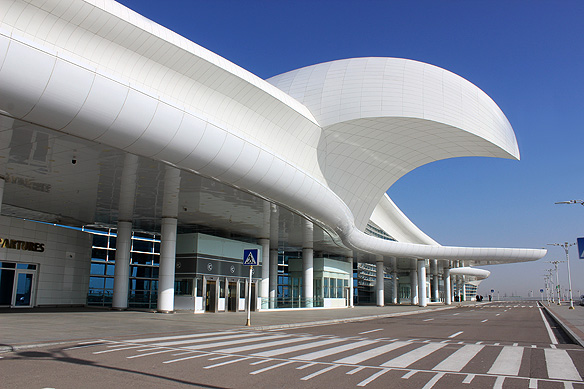
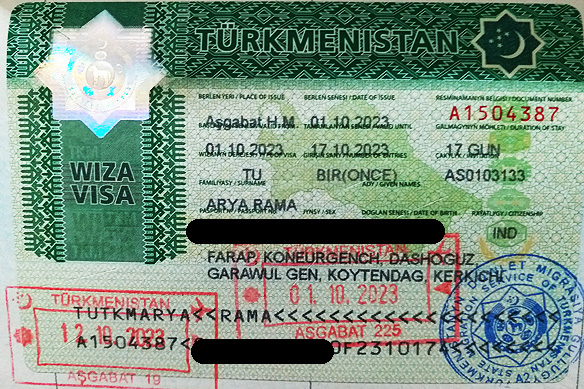
It is the early hours in the morning of 1 October, and I am at the gleaming falcon-shaped marble-encased airport in Ashgabat, capital of Turkmenistan. I ask the official at the visa counter what does this line on my entry stamp mean. He explains that 1,932 tourist visas had been issued in 2023 before mine. I am 1,933rd. This does not include the 3-to-7-day transit visas, by-the-way.
With a silly grin plastered on my face, I tell him he has no idea how much it means to have that sticker on my passport. Many months of planning and three back-to-back flights, from Goa to Muscat to Dubai to Ashgabat, and I am finally, finally here.
I guess my enthusiasm is contagious. The otherwise poker-faced official gives a little smile and wishes me a happy stay. I respond with a beaming grin.
Outside, shifting lights on the airport’s facade recreate a falcon’s flapping wings.
Bordered by Afghanistan, Iran, Kazakhstan, and Uzbekistan, Turkmenistan is flanked by the Caspian Sea to the west. Over 80 percent of the country is covered with the Karakum Desert, making it one of the driest countries in the world. Under this barren stretch is the world’s fourth largest gas reserve.
Till 1991, the country was a part of the USSR. After independence, it was ruled by a series of dictatorial regimes determined to keep the country inaccessible, deeply nationalist, and independent, making it the second most isolated country after North Korea. If that did not make it different enough, Turkmenistan is the only permanently neutral country in the world which prevents it from becoming part of any multi-national defence organizations.
Though technically a new country, its people, the Turkmen, have a history and heritage that goes back 4,500 years. Straddled across the lucrative Silk Road, their homeland hosted some of the greatest cities of the ancient and medieval world. Carpet-weaving and horse-breeding have been an integral part of Turkmen nomadic culture for millennia with complex meanings and rituals attached to it.
Turkmenistan’s geological heritage goes back even further—150 million years—with a plateau imprinted with dinosaur footprints and fossilized ravines which once formed the seabed of a prehistoric ocean.
All these have contributed in creating a country unlike any other, and offering travel experiences not to be found anywhere else. Here are 11 experiences one can only have in Turkmenistan, because it is the kind of country it is. Wishing you happy travels, always. ❤
1. EXPLORE ASHGABAT, ‘THE CITY OF LOVE’ WITH 1,000 MARBLE-ENCASED BUILDINGS
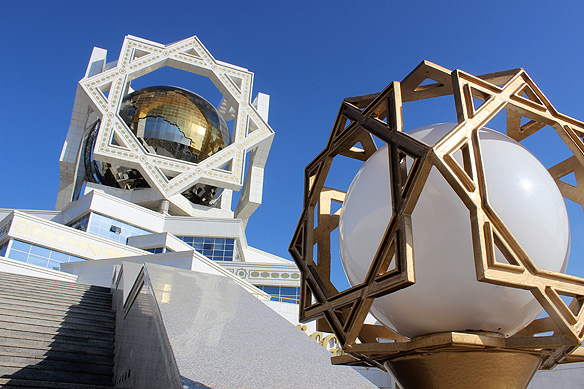
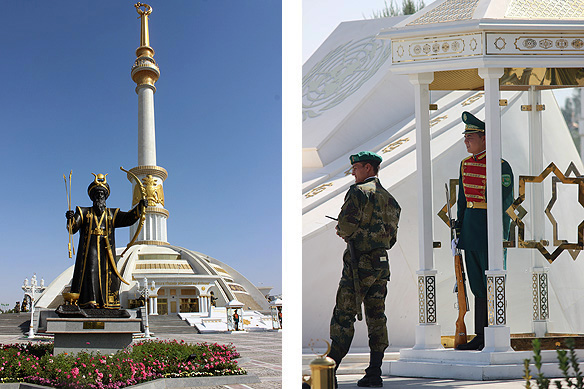
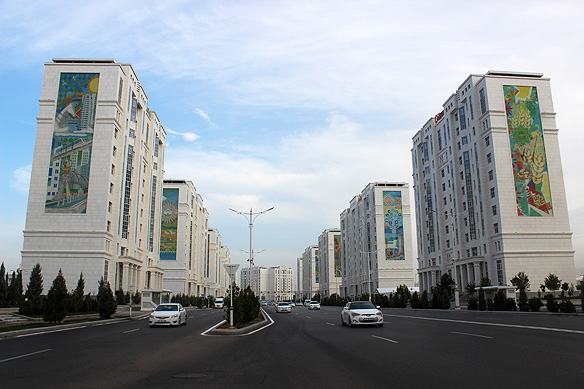
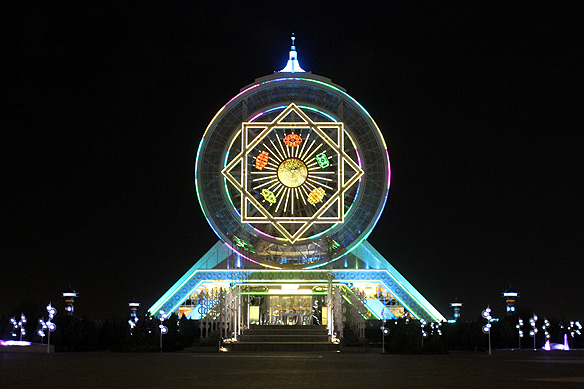
Ashgabat, meaning ‘City of Love’ in Arabic, is Turkmenistan’s capital designed and built by its first president Saparmurad Niyazov. Five million cubic metres of imported marble has been used so far to encase some 1,000 buildings spread over 12 sq. miles. The city even won a Guinness world record for the enormous amount of marble used, apart from having the highest number of fountains [26 of them] in a public space, and the world’s largest indoor Ferris wheel. As if that were not enough, Ashgabat has the world’s largest buildings in the shape of a star and a horse.
There are also fantastical monuments galore dedicated to Alabai [the national dog], bicycles, and the Ruhnama [Book of the Soul], in addition to the country’s independence and its constitution. Come night-time the whole city, criss-crossed with spotless brightly-lit streets, is lit up in neon lights making it kind of Las Vegas-ish, except that it is all deserted. Not enough people live in Ashgabat and it is illegal to wander around aimlessly post 11 pm.
NOTE:
You may also like to read Photo Essay: Unravelling Turkmenbasy, the Rukhnama, and Ashgabat
2. SPEND A NIGHT AT THE RIM OF A BURNING INFERNO CALLED ‘GATES OF HELL’
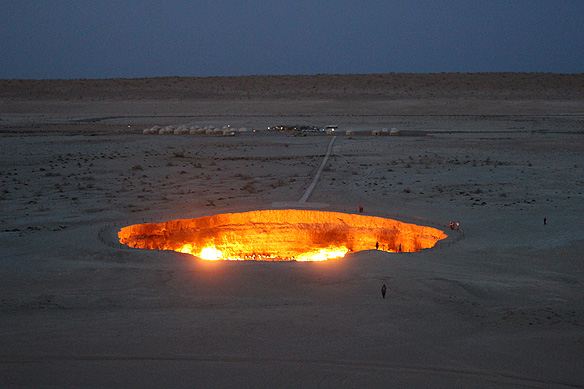
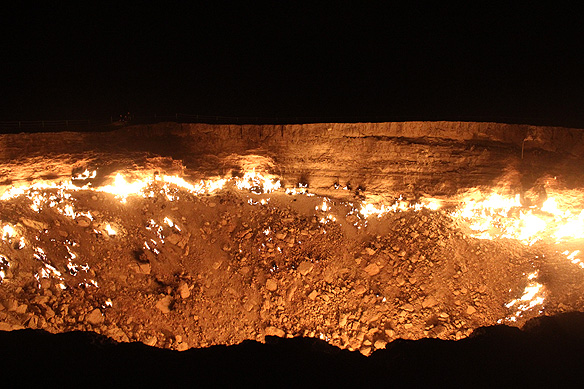
Standing on the rim of the Gates of Hell, deep in the Karakum Desert, is perhaps the closest one can get to Dante’s Inferno whilst alive. The blood-red flames, licking the air in a pit the size of a football field, are at their most ominous at night. For the more pragmatic souls, the gas crater, burning non-stop since 1971, is a peek into Turkmenistan’s astonishing gas reserves—the fourth largest in the world.
Known locally as Darvaza and officially as the ‘Shining of Karakum,’ the gas crater is an oil exploration gone awry, and one of the country’s most popular attractions. Get yourself a comfy spot and indulge in a front row uninterrupted view of a spectacle like no other. Oh, and yeah, whilst at the Darvaza, do pop in at the mud crater and water crater in the vicinity.
NOTE:
You may also like to read At Turkmenistan’s Darvaza: The Gates of Hell
3. MARVEL AT MERV, THE OLDEST AND BEST-PRESERVED OASIS CITY ALONG THE SILK ROAD
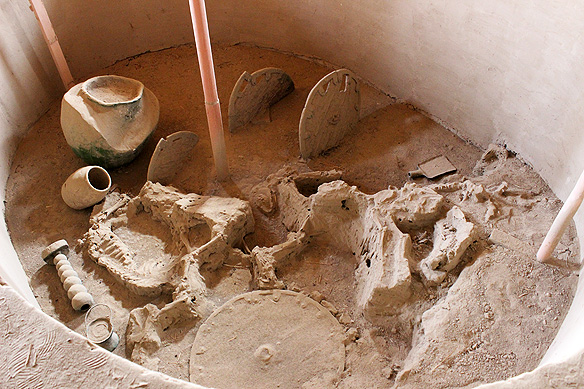
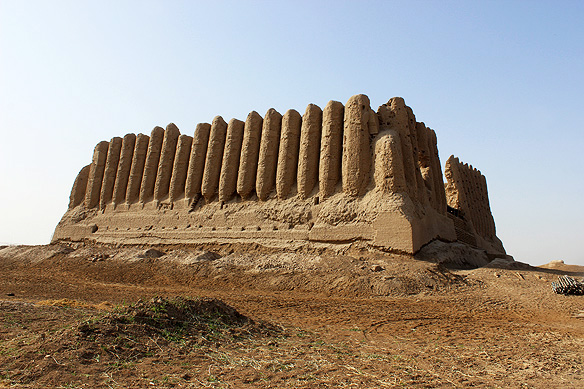

Merv is Turkmen heritage’s grandest showpiece and the country’s very first UNESCO World Heritage Site [1999]. The oldest and best-preserved oasis city along the Silk Road in Central Asia, it is spread over 1,236 hectares and covers four millennia of built heritage. When the Murgab River changed course from east to west, new bigger cities were built next to the old ones, which were abandoned. The result is a unique collection of walled cities from different epochs which were neither destroyed nor built over.
In the 11th and 12th Centuries, under the Great Seljuks, Merv reached its zenith earning it the nickname ‘Queen of the World.’ But its end was, sadly, just round the corner. Genghis Khan’s army attacked Merv in 1221, killing its entire populace.
Highlights include the foundation [burial] pits in Bronze Age Gonur Depe, the walled cities of Erk Kala, Gyaur Kala, and Soltan Kala, the Mausoleum of Seljuk Sultan Ahmad Sanjar, and the two Koshks Greater and Lesser Kyz Kala. Koshks were gigantic pre-Islamic multistorey mansions of the elite.
NOTE:
You may also like to read Travel Guide: Turkmenistan’s 3 Legendary UNESCO-Listed Treasures
4. WANDER THROUGH THE RUINS OF MEDIEVAL KONYE URGENCH
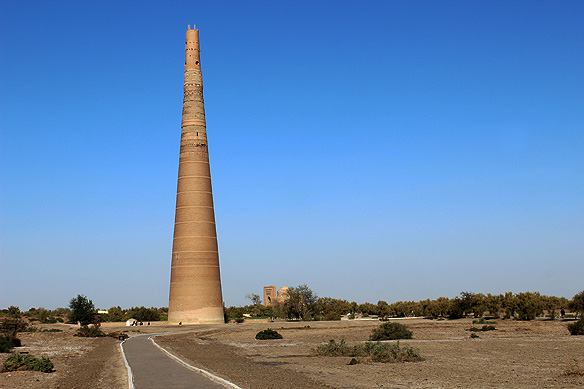
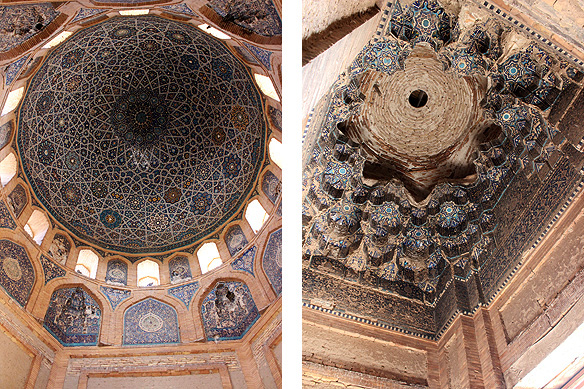
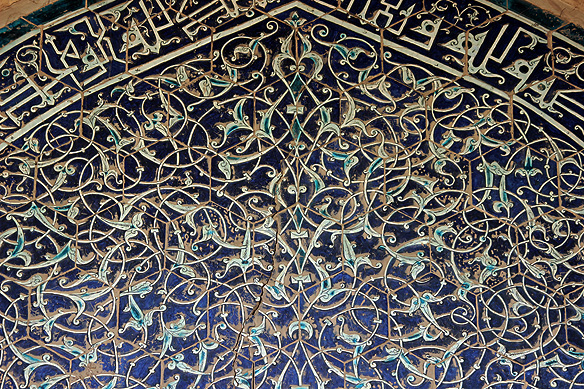
To the north of the country, a mere 20 kilometres from the Uzbekistan border is Konye Urgench, Turkmenistan’s second UNESCO World Heritage Site. Precursor to the glorious Uzbek monuments, the capital of the Khwarezmshah Empire rose to power after the fall of the Great Seljuks. Like Merv, Konye Urgench was also razed by the armies of Genghis Khan. But whilst Merv was wiped out, Konye Urgench rose like a Phoenix from the ashes following the Islamization of the Golden Horde, its new rulers.
Compact and arranged around a meandering pathway, its monuments are filled with exquisite medieval detailing. Do not miss the stunning 14th Century Turabeg Khanum Mausoleum with its mosaic tile roof comprising 365 floral motifs, Kutlug Timur Minar which historians believe predates the Minaret of Jam in Afghanistan, Nejameddin Kubra Mausoleum part of the 360 Pirden Sowgat pilgrimage route, and the 12th Century tombs of father-son duo, Sultans Il Arslan and Tekesh, with their conical roofs.
5. GO OFFROAD AT THE GEOLOGICAL GRANDEUR OF YANGYKALA CANYON
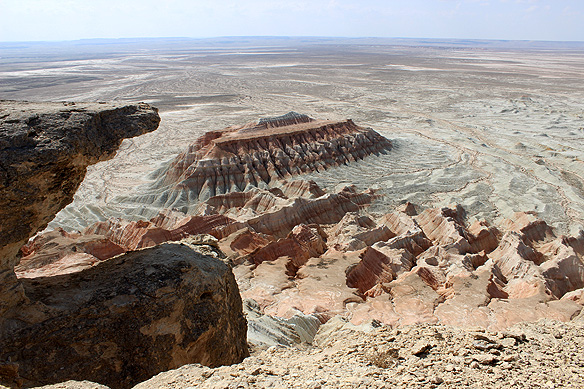
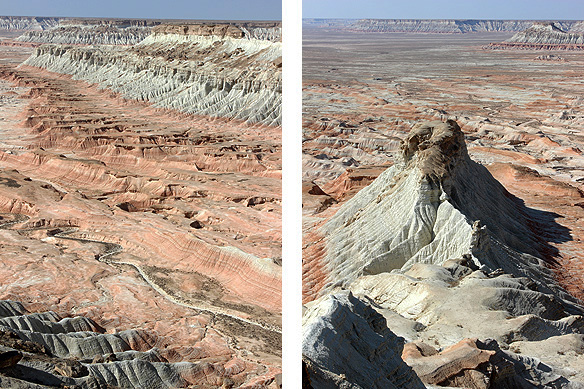
Yangykala Canyon may well end up being not just a highlight of your Turkmenistan trip, but a highlight across your travels to date. It was definitely mine. Midway between Balkanabat and Turkmenbashi in Western Turkmenistan, the canyon spreads across 25 kilometres with multiple viewpoints along the way, each more dramatic than the previous. The most photographed and surreal one is Crocodile’s Mouth.
Five-and-a-half million years ago, the canyon was the ocean bed of the prehistoric Tethys Sea. When the land masses collided to create continents and the oceans receded, this large expanse was revealed. Ripped by winds, back then and even now, ‘Yangi Kala’ is Turkmen for ‘Fire Fortress.’ An appropriate name to describe the white, ochre, and pink banded cliffs and bizarre shapes, wouldn’t you say?
6. DIVE DEEP INTO THE EARTH TO SWIM IN A SULPHUR POOL
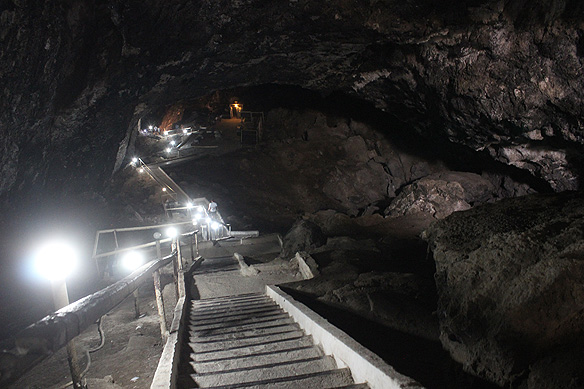
Don’t get taken in by the nondescript metal cage clinging to the foot of the Kopet Dag mountain wall, or the list of swimming etiquette to be followed once inside Kow-Ata. If you find yourself going “Aah, just another cave!” nothing could be further from the truth. Once inside the opening, a dizzying spread of dark, initially steep, and thereafter slippery, steps lead deep into the bowels of the earth, 55 metres below you. The zigzagging path ends in a Sulphur compound underground lake that claims to have medicinal properties.
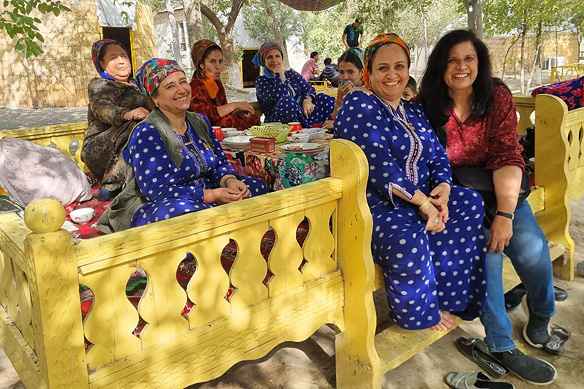
Kow-Ata, meaning ‘Father of the Caves’ because of its impressive dimensions measuring 250 metres in length and 50 metres in width, is a hot favourite with both Turkmen and the few foreign tourists the country sees. Once you have had your fill of the dank waters make your way back to the stalls at the entrance, and join one of the many family gatherings that are in full swing for a laugh and some kebabs.
7. STEP INTO NOKHUR’S WORLD OF SUPERSTITION, HERBS, AND GRAVES TOPPED WITH MOUNTAIN GOAT HORNS
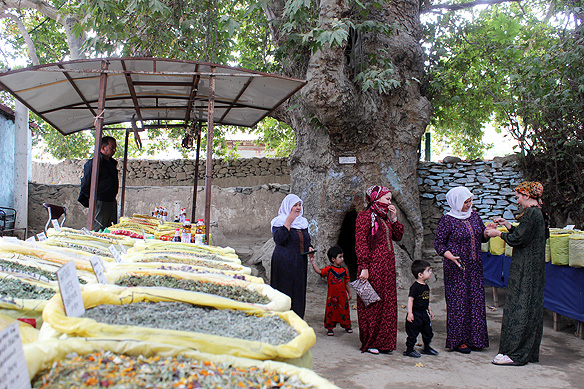
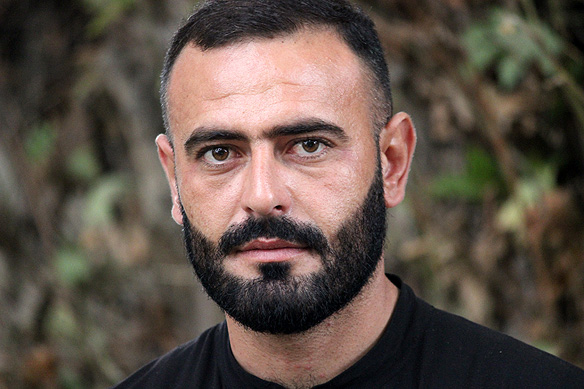
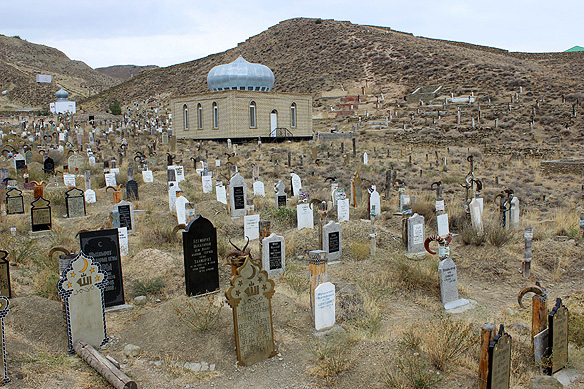
Nokhur, a village in the Kopet Dag Mountains, is starkly different from mainland Turkmenistan. Why, even its residents look poles apart in ethnicity, speak a different language, and practice rituals unique to themselves! Known as the Nokhurlis, a closed and conservative tribe, they believe they are the descendants of Alexander the Great’s Greek legionnaires.
Gravestones topped with mountain goat horns spread over silent empty brown rolling hills here. The horns, a pre-Islamic animistic tradition still fervently followed, are meant to keep evil spirits away. Atop one such hill is a shrine in a cave, strewn with nails. It belongs to the infant girl-saint Gyz-Bibi, and is one of the many sacred places associated with the Persian legends of Peri or ‘fairy.’ Meanwhile in the market bursting with aromatic herbs is an old wish-granting hollow sycamore tree into which entire families walk into and wish in commune.
8. FOLLOW IN THE DINOSAURS’ 150-MILLION-YEAR-OLD FOOTSTEPS AT DINOSAUR PLATEAU
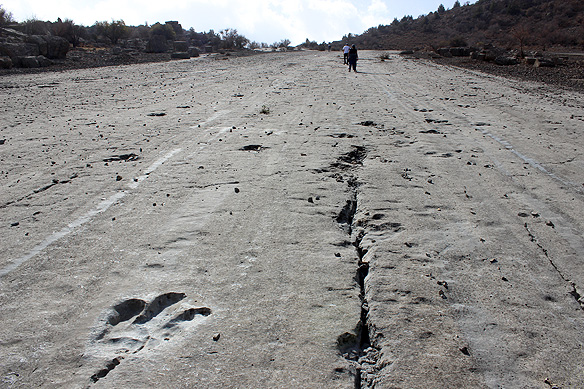
If it is the prehistoric 4-legged variety that defines your idea of adventure, Turkmenistan does not disappoint on that front either. In the extreme north-east of the country is a tilted limestone plateau with a couple of hundred dinosaur footprints. Scientists believe it is the largest such collection in a single place. Measuring 400 metres by 300 metres, the 150-million-year-old slab originally lay under a lagoon with Megalosaurians traipsing across it. After the tectonic plates clashed and the slab was pushed up, erosion revealed the massive footprints scalloped into the smooth slippery surface.
Till the late-20th Century, villagers believed they were the footprints of Alexander the Great’s prancing elephants. Following research by international scientists which proved otherwise, it was listed on UNESCO’S Tentative List in 2009.
NOTE:
You may also like to read Time-Travel and Dinosaur Plateaus in Remote North-East Turkmenistan
9. SHOP FOR TURKMEN SOUVENIRS IN RUSSIANIZED BAZAARS
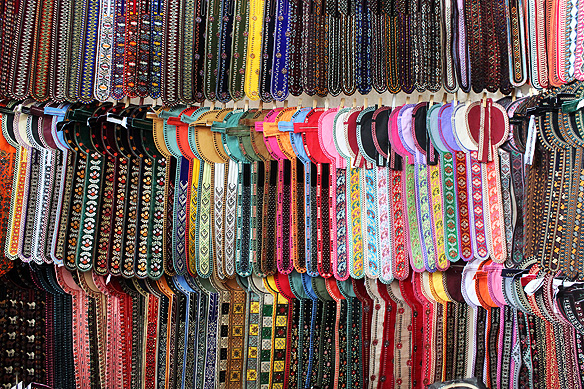
Every major town and city in Turkmenistan has the ubiquitous bazaar on Russian lines stuffed with meat, veggies, Chinese goods, and Turkmen handicrafts. The latter being the key attraction. Watch out for the rows of bright colourful trimmings which are sewed onto the national dress [a long full-sleeved gown], Turkmen skull caps, and vibrant scarves. Head-dresses for the ladies come with their own meanings. Skull caps signify the lady is single, and a scarf, worn knotted at the back, is used by married women.
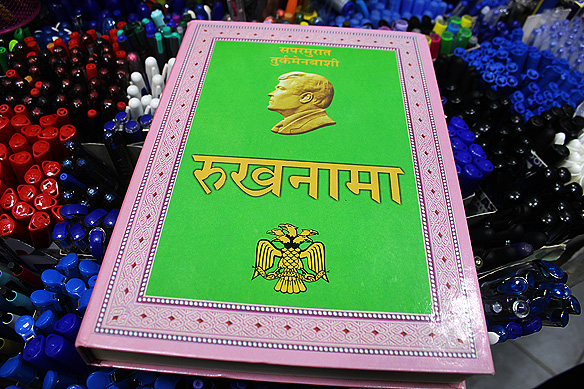
Then there is the Telpek, the sheepskin hat that comes in white and black. A male headdress, it helps maintain a stable body temperature in summer and winter. Also of interest are the heavy velvet gowns trimmed with bling which are worn in the remote villages and pattern-makers for baked bread. However, if the literary arts is more your scene, than nothing beats a copy of the Ruhnama meaning ‘Book of the Soul,’ written by the first president Saparmurad Niyazov aka Turkmenbashy. The book was translated into more than 36 languages, and a copy has even been blasted into space.
10. MAKE A WISH AT KYRK GIZ GROTTO WITH A RIBBON AND MUD
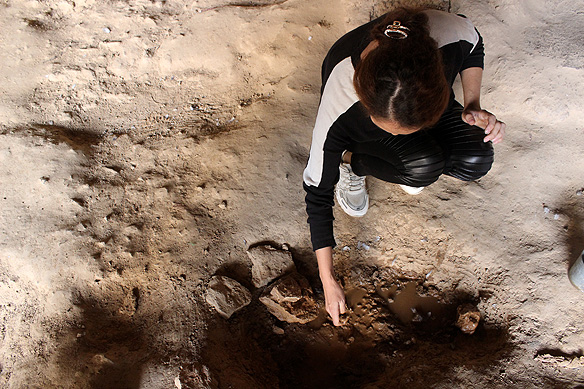
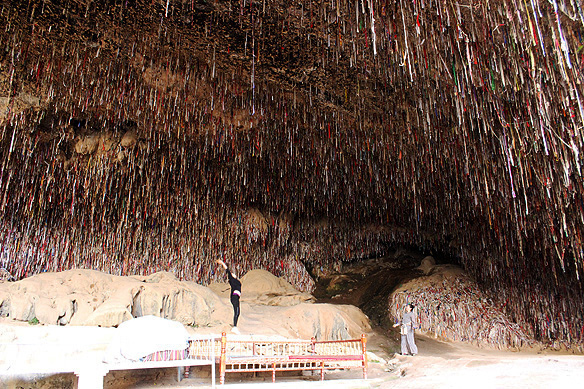
Imagine a humongous open-air cave filled with stalactites. Except that in place of strips of solidified minerals are strips of cloth—each representing a heart’s ardent desire. Sufi shrines and places of worship associated with Persian legends are a common sight across Turkmenistan. It is a legacy of the various empires which ruled over Central Asia over the past millennia. But none is more evocative than Kyrk Giz Grotto in the Koytendag Mountains in Lebap Province.
Turkmen believe that if one can make the ribbon stick, using mud from a stream that runs inside the cave, their wishes would come true. It is common practice for people to travel from across the country to test their destinies here. The result is an astounding work of human faith across time and distance. Do try your luck too. Where else do you get to be part of a collective faith that is in the shape of colourful strips of cloth in a cave placed in the middle of nowhere.
NOTE:
You may also like to read Travel Shorts: Kyrk Giz Grotto, if Ribbons and Mud Could Stick
11. LEARN ABOUT THE WONDERFUL WORLD OF TURKMEN CARPETS
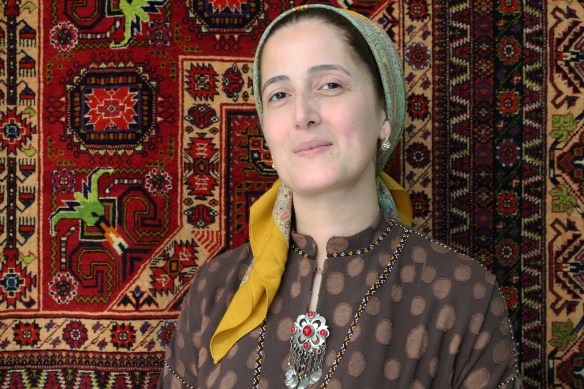
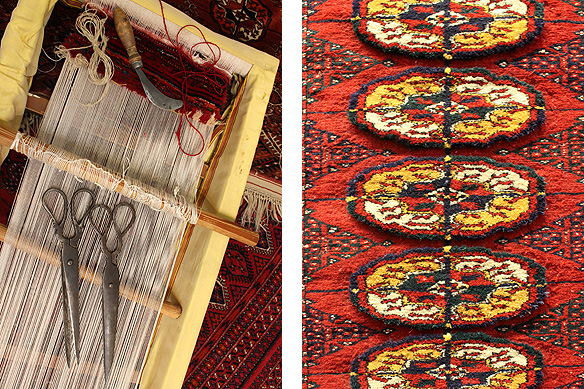
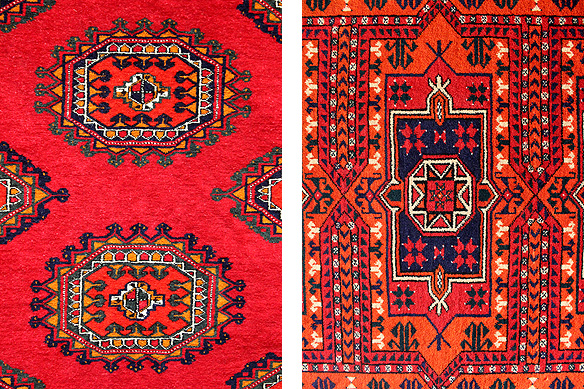
Finally, what is a visit to Turkmenistan without coming up close and personal with its carpets, a UNESCO intangible cultural heritage listed in 2019.
To put things in context, the Turkmen, who are historically nomads, are born on a carpet, buried in a carpet, and decorate their yurts and horses with carpets in the journey in between. Traces of carpets have been found dating back to 2000 BC. Each of the country’s five provinces has its own set of carpet patterns reflecting indigenous life. Yet at the same time, carpet weavers have the freedom to express themselves, making each carpet unique.
Famous across the world for their fine craftsmanship and rich colours, there is a Turkmen saying which goes along the lines: “Put your carpet. I will read your soul.” When Turkmen are about to get married, they express their hopes and desires in a hand-woven carpet, giving the prospective partner the opportunity to peek into who they are and what they expect from the marriage.
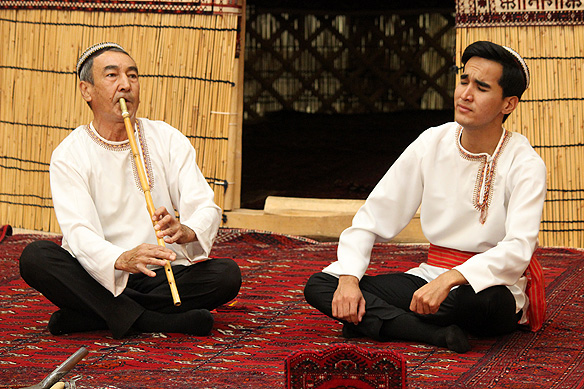
Turkmenistan is the only country in the world which has a Ministry of Carpets, a Carpet Day, and 5 carpet motifs [representing each province] on its flag. And the best place to truly understand this fabulous craft and art form is at the Carpet Museum in Ashgabat which is also the venue for some authentic Turkmen singing that’s broadcast live on state television.
– – –
Inspired to make it to Turkmenistan? Here’s how to go about it. 🙂
Travel tips:
- Best time to visit: Spring and Autumn. Otherwise, it is too hot or too cold.
- Money matters: Bring all your spending money in USD cash. There are no ATMs and foreign cards don’t work. The local currency is Manat.
- Staying connected: Your SIM will not work, neither can you buy a local SIM. Internet is slow. Social media is blocked and so are most foreign news websites.
- Visa: To get a tourist visa [for travel more than 7 days], you will need to book a private or group tour. The tour company will arrange for your Letter of Invitation [LOI]. When you reach Ashgabat airport, make your way to the Visa counter, give them your LOI and passport, and pay for your visa in USD cash at the Bank counter next to it. The visa sticker will be issued in less than 30 minutes.
- Recommended tour companies: Ashgabat Tours and Advantour.
 rama toshi arya's blog
A fascinating round up of this unique country! Did you use advantour for this trip Rama? I am using them to help with my Uzbek trip, i have heard good things about them which i hope are true! X
LikeLiked by 1 person
Thank you, Anna. Glad you have enjoyed the series so far. One last post coming up next week which is more of a literary post. 🙂 No, I did not use advantour, but met their guides and tourists who were using their services in the country. Everyone had only good things to say about them, so figured I should add them to the post.
LikeLiked by 1 person
Oh I do love a good literary post! Look forward to it!
Glad advantour have a good reputation, my Uzbek trip is all organised and I’m so excited! As a mum I don’t get to holiday as much as I used to!
LikeLiked by 1 person
Worth waiting for. After reading your blog, I’m desperate to visit!
LikeLiked by 1 person
It’s a very special country. 🙂 Am glad the post was able to inspire you. I must admit, Turkmenistan is one country I would like to revisit some day!
LikeLike
Nicely written. Great experience shared. Thank you! 👍
LikeLiked by 1 person
Am happy you enjoyed the post, Digital Bud! Thank you for stopping by and dropping a comment. Appreciated. 🙏
LikeLiked by 1 person
I thought the role of the carpet in Turkmenistan was most interesting. And all that marble! (I wonder why they felt compelled to import so much marble?)
Is the primary color of their carpets red? Really beautiful color and designs. Are the designs general expressions used by Turkmenistan only, or are they expressing something more personal and specific, like the marriage carpets? The dinosaur footprints are amazing as well. What an interesting place to visit!
LikeLiked by 1 person
Turkmenbashy, Turkmenistan’s first president/ dictator had a penchant for the colour white. He even had a law passed that only white cars be allowed in Ashgabat. 🙂
Though red is the most common colour in Turkmen carpets, they also include bits of green, navy, black, ivory, pink, and orange in their narrative. The motifs are typical for each province, like boats in the carpets from Balkal Province [near the Caspian sea], horses in those made in Ahal Province, and white in the carpets made in Lebap Province [to reflect the snow in the mountains]. So, it is a mix of standard Turkmen motifs, and the personalized ones the weavers make. They are a splendid work of art for sure.
LikeLike
Nice! I like the idea of a ministry of carpets! But why is the Rukhnama in Devanagari script?
LikeLiked by 1 person
The book was translated in over 36 languages, and as luck would have it I found the Hindi version in Ashgabat’s Russian bazaar. 😄
LikeLiked by 1 person
Hello friend, I enjoyed reading your post. I subscribed. See you often. Have a happy and bright day🌙💫🔆
LikeLiked by 1 person
Thank you for stopping by. Appreciated. 🙏
LikeLiked by 1 person
🙏
LikeLike
Pingback: photo essay: uncovering turkmenbasy, the rukhnama, and ashgabat | rama toshi arya's blog
Fascinating! Definitely putting this in my bucket list!
And you, my dear friend, are a very good writer! You had me hanging on every step of the way in your flying carpet of dreams. Literally took me for a ride! 🙂
LikeLiked by 1 person
Thank you. Means a lot. 🙂
LikeLiked by 1 person
It is interesting to compare and contrast the scenes from your last two trips. The amazing wealth and architecture of Ashgabat and the war torn Kabul; the peace and stability of the one country and the recent violence and current poverty of the other. And yet for over 3 millennia the neighbours followed the same trajectory of great civilizations – empires and city states – pre-Islamic and Islamic, based on trade, with periodic destruction by Genghis Khan and Timur, until the 19th century when Turkmenistan was occupied by Russia (Imperial and Soviet) and Afghanistan resisted colonial occupation by Britain and latterly Russia and the USA. But at the time of the Russian invasion of Afghanistan in 1979 and the independence of Turkmenistan in 1991 they were still at a pretty similar stage of development – and then! What combination of political, economic, social and religious factors caused such a radical divergence in a matter of 30/40 years? Dictatorship/democracy/anarchy; oil wealth/no oil resources; Islamic extremism; outside political and military interference; war and peace. But how to make sense of it? Dictatorship and oil together don’t necessarily make for wealth and stability – just look at Venezuela. But travelling to such places and seeing/reading your posts helps you reflect on these matters. So, many thanks Rama!
LikeLiked by 2 people
It is interesting that you bring this up, because that’s exactly what was going on in my mind when I visited these two countries back-to-back. Neighbors with a similar past, how different their today was. No two cities, Kabul and Ashgabat, or two countries, Afghanistan and Turkmenistan, could be more different from each other. And it makes one wonder what motivates such divergent paths. All I know is I am grateful I can travel and ask such questions, even if I don’t think I will ever know the answers to them. 🙂
LikeLike