Forty kilometres off the northern coast of Sri Lanka, is its farthest island—Delft.
It is an unusual name to come across for a tropical island in the Indian Ocean. After all, there is not much in common between the bleached island and the picture postcard region in Netherlands where white glazed pottery with blue decorations have been historically made. The 18th Century Dutch colonial rulers obviously felt differently; for them it was a perfect fit for their new home. Perhaps a gentle reminder of their roots in faraway lands.
Remote and sparsely populated, Delft is the largest island in the Palk Strait which separates Sri Lanka from the Indian subcontinent. Eight kilometres wide and 5.5 kilometres long, it is not just its name which is out of the ordinary. Delft Island used to be a coral reef in the distant past as revealed by the petrified coral chunks strewn on its emerald green beaches. Sans any streams, potable water is limited to catchment areas for surface water and a few pockets of ground water.
Despite these challenges, 1,300 Tamil Christian and Hindu families call the island their home today; their houses clustered around compounds in the north. Empty, windswept scrublands meanwhile stretch out in the south, right up to the rugged charred coastline.
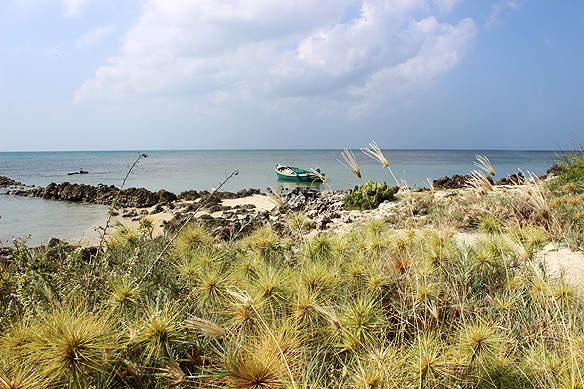
Reached by a 90-minute ferry ride across the choppy waters of the strait, the island is devoid of tourists and touristy hotels, restaurants, or banks. Occupied first by the Portuguese [1505 – 1658], and then the Dutch [1658 – 1796] and British [1796 – 1948], its attractions are chiefly colonial legacies.
On the monuments side, there is a crumbling fort, pigeon dovecot, stables and courthouse, all made of coral chunks, and a lighthouse on the southern coast which used to be wrapped in a shiny material to reflect light. Its natural charms, include a massive Baobab tree all the way from Africa and herds of feral Arabian stallions running wild through the plains.
Both the tree and horses are also colonial remnants. The horses were imported by the Portuguese to sell to the Indian kingdoms for the latter’s cavalry. A business practice that continued right up to British rule. The imported Baobab tree provided medicinal ingredients to cure horse diseases.
Amidst these colonial leftovers are attractions of an indigenous kind. Three ancient Buddhist stupas, sacred Hindu sites dedicated to Shiva and the epic Ramayana, and catholic churches with vibrant schools attached to them. Deserted beaches and palmyra-fringed winding lanes complete the disparate ensemble to create a seamless whole unlike any other. Just like the pairing of the remote isle in the Indian Ocean and its foreign name. ❤
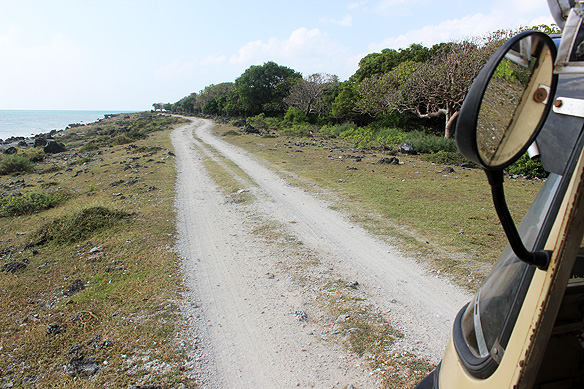
Delft Island’s major sights, both historic and natural, are connected by a circular route which runs parallel to its stunning coastline.
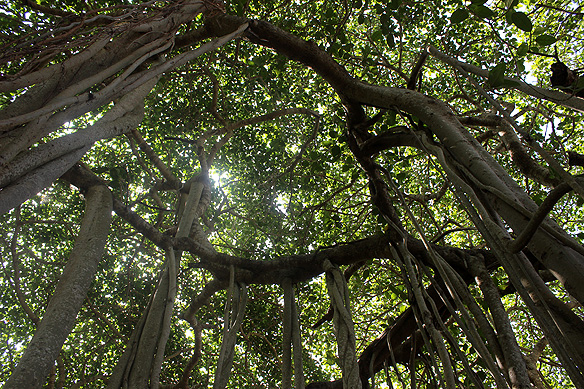
Known locally as the ‘without mother Banyan tree’ [because it is hard to identify its primary trunk] the canopy covers an area of 60 metres long by 30 metres wide supported by multiple branch-roots.
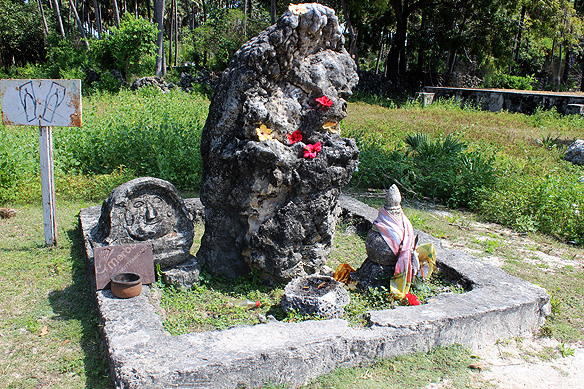
From growing roots to growing corals. Hindu devotees believe Dalulana Gala, a growing coral stone, is a swayambhu linga—a symbol of the Hindu god Shiva.
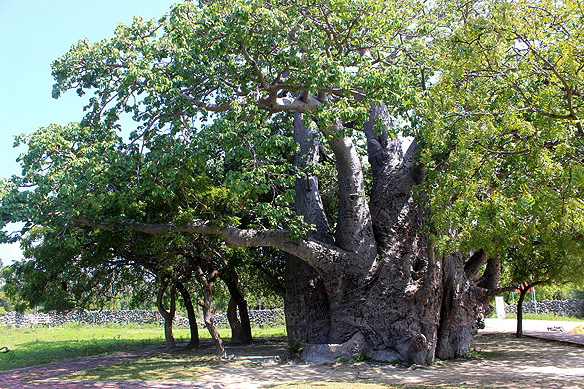
All the way from Africa is a centuries-old gigantic baobab tree. It was brought in by the Portuguese for its medicinal properties in curing horse diseases.
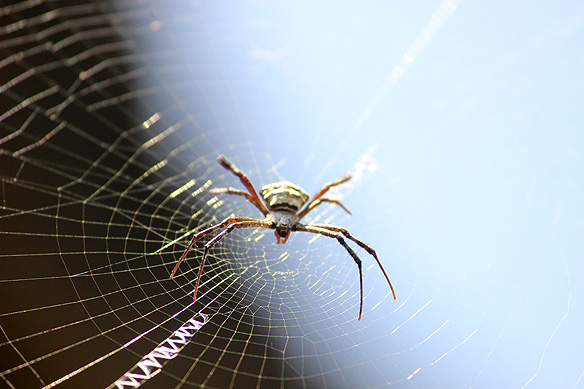
What webs time weaves across history.
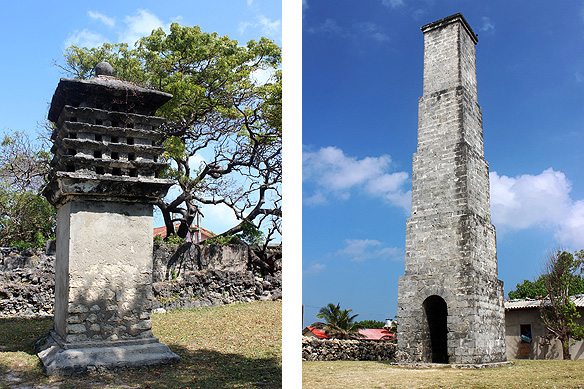
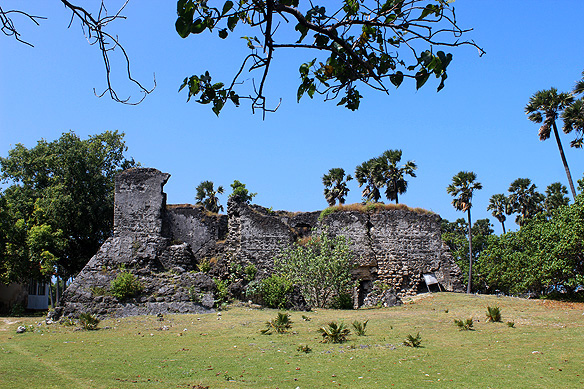
Some of the island’s most evocative monuments are remnants of its colonial history.
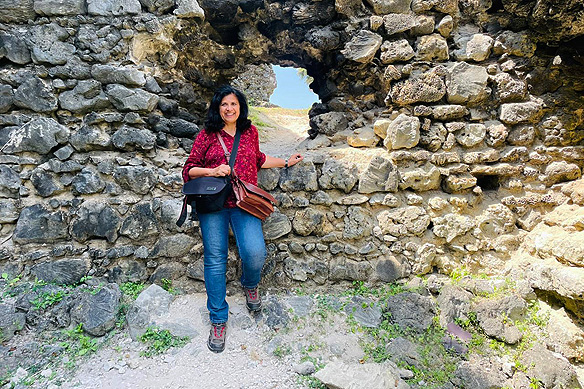
Top left: Dutch dovecot in the ‘court complex’ with its 70 holes to house ‘carrier pigeons.’ These birds were brought to the island by the Dutch to deliver messages to Jaffna mainland and back; a practice that continued right up to British times. Top right: Queen’s Tower, a Dutch-era lighthouse on the southern coast. Below: The two-storeyed Meekanam Fort traces itself back to 16th Century Portuguese rule.
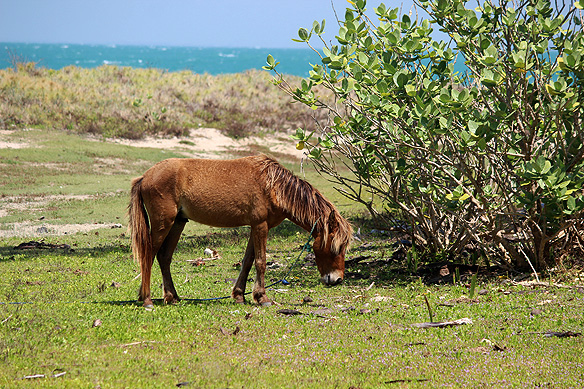
Delft Island’s approximately 500 feral horses are the descendants of Arabian stallions brought in by the Portuguese in the 16th Century to export to India; the horse breeding practice continued till 1906.
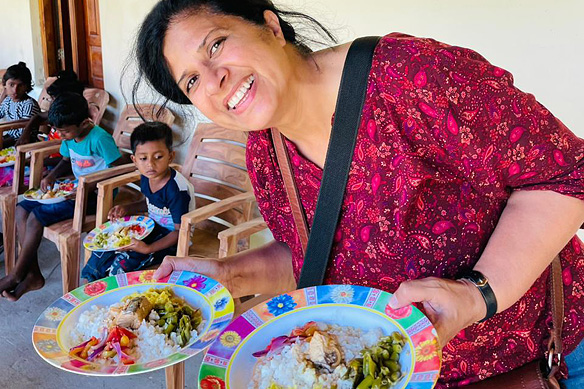
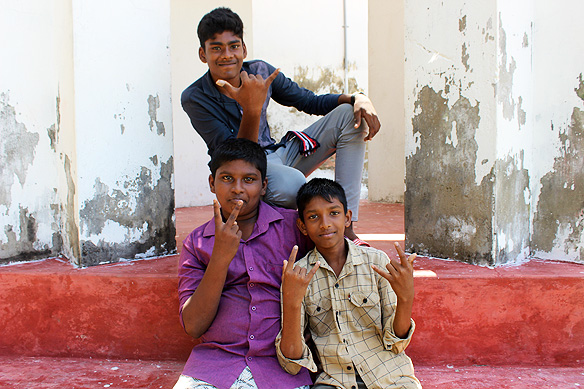
Volunteering for a couple of hours at a food donation drive in a local Catholic school turned out to be the cherry on the cake of my trip! Top: Some of my new friends. 🙂
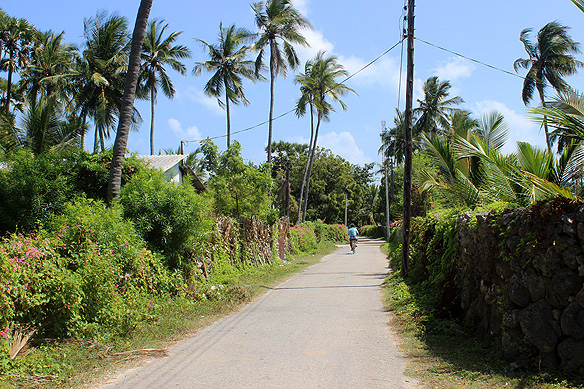
1,300 families, amounting to around 4,000 people, call Delft Island home.
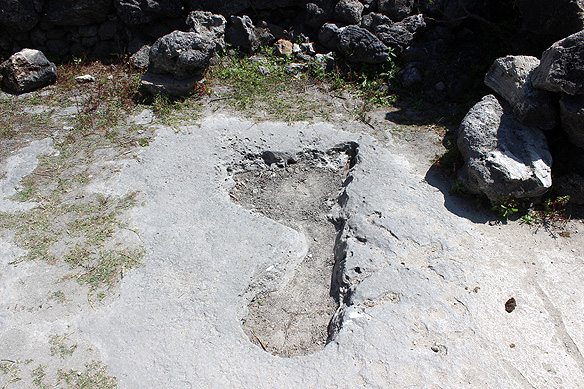
Hanuman’s Footprint, another Hindu site. Hindus believe the gigantic impression was created by the Hindu monkey-faced god Hanuman himself. According to the epic Ramayana, he had made multiple visits to Sri Lanka to free Sita from the clutches of Ravana. On one such visit, he hopped over Delft Island.
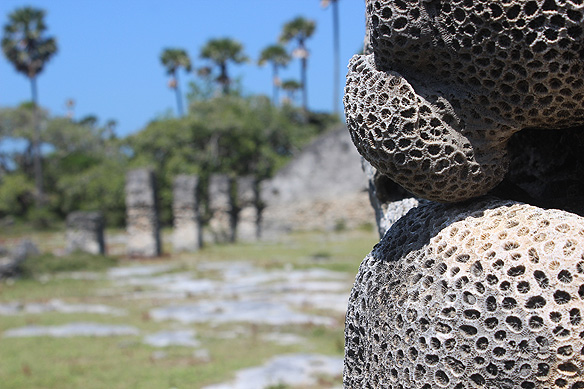
Making do with naturally available material, the colonial rulers used coral stones for all their buildings on the island. The above are in the Sarapiddi stables which once housed the Arabian stallions.
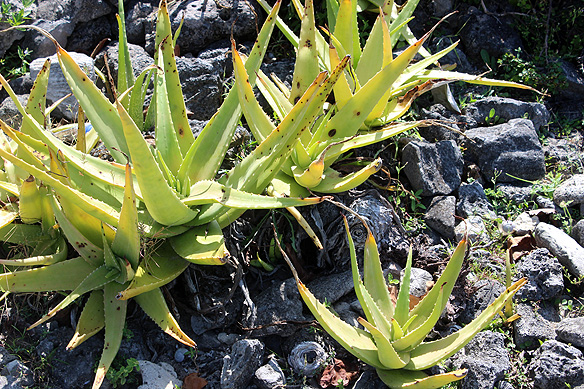
Aloe vera plants, along with 60 other Ayurvedic species, grow profusely on the Island’s coral plains.
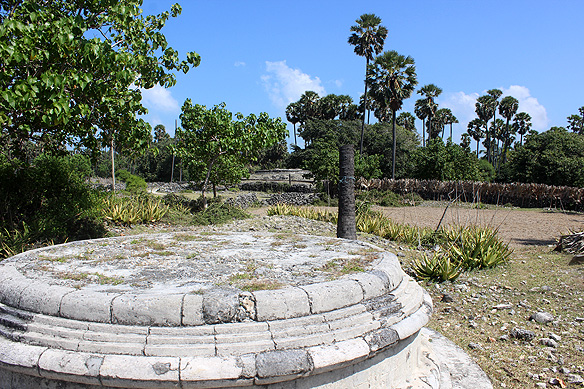
Three ancient Buddhist stupas on the north-west coast, known as the Cholan Ruins or Vediyarasan Fort, are a reminder of Delft Island’s pre-colonial heritage.
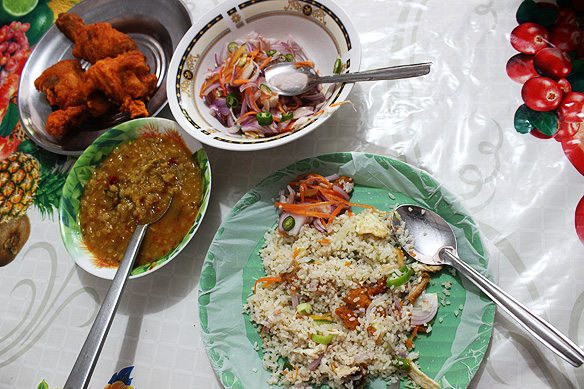
Time for a late lunch. Chicken and fried rice, Sri Lankan style.
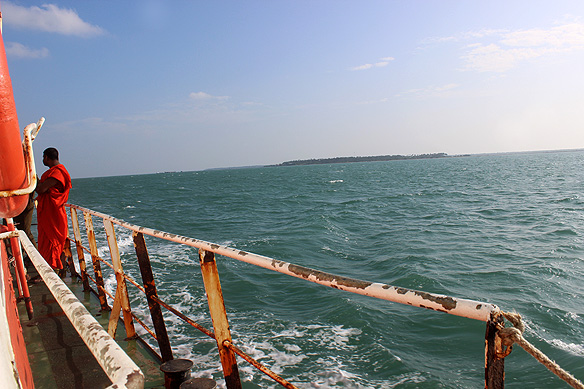
And then back to mainland Jaffna Peninsula, across the Gulf of Mannar.
– – –
Travel tips:
- The Tamil name for Delft Island is Neduntheevu, meaning Large Island.
- I explored Delft Island as a day trip from Jaffna with Dilushan from Elite Travels using tuk-tuks and the public ferry. Dilushan can be contacted on WhatsApp at +94 77 953 5200.
- Getting to Jaffna: I used Sanara Travels’ car rentals. Sanjeewa can be contacted on WhatsApp at +94 76 941 5579.
[Note: Pictures in this post with me in the frame were taken by Dilushan, my Delft Island tuk tuk tour guide. This blog post is part of a series from my solo independent travels to Sri Lanka. To read more posts in my Sri Lanka series, click here.]
 rama toshi arya's blog
I love this post! Such beautiful pictures and words. The footprint of Hanuman is incredible. Makes history and mythology come alive. ❤️❤️
LikeLiked by 1 person
Thank you. 🙂 I absolutely loved Delft Island and was even toying with the idea of settling down here for good whilst on my tour. That is till I learnt about the lack of potable water. Wasn’t sure if I was cut out for it. Hats off to all those who live there. I suppose the island’s stunning beauty more than makes up for any lack of infrastructure for its inhabitants.
LikeLike
True. Our ancestors lived with a lot less. Looks like a blessed land.
LikeLiked by 1 person
What a cool unique little place! Definitely not like the one in the Netherlands! 😜
LikeLiked by 1 person
Hehe. Definitely not. 😀 I think that’s one of the joys of global travel. Discovering all these eclectic mixes!
LikeLiked by 1 person
Pingback: jaffna: the unexplored north of sri lanka | rama toshi arya's blog
I love the way that you find these interesting places, way off the tourist track. Fascinating.
LikeLiked by 1 person
Thank you. Places like these and I just gravitate to each other, I guess. Am glad you liked the post. Delft Island was fabulous. Easily one of my all time favourite places, and the day spent exploring it, one of my all-time favourite travel days. 🙂
LikeLike
Indeed, reading your headline made me wonder how come Delft is an island. Having been to Netherlands, I associate the word with a small town near Dan Hague, famous for its porcelain. To be honest, I have never heard of this island, before.
LikeLiked by 1 person
I came across it when doing my research on Sri Lanka for my itinerary. Discovered it was especially popular with Dutch travellers because of the colonial connection. 🙂 It’s a beautiful, wildly remote, yet eclectic place.
LikeLike
I’m glad you did.
LikeLiked by 1 person
Your blog was most interesting. I wonder if the Dutch ever brought any clay back to the Netherlands from the island at first.
Do you know if they cull the horses to keep the population under control? In Wyoming out west here, they have to cull the wild horses. With such a small island, it’s a wonder that they get enough to eat. Of course, your writing had me googling Delft pottery and china, learning how it was made, and what some of the patterns looked like. One thing always leads to another I find, as I’m sure you do, too.
LikeLiked by 1 person
Happy you enjoyed the post, June. 🙂 I don’t know if the horses are culled. What I do know is they are protected by the government and cannot be made captive or caused any harm. The Dutch had renamed all the main habitable islands off the coast of Jaffna after Dutch towns/ regions. Whilst the others have been changed to Tamil names, Delft has somehow retained its Dutch name.
LikeLike
Interesting, I’d never heard of this island before.
LikeLiked by 1 person
I had never heard of it before either, that is until I started reading about Sri Lanka. 🙂 I found out about it from a Dutch blog post. Am so glad I explored it though. The day I spent there is sort of etched in my memory. It was a very happy day.
LikeLiked by 1 person
When I think of the islands along the Palk Strait, I always think of that chapter in the Ramayana where a bridge was built by monkey troops to help them who were led by Sugriva to cross to Lanka to rescue Sita from Ravana. Or at least that’s the version I grew up reading. It’s really cool that the island has quite a number of colonial buildings still standing today.
LikeLiked by 1 person
On the Indian side, across the Palk Strait is Dhanushkodi where one can still see floating rocks which Hindus believe are remnants of that bridge. 🙂 Delft was an interesting eclectic combination. A bit of everything, beautifully woven together. Just like life.
LikeLiked by 1 person
I love the combination of the baobab tree and the Arabian horses!
LikeLiked by 1 person
Wild and free. 🙂
LikeLiked by 1 person
Another magical place you have found – hardly known by anybody apart from those who live there – yet it never ceases to amaze me just how much history there is in these places – a wealth of human, cultural, religious and historical remains. The colonial stuff is particularly fascinating – how much effort required to create a fort, tower and lighthouse – and for what economic purpose? I suppose it was strategic in the strait between the continent and island of Sri Lanka. Try to imagine the lives of Europeans sent to such a far off place – so far from home. And then the lives of the current inhabitants? Probably not as idyllic as for the day trip tourist (no disrespect intended Rama!) Remarkable.
LikeLiked by 1 person
At one time the Dutch East India Company had monopoly over the trade routes which were later taken over by the British. They must have been lucrative enough for them to choose to live in far off places. Much like today’s expatriate community globally? 🙂
Regarding the current inhabitants — no, definitely not idyllic. But one thing I have learnt in life and my travels is that comfort and contentment do not really go hand-in-hand. I have seen people with less, at peace. And those with everything materially, often at odds with life. There was an incredible sense of acceptance and contentment in Delft. Everyone was happy. Everyone was smiling. The sense of belonging, community, and social support systems in these kind of places is very strong. Everyone is there for each other. These very people would flounder in a big city with amenities, without the emotional and social support they have in their hometowns. I see it happening all the time around me.
LikeLike
Great to hear of people who are happy and contentand smiling! I completely agree with you that material wealth often leads people to want more and more – dissatisfied with anything and everything. As the second Noble Truth of Buddhism puts it the cause of suffering (Dukkha) is desire or thirst (Tanha). I remember you mentioning the similar smiles of the people in the remote Lebap Province in north-east Turkmenistan.
LikeLiked by 2 people
NICE 💚🧡♥️
Blessed and Happy afternoon 🌞
Greetings 🌈🇪🇸
LikeLiked by 1 person
Thank you. 🙂 Wishing you a great day too.
LikeLike
wonderful , v interesting n informative post
LikeLiked by 2 people
Glad you enjoyed the read, Nitin. 🙏
LikeLiked by 1 person