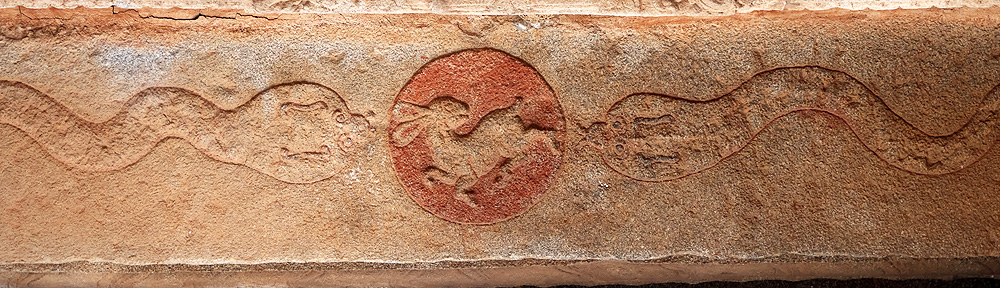

Loadstone: Noun. A person or thing that is the focus of attention or attraction. In aplenty. In other words—Kullu and Manali.
– – –
Two of India’s most popular hill stations’ names are often taken in the same breath. Even though they are separated by some 40-odd kilometres.
Welcome to Kullu Manali. Two towns located on the verdant Kullu valley in India’s Himachal Pradesh with the ice-blue Beas river gurgling past them.
Free of a colonial overprint, or the culture and faith of an invading ruler, these two towns have in the past, as well as today, continue to epitomize Himachal history, traditions, and heritage. In all its unadulterated richness.
Gods are in abundance here, and so are centuries-old beliefs. The lines between mythology and mundane reality are blurred with characters from the epics Mahabharata and Ramayana popping up everywhere. Ancient sages, mythical heroes, demons, and the proverbial Noah [in Hinduism’s case Manu] who set forth from his ark to kick-start the lineage of mankind. They are all somehow associated with the Kullu valley which has earned itself the moniker ‘Valley of Gods.’
There’s also tall graceful fir trees, rivers fed by melting glaciers punctuated with hot water springs, and wooden homes which have housed many a generation of pahari [mountain] folks inside their weathered walls.
You will need at least a few days to get acquainted with Kullu and Manali’s sites. Hotels and taxis are easily available. Let me not go into them here. Rather let this post be a roadmap of what makes these two towns attract pilgrims and tourists in their droves, always. ❤
1. Old Manali, home of Manu

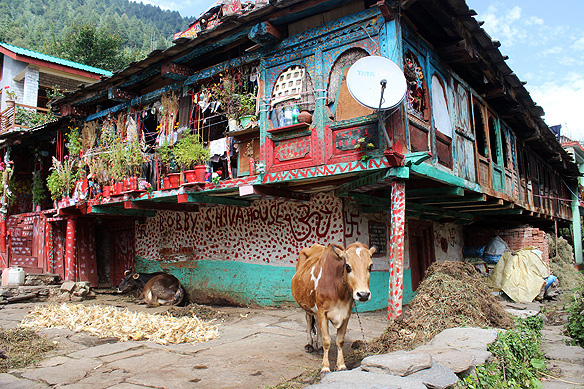

Winding its way up the steep hill, Old Manali’s main road is lined with traditional houses turned into homestays complete with mooing cows, colourful potted plants, and Shiva graffiti. Sandwiched between them are cute little cafes. The road culminates on the top at the Manu Maharishi Temple, the only temple ever dedicated to Sage Manu. Here the village elders gather under the soft Himalayan sun, and Indian tourists do their darshan. Manu was the first man and the creator of humankind as per Hindu scriptures—a momentous task that is believed to have been carried out at this exact spot. Manali, in fact, means ‘Home of Manu.’
Ask any western backpacker travelling to India’s north about their itinerary, and Old Manali will most likely figure in it. Foreign ‘enclaves’ in the shape of country-specific budget guesthouses are nestled inside the surrounding forest and provide rooms for both pit-stops and extended stays. These range from squat structures for Israelis with Hebrew signage to tiny homes hidden behind curtains of bougainvillea such as Little Italy Purnima.
Travel tip: German Bakery offers a fab menu and an even better cheese cake with coffee.
2. Vashisht Temple dedicated to saptrishi Vashisht
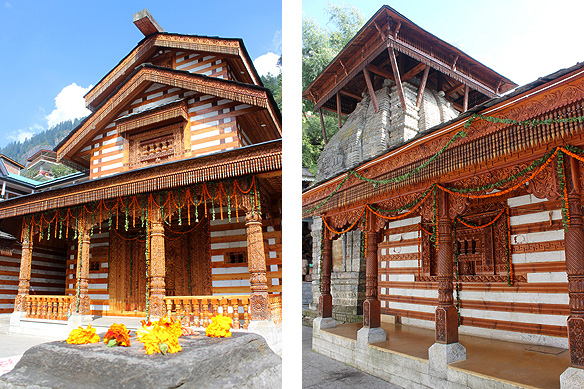
Vashisht is on the opposite side of the Beas river from Manali. Though not as picturesque or atmospheric as Old Manali, it is built along the same lines. A steep road goes uphill, and is flanked by guesthouses and cafes and ends with a temple. In this case, the Vashist Temple, a place of much sacred importance to Hindus. Built around therapeutic hot water sulphur springs, the complex comprises of pagoda-topped temples with exquisite wood carvings, and is dedicated to Sage Vashisht, and the Hindu gods Rama and Shiva.
Sage Vashisht was one of the seven ancient Vedic rishis collectively known as saptrishi, and the teacher of Lord Rama in the Hindu epic Ramayana. Lord Rama, along with his wife Sita, as well as Sage Vashisht, are said to have meditated here.
3. Hadimba Temple and Manali’s demon-goddess
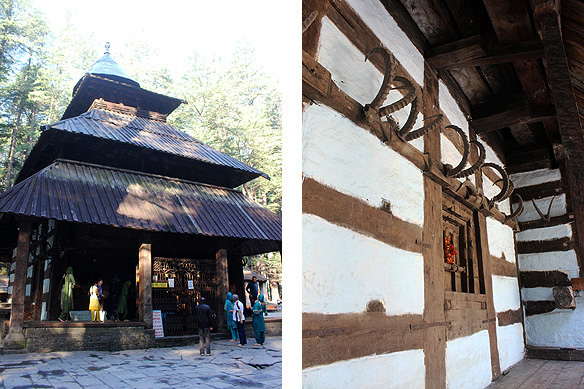
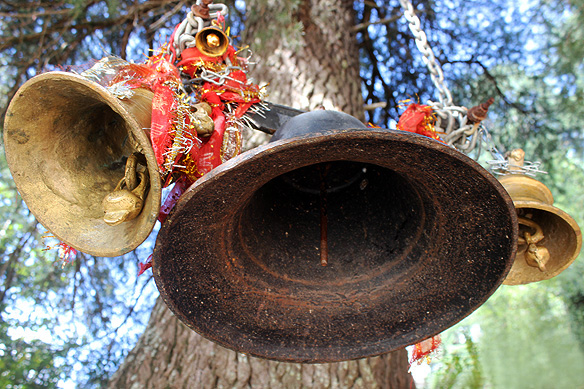

Manali’s most popular site—everything is a poor second in comparison—is the 4-tiered pagoda-styled Hadimba Temple in the Dhungri forest. Hadimba, a female demon, was one of the wives of Bhima in the Hindu epic Mahabharata, and is the presiding deity of Manali. Built in 1553, it is the only temple in the country that is dedicated to her, and where she is worshipped as a goddess. Inside the temple, in the inner sanctum is a cave which [according to local beliefs] has her footprints.
The temple, however, is only half the sacred site. A short walk away is an ancient tree surrounded with models of houses, strips of cloth, animal horns, and tridents. It is the altar for the worship of Vir [brave] Gatothkach—Hadimba and Bhima’s son born out of wedlock. Gatothkach was responsible for the Pandavas’ victory in the Mahabharata, and the subsequent rule of righteousness.
4. Rohtang Pass and Atal Tunnel, a natural and engineering marvel

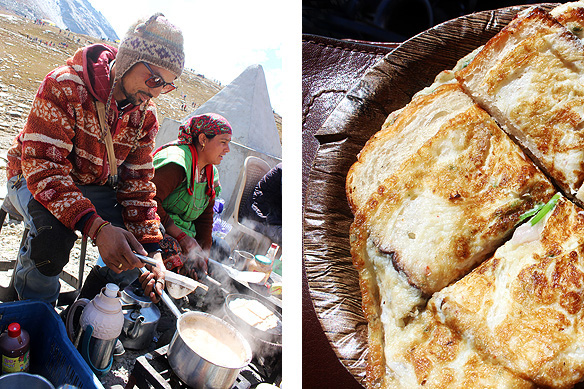
The closest one can get to Lahaul and Spiti’s raw ice-capped beauty, whilst still in Manali, is Rohtang Pass. Situated at a height of 3,978 metres, it is only 50 kilometres away from the hill station and is inaccessible in winters. Permits are required to enter which are easy to get and given out en-masse, explaining the inevitable crowds that throng it. Enterprising locals sell freshly-cooked snacks and hot beverages from portable kitchens by the roadside.
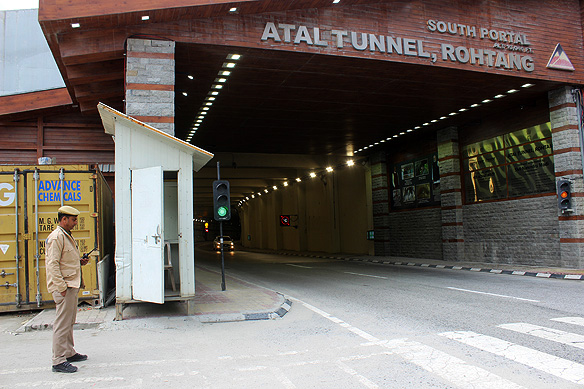
May I suggest you take the scenic route when going to the pass and the 9.02-kilometre-long Atal Tunnel, also known as the Rohtang Tunnel when returning. Ten years in the making, the tunnel, an engineering marvel, opened in 2020 and cuts under the Rohtang Pass in the Pir Panjal range of the Himalayas. It is the longest highway single-tube tunnel above 3,100 metres in the world.
5. Van Vihar, an oasis of peace in an over-popular town
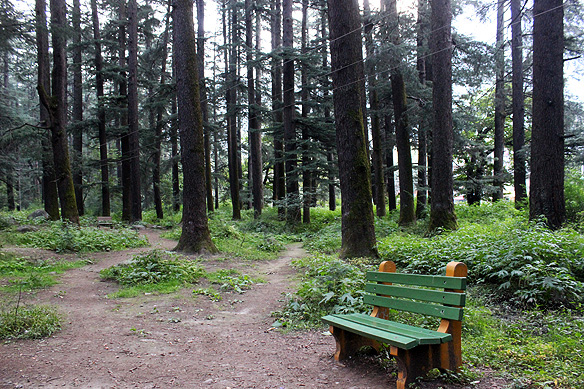
Van Vihar, at the end of Manali’s Mall Road, is the perfect antidote to its busyness. Enveloped in tall deodar trees on the banks of the Beas river, the municipal park is a haven of tranquility. If you are looking for a stronger dose of peace and quiet, take the well-marked trail which wraps around it.
Travel tip: Time your walk, as the park closes at 7 PM in summer and 5 PM in winter.
6. Tibetan Colony and memories of Tibet
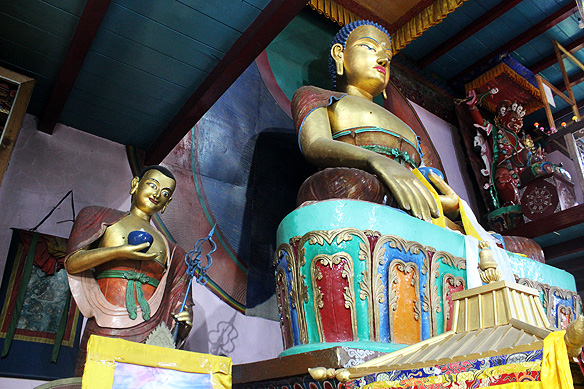
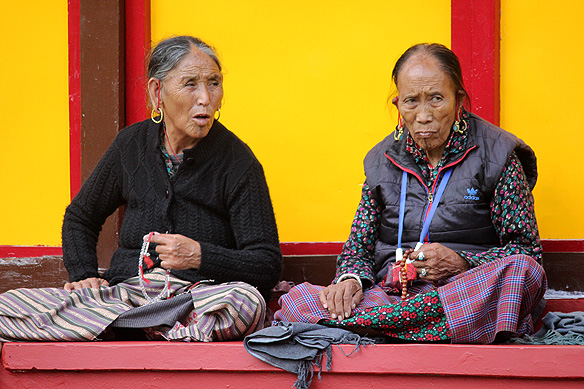
Right across Van Vihar is Manali’s Tibetan Colony. Comprising of lodgings for Tibetan refugees, a Tibetan monastery and Tibetan market, it is one of many such settlements scattered across India. When the Chinese invaded Tibet in March 1959, more than 80,000 Tibetans moved to India as refugees, together with their political and spiritual leader, the Dalai Lama. The Tibetan government-in-exile was given MacLeod Ganj in Dharamshala to use as their defacto capital by the Indian government.
India, however, is not a signatory of the 1951 UN convention on refugees. What this amounts to, in real terms, is that the Tibetans do not have any citizen rights in India: they cannot buy land, apply for government jobs, or get a bank loan, despite having been in the country for 65 years. Young Tibetans have never seen Tibet and most likely never will, while the old reminisce of a forgotten era.
7. Home of Nicholas Roerich, the Russian artist of the Himalayas
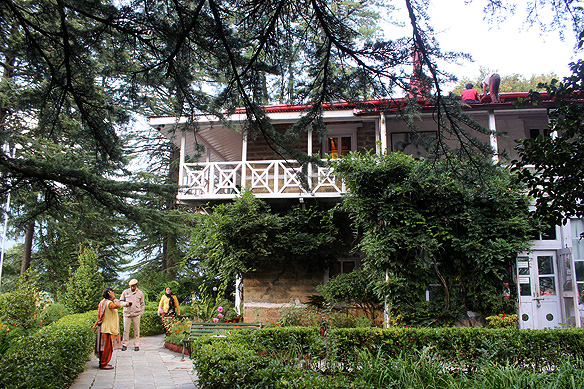
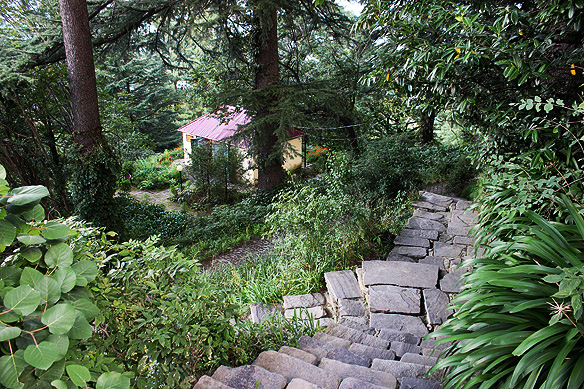
This one is for the art enthusiasts. If you have an interest in modern Indian art, you will most likely have heard of Nicholas Roerich [1874 – 1947]. Part of the Nine National Treasures declared in the late-1970s by the Indian government, he was the only artist who was not an Indian. He was Russian.
Roerich, who moved to India in 1929, painted hundreds of paintings on the Himalayas during his lifetime. From the mountains’ evocative landscapes to their timeless spirituality: his works captured them in their entirety. Roerich Memorial House in his estate near Kullu contains an art gallery of some of his works and furnished rooms. Photography is not allowed.
Travel tip: To see Roerich’s works online, click here. If keen to see them in person, the Modern Art Gallery in Delhi has a fantastic permanent exhibition with the hiss of the Himalayan winds as a background score.
8. Naggar, the old capital of Kullu state and its stone castle
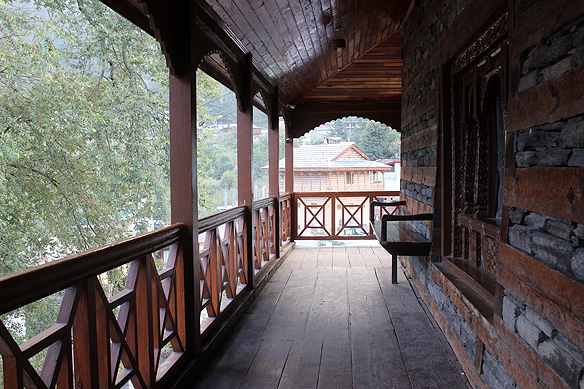
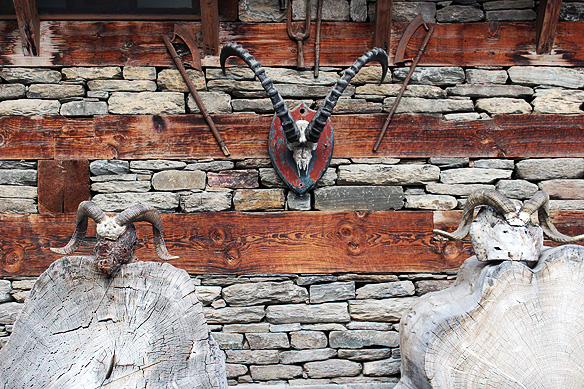

Naggar, with its mighty castle decorated with animal horns, is 23 kilometres from Kullu. The city was founded by Raja Visudh Pal and served as the capital of the Kullu state before it was shifted to Kullu, the town. His descendant Raja Sidh Singh had the castle built in 1460. In the courtyard is a small temple called Jagti Patt which is still revered as the judgement seat of Kullu’s gods.
After the capital was shifted to Kullu town, Naggar Castle became the royal family’s summer palace. In 1846, the British took over both the region and castle, and added a staircase, fireplace, and chimneys to the edifice, creating a unique amalgamation of an English country seat and local Kathkooni architecture [combination of stones and wooden beams]. The castle was converted into a state-run heritage hotel in 1978.
If there are any Bollywood movie buffs reading this post, this is also where the second part of the song Yeh Ishq Hai of Jab We Met was filmed. 🙂
9. Raghunath Temple, home of Kullu’s presiding deity

Don’t get taken in by the seemingly simple temple entrance squeezed between concrete houses. Behind the nondescript exterior is Kullu’s most important deity: Raghunathji or Lord Rama, the presiding deity of this Himalayan town. The effigy was brought [some say stolen] from a temple in Ayodhya. Dating back to the 17th Century, the Raghunath Temple was built by Kullu’s king, Raja Jagat Singh as an apology for his past misdeeds.
Himachal Pradesh’s mega festival, Kullu Dussehra, is centred around Raghunathji’s effigy in this temple. As elsewhere in the country, Dussehra is celebrated with much pomp and ceremony in Kullu too, but differently. Here, instead of burning effigies of Ravana, the seven-day festival starts when the rest of the country’s celebrations end, and consists of a gathering of hundreds of gods and goddesses from across the city, grand processions of the Raghunathji idol, and colourful lively fetes. The finale, Lanka’s destruction, is enacted through the burning of a pile of thorn bushes on the banks of the Beas river.
10. Gurudwara Manikaran Sahib’s sacred secularism
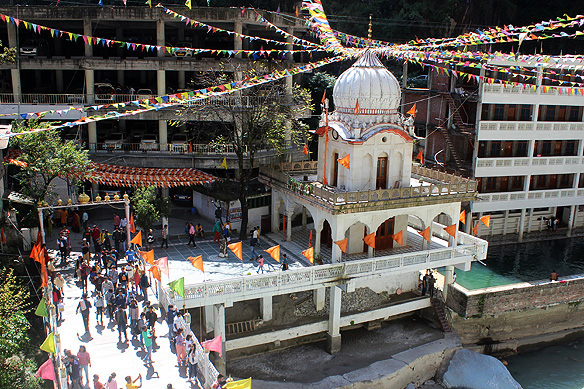
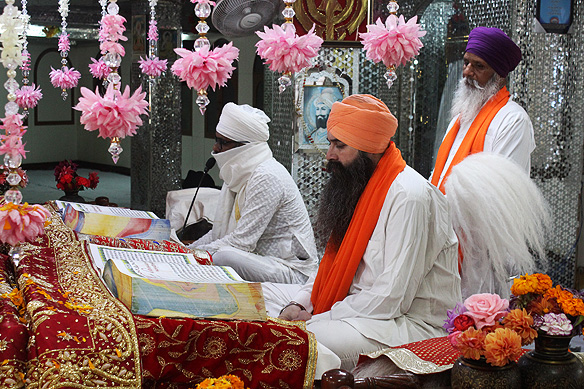
Sacred to both Hindus and Sikhs alike, Manikaran Gurudwara Sahib is 42 kilometres from Kullu. Hindu mythology links the site to Shiva and Parvati and the loss and retrieval of her jewels [mani]. Sikhism links it to the religion’s founder Guru Nanak and his friend Bhai Mardana’s visit during which multiple miracles were carried out. Both aim to explain the mysterious hot water springs which bubble around the site.
Whilst the Hindu temple was originally built in the 15th Century, the gurudwara dates to 1940. Its message of secularism, mix of Sanskrit mantras and Sikh Gurbani recitals, and dramatic setting attracts pilgrims year-round.
11. Dhakpo Shedrupling Monastery, a 21st Century ode to Tibetan Buddhism
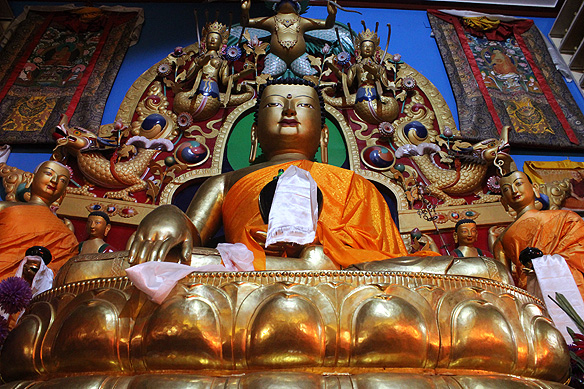
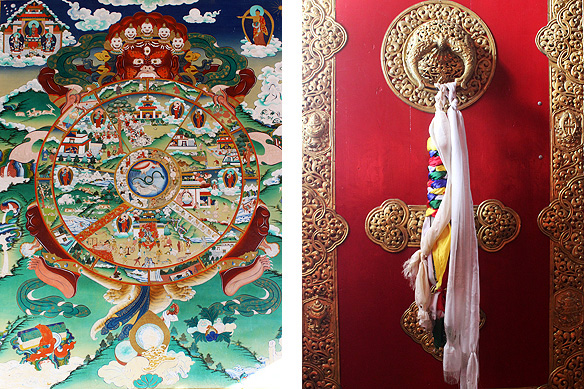
Last, but definitely not the least, is Dhakpo Shedrupling Monastery on the outskirts of Kullu, in Kais Village. Relatively new, compared to the other sites, it was built and inaugurated by the Dalai Lama in 2005. It is a large monastery with boarding facilities for its students. Whilst most of Kullu and Manali’s spiritual sites are centred around ancient Hindu temples and shrines, this monastery provides a window to the other, and equally integral, side of Himalayan spirituality: Tibetan Buddhism.
– – –
I hope you enjoyed this post and found it useful. To read more on my Himachal Pradesh travels, click here.
 rama toshi arya's blog
Another post that brings back memories and makes me appreciate even more my trip through the Kullu valley in 2008. Another ‘Shangri La’ with stunning views, lovely dwellings and temples with intricate carvings and a delightful mix of people. Your explanation of ‘Loadstone – a person or thing that is the focus of attention’ – also provides a perfect caption to one of my favourite photos (which I will email you) of a street entertainer in Manali surrounded by people – an amazing coincidence!
LikeLiked by 1 person
Thank you for mailing the picture that you mention. It is a lovely photo and captures the very essence of Manali!
Manali and Kullu are both super-crowded, but strangely enough, it is not jarring. Everyone seems to be so enthralled with its charms, like oneself, making the towns vibrant and buzzing with life.
LikeLike
Went to Manali and Shimla in 2022, post lock down. It was awesome experience. Though I missed traveling like a solo that time as I traveled with my wife. But yes I would love to explore the localities as locals. 😊
LikeLiked by 2 people
Interesting that you mention Shimla. I am working on a post on it right now, and will be publishing it this Monday. India is full of so many fabulous places, and every place is packed with so much to see and do. It really is an incredible country. And yes, travelling solo is nice, but all kinds of travel are also nice. One should just never stop travelling. 🙂
LikeLike