In just five to six hours, one can traverse across Azerbaijan’s length or breadth, crossing nine of the world’s 11 climatic zones along the way. And whilst at it, you would most likely not pass another soul.
Of Azerbaijan’s population amounting to just over 10 million, almost half of these live and work in the capital city Baku and the surrounding Absheron peninsula. The rest of the country is deserted. A tiny village tucked away in a forest-canopied valley or perched on a mist-wrapped mountain is as busy as it gets, apart from a handful of administrative and historical towns.
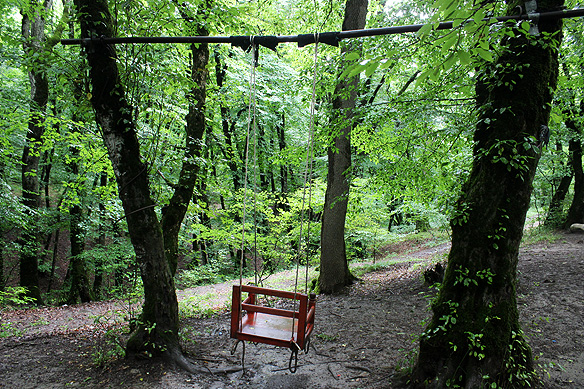
Nature is at its most magnificent on these stretches, free of exploitation for commercial gains and plastic waste. It is a setting which has also created some of the world’s most unique villages.
Take for instance Lahij, a thousand-year-old Persian village on the southern slopes of the Greater Caucasus Mountains. Unable to find suitable building material, the villagers created an entire settlement of homes and roads with river boulders. Over the centuries they also developed copper handicrafts of exquisite workmanship. It is a craft that is still practiced by its residents and has been listed in UNESCO’s Intangible Cultural Heritage of Humanity.
Then there are the villages in Lerik district in the foothills of the Talysh Mountains in south-east Azerbaijan where centenarians are the norm. Home to some of the oldest people that have ever lived on earth, the Talysh people, also of Persian descent, can be seen working on their fields and grinning cheerfully way into their hundredth birthday. At 90, they would be quick to exclaim that they still felt incredibly young!
If Lerik is about villagers renowned for their longevity, Khinalig high up in the Greater Caucasus range is the oldest inhabited village in the world—historians place it at 5,000 years. Its semi-nomadic villagers travelling between pastures have their own language, possess a distinct genetic make-up, and till recently had no contact with the rest of the world. Together with the mountains encircling it, the village and its inhabitants are a UNESCO-listed World Heritage Site.
Fascinating, isn’t it? Here are some more insights into these villages and their incredible secrets on the road less travelled, this time in the mountains of Azerbaijan.
Oh, and when on that road, don’t forget to have a qutab and chai from one of the many eateries nestled deep in dark lush forests. 😊
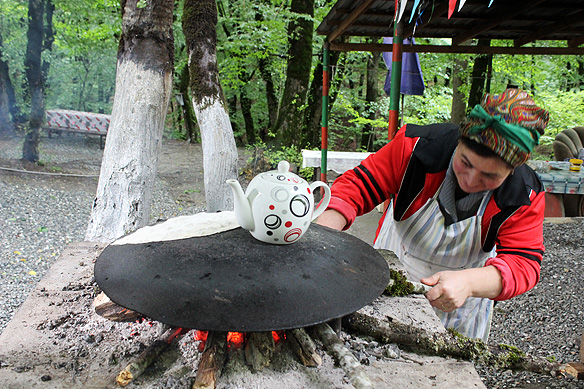
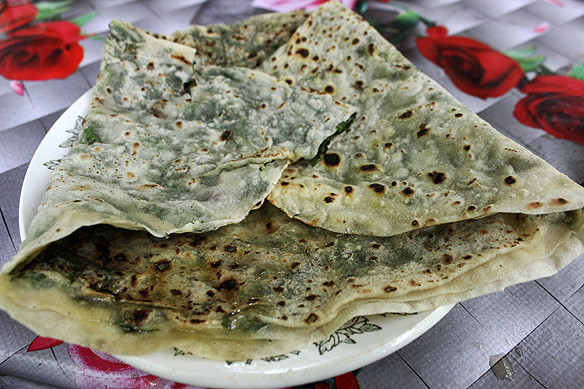
Local hospitality: Qutab, an Azerbaijani stuffed flatbread, with a pot of black chai.
LAHIJ: RIVER BOULDERS AND COPPER HANDICRAFTS
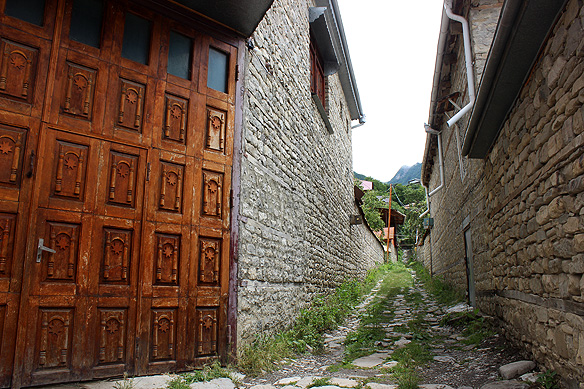
Located in Azerbaijan’s Ismayilli region, Lahij is one of the country’s oldest villages with a population of less than a thousand. Its villagers are Persians who trace their origin to 5th Century migrants from Iran to the Caucasus.
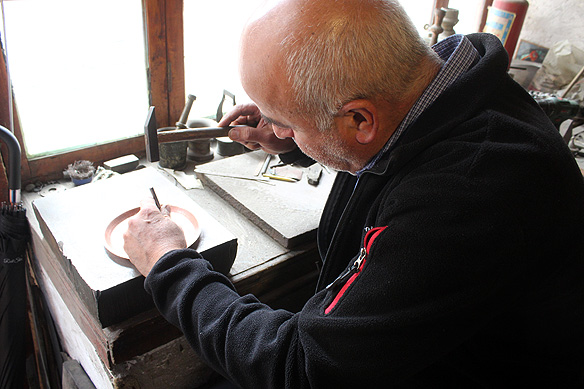
Coppersmith at work using a skill passed down from father-to-son over hundreds of years.
Since the terrain made agriculture difficult, the villagers turned towards handicrafts, particularly copper craftsmanship, when they moved here.
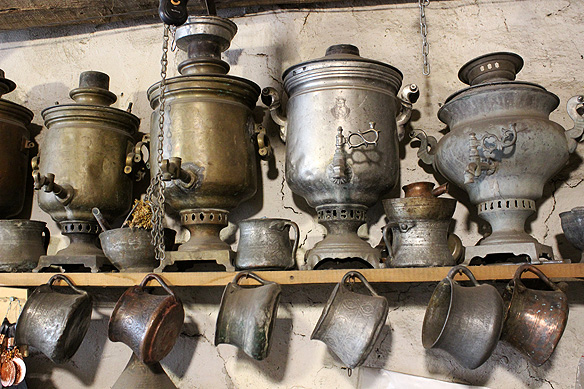
And this is what those hands are able to create. In 2015, UNESCO added the Copper Craftsmanship of Lahij into its Representative List of the Intangible Cultural Heritage of Humanity.
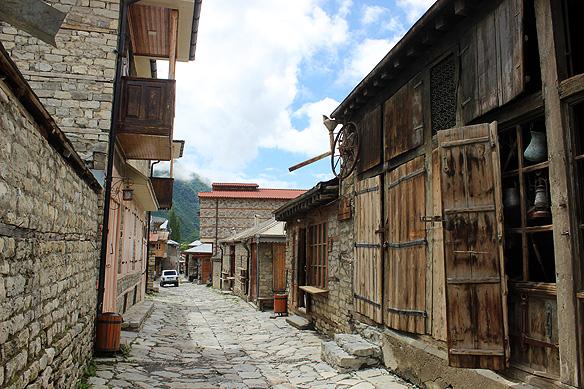
Under those lanes lined with workshops and the sound of copper being hammered into shape, is an efficient thousand-year-old sewerage system.

Left: Thirsty? How about a sip of crystal-clear spring water at the public drinking fountain.
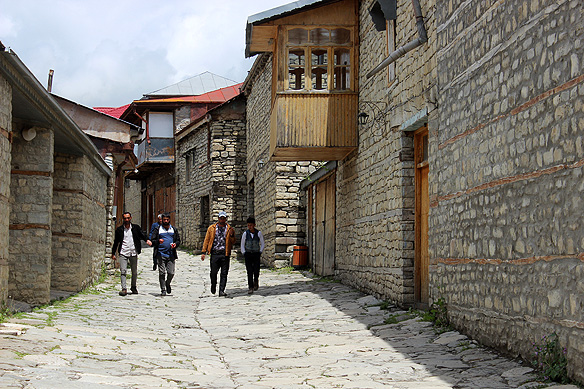
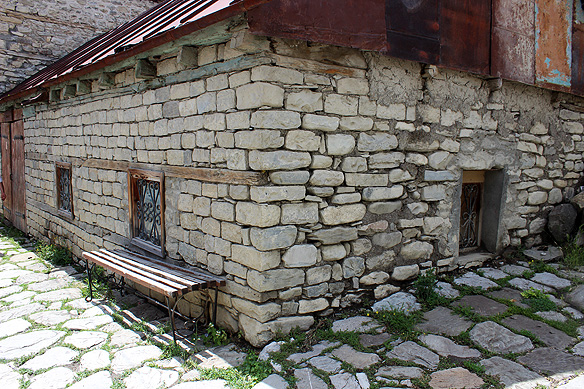
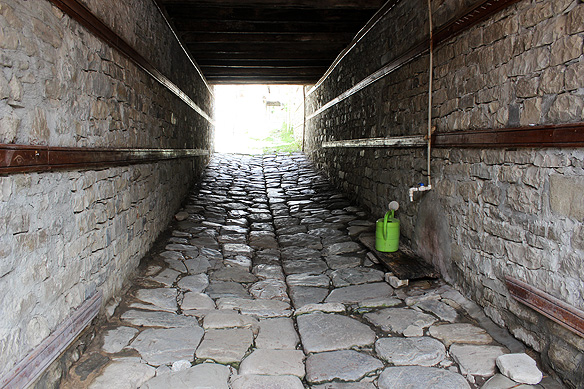
Lahij is built completely out of boulders from the nearby Ghirdiman river. Its earthquake-resistant houses have managed to survive many an otherwise devastating tremor which the area is prone to.
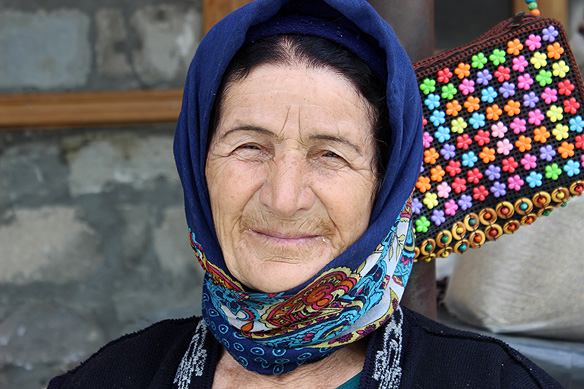
My penchant for taking portraits of the local people I meet in my travels. 🙂
The Lahij villagers speak Tat or Caucasian Persian which is different from Azeri and is an endangered language.
LERIK: CELEBRATING LONGEVITY
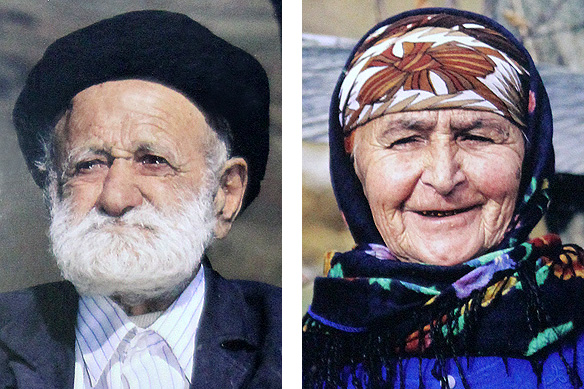
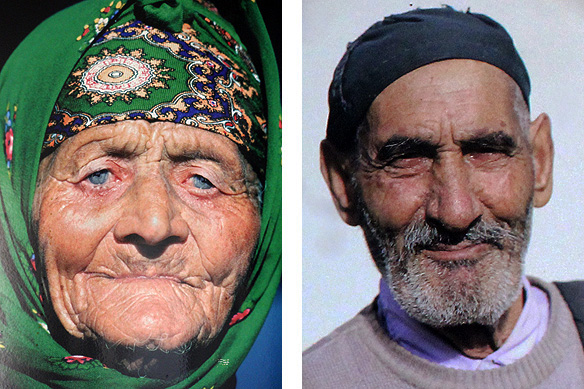
Clockwise from top left: Huseynov Rza Qasim, 1887 – 2001 [114 years]; Rahimova Mabaci Qudrat, 1900 – 2003 [103 years]; Safarov Gulali Masti, 1900 – 2003 [103 years]; Mirzayeva Suri Mirqavvam, 1882 – 2005 [123 years]. Portraits of past Lerik residents, Longevity Museum.
Notice their ages? These four are just a fraction of the very many others who have lived over a hundred in Lerik’s villages!
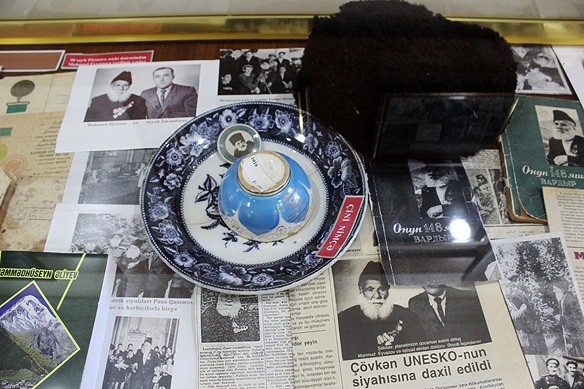
Newspaper clippings and personal belongings of Mahmud Eyvazov who lived to a ripe old age of 150. He was, however, surpassed by Shirali Muslimov [1805 – 1973] who died aged 168 with 330 descendants [including the 5th generation]. Longevity Museum.
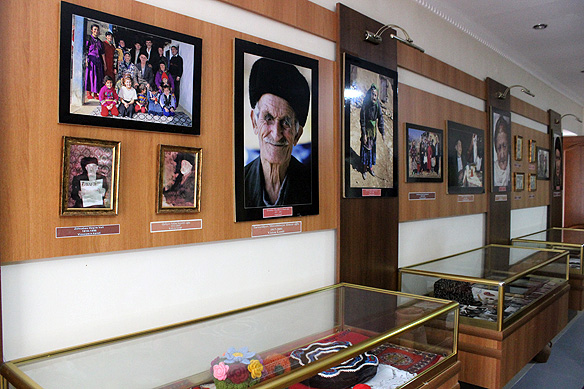
Lerik’s Longevity Museum is the only one of its kind in the world, celebrating the lives of its centenarians. Though believed to be a genetic trait, Lerik’s inhabitants attribute their long lives to Azerbaijan’s social structures comprising close-knit families and respect for the elderly, fresh mountain air, and eating yogurt and garlic every single day.
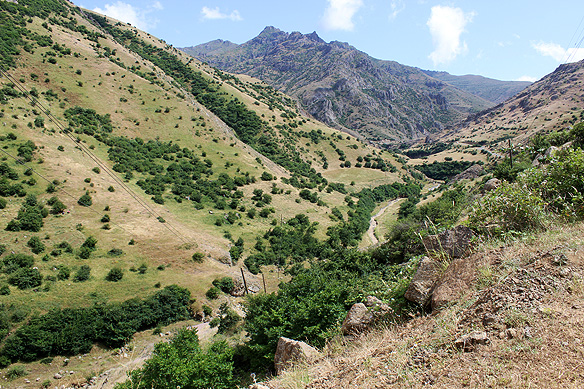
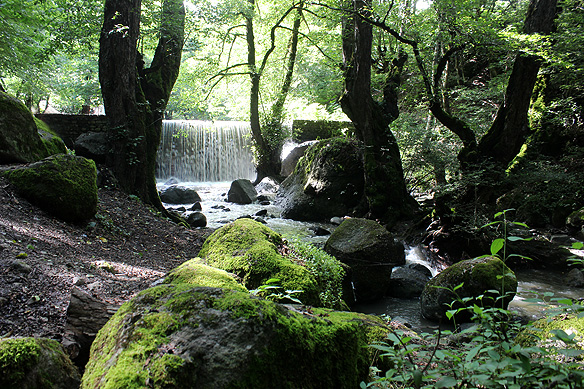
The villages of Lerik are scattered across the foothills of the Talysh Mountains in south-east Azerbaijan, close to the border with Iran.
KHINALIG: THE WORLD’S OLDEST AND AZERBAIJAN’S HIGHEST VILLAGE
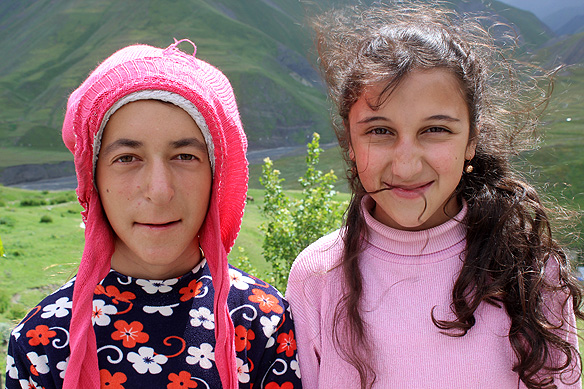
Friends.
Every autumn and spring, the 1,200 descendants of the 2nd Century BC Caucasian Albanians living in Khinalig embark on a two-week long journey. Accompanying their livestock, they move to the winter pastures in Central Azerbaijan in autumn. Once winter ends, in spring, they make the long journey back home to Khinalig.
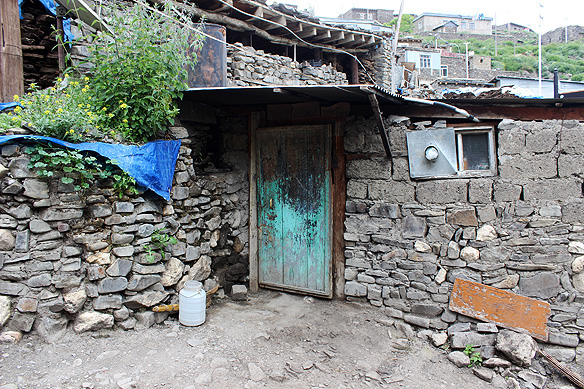
Hardship, thy name is making the best out of what is available. Khinalig’s harsh climate, steep cliffs, and lack of village land add up to a difficult life. Yet, it has survived 5,000 years of continued habitation.
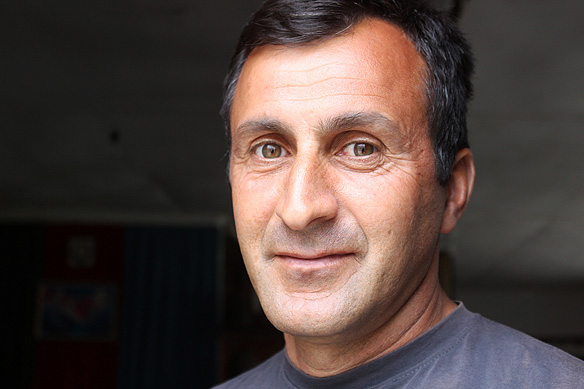
Khinalig villager.
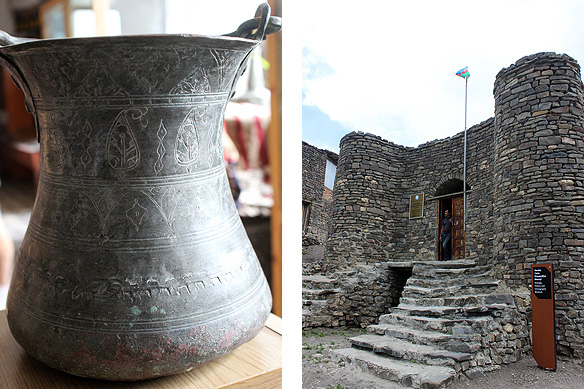
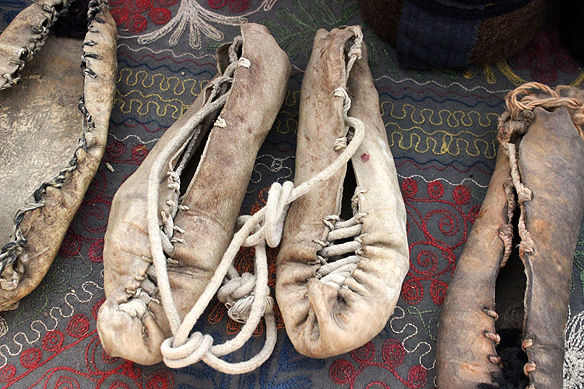
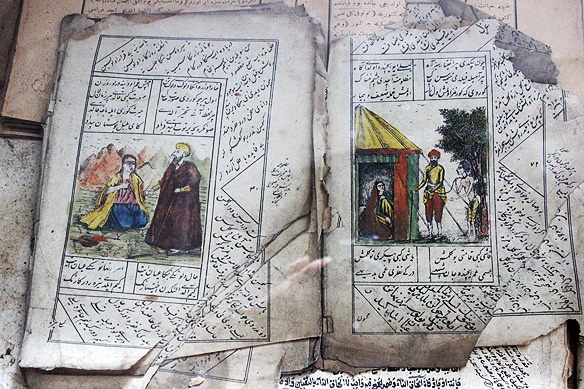
Khinalig dates to the early-Bronze Age [late-4th millennium BC]. Archaeological excavations in the village have revealed bronze amulets, arrowheads, and ornaments. These findings are exhibited at the Khinalig History and Ethnographic Museum. Also on display are artefacts such as bronze vessels, handmade leather shoes, and illustrated manuscripts.
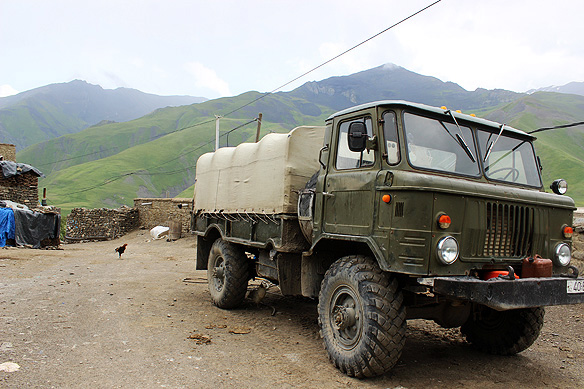
Soviet remnant amongst stone huts and clucking chicken.

‘Home’ for four months, from spring to autumn, in the highest village in Azerbaijan. Khinalig lies 2,150 metres above sea level and is surrounded by some of the country’s highest peaks, including the famed Shahdag [4,243 metres].
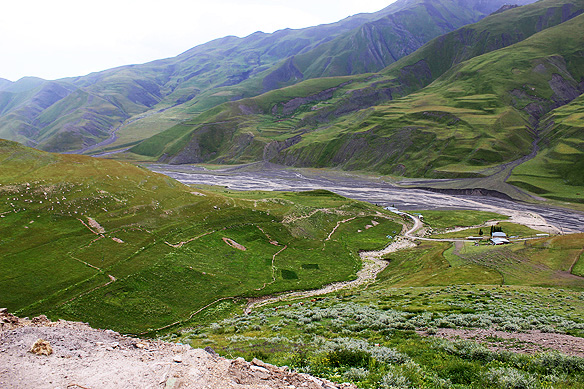
These pastures, along with Khinalig village, are listed under UNESCO as the World Heritage Site Cultural Landscape of Khinalig People and “Köç Yolu” Transhumance Route.
Travel tips:
- I explored the three villages with Azerbaijan Travel International [ATI]. They run full day tours to each of the three villages, clubbing it with other sites en-route.
- If looking for authentic Azeri souvenirs, Lahij’s workshops sell copperware and Khinalig offers herbs and colourful handwoven socks.
– – –
[This blog post is part of a series from my solo independent travels to Azerbaijan in June, 2024. To read more posts in my Azerbaijan series, click here.]
 rama toshi arya's blog
Again, you surpass yourself with fascinating articles about your travels to obscure places. One very, very, minor criticism:
“Under those lanes lined with workshops and the sound of copper being hammered into shape, is an efficient thousand-year-old sewage system.”
Sewage is the effluent; sewerage is the system transporting the effluent.
Ian
LikeLiked by 1 person
Thank you for pointing out the typo error. I will fix it asap. 🙂 These villages were fascinating. Completely unique.
LikeLike
Great Pics!
LikeLiked by 2 people
Thank you Ehna. They were very photogenic villages. 🙂
LikeLiked by 1 person
🙂
LikeLiked by 1 person
Fantastic stuff Rama! Its amazing how old people can live to if they live active healthy lives.
LikeLiked by 1 person
Thank you, Anna. True–emotionally, mentally, and physically healthy lives.
LikeLiked by 1 person
Absolutely wonderful looking place.
LikeLiked by 1 person
I had never seen such places before. Each village, in spectacular natural surroundings, had its own unique story to share.
LikeLiked by 1 person
In some ways, they reminded me of some Nepalese villages.
LikeLiked by 1 person
Pingback: the road less travelled: azerbaijan’s unusual villages – The Travel guru
The stone buildings are a very different kind of architectural beauty! Loved the Article. Super Interesting. I am Abu . I am planning to go to Azerbaijan soon. I am doing my final year in animation courses in dubai.
LikeLiked by 1 person