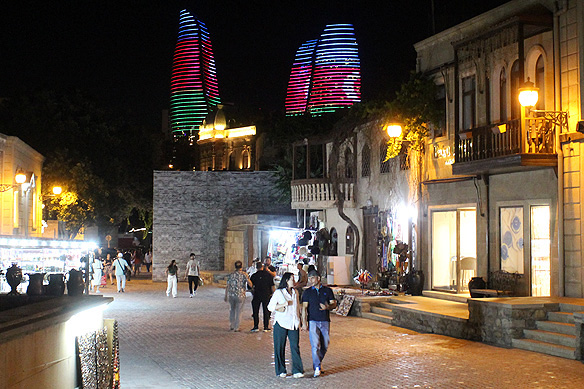
Baku is often described as one of the most beautiful cities in the world. It is a description that is not off the mark. The city’s rich heritage spanning three millennia can be invariably seen in a single line of vision. Now where else would you have such a splendid view!
But Baku is not only about pretty buildings. A world city in every respect, it abounds with museums and galleries wherein local meets international. Literature, art, and music thrive here, both at the esoteric and popular levels. Can the culinary be far behind in all this? With one-fourth of Azerbaijan’s population, Baku buzzes with life. Literally. Not in a chaotic haphazard way. But as a celebration.
Travellers have only recently started noticing this city on the shores of the Caspian Sea which comes with the moniker ‘Windy City.’ On its part, the Azerbaijan government is making every effort to ensure it is a memorable visit. The visa department sends out surveys to its tourists to find out what worked, what did not, and how Azerbaijan could be a better travel destination.
Here is a three day/ 72-hour itinerary with context, tips, and links to help you make the most of your stay. To go straight to the itinerary for a specific day, use the table of contents below. Wishing you happy travels, this time to Baku. 🙂
Table of Contents:
- Day 1: Explore Old and New Baku
- Day 2: Baku’s Mosques and Heydar Aliyev Center
- Day 3: Museum-hopping across Baku
[Please note there are NO affiliate links in this post, or in any of my posts. Links are provided only to help you with your plans or for you to get extra info. Neither is any of the content in this post or any other post sponsored. The services mentioned are what I used and I am simply sharing them with you.]
DAY 1: EXPLORE OLD AND NEW BAKU
Let Day 1 be all about Old and New Baku. The best way to get acquainted with their multiple charms is through a walking tour. It puts Baku’s city plan and rich heritage in context with valuable insights. Heritage walks are aplenty here, so you would well be spoiled for choice. Or you could simply choose to explore on your own.
Either way, start with the historical walled city of Icheri Sheher [literally meaning Inner City] before making your way out through one of the city gates into 19th and early-20th Century Europeanised Baku. For a grand finale, jump on to the funicular for fabulous views of Baku’s uber-modern steel and glass extravaganzas from Highland Park.
Day 1: Morning: Explore Old Baku
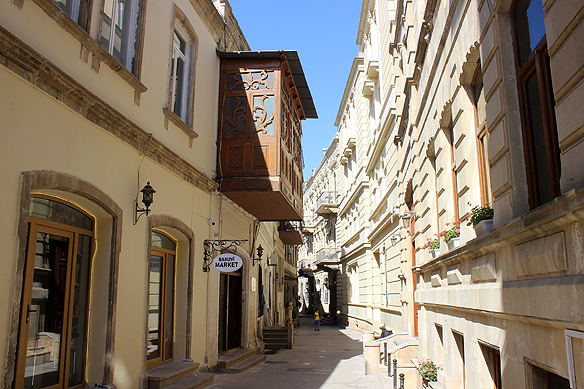
UNESCO-listed Icheri Sheher, with 2,700 years of heritage coexisting in perfect harmony, is Baku’s centrepiece. Inside the towering 12th Century walls are the magnificent Shirvan Shahs’ Palace and Maiden Tower surrounded with medieval mosques, bathhouses, and caravanserais along with 18th to 20th Centuries mansions. All snuggled together along time-worn cobbled lanes.
Shirvan Shahs were the rulers of the Shirvan region and moved their capital to Baku in the 15th Century after an earthquake devastated their previous capital Shamakhi. Three rulers, Ibrahim I, Khalilulla I, and Farrukh are credited with building the elaborate palace complex perched on the hill.
The 15th Century royal ensemble comprises of a two-storeyed residential building [now a museum], Divankhana with an elaborate entrance, Turba or tomb of the royal family, royal mosque, mausoleum of a Sufi dervish-cum-scholar, and underground bathhouse. Don’t miss the row of carved stone slabs in the garden. Part of the 13th Century Sabayil Castle’s ruins submerged under the Caspian Sea, they list the Shirvan Shahs’ genealogy.
Whilst the palace complex is an echo of medieval Islamic aesthetics, the 12th Century Maiden Tower seems to belong to a different world. And it did. Historians believe the tower was originally a Zoroastrian temple [7th – 6th Century BC] which was converted into an observatory under the Shirvan Shahs. Steep stone steps wind their way around its inner walls to open on the flat roof offering expansive views.

Baku’s most popular landmark and meeting point for tours is the Double Gates, a pair of impressive 12th Century stone gateways. They serve as the main entrance into Icheri Sheher. The two lions and bull’s head on its facade are the Shirvan Shah rulers’ promise to its people: to unstintingly provide strength and power.

600 metres away is one of Azerbaijan’s most remarkable sites—the 12th Century Maiden Tower believed to have been a Zoroastrian temple in a previous avatar. When built, the cylindrical eight-storey-high structure had stood right next to the Caspian Sea; the coastline has since receded considerably.
If you wondering where the tower got its name from, there are two versions. There is the Zoroastrian legend in which a redhead virgin [maiden] saved the people of Baku, and a Zoroastrian religious belief that since the temple was never conquered, it was a virgin [maiden] temple of Ahura Mazda.
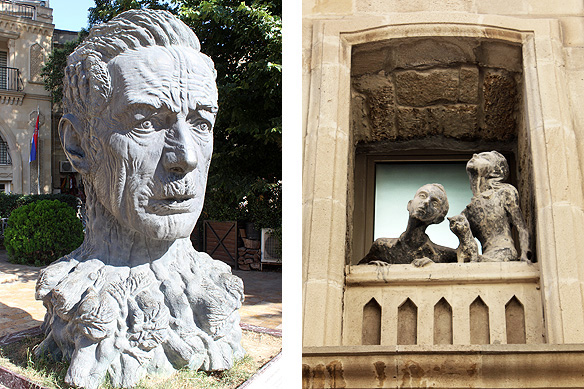
You will find open-air sculptures throughout Old Baku. Some depict famous poets and writers, and some are just quirky.
The bronze bust above of Aliaga Vahid [1894 – 1965], a satirical poet and gazal master, is Icheri Sheher’s most famed piece of modern art with scenes from the poet’s works melded into his hair and neck. I quite liked the two figures on the right too!
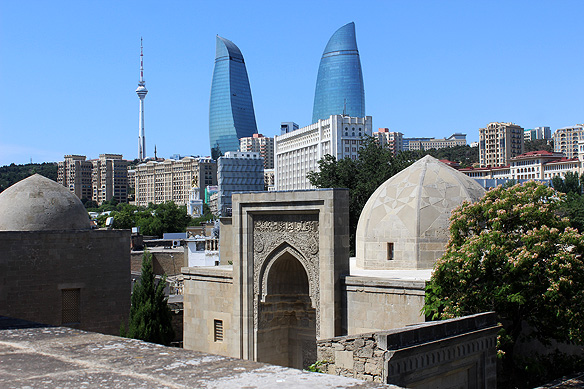
Six hundred years in a single frame: 15th Century Shirvan Shahs’ Palace with the 21st Century Flame Towers in the background. The Shirvan Shahs’ Palace complex comprises of multiple buildings ranging from residential and administrative to tombs, a mosque, and bathhouse.
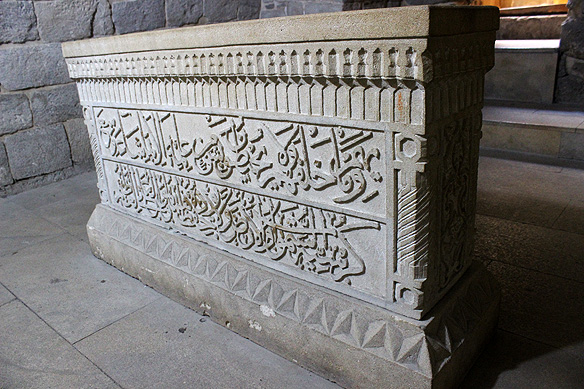
Sarcophagus in the crypt of Seyid Yahya Bakuvi’s Mausoleum inside the palace complex. Bakuvi was a 15th Century Sufi dervish during the reign of Khalilulla I.
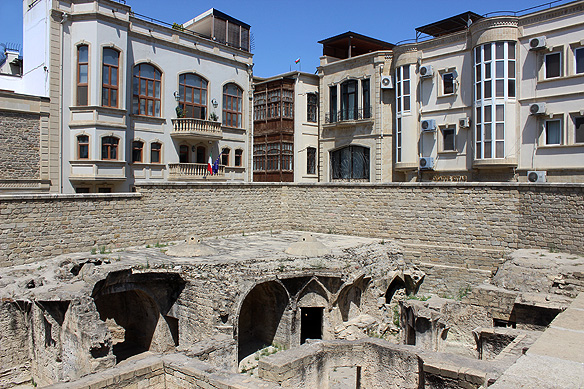
On the lowest terrace of Shirvan Shahs’ Palace is the semi-underground 26-roomed royal bathhouse [hammam]. Profusely decorated with tiles when in use, it consisted of dressing rooms, bathing rooms with hot and cold water, cloak rooms, and even a nook for those who wished to bathe alone. Water for the hammam’s use came from an underground reservoir through clay pipes.
Day 1: Lunch at an authentic chaikhana with music for company
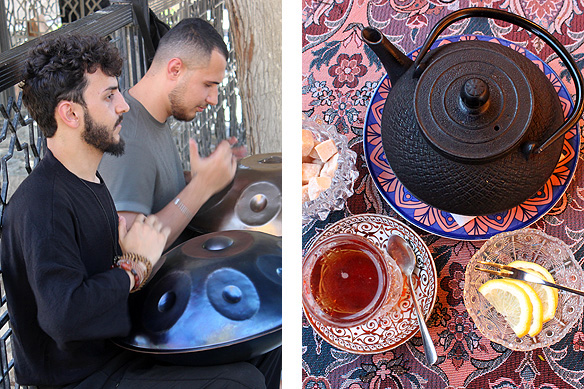
Right next to Maiden Tower is one of Icheri Sheher’s most charming traditional tea-houses. If you are, however, more peckish, then try the Qaynana Restaurant. Azeris vouch for its local food. But before plunging into your kebabs, do enjoy the musical performances which take place in the square.
Day 1: Afternoon: Explore New Baku
Outside Icheri Sheher’s stone walls are rows of palatial Baroque, Rococo, and Neo-Gothic-styled buildings. No, these did not belong to any Europeans. They were, in fact, the private mansions of 19th and 20th Century Azeri billionaires who were so taken in by what they saw on their European travels, they decided to duplicate it back home. With the help of Polish architects.
Oil was industrially drilled for the very first time in the world in Azerbaijan, in 1846. Back then, whoever owned the land drilled was also the owner of the limitless oil it sputtered out, and the riches that selling it brought. Overnight, many Azeris became billionaires with so much wealth that no amount of spending made the slightest dent to their bank balances. Except for the Soviets who stripped it all off them in 1920 when they took over the country.
These barons’ spectacular mansions have now been converted into government offices whilst some are museums or broken on the inside into blocks of flats. The ones to look out for are the Palace of Happiness [1912] built by a doting husband for his wife, Ismailiya Palace [1913] by a father in remembrance of his dead son, Baku’s most generous philanthropist Haji Zeynalabdin Taghiyev’s home [1902], currently the National Museum of History, and Isa bek Hajinski House [1912] next to Maiden Tower.
Amidst this lavish spread are two administrative buildings with no change to their functions since inception. Building of Baku City Executive Power [1904] when Baku was still part of the Russian empire, and the striking Government Building [1952] on Baku Boulevard built by German Prisoners of War during Soviet rule.
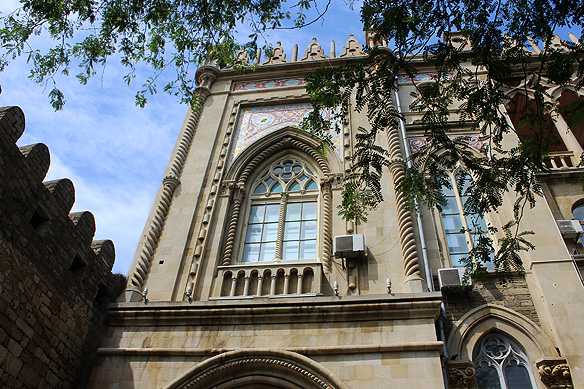
When East met West, and the old met the new: Icheri Sheher’s 12th Century outer wall and early-20th Century Venetian Gothic Ismailiya Palace.
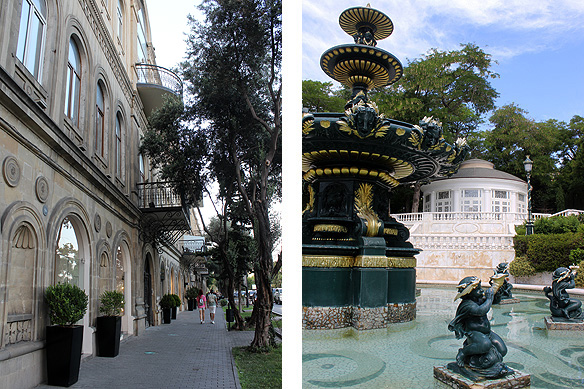
Left: Most of Baku’s pre-Soviet mansions now house high-end shops and have been broken into flats on the inside; Right: The stunning Art Nouveau Azerbaijan State Philharmonic Hall [1912] was originally a club for Baku’s wealthy.
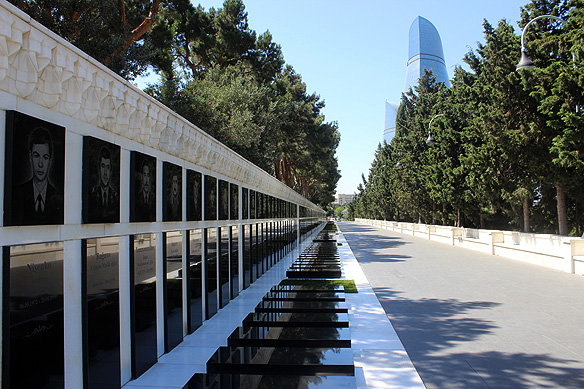
Martyrs’ Lane is a cemetery and memorial on Highland Park. It honours those killed in the First Nagorno-Karabakh War of 1988 – 1994, and during Black January, 1990. Some 15,000 martyrs are buried in the cemetery.
The first tomb in Martyrs’ Lane belongs to a married couple, and has become a symbol of love and loyalty in local culture. Ilham, the husband, was shot dead by the Soviet troops during Black January. On hearing the news, his wife Fariza then committed suicide.
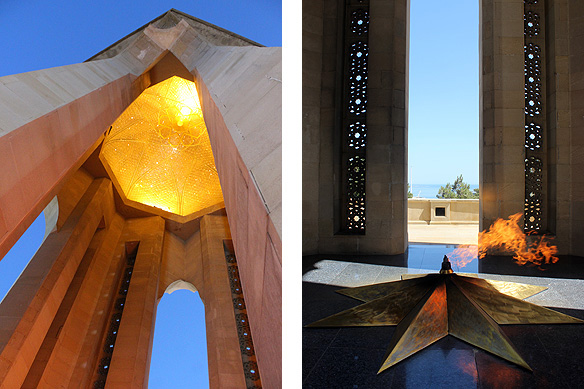
Eternal Flame Memorial, part of the Martyrs’ Lane Complex.
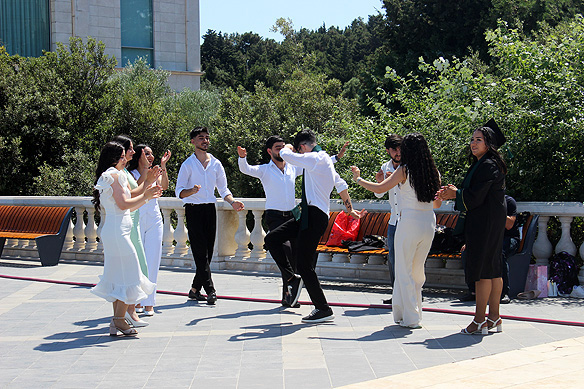
I came across these young Azeri graduates celebrating their graduation with some pretty cool traditional dance moves at Highland Park. Located on Baku’s highest point, the park, with its stunning views, is a hot favourite for photo shoots.
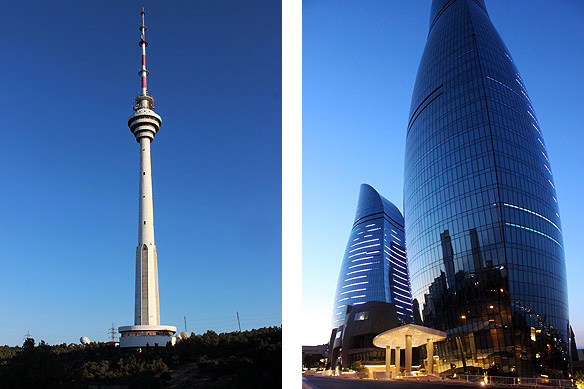
Left: Baku TV Tower [1996] is Baku’s tallest building at 310 metres. Its rotating restaurant, though not famed for its food, has amazing views at night; Right: The three Flame Towers [2013] comprise of a hotel, business centre, and apartments.
Rising above New Baku is Highland Park with the city’s modern history on full display. These include memorials to its two wars preceding the 1918 and 1991 independence and Turkiye’s unstinting support through both, martyrs in the wars with Armenia, and the eternal flame in remembrance of those who died during Black January. After paying homage to the heroes and heroines immortalized by these memorials, end your walk with a visit to the viewpoint for the best views of the city’s modern architecture.
Azerbaijan’s second oil boom, post its independence in 1991, saw the state-owned oil and gas sector generate billions of dollars. These funds were soon injected by the government into fancy structures, guided by a vision to be the Dubai of the Commonwealth of Independent States [CIS]. Up came the sparkling Baku Crystal Hall [2012] specially made for the Eurovision Song Contest, surreal Flame Towers [2013], innovative Azerbaijan National Carpet Museum [2014], and impressive SOCAR head office [2015]. A few of these are still under construction like the inverted crescent moon building on the other end of Baku.
Day 1: Night: Enjoy the views from Highland Park followed by a stroll
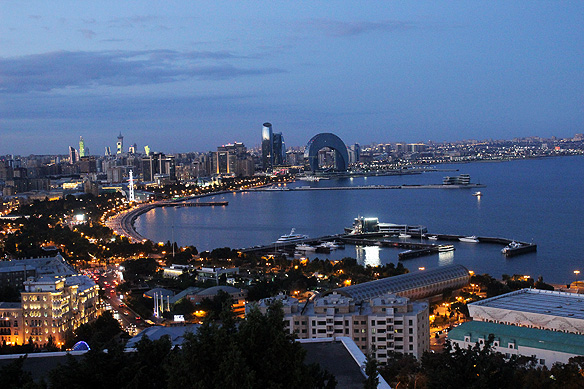
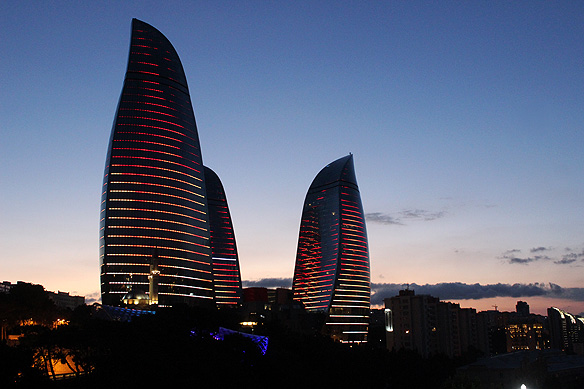
Baku is always lovely, but at night it becomes enchanting when the whole city is lit up, and crowds throng Nizami Street and Baku Boulevard. The latter is a 26-kilometre-long promenade built in 1909, flanking the Caspian Sea. Both are pedestrian-only public spaces packed with restaurants and live performances after sunset. The Flame Towers, meanwhile, lick the dark sky with red, orange, and yellow led lights.
Although you would have visited Highland Park in the day, visiting it again at night is something of a mandatory ritual on a Baku visit. Take the ride up before the funicular closes at 8:00 PM, enjoy the aerial night views, and then climb down the steps or take a bolt taxi back to sea-level for a stroll amidst the vibrant nightlife.
DAY 2: BAKU’S MOSQUES AND HEYDAR ALIYEV CENTER
Having explored Baku’s must-dos and not-to-miss sights on Day 1, Day 2 is about peeling back another layer of the city and visiting three of its most stunning mosques [there are around 120 in total in Baku itself] and the iconic Heydar Aliyev Center.
Day 2: Morning: Visit two of Baku’s historic mosques
To the south of Baku, on a promontory facing the silk-smooth Caspian Sea is Bibi Heybat Mosque. Revered deeply by locals, it is best viewed in the morning when sunlight bathes the east-facing limestone facade in a golden glow.
The current rebuilt structure dates to 2008 and marks the spot where a 13th Century mosque built by the Shirvan Shahs once stood. In 1934, the Bolsheviks razed the historical place of worship to the ground as part of the USSR anti-religious campaign.
Inside, in a dark chamber with a glittering green ceiling, is the tomb of Bibi Heybat meaning ‘aunt of Heybat’ aka Okuma Khanim who lived in the 8th Century. She was the sister of the 8th Imam and a descendant of the Prophet Mohammed. Pilgrims file in and out of the shrine the whole day, paying their respects to her. Women need to cover their hair, and men, their knees.
Back in the centre of Baku, hidden behind a maze of narrow uphill lanes is the grand Taza Pir Mosque, a gift from a wealthy philanthropist lady called Nabat Khanim Ashurbeyli in the early-20th Century. Unfortunately, she passed away before its completion. Her son later carried out the remaining work, and had his mother buried in the mosque grounds as a sign of respect.
In its hundred years of existence, the soaring edifice has seen it all. It was used as a cinema and barn under the Soviets, and devastated in the 2000 earthquake. Rarely visited by tourists, the restored mosque with interiors painted in jewel colours and gold-topped minarets is one of Baku’s loveliest gems.
Once done exploring it, head straight to modern Baku’s most famous landmark—the Heydar Aliyev Center which opens at 11:00 AM.
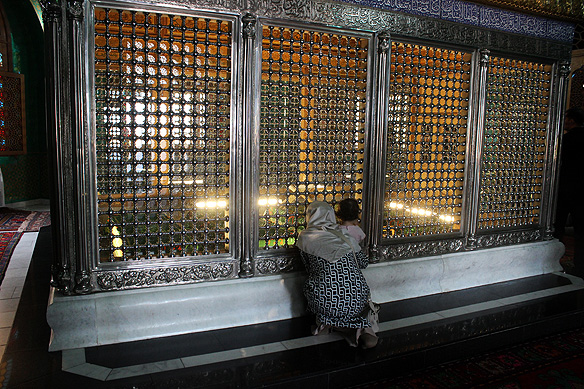
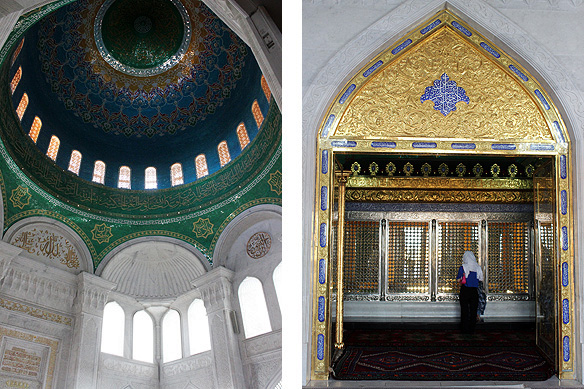
Bibi Heybat Mosque, also known as the Mosque of Fatima, is the final resting place of the 8th Century Imam Ali al-Rida’s sister.
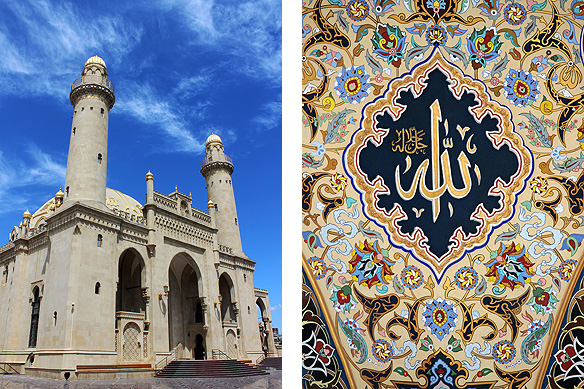
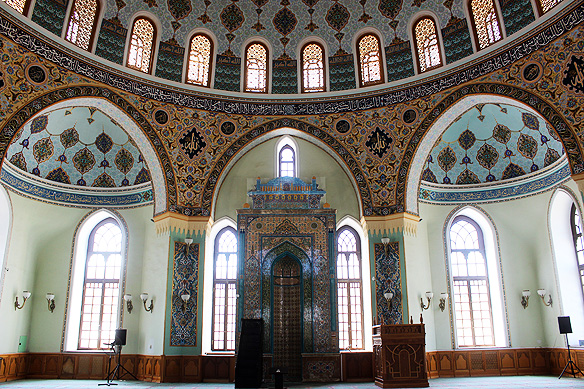
Azerbaijan’s central mosque, the Taza Pir Mosque, is decorated with white marble domes and the Azerbaijani school of painting.
Day 2: Afternoon: Have an art and culture fix at the iconic Heydar Aliyev Center
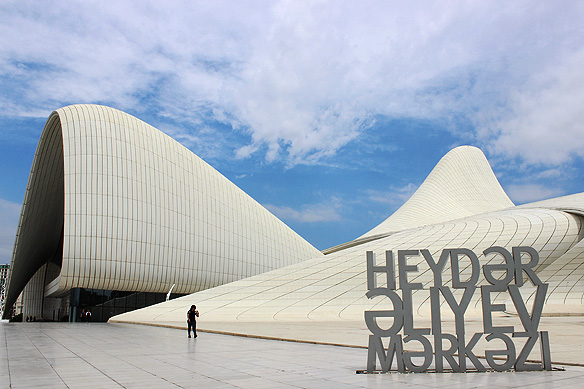
Award-winning Iraqi-British architect Zaha Hadid’s masterpiece in Baku, the Heydar Aliyev Center, was designed as an ode to the city’s dynamic future. Built in 2012, it functions as a museum of the ex-President Heydar Aliyev, and a cultural venue.
Fluid lines form a wave-like exterior which flows into the interiors seamlessly. Inside, multiple temporary exhibitions from across the world along with permanent exhibits vie for one’s attention over nine floors. Do not miss Mini Azerbaijan featuring 24 models of historical and architecturally-significant buildings, Art Doll Exhibition, Musical Instruments Exhibition, and the Classic Car Exhibition of vintage cars.
When I went in June, I also got to revel in contemporary art from Ghana and China, sculpture from Italy, and exquisite Azerbaijani carpets inspired by Sheki Khans’ palace frescoes. It is a massive centre, so allocate 5 to 6 hours to really enjoy its treasures.
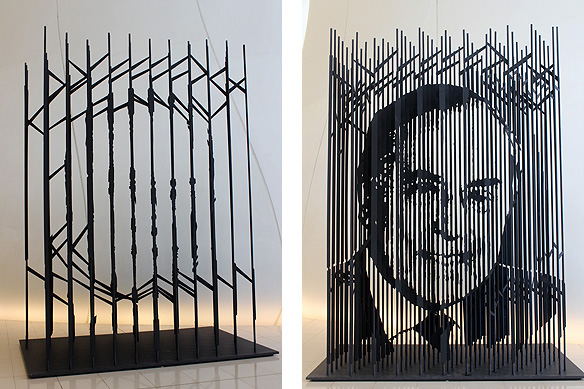
“Heydar Aliyev – 100” installation by Rashad Alakbarov. 100 metal columns, celebrating ex-President Heydar Aliyev’s 100th birth anniversary, morph into his portrait when viewed from a designated vantage point.
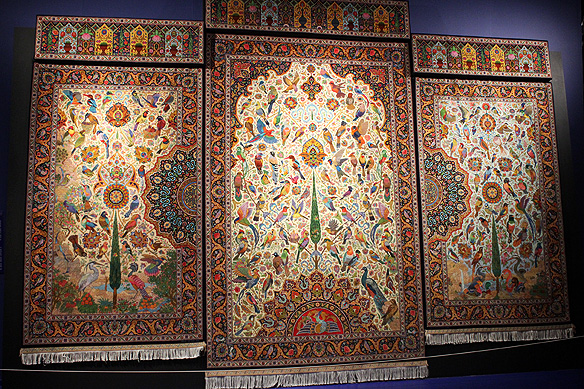
Carpet weaving master Eldar Mikayilzadeh’s 19 original silk and wool carpets are inspired by the 18th Century UNESCO-listed Sheki Khans’ Palace frescoes.
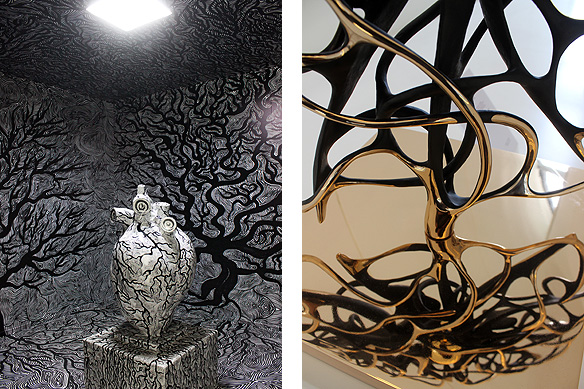
Left: Installation by artist and conservationist Leyla Aliyeva, Live Life Exhibition; Right: Breath of the Invisible Disc, Shaping the Invisible series by Italian sculptor Gianfranco Meggiato explores the concept of ‘introsculpture’ wherein an artist gazes into the interior of a sculpture.
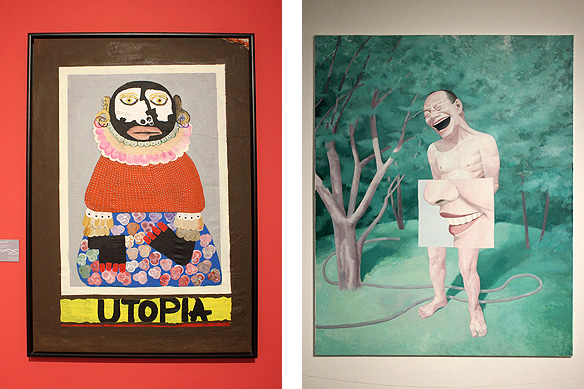
Left: Utopia by London-based multidisciplinary Ghanaian artist Kojo Marfo who fuses Akan fertility dolls with 16th – 17th European court paintings; Right: Summer Garden, Garden of Grins series by contemporary Chinese artist Yue Minjun are a play on cynical realism.
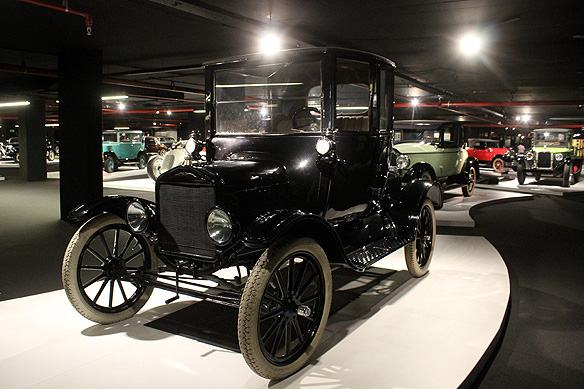
Ford Model T [1918], the first affordable car for many Americans, was mass produced only in black from 1913 to 1925. Together with around 60 other cars from the turn of the 20th Century, the exhibition is housed in the basement and has a separate entrance ticket.
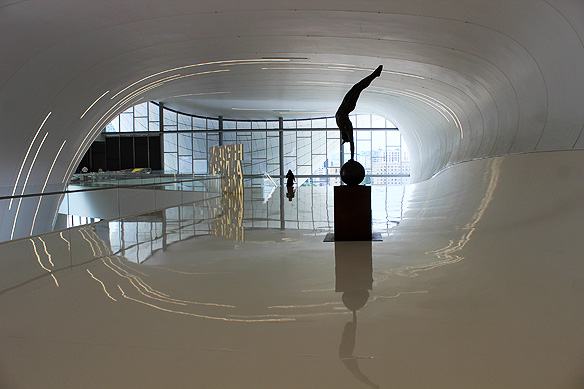
Sans a single straight line in its architectural design, the Heydar Aliyev Center won the London Design Museum’s Design of the Year Award in 2014.
Day 2: Night: Visit Baku’s newest and grandest mosque
This is one mosque that needs to be seen at night. Under a dark velvety sky, Baku’s largest mosque’s architecture and lighting create pure magic.
Built by the current President Ilham Aliyev in 2014 and named after his father, the previous president, Heydar Mosque has a seating capacity of 75,000 worshipers. 95-metre-tall minarets rise above the 55-metre-high dome embellished with Quranic verses, further adding to its grandeur. True to Azerbaijan’s secular values, the mosque’s opening ceremony was attended by heads of multiple faiths and sects, including Shia Muslims, Sunni Muslims, Mountain Jews, and the Russian Orthodox Church.
Do go up the stairs [or the escalator if it is working] and wander along the colonnades and terraces. For a perfect wrap, find a bench, and just bask in the sensory feast.
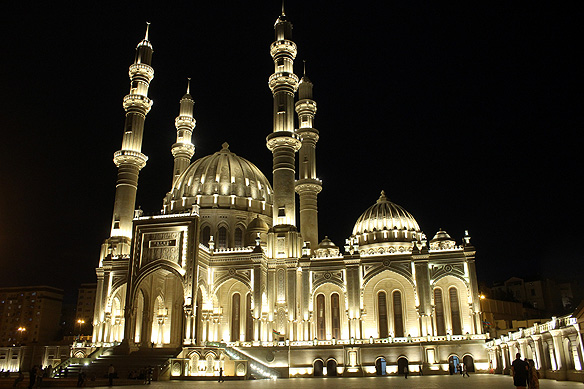
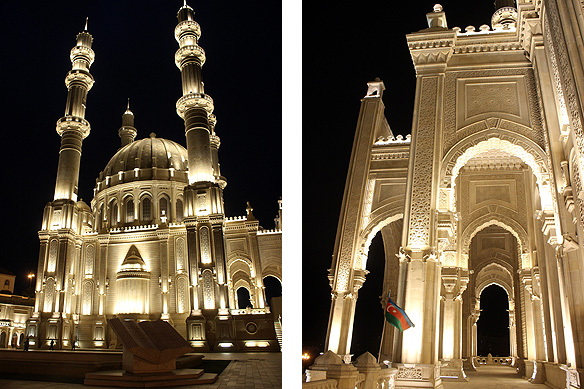
Azerbaijan is officially a secular country with Islam as the majority religion. There are around 120 mosques in Baku, the grandest of which is the state-built Heydar Mosque.
DAY 3: MUSEUM-HOPPING ACROSS BAKU
If you are an art and museum buff, you are in for a treat in Baku. The city is packed with museums of all kinds and some of the world’s most outstanding art collections. Here is a pick of the best of the lot for the last and final day in the city.
Day 3: Morning 1: National Museum of History of Azerbaijan
[10:00 AM to 18:00 PM; Mondays closed]
Housed in Haji Zeynalabdin Taghiyev, Azerbaijan’s most beloved entrepreneur-cum-philanthropist’s residence, the National Museum of History is part house-museum and part exhibition space. In its latter role, it contains the country’s material culture from Palaeolithic findings in Azokh Cave to its establishment as a Republic after independence from the Soviets in 1991.
A visit to the museum makes for an excellent crash course in Azerbaijan’s rich eclectic history riddled with shifting borders and contradictory ideologies, and how each chapter flows into the next. The walk-through culminates with Taghiyev’s sumptuous private rooms decorated with opulent furnishings and personal touches such as his name in the Arabic script on frosted windows.
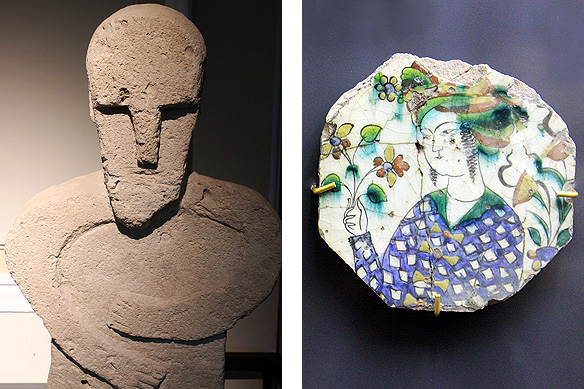

Top row: Left: Stone statues [balbal] used in ancestor worship from Shamakhi, 1st to 3rd Century; Right: Safavid-era painted pottery. Above: Staircase leading to Taghiyev’s personal rooms and Taghiyev’s name in Arabic script on the windows of the Oriental Hall.
Day 3: Morning 2: Nizami Museum of Azerbaijani Literature
[11:00 AM to 17:00 PM; Sundays closed]
Azerbaijanis take their literature very seriously as evidenced by the numerous statues of writers and poets which dot the entire city. Sealing this a few notches higher is the Nizami Museum of Azerbaijani Literature in a stunning Art Nouveau building at the entrance of Nizami Street.
If you are reading this post and are from the Indian subcontinent, you would in all likelihood have heard of the ill-starred lovers Laila Majnu. But did you know that this love story, repeatedly told and retold in popular Indian culture, was an Arabic legend that took a literary form under the 12th Century Azerbaijani Persian poet Nizami Ganjavi? The museum celebrates his life and work along with those of other literary giants. No photography is allowed inside, and you will have to leave your shoes outside.
Nizami Street is full of cafes and restaurants. Replenish yourself before hitting the remaining museums.

Nizami Street, Nizami Museum of Azerbaijani Literature and Nizami Park are all named after Azerbaijan’s celebrated romantic poet—Nizami Ganjavi.
Day 3: Afternoon 1: Azerbaijan National Carpet Museum
[10:00 AM to 19:00 PM Tuesday to Friday; 11:00 AM to 20:00 PM Saturday and Sunday; Mondays closed]
True to its contents, the Azerbaijan National Carpet Museum on Baku Boulevard is shaped like a rolled carpet. Designed by the Austrian architect Franz Janz, and completed in 2014, it houses the world’s largest collection of Azerbaijani carpets, numbering 3,079, together with 1,576 carpet products. The extensive collection, including both pile and pile-free carpets, spans a period of four hundred years [17th to 20th Centuries], and four carpet schools [Guba-Shirvan, Ganja-Gazakh, Karabakh, and Tabriz] decorated with geometric motifs, humped camels, antelopes, and flying birds.
The Traditional Art of Azerbaijani Carpet Weaving is listed as a UNESCO Intangible Cultural Heritage. Keep an eye out for the museum’s oldest carpet dating to the 17th Century from Karabakh, section of a 15th – 16th Century tombstone depicting a woman with a loom, and the Varni pattern made of stylized S-shaped dragons.
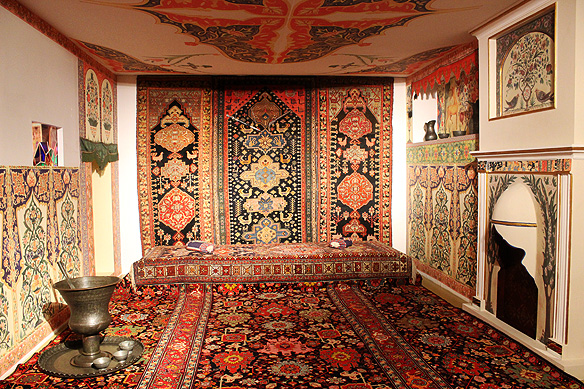
Room illustrating how carpets would have been used in royal palaces during Azerbaijan’s medieval period.
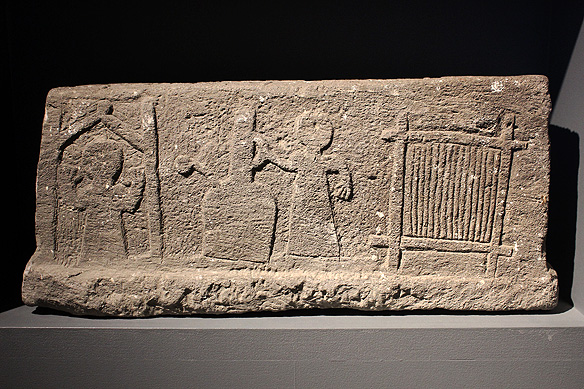
Carving of a woman with a loom, Tombstone, Urud, 15th – 16th Century.
Day 3: Afternoon 2: Museum of Miniature Books
[11:00 AM to 18:00 PM; Mondays and Thursdays closed]
The one-of-its-kind Museum of Miniature Books inside Icheri Sheher is one woman’s labour of love for books. A mere 2-minute walk from the Shirvan Shahs’ Palace, you can choose to explore its tiny treasures on Day 1 itself, if that is more convenient. Please note that unlike other museums which are closed on Mondays, this is closed twice a week—Mondays and Thursdays.
Ms Zarifa Salahova’s private collection of over 5,800 miniature books collected across 30 years from more than 70 countries also holds the distinction of making it to the Guinness Book of Records in 2014. For the unversed, a miniature book is one that does not exceed 3 inches in height, width, or thickness, and can be as small as less than 1/4th of an inch.
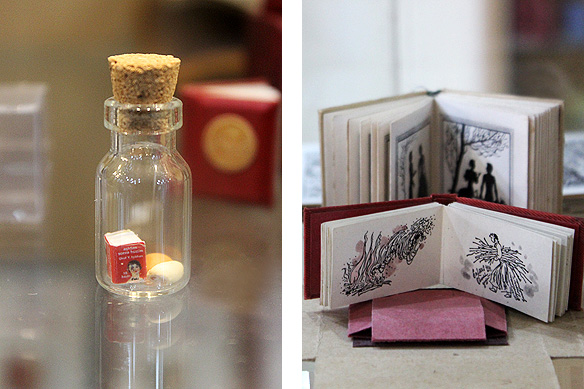
So tiny that the book fits into a vial.
Miniature books are replete with text and illustrations, and cover a wide range of topics from religion, political ideology, and literary classics, to old-fashioned common-place proverbs. The smallest of the lot known as ultra-micro-mini and micro-mini books are read with a magnifying glass.
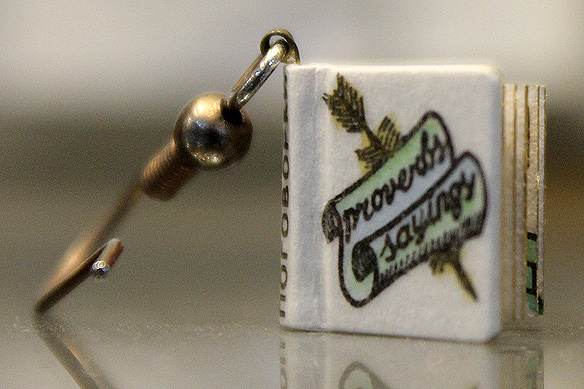
Another quirky exhibit: Micro-mini book [1/4 to 1 inch] earrings.
Day 3: Evening: Museum of Modern Art
[11:00 AM to 20:00 PM; Mondays closed]
Okay, modern art may not be everyone’s cup of tea, but this museum would make even the most unenthusiastic visitor sit up and take notice. Some eight hundred Avant Garde artworks by 20th Century Azerbaijani artists, comprising paintings, mixed media, sculpture and installation art, line the pure white labyrinthine open space scattered with floor cushions.
Each artwork here is a very personal, powerful expression of visual and conceptual bravado. Collectively, they form a euphony of creative minds on display, unfiltered and free of any desire to emulate. And yes, there is also some Picasso and Dali works from private collections to round off the museum collection.
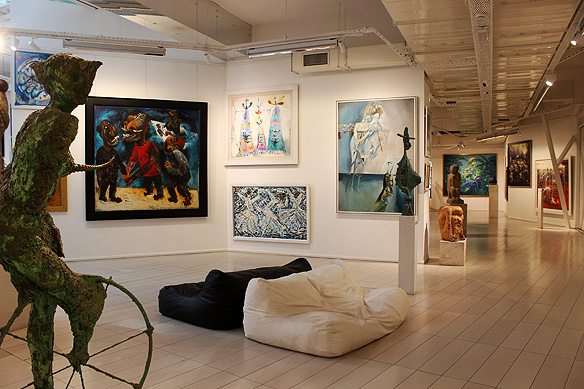
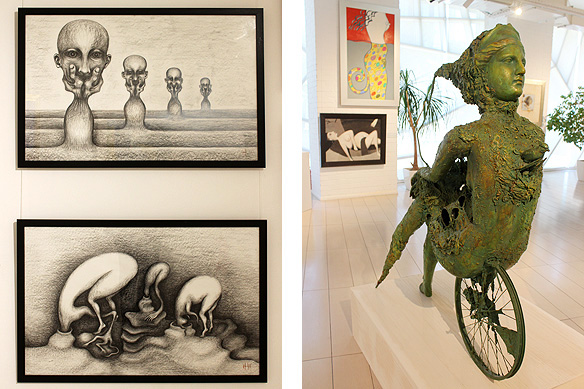
Baku’s Museum of Modern Art is a peek into modern Azerbaijan’s creative consciousness where every voice matters.
– – –
Now that you have all the insider tips on how to make the most of your Baku visit, are you ready to explore the city? ❤
Travel tips:
- Staying there: I stayed at the Royal Antique Boutique Hotel, a historical mansion converted into a boutique hotel inside Icheri Sheher.
- How many days: At least three days for Baku, and two weeks for the whole country.
- Getting around: Icheri Sheher is pedestrian-only. For other sites, I walked or took a Bolt taxi [reasonably priced]. You can download the app from its website here.
- I took a walking tour run by Baku Explorer to explore Old and New Baku on Day 1. It was very comprehensive.
- Save this post as a PDF for easy reference when offline.
– – –
[This blog post is part of a series from my solo independent travels to Azerbaijan in June, 2024. To read more posts in my Azerbaijan series, click here.]
 rama toshi arya's blog
Thanks for introducing me to Baku. I knew nothing about it before. Neil S.
LikeLiked by 1 person
Am glad you liked the post, Neil. I must admit, I really enjoyed the city. Though travelers have only recently started paying attention to it, interestingly, I met a lot of repeat tourists who kept coming back to Baku, year after year. 🙂
LikeLiked by 1 person
Baku looks even more amazing then i knew it already was! You really delved deep into this wonderful city. It is so high on my wishlist. If you like to read, pick up a copy of “Ali and Nino” by Kurban Said or “Days in the Caucasus” by Banine – these two books got me obsessed with everything Azerbaijan! X
LikeLiked by 1 person
Thank you for the reading tip. Will pick up the books you mention. I am not too sure what I was expecting when I went. But Azerbaijan went way beyond it all. Baku is super artsy and vibrant, and the country full of quirky details. Yeah, I delve deep when I travel. If I don’t, I get serious FOMO issues. 😀
LikeLike
You captured all things that for me make the Azerbaijani capital a very intriguing city to visit. I like the juxtapositions of old and new that seem to be everywhere in Baku. (I find your shot of six hundred years in one frame particularly fascinating.) Speaking of Laila Majnun, I remember my parents talked about it when I was little. Although I don’t think most kids these days have heard of it.
LikeLiked by 1 person
Azerbaijan is old and new, east and west, traditional and progressive–all rolled into one. 🙂 It is interesting that Laila Majnu reached even Indonesia. In India it is still popular, having been incorporated into cinema, music, theatre, and sayings over and over again.
LikeLiked by 1 person
Wow, that’s most impressive!
LikeLiked by 4 people
It is, indeed, a very impressive city. 🙂
LikeLiked by 1 person