In search of the Arpauzen petroglyphs in southern Kazakhstan.
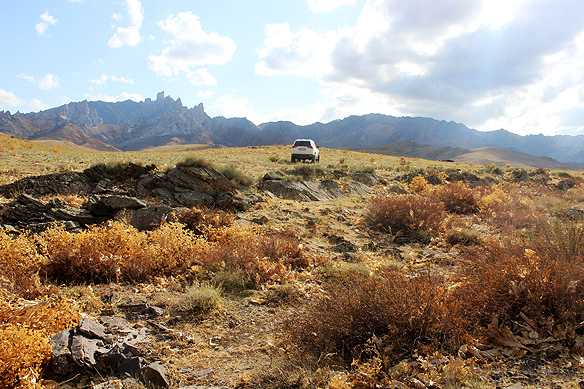
I wish I had some form of 360-degree vision and could see nature’s entire spread around me at the same go. On one side, the Prisyrdarya Karatau Mountains‘ dark craggy peaks encircled the isolated silent valley swathed in wild tulips and golden heather. On the other, colossal black chunks of rock glistening in the afternoon sun cascaded down the slopes. Pinch me, I whispered to myself. Is this really for real!
But this was all just half its magic …
“Come, look here. There are etchings of two double-humped Bactrian camels and a hunter with a bow and arrow.” My guide, Islam’s excited voice broke into my reverie, and the otherwise pin drop silence punctuated with the sound of our footsteps on crackling sun-dried tangled gorse, and neighing of wild horses grazing a mere stone’s throw away.
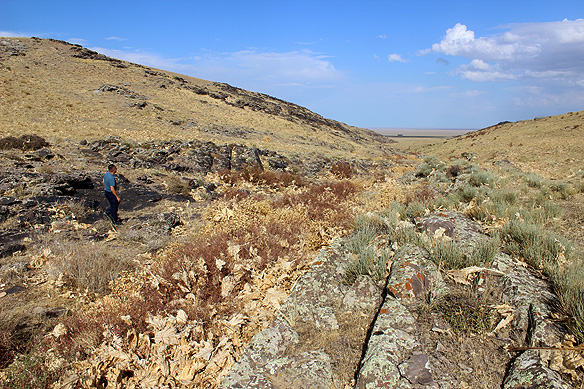
Arpauzen petroglyphs gallery contains over 5,000 rock etchings spanning three millennia.
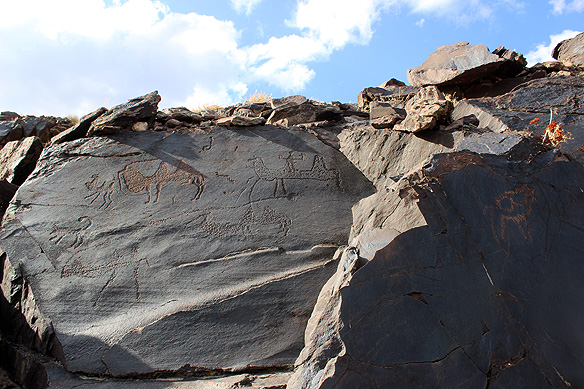
Some of the masterpieces.
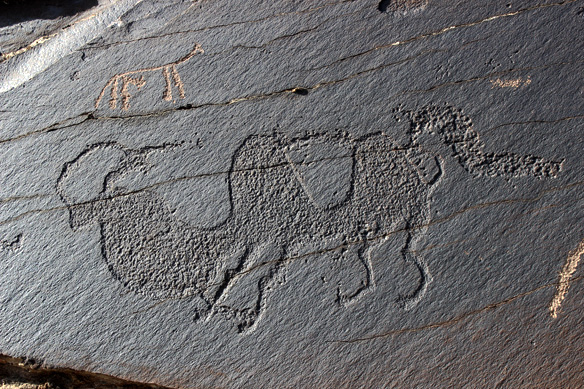
Double-humped Bactrian camel petroglyphs illustrate the introduction of the animal to the steppes via ancient trade routes.
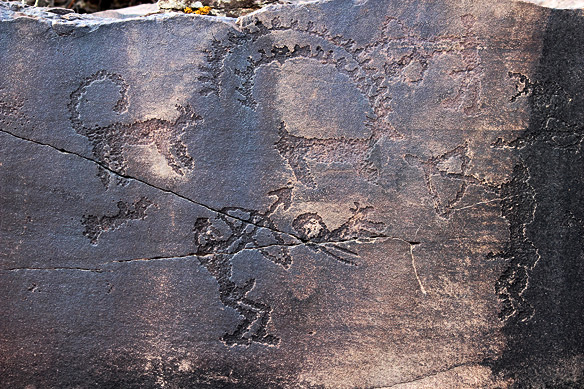
A Bronze Age collage. Notice the two men with bows and arrows, domesticated dogs, and creature with fantastical horns!
We were in an expanse, deep in the mountain foothills, in which human beings had time and again returned to, since the Early Bronze Age (3300 BC) to the present day, to express themselves. The massive chunks of rocks, once part of ancient trade routes, had served as nature’s canvases for these travellers who covered their smooth surfaces with more than 5,000 petroglyphs over time.
Collectively they are known as the Arpauzen petroglyphs, southern Kazakhstan’s largest and most magnificent collection of rock etchings. Most of them were drawn between the Late Bronze and Early Iron Ages, around 1200 BC. They offer a unique tapestry of the evolution of a culture and daily life which reflects the meeting of nomadic and settlement lifestyles over the millennia.
Efforts are underway for the site to be accorded UNESCO World Heritage Site status, similarly to the Tamgaly petroglyphs. Till such a time, and the associated signage, barbed wires, and concrete structures with ticketing officers and posters that would invariably come up, I felt privileged to be part of this hidden wonder in all its unadulterated glory. Pinch me, dear life! 🙂
– – –
I explored the Arpauzen petroglyphs on a private tour from Shymkent with Islam Kalanov, SilkTrip, WhatsApp No. +7 707 439 0099.
[This blog post is part of a series from my 14-day solo independent travels across Kazakhstan in August–September, 2024. To read more posts in my Kazakhstan series, click here.]
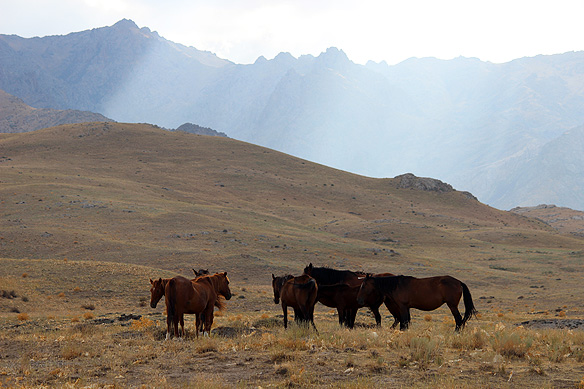
Mountains, petroglyphs, wild horses … and silence. 🙂
 rama toshi arya's blog
Love the horse pic, and the petroglyphs are amazing!
LikeLiked by 1 person
It was a beautiful place. Dreamlike.
LikeLiked by 1 person
You’ve captured that perfectly!
LikeLiked by 3 people
Pingback: travel guide: the six untold treasures of kazakhstan’s silk road heritage | rama toshi arya's blog