Tucked away on the Arabian Peninsula’s south-east coast is the Middle Eastern’s favourite getaway. Salalah.
Its very mention brings about a soft sweet smile to their otherwise calm controlled air, and a sparkle to dark eyes.
“Aah, Salalah!” followed with unbridled joy that I will be making the journey across a thousand kilometres from Muscat to this ‘haven.’
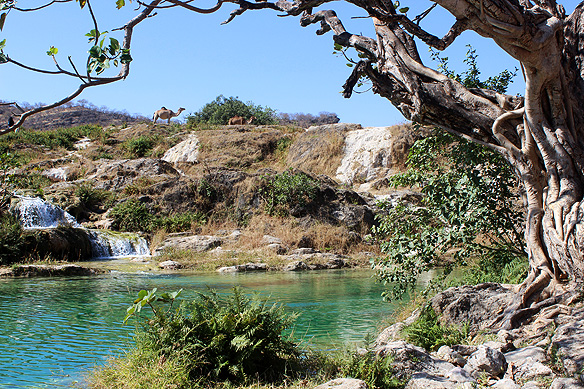
For two months in a year, July and August to be precise, Salalah in Southern Oman is engulfed in dense moist cloud and fog, with a light drizzle that amounts to less than a monthly average of an inch. This season is lovingly called ‘khareef,’ even though the term technically means autumn.
During these two monsoon months the barren shrivelled lunar landscape morphs into gushing waterfalls, turquoise-blue rivers, and lush green vegetation, replete with coconuts and bananas.
Whilst the rest of the Middle East swelters at 50 degrees, its populace flock to this anomaly in droves. Carnivals brighten the choppy sea-shores, and long queues together with packed car-parks peak to a frenzy.
Not your cup of tea?
Salalah is just as delightful in December when like the rest of Oman, it enjoys perfect weather.
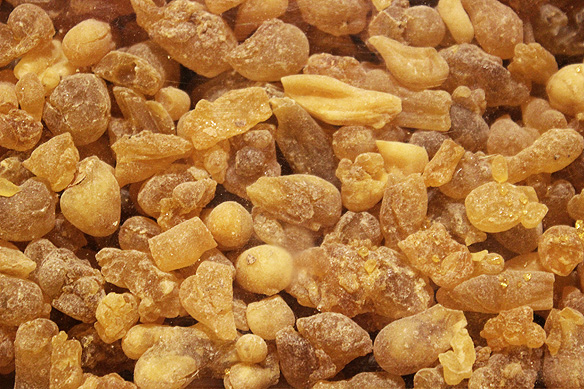

Another anomaly. Whereas the rest of the region is built on recently discovered oil and gas, Salalah’s economy traces itself back 5,000 years to Sumerian times. Capital of Oman’s Dhofar governate, Salalah and its surrounds were once part of a much-touted trade in frankincense.
More valuable than gold for thousands of years due to its scarcity, fragrance and medicinal qualities, frankincense flourished in this sliver of land. Crumbling archaeological sites and tracts of frankincense trees, still oozing the heady resin, form part of a UNESCO-listed world heritage site.
Intrigued?
Read on to know more about the frankincense connection, other rarities that set Salalah apart, and why no visit to Oman is considered complete without experiencing it—khareef or no khareef.
Who knows, perhaps like me, by the time you leave Salalah in some December, you too would be gushing “Aah, Salalah!” and planning a second visit. This time in khareef. 🙂
Land of Frankincense
![Frankincense trees [Boswellia sacra] are indigenous to the Dhofar region and have grown in Wadi Dawkah for thousands of years.](https://ramaarya.blog/wp-content/uploads/2025/01/salalah-frankincense-1.jpg)
Frankincense trees [Boswellia sacra] are indigenous to the Dhofar region and have grown in Wadi Dawkah for thousands of years.
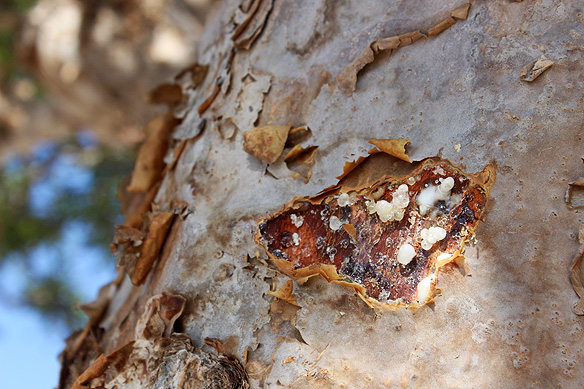
The white resin from the sap of the frankincense tree’s trunk is used in incense and perfumes.
![Caravan oasis of Wubar [Shisr] was an inland trading post in the Frankincense Trail from the 4th to 16th Century.](https://ramaarya.blog/wp-content/uploads/2025/01/salalah-frankincense-3.jpg)
Caravan oasis of Wubar [Shisr] was an inland trading post in the Frankincense Trail from the 4th to 16th Century.
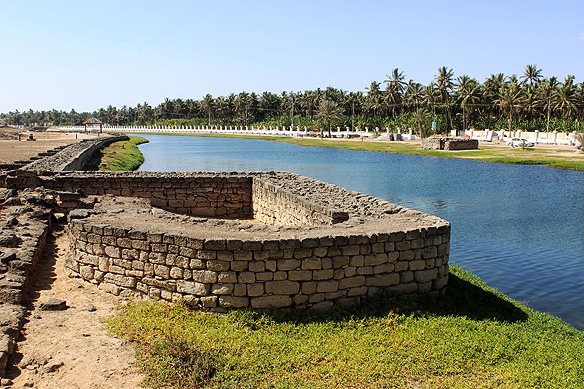
Al-Baleed, together with Sumhuram, shipped frankincense from their harbours to the far corners of the world for over 2,000 years.
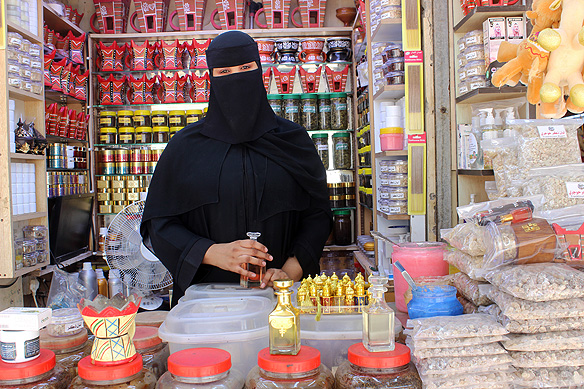
Stall selling frankincense in Souq Al Haffa today.
Remember the Biblical story of the three wise men who paid homage to Jesus right after his birth? They had brought with them gold, frankincense, and myrrh.
In all likelihood the frankincense was from Oman’s Dhofar region. Indigenous to this part of the world, the frankincense tree [Boswellia sacra] has been cultivated on its alluvial plains for the past five thousand years.
For much of this period, the resin from its trunk was worth its weight in gold, catapulting Dhofar, and the capital Salalah, to dizzying heights of wealth and prosperity.
Aided by a string of natural harbours and oases, Dhofar’s frankincense was shipped across the world: overland to Jerusalem and via sea routes down the east coast of Africa to far-flung China in return of coins, silks, and spices, as well as ideas and knowledge.
When the Great Silk Road came to an end in the 15th Century, so did Dhofar’s fortunes, and Salalah was buried in obscurity.
Today, dotted around Salalah are the evocative UNESCO-listed ruins of this trading trail. They include the trading fortress-cities of Sumhuram [4th Century BC to 5th Century AD] and Al-Baleed [8th to 16th Century AD], the caravan oasis of Wubar and the reason for it all—tracts of frankincense trees “God’s gift to Dhofar” in Wadi Dawkah.
The incense, in comparison, has fared better. It survives, albeit at a fraction of its historical price, in touristy Souq Al Haffa.
Rub’ al Khali: The Empty Quarter
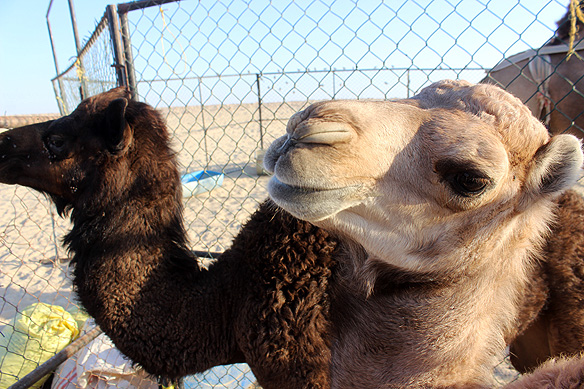
Baby camels in the camel farm on the way to the Empty Quarter.
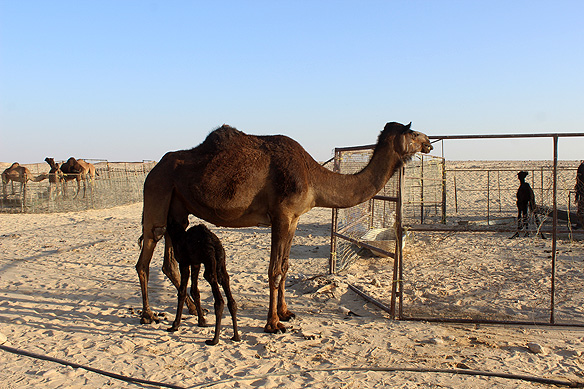
This little fellow suckling its mother was born just one day ago. It still had its umbilical cord hanging.
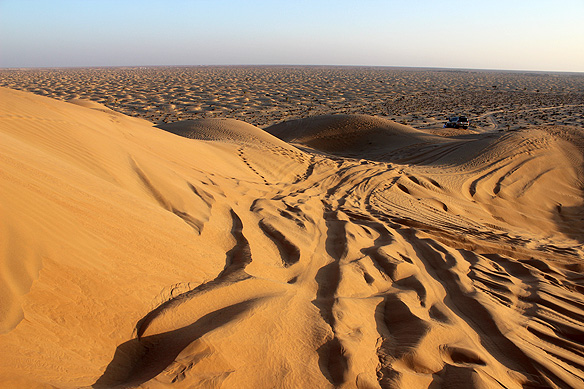
Rivers of sand and sand dunes, Rub’ al Khali.
![The Empty Quarter [Rub' al Khali] is the largest stretch of continuous sand in the world.](https://ramaarya.blog/wp-content/uploads/2025/01/salalah-empty-quarter-4.jpg)
The Empty Quarter [Rub’ al Khali] is the largest stretch of continuous sand in the world.
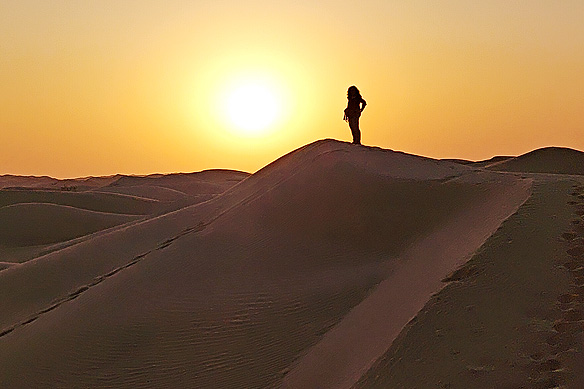
Self-portrait.
A mere 200 kilometres north of Salalah sees the start of the ‘Empty Quarter,’ the world’s largest stretch of continuous sand covering an area of 650,000 sq. kms. ‘Empty Quarter’ because it is … empty. Devoid of life, except for the most resilient scorpions and rodents.
Straddled across Yemen, Oman, Saudi Arabia and the UAE, the Empty Quarter [Rub’ al Khali in Arabic] is an eerily beautiful place. Miles and miles of golden peachy dunes, tinged with burnt orange. There are no roads, no settlements. Why, even the Bedouins hesitate to venture too deep into it.
The only constant in a world of shifting sands is the canopy of twinkling stars sans any artificial light. Jupiter, Saturn, Venus, the Milky Way, and the many constellations are all here for the taking. See if you can recognise Ursa Major, Ursa Minor, Andromeda, Auriga, Cassiopeia, Pegasus, Perseus, and the Seven Sisters.
Excursions to the Empty Quarter go as far as a series of towering dunes peppered with tourist camps for overnight stays, and a camel farm in which awkward baby camels prance. The former provide a unique opportunity to experience the quarter’s deadly silence. Because from that point on, it is nothingness.
Salalah’s Omani Charms
![Sultan Qaboos Mosque [2009] is Salalah's grandest structure, both from outside ...](https://ramaarya.blog/wp-content/uploads/2025/01/salalah-city-1.jpg)
Sultan Qaboos Mosque [2009] is Salalah’s grandest structure, both from outside …

… and inside. Non-Muslims can visit the mosque from 8 am to 11 am, Saturday to Thursday, and must restrict themselves to the strips of blue carpet.

Livestock slaughtering in the Central Market.

From fruits and veggies, to breads and pickles, the Central Market’s stalls have it all.

Oman’s ship-building prowess and ports contributed to a nautical empire which reached its zenith in the 18th and 19th Centuries, stretching from modern-day Pakistan to Zanzibar in East Africa. (Museum of the Frankincense Land)

Finds from the Sumhuram Archaeological Park. Left: Funerary limestone head; Right: Shells with decorations perhaps used as buttons or medallions. (Museum of the Frankincense Land)
Oman’s most loved and longest reigning ruler late Sultan Qaboos bin Said Al Said [1970 to 2020], a 15th generation descendent of the Al Said royal family, was from Salalah.
When the Sultan came to power on 23 July, 1970 after overthrowing his father in a bloodless coup, the country had only 10 kilometres of paved roads, three schools, and was bereft of medical facilities. Though Qaboos moved to the capital city Muscat, he never forgot his hometown. He ensured it too thrived under his leadership and the newly discovered oil.
His most opulent gift to Salalah, however, was perhaps the Sultan Qaboos Mosque. Completed in 2009, the grand edifice in polished marble, decorated with massive crystal chandeliers and a hand-knotted carpet, can house 2,500 worshippers.
Close by is the Central Market, an arcaded complex bustling with livestock slaughtering, dates and bananas, and miniscule eateries. It is where Salalah’s residents living in the loosely laid-out cream and white low-rises on wide streets, flanked by wider footpaths, shop, and is as untouristy and real as it can get.
Museum of the Frankincense Land in the Al-Baleed Archaeological Park completes Salalah city’s cultural circuit. Its two halls showcase Oman’s ship-building heritage and finds from the region’s UNESCO-listed sites, along with a section dedicated to the frankincense trade.
For the perfect wrap of an exploration of Oman’s third largest city, make your way to Dahariz Beach. You will not be alone. As the sun sets, the brightly lit-up beach fills up with locals on chaise loungers, chilling late into the night.
Heritage Precinct of Taqah
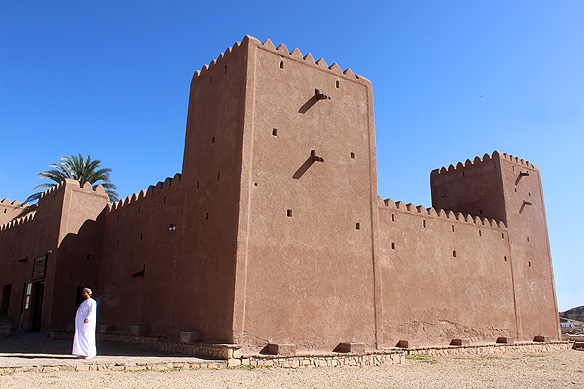
19th Century Taqah Castle served as the residence for Dhofar’s governors.
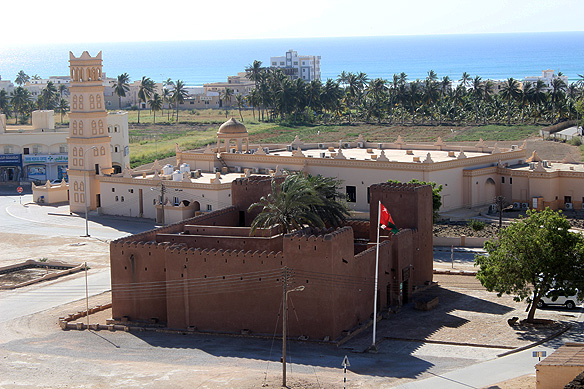
Taqah Castle and Afif Mosque as seen from Burj Al-Askar, with Taqah Beach in the background.
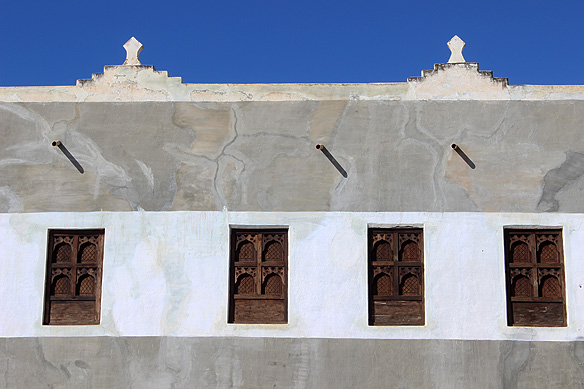
Koofan Heritage House, a 150-year-old family home converted into a hotel-cum-museum, stands right in front of the castle and has a coffee shop on the ground floor.
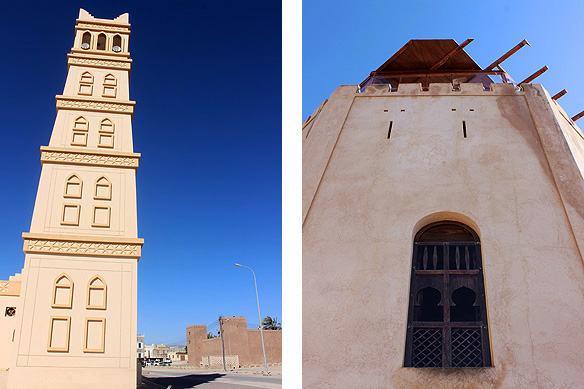
Afif Mosque and Burj Al-Askar, on opposite sides of the castle, are both worth a dekko.
Taqah, a fishing village east of Salalah, stands out for its squat 19th Century stone castle right in the middle of a sandy square. Built by Sheikh Ali bin Timman Al Ma’shani as his private residence, it housed Dhofar’s governors from the early-20th Century onward.
The castle is replete with everything its residents could need, including protection from possible attacks. There is an indoor well [to avoid poisoning of the water supply], a prison with shackles, guardroom, oven, living quarters, and a majlis to carry out government business.
Dhofar was a relatively late entrant into the Sultanate of Oman. Prior to the 19th Century, the secluded governate separated from northern Oman by inhospitable mountains and vast stretches of desert had a chequered past built on cultural and political links to Saudi Arabia. Even now, the language spoken in Dhofar is Dhofari Arabic. Completely different and unrelated to what is spoken in neighbouring Yemen or the rest of Oman.
Overlooking the Taqah Castle is the Burj Al-Askar perched on a rocky outcrop that offers fabulous views of the square and maze of lanes and whitewashed houses huddled around it. Both the castle and tower are currently museums containing Omani weapons, artefacts, and household goods, and give a fascinating glimpse into 19th Century Omani life.
Do take the time to pop inside the historical structures if open, but also to simply walk around the atmospheric precinct, maybe have a Qahwa [Arabic coffee] at Koofan Heritage House, and gaze up at the towering minaret of the nearby Afif Mosque which has been rebuilt multiple times.
From Fazayah Beach to Wadi Darbat: Salalah’s Natural Wonders
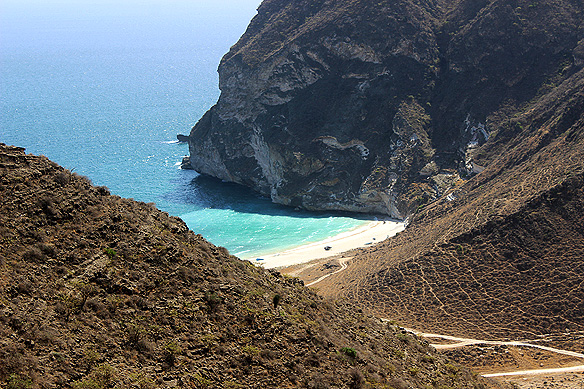
‘Hidden’ Masood Beach lies to the west of Salalah.
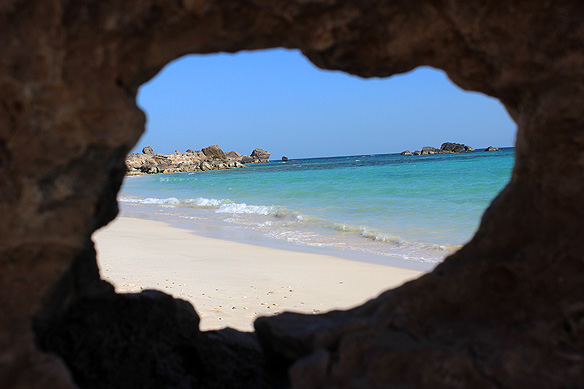
Fazayah Beach can only be accessed by an offroad route over craggy mountains.
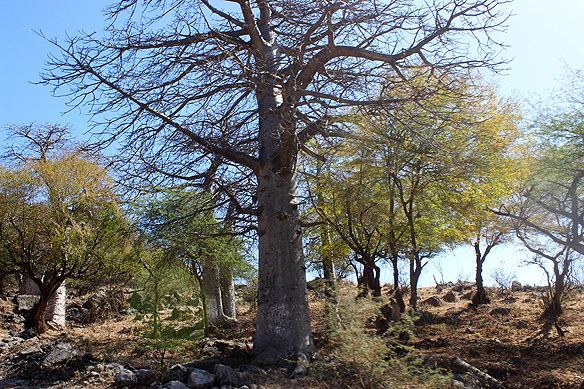
Now how did they get here? Grove of ancient Baobab trees in Wadi Hinna.
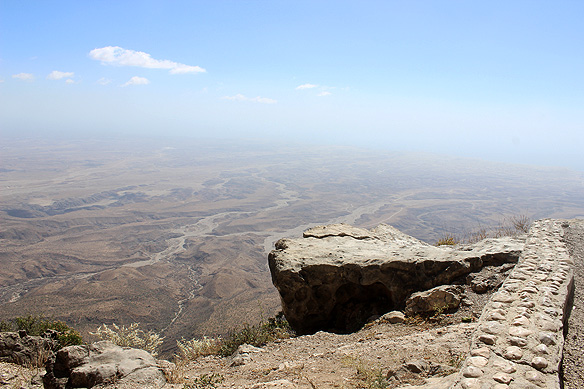
Four thousand feet up in the air atop Jabal Samhan.
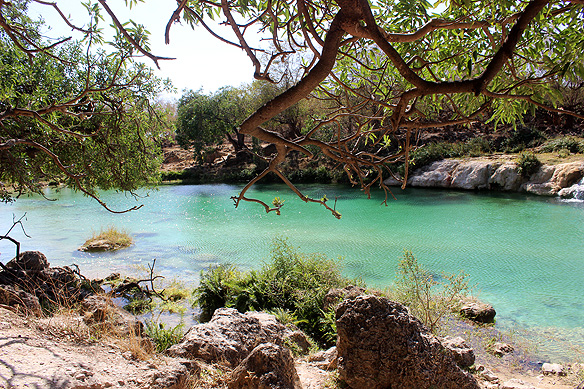
The undisputed beloved jewel of Dhofar: Wadi Darbat.
Oman’s coastline east and west of Salalah, with hundreds of sauntering camels for company, is often considered to be the country’s most scenic.
To Salalah’s west are a string of picture-perfect powdery beaches. First in line is the Mughsail Beach and the blowholes in Marneef Cave which during the khareef season spurt gallons of water over unsuspecting visitors. Next is the hidden away Masood Beach. The route culminates at the remote Fazayah Beach scattered with gigantic boulders, and accessed through off-road climbs over sheer craggy peaks.
Should you turn east of Salalah, be prepared for jaw-dropping viewpoints. Jabal Samhan in the Dhofar mountains is the most magnificent of all. At 4,000 feet above sea level, it overlooks the deserted plains and ocean of the Jabal Samhan Nature Reserve as far as the eye can see.
Along the way are a string of natural oddities. There is the 211-metre-deep and 100-metre-wide Tawi Atair Sinkhole, also known as the ‘Well of Birds’, which is home to hundreds of migrating birds. Add to it a cluster of ancient Baobab trees in Wadi Hinna, and an anti-gravity point where one’s vehicle cruises uphill on neutral gear!
However, speak to any Middle Eastern, and the top favourite would be Wadi Darbat—a collection of iridescent turquoise-blue pools and canals surrounded with lush foliage even outside the khareef season. Were you to visit in the monsoon months you would be welcomed with waterfalls gushing over its mountains and an ethereal mist holding the wadi close. ❤
– – –
Wanna know how I planned my Salalah trip? Check the travel tips below.
Travel tips:
- Getting to Salalah: I flew in and out from Muscat with Oman Air.
- Staying there: I stayed at the Hotel Kyriad in Salalah city centre, a brand new hotel with a fabulous breakfast spread and even more fabulous staff!
- How many days: I stayed for 5 days and 4 nights.
- I explored Salalah through three full day tours run by Beautiful Salalah, the only one in town which runs group tours. Highly recommended. For Salalah city, I walked or took an otaxi. You can download the app from its website here.
- Save this post as a PDF for easy reference when offline.
– – –
[This blog post is part of a series from my 12-day travels across Oman in December, 2024. To read more posts in my Oman series, click here.]
 rama toshi arya's blog
I kind of had a feeling that you were traveling somewhere recently, and I was trying to guess where it was. Now I get my answer. Salalah looks beautiful, and the way you weaved a little bit of history into the blog post makes it sound like a very appealing place to explore. I had no idea that the late Sultan Qaboos hailed from this city.
LikeLiked by 2 people
Yes, was travelling. And I still have not been able to travel and blog at the same time. Hehe. I was in Bahrain, Qatar, and Oman for three weeks. Very interesting part of the world. Three countries right next to each other, yet so different. Each has such strong individual identities! Am glad you liked the post. Salalah is a special kind of place. Hope you enjoy the rest of my Middle East series too. 🙂
LikeLiked by 1 person
Very beautifully written article. The pictures are fascinating. Had never heard of salalah. Hopefully visit one day.
LikeLiked by 1 person
Thank you for your kind words. 🙂 Salalah is very much worth a visit!
LikeLike
What a beautiful place – loved the photos such a range of blues and turquoise and the sky gradation in the photo of the minaret of Afif Mosque is fantastic (good to be back Rama)
LikeLiked by 2 people
Good to have you back in my blog. 🙂 Salalah was lovely. Some day I would like to go back. Let’s see.
LikeLike