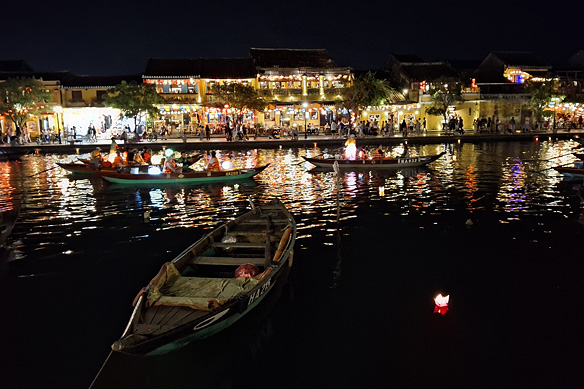
Imagine a whole town swathed in deep red and yellow silk lanterns. Across tree-lined streets and narrow alleys, on shopfronts and cutesy cafes. A centuries-old town with yellow tube houses that stretched between lanes, and a wide placid river that gently lapped against its banks.
If during the day Hoi An is a fairytale, at night it is as if those very fairies had waved a wand and created magic. Don’t be surprised if you catch yourself wondering if it was all for real. After all it is the 21st Century. How did this exquisite time capsule manage to survive. Especially one that was authentic, and not contrived.
Frozen somewhere in the 17th and 18th Centuries, UNESCO-listed Hoi An’s very name recounts its story. Hoi An means the ‘peaceful meeting place.’ Four hundred years ago, this idyllic riverside town became an international trading port in southeast Asia. Merchant vessels and traders from Japan, China, Europe, and India converged on its waterfronts and streets exchanging goods and ideas. Hoi An was their ‘peaceful meeting place.’
However, when neighbouring Da Nang started to grow as a port in the 19th Century, Hoi An’s fortunes fell and the town was forgotten. No one saw any merit in pumping money into building over its yellow trading tube homes and colourful assembly halls in the name of development. It was this very neglect which turned out to be Hoi An’s blessing in disguise and the reason for its revival, thanks to help from a completely unexpected quarter—Kazimierz Kwiatkowski, a Polish architect and conservationist.
If Hoi An is on every traveller’s bucket-list today, it is because Kwiatkowski spent years towards getting it listed as a UNESCO World Heritage Site. Hoi An never forgot the favour. A memorial in his honour stands in Kazik Park in the Old Town today.
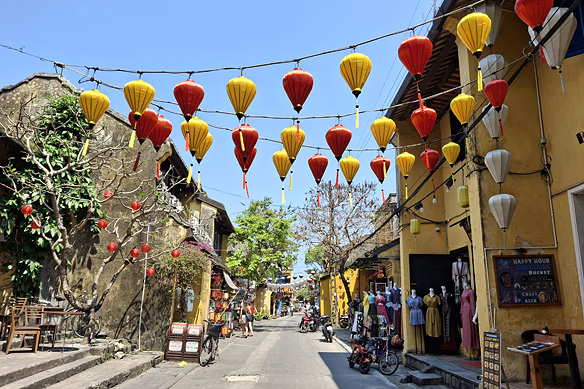
As you wander through the pedestrian-only streets filled with quirky museums, snazzy boutiques, and cozy cafes in the company of other tourists, you may well ask: Where are all the Vietnamese?
To come up-close-and-personal with Hoi An’s native vein, you will need to wake up with the sun. Whilst the tourists sleep out their hangovers, the locals scuttle through the city. A quick breakfast at the stalls, a series of halts on their bicycles and scooties as they shop for meat and veggies in the morning markets, a prayer to both the gods and ancestors alike in the pagodas and temples. Hoi An is being prepared for another day as ‘Hoi An.’
By the way, the historical houses are historically painted yellow for a reason. It is to camouflage the effects of the annual flooding. Come rainy season, all of Hoi An is typically submerged under upto a metre of turgid river-water. Household items are shifted to the upper floors via floor traps. Paddle boats replace scooties. And life goes on. Here’s a lovely photo essay on Hoi An where floods are a fact of life.
To come back to Hoi An’s omnipresent lantern, it was introduced by the Chinese and Japanese traders who hung them outside their shops and homes when they moved here in the 16th Century. The local Vietnamese quite liked the idea and not only adopted it, but also came up with a silk on bamboo frame version of it.
Seeing its popularity, a monthly Lantern Festival was introduced in 1988 in which lanterns were released into the river under a full moon, accompanied with wishes. Fast forward to 2025 and Vietnam’s burgeoning role in global tourism—Every night is presently being celebrated as Lantern Festival night!
Welcome to my photo essay on magical Hoi An sprinkled with lanterns and a glittering river, followed by travel tips on how to make the most of a four-day stay in it.
Wishing you happy travels. Sorry, ‘magical’ travels. Always. ❤️
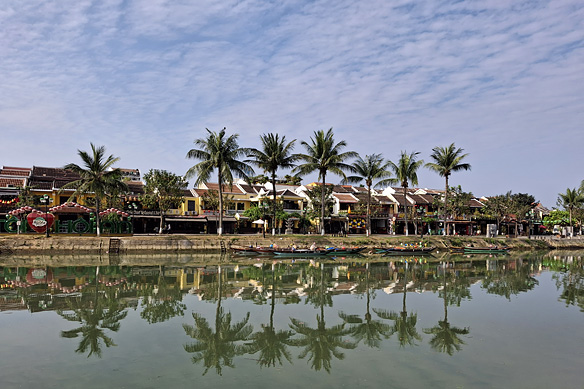
Early morning and Hoi An’s Hoai river.

Chinese and Japanese merchants were the first foreigners to call Hoi An their home. They settled on either side of a canal connected by a Covered Bridge built by the Japanese.
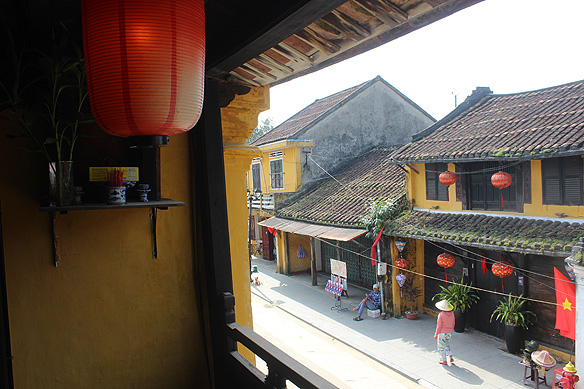
View down the Japanese side of Hoi An.
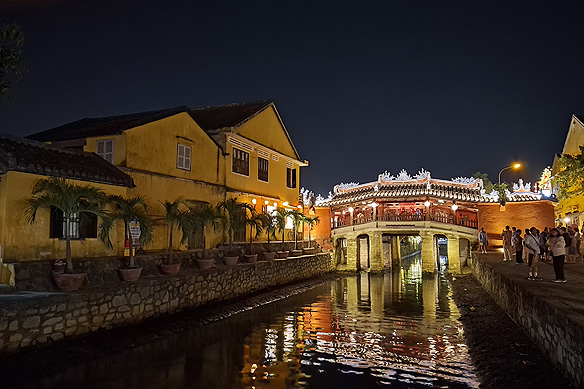
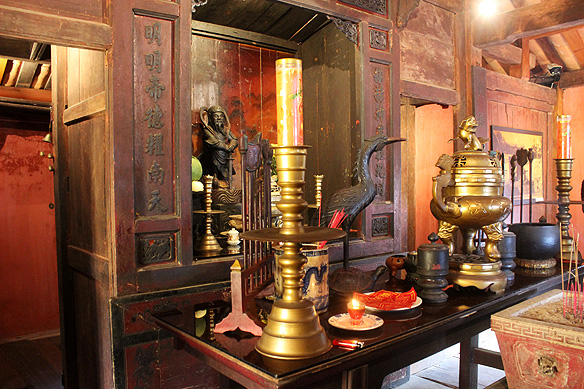
Hoi An’s most popular attraction, the Japanese Covered Bridge, dates to the 17th Century. It contains a shrine dedicated to Tran Vo Bac De, god of happiness, wealth, and health.
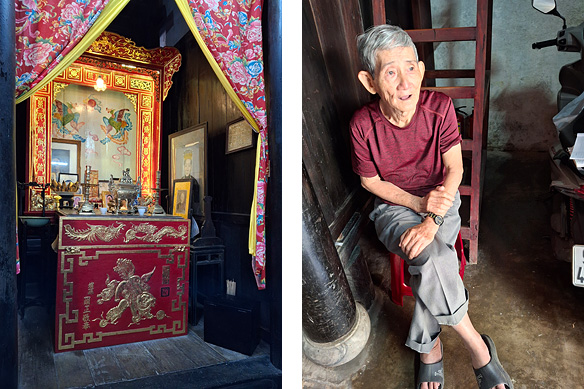
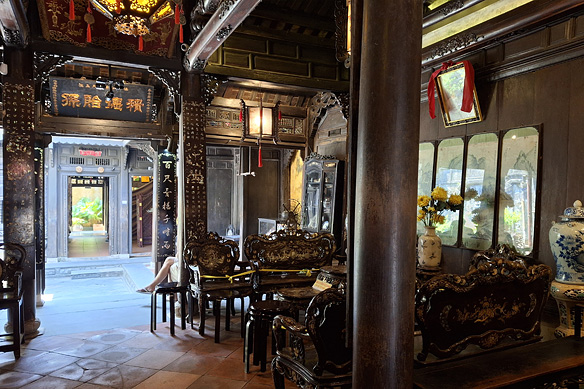
Inside the 18th Century Quan Thang Old House: family altar and the present patriarch. There are over 800 protected historical houses in Hoi An of which tourists can enter six with the entrance ticket. Quan Thang is the most evocative …
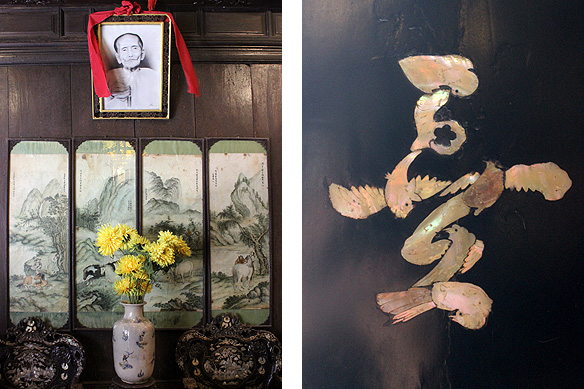
… Whilst Tan Ky Old House [1741] the most artistically exquisite. Watch out for the mother-of-pearl Chinese characters on the columns made of birds in flight.
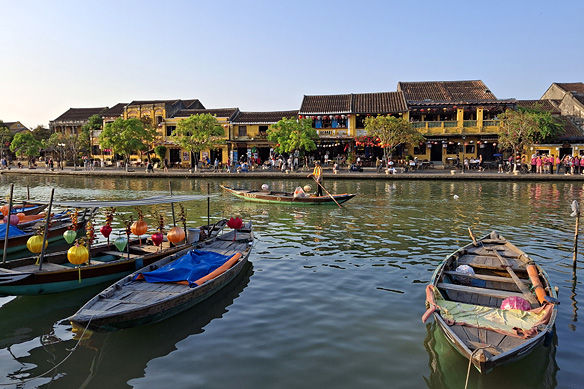
Most Hoi An houses have stayed within the same family for the past 200 years. It is not just their homes that are frozen in time. It is also their way of life.
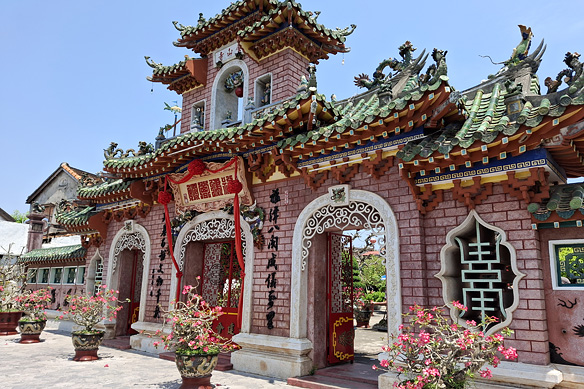
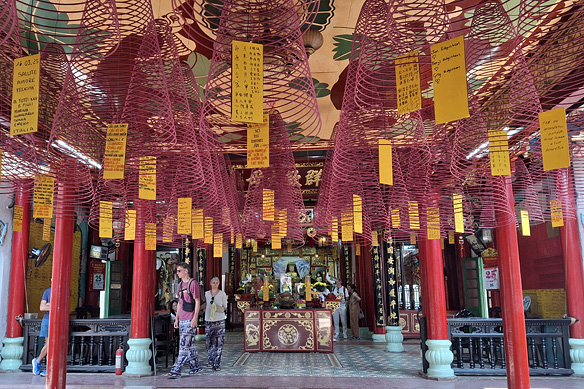
The Chinese who settled in Hoi An identified themselves with the provinces they came from and made assembly halls for social and religious gatherings. These were later turned into places of worship. The Fujian Assembly Hall [1759] is one such where the goddess Thieu Hau [protector of seafarers], along with deities for fertility, wealth, and academic success are worshiped.
Those wonderful conical rings hanging from the ceiling are incense sticks, and the yellow strips are devotees’ wishes and personal details.
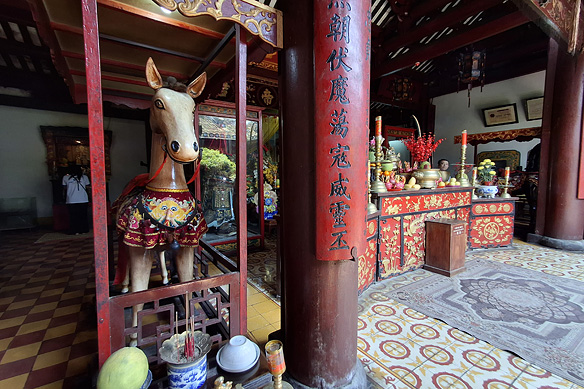
Quan Cong Temple [1653], on the other hand, is dedicated to Quan Cong, a Chinese general who came to symbolize loyalty, sincerity, integrity, and justice. That’s his horse next to the altar.
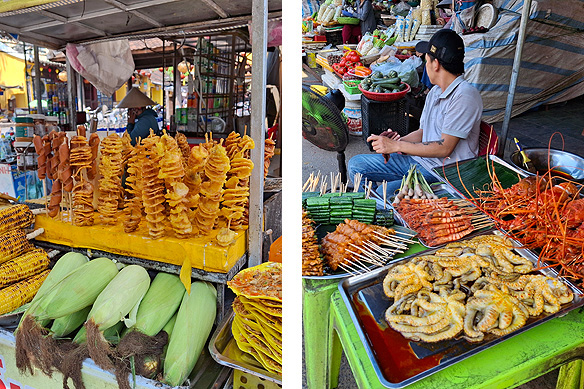
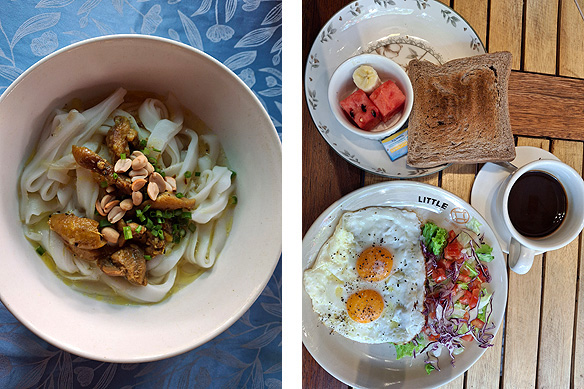
Hungry? Hoi An has it all. Exotic street food, and homely noodle soup and all-day-breakfasts for the faint-hearted such as me. 😀
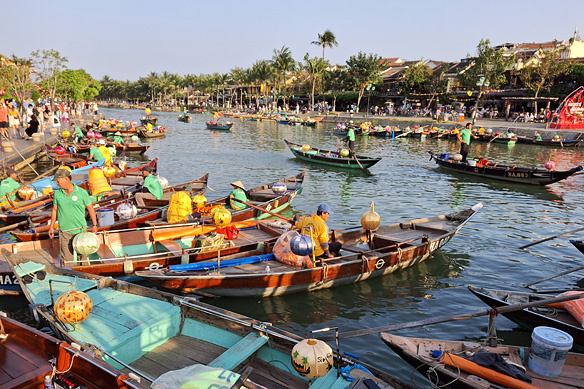
Bamboo boats waiting for the sun to set and the streams of tourists eager to release lanterns into the river.
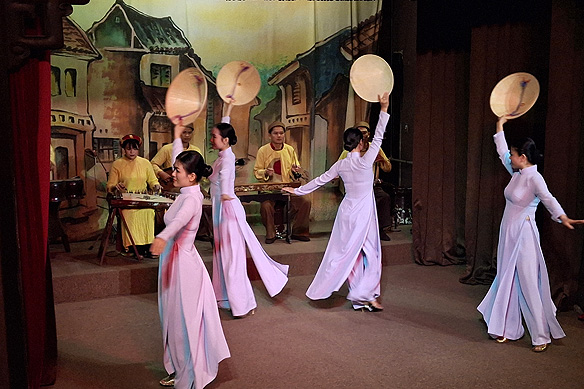
Every day at 10:15 AM, 3:15 PM and 4:15 PM, Hoi An’s rich cultural legacy is brought alive through traditional Vietnamese performances in the Old Town.
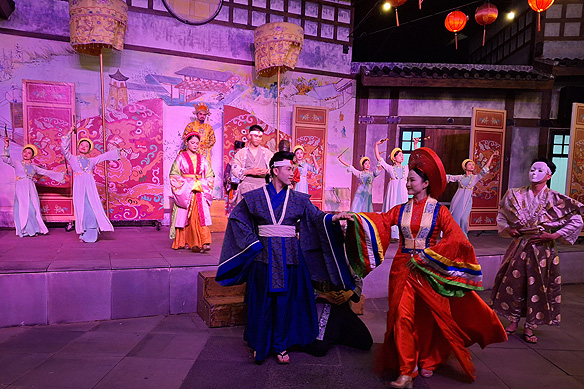
To get the big picture though, make your way to the Memories Show at Hoi An Impression Theme Park where Hoi An’s history over the centuries is recreated in a spell-binding show [ticketed], preceded by a series of mini-shows [free].
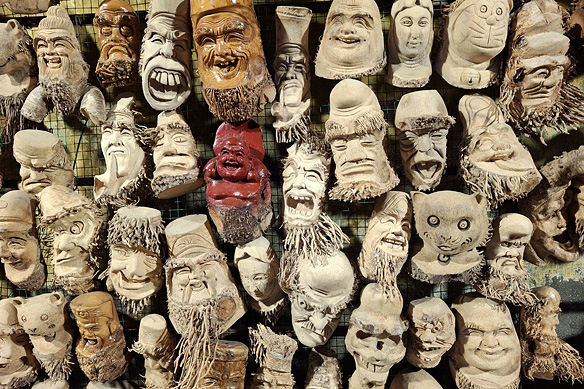
Aren’t these fabulous! Sold as souvenirs, these clay masks are an integral part of Vietnam’s tribal culture.


French photographer Rehahn, who calls Hoi An his home, set up Precious Heritage Museum in the Old Town to display his most celebrated work. A sensory feast, the permanent exhibition comprises his decade-long journey to document Vietnam’s 54 ethnic groups through portraiture, heirlooms, and tribal songs. You just might also bump into him signing prints.
His above two portraits are my favourites. On the left is An Phuoc, a 7-year-old Cham girl; to the right is Y An, a 76-year-old from the Brau tribe.
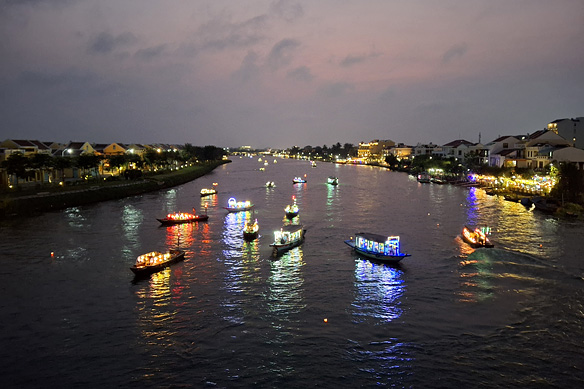
It is dusk, and time to drift down Hoai river, release a lantern, make a wish.
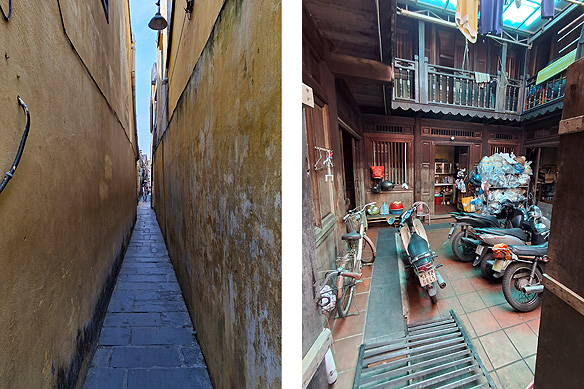
Hoi An’s yellow tube houses are long, stretching between two parallel streets. While the ends open onto the streets and have been turned into cafes and shops, the central part, replete with a sunlit courtyard is where the Vietnamese homeowners live. Narrow alleys, often just a couple of feet wide, house the entrances to these sections of the house.
This is the Vietnamese part of Hoi An. This and the morning markets selling fruits, veggies, meats and fish, and the 24×7 pho stalls.
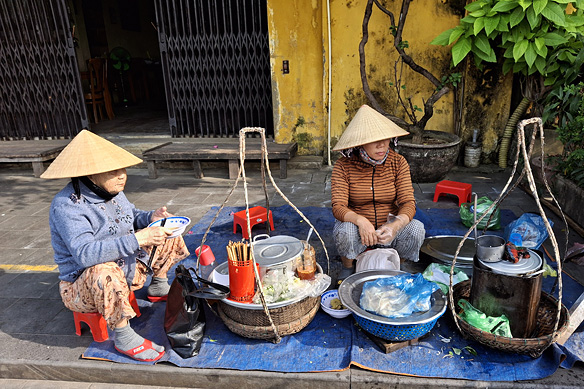
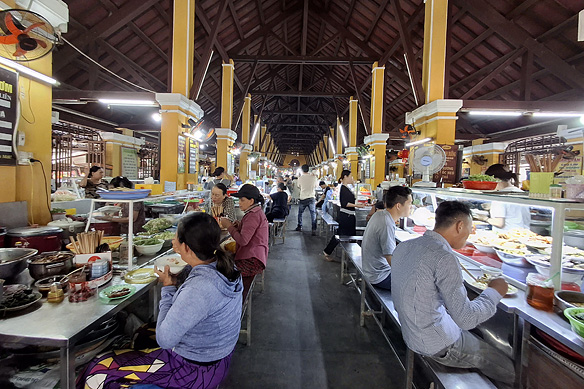
Vietnamese take their pho [a soup dish] very seriously. Anytime is pho time. Anywhere can be a pho place.
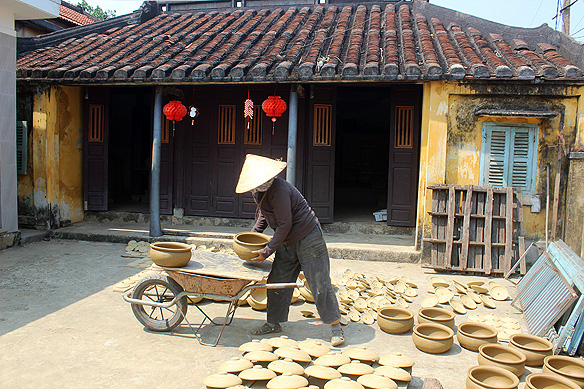
The building material and household objects for Hoi An’s homes historically came from Thanh Ha pottery village on the outskirts of the Old Town. Around since the 16th Century, it rose to fame in the 19th Century when Hue’s rulers called its artisans to work on the royal buildings. Now the village offers pottery workshops and goodies for sale.
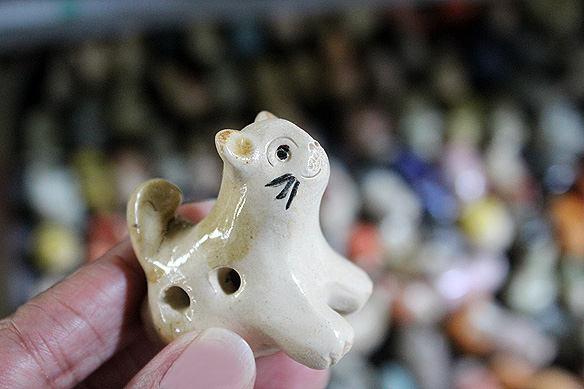
Cat whistle. There are also snake whistles, turtle whistles … the list goes on.
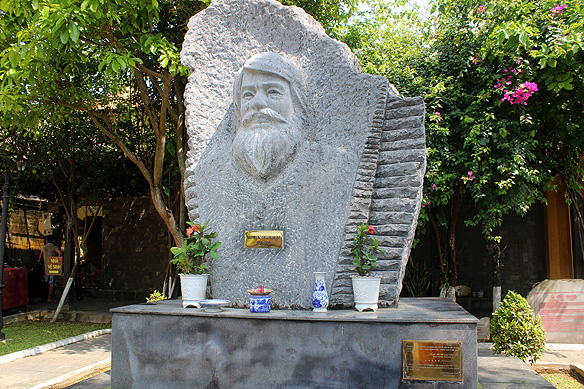
Kazimierz Kwiatkowski, the man who gave Hoi An its second innings. Hoi An was listed as a UNESCO World Heritage Site in 1999.
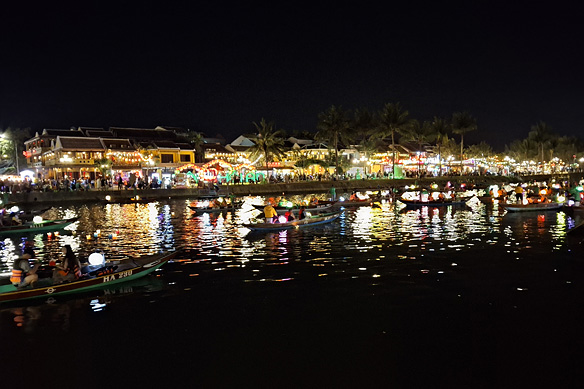
Every night is Lantern Festival night in Hoi An, the ‘peaceful meeting place.’ 🙂
– – –
[Please note there are NO affiliate links in this post, or in any of my posts. Links are provided only to help you with your plans or for you to get extra info. Neither is any of the content in this post or any other post sponsored. The services mentioned in this post are what I used and I am simply sharing them with you.]
Travel tips:
- Staying there: I stayed at the Villa Soleil Hoi An in the heart of the Old Town. A budget hotel, the rooms with balconies are simply fabulous and the breakfast yummy. Avoid Room 303; it is a bit mouldy.
- How many days: At least four days, three nights.
- Getting around: I walked in the Old Town and took a Grab taxi [reasonably priced] for further out sites. You can download the app from its website here.
- Getting to the airport: To get to Da Nang city or airport, Ha Hoang Travel provides an hourly shuttle service with hotel pickup for 120,000 VND. Their offices are right opposite the covered market.
- Entry ticket: Being a UNESCO-listed site, there is an entry ticket [120,000 VND] which provides access to any five of Hoi An’s 25 historical houses, museums, assembly halls, and places of worship, plus a complimentary traditional show.
- The best way to understand the Old Town is through a walking tour. This is the one I did, and it was fantastic.
Best museums in the Old Town
- Museum of Folk Culture on Hoi An’s cultural traditions. Ticketed entry.
- Precious Heritage Museum, French photographer Rehahn’s incredible collection of photos on Vietnam’s 54 ethnic groups. Free entry.
Not-to-miss cultural performances:
- Hoi An: Teh Dar Vietnamese Bamboo Circus at Lune Centre. Go for the ‘WOW’ ticket. It is completely worth the splurge. No photography allowed.
- Memories Show at the Hoi An Impression Theme Park in which 500 performers recreate Hoi An’s history through a visual extravaganza. ‘HIGH’ ticket recommended.
[Note: This blog post is part of a series from my travels to Vietnam for three weeks in March 2025. To read more posts in my Vietnam series, click here.]
 rama toshi arya's blog
I loved Hoi An. And yes, you’re right about how this beautiful town looked so different during the day and at night, and I’m glad to have experienced both. I remember having the best bánh mì I’ve ever tasted, right in this place.
LikeLiked by 2 people
I guess no trip to Vietnam is complete without Hoi An and a Banh Mi. 🙂
LikeLiked by 1 person
Beautiful Hoi. Well shared with beautiful photos and description 👍😊
LikeLiked by 1 person
Thank you, Priti. Glad you liked it. Hoi An is a photographer’s paradise. 🙂
LikeLiked by 1 person
https://notionpress.com/write_contest/details/1559/ashalata. Please support me with 50 points through the link. It’s a short story competition
Thank you 👍😊
LikeLike
Great photos!
LikeLiked by 1 person
Thank you. 🙂
LikeLike
One of the most Idyllic places I’ve visited – in 1994 that is. Bought an oil painting by a local artist a la Gauguin – still on my living room wall – LOVE IT! Thanks for the memories …
LikeLiked by 3 people
Hoi An is indeed idyllic. You went at a good time. Now the little town is over-run by tourists from across the world. 😀 I liked Hoi An in the early mornings and around dusk the best. Mornings is when I got to see the Vietnamese side of it. And dusk, when Hoi An turned into a painting.
LikeLike
Pingback: travel diaries: in search of champa, vietnam’s ancient hindu kingdom | rama toshi arya's blog
Pingback: the complete travel guide to the wonders of royal hue | rama toshi arya's blog