
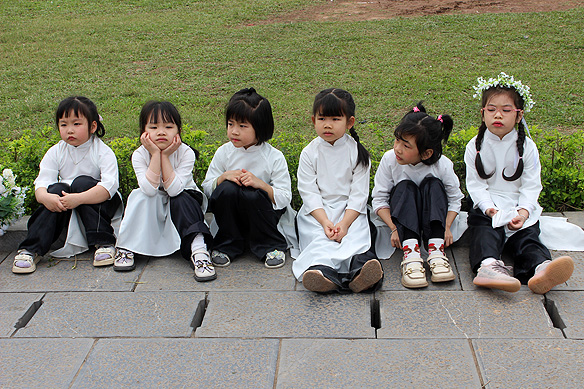
A thousand years of Chinese rule, followed by a thousand years of independence. Except for a misfit seventy years under the French, somewhere in-between.
Hanoi’s story is like no other.
After being a Chinese territory from 179 BC onward, it finally threw off the yoke in 1010 when the first indigenous Vietnamese dynasty [Ly Dynasty] made Hanoi its capital. Since then, multiple local dynasties stuck to the tradition, apart from the Nguyen dynasty who moved their capital to Hue. The later French occupation followed suit, and chose Saigon in the south as their base, but made Hanoi capital of French Indochina from 1902 to 1945.
By the time Hanoi took back its mantle of being a political and administrative seat in 1954, Vietnam had ousted the French and part of the country was communist. Today, Hanoi is the capital of one of only five officially communist countries in the world, balancing Marxism-Leninism socialism with a market-oriented economy.
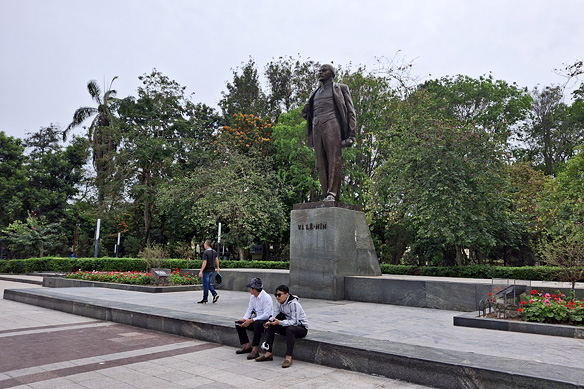
The result of this eclectic past and present has created a culturally rich city where contradictory layers coexist. Ancient Confucian temples, Buddhist pagodas, and a sprawling royal citadel which doubled up as both a medieval fortress and a 20th Century war bunker. Colonial houses replete with wooden shutters and a towering French stone cathedral, surrounded by local eateries jostling for space on footpaths and railway tracks. A communist-styled marble memorial for an embalmed ‘Uncle Ho,’ and sombre Lenin statue in a city square. It would not be too far off the mark to say there is something for every ideology in Hanoi!
Small wonder then that there are stories galore in this Vietnamese city tucked away in the country’s north. Some repeated often. Some which only the locals know. And some, midway between the two, which intrepid curious travellers stumble upon.
Shall we begin? 🙂
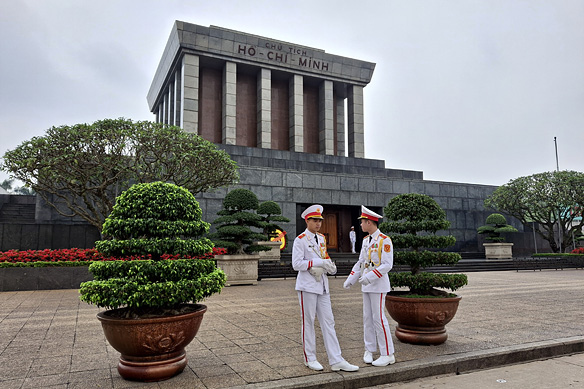
Hanoi’s most iconic landmark is the Ho Chi Minh Mausoleum where visitors silently file past the embalmed corpse of Vietnam’s beloved Uncle Ho. If it was not for him, the French may not have left or the country not united. He had wanted a simple cremation after his death. Instead, he got a gigantic marble mausoleum, like those accorded other communist stalwarts: Lenin and Mao.
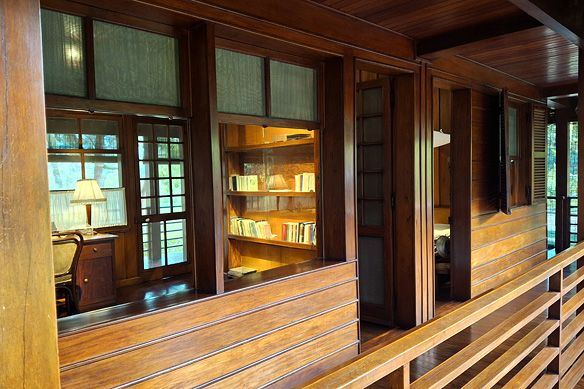
Inside the nearby Ho Chi Minh Relic Complex is a string of buildings President Ho Chi Minh called his home and office from 1954, for 15 years. The last, where he lived intermittently from 1958 to 1969, is the most telling of him as a person. Simple. Unassuming. The traditional Stilt House he used during the wartime has two rooms. A bedroom and office where his personal belongings lie just as he had left them.
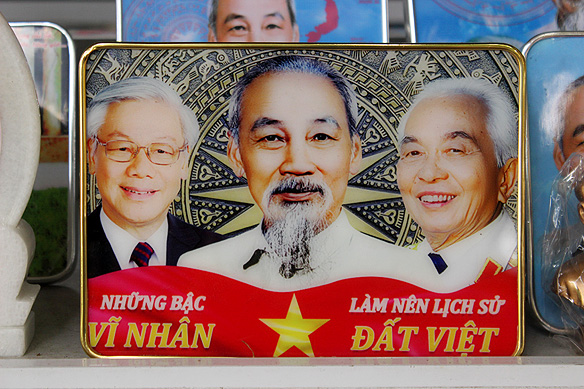
The ‘Uncles’ of modern independent Vietnam: Ho Chi Minh [centre], leader and strategist of Viet Minh, the nationalist organization which fought for Vietnamese independence from French colonial rule. Vo Nguyen Giap [right], military strategist who led campaigns against the French, and later the Americans. And Nguyen Phu Trong [left], General Secretary of the Communist Party of Vietnam from 2011 to 2024.
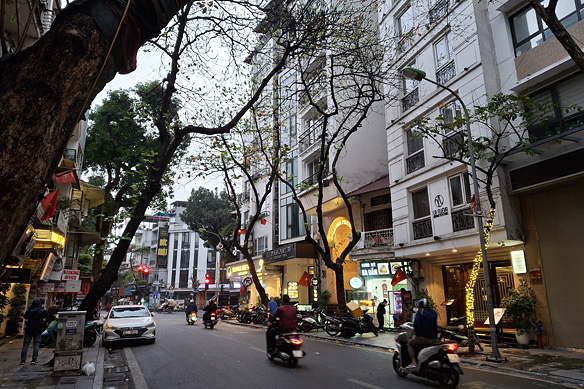
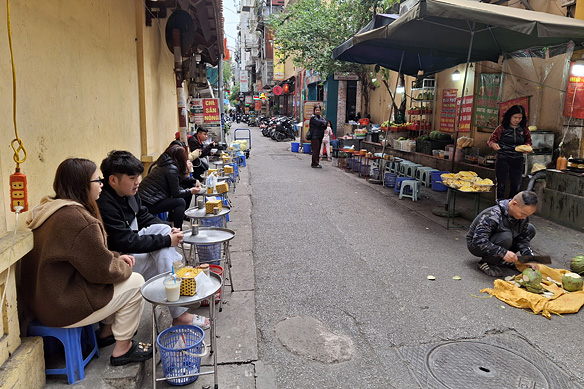
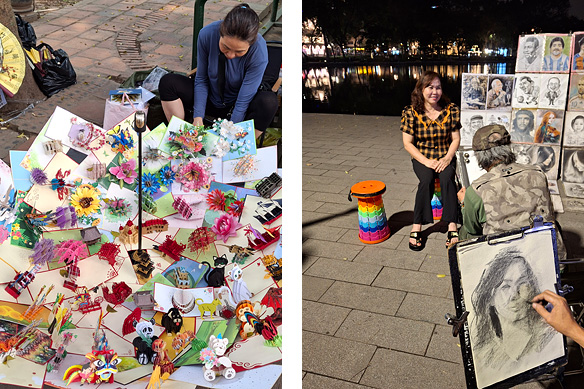
Not to be confused as the same thing, Hanoi’s French Quarter and Old Quarter are two different neighbourhoods in the heart of the city. They are also where all the action and attractions are.
The French Quarter, typified by deep-yellow colonial buildings and wide boulevards, sprung up on the south and east of Hoan Kiem Lake in the 19th Century. In contrast, the Old Quarter, older by almost a millennium and deeply traditional, lies to the north and west of the lake. The latter also goes by the name 36 Street Hanoi, in reference to its 36 streets which have each housed one of 36 trade guilds since the 13th Century. At the lake itself, the two quarters weave into each other, hard to tell apart.
NOTE:
You may also like to read Global travel shot: Hanoi’s train street
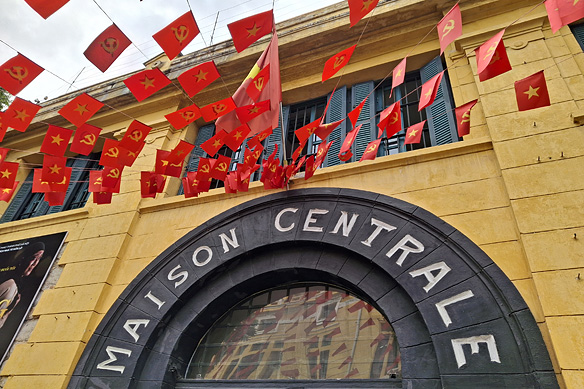
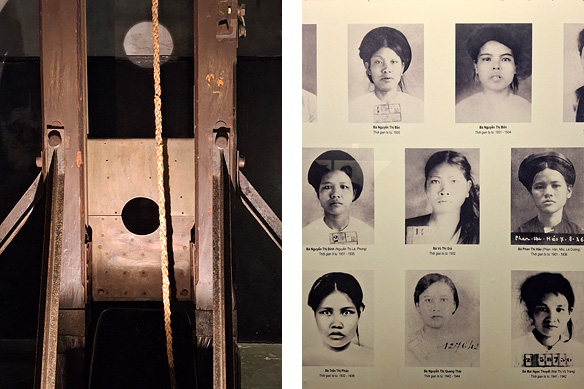
Hoa Lo Prison was built by the French in 1896 to imprison Vietnamese political dissidents. Made for 450 inmates, it housed some 2,000 by 1954—their hands and feet shackled, packed into dark cells. Torture and execution were commonplace. Some escaped through the sewer grates. Others had their heads chopped off on the French guillotine inside the premises. After the French left, the Vietnamese used the prison for American Prisoners of War [POWs].
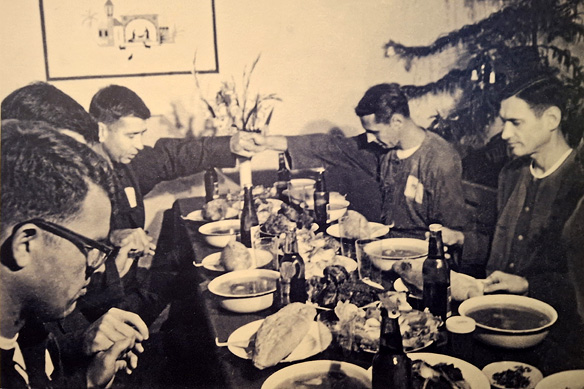
The American POWs captured during the American/ Vietnam War nicknamed Hoa Lo Prison the ‘Hanoi Hilton.’ According to the Vietnamese, the Americans celebrated Christmas and played football whilst locked up. That they were not any worse off than how Americans treated Vietnamese POWs. The Americans claim that they had been abused and beaten up, ruthlessly. Far worse than their counterparts. Two opposing narratives.
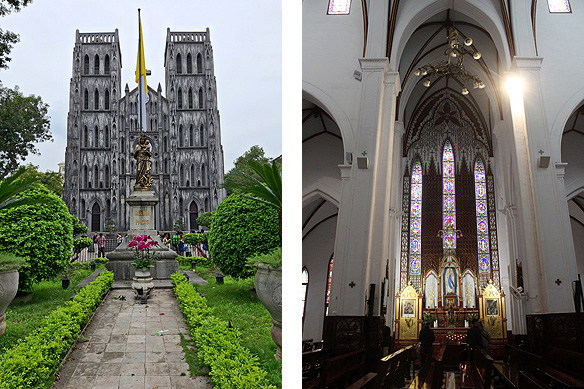
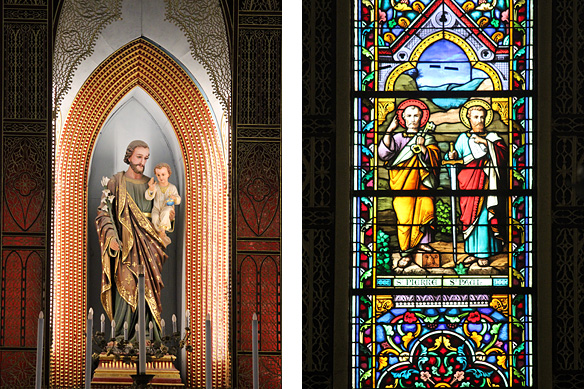
For a moment you may well be led to believe you are somewhere in France as you gaze up at Hanoi’s very own version of the French Gothic Notre Dame, complete with twin bell towers, jewelled stained glass windows, and an ornate altar. Constructed in 1886, St. Joseph’s Cathedral is the city’s oldest church.
The French occupied all of Vietnam from 1884 to 1954. Although their capital was Saigon [now Ho Chi Minh City], they had a governor and sizable garrison stationed in Hanoi from the outset, redesigning a part of the city to align with their European lifestyle and tastes. From 1902 to 1945 they made Hanoi capital of French Indochina in order to keep a closer eye on neighboring China.
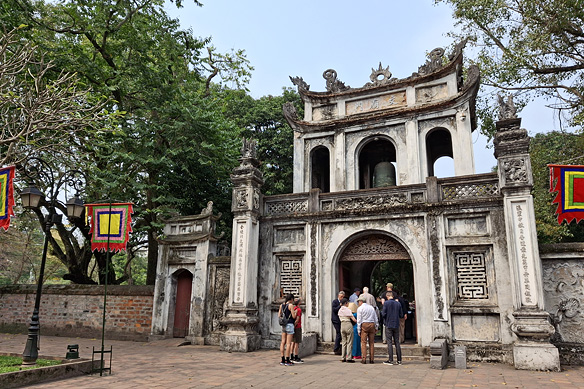
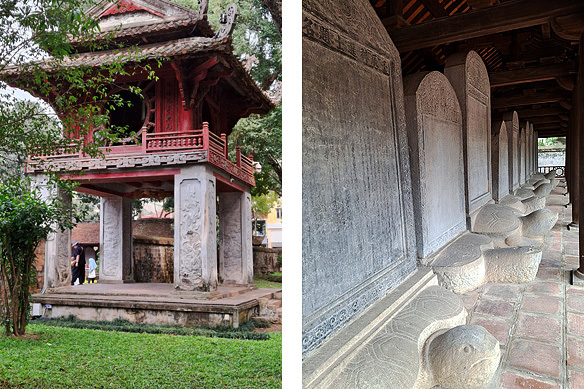
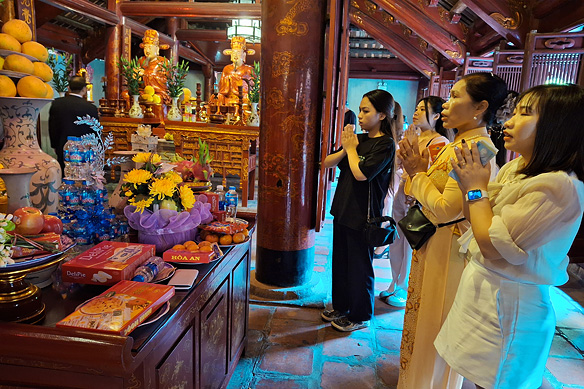
Van Mieu – Quoc Tu Giam, better known as the Temple of Literature and the country’s first university, is one of Hanoi’s most unique attractions. A thousand years old, it is a homage to intellect and Confucianism. Students still come here to pray for good marks. The Temple of Literature component was built in 1070 by King Ly Thanh Tong, and the Quoc Tu Giam part added in 1076 by King Ly Nhan Tong.
Initially, the university only accepted princes and children of noble families. This was democratised in 1253, with admissions based on merit. The result was an alumni comprising some of the brightest minds during its seven centuries of existence. A highlight of the site is the collection of 82 stone steles recognized by UNESCO as a World Documentary Heritage. Placed on tortoise-shaped bases, they list the university’s royal examinations held from 1442 to 1779 and details of the laureates.
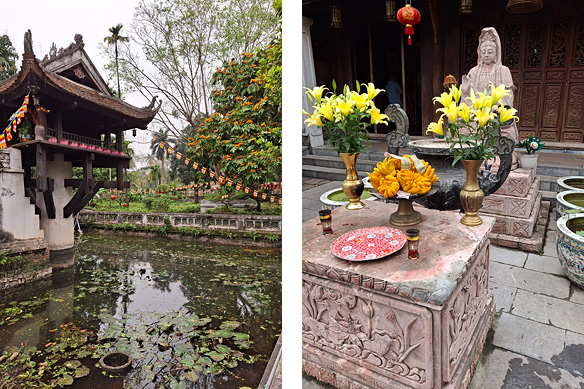
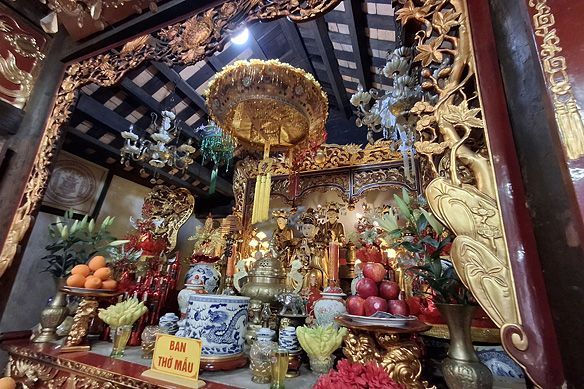
This wooden pagoda atop a single stone pillar in the midst of a pond is meant to resemble a lotus. Its story goes back to the 11th Century when a childless King Ly Thai Tong had a dream in which the Goddess of Mercy, seated on a lotus in a similar pond, handed him a male child. The king soon met a young peasant girl and had a son with her. In gratitude, he had the one-pillar pagoda made in 1049. And so it stood for a thousand years, restored time and again, till the French army blew it up with dynamite in 1954. The current structure is the rebuilt version by the new government in 1955.
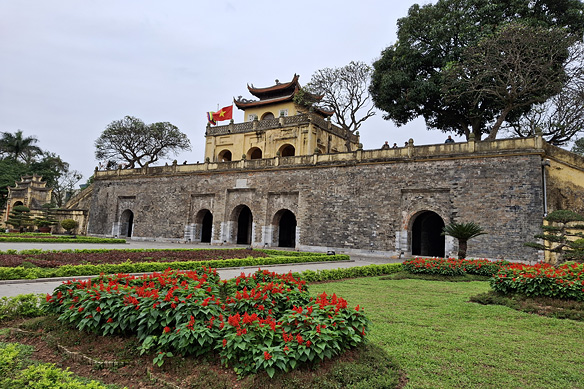
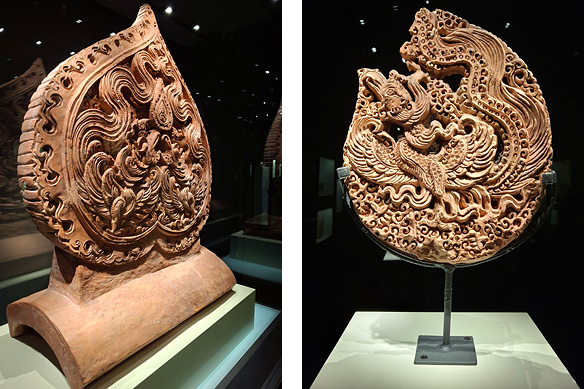
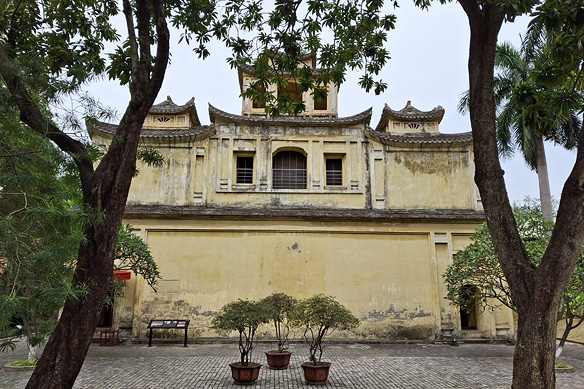
From the 11th to 18th Centuries, the UNESCO-listed Imperial Citadel of Thang Long was the most important site in the former capital city of Great Viet. Its outer wall encircled an Imperial Citadel which in turn surrounded the Forbidden Citadel wherein lay the palaces of the royal family.
Though both time and war have taken their toll on the complex with most of its structures reduced to dust, the surviving 15th Century Doan Mon [South Gate] reveals its once sheer grandeur. Meanwhile, the sculptural remains throw light on the artistic heights the era had achieved. Especially remarkable are the 11th Century bodhi leaf phoenix terracotta tiles on display in the exhibition halls. At the other end of the citadel is the 1821 Hau Lau or Ladies Pavillion, a Nguyen dynasty contribution in which Emperor Minh Mang prayed to the Three Gods for the well-being of Hanoi’s people.
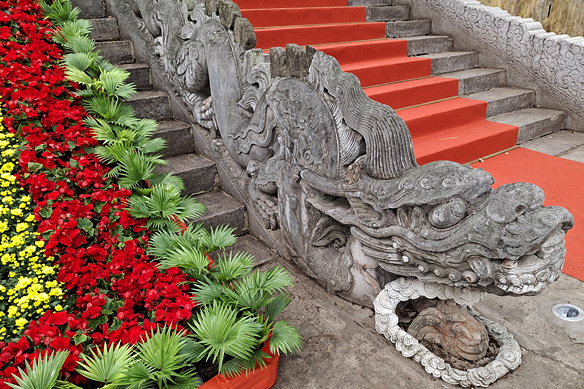
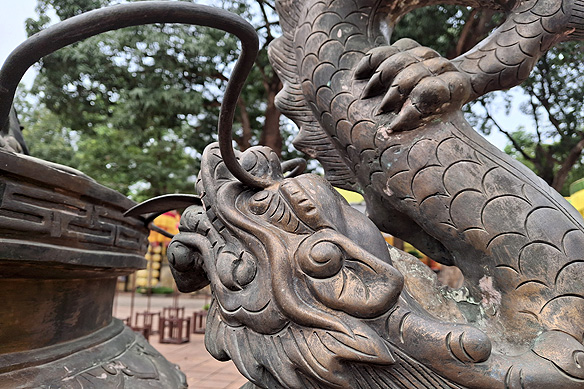
Dragons, dragons, and more dragons. Connected to the origin myth and symbolizing the might of the ruler, they appear everywhere in the Imperial Citadel of Thang Long. On the steps of the now disappeared Kinh Thien Palace and a gigantic bronze cauldron in the grounds. Kinh Thien Palace, built atop the ‘Dragon’s Navel,’ was where the rulers used to hold court meetings.
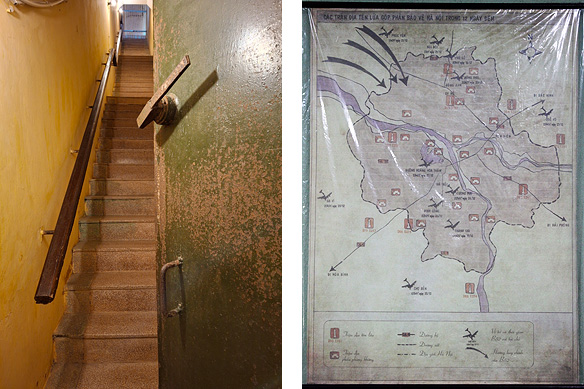
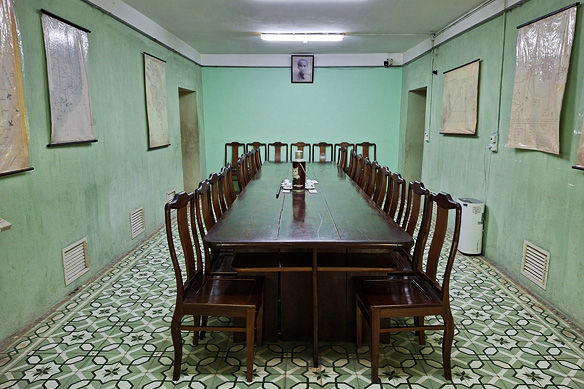
In more recent years, 1967 to be exact, the Imperial Citadel of Thang Long became the location for a host of specialized buildings and bunkers collectively known as D67. These were built to hold meetings of the Politburo, Central Military Commission, Ministry of National Defence, and the People’s Army of Vietnam during the American/ Vietnam War. Nine metres underground, the Basement Meeting Room was where the Politburo and Central Military Commission strategized in top secrecy to counter Hanoi’s 12 days and 12 nights of intense bombing by US aircraft in December 1972.
The citadel also contains the Bunker of the Operational Department or Bunker T1 which was the centre for information and operations of the General Staff of the People’s Army of Vietnam.
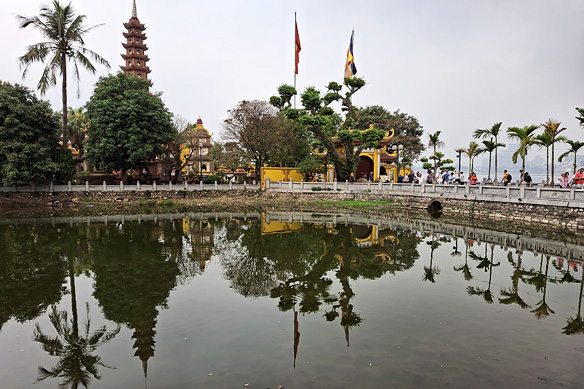
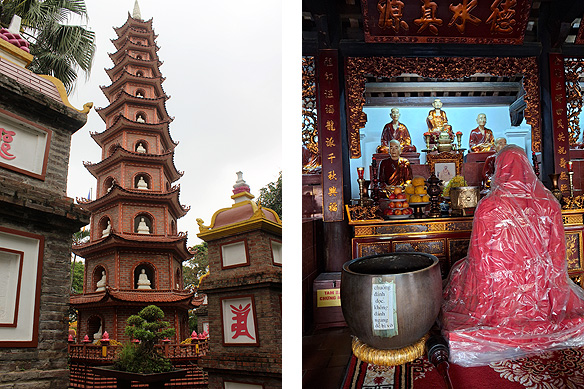
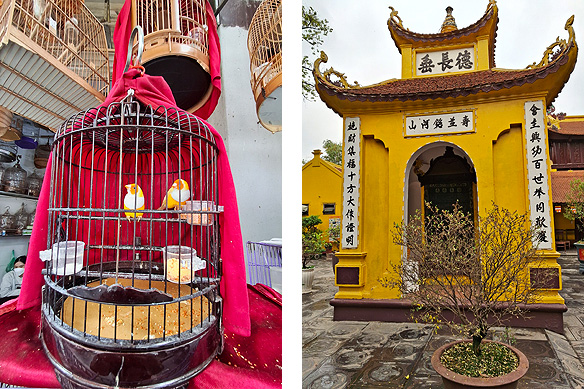
Time travel back one thousand five hundred years, and you will find yourself at Tran Quoc Pagoda, Hanoi’s oldest pagoda. It stands on an island in West Lake, connected by a causeway. There is a 1639 stone stele inside which recounts the pagoda’s history. It is common practice in Vietnam for shops to sell caged birds in the vicinity of pagodas. These are not for keeping as house-pets, but to buy and then set free. As a means of achieving good karma.
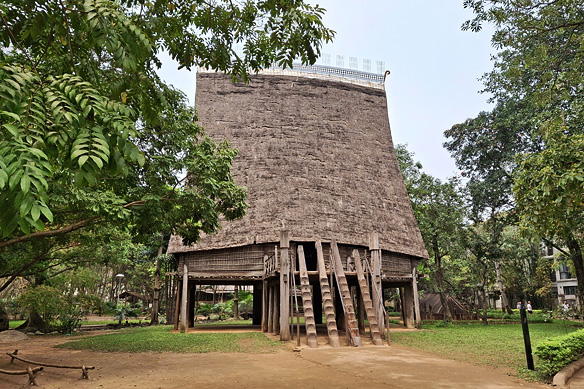
From urban to rural in an urban setting. At 19 metres tall, the Bahnar Community House towers above the other recreated traditional wooden buildings in Hanoi’s Museum of Ethnology. Big enough to accommodate all the village men, its large central room is for social and ceremonial purposes. There are 54 ethnic groups in Vietnam; the largest being the Viet at 85 percent. The ethnology museum offers a rare opportunity to see how these various groups live.
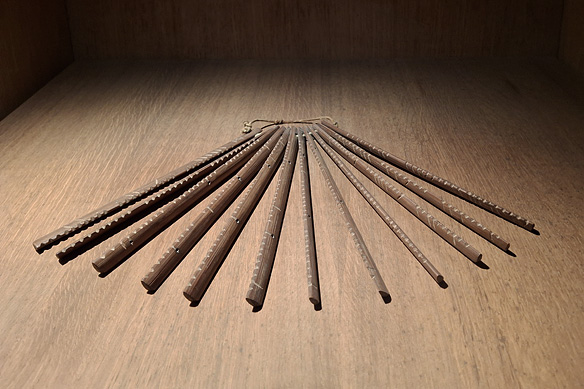
One of the very many uncommon artifacts in the Museum of Ethnology’s permanent collection is the Muong Lunar Calendar in which lines mark the movements of the moon and Pleiades star constellation. Made of bamboo, the ‘Doi‘ or ‘Khao Roi‘ calendar is different from other Vietnamese lunar calendars—days move back by one, while months advance by three. Muong life is filled with auspicious and inauspicious days for everything, including agriculture and ceremonies. The calendar is their key to navigate through them.
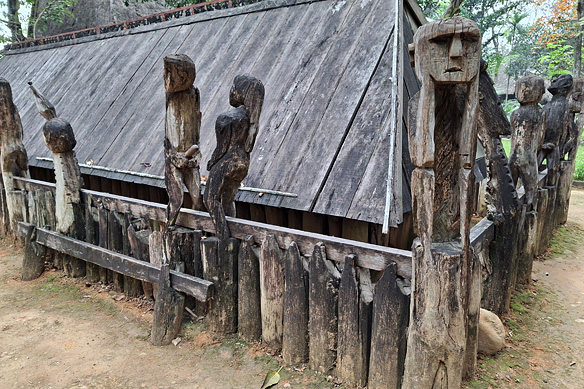
These wooden statues brandishing their private parts or in deep contemplation encircle a Tomb House belonging to the Giarai ethnic group in the Museum of Ethnology. Built by the local community, they are meant to house up to 30 deceased people along with their belongings for use in the afterlife. After a farewell ritual comprising a buffalo sacrifice, the tomb is abandoned. The dead are left in the building, surrounded with crockery and tools to continue their afterlife within its walls.
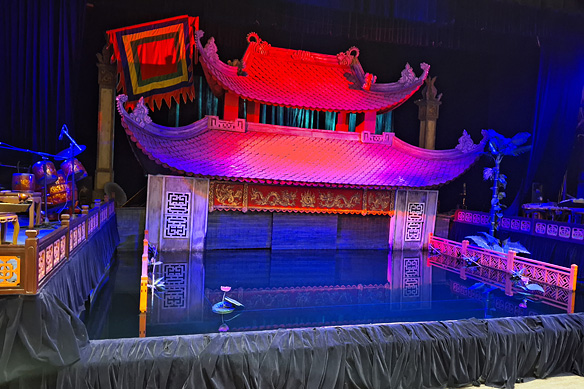
To finish off, what’s a visit to Vietnam without attending a water puppet performance! Though they can be found all over the country, Hanoi puts up some of the best shows ever. Water puppet theatre, as the name states, are puppet shows on water. Dating to the 11th Century, they originated in the Red River Delta, in Vietnam’s north.
Whilst regular puppets are manipulated with strings above the figures, water puppet movements are controlled by bamboo rods under the water. The theatre versions aim to recreate the stagings carried out in Vietnam’s rice paddies where the art form took birth, and is still practiced. ❤
– – –
Travel tips:
- Staying there: I stayed at the Hanoi Emerald Waters Hotel Valley in the Old Quarter. Elegant rooms, a limited but delicious breakfast spread, and definitely the best service of all the hotels I stayed at during my Vietnam travels.
- How many days: I stayed for four days, four nights.
- Getting around: I did a Hanoi city tour on my first day and took a Grab taxi [reasonably priced], thereafter, to explore deeper.
[Note: This blog post is part of a series from my travels to Vietnam for three weeks in March 2025. To read more posts in my Vietnam series, click here.]


As your photos and text show Hanoi is a vibrant and colourful city with a long history of different cultures and ideologies still apparent and such hard working and resilient people. I loved it. One of my memories from 1994 was how many people still wore the distinctive Vietcong army pith helmet which I see is now a collectible on websites. Are they still seen or now a part of fashion history?
LikeLiked by 2 people
Oh they still do wear it. Not in large numbers, but enough to not relegate it to the annals of fashion history. 🙂 I saw scootie drivers, guides, and even farmers wearing it!
LikeLike
This post reminds me to really plan a trip to Hanoi because despite having been to Vietnam three times, I have yet to explore the north. I watched a water puppet show in Saigon and I loved it. I wonder how similar, or different, the one in Hanoi is. And I’m also curious about the food in the north. So many reasons to go!
LikeLiked by 3 people
You definitely should! I am already thinking of another trip. This time to Sapa which I missed out on, in my March trip … I only got to see the water puppet show in Hanoi so am not aware if it is different from the one in the south. I am glad you found the post inspiring. This series is my own little way of giving back to a country that showed me much beauty, gentleness, and hospitality. 🙂
LikeLiked by 1 person
Pingback: travel guide to the american war | rama toshi arya's blog