
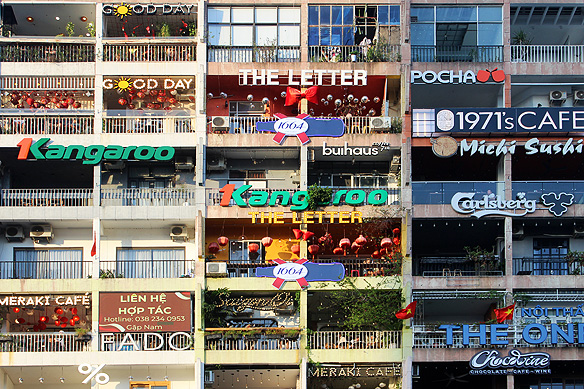
Aah, the buzz of Ho Chi Minh City, better known simply as HCMC, as thousands of scooters whiz past towering colourful tube-houses. Whether you are here in search of elegant Saigon or Uncle Ho’s namesake, looking for Vietnamese modern art or Soviet brutalism, fancy a street-side noodle soup or the perfect quiche in a quiet patisserie, you won’t be disappointed in this fastest growing city on Vietnam’s southern end sliced by the Saigon river.
No other south-east Asian city has quite captured the imagination of travellers the way HCMC has done. And continues to do.
Part of a unified Vietnam under the Nguyen Lords and Nguyen Dynasty, the city on the fringes of the Mekong Delta became a French colonial stronghold from 1862 to 1954. Next in line was its role as the capital of US-backed South Vietnam. After being ripped apart by decades of war, the city finally fell to communist North Vietnam on 30 April, 1975, paving the way for a re-unified nation.
On 2 July 1976, Saigon was renamed Ho Chi Minh City, as a mark of respect to the man who had dreamt of a free and reunited Vietnam, and the dream that came true.
The city has seen it all, at close quarters. Yet there is no bitterness or anger or melancholy whatsoever. No vengeance or self-pity. Instead, it seems to waltz better, with a more experienced step and twirl.
One could easily spend a week in this frenzied fast-paced populous city which never seems to sleep, and still not be bored of it. Where does one start? How about 72 hours to see the best it has to offer? And then maybe a few more days to relish it further. ❤️
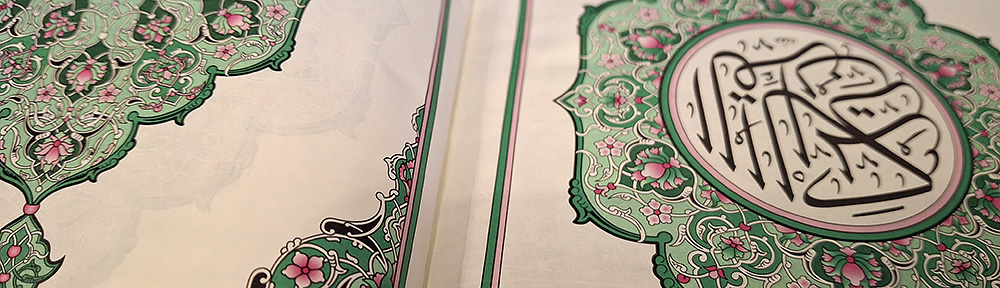
[Title photo: Detail, Central South and North Spring Garden by Nguyen Gia Tri, Lacquer on Wood, 540 cm x 200 cm, 1969 – 1989, HCMC Museum of Fine Arts.]
Table of Contents:
- Day 1: Explore American and French Saigon, and Modern HCMC
- Day 2: Venture into the untouristy side of Mekong Delta
- Day 3: Pray, shop, and wander in HCMC like a true-blue local
DAY 1: EXPLORE AMERICAN AND FRENCH SAIGON, AND MODERN HCMC
Day 1: Morning: Learn about the American/ Vietnam War and its after-effects
It’s a morbid way to start, but necessary to understand Vietnam and the resilience of its people. Thirty years of war is a long time, a war forced upon a country by foreign interests with its after-effects reverberating even today. From 1945 to 1954, for ten years the Vietnamese fought against the French, followed by 20 years fighting off the Americans.
What started off as a war against colonialism became a cold war between communism and democracy. Finally, on 30 April, 1975, from the ashes of 2 million Vietnamese civilians and 1.1 million Vietnamese soldiers, and a land ripped apart by bombs, defoliation from toxic chemicals, and land-mines, an independent unified communist Vietnam emerged.
HCMC’s War Remnants Museum traces this war and its atrocities through a heart-wrenching collection of photographs that were taken on site by war photographers from across the world. The museum has one mission: That the war is not forgotten. And more importantly, that war is not repeated.
The museum trail starts on the second floor with ‘Historical Truths,’ ‘Requiem,’ ‘Vietnam War and Peace,’ and ‘Agent Orange During the Vietnam War.’ On the first floor are the galleries titled ‘War Crimes,’ and ‘Agent Orange Consequences,’ with ‘The World Supports Vietnam 1954 – 75’ on the ground floor. Outside, US war-planes and recreated prisons for Vietnamese POWs, replete with Tiger Cages, wrap up the display.
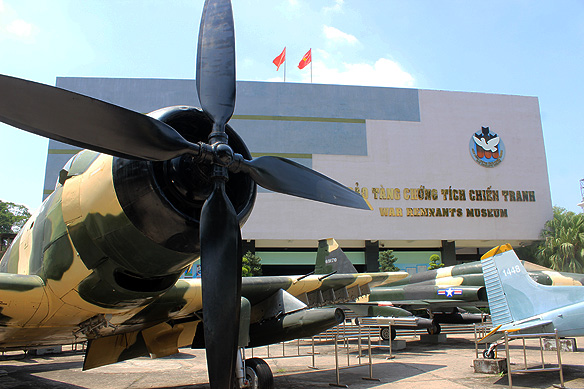
War Remnants Museum: So that one does not forget the American/ Vietnam War, and whosoever visits it, opposes wars.
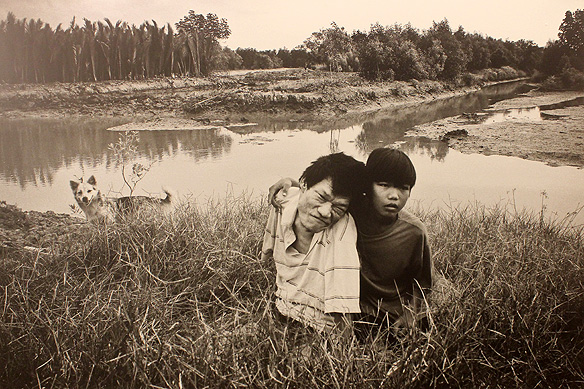
The after-effects of Agent Orange—when the US army sprayed 90 million litres of chemicals across Vietnam.
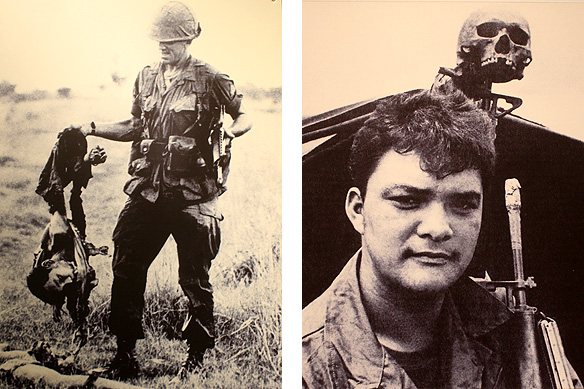
Left: A GI from the 25th Infantry Division holding a part of the corpse of a liberation soldier killed from a grenade launcher, 1967; Right: An American soldier with the skull of a Vietnamese.
Round the corner is HCMC’s second political landmark—Reunification Hall associated with the fall of Saigon and the resulting reunification of Vietnam when communist tanks crashed through its gates on 30 April, 1975.
Built in 1962 by President Diem to replace the bombed 1868 Norodom Palace [residence of the French Governor-General of Cochinchina as French-occupied Vietnam was then known], it was originally called Independence Palace.
An excellent audio-guide takes one through its entirety, including the multiple meeting and reception rooms, helipad on the roof, fancy card-room and nightclub on the top floor, and war room-cum-bomb shelter in the basement.
Travel tip: There are a number of cafes in the grounds that make for a good lunch stop.
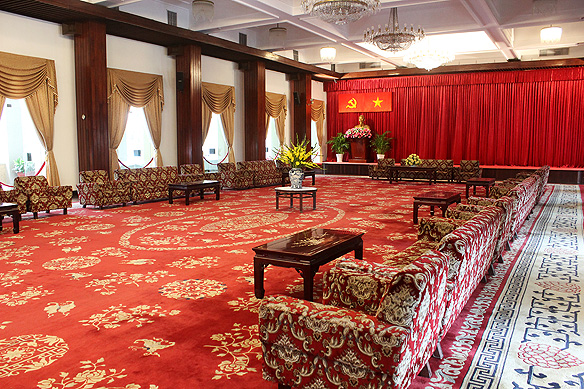
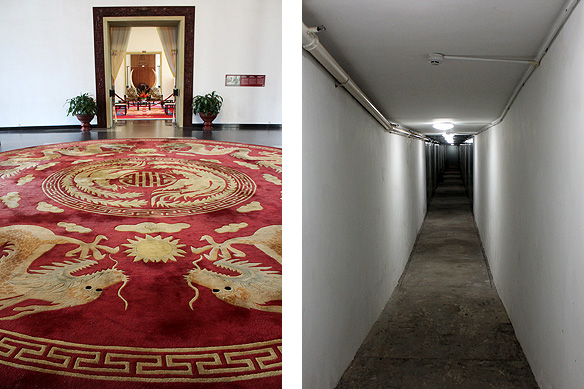
Reception rooms and underground bunkers in the Independence Palace, headquarters of South Vietnam’s government. The palace was renamed Reunification Hall after 1975.
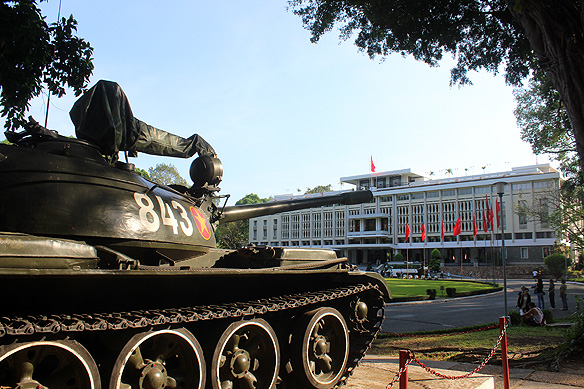
The communist tank which crashed through the gates of Independence Palace on 30 April, 1975, signalling the fall of Saigon and the country’s reunification.
A short walk away is the Xa Loi Pagoda [1956], a centre of opposition to the US-supported government in South Vietnam. Its current peaceful air belies its history. These range from attacks from the Diem government in 1963 in which over 1,400 monks, nuns, and the patriarch were arrested to self-immolations by protesting monks.
Travel tip: Xa Loi Pagoda is closed from 11 am to 2 pm.
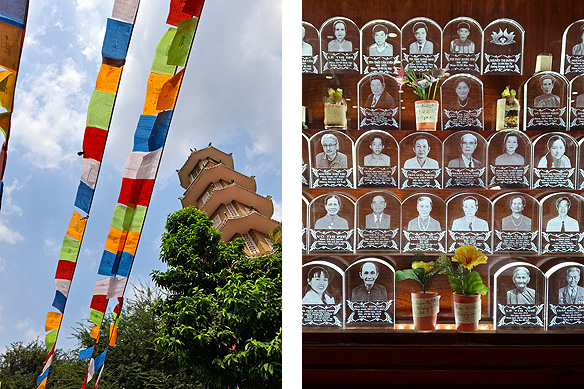
Xa Loi Pagoda, headquarters of Buddhism in South Vietnam, used to be a hub for Buddhist activism during the war; Right: Crystal spirit tablets for the departed at Xa Loi’s Dia Tang Duong.
Day 1: Afternoon: Enjoy a leisurely stroll through French Saigon
District 1, HCMC’s city-centre wears its French mantle with panache. Numerous buildings dating to the colonial period, when the French named the city ‘Saigon,’ decorate the area.
As you walk from District 3, where the War Remnants Museum and Reunification Hall are, make a stop first at the HCMC City Museum. Dedicated to the city, its charms lie more in its dilapidated yet evocative building, rather than its collection of maps and memorabilia. Built in 1890, and utilized alternately as residences and offices, the gigantic classical edifice stands over a network of [now closed] underground tunnels.
Next in line is the grand red-brick Notre Dame Cathedral Basilica of Saigon in the neo-Romanesque style. Consecrated in 1880, the 60-metre-high twin-towered church is presently under an extensive renovation project. Across the road is the Central Post Office [1891] embellished with green wrought iron and elaborate stucco. Inside, look out for the splendid floor tiles, mosaic of Ho Chi Minh, and historical maps of South Vietnam, Saigon, and Cholon.
Further along the same road is the 468-seater Saigon Opera House which opened on 1 January, 1900. Its picturesque square is a favourite with wedding shoots on Cadillacs and pouting selfie-takers. This is also where you turn right into the parallel pedestrian-only Nguyen Hue Boulevard flanked by the ornate HCMC City Hall [1908]. The latter contains three sculptures of Marianne, the French Republic’s symbol of liberty, equality, and fraternity on its facade. In front of the City Hall, a statue of Ho Chi Minh gazes down the boulevard.
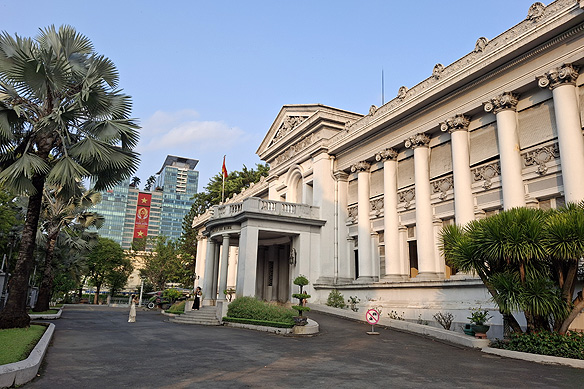
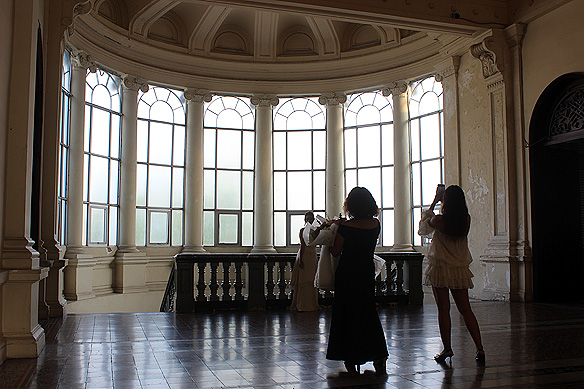
Ho Chi Minh City Museum’s building has been the French governors’ residence, government offices, President Diem’s residence, and supreme court in its earlier avatars.
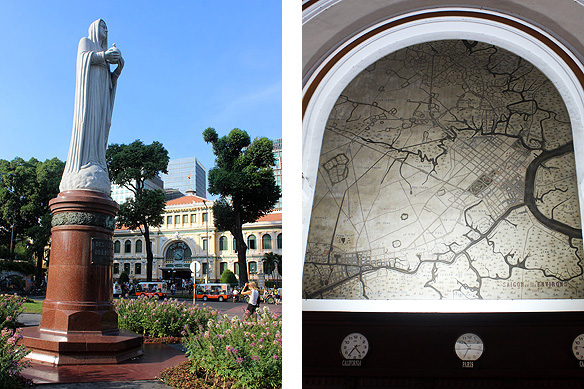
Left: ‘Our Lady of Peace,’ custom-made in Rome, was installed in front of the Notre Dame Cathedral in 1959. In the background is the Central Post Office; Right: Map of ‘Saigon and its surroundings in 1892’ inside the post office.
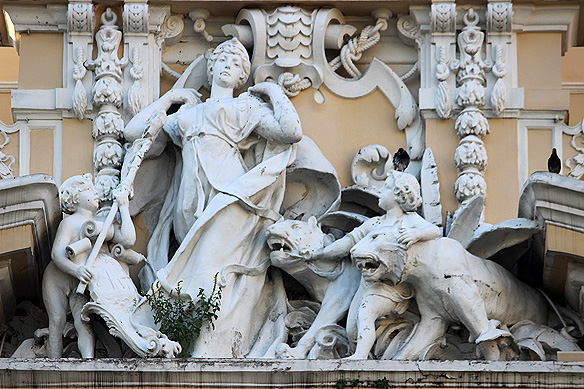
One of the three sculptures of Marianne, the French Republic’s symbol of liberty, equality, and fraternity, on HCMC City Hall’s facade.
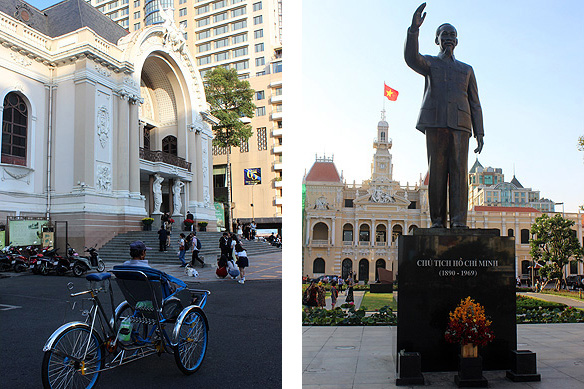
Left: Saigon Opera House; Right: Statue of Ho Chi Minh in front of HCMC City Hall, Nguyen Hue Boulevard.
Day 1: Evening, and into the Night: Discover Modern HCMC’s charms top down
It can be hard to decide as to when HCMC is at its most vibrant. Day or night? If during the day its frenetic pace is built around commerce and role in world history, at night it is awash with a sensory overload. Live performances take over the pedestrian-only Nguyen Hue Boulevard on weekends, water-taxis plough the Saigon river that transforms into a motley of vivid reflections, and plastic stools packed onto narrow footpaths overflow with both food and beer with equal gusto.
One good way to discover the city’s night avatar is by exploring it top down. Yes, literally.
Having weaved your way to the pedestrian artery of HCMC from your explorations during the day, make your way to the 49th floor of Bitexco Financial Tower’s Saigon Skydeck. Try and time it to just before the sun sets, and then hang around till it is dark.
The tallest building in Vietnam for a year [2010 – 11], the 262.5-metre-tall neo-futuristic skyscraper is designed by Venezuela-born American architect Carlos Zapata. Though it has since been relegated to 4th position, the lotus-inspired steel and Belgian glass mixed-use building, with a helipad jutting out on the 52nd floor, still takes one’s breath away. Both looking at it, and looking out from it.
Saigon Skydeck has HCMC’S best 360-degree aerial views as the sun sets and is replaced with hundreds of thousands of twinkling lights.
Satiated with the views, walk over to Bach Dang Saigon Waterbus Wharf for an inexpensive hour-long cruise down the Saigon river and back. The waterbus runs every 15 minutes till 9:00 pm on weekdays and 11.00 pm on weekends. Tickets can easily be bought at the counters.
Finally, wrap up the night with a meal, a drink, or just a seat to people-watch the city that never yawns or sleeps.
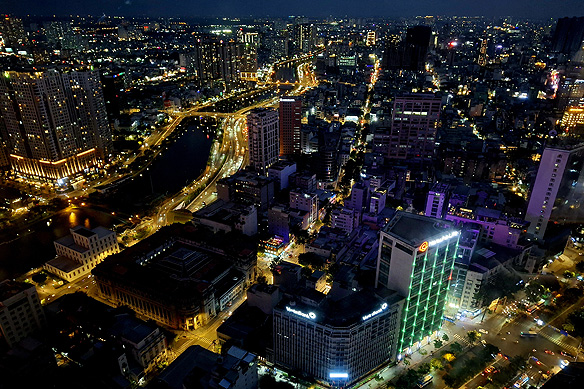
View of Ho Chi Minh City from Bitexco Financial Tower’s Saigon Skydeck.
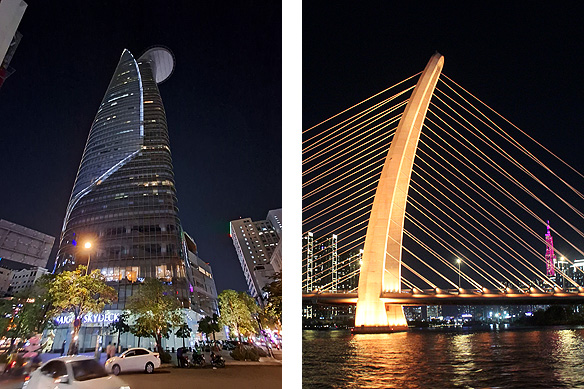
Left: When Bitexco Financial Tower opened on 31 October, 2010, it was the tallest building in the country. The saucer jutting out is a helipad. Right: Thu Thiem 2 Bridge on the Saigon river with Vietnam’s current tallest building Landmark 81 [pink building] in the background.
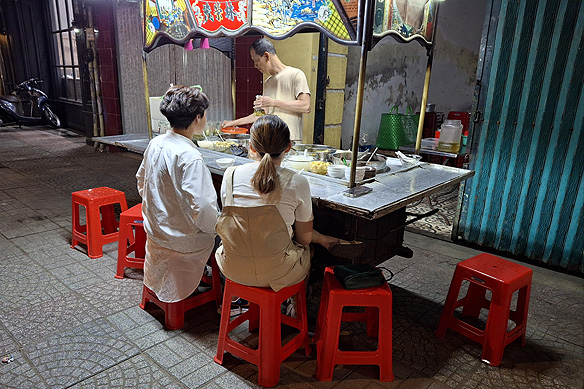
Every-time is meal-time in Ho Chi Minh City.
DAY 2: VENTURE INTO THE UNTOURISTY SIDE OF MEKONG DELTA
Just two hours away from Ho Chi Minh City by road is a world of placid water canals wrapped in bamboo trees and birdsong, colourful lush fruit-gardens, and rural peace. A stark contrast to the energy of the southern commercial and entertainment capital.
Mekong Delta, or the Nine Dragon River Delta as the Vietnamese call it, is a massive triangle of distributaries through which the Mekong river empties into the East Sea [South China Sea]. The area is a key source of agriculture and aquaculture with coconuts, rice, and fish topping the production list.
Though subjected to over-tourism over the past few decades, there are many sections of the delta which still remain completely untouched. After all it spans 43,000 sq. kilometres. Tell that to anyone who has been to the touristy part and they may well think you are bluffing. But it is true.
One such well-kept secret are the hidden villages and canals around Ben Tre where bamboo boat rides veer towards the meditative, scooters glide through riots of colour, and the locals smile from a happy place in their hearts. Coconut production aces the sustainability plot here. Every single part of the tree and its fruits are used to create a range of organic goodies. Do not forget to try the coconut candies!
Travel tip: Mekong Zig Zag runs small group tours from HCMC to Ben Tre, starting at 8 am and bringing you back by 6 pm. Highly recommended.
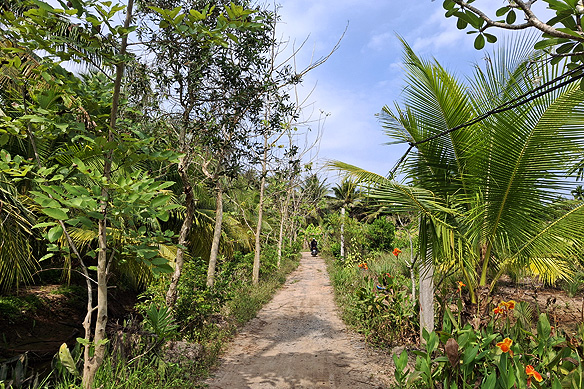
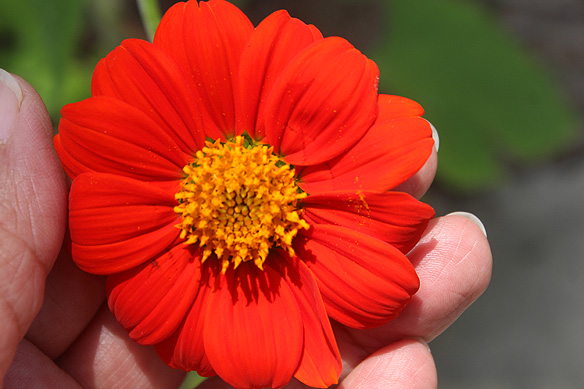
Fruits and flowers fill the gardens tended by the villagers.
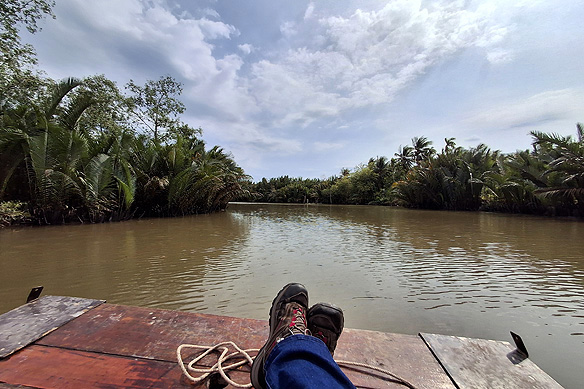
This is how the boat-ride starts …
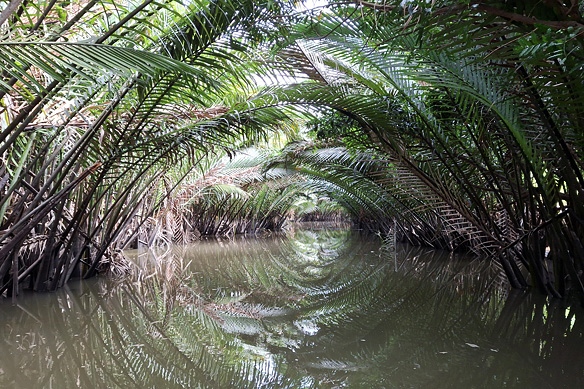
… and this is where it leads to.
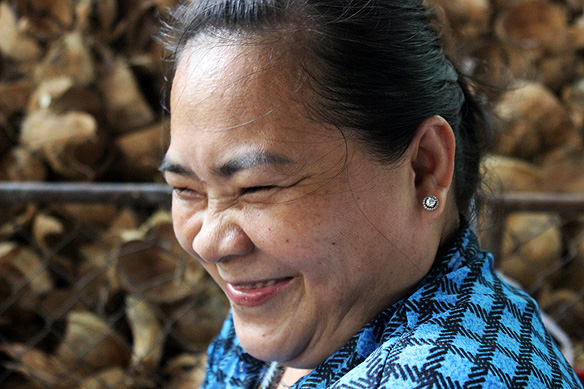
Happiness. Also known as the lady who dehulls coconuts.
DAY 3: PRAY, SHOP, AND WANDER IN HCMC LIKE A TRUE-BLUE LOCAL
Day 3: Early Morning: Pray at Jade Emperor Pagoda and shop at Ben Thanh Market
Today is about getting under HCMC’s skin, one layer at a time. What better way to start than with a visit to the Jade Emperor Pagoda before the onslaught of tourists, and be in the company of devout locals carrying out their morning prayers.
Dedicated to the supreme Taoist god Jade Emperor [King of Heaven], the multi-faith place of worship built by a Chinese immigrant in 1909 marries Buddhist and Taoist deities in a maze of incense-cloaked rooms. The pagoda came into the limelight when former US President Barack Obama toured it as part of his visit to the country in 2016.
Look out for the effigy of Jade Emperor himself bedecked in luxurious robes, the Hall of the Ten Hells, and a side room with ceramic figures of 12 women and scrambling children. Each woman in this ensemble represents a year in the Chinese calendar and a good or bad human character. Once done, climb up the wooden staircase to the Hall of the Goddess of Mercy with its wall painting of Bodhidharma, the Indian monk who founded Zen Buddhism.
Travel tip: Jade Emperor Pagoda lies outside the city-centre. You will, therefore, need to get a Grab taxi to get there and back.
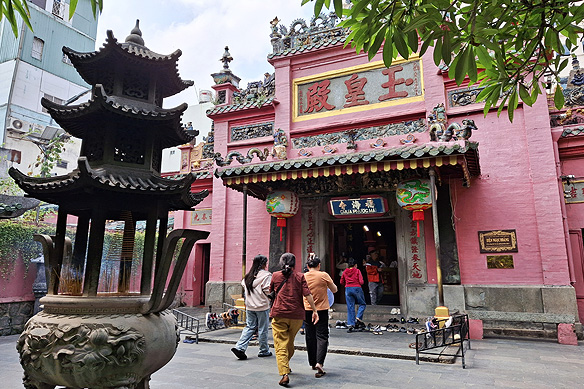
Early morning is the best time to visit Jade Emperor Pagoda.
Back in the city-centre, the next stop is Ben Thanh Market [1914] to browse its 1,500 wholesale and retail stalls overflowing with every conceivable item. Need to get a designer dress tailor-made in less than 24 hours at a fraction of a boutique price? Need a quick meal? Need a suitcase or a teddy bear or a pen or a frying pan or a … you get the drift. You will find them all, and more, under its vast roof capped with a clock tower in the Indochinese architectural style.
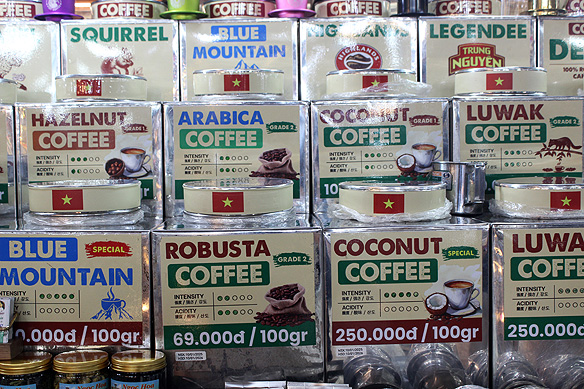
In Vietnam, coffee is not just a drink. It is a way of life.
Day 3: Mid-morning: See Vietnam through the eyes of Vietnamese artists at the HCMC Museum of Fine Arts
A short walk from Ben Thanh Market will bring you to three elegant early-20th Century buildings which comprise the HCMC Museum of Fine Arts. Do visit all three.
Building number 1 showcases Parisian buoyancy, war miseries, and nationalist optimism through Modern Vietnamese art. The bilingual commentaries are a boon in putting the artists and their works in the country’s political and social contexts. The second building houses special exhibitions by local masters and building number 3, at the far end contains a small, but fabulous collection of Cham-era masterpieces and traditional sculptures.
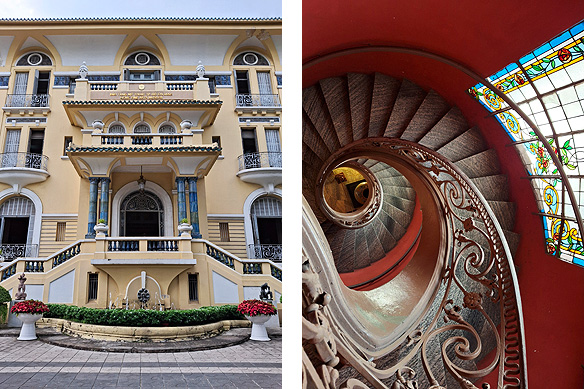
HCMC Museum of Fine Arts’ three buildings are just as interesting as the collections they house. Left: Main building of the museum; Right: Staircase inside building number 3.
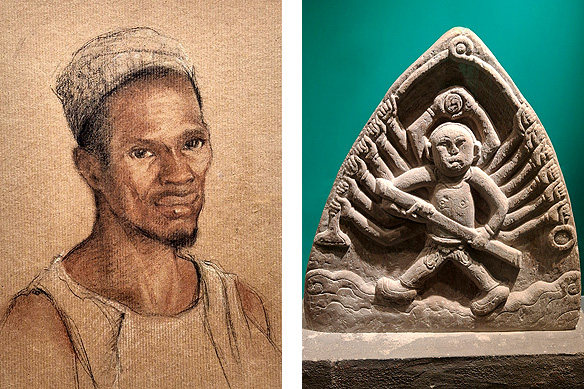
Left: ‘Portrait of Guinee Man’ by Le Thi Luu made during her stay in Guinee, Pencil on paper, 1943; Right: Relief sculpture in Bodhi-leaf shape, Stone, 17th Century.
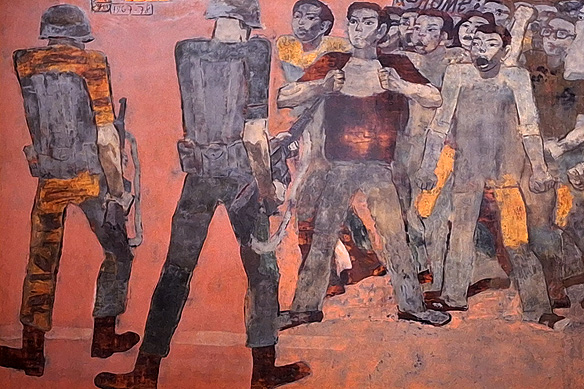
‘Young People of the Fatherland’s Iron Bulwark’ by Nguyen Sang is his tribute to the Southern students’ struggle against the Americans, Lacquer on wood, 1978 based on sketches drawn in 1967.
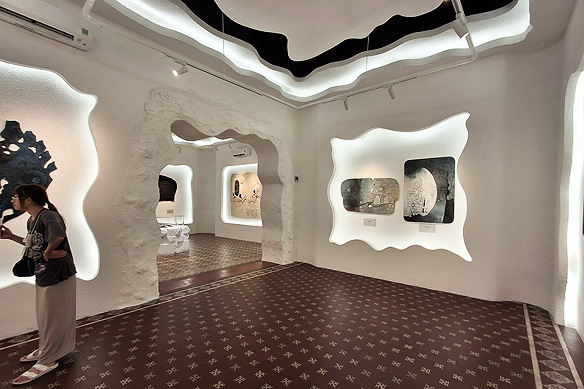
The museum’s Le Ba Dang Art Space honours the work of Modern Vietnam’s most popular artist, Lebadang [1921 – 2015]. Although he spent most of his life in France, he remained indelibly tied to his homeland till the end.
Day 3: Afternoon: Explore Cholon, the world’s largest Chinatown, on a self-guided walk
If you have travelled a bit, you may have noticed that almost every mega-metropolis in the world has a Chinatown. It’s a testament to the Chinese spirit of enterprise championed by a widespread diaspora. HCMC is no different. Except that HCMC’s Cholon is the world’s largest. Cholon literally means ‘Big Market.’
Founded in the 18th Century by the Hoa community [Vietnamese citizens with full or partial Han Chinese ancestry], Cholon used to be a separate city. The French then made it part of HCMC in 1931, calling their enlarged capital Saigon-Cholon, except that no one ever referred to the city by its full name. The Cholon affix was eventually dropped once the French left.
Eleven kilometres away from HCMC, Cholon is as Chinese as it can get with traditions and practices almost unchanged for the past three hundred years. A string of mystical Chinese temples and pagodas, hand-in-hand with the caramel Cha Tam Church and green-trimmed white Cholon Mosque surround the bustling Binh Tay Market topped with a clock tower. Not to be missed are the Ong Bon Temple, Minh Huong Gia Thanh Hoi Quan, Tam Son Hoi Quan Pagoda, Thien Hau Temple, Quan Am Pagoda, Phuoc An Hoi Quan Temple, and Nghia An Hoi Quan Temple. Hao Si Phuong Alley, meanwhile, offers a unique opportunity to step inside an authentic Hoa residential neighbourhood.
Here’s a fabulous post with Google map locations of Cholon’s major sights to help you discover the area at your own pace. If you get peckish on the way, there are enough cafes serving Vietnamese coffee to keep you content.
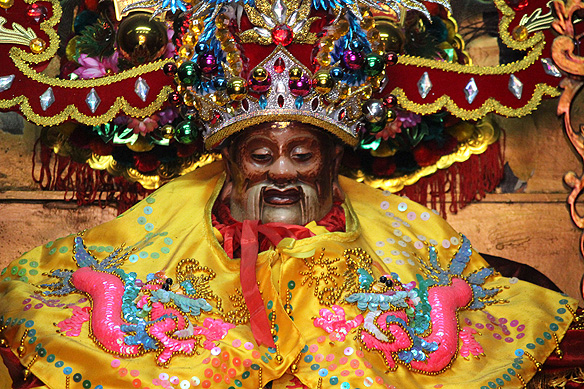
Ong Bon, provider of happiness and prosperity, in his 18th Century temple’s inner sanctuary.
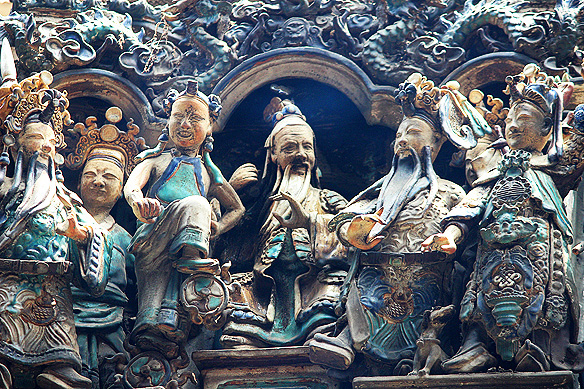
Animated statues from Chinese folklore decorate Thien Hau Temple, Cholon’s most important site. The temple, dated 1760, is dedicated to Mazu, the Chinese sea-goddess.
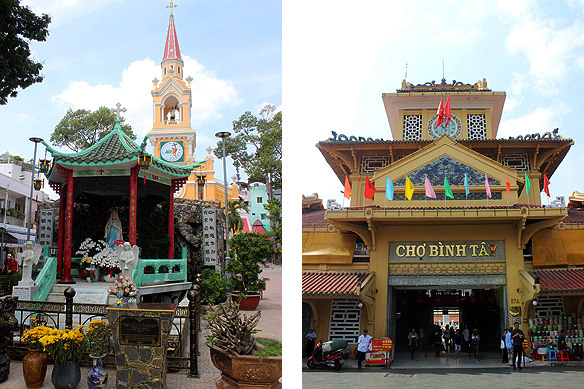
Left: Catholic Cha Tam Church/ St. Francis Xavier Church blends Chinese and European architectural styles; Right: Binh Tay Market was built in the 1920s by a wealthy Chinese merchant.
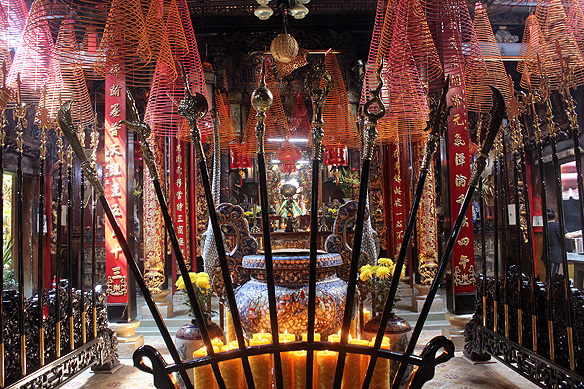
Phuoc An Hoi Quan Temple [1902] pays homage to the 3rd Century Chinese general Quan Cong, and is appropriately filled with elaborate ritual ornaments and weapons.
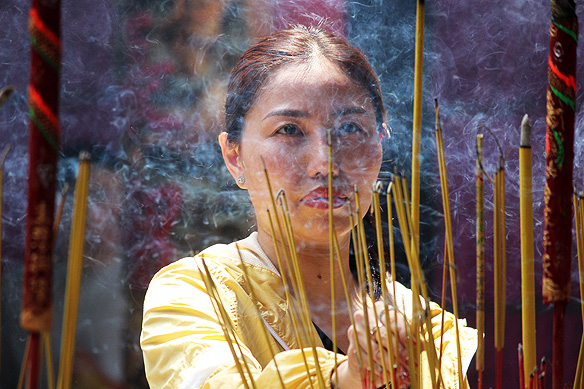
A Hoa woman doing her daily prayers.
Day 3: Last Stop: Mariamman Hindu Temple
Mariamman Temple in HCMC’s city-centre makes for an unusual ending to one’s 72 hours of explorations. A 19th Century Tamil Hindu temple for a Hindu goddess of prosperity and abundance, built by Tamil immigrants in a city tied inexorably to the West. Moreover, a temple in which even some Vietnamese diligently come over to pray. How did that happen? That is Ho Chi Minh City for you. 🙂
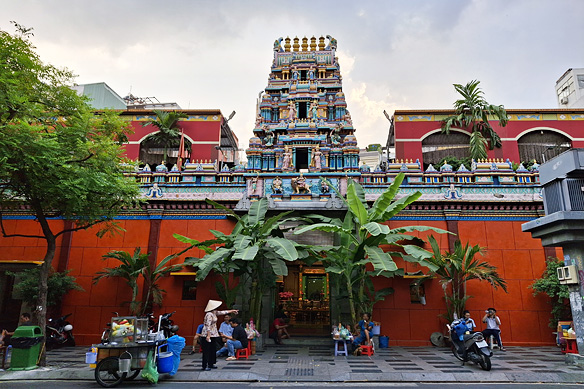
Mariamman Temple, a 19th Century Tamil Hindu temple in the heart of HCMC.
– – –
Travel tips:
- Staying there: I stayed at the Triple E Hotel Metro Ben Thanh, in District 1 [city-centre]. Brand new boutique hotel with a fusion breakfast and fabulous location.
- My favourite cafe in HCMC: Tous les Jours in District 1.
- How many days: I stayed for six days, five nights.
- Getting around: I walked for the city sights, took a brilliant tour by Hanoi Backstreet Tours/ Mekong Zig Zag for Mekong Delta [WhatsApp No. +84 91 404 3296], and got a Grab taxi [reasonably priced] for Cholon.
[Please note there are NO affiliate links in this post, or in any of my posts. Links are provided only to help you with your plans or for you to get extra info. Neither is any of the content in this post or any other post sponsored. The services mentioned in this post are what I used and I am simply sharing them with you.]
[This blog post is part of a series from my travels to Vietnam for three weeks in March 2025. To read more posts in my Vietnam series, click here.]
 rama toshi arya's blog
Thanks
LikeLiked by 2 people
Am happy you liked it. 🙏
LikeLike
Thanks Rama for another information packed and beautifully photographed piece on HCMC/Saigon which again brought back many memories. In 1994 there were all the historic pre-colonial and colonial sites to see but none of the new architecture which looks amazing. The War Crimes Museum as it was called then certainly stays in my mind – like Tuol Sleng in Cambodia – and for the same reason – the horror. And in contrast to the city, life on the delta looks unchanged and so idyllic to visit as a tourist but I guess not so charming if you live there! Did you get to see the Cu Chi Tunnels? Or is that coming up next week …
LikeLiked by 1 person
Glad you enjoyed the post. 🙂 Yes, I did go to the tunnels. And yes, that’s coming up in the next post — the last in the Vietnam series.
LikeLike
Did you ever read Graham Greene’s novel ‘The Quiet American’ (1955) which brilliantly describes the end of the French and the beginning of the American involvement in Vietnam? I bought my copy in Saigon – a pirated photocopied Penguin edition. Highly recommended.
LikeLiked by 1 person
No, I haven’t. But would love to read it. Will try and get a copy. Thank you for the tip. 🙂
LikeLike
Beautiful Ho Chi Min city! Well shared with beautiful descriptions 👏🏼
LikeLiked by 2 people
Thank you, Priti. Ho Chi Minh City is a very interesting eclectic mix. 🙂
LikeLiked by 1 person
Welcome hi subscribe to my YouTube channel if you don’t have any problems.https://youtube.com/@pritilatanandi2010?si=SEUikBIOxSSeZEuH. Stay happy 😁
LikeLike
Sure. Done. 🙂
LikeLiked by 1 person
😊
LikeLike
Pingback: travel guide to the american war | rama toshi arya's blog
Profoundly relatable
LikeLike