
The fifth smallest country in the middle-east also has the highest GDP per capita in the world at USD 114,648.03. It is a data point made possible because of a 38-fold growth in the economy over the past three decades. 88.4 percent of this country’s population are foreign workers, and 92 percent of the population lives in its capital city. It is the headquarters of Al Jazeera English, an acclaimed independent editorial media channel, and the world’s best airline. Outdoor air-conditioning is common, desalination is the primary source of potable water since there are no rivers in its arid plains, and there is no personal income tax.
Welcome to Qatar.
Until 1939, however, things were very different in this peninsula jutting off Saudi Arabia’s coast into the Persian Gulf. A British Protectorate from 1916 to 1971, the pearling industry which sustained the emirate had died a rapid death in the 1920s with the introduction of the cultured pearl by Japan; the economy was sinking. Qatar was fast becoming one of the poorest countries in the world. Then a miracle happened. Not one, but two. The second even more incredible in scope, and its timing.
Oil was discovered in the Dukhan Field in 1939. Ten years later, the first crude oil exports left Qatar’s harbours. The Qataris were happy enough with this. But there was more wealth in store for them. In 1971, immediately after gaining Independence from the British, one of the world’s largest gas-fields was discovered off its shores—the North Field. Qatar exported its first shipment of liquefied natural gas [LNG] in 1996.
Ruled by the House of Al Thani since 1776, Qatar today contains 14 percent of the world’s known natural gas reserves, third only to Russia and Iran’s, and is the second largest LNG exporter globally with China, India, and Japan the country’s top trade partners.
There has been no looking back for Qatar after 1996. It just continues to surge ahead.
Immense wealth and traditional Bedouin values guide this nation where in two hours one can traverse its 160 kilometres length from north to south, and go from east to west in half that time.
Here’s how to spend 72 hours in Qatar. In pictures. For at times, pictures just say it better. 🙂
DAY 1: EXPLORE QATAR’S WORLD-CLASS MUSEUMS IN DOHA
Qatar’s museums in its capital Doha are a class apart. Highly specialized, they surpass global standards in both display and commentary. Start your day with the city’s hidden gem, the Msheireb Museums, and then walk over to the fabulous Museum of Islamic Art, ending your explorations at the nearby National Museum of Qatar designed to resemble the indigenous desert rose crystal.
Stop 1: Msheireb Museums
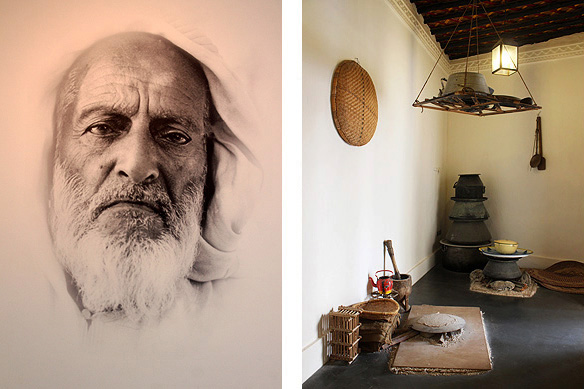
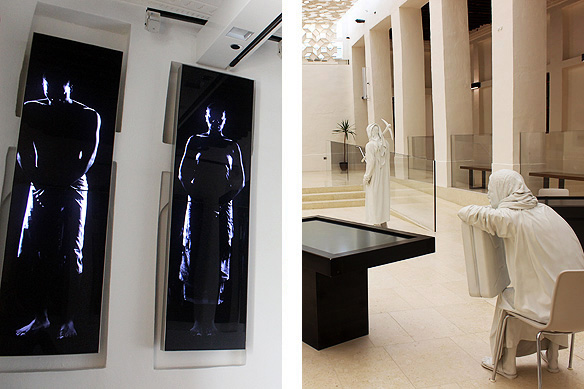
Msheireb Museums, a group of four heritage house museums tucked away in Msheireb Downtown Doha, make for the perfect introduction to the country.
Mohammed Bin Jassim House, home of the son of modern Qatar’s founder, traces the development of Msheireb, Qatar’s first ‘city.’ Radwani House, built in the 1920s, presents a traditional Qatari home and Qatari family life. Company House, headquarters of Qatar’s first oil company, tells the story of the country’s petroleum industry and the workers who laid its foundations. Lastly, Bin Jelmood House, former home of a slave trader, explains how Qatar’s story began with the slave industry, and has ended as shared freedom and prosperity.
On to the Museum of Islamic Art via the Corniche
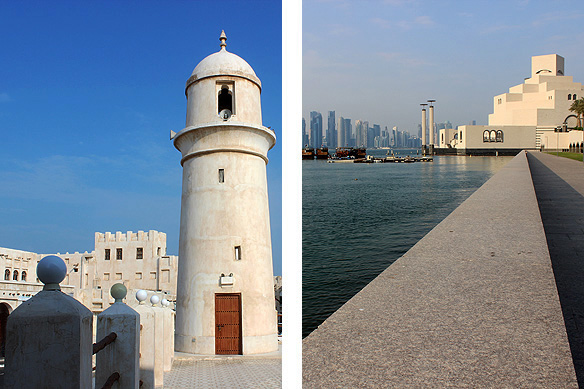
Stop 2: Museum of Islamic Art


Inspired by the fountain of Cairo’s 9th Century Ibn Tulun Mosque, the Museum of Islamic Art is a showcase of 1,400 years [7th to 20th Century] of Islamic art from three continents. Top: Cavalry armour; Ottoman period; Turkey; Iron alloy; 15th/ 16th Century.

‘The art of living in Damascus,’ Syria, during the Ottoman period.

Manuscript of the Hindu epic Ramayana; Mughal period; Lahore, Pakistan; Ink, opaque watercolour, and gold on paper; 16 May 1594.

Left: Sitara [door textile] of the Ka’ba made on the Sultan’s orders; Ottoman period; Cairo, Egypt; Embroidered metal threads on silk; 1846 – 1847. Right: War mask; Timurid period; Western Iran; Steel with gold inlay; 15th/ 16th Century.

Clothing, carpets, and gold jewellery inset with rubies, emeralds, and diamonds; Mughal period and British Raj; India.
Stop 3: National Museum of Qatar


The National Museum of Qatar is a sensory feast of sights, sounds, and lights. Enclosing the early-20th Century Amiri Palace, the museum collection weaves its way through the region’s natural history, Bedouin culture, tribal wars, establishment of the Qatari State, discovery of oil and gas, to present-day Qatar.
Travel tips: 1) Both the National Museum of Qatar and Museum of Islamic Art are open till 7 pm daily, and till 9 pm on Thursdays. The National Museum of Qatar is closed on Tuesday, Museum of Islamic Art on Wednesday, and Msheireb Museums on Sunday. 2) All the museums are at walking distance from each other. 3) Msheireb Downtown Doha has excellent restaurant options.
DAY 2: DISCOVER QATAR BEYOND DOHA’S CITY-LIGHTS
Qatar’s north, west, and south have much to offer, and together show a side of the country far removed from Doha’s glitz; a side that is closer to nature and the country’s past. For the perfect itinerary go to the north, peppered with forts and crumbling villages in the morning, to the west in the afternoon for moonscapes and Richard Serra’s masterpiece, and wrap the day with a sunset at the inland sea in the south. Multiple tour companies offer day trips to these sites.

Stop 1: Al Khor Island, better known as Purple Island, has as its chief claims to fame lush mangroves and the remains of a 2nd millennium BC Kassite-era purple dye industry.
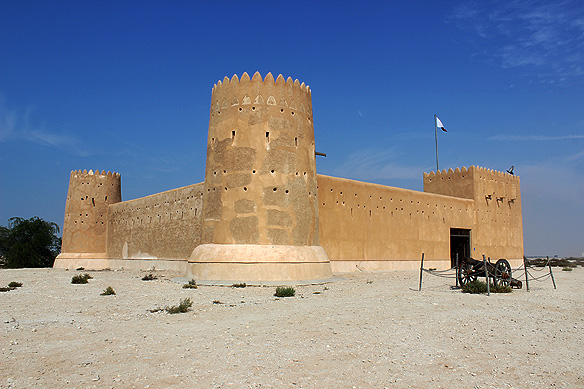
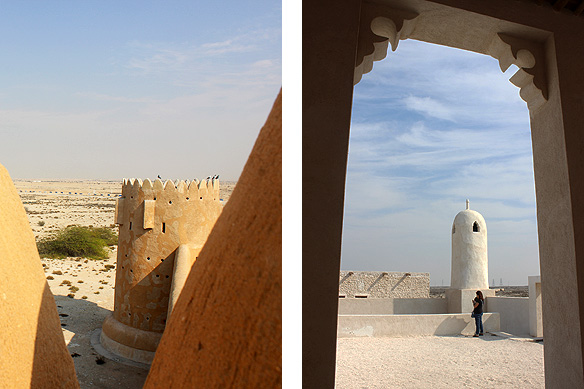
Stop 2: Al Zubarah Fort and Archaeological Site is Qatar’s one and only UNESCO World Heritage Site. The walled coastal town used to be a pearling and trading centre in the 18th – 19th Centuries. It was destroyed in 1811 and later abandoned.

Stop 3: American sculptor Richard Serra’s East-West/West-East [2014] public commissioned artwork in Brouq Nature Reserve comprises four 14-metre-high steel plates standing in a straight line over a distance of one kilometre.
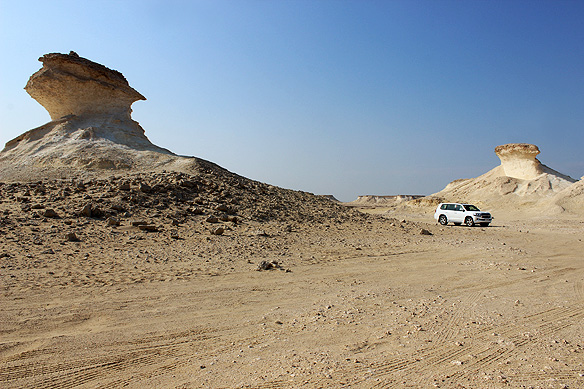
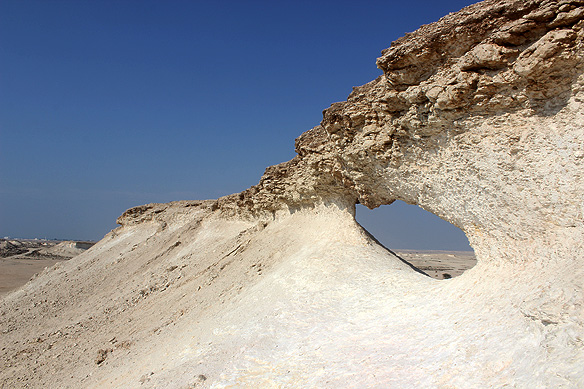
Stop 4: Zekreet peninsula’s desert moonscapes and mushroom-shaped limestone rock formations are as otherworldly as it can get.
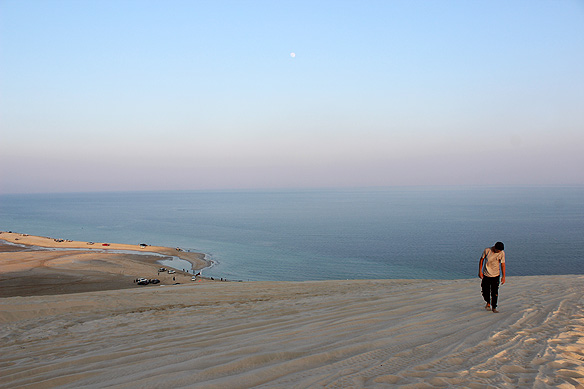
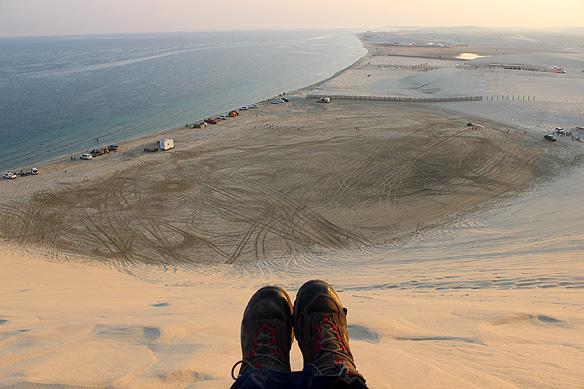
Stop 5: Khor Al Adaid or the ‘Inland Sea’ in Qatar’s south-east is an inlet of the Persian Gulf. The nature reserve is on UNESCO’s Tentative List. Across the sea is Saudi Arabia.
Travel tips: 1) I used Arabian Tourism to visit Qatar’s north, west, and south. Highly recommended! 2) For lunch, pick up something from the supermarket at the petrol pump pit-stop en-route.
DAY 3: VISIT DOHA’S ATTRACTIONS OUTSIDE THE CITY-CENTRE
Whilst the city’s museums [explored on Day 1] are all huddled together around the Old Town, often a mere walk from each other, Doha’s newer shinier attractions are further afield. These include West Bay with its steel and glass extravaganzas; Katara Cultural Village where a Greek theatre, mosaic-tiled mosques, hip cafes, and art galleries happily converge; The Pearl Qatar, home and playground of Qatar’s uber-rich; and the State Grand Mosque, Qatar’s largest mosque. A good way to see all these is with the city’s hop-on hop-off open top Doha Bus. Icing on the cake? The night tour thrown in for free. Back in the city-centre, there’s always food available at Souq Waqif.
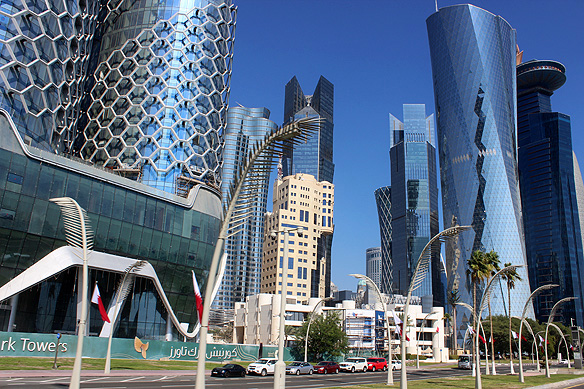
Stop 1: West Bay, Doha’s financial and economic hub, is built on reclaimed land and contains Qatar’s tallest skyscrapers. At night, the central business district turns into a fantasyland of light and colour.


Stop 2: Katara Cultural Village is Doha’s art, culture, and dining hub. Not-to-miss sights are the 5,000-seater Classical Greek-styled amphitheatre, Katara Mosque with features borrowed from famous mosques across the world, the gold-tiled Gold Mosque, Pigeon Towers, a public beach, ultra-luxe High Street, contemporary art galleries, and some of Doha’s most popular eateries.
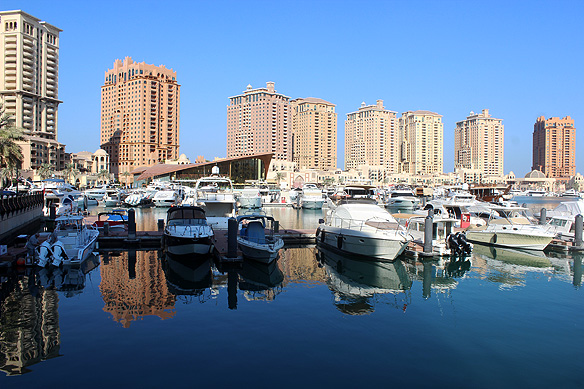
Stop 3: The Pearl Qatar is a group of artificial islands dedicated to luxe living. Its residential buildings, six hotels, yacht-lined marinas, high-end shops, and fine-dine restaurants spread over canals and piazzas resemble an open oyster shell, replete with a pair of pearls, when seen from above.
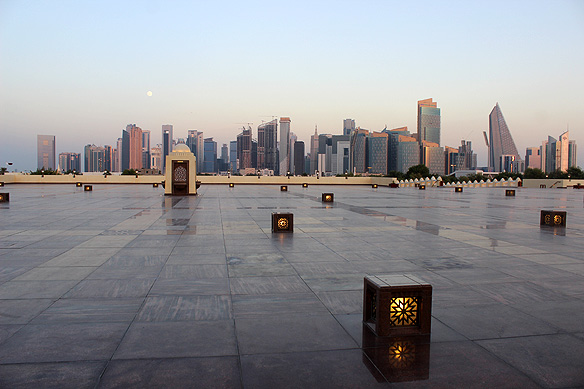
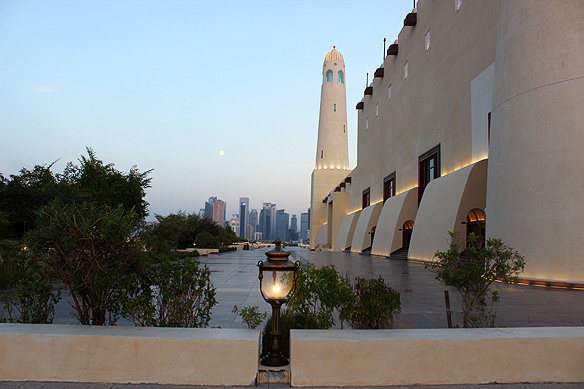
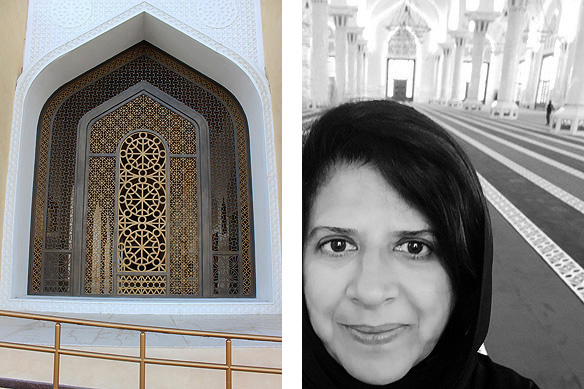
Stop 4: Qatar’s largest mosque, the State Grand Mosque is named after Imam Muhammad ibn Abd al-Wahhab, founder of Wahhabism, and can hold 30,000 worshippers. It also has some of the best views of Doha’s skyline. Above right: Self-portrait inside the mosque.

Stop 5: Doha’s 100-year-old Souq Waqif with its winding alleys and mud-daubed walls never sleeps. Shops sell Qatari garments, spices, handicrafts, as well as camels, goats, and falcons, while restaurants and sheesha bars serve traditional fare right through the day into the wee hours of the night.
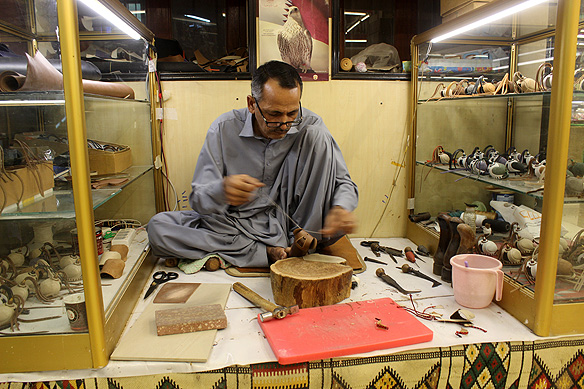
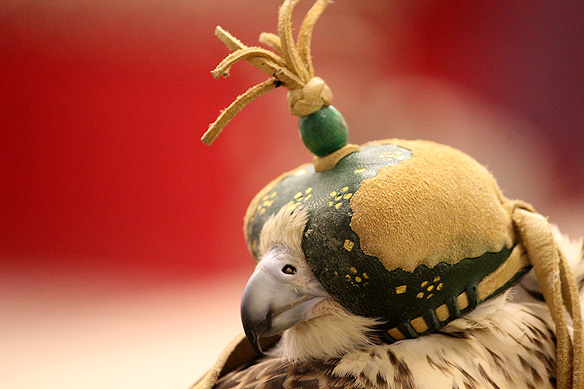
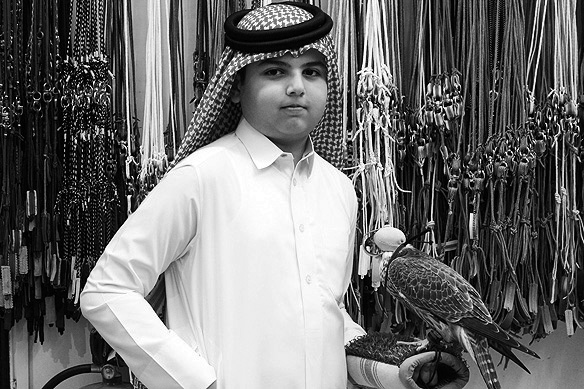
Stop 6: The best place to get an insight into falconry, a tradition central to Qatar’s Bedouin heritage, is at the Falcon Souq in Souq Waqif. Falcons, in all shapes and sizes, with their eyes covered with hoods, sit patiently in rows, surrounded by falconry accessories. There’s even a falcon hospital in the premises. Above: Keeping a promise made to this 11-year-old young Qatari with his pet falcon that I will include his picture in my post. 🙂

And with this, it is time to say good-bye Qatar. Till we meet again.
– – –
Travel tips:
- Staying there: I stayed at the Ramada by Wyndham Doha Old Town, a shortish walk from the city’s museums.
- How many days: I stayed for 4 full days.
- Getting around: For Day 1, I walked. For Day 2, I took two tours. And for Day 3, I used the hop-on hop-off open top Doha Bus. [Doha Bus has a booth outside Souq Waqif.]
[I travelled solo and independently across Qatar in December, 2024. It was part of a three-week-long multi-country trip covering Bahrain and Oman as well.]
Note: There are NO affiliate links in this post, or in any of my posts. Links are provided only to help you with your plans or to give extra info. Neither is any of the content in this post or any of my posts sponsored. The services mentioned in this post are what I used and I am simply sharing them with you.
 rama toshi arya's blog
Fascinating. Looks like great wealth can be tasteful – unlike some other places (nameless) and celebrity weddings and occasions (too many to mention). I enjoyed this post and look for news from Al Jazeera. Oh – and impressed by the Richard Serra sculpture – one of the last great sculptors before they became silly and grossly commercial. Thanks
LikeLiked by 4 people
Oh, yes, the Qataris have good taste. Very refined. There’s nothing garish or over the top in Qatar! Serra’s sculpture is quite an unusual piece. Bang in the middle of the desert. But elegant, in keeping with the aesthetics of the country. Am glad you enjoyed the post. 🙂
LikeLike
Wonderful capture as usual, Rama! I always enjoy your posts…:)
LikeLiked by 2 people
Thank you! So lovely to hear from you. It’s been an incredibly long time. Hope all is well on your side. Am happy you have been enjoying the posts. Gratitude 🙏
LikeLike
I took advantage of a free stopover a few months ago, I would have liked to put more of what you’re showing in it. I hope it will be for another time.
LikeLiked by 2 people
I really liked Qatar. Its museums are fabulous. And for a small country it delivers a LOT. 🙂 I hope you get to go back someday and enjoy it deeper.
LikeLiked by 1 person
I’ve heard that the Museum of Islamic Art is great, but I see that there’s much more to Qatar. It reminds me of Abu Dhabí, mixing the modern architecture with some historical one as well. It has its charm, I hope to visit soon 🙂
LikeLiked by 2 people
So lovely to hear from you! I so miss our exploratory heritage walks in Delhi and the one to Sirhind. We had so much fun. I see from Markus’ blog you went to South Korea and Japan. Loved reading his post on it. Yeah, Qatar is like Abu Dhabi in a way. I really liked Qatar. It’s a nice mix of modern, traditional, and nature. Their museums are especially fantastic. Take care and big hug. ❤️
LikeLike
Too bad my stopovers in Doha weren’t long enough to make me leave the airport and explore the city. But I have been thinking of doing exactly that, I don’t know when though. The museums are what I really look forward to visiting. Nice to see this country through your lens, Rama.
LikeLiked by 1 person
Qatar is definitely worth exploring! Small enough to see in 3 days, and yet 3 days that are pretty varied with its wide range of attractions. Am glad the post made you think of spending a few days in the country. 🙂
LikeLiked by 1 person
Wonderful 🧡
LikeLiked by 2 people
Thanks much. 🙂
LikeLike