
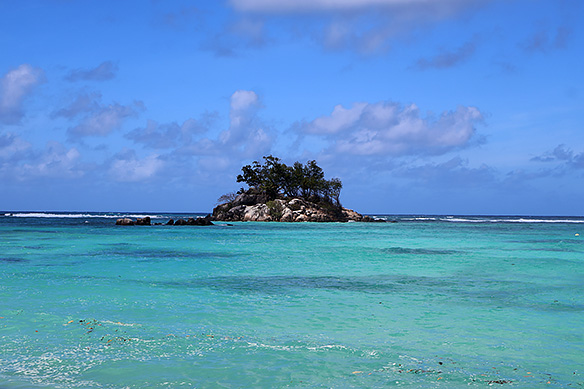
“You cannot discern that ever any people had been there before us,” wrote John Jourdain in his diary.
It was 19th January, 1609. Jourdain was part of the crew aboard ‘Ascension,’ a British East India Company ship that had blown off course on its way to India. He and his shipmates were marooned on what we now know as North Island, one of Seychelles’ 115 islands.
Things have not changed much over the past 400 years. Walk along any of the islands’ white sands lapped by an ocean that’s a cross between emerald green and turquoise blue, or under lush rainforests, and you may well feel you had chanced upon a remote unchartered paradise.
Welcome to part 2 of my series on island-hopping in the Indian Ocean, and to Seychelles—Africa’s smallest and least populated country with the highest GDP per capita of its 54 nations.
1,600 kilometres east of Kenya, Seychelles is seated atop a colossal granite block in the Indian Ocean—the Seychelles microcontinent—which bursts through its powdery sands in spurts and dribbles. The 115 islands comprise 42 granite Inner Islands, where 98 percent of the 135,500 population live, and 73, mainly uninhabited, low-lying coral Outer Islands.
It would be another 133 years after Jourdain’s tryst with Seychelles before a ‘settler’ would land on the archipelago’s shores again. In the interim, the islands became a favoured refuge for pirates to rest, recoup, and repair their ships. To this day Seychelles abounds with stories of plundered treasures these men hid away on its beaches.
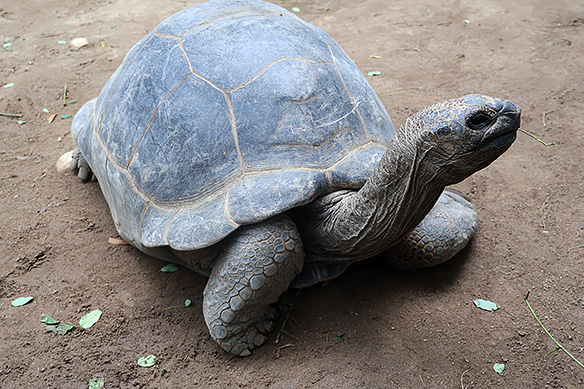
Aldabra Giant Tortoise, National Botanical Garden, Victoria.
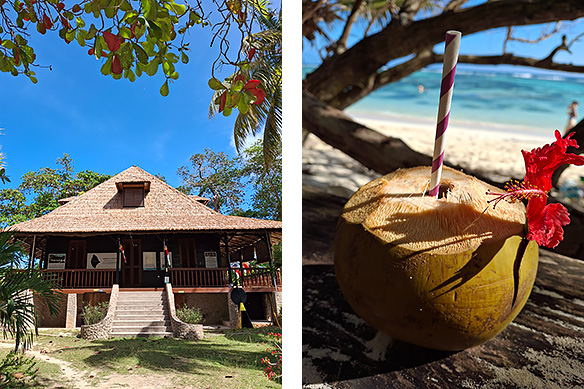
La Digue. Left: L’Union Estate, Right: Fresh coconut water at Anse Source d’Argent.
On 21st November, 1742, everything changed. French captain Lazare Picault from Ile de France [Mauritius] landed on the biggest of the islands and named it Isle Dabondance, meaning Island of Abundance, after the plentiful coconut palms, tortoises, timber, and water he found. In 1744, he renamed it Mahe after Bertrand Francois Mahe de La Bourdonnais, the Governor-General of Mauritius. The French officially took possession of Seychelles in 1756.
Up came Seychelles first settlements in 1770 and 1772, established by French men accompanied with their African and Indian slaves. By 1790, the population had risen to 572 inhabitants. 65 French settlers and 507 slaves.
The French were replaced with the British in 1811 who continued with the slave trade. In 1827, it was recorded Seychelles had 685 free men and 6,638 slaves. About 45 percent of these slaves came from Madagascar, 40 percent from East Africa [Mozambique], 13 percent from Pondicherry in India and 2 percent from West Africa. It was common practice for slave women to be used as concubines.
After the slave trade was abolished in 1835, the British East India Company started to ‘free’ African slaves en route to the New World, and diverted the ‘Liberated Africans‘ to work in the Seychelles and other colonies as indentured labourers.
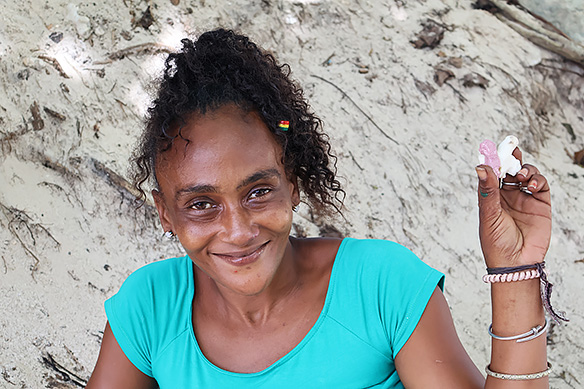
Creole woman, Mahe Island.
These numbers are important. For more than 200 years Seychelles was a slave society, and every Seychellois, directly or indirectly, has been shaped by the slave trade. This history binds all its citizens, across race and religion, shaping Creole language, food, music, dance, and social structures. It is a history which independent Seychelles and its people today carry with immense grace.
Favoured by the wealthy, including the late UAE President Sheikh Khalifa who built a six-storied palace in Mahe, and the offbeat traveller, Seychelles is an expensive travel destination. No surprises, since nearly everything needs to be imported. But, oh so worth the detour from the commonplace in travel.
Here’s a suggested itinerary for 72 hours in this idyllic paradise with a nuanced backstory. Come along with me? 🙂
DAY 1: SELF-GUIDED WALK IN VICTORIA, ONE OF THE WORLD’S SMALLEST CAPITAL CITIES
All roads in Mahe, Seychelles’ biggest island, lead to Victoria—one of the world’s smallest capital cities. No matter which part of Mahe you choose to make your base, you would not be far from a local bus ferrying locals to and from its main bus terminal.
Founded in 1778 by French Lieutenant Charles Routier de Romainville who named it L’Etablissement du Roy, the settlement was renamed Victoria in honour of Queen Victoria in 1841.
Though only a handful of traffic lights long, the walkable and utterly charming city warrants a full day of exploration. Some sites are best experienced early in the morning. Some burst into life around noon. And some deserve a leisurely stroll as the island cools down under a waning sun.
Here’s a self-guided walk through Victoria, with stops to help you make the most of the city, including tried and tested cafes which the locals happily vouch for. Start early. Buses start at 6:00 AM. Both the Hindu temple and museum close early for lunch.
Travel tips: 1) Bus cards are compulsory for bus travel. They are available at the Airtel counter, airport arrivals area. 2) If staying in Beau Vallon, Bus No. 21 from Bel Ombre Road goes to Victoria Bus Terminal. 3) Bank cards are readily accepted everywhere.
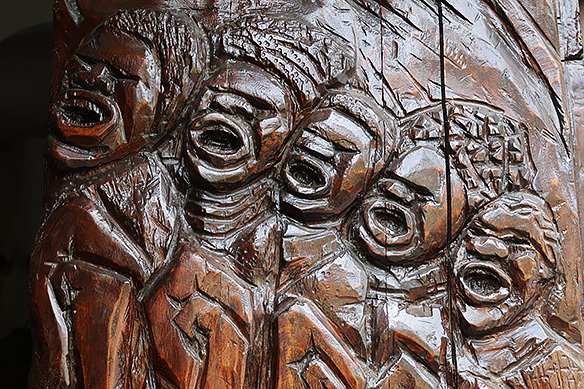
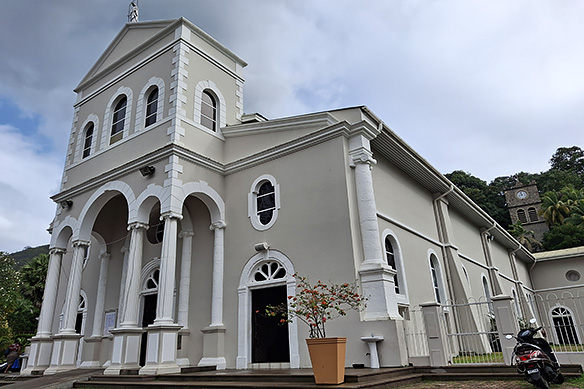
Stop 1: A short walk from the Victoria Bus Terminal is the Immaculate Conception Cathedral [1874] in the French colonial style. Look out for the magnificent hand-carved wooden doors.
Father Leon des Avanchers was the first Catholic missionary to arrive in Seychelles. During the three weeks he spent in Mahe in 1851, and then again from 1853 to 1855, he built a chapel in Victoria [which became the Immaculate Conception Cathedral], and baptised 3,800 people.
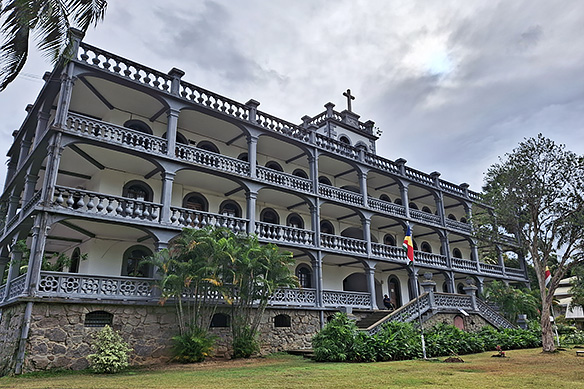
Stop 2: Next to the Immaculate Conception Cathedral is La Domus, residence and administrative offices of Seychelles’ Catholic priests since 1934.
Christianity plays a big role in Seychellois society. 90 percent of the population are practicing Catholics. Other Christian denominations, Hinduism, and Islam make up the balance.
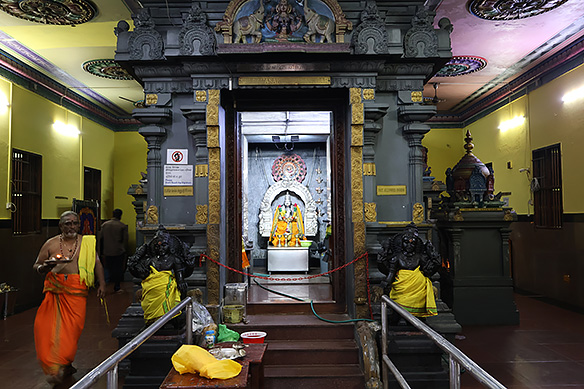
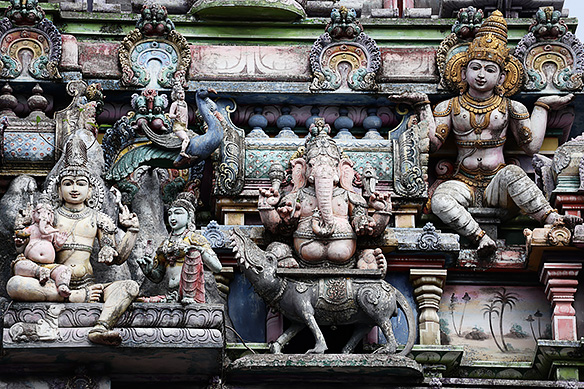
Stop 3: Seychelles’ only Hindu temple, Arul Mihu Navasakthi Vinayagar Hindu Temple is a recent addition [1992] to serve its Indian Hindu citizens. Comprising around 2 percent of the population, they trace their roots to the five Indian slaves brought in from Pondicherry, a French colony in India, in 1770 and an influx of traders and construction workers in the 20th Century.
Note: The temple is open daily 6:00 AM to Noon and 5:00 PM to 9:00 PM.
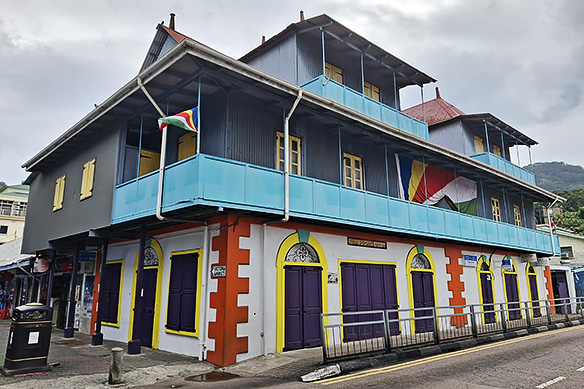
Stop 4: Jivan Jetha Shop, now Jivan Imports, one of Victoria’s landmark commercial buildings from 1960 that is still around.
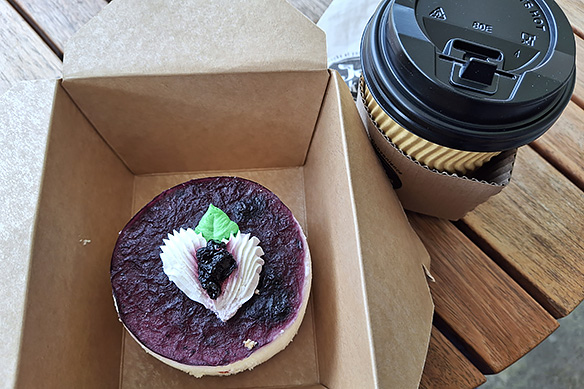
Stop 5: Time for breakfast. Blueberry cheesecake and coffee at Jo’s Kafe. There’s also a full range of fabulous grilled panini sandwiches.
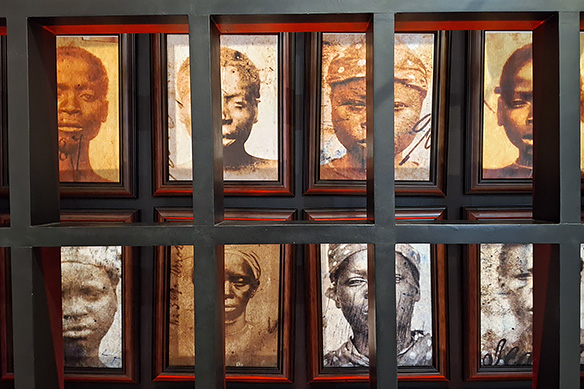
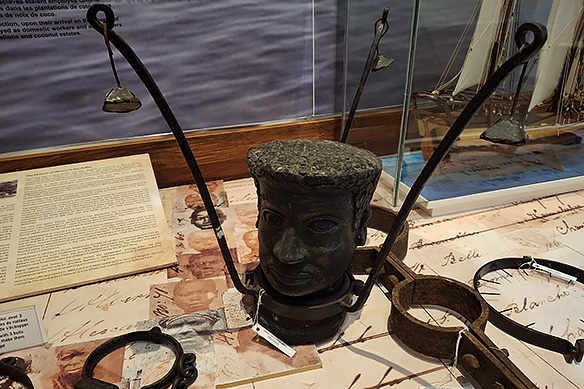
Stop 6: Housed in an 1885 colonial building, the National Museum of History’s carefully labelled and described five compact galleries take the visitor through Seychelles’ story and its many layers. From pirates to French and British colonial rule. From local traditions to the markers of independence. You will need at least an hour to make the most of your visit.
The display above contains a Slave Collar with three bells [1900] which would jingle when the wearer moved. It was used to prevent enslaved men and women from trying to escape.
Note: Opening hours. Monday: 9:30 AM – 11:45 AM; Tuesday to Friday: 9:30 AM – 11:45 AM, 1:00 PM – 4:30 PM; Saturday: 9:30 AM – 1:30 PM; Sunday: Closed.
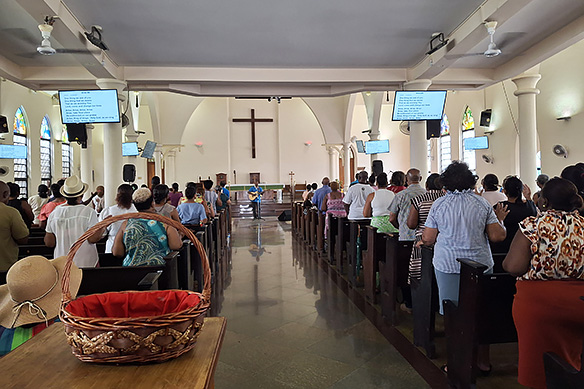
Stop 7: Most days of the week see congregational singing at St. Paul’s Anglican Cathedral. Held around lunchtime to a full house, officegoers slip in and out, and there’s an air of bonhomie and joy. Visitors are welcomed with huge smiles. The original church was consecrated in 1859, and rebuilt several times; the most recent was in 2004.
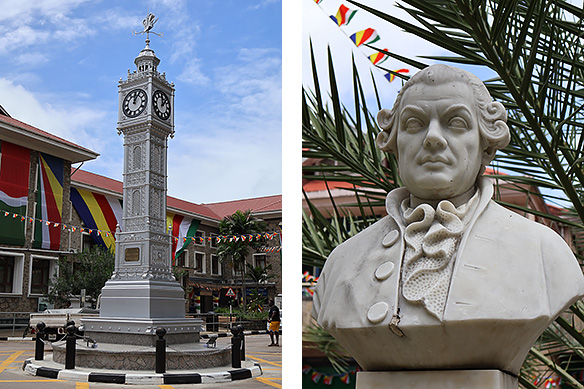
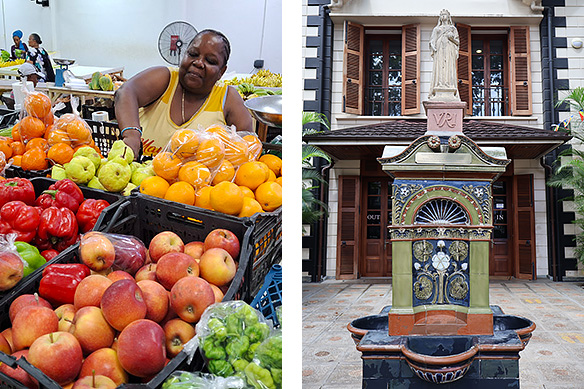
Stop 8: Wander around Victoria’s city-centre which marries all its past into a few streets. Points of interest are the Victoria Clock Tower [1903], a cast-iron Little Big Ben straight from London, French administrator Pierre Poivre’s bust [he set up Mahe’s first spice garden in 1772], a colourful fruit and vegetable market, and the Supreme Court building [1885] which became the National Museum of History.
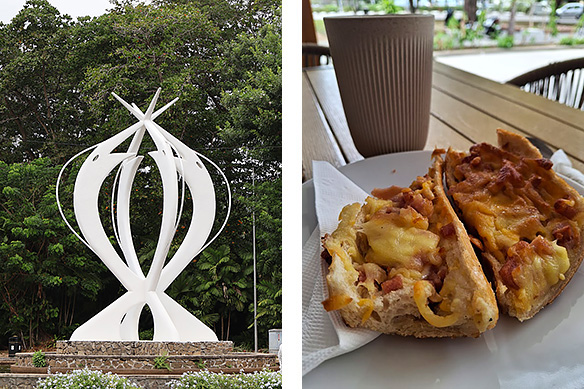
Stop 9: Walk down to the Marina, past the Bicentenary Monument, Liberty Monument, Zonm Lib Statue, Unity Monument [above left], to conclude for lunch at Ma Boulangerie, another local favourite.
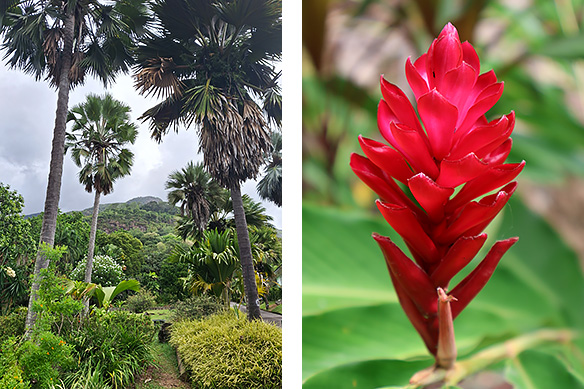
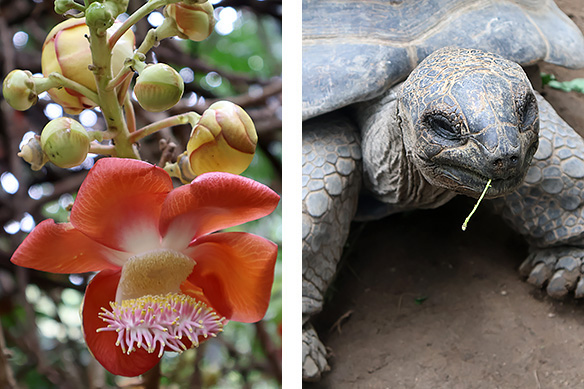
Stop 10: Victoria’s National Botanical Garden started off as an agricultural station in 1901 and went on to become a public park in the mid-20th Century with endemic and exotic flora. Since 2009, it has been managed as a botanical garden and is the official site for tree plantings by visiting dignitaries. The most famous is the fruit-heavy Coco de Mer planted by the Duke of Edinburgh in 1956. Whilst here, don’t miss the Aldabra Tortoise Pen where you get to feed the protected giants and the Guangzhou Garden with its poignant sculpture of the Five Rams.
End point: Make your way to the Victoria Bus Terminal to catch the bus back to where you are putting up. Keep in mind the last buses leave around 7:00 PM.
DAY 2: ISLAND-HOP TO SEYCHELLES’ MOST FAMOUS ISLANDS: PRASLIN AND LA DIGUE
44 kilometres off the northeast coast of Mahe Island, separated by the choppy untamed Indian Ocean in the dry winter months, are Seychelles’ most famous islands: Praslin and La Digue. Much has been waxed about their incredible beauty and boulder-strewn beaches. Truth is, they live up to their reputation.
Bigger of the two, Praslin’s other claim to fame is the UNESCO-listed Vallee de Mai. The nature reserve is tasked with the preservation of the endangered endemic Coco de Mer, a palm tree that once grew in the depths of the ocean and produces the world’s largest seed. Apart from the Coco de Mer, the reserve is also home to five other endemic palm species including the protected Millionaire’s Salad [Deckenia nobilis] with fruits sheathed in spines.
Travel tip: 1) Creole Travel Services offers a one-day tour to both islands from Mahe. It includes pick-up and drop-off, ferry tickets, entrance ticket and guided walk at the Vallee de Mai, lunch in a Bali-styled fancy restaurant, and enough free time at the beaches.
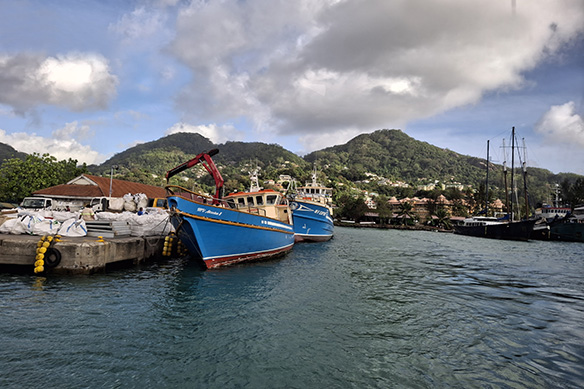
Victoria Port from where boats, both passenger and cargo, leave for the other islands in the archipelago.
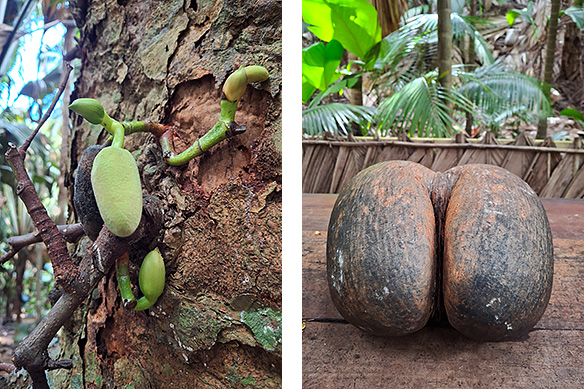
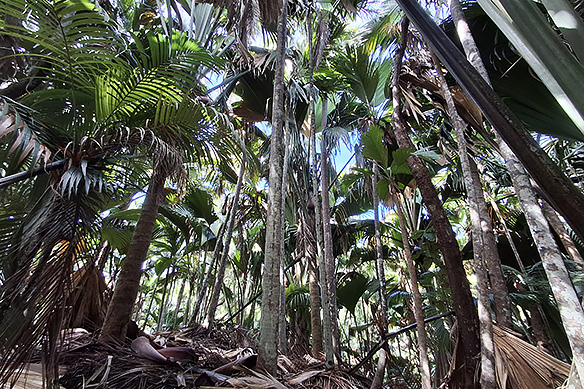
Charles George Gordon, a 19th Century British army officer and Christian cosmologist, believed Praslin’s Vallee de Mai to be the original Biblical Garden of Eden, and the Coco de Mer coconut to be the forbidden fruit. Often compared to a woman’s pelvis or hips, its double-lobed seed can grow up to a weight of 40 kilograms.
The endangered tree, a rare remnant of prehistoric flora millions of years ago, is dioecious. What this means is the species has separate male and female plants. This had led to numerous local legends on their mating because botanists are still clueless on how its pollination takes place.
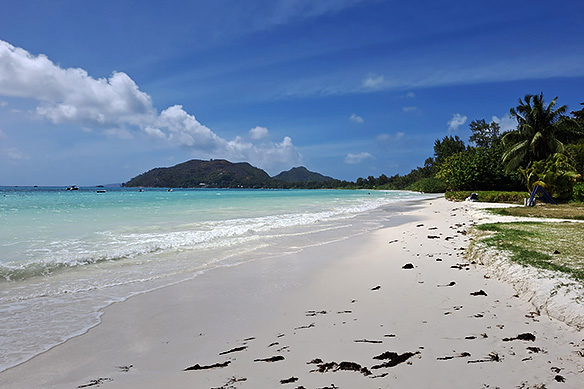
Cote d’Or Beach stretches for 2.6 kilometres along Praslin’s coastline.
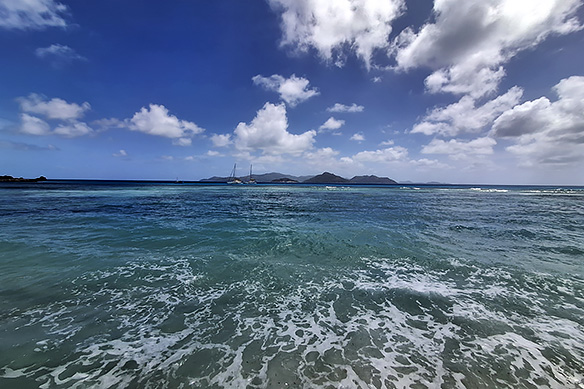
When the view is as delicious as the lunch, the view wins.
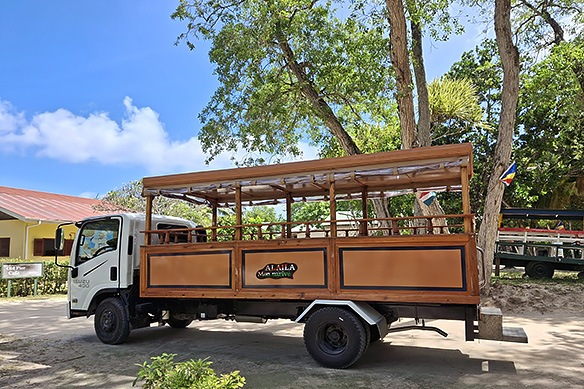
Local transport in La Digue’s L’Union Estate, a coconut and vanilla plantation tracing itself back to the French colonial period.
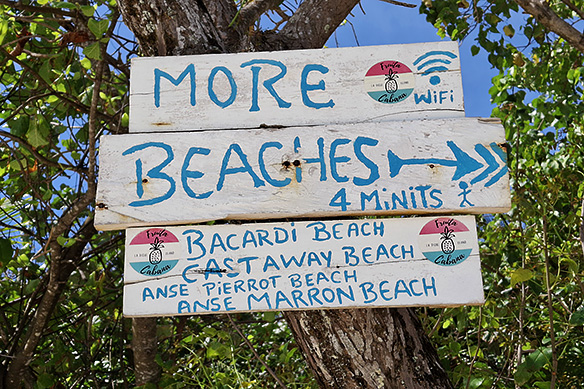
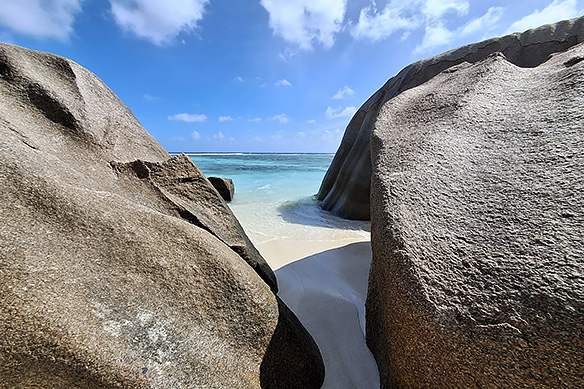
Yes, there are more beaches! Anse Source d’Argent, often described as one of the world’s most photographed beaches, just keeps getting more picture postcard-perfect as one walks on.
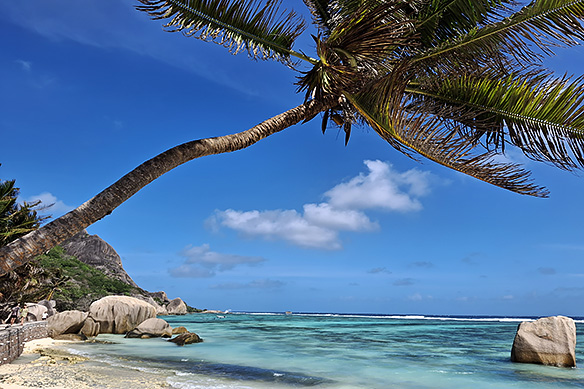
DAY 3: DISCOVER MAHE ISLAND’S NATURAL AND HISTORICAL CHARMS
Lazare Picault’s Island of Abundance, later renamed Mahe, is the biggest island in Seychelles. Often side-lined for the Instagram favourites Praslin and La Digue, it has no shortage of stunning beaches, rainforests, or history itself. An easy way to explore its 157 sq. kilometres of pristine beauty is on a ‘private tour,’ which amounts to transport with a local Seychellois guide, where you have the freedom to specify the stops.
This is the route I took. Starting with two cemeteries outside Victoria, up the lush peaks of Morne Seychellois National Park and its historic sites, and ending with a wraparound drive through the string of beaches which encircle the island, stopping at those that took my fancy.
Travel tip: I had Emelie Contoret, cell no. +248 2589 500 from CME Tours as my guide. She is fabulous. When she is not guiding, she is a professional Moutya dancer and performs at Creole festivals.
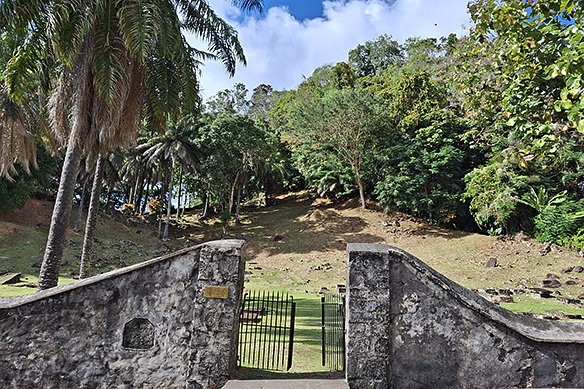
Stop 1: This is no ordinary cemetery. Bel Air Cemetery was the first public burial ground to be opened in Mahe in the late-1780s. Star attraction is the tomb of the 14-year-old corsair Jean-Francois Hodoul who was 9 feet 6 inches tall when he died aged 14. His elongated grave stands on top of the hill.
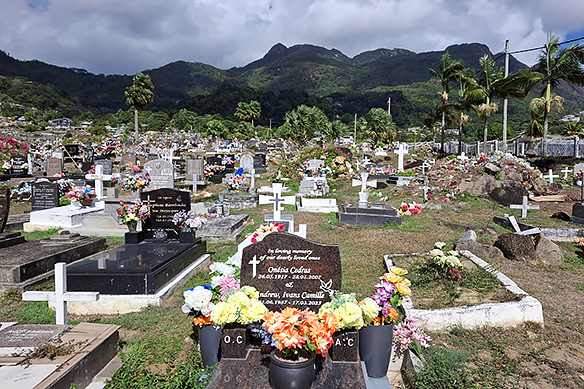
Stop 2: All those colourful flowers in Mont Fleuri Cemetery [1875] are plastic to ensure it always looks like a vibrant garden abloom in the hills. Every year, on 2nd November, All Souls Day, tens of thousands of Christian Seychellois gather at the cemetery to clean, paint, and put new flowers on the graves in remembrance of the departed souls.
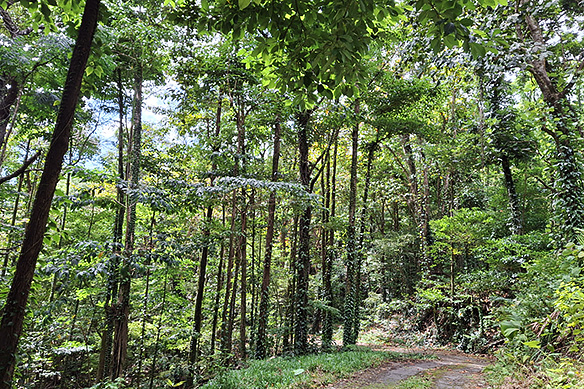
Stop 3: A little detour on the Sans Souci Road through Morne Seychellois National Park.
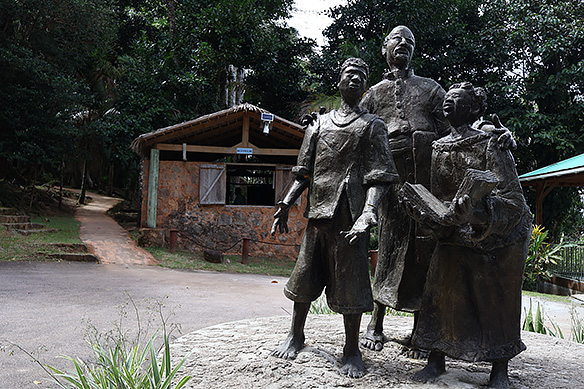
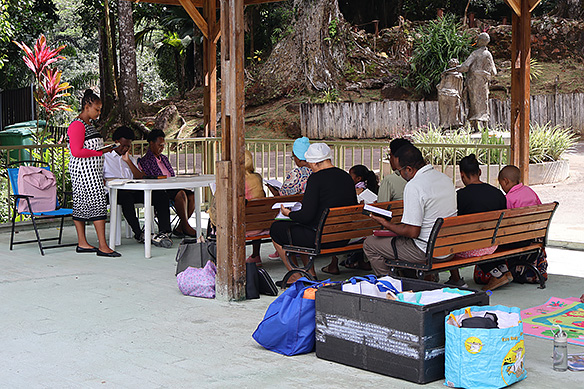
Stop 4: In 1875, Reverend William Venns from the Church Missionary Society of London set up a Mission at Sans Souci. It included an industrial school to teach and take care of ‘liberated’ slave children where these students, as part of their curriculum, cultivated crops to sustain the Mission.
Venn’s Town officially closed in 1889. The whole area of the Mission is now a historical monument in the Morne Seychellois National Park. Popular with locals, both yoga sessions and Christian study groups are often held in the grounds.
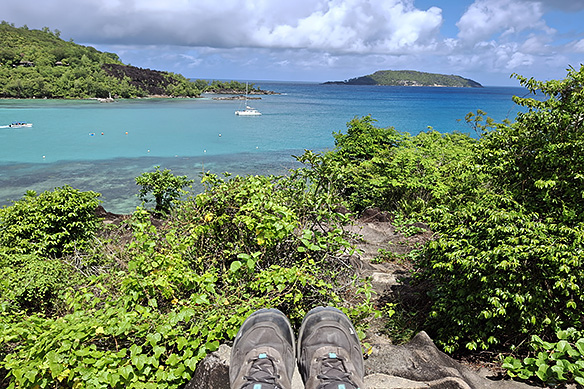
Stop 5: Sit down a while at the Bench of Happy Thoughts, a parent’s gift to their deceased son Jonathan, Port Launay Beach.
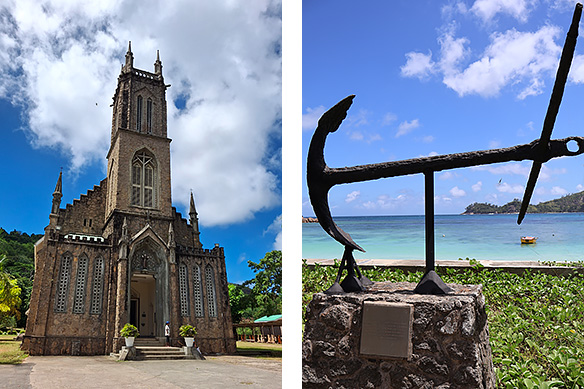
Stop 6: Baie Lazare on Mahe’s west coast is the site of St. Francis of Assisi Church [1953] and Lazare Picault ‘Anchor’ Monument. The latter marks the spot Picault landed at Mahe’s shores on 21st November, 1742.
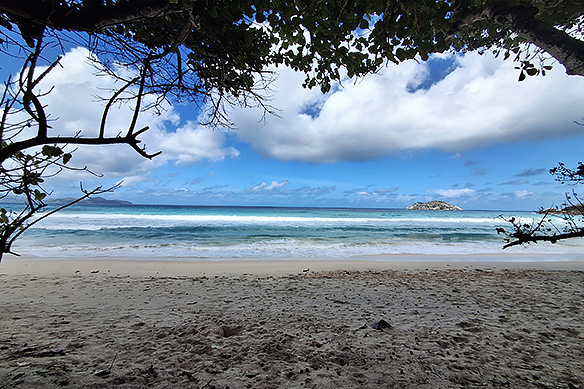
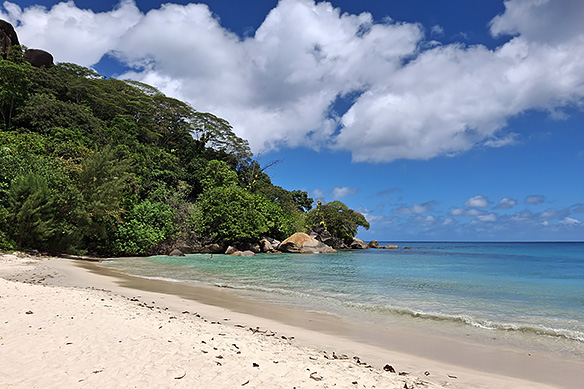
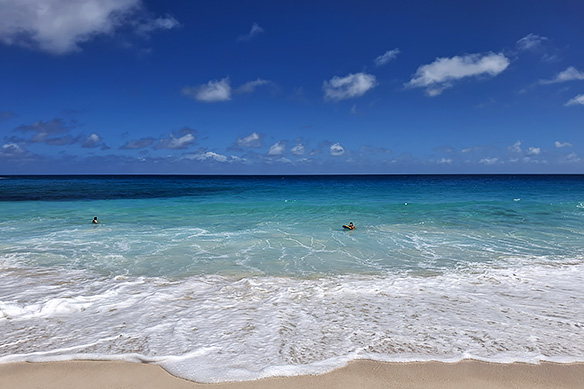
Stop 7: First sighted by Vasco da Gama in 1503, Mahe’s entire coastline is a beach—Baie Lazare, Anse Takamaka, Anse Intendance, Anse Royale. Take your pick. Choose one, choose all.
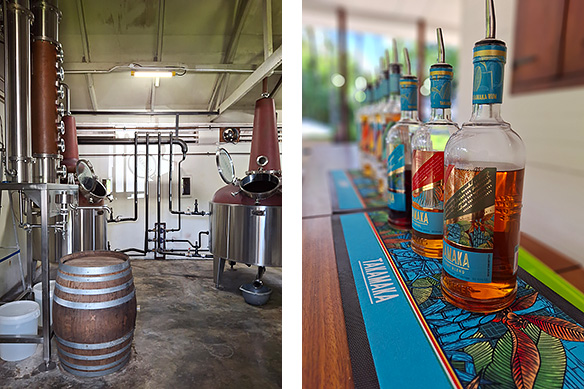
Stop 8: Takamaka Rum is the labour of love of a father and his two sons who, in 2000, set out to make Seychellois rum. They are the descendants of Pierre Louis d’Offay, one of the first people to call the islands home in 1778. Their distillery comprises a museum, rum-tasting, and a story told with much passion. Sold globally, the rum has become synonymous with Seychelles.
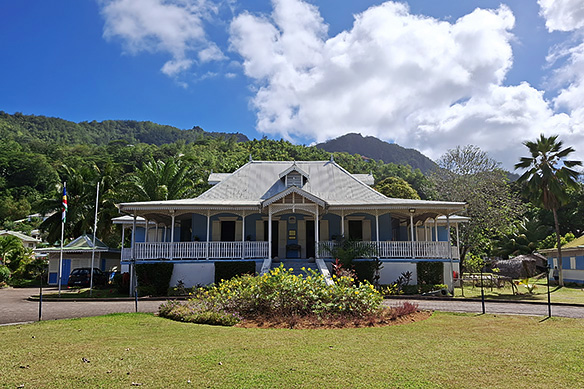
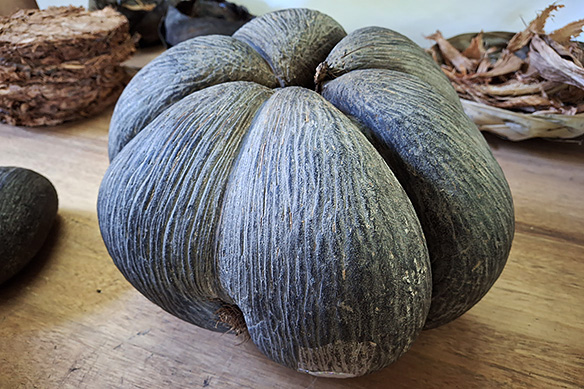
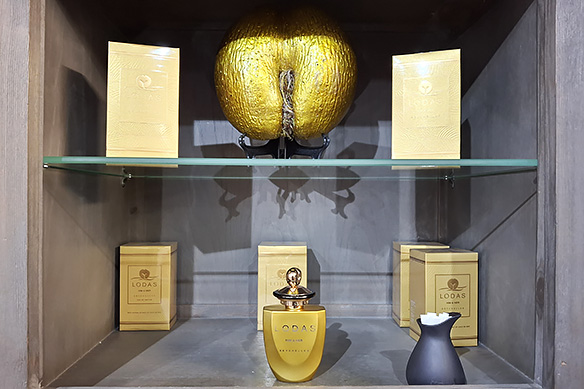
Stop 9: Domaine de Val des Pres Craft Village, built around an 1870 restored colonial-era plantation house, showcases a variety of Seychellois handicrafts. Coco de Mer World is, perhaps, the most interesting. Short free guided tours explain the various uses of the Coco de Mer husk, including its export to Asia as an herbal supplement for wellness and longevity, and recent transition into an intrinsically Seychellois perfume.
The Coco de Mer in the above image is a rare construction of nature; a six-lobed seed instead of the typical two-lobed version. Just like Seychelles is? ❤
With this, I come to the end of this segment of island-hopping in the Indian Ocean. Hope these posts help you plan travels of your own to this beautiful part of the world.
– – –
Travel tips:
- Staying there: I stayed at La Maison Hibiscus [self-catering apartments] in Beau Vallon, a popular tourist area close to the beach, bus stop, and shops.
- How many days: I stayed for 4 days.
- Getting around: Refer to travel tips under each day above.
[I travelled solo and independently across Mauritius and Seychelles in August 2026. More islands in the Indian Ocean are in the pipeline. 🙂 ]
Note: There are NO affiliate links in this post, or in any of my posts. Links are provided only to help with your plans or to give extra information. Neither is any of the content in this post or any of my posts sponsored. The services mentioned are what I used and I am simply sharing them with you.
 rama toshi arya's blog
Another really interesting guide!
LikeLike