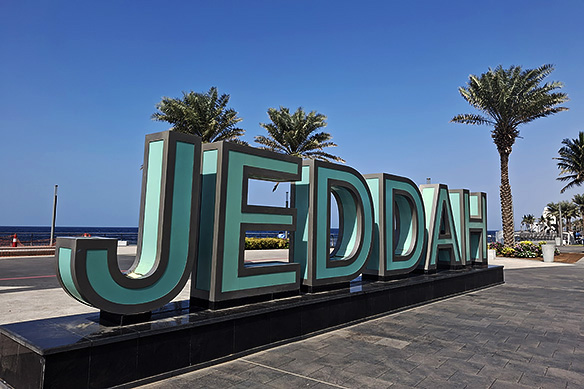
Jeddah Ghair!
If you wondering what it means, it is the city’s motto, and means “Jeddah is different.”
And it is. Cosmopolitan, liberal, capitalistic.
Most countries, over time, are seen to end up with two megapolises—the traditional, political heart and the commercial wheeling and dealing hub bursting with an eclectic art and food scene. Hanoi and Ho Chi Minh. Delhi and Mumbai. Washington and New York. Beijing and Shanghai.
In Saudi Arabia, it is Riyadh and Jeddah. But Jeddah is not just different from the country’s capital in the arid Najd desert. It is different from the whole peninsula. A difference it celebrates with a self-congratulatory pat.
Hugging 30 kilometres of azure blue waters along the Red Sea coastline, Jeddah has been a major port on the Indian Ocean trade routes and the official gateway to the holy city of Mecca since the 7th Century. The city got an extra boost after the Suez Canal opened in 1869, bringing with it an influx of steamboats from Europe on their way to India and Asia and vice versa. More business. More pilgrims. A role it still carries out diligently.
People from all walks of life, from across the world, continue to land on its shores everyday just as they have done for 1,400 years. The result is a city with a rich heritage shaped by Asian, African, Middle Eastern, and even Western influences.
Here are five ways to experience the Ghair in Jeddah. These five ways are also the reasons why Jeddah needs to be on your Saudi Arabia bucket-list. What say?
PS. There is also a sixth. But not yet. The world’s to-be tallest building, Jeddah Tower, at 1-kilometre-high is scheduled to be completed by 2028. 🙂
1. UNESCO-LISTED AL-BALAD, A WINDOW INTO 19TH CENTURY JEDDAH
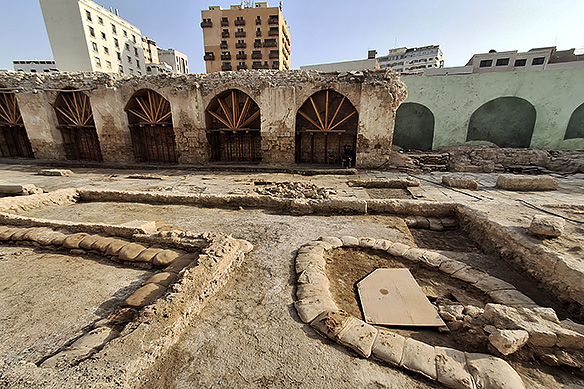
Al-Shona Archaeological Fortress [16th to 20th Century AD] in Al-Balad has had its fair share of avatars: A Mamluk fortress to government warehouse to a merchant’s private warehouse for goods from across the world.
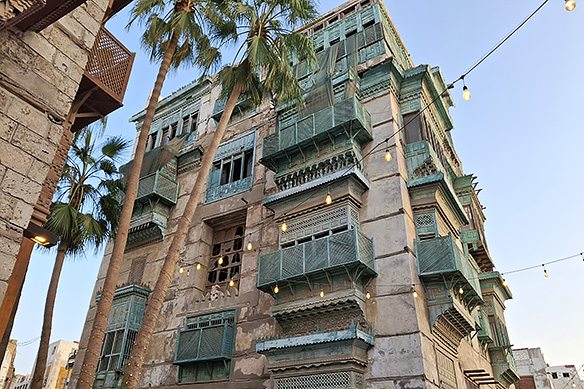
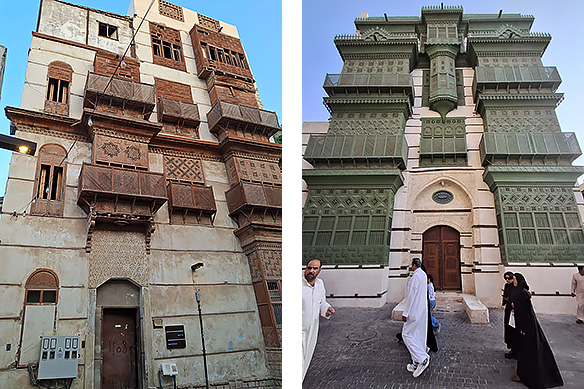
Al-Balad’s signature coral stone tower-houses wrapped in rawashin. Above right: Beit Noorwali is named after its Indian merchant owner, Mr. Noorwali.
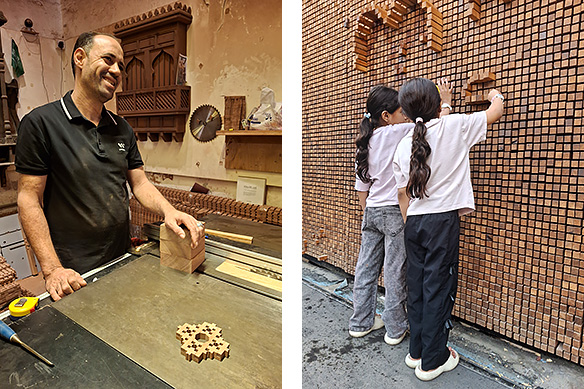
Craft to play. Left: A carpenter demonstrates how small carved wooden blocks interlock to form the rawashin panels; Right: Children playing with an interactive woodblock installation.
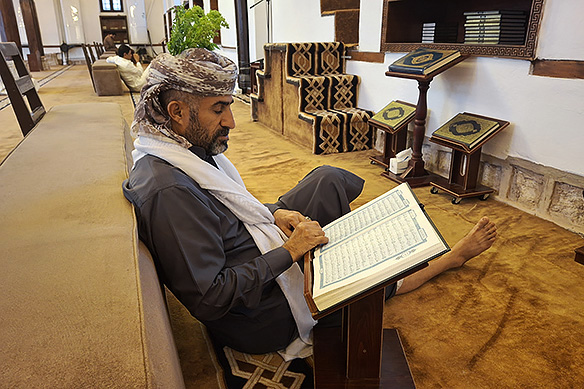
A Yemeni reading the Quran at the Al-Shafi’i Mosque. How do I know he is from Yemen? The herbs in his headscarf function as a perfume. It is a Yemeni thing. Plus, I asked him. 🙂
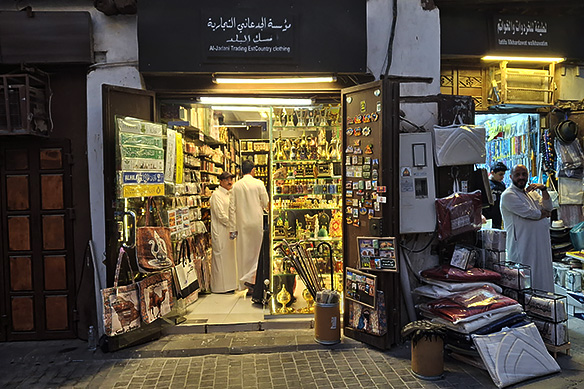
Once the sun sets and night falls, the suqs and squares come alive.
In the late-19th Century, after the opening of the Suez Canal and subsequent surge in Indian Ocean trade, both coasts of the Red Sea became home to a unique construction style which reflected this period. It was known as the Red Sea architectural tradition.
The mercantile elite who lived on these coasts built for themselves coral stone tower-houses decorated with large wooden lace-like rawashin bay-windows. These were part of a vibrant space comprising low-rise houses for the not-so-elite, ribats [to host pilgrims], mosques, suqs, and public squares. Very little remains of this urban tradition apart from the rare cluster intact in Jeddah.
In 2014, Al-Balad aka Historic Jeddah was designated a UNESCO-listed World Heritage Site. The restored residence of King Abdulaziz, Beit Nassif, is now a museum. Al-Shafi’i Mosque [1250] built by a Yemeni king is fully functional. The stores and coffee-shops continue to do business, and locals and visitors alike throng its lanes once the sun sets. Just like they did 150 years ago.
2. RED SEA MUSEUM, THE MUSEUM DEDICATED TO THE SEA BEHIND THE CITY
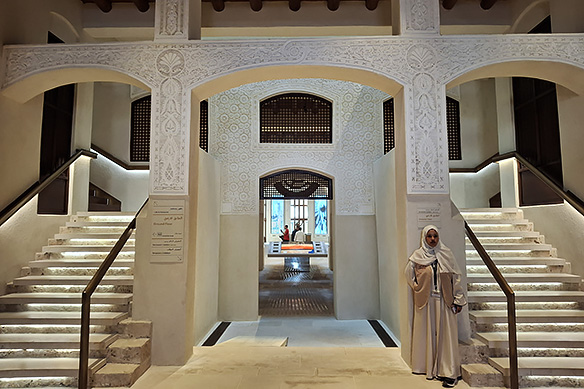
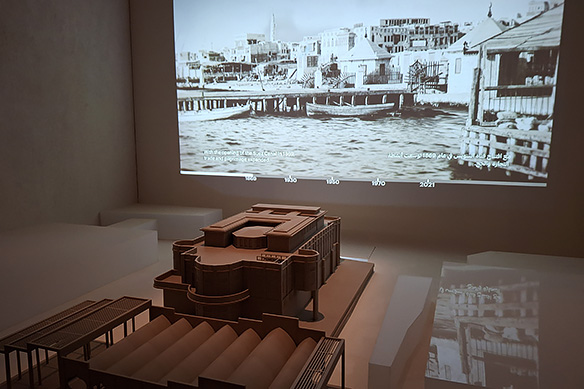
Red Sea Museum is housed in a restored 1869 customs office. Back then the building faced the coastline, which has since been pushed back.
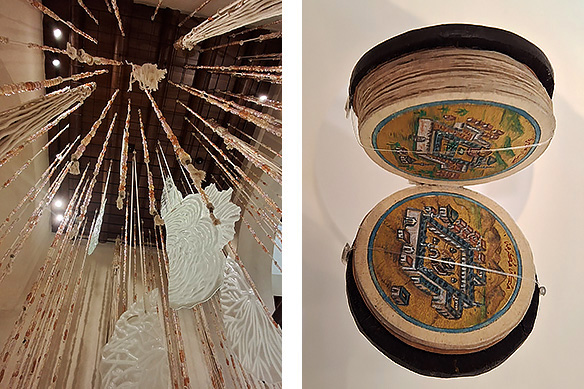
Left: We Are Coral by Manal Al Dowayan, 2020; Right: Miniature collection of prayers, Ottoman, 1812.
One of the most recent additions to Jeddah’s attractions is the Red Sea Museum in historical Al-Balad. It is housed in Bab Al-Bunt, a 19th Century customs office which served as the first point of entry for both traders and pilgrims to Saudi Arabia.
It’s an apt choice because its collection of over 1,000 objects, comprising historical artefacts, contemporary art, and archival photography, explores the role the seawater inlet played as a conduit for trade, industry, and pilgrimage. By connecting Africa, Arabia and Asia, the Red Sea created Jeddah, making it what it is—a flourishing trading port, cultural melting pot, and gateway to Islam’s holy cities. The museum is the story of the city and its sea.
3. JEDDAH CORNICHE, JEDDAWIS FAVOURITE PLACE TO HANG OUT
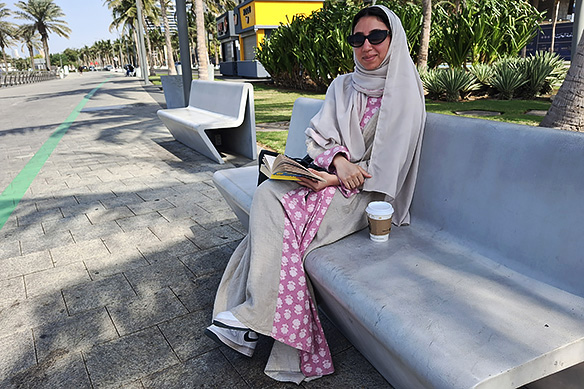
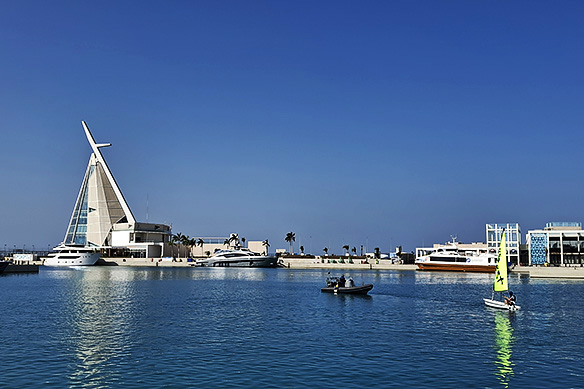
Jeddah’s Corniche stretches for 30 kilometres with the luxe Yacht Club and Marina located at the northern end. There are numerous chic cafes and fine dining restaurants inside the complex.
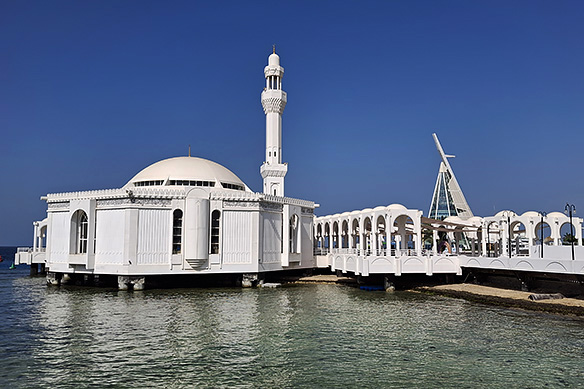
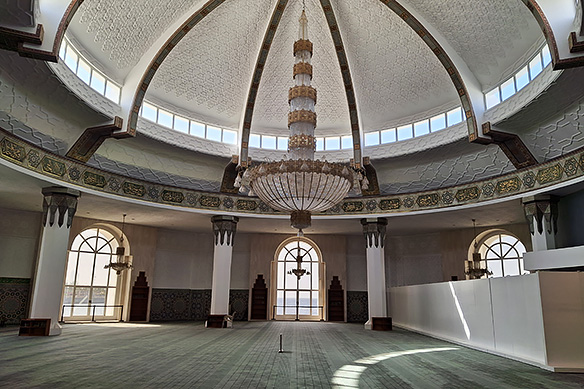
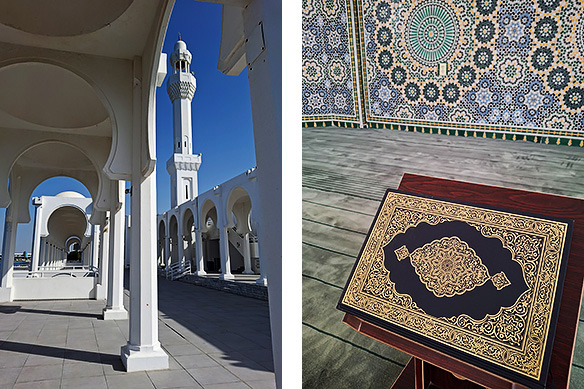
Al Rahmah Mosque aka the Floating Mosque [1985] is the world’s first mosque built over water. It blends Islamic tradition with modern aesthetics, and is open to tourists.
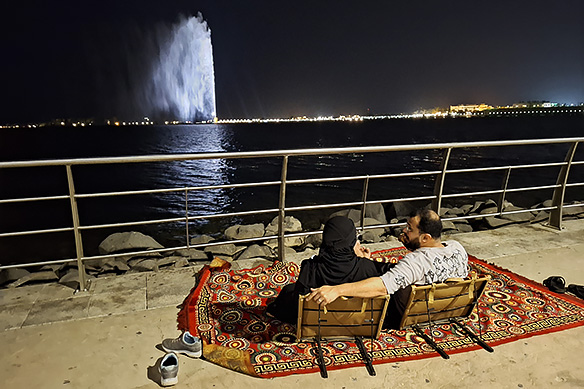
Friday night chilling at the Corniche with King Fahd Fountain for a view.
Jeddawis favourite part of their city is the 30-kilometre-long Corniche on the Red Sea. At one end is the plush Jeddah Yacht Club and Marina and Al Rahmah Mosque; the latter popularly referred to as the Floating Mosque since it is built on stilts over the sea and appears to float during high tide.
At the other end is King Fahd’s Fountain, the world’s tallest fountain spurting seawater 312 metres into the air from an Arabian incense burner lookalike, and lit by 500 LED spotlights at night.
In-between are high-rises and cafes facing the waters, palm-lined promenades dotted with sculptures, sandy beaches, landscaped gardens, malls, and an aquarium. Mornings see cyclists and joggers, afternoons the bibliophiles, and at night Jeddah’s families, couples, and friends descend en masse to socialize and dig into scoops of flavoured ice creams al fresco.
4. JEDDAH CENTRAL FISH MARKET, THE MARKETPLACE FOR RED SEA CATCH
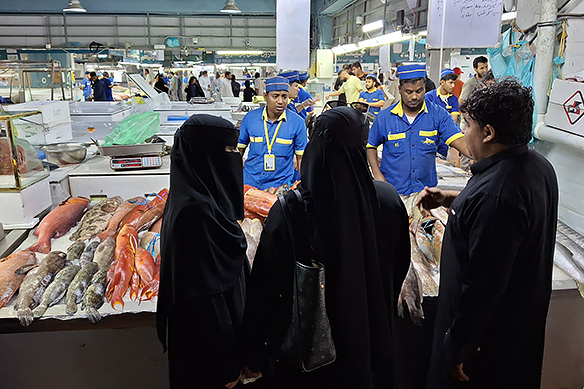
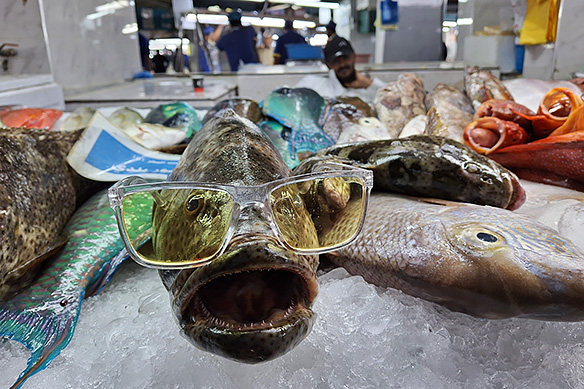
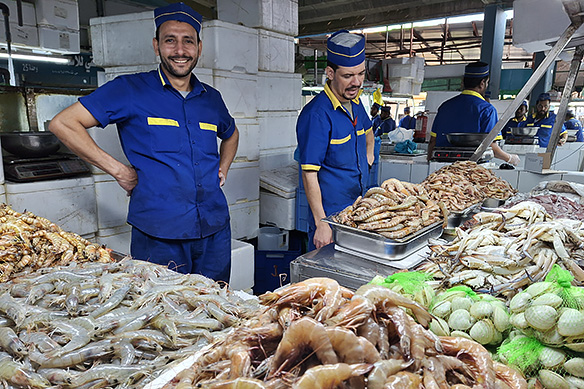
What’s a city by the sea without a fish market? And when it is on the scale of Jeddah’s Central Fish Market, it is inevitable it would find its way into this list.
Located close to Al-Balad, the market comprises 100 stalls across 30,000 sq. metres, handles 2,600 tons of fish and 5,000 customers daily, and has been selling catch from the Red Sea since antiquity. In addition to scale and age, another feature that sets it apart is its ‘hook-to-table’ experience. Here, one can buy seafood, get it cleaned, and if required, also cooked. All under the highest hygiene standards. For the traveller it offers an insight into local life—the frenetic bargaining and auctions, excited chatter, and medley of smells. The best hours and freshest produce are from 5 am to 9 am.
5. AL TAYEBAT MUSEUM, ONE MAN’S COLLECTION OF 2,500 YEARS OF HISTORY
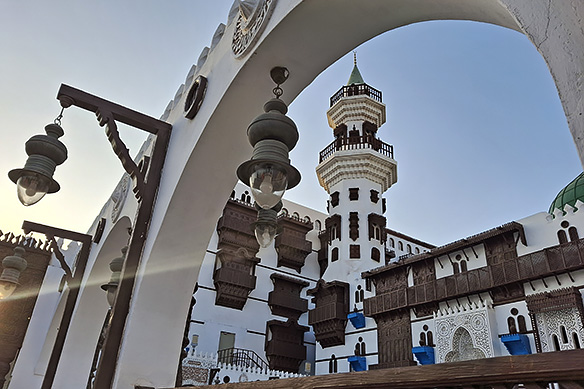
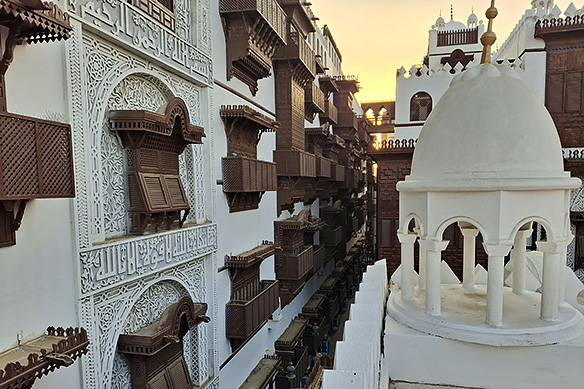
Al Tayebat Museum’s Hejazi-styled buildings recreate the Jeddah of 19th Century.
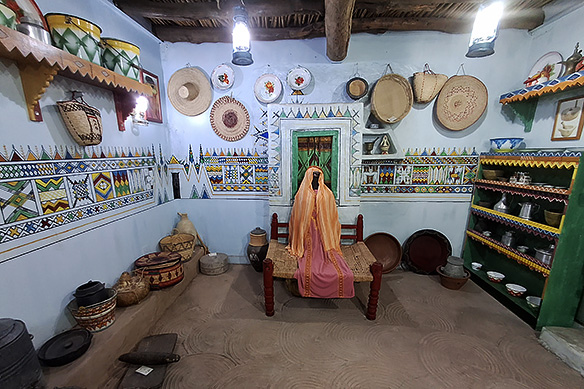
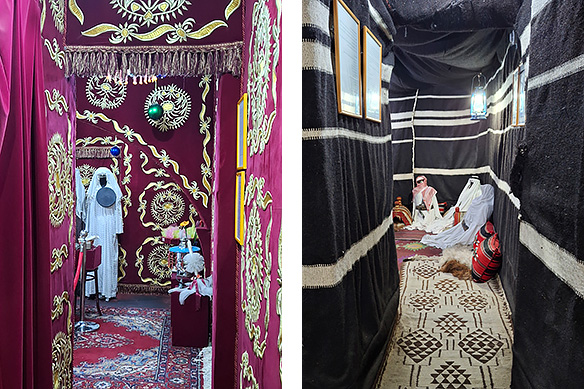
Whatever the desert lacks in colour, the Saudi homes make up for it with their colourful homes. Inside the Al Tayebat Museum, each province’s distinctive décor, applied arts, traditions, and clothing are displayed through a maze.
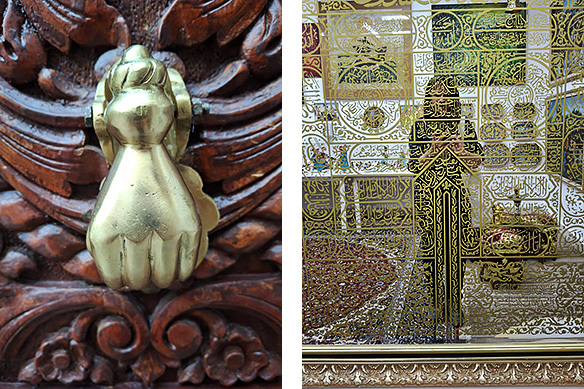
Left: Door knocker; Right: In the Hall of Islamic Art.
Al Tayebat International City Museum for Science and Knowledge is a mouthful like its name. 12 buildings four storeys high, over 365 rooms, and 60,000 artifacts. All courtesy of one man: Sheikh Abdul Raouf Hassan Khalil, a Saudi historian, scholar, and collector. His son continues the legacy.
Likened to a mini-city, the stunning Hejazi-styled buildings display a variety of intricate rawashin on the outside. Do take the stairs to the roof for some fabulous views. Once you have had your fill, a 50 SAR ticket opens up the world of Islam, manuscripts, antiques, jewellery, crystal collectibles, and art. Upstairs, a maze recreates the rich decor and applied arts of homes and people from across Saudi Arabia. The eclectic collection is wrapped up with a comprehensive exhibition of petrochemical products the country produces today.
– – –
Hope you enjoyed this post. Next week I’d like to show you around Riyadh. Till then, wishing you safe, happy travels. Always. ❤
Travel tips:
- Staying in Jeddah: I stayed at the Rosemond Al Hamra.
- Getting around: Uber and flagged-down taxis are readily available.
- Jeddah city guides: Marwah A. Saeedi, +966 50 535 3447 [founding member of Tour Guides Cooperative]; Kholoud Abdulwassie, +966 56 542 1771 [Certified tour guide by the Ministry of Tourism]. They were both brilliant.
- Al Tayebat Museum guide: Ask for Mustafa, an Egyptian archaeologist at the museum, to show you around. He knows the exhibits like the back of his hand.
[Note: I travelled through Saudi Arabia for 17 days in January-February this year. To read more posts in my Saudi Arabia series, click here.]
 rama toshi arya's blog
Lovely. We visited Jeddah in Nov 2023 as part of a tour of Saudi Arabia and we loved the city. Your photos bring back lots of nice memories. (Suzanne)
LikeLiked by 1 person
Nice to e-meet someone who’s toured Saudi Arabia. It is still very much an offbeat destination. Though things are changing fast. Thank you for stopping by. 🙂
LikeLike
I was never interested in visiting Jeddah until I saw photos of Al-Balad. Back then, I always thought of the city as the gateway to Mecca only with not much to see. It seems like I was wrong. Thanks for introducing us to more places worth seeing in Jeddah.
LikeLiked by 1 person
Jeddah is lovely. Very different from the capital Riyadh, as you may notice in my next week’s post. It reminded me a bit about Mumbai. 🙂
LikeLiked by 1 person
Quite an informative read, Rama! It’s funny, I feel like I already know Jeddah’s heartbeat pretty well. I spent a year on a major research project for NCB (now SNB after the merger) and STC across Jeddah, Riyadh, and Dammam, which involved analysing countless focus groups. Diving into those consumer attitudes gave me such a unique window into the local lifestyle and culture, even though I haven’t traveled there myself.
Was this trip pure leisure for you, or do you have business interests out there as well?
LikeLiked by 1 person
Thank you for sharing. This is indeed interesting. So, did your research findings agree with what the Jeddawis think of themselves and what I saw? Are they indeed Ghair? Would love to hear your thoughts. 🙂
Regarding your question, my Saudi Arabia travels were purely for pleasure. I have never been able to mix work and pleasure travel. 🙈
LikeLiked by 1 person
Pingback: travel diaries: one traveller, mount shada, and happiness | rama toshi arya's blog