I am often asked what is my favourite travel destination. High up on the long list is India. Just when I think I have figured the travel scene out here, it throws me a googly. Now look at Goa for instance. Top layer: beaches and Portuguese-era culture and churches. Second layer: pristine tropical nature and ancient Hindu temples. Third layer? Prehistoric geoglyphs.
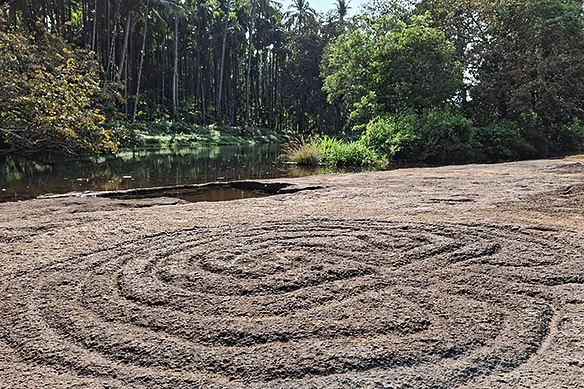
Yes, even I was taken by surprise. Far from prying eyes is a collection of some 125 rock carvings spread over 5,000 sq. metres on a laterite shelf dated between 20,000 BC and 30,000 BC in South Goa. They are known as the Usgalimal rock engravings, named after the nearest village.
When Goa’s monsoons arrive, the entire shelf gets buried under the adjacent river. When the waters recede, it is often covered in mud. A quirk of timing that contributed to its anonymity in archaeological circles till May 1993.
Somewhere between the flooded river and parched winter, the rain washes the shelf, revealing its mysteries in all their unadulterated glory—a massive labyrinth, a pair of feet, a peacock, a mother and new-born connected by an umbilical cord, bison and antelopes and dogs, amongst scores of others. Each engraving completely unique.
The setting of this UNESCO World Heritage tentative-listed site is just as magical. Located on a bend of the tranquil waters of the Kushavati river and surrounded by tall dense foliage, the cluster, reached by a winding offroad lane, is far from habitation. Quiet, apart from birdsong, and an Archaeological Survey of India guard to point out the most interesting figures.
Next time you are in Goa, why not time-travel tens of millennia back as well. 🙂
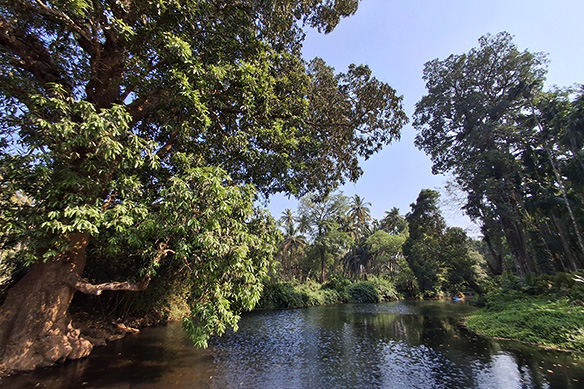
The quiet lush splendour of the Kushavati river, a tributary of the Zuari river.
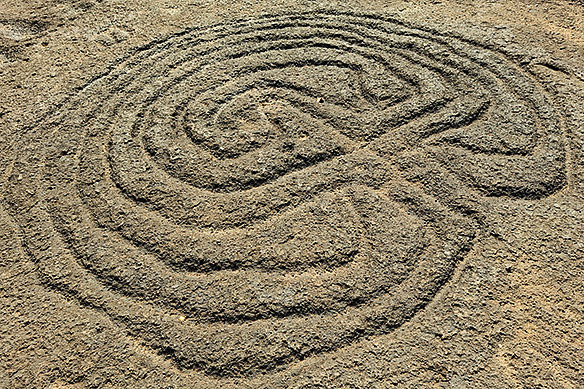
Five feet across, the labyrinth is believed to be the oldest in Asia.
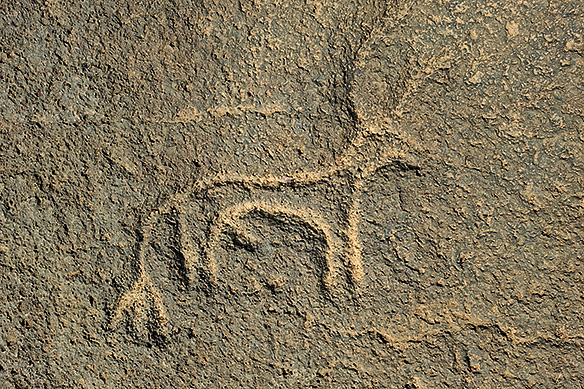
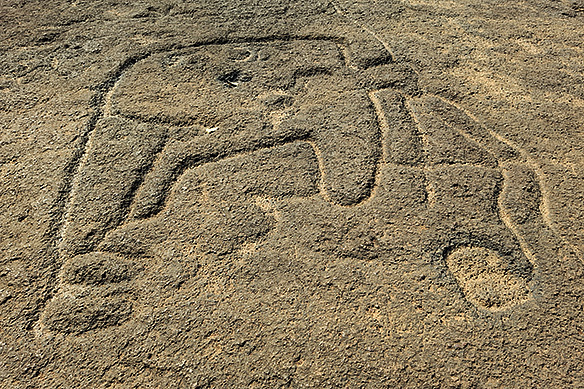
Antelopes and elephants, recognized by their antlers and trunks.
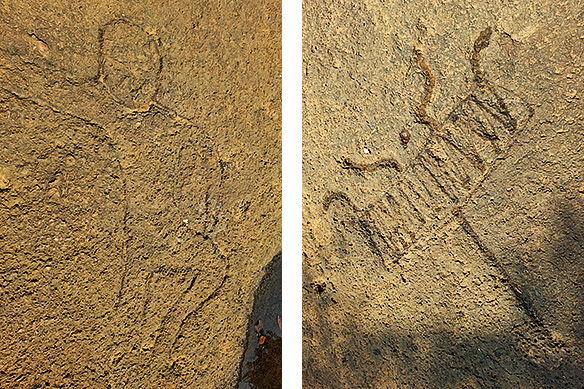
Left: Dancing figure; Right: Trident or trishul. Pouring water in the grooves makes the engravings ‘pop’ into focus.
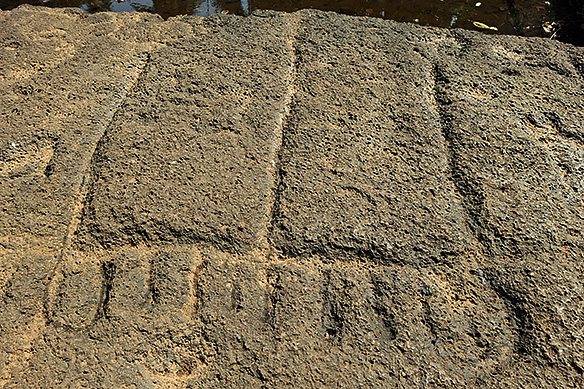
Pair of ‘human’ feet. Note the toes are at the outside ends instead of the inside.
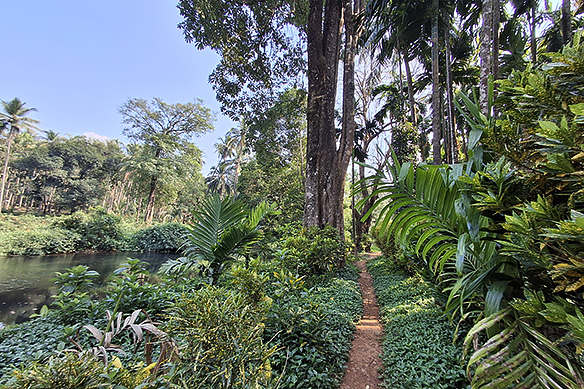
A recent tourism endeavour: spice plantation on the opposite bank of the Kushavati river.
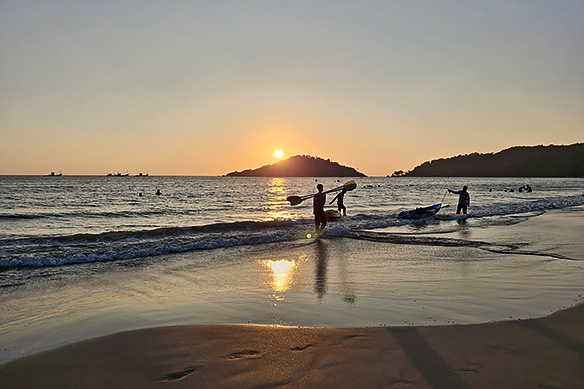
Goa as we think we know it. But there is so much more. ❤
 rama toshi arya's blog
You must be logged in to post a comment.