Afghanistan’s capital, Kabul, is not your regular city. Hemmed in by the Hindu Kush Mountains and Kabul River, it is beautiful. And broken.
The city traces itself back some 3,500 years and was a strategic trading centre on the Silk Road linking India with the Hellenic world. Over the centuries, the Who’s Who of Central Asia’s rulers and empires have ruled over it.
One of its earliest turning points was in the 9th Century when it was conquered and Islamised by the Abbasid Caliphate. Prior to this, Kabul was politically and culturally a part of India with a Buddhist and Hindu populace and rulers. Another major turning point was in 1776, when it officially became the capital of ‘Afghanistan,’ a nation the country’s founding father Ahmed Shah Durrani had established a decade earlier.
The mid-20th Century saw one final string of events that would change its destiny for the foreseeable future.
By the 1960s and 1970s, Kabul had become all that was hip and happening—modern in outlook, infrastructure, and lifestyle. It was both, the ‘Paris of Central Asia’ and a key stopover on the hippie trail. But everything changed when the then ruler King Zahir Shah was ousted by his pro-Soviet cousin Daud Khan. Once in power, Daud Khan, however, turned his back on the Russians and was deposed in five years by the country’s communist party. Quick to take advantage of this, the Russians invaded Afghanistan in December 1979.
Kabul, like the rest of the country, was to be broken, from now on, with guns, bombings, invasions, civil war, and occupations for the next four decades.
There is finally some semblance of normalcy in Kabul today. There is peace. But that does not make it a regular city. Far from it. Read on to find out what are the top 15 memorable things to do in Kabul, which makes a visit to this ancient, beautiful, but broken [hopefully, not for too much longer] city, so very unique!
1. Come face-to-face with 2nd Century Kushan King Kanishka and his boots, amongst other treasures, in Kabul’s National Museum
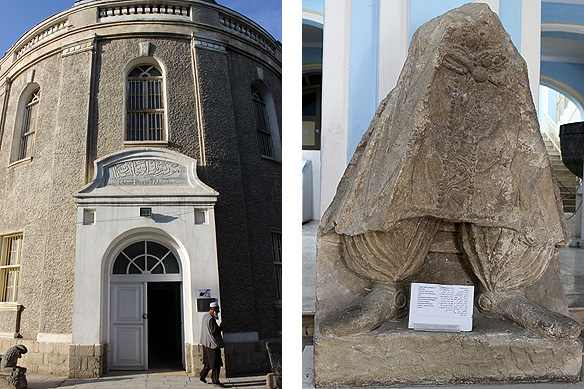
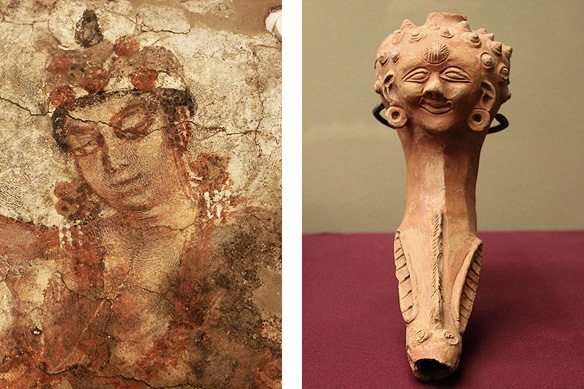
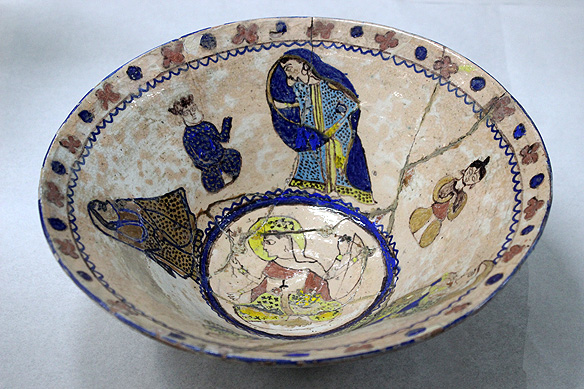
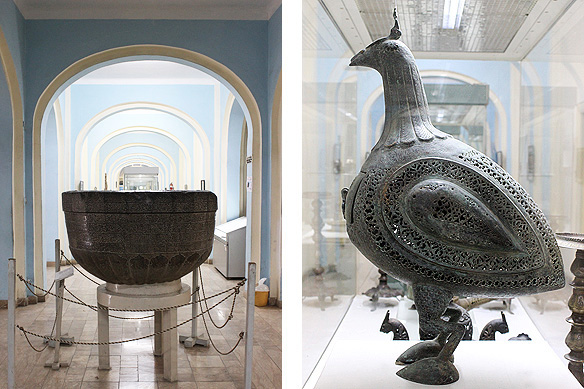
Before 1992, the National Museum of Afghanistan contained one of the world’s most impressive collections—over 100,000 artefacts spanning a history of 50,000 years unearthed from within the country’s borders. But the subsequent years of war and loot, culminating in the destruction of 2,750 priceless ancient works in 2001, brought it down to a fraction of its original count. What survives, however, is still astounding.
Do not miss one of the very few surviving statues of the secular 2nd Century AD Kushan King Kanishka who was responsible for establishing Mahayana Buddhism and the Gandhara School of Art, the Silk Road treasures unearthed from Mes Aynak, an extensive gold and silver coin collection, and exquisite indigenous Afghan Islamic art over the centuries.
Note: Museum image captions from top: Front facade of the Kabul National Museum [1931] and surviving limestone statue of Kushan King Kanishka [2nd Century AD]; Tempera wall painting [3rd-6th Century AD] and baked clay crenate pot [2nd-5th Century AD] from Mes Aynak; Glazed ceramic bowl with seven human figures [11th-13th Century]; Black marble basin inscribed with madrasa regulations from Kandahar [16th Century] and bronze burner in the shape of a bird [11th-13th Century].
2. Ponder over the course of history at the tomb of Emperor Babur, founder of the Mughal Empire
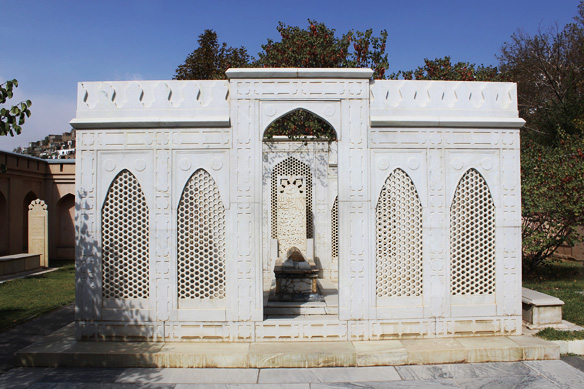
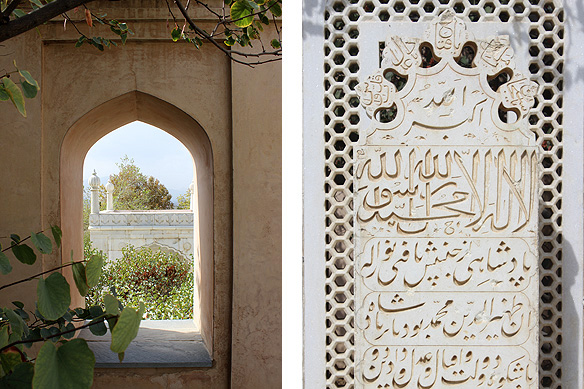
What if. What if Babur had not invaded India on 21 April 1526 on the invitation of Daulat Khan Lodi. Fuelled by resentment against Delhi Sultanate’s then Afghan ruler Ibrahim Lodi, Daulat Khan Lodi was determined to have him deposed. Would northern India have continued under the Afghan Lodi rulers, would Lodi rule have fizzled out, or would some other empire have instead risen through the ashes.
Timurid by descent on his father’s side, and Mongol on his mother’s, Babur’s one decision changed the course of Indian history for good. His descendants, the Mughal dynasty, ruled India for 331 years. Its after effects are still felt in the fabric of Indian culture. And the man behind it all lies buried in a tomb, not in India, or his native land, the Fergana Valley [in present-day Uzbekistan], but on the terraced garden Bagh-e Babur in Kabul at his own request. Such was his love for this city in Afghanistan.
Note: The site includes a terraced garden, Mughal Emperor Shah Jahan’s Mosque, Babur’s Tomb, and a Queen’s Palace [1890s].
You may also like to read the following posts on Delhi which are associated with Babur and the Afghan Lodi dynasty
Lodi Garden: Eleven monuments and 7,000 trees
Humayun’s Tomb: An ode to destiny’s child
3. Be enveloped in a cacophony of bird song at the Ka Faroshi Bird Market
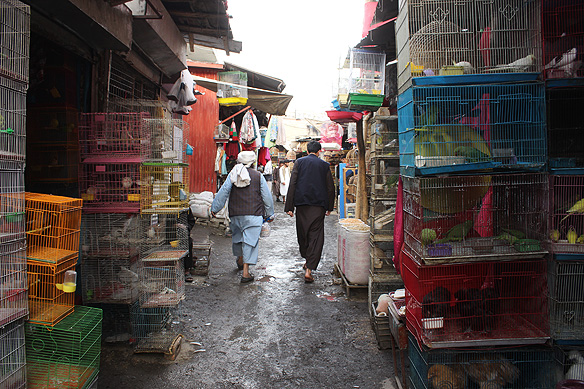
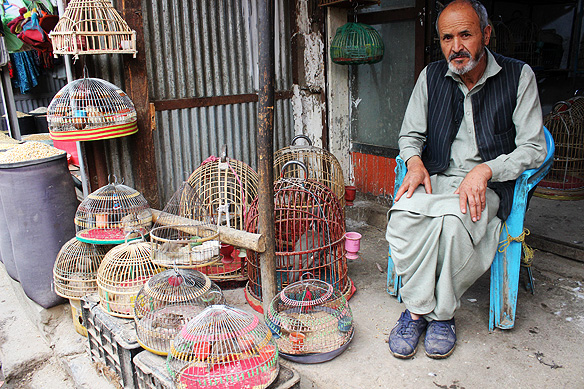
Through the din of 40 years of fighter jets, bomb blasts, collapsing edifices and human screams, a narrow alley in Kabul called the Ka Faroshi Bird Market has steadfastly remained enveloped in a cacophony of bird song. As it has always done, and continues to do so. There are partridges, doves, parakeets, and canaries in cages piled high atop each other, which the Afghans buy to display, contest, or listen to as an escape to their daily woes. It is a capsule where time has stood still and global politics has never been able to make a dent into.
4. Wander through 20,000 titles in the bookstore featured in the international bestseller ‘Bookseller of Kabul’


This one is for the bibliophiles out there! If you have read the international bestseller Bookseller of Kabul, a visit to the bookshop run by Shah Muhammad Rais would most likely be THE highlight of your Kabul explorations. Shah, his family, and bookstore formed the cornerstone of the non-fiction book by Norwegian journalist Åsne Seierstad. She lived amongst the Shah household for six months in 2001, recording their daily life, joys, and dilemmas, and published her book in 2002.
Shah’s bookstore, which he founded in 1974, comprises of over 20,000 titles and the largest collection of books on Afghanistan. To ensure his books’ posterity, he has digitized his collection. His online store delivers orders across the world.
Note: Here’s an interesting article on Shah if you would like to know more about him and his bookshop; the side of him not described in the bestseller.
5. Meet the only box-cameraman left in Kabul and get your picture taken by him
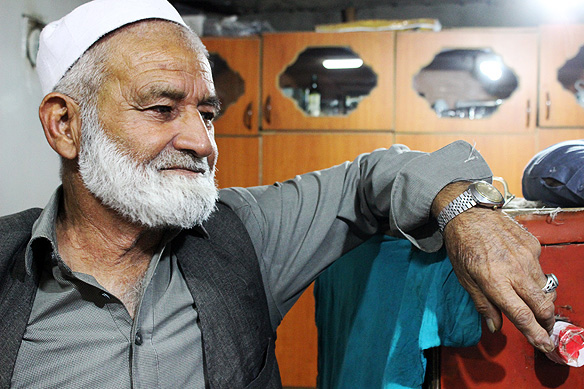
Afghanistan is one of the last countries to use box-cameras or kamra-e-faoree as they are locally called, to make a living. And Haji Mirzaman is Kabul’s last remaining professional box-camera photographer. He is 72 years old and his camera over 55 years old.
The box-camera is a handmade wooden contraption which serves as both camera and darkroom, and produces instant photos. Its paper and spare parts are no longer available in today’s digital world. When Mirzaman runs out of his 20-year-old paper stock, he too would need to close shop. Meetings with him are by appointment in his home, where his open courtyard and sunlight function as his studio. As an added perk, one gets to chat with him and understand how this dying 100-year-old art form works.
6. Make a wish in Sakhi Shrine, Kabul’s most poetic tile-encrusted Shi’a mosque
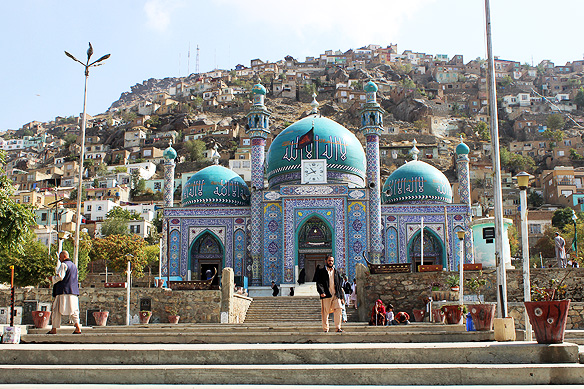
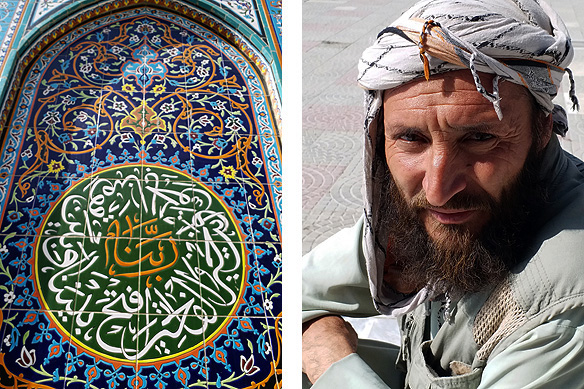
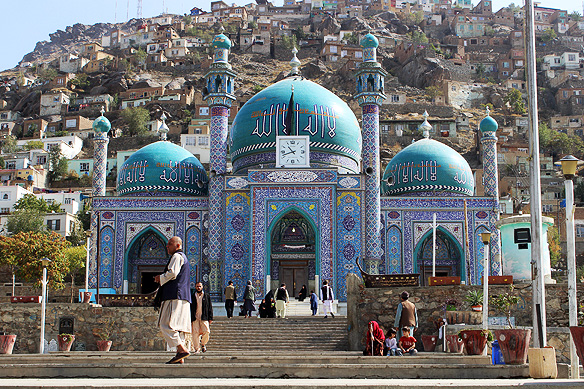
Sakhi Shah-e Mardan Shrine, Kabul’s most poetic mosque is wrapped in neo-Safavid blue glazed tiles decorated with excerpts from the Koran, Hadith, poetry, and prayers. It was built in the 18th Century by Ahmed Shah Durrani, founder of the Afghanistan nation, and marks two key events. Firstly, it is where the country’s most sacred relic, the cloak of the Prophet Muhammad was housed for eight months en-route to Kandahar, the then capital, from Balkh. It is also where a sighting of Ali, the Prophet’s cousin and son-in-law, was believed to have occurred twice.
Popular with Afghanistan’s Shi’a Hazara community, it is a lively place packed with pilgrims, families, old men, women, and children, all of the firm belief that wishes are granted here.
7. Feed pigeons outside Shah do Shamshera Mosque in the company of a legendary hero, 21st Century martyr, and Kabul’s common folks
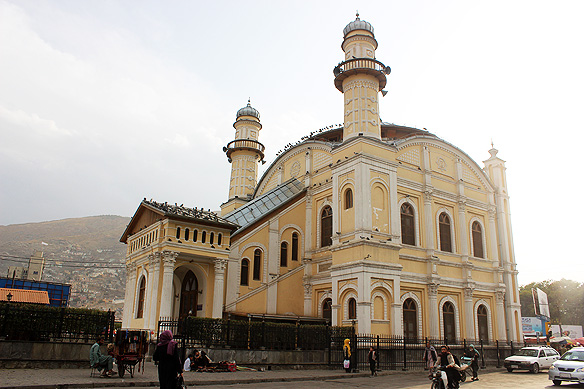
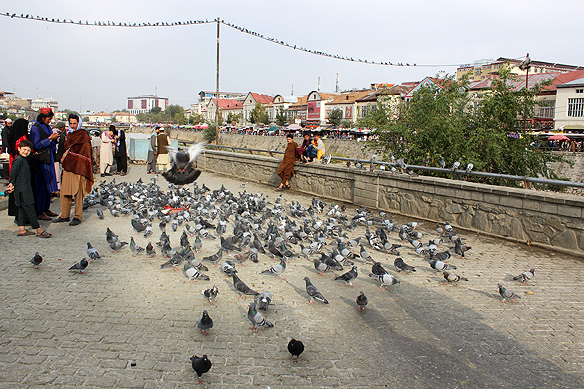
As the afternoon sun casts its long shadows over the city, make your way to the square in front of the 1920s pastel yellow Shah do Shamshera Mosque. It is Kabul’s own version of a European square, albeit smaller and humbler, replete with an Italian baroque-styled place of worship and countless pigeons.
Shah do Shamshera means Mosque of the King of Two Swords and refers to a 7th Century Arab army-general hero who defeated the then Hindu ruler of Kabul by fighting with two swords. In more recent years, 19 March 2015 to be exact, the mosque was the site of the horrific murder of Farkhunda, a present-day martyr. An Islamic scholar, she got into an argument with the mosque’s mullah who then falsely accused her for burning the Koran. She was murdered by a mob at this very place. A memorial in her honour stands in the square.
8. Mingle with Kabulis under Afghanistan’s largest Taliban flag on Bibi Mahro Hill
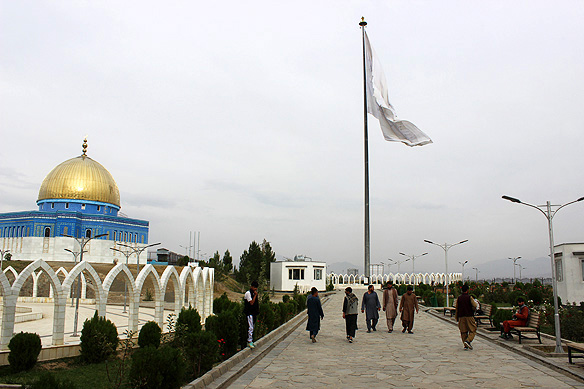
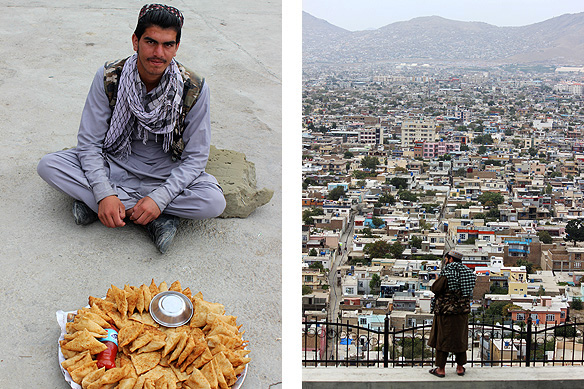
Perched on top of Bibi Mahro Hill, in the heart of the city, is an eclectic mix of structures. A Soviet-era Olympic-sized swimming pool which the Taliban used for executions from 1996 to 2001, a mosque on the lines of the Dome of the Rock in Jerusalem, and a colonnaded paved square which offers some of the most stunning views of Kabul at sunset when the city is slowly and steadily blanketed in twinkling lights. The centre of attraction is Afghanistan’s largest Taliban flag with the Shahada emblazoned on it, fluttering on a towering flagpole.
The hill is frequented by locals and makes for an ideal opportunity to indulge in light-hearted conversations with them in a relaxed setting. Whilst at it, why not have a samosa or two as well!
9. Shop for quirky magnets, colourful Afghan ethnic-wear, and exquisite handicrafts in Chicken Street
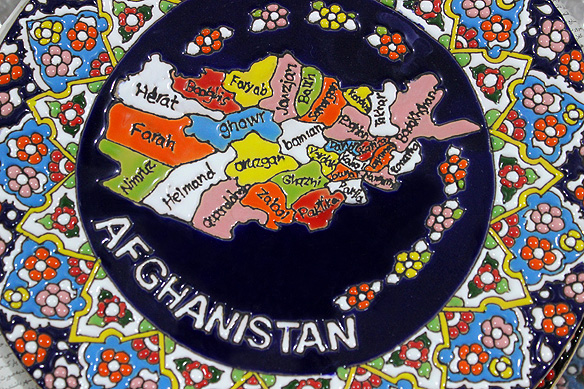
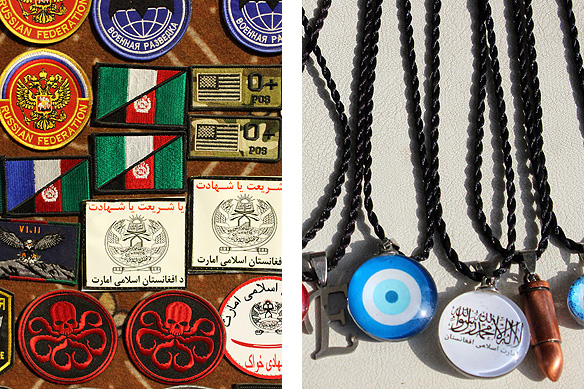
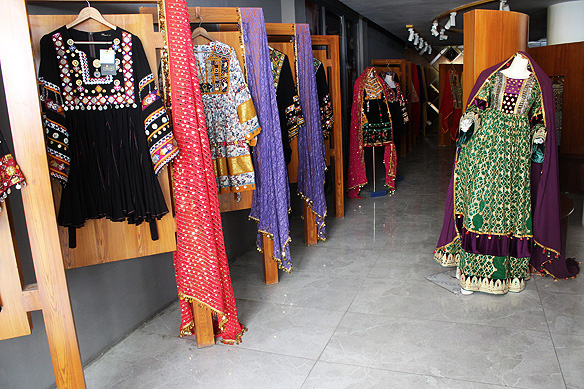
Afghanistan was a very different place in the 1960s and 1970s. An integral part of the Hippie Trail which started in Western European cities and ended in Thailand, Kabul’s Chicken Street [No, it does not sell chicken] was a key stopover for foreigners. Hashish and opium and trinkets were aplenty here, and music and chatter filled the narrow road. Much has changed since then. Today, its shops are chock-a-block with exquisite Afghan handicrafts, quirky magnets and badges, striking carpets, colourful clothing, and lapis lazuli jewellery. The perfect place for souvenir shopping without the hash!
Note: Click here for an animated history of the Hippie Trail by Lonely Planet.
10. Embark on a hair-raising ride sans any safety precautions in Kabul’s amusement parks
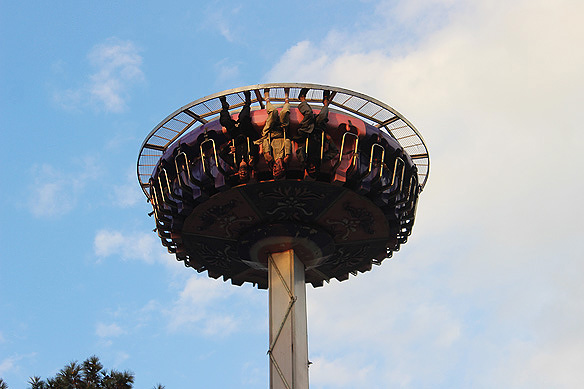
Yes, there are three gentlemen strapped upside down in the image above, and no, the wheel was not paused at this position for a split second. In fact, much longer—long enough for me to take multiple shots of it and that too from different angles.
Safety standards are a bit dodgy after nine years at Kabul’s City Amusement Park which opened in 2014, but that does not seem to deter local Afghan men and Taliban soldiers from going on hair-raising rides. There are tame rides as well for the faint-hearted, such as bumper cars, along with faded jaded cartoon characters. In November 2022, women were banned from taking rides at the amusement park. As a woman tourist you are, however, free to wander around.
11. Dig into Afghanistan’s most famous dish, the Kabuli pulao, whilst in its namesake turf
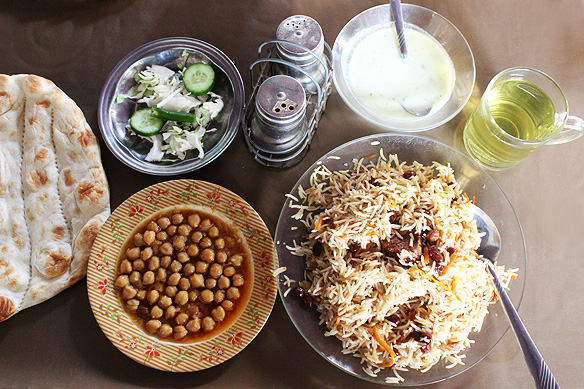
No matter where you travel in this Central Asian country, one dish that you will always find on the menu is the Kabuli pulao. Believed to have, in fact, originated in northern Afghanistan, and not in Kabul, it comprises of steamed rice thrown in with caramelized carrots and raisins, and a piece of marinated lamb meat buried under the bed of rice. If had in a fine dining restaurant, the pulao would be garnished with pistachios, almonds, and saffron. If had in a street-side eatery, it would come with a pair of very basic sauces. Either way, it is always delicious.
12. Spot Kabul’s iconic graffiti of a woman with an ak47
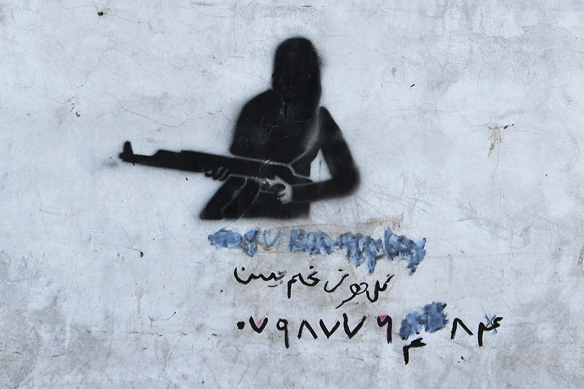
As you drive around Kabul you will notice its streets are lined with blast walls. These were put up by the NATO forces to safeguard their camps and checkpoints during their occupation of Afghanistan from 2001 to 2021.
Post-15 August 2021, these walls became canvases for Taliban propaganda such as “Afghanistan belongs to the Afghans.” Somewhere in-between, a string of stencilled graffiti images of an Afghan woman holding an ak47 popped up. The Taliban decided to paint over her face but let the graffiti stay. See if you can spot them whilst in Kabul!
13. Shed a tear and embrace hope at the Omar Mine Museum
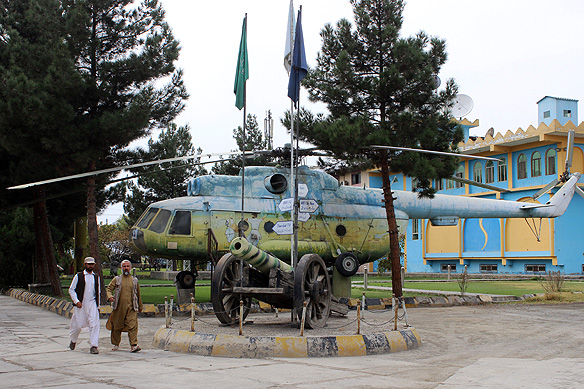
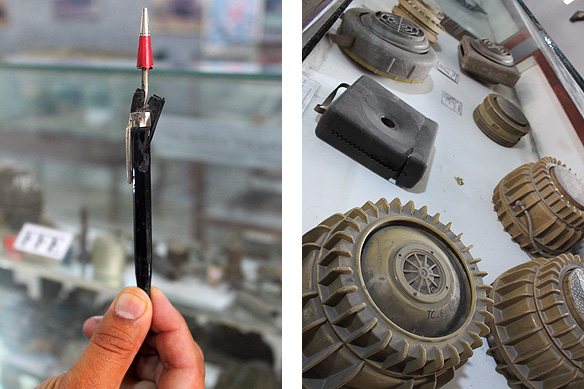
Since the end of the Afghan-Soviet War in 1989, 39,429 areas covering 4,946 sq. kms across Afghanistan’s landscape have been turned into ‘hazardous’ areas, threatening 5,037 local Afghan communities.
Even though more than 19 million items of explosive remains of war [ERW], 756,808 anti-personnel [AP] mines, 33,463 anti-vehicle [AV] mines, and some 7,008 abandoned improvised mines [AIM] have been cleared so far, much needs to be done yet. There are still 5,392 hazardous areas over 1,283 sq. kms affecting 1,537 communities waiting to be demined. On an average, 110 Afghans die every month from landmines and ERW. In 2022 alone, 2 children were killed or maimed per day, according to UNICEF.
Omar Mine Museum reveals the horrors of this reality, and the awareness-creating and demining endeavours by Omar, a wholly Afghan-owned NGO established in 1990, working in partnership with the UN and international community. Be prepared to learn about the fatal impacts of war, types of mines, and the efforts to make the Afghan landscape safe to live and work in again.
14. Visit Billy Batman’s gravestone at the British Cemetery and pay homage to art noir in real life
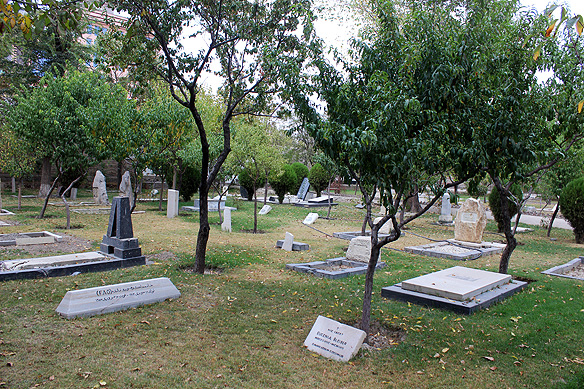
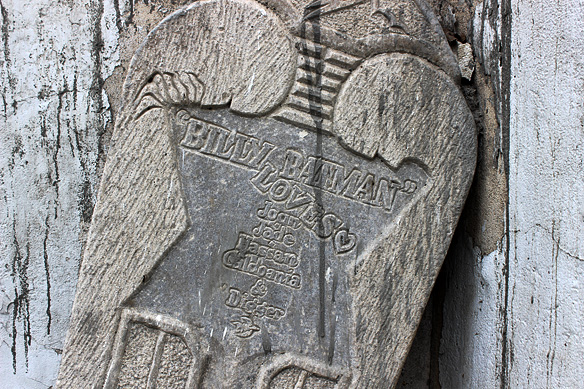
Truth is stranger than fiction. And some life stories darker than art noir. One such life story belongs to a gentleman from San Francisco called William Joseph Jahrmarkt, better known as Billy Batman, whose life was irrevocably entwined with Afghanistan. And drugs. He and his wife Joan were the power couple of Kabul’s expat scene. Billy first came to Afghanistan in the 1950s and is credited with introducing hash to America, and Americans to hash. His clients included some of the greatest jazz musicians of the time. In 1972, he dropped a loaded pistol by mistake and shot himself in his own private parts. And then to relieve the pain, “he took some heroin and laid down to die.”
His gravestone stands propped up in a corner of Kabul’s British Cemetery surrounded with the graves of western soldiers, servicemen, missionaries, and expats who had died in Kabul over the past two centuries.
15. Take a picture of yourself at the ‘I Love Afghanistan’ sign at Kabul Airport, no matter what time you arrive or leave
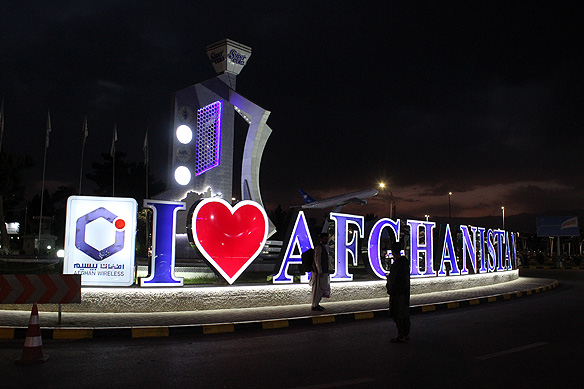
Yes, you will love Afghanistan. For it is unlike any other place under the sun. Despite 40 years of war, its people are still trusting, loving, and possess unwavering hope. Straddled on the crossroads of the famed Silk Road, it was a melting pot of contrasting, and at times conflicting, cultures for 1,600 years. Nicknamed, the ‘Graveyard of Empires,’ nearly every major empire, from the Persians, Greeks, Alexander the Great, Mongols and Timurids to the British, Russians and Americans have wanted to permanently own this land but failed. It is a complicated country. Beautiful, and broken. And for the traveller Kabul is where it begins, and ends.
Travel tips:
- Staying there: Cedar House, in the heart of Kabul, offers comfortable en-suite rooms for AFN 2,400 a night inclusive of a basic breakfast and free laundry, Cell: +93 79 913 0130.
- Getting around: Yellow taxis are readily available. You can ask the hotel to arrange one. Please note that some sites, such as the museum and shopping streets, you can visit on your own. Others, where there could be a language barrier, it is recommended that you explore with a local guide.
- WhatsApp contact details of my local tour operator: Obaid [+93 77 842 6816] and Tamim [+93 70 804 5886].
[Note: This blog post is part of a series from my solo travel to Afghanistan for 18 days in October 2023. To read more posts in my Afghanistan series, click here.]
– – –
If you enjoyed this post, you may also like to read these three from my ‘Top 15 memorable things to do’ collection:
Top 15 memorable things to do in Jerusalem, capital of the holy land
Top 15 memorable things to do in Fes, Morocco’s cultural and spiritual capital
Top 15 memorable things to do in Bukhara, Silk Road’s legendary trading post
 rama toshi arya's blog
You sure had a great time out there, it seems!
LikeLiked by 1 person
I loved Afghanistan! It was like a homecoming, a second home. 🙂 Heard from you after a long time. Trust you have been well!
LikeLiked by 1 person
Getting along in life. Thank you.
LikeLiked by 1 person
What a brilliant piece on what must have been a fascinating journey. A much needed challenge to the doomsday hellscape that popular-media driven narratives often reduces Afghanistan to. To me, most striking is a certain normalcy that comes across through the wonderful photographs. One hopes that it is also underpinned by social and economic change, stability and lasting peace. Love your work Rama…and look forward to many more tales of your adventures.
LikeLiked by 1 person
Thank you for your wonderful comment! Means a lot. Yes, Afghanistan is very normal. Ok, as normal as can be with its recent history. Kabul and Herat more so. 🙂
LikeLike
While most online articles about Kabul show its rough face, broken buildings, and poverty, yours show its cultural heritage which, in my opinion, should have been highlighted more often by those who have visited the Afghan capital. Your photos show how this crossroads of civilizations was once a thriving city with impressive historical monuments.
LikeLiked by 1 person
Thank you, Bama. There is a saying, I forget the exact words, which has as its gist that we see what we are and what we want to see. As a heritage enthusiast, heritage tends to be what I see most clearly. And Kabul has more than its fair share of it which even 40 years of war has not been able to wipe out. 🙂
LikeLiked by 1 person
Pingback: taliban afghanistan, a solo indian woman traveller, and help from unexpected quarters | rama toshi arya's blog
Being a history major this article really struck a chord. Beautiful piece of writing and photography. The story about the square touched me too. I hope one day that men and women and different religions survive in harmony. Do not think it will happen in my lifetime but maybe one day. Thank you for sharing your thoughts and experiences. You painted a picture with this blog.
LikeLiked by 1 person
Thank you so very much! Kabul evokes many emotions and, like Afghanistan, will always be close to my heart. I am happy I could share the stories it holds and that these stories resonate with readers such as you. ❤
LikeLike
Pingback: photo essay: in search of kandahar, the taliban’s former capital | rama toshi arya's blog
Pingback: a guide to solo travel in afghanistan for the indian traveller | rama toshi arya's blog
Pingback: ghazni and its indomitable sultans | rama toshi arya's blog
Pingback: travel diaries: from bamyan to herat via the minaret of jam | rama toshi arya's blog
Pingback: top 15 memorable things to do in bahrain, pearl of the persian gulf | rama toshi arya's blog
Yeah nice
LikeLiked by 2 people
Thank you. 🙂
LikeLike