Indian temple design did not arrive at in a day. Surprised? 🙂
More surprising is where its evolution took place.
The floor-plans and superstructures one takes so much for granted today took shape in a tiny village in north Karnataka over a period of two hundred years of vigorous, yet brazen experimentation.
Known as the ‘cradle of Hindu temple architecture,’ Aihole, the first capital of the Early Chalukya Kingdom [6th to 8th Century] served as a laboratory for the construction of sacred sites.
From rock-cut cave temples to apsidal-shaped monumental structures to one akin to a cozy homely hut. From the ‘northern’ high curved Nagara-style and ‘southern’ pyramidal stepped Dravida-style superstructures to the hybrid ornate Vesara model typical of the Deccan. They all came into being here.
There are 15 prototypes of sandstone standalone and rock-cut cave temples in Aihole’s over 125. Each a masterpiece built by architects 1,500 years ago who designed fearlessly and were ready to break stereotypes.
It was a feat made possible by the prevailing rulers’ openness and willingness to experiment as they reigned over the Deccan, a region sandwiched between the north and south of the Indian subcontinent.
Currently on the UNESCO World Heritage Tentative List for its role in temple architecture evolution, many of Aihole’s edifices owe their names to a more recent and lax naming ceremony. Durga Temple is not dedicated to the goddess, but refers to a later Durg or watchtower built on its roof. Lad Khan temple, Aihole’s oldest temple, is so named because when discovered by the Archaeological Survey of India, it was known as where a Mr. Lad Khan once lived. A gentle reminder of Indian plurality. 🙂 And the Ravana Phadi rock-cut cave temple has less to do with Ravana and more to do with Shiva.
Next time you walk into a Hindu temple, surrounded by a familiar standardized floor-plan and superstructure, just remind yourself it is a design which won the lottery and got pushed into the future. There were many others in the original basket where these came from. And if you are curious about them, here are some of the candidates.
What if this instead had become the Hindu temple norm?
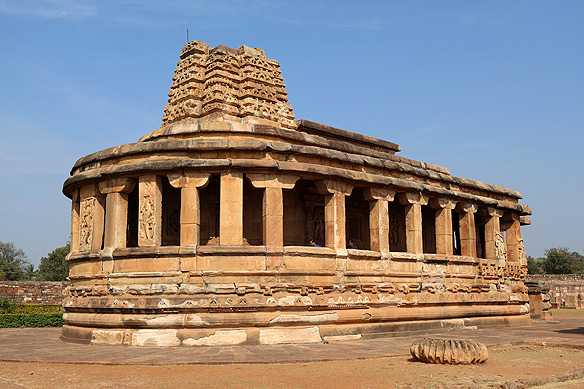
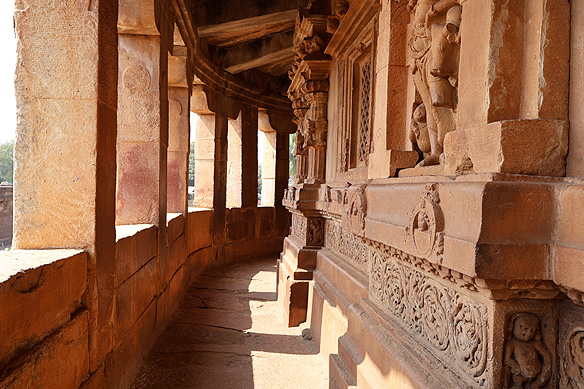
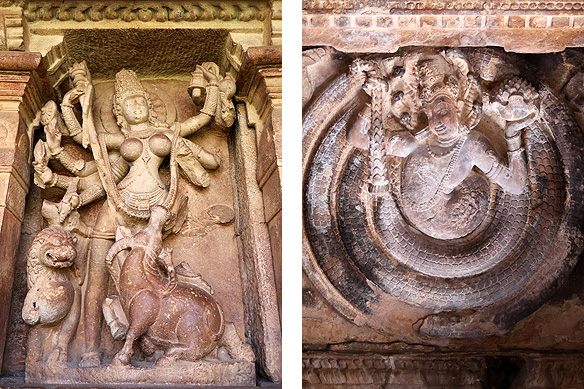
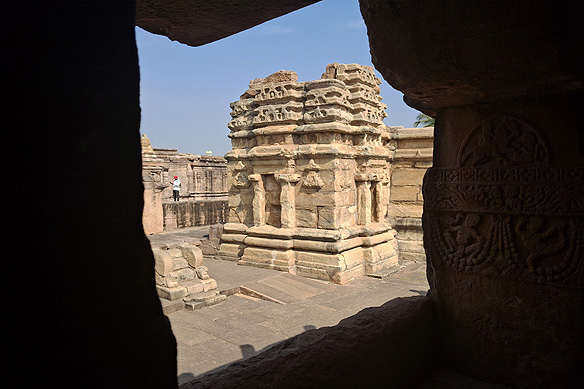
Inspired by the Buddhist chaitya [prayer hall], Aihole’s most impressive temple design, even after 1,300 years, is the Durga temple [with a fortified 13th Century Durg or watchtower atop it]. It was originally dedicated to Surya, the sun god, and is a treasure trove of Ancient India’s finest relief carvings. The Durg has since been removed, and the temple elevated to Aihole’s trademark site, but can you imagine the accolades it must have received in its heyday in architectural circles!
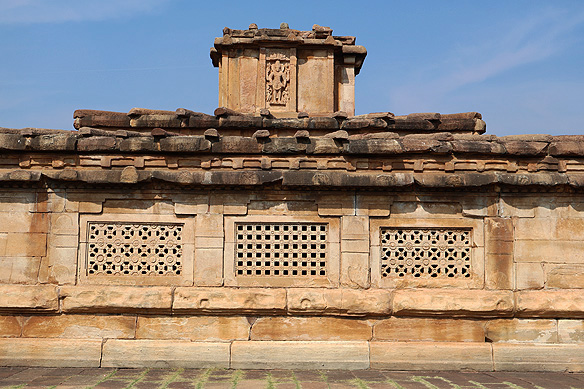
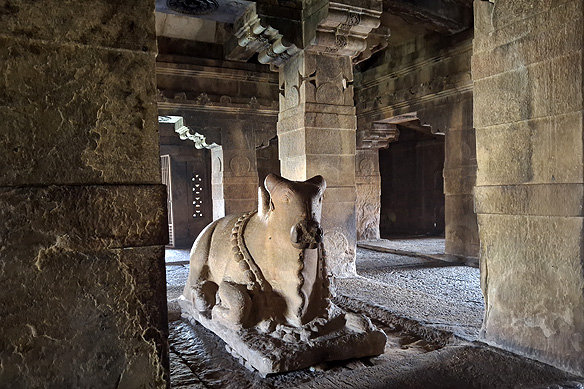
Before there were shikaras and vimanas, the superstructures synonymous with Hindu temple architecture, there was a ‘turret.’ Aihole’s oldest temple dated 5th Century, the Lad Khan temple, also comes with a stone roof evocative of the timber logs then used in buildings. Its current name is a complete misnomer—the Shiva temple is named after Lad Khan, a Bijapur Sultanate General who took refuge within its walls during battle.
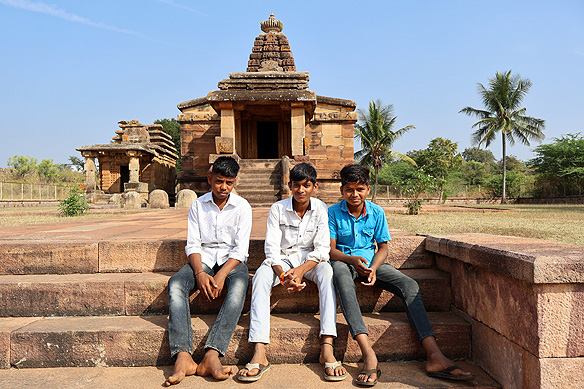
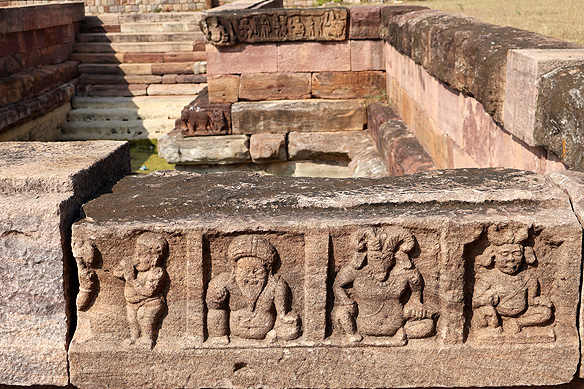
When the architect of Hucchimalli Gudi decided to add a stepped water-tank to the temple complex, he was doing something that had never been conceived before in the Chalukya Kingdom. In addition, he experimented with the floor-plan, bringing it closer to its final, albeit more complex, future form. Do have a look at the secular carvings on the water-tank’s wall. Aren’t they fabulous.
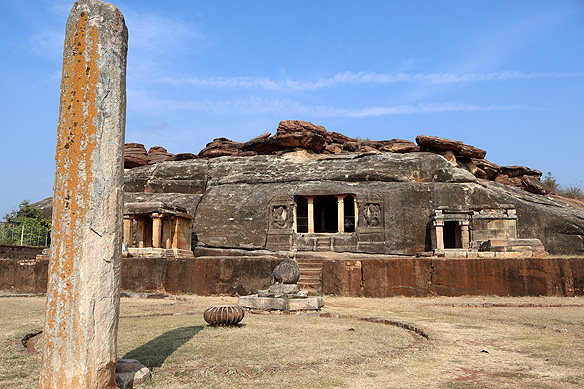
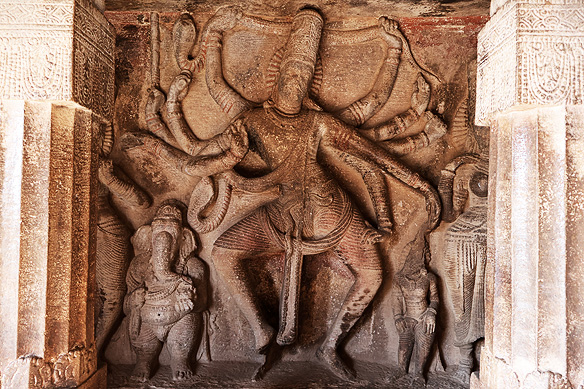
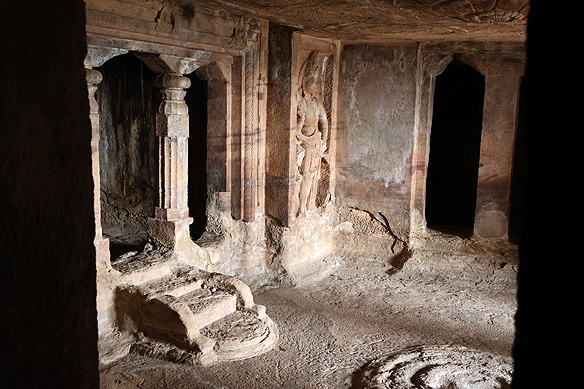
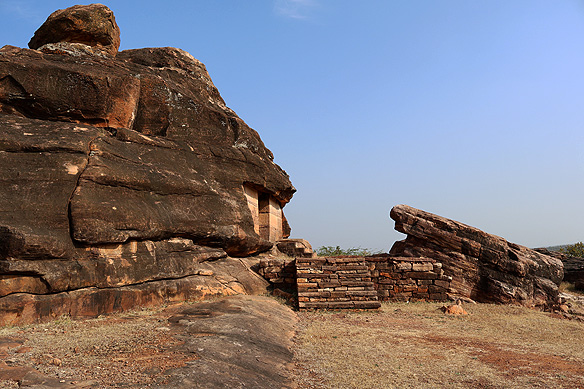
Unprecedented in style and subject, Aihole’s Ravana Phadi and Jain Basdi are apt precursors to the Badami rock-cut cave temples’ exquisite beauty. Here too are life-sized sculptures of Shiva’s multiple aspects, differentiated by a slenderer form and fine pleated clothing. The Jain Basdi, despite the erosion, still impresses with its layout scalloped out of the hills.
– – –
Hope you enjoyed this post. Next week I take you to Hampi, Karnataka’s crowning glory. ❤
Travel tips:
- Getting there: I visited Aihole on my way from Hampi to Badami. I used Swathi Tours & Travels for my one-way transfer. Had a fabulous car, driver, and rate.
- Getting around: Durga temple cluster is ticketed with excellent ASI guides at the gate. Rest of the 125 are scattered throughout the village; entry to them is free.


Very informative. Thank you.
LikeLiked by 1 person
Glad you liked it. Thank you for stopping by. 🙂
LikeLiked by 1 person
Very impressive.
LikeLiked by 1 person
I thought so too. Aihole was one big history-cum-architecture lesson rolled into one. 🙂 Glad you liked it.
LikeLiked by 1 person
Most early places of worship are translation of wood and brick architecture into stone. So to call a 6th century Temple, as the birthplace seems surprising. Sanchi Gupta Temple is of 4th Century.
LikeLiked by 3 people
I completely agree with you. Maybe it is described so by historians because of the large scale experimentation and evolution that took place within a single site. Perhaps cradle would be a better word, instead of birthplace What do you think? I will change the heading accordingly. 🙂
LikeLike
Pingback: photo essay: hampi, stories told and untold | rama toshi arya's blog