Mepeta Mepe, King of Kings Tamar was only 18 when she was crowned co-ruler of the Kingdom of Georgia in 1178. Six years later, when her father King Giorgi III died, she became its sole ruler. Here, I’d like to add some context regarding the word ‘Mepe’ before I write further. Georgian is a gender-neutral language, and Mepe means king or sovereign ruler, immaterial of whether the person is male or female.
Coming back to Tamar, her title was not the only unusual part of her story. Georgia, under her rule, reached its political and cultural zenith. Its borders spread from the Black Sea in the west to the Caspian Sea in the east, and the Greater Caucasus Mountains in the north all the way to eastern Türkiye and northern Iran in the south. She founded multiple cultural academies, and the arts and literature flourished with masterpieces such as the epic poem Knight in the Panther’s Skin by Shota Rustaveli written as an ode to her extraordinariness.
Eight centuries ago, deeply religious herself in a deeply orthodox country, she also chose to divorce the husband the court nobles had chosen for her. She then found herself a second husband [David Soslan, an Ossetian prince] in 1189 who was more to her liking.
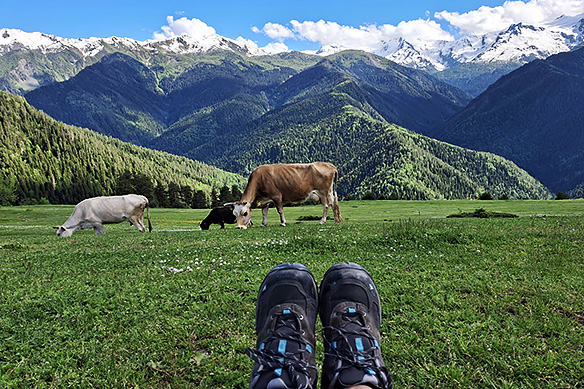
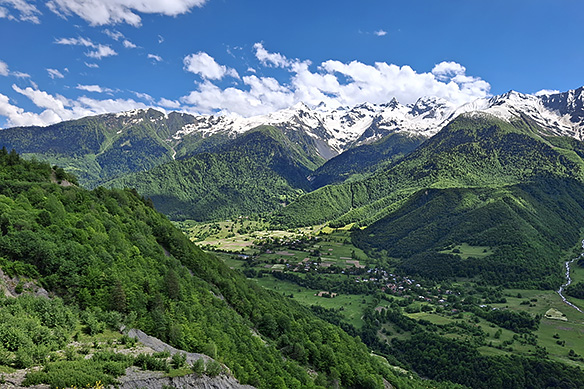
According to Georgian legends, Tamar had a special fondness for Svaneti, a region in the upper reaches of the Greater Caucasus Mountains, where, come summer, she would make the journey to a castle named after her. Here, snow-capped peaks reached out to iridescent blue skies, hemming in emerald meadows in which cows mooed and stone towers pricked its sleepy valleys.
![Fresco of King Tamar [left] with her father King Giorgi III. This fresco in Vardzia is the only surviving portrait of Tamar painted during her lifetime in the 12th Century.](https://ramaarya.blog/wp-content/uploads/2026/07/king-tamar-fresco-1.jpg)
Fresco of King Tamar [left] with her father King Giorgi III. This fresco in Vardzia is the only surviving portrait of Tamar painted during her lifetime in the 12th Century.
But it was not only foreign enemies the Svans had hid from. More often it was their own angry neighbours and relatives in a society where blood revenge and honour reigned supreme, and still does.
Today, the alpine landscape with its hundreds of medieval stone towers [9th to 12th Century], and the Svans’ three-voice polyphonic singing, such as the Chakrulo, are UNESCO-listed.
One early morning, under a heady blue June sky, I decided to follow in King Tamar’s footsteps too. To the mountains, the legends claim, she had so loved. To try and understand what she had loved.
Here is my journey, of a common traveller’s 800 years later, markedly grounded in contrast to her royal excursions. Because the mountains and its people, I am told, were still the same. ❤️
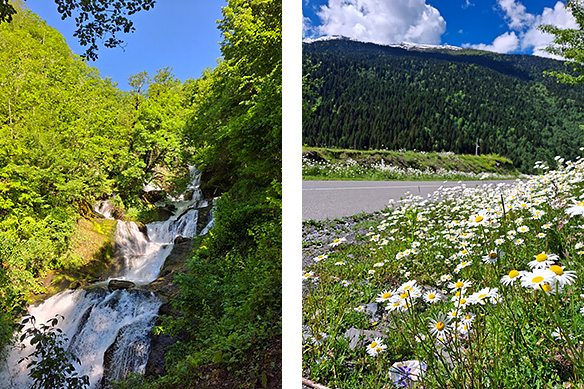
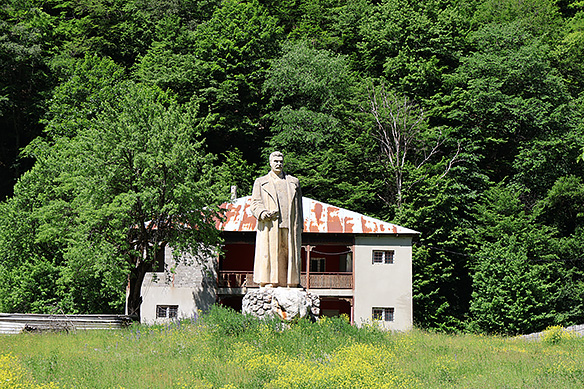
On my way to Upper Svaneti, I passed waterfalls and fields of wildflowers. And then, just out of the blue, a towering statue of Joseph Stalin outside Mele village. The owner, was of the opinion, the effigy looked better in his private yard.
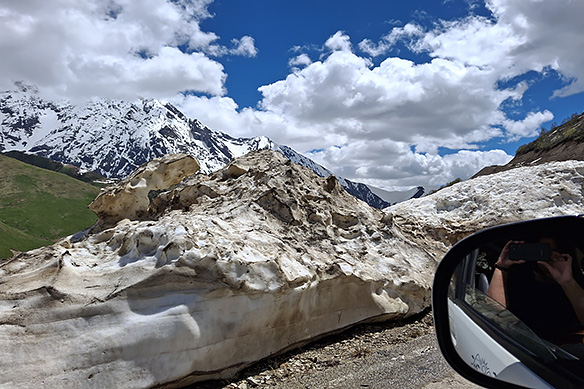
Higher and higher. The ice from winter had not fully melted yet.
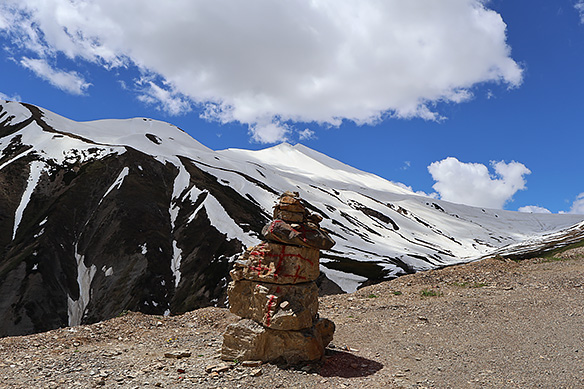
A prayer to the gods replete with the Georgian flag, because the mountains were closer to the heavens.
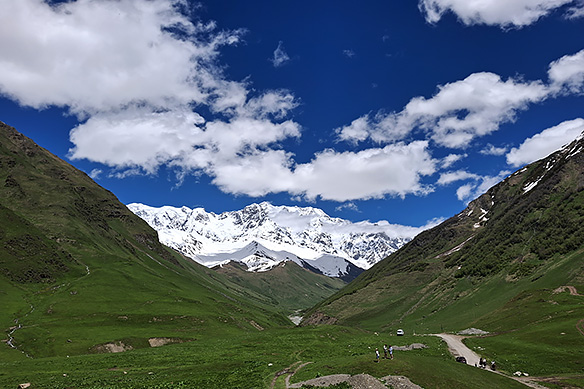
❤
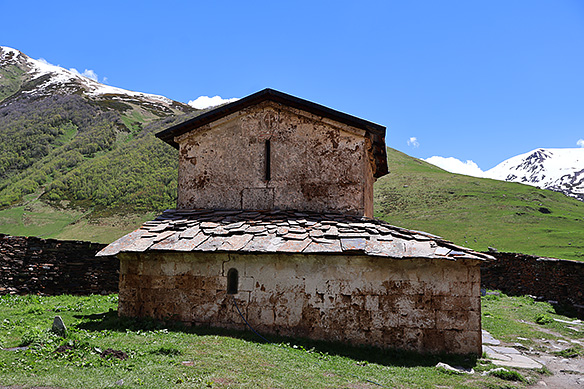
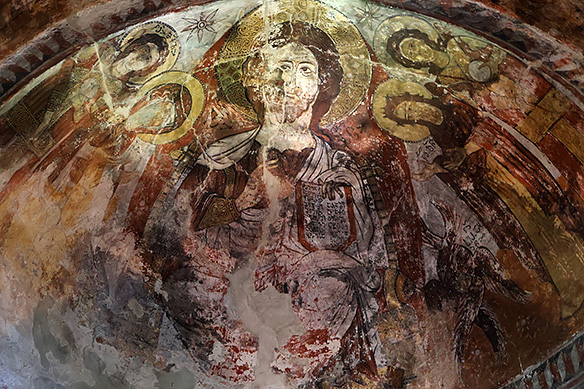
This is Lamaria Church, also known as the Ushguli Church of the Mother of God, with its thousand-year-old frescoes. The church stands in the shadow of Mount Shkhara, Georgia’s highest peak 5,203 metres tall. Svaneti adopted Orthodox Christian liturgy a little later than the rest of the country resulting in a faith and practice that combined Christian and pagan beliefs. For instance, the Svan name Lamaria assigned to Mary used to be a pre-Christian Svan fertility goddess.
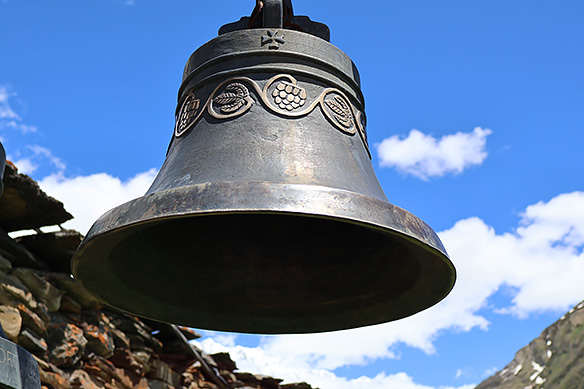
Church bell in the church courtyard.
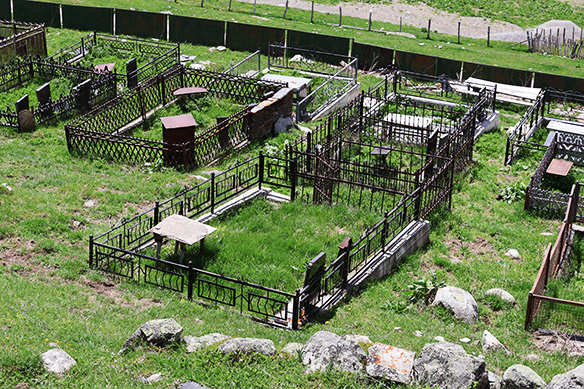
And on the other side, a graveyard. Each fenced plot belonged to a family. Because where there’s life, there’s death.
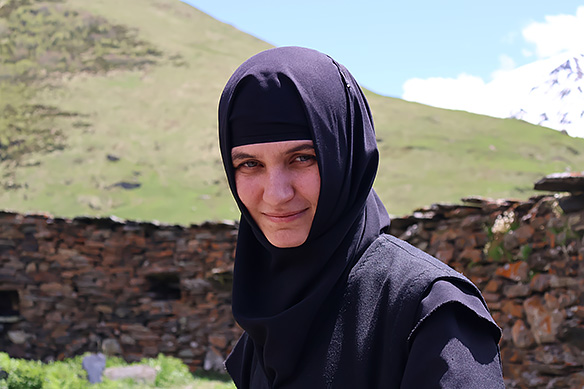
Local Svan nun keeping an eye on the comings and goings in the walled church that had miraculously, like the rest of Upper Svaneti, survived a millennium. Secluded from the rest of the world, the Svans speak a standalone language unrelated to Georgian; it does not have a written form.
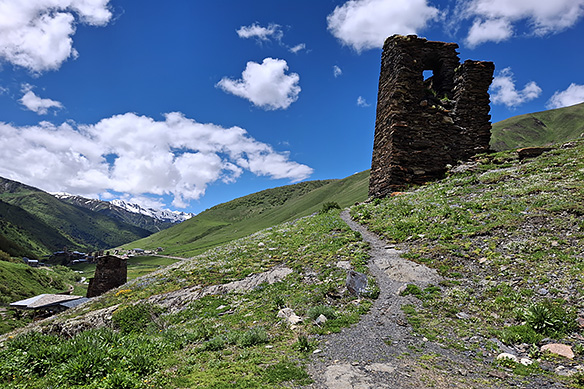
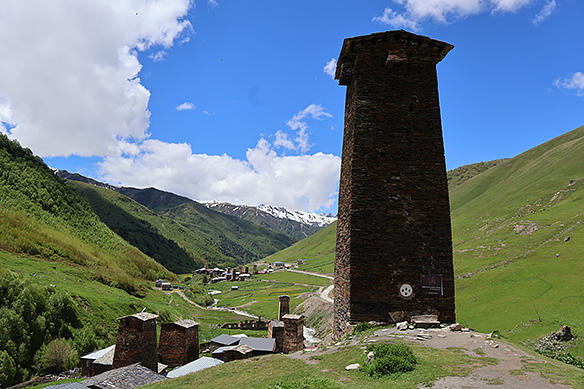
The reason I travelled so far: Ushguli with its UNESCO-listed medieval stone towers is one of Europe’s highest continuously inhabited settlements at 2,160 metres. Six months in a year, it is completely inaccessible. High above its five villages is where Tamar’s legendary castle once stood. All that remains of the latter are ruins. Time has been kinder to the commoners’ homes in the valley.
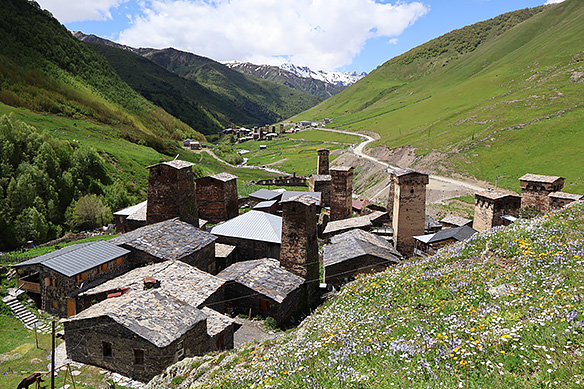
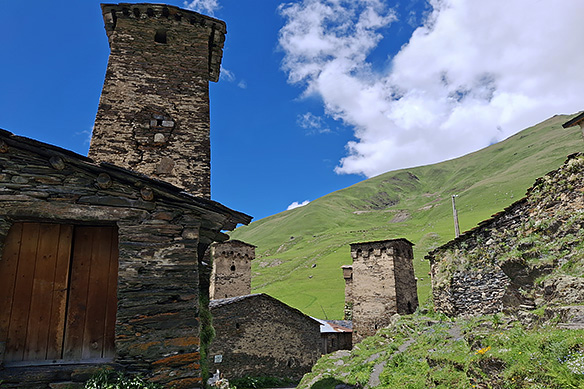
Chazhashi, one of the five villages in Ushguli and home to two dozen people, is the best preserved of the settlement.
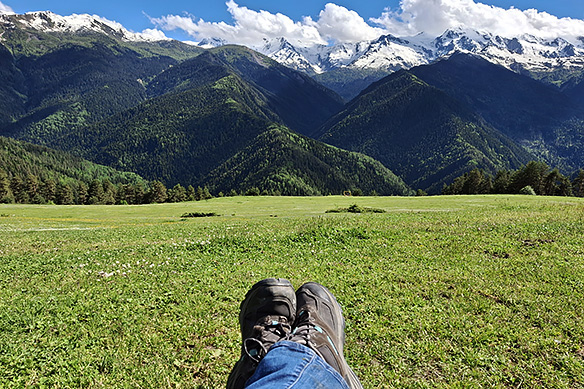
Somewhere in the Greater Caucasus. Okay, Heshkili to be exact.
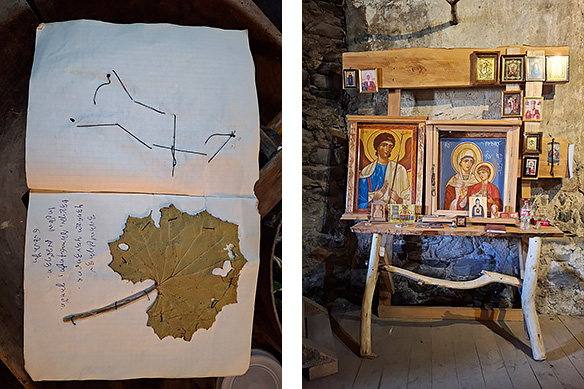
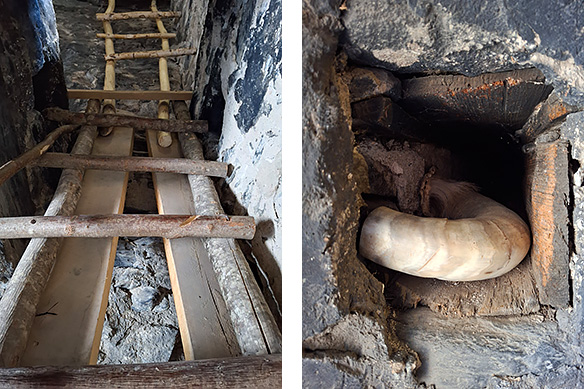
Inside the Margiani’s House Museum in Mestia. Clockwise from top left: Notes on local herbs, the home altar, horns for the tamada’s toasts, and a steep ladder to reach the top innards of the stone tower.
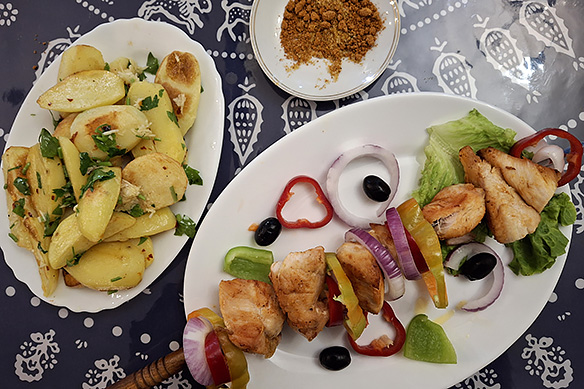
Dinner, Svaneti style: Mexican potatoes [yes, a local Svaneti dish], mtsvadi [grilled chicken skewers], and Svaneti salt. In the olden days, salt was hard to come by so the Svans would add blue fenugreek, chili, coriander, garlic, and marigold petals to the coarse sea-salt to build volume. And that’s how it has since stayed.
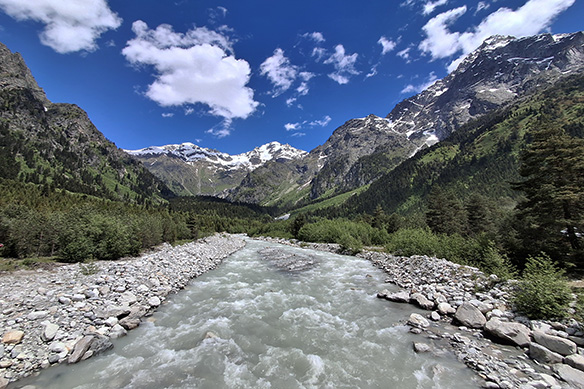
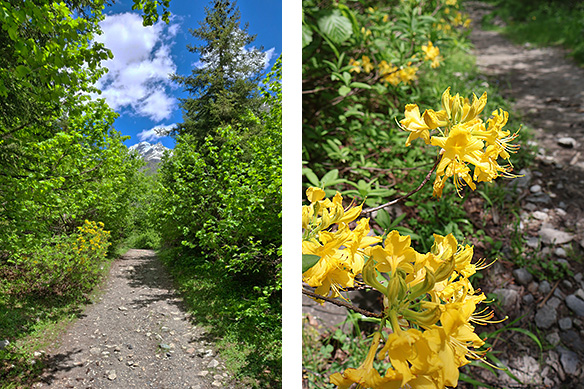
A new day, a walk amidst radiant nature, never far from the sound of the gurgling Dolra river. I am at Mazeri at the foot of Mount Ushba, Zemo Svaneti Planned National Park, a few kilometres from the Russian border.
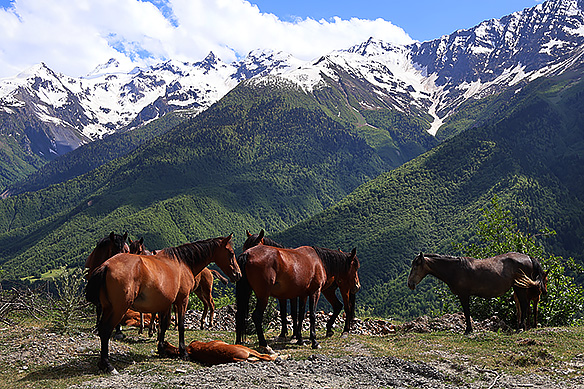
No, these horses are not wild. Every livestock in the mountains belongs to someone.
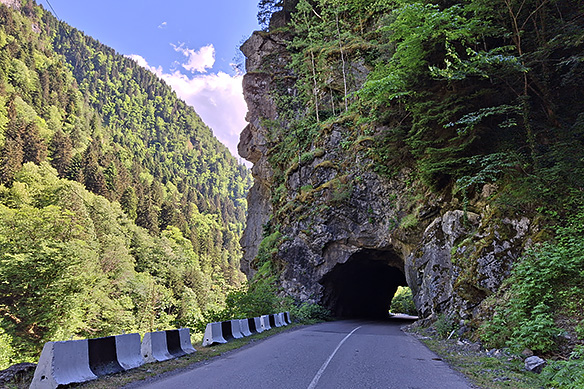
Time to return to the plains. From Upper Svaneti to Lower Svaneti.
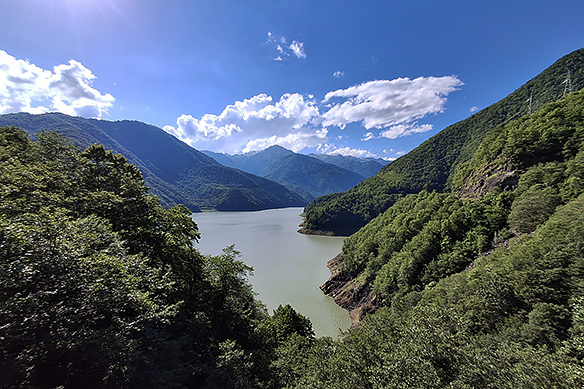
With views of Enguri Reservoir, created by the world’s second highest concrete Soviet-era arch dam 271.5 metres high.
King Tamar, I think I now understand your love for Svaneti, whether it was in real or in myth. Svaneti is as spectacular as your own story. 🙂
– – –
[This blog post is part of a series from my travels to Georgia for 17 days in June 2026. To read more posts in my Georgia series, please click here.]


thanks
Sincerely,
Patricia Pedrus (Patti) -“With Respect and Guð blessi þig” –(God bless you)
Deputy Assistant Secretary Waste Management & Pollution Control Unit Division of Environment and Sustainable Development Department of Environment, Climate Change, & Emergency Management FSM National Government Federated States of Micronesia 96941
LikeLiked by 1 person
Thank you, Patti for stopping by and commenting. 🙏
LikeLike
Fantastic, as usual , Rama.
LikeLiked by 1 person
Thank you, as always. 🙂 Truly appreciated.
LikeLike
When would be the best time of year to visit?
LikeLike
I went in mid-June. The weather was fantastic and there were spring flowers everywhere.
LikeLike
Thanks, Rama
LikeLiked by 1 person
You welcome. 🙏
LikeLike
Looks amazing, Rama. Great pictures as well as the information.
LikeLiked by 1 person
Many thanks, Mick. It is a beautiful remote part of Georgia and I loved all the stories associated with it. Glad you enjoyed the post. 🙏
LikeLiked by 1 person
It’s certainly another of those places I’d like to visit.
LikeLiked by 1 person
I hope you do. It is completely worth it.
LikeLiked by 1 person
Svaneti is beautiful, and it tells a very interesting story too.
LikeLiked by 1 person
It indeed does. 🙂 A fabulous mix of nature and part-history part-myth.
LikeLiked by 1 person
Pingback: towering peaks and gold jewellery: georgia, land of the golden fleece | rama toshi arya's blog
Wonderful photographs! I ended up staying in Ushguli far longer than I planned b/c I couldn’t bring myself to leave.
LikeLiked by 1 person
Thank you. 🙂 Svaneti is very photogenic. I fully get your staying there longer than planned!
LikeLike
🙂
LikeLike
Pingback: a cultural buff’s guide to tbilisi | rama toshi arya's blog
Pingback: georgia: a story of war and faith | rama toshi arya's blog