So, you like museums, art, theatre, and live music. Then you are in the right place if you are in Tbilisi. 🙂
I spent 10 days in Georgia’s capital this June before travelling deeper west into the country. Though I would venture out on some days to discover the country’s north, south, and east, coming back to Tbilisi always felt like I was returning home.
The city’s hills hugged both the Kura river and hot sulphur springs; its slopes dotted with medieval stone churches. Strains of music would waft through the air, an accompaniment to the fragrance of freshly baked cheesy pies. A patchy sky overhead seemed perpetually torn between sunshine and rain.
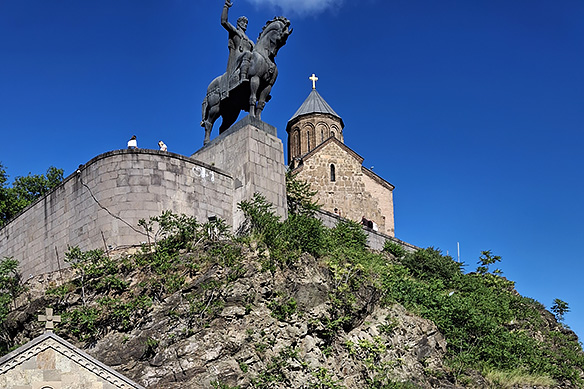
Popular legend credits King Vakhtang I Gorgasali as the city’s founder in 458 CE. An achievement reaffirmed by an equestrian statue of him perched on the riverbank. The story goes somewhat as follows: One day the king and his falcon went hunting. The falcon caught a pheasant, but both birds fell into a nearby hot sulphur spring. Chaffed at his discovery of these scalding hot waters miraculously emerging from the earth, the king decided to build a city at this spot. And so, Tbilisi—meaning the ‘warm place’—was born. Archaeological findings tend to dismiss this tale and place the city’s habitation further back in time to the Palaeolithic age.
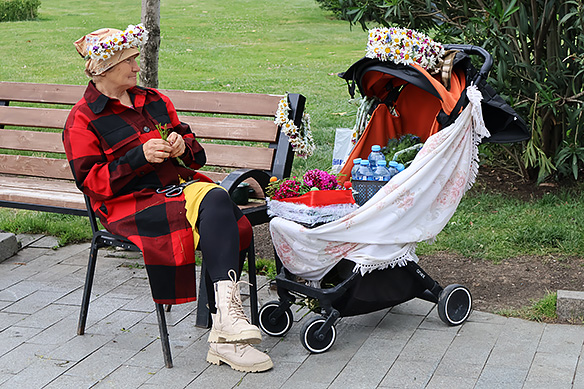
Woman selling coronets and water bottles to tourists at Rike Park.
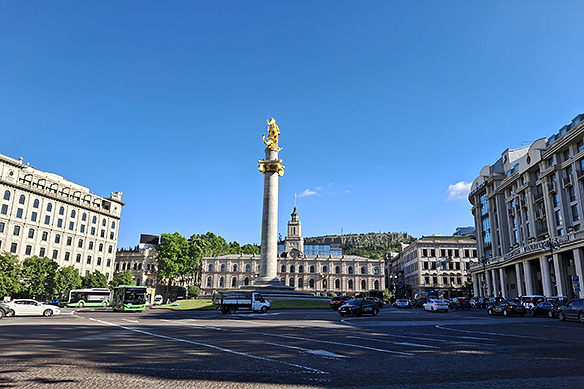
Early-19th Century Freedom Square AKA Liberty Square: The pride of Shota Rustaveli Avenue.
Coveted by rulers from the 5th Century CE onward for its prime location and sulphur springs, the city was subsequently ruled by one or the other leading empire in the region. From the Arabs to the Byzantines and Seljuks, to Mongols, Persians, Ottomans, Russians, and Soviets, with periods of self-rule in-between.
Its greatest glory was reached during King Tamar’s rule [1184 – 1213] when it served as the political and cultural capital of the Kingdom of Georgia’s Golden Age. Under Imperial Russia, Tbilisi once more reclaimed its role as a favourite of the cultural elite. Independence in 1991 came with a price tag of poverty, crime, and political instability, which it has since been able to shirk off successfully.
The result is a city that is a patchwork of its mottled past. Persian fortresses, Ottoman homes and public baths, Imperial Russian-styled grand public buildings with a smattering of Soviet-era relics and post-independence steel and glass gargantuans set against alleys swathed in angry graffiti. But above all, a city that continues to pride itself for its affinity to the arts.
Here’s my personal favourite to-do-list for Tbilisi. Can I take you on a virtual tour?
1. Take a heritage walk to find your bearings in Tbilisi
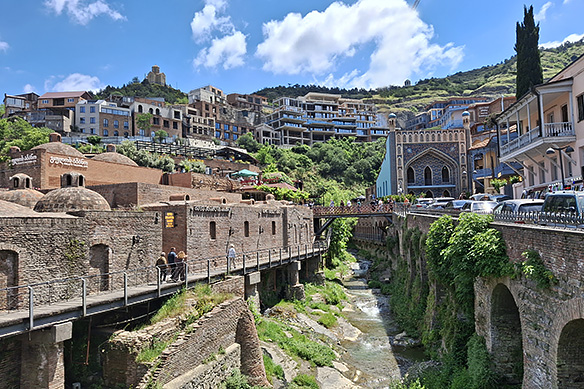
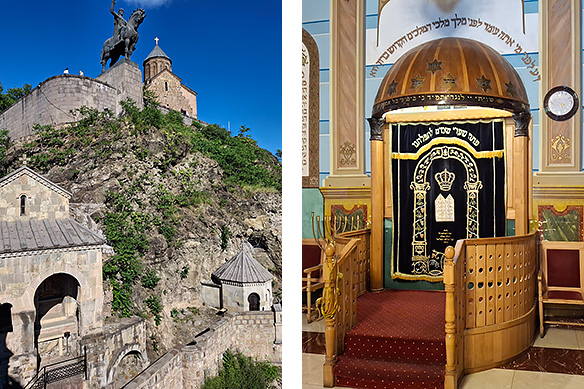
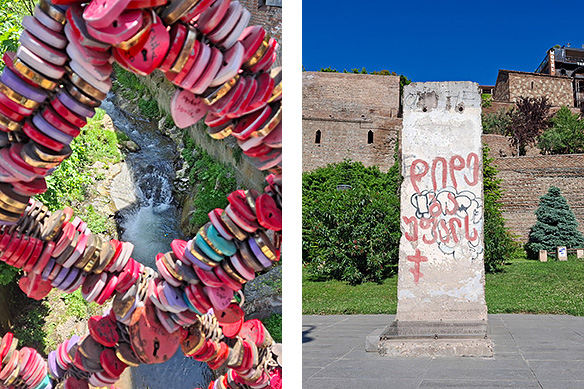
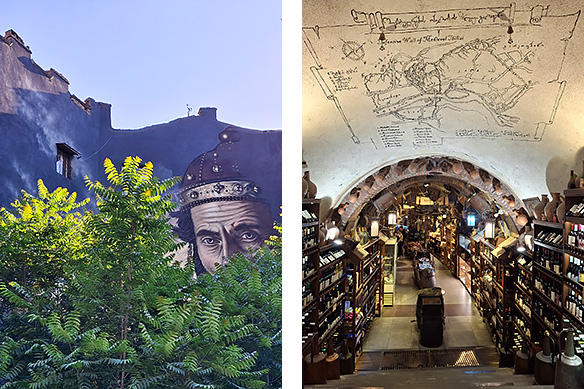
Tbilisi can be overwhelming at first glance. A good way to get context: geographically, historically, and culturally is with a walking tour. Be warned, post the walk you may feel the city is a mix of mismatches. But by some miracle, they do fall into sync.
There are underground craft markets, a canyon lined by sulphur baths that ends at a waterfall, a string of historical churches with a synagogue in the middle, and a quirky clock tower straight from a fairy-tale. If that weren’t enough, there is also a medley of Ottoman, Imperial Russia and Soviet buildings, pockets of blissful green spaces, tantalising wall art, and a nice big chunk of the Berlin Wall. All of these line a sediment-heavy Kura river crisscrossed with bridges from across the centuries, including a brand-newish steel and glass Bridge of Peace.
Try and book a walking tour that includes a cable-car ride to the Mother of Georgia monument to get a bird’s eye view of the city. Some more context?
Travel tip: I did my walking tour with Gamarjoba; it was excellent.
2. Unravel Georgia’s rich past at the National Museum
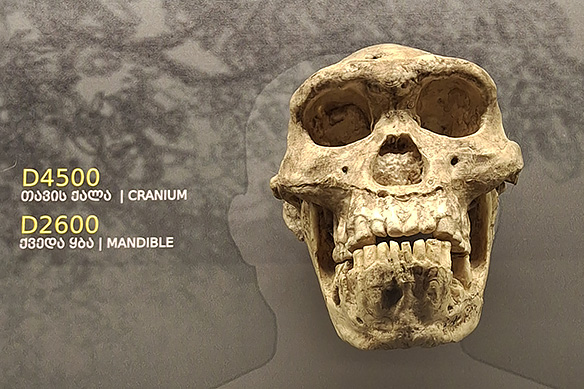
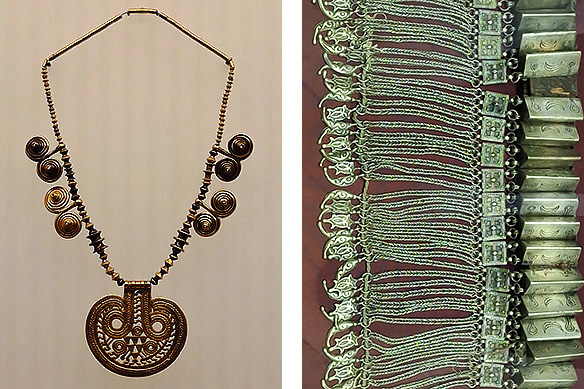
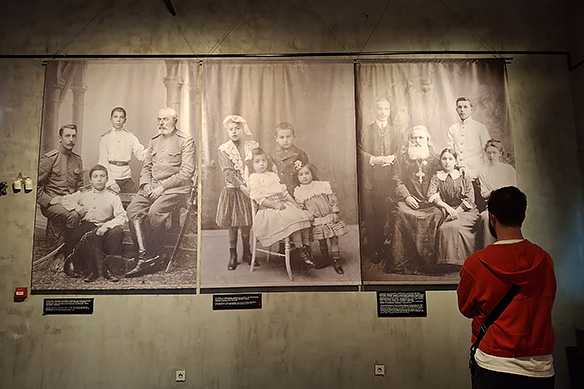
Close on the heels of a walking tour, is a visit to the National Museum. Tbilisi’s wins on all counts. Whether it be its extensive collection, curation, or display. Which is no mean feat when one considers one is talking about a 1.8-million-year-old history.
Yes, the world’s five oldest skulls outside Africa [1.8 million years old] were found in Dmanisi, 85 kilometres southwest of Tbilisi, and they are on display here. Along with it are the exquisite Colchis jewels—a collection of pre-Christian gold jewellery [early-2nd Millennium BCE to 4th Century CE] which led to the legend of Jason and the Argonauts with Colchis as the ‘land of the golden fleece.’ Behind a thick vault door, adjacent to the Colchis collection and often missed by tourists, lies a treasure trove titled Medieval Christian Treasury. It comprises magnificent icons, altars, reliquaries, utensils, and processional crosses from the 5th to 19th Centuries CE.
There are also coins from the 6th Century BCE to 19th Century CE which substantiate Georgia’s pivotal role, pottery which proves the country as the birthplace of wine, traditional silver jewellery synonymous with various ethnic groups, and a Retrospective of Soviet Occupation. In a nutshell, the entire Georgian story under one roof.
Travel tips: 1) Take an extended guided tour. Though on the steep side [100 GEL when I visited in June 2026], it added so much value to my understanding of Georgian history. The tour covers most of the halls except the Medieval Christian Treasury. 2) For the Medieval Christian Treasury, download the audio guide from the GeoGuide app. 3) Photography is allowed in all halls except the Medieval Christian Treasury.
3. Revel in Soviet and Post-Soviet Georgian Art
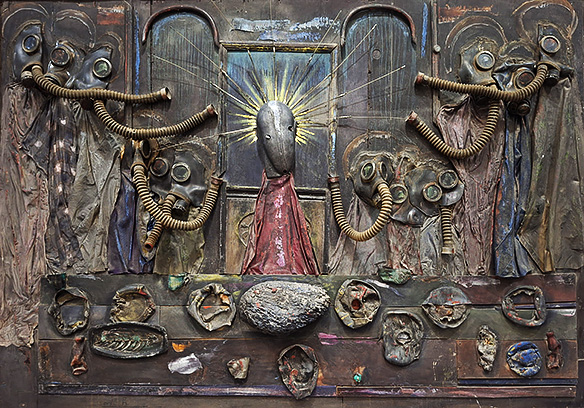
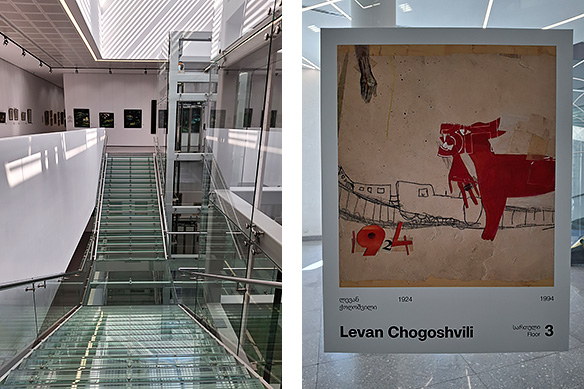
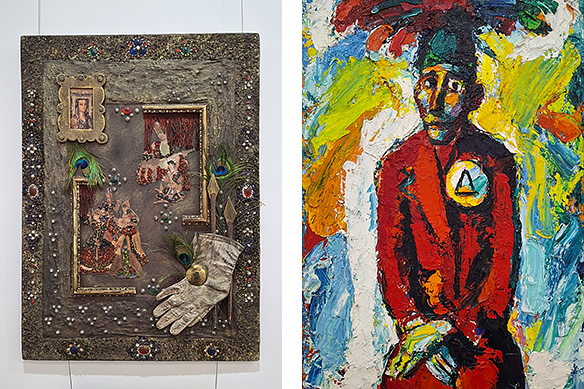
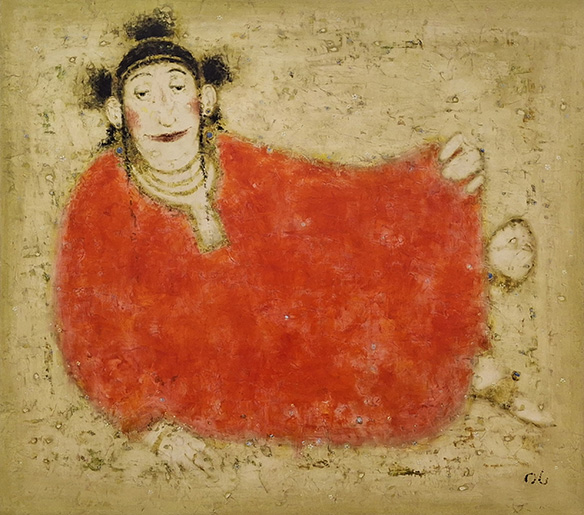
Right next to the National Museum, facing the Parliament building is the Georgian Museum of Fine Arts. Not to be confused with No. 5 on this list, it is one of the largest private collections in the world with 3,500 Soviet and post-Soviet Georgian artworks created by over 100 artists in the past 70 years.
It is a fabulous collection meant to be savoured at leisure starting in chronological order from the 5th floor and making its way down to the 4th and 3rd. Along the way, themes of Socialist Realism, Period of Iron Curtain and Cold War, Period of Warming, Collapse of the Soviet Regime, Civil War, and Independent Georgia unfurl through paintings, sculptures, and multimedia. There are even a few works by the iconic Armenian filmmaker Sergey Parajanov who used to call Georgia his home.
Travel tips: 1) Pick up a complimentary brochure from reception. It lists the collection’s most important artworks. 2) Scan the QR codes for detailed information.
4. Enjoy a quirky marionette show steeped in Georgian traditions
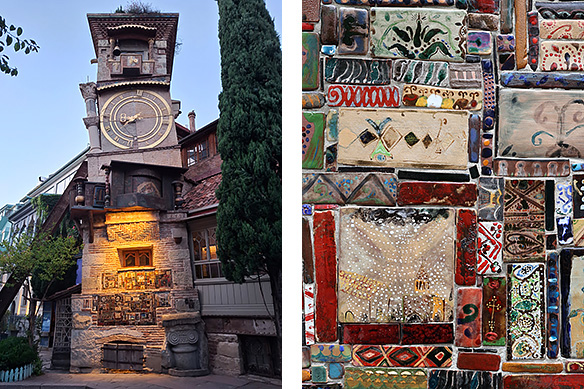
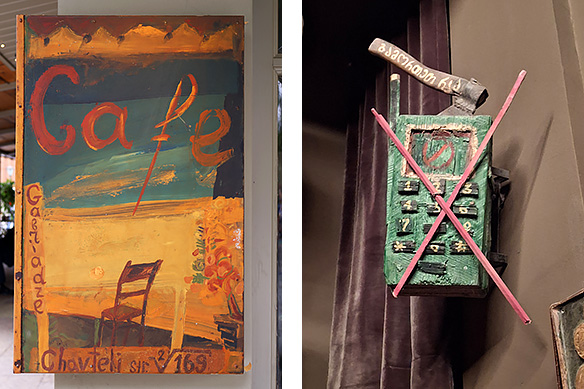
In the heart of Old Tbilisi is a clock tower, its square cubes placed higgledy-piggledy over each other, propped up by a pole. There’s a miniature clock embedded inside the bottom cube that’s covered in hand-painted tiles. Next to the tower is a café, and since it was plot no. 13, and 13 was often considered an unlucky number, the owner decided to write it a wee bit differently. As the square root of 169.
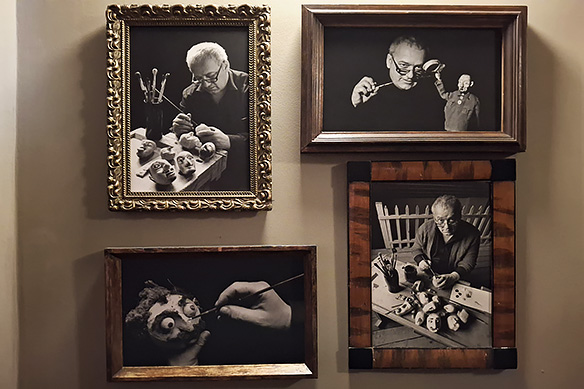
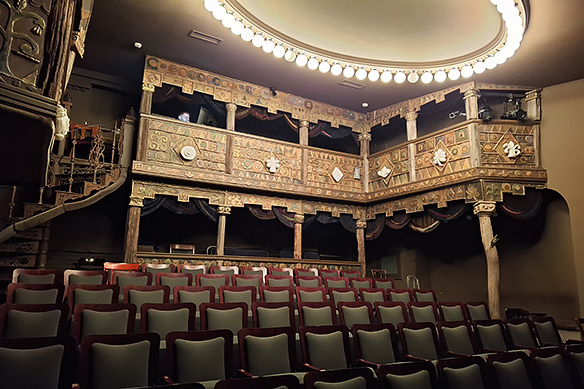
Welcome to the poetic fairy-tale world of Rezo Gabriadze, the world-renowned marionette playwright, director, and producer. Even quirkier than these outer trappings are his hauntingly beautiful puppet theatre shows which take place inside every evening, filled with Georgian traditions and music. May I recommend ‘The Autumn of My Springtime‘ based on his own personal memories? It’s a masterpiece.
Travel tips: 1) Tickets can be bought here. 2) Book seats 5th row or higher so you can watch the show and read the English subtitles without getting a crick in your neck. 3) Use of cell phones and photography is strictly prohibited during the 90-minute show.
5. Pay homage to Niko Pirosmani’s timeless Naïve Art
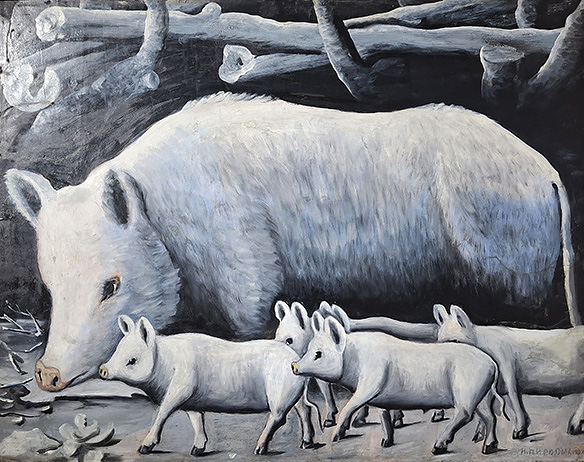
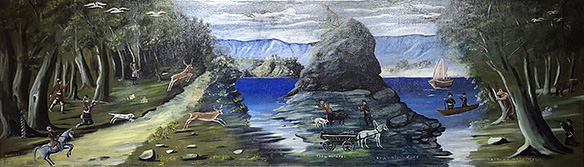
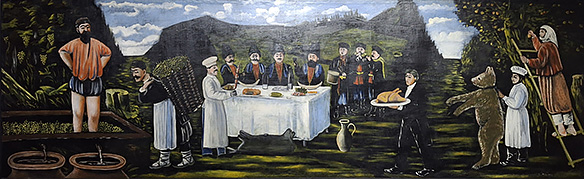
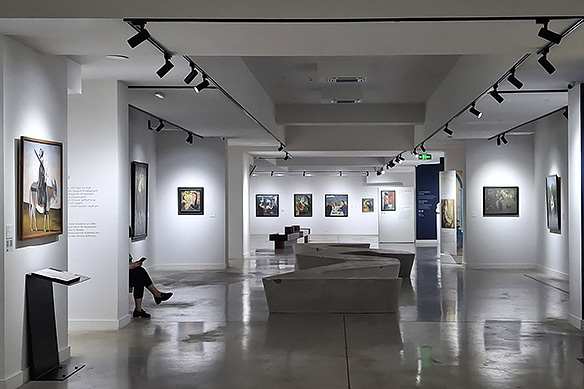
It is not possible to talk about Modern Georgian Art, and not talk about Niko Pirosmani. Yet, Georgia’s most famous and beloved artist who shaped Eastern European Avant Garde Art only received recognition posthumously. Born Nikolay Pirosmanashvili in 1862 to a peasant family, Niko was broke and homeless much of his adult life, selling his art for a meal or a glass of wine. For a brief spell the prevailing art world did endow him some fame, but soon pushed him back into anonymity again. He died in 1918 of illness and starvation.
Painting in a style termed ‘Naïve’, Niko was self-taught and a true prodigy, bereft of any exposure to other artists or art. His inspiration lay in the world around him—Georgia’s rural landscapes, Georgian Orthodox icons, and newspaper caricatures. His material? The cheapest available. Black oil cloth on which he applied brush strokes of dark colours mixed with white, giving his compositions a translucent quality. These masterpieces are now on display at the Art Museum of Georgia [2nd floor] along with works of other key Modern Georgian artists.
Travel tip: Watch this evocative movie on Niko Pirosmani’s life [1969] before visiting.
6. Marvel at exquisite Medieval Georgian stone carvings
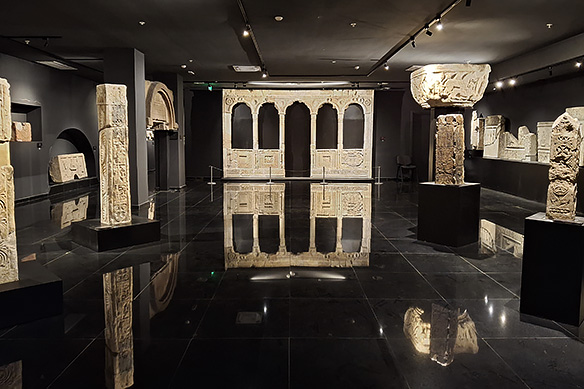
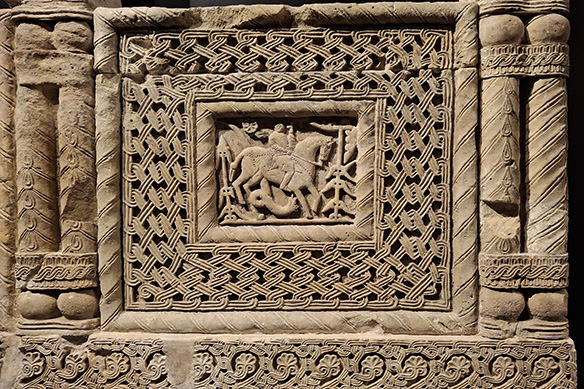
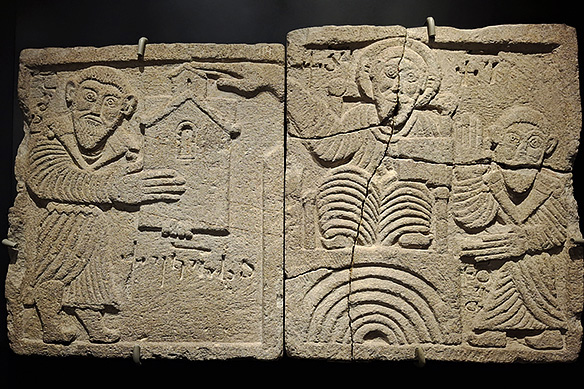
Whilst at the Art Museum of Georgia, make your way to the ‘Medieval Georgian Relief Sculpture’ permanent exhibition on the ground floor where exquisite sandstone carvings pop out of sleek black walls, ceilings, and floors. These relief sculptures, dated from the 5th to 12th Centuries CE, once decorated the facades and interiors of Georgia’s medieval churches.
Look out for the ethereal figures of princes on relief slabs holding models of churches they had commissioned and rows of demure saints and angels on steles [both 9th Century CE]. Of special mention is the gallery’s centrepiece: an altar which was once part of the Satkhe Church in Kvemo Kartli, dated 1171.
Travel tips: 1) The museum is closed on Mondays. 2) Download the audio guide from the GeoGuide app for more details about each exhibit. 3) The official name of the museum is Shalva Amiranashvili State Museum of Arts. Its current version was launched in October 2024.
7. Peek into the sumptuous world of Georgian theatre and film
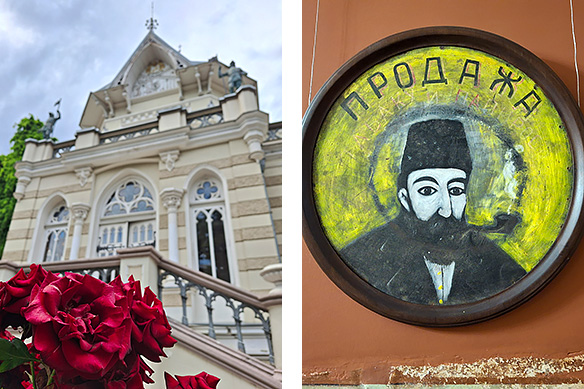
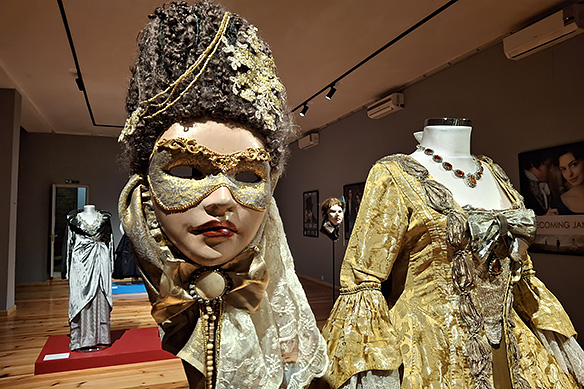
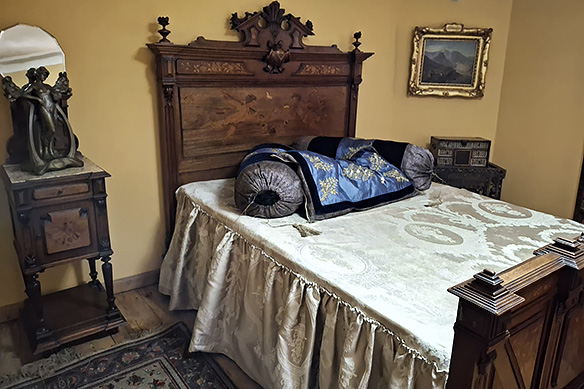
Lying outside the city centre, the Art Palace of Georgia – Museum of Cultural History is very much an Alice in Wonderland experience. Dedicated to an array of Georgian arts, the 1882 Islamic Gothic edifice comes with its own romantic novella. There was once a German prince who fell in love with a much-married Georgian queen in Kutaisi. They both eloped to Tbilisi to this wondrous extravagant palace our hero had had specially built for the love of his life, complete with a ‘secret room’ in the attic as they had to keep their affair under wraps for a while. Both royalty and the public had been aghast at what they’d done.
Befitting its dramatic past, the palace, since 1927, has been filled with 300,000 items tracing the development of Georgian theatre, opera, ballet, music, folk art, and circus, and the artists who worked in these fields.
8. Attend a Georgian opera replete with song and dance
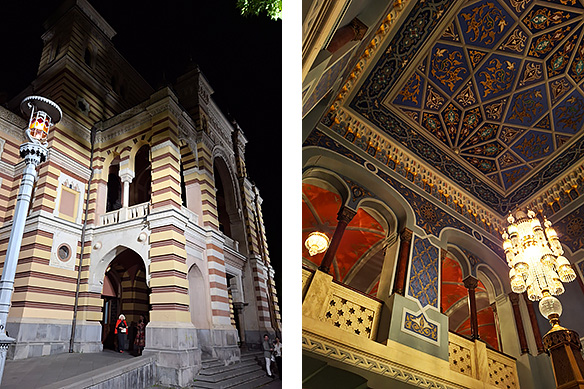
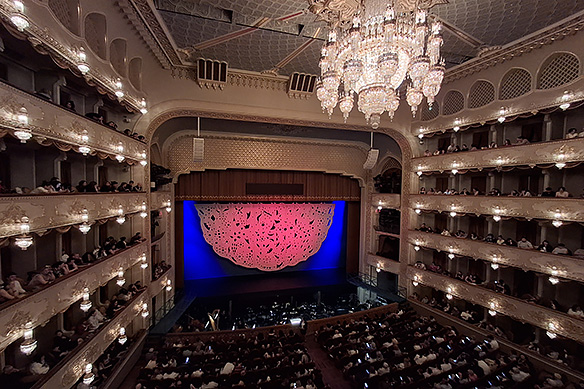
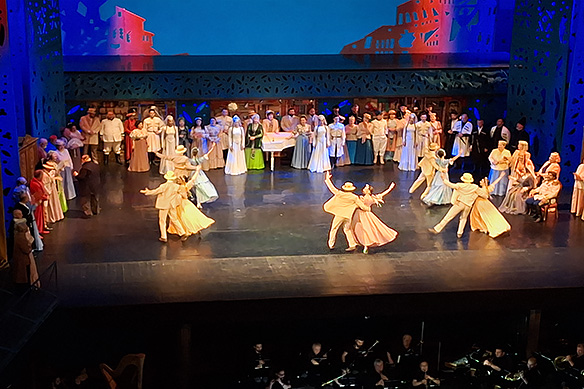
Go for the gorgeous building and a show that sparkles with vibrant colour, dance, and music. Don’t worry about any possible language barriers. English subtitles stream above the stage.
Housed in an 1896 neo-Moorish edifice with red bands and star-sprangled interiors, the Tbilisi Opera and Ballet Theatre is a favourite with Georgians. Shows are invariably packed and tickets sell out fast. The lineup keeps changing. When I was in the city, the 1919 Classic Keto and Kote, a comic opera about a pair of star-crossed lovers was running. The icing on the cake was a traditional performance mid-show in which women in white gowns and high hats floated over the stage whilst men in black manoeuvred acrobatics mid-air. The opera had a happy ending, and all 1,200 spectators were mighty happy about it.
Travel tip: For a current lineup and tickets click here.
9. Church hop through centuries within a square mile
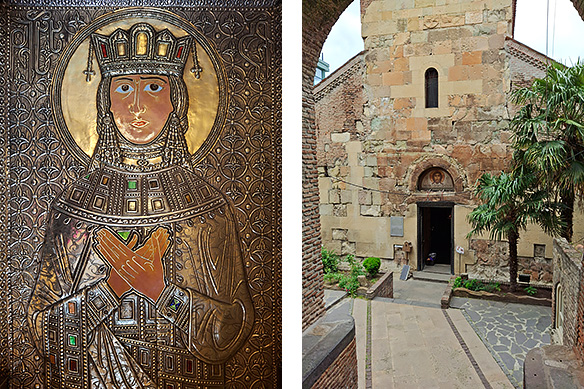
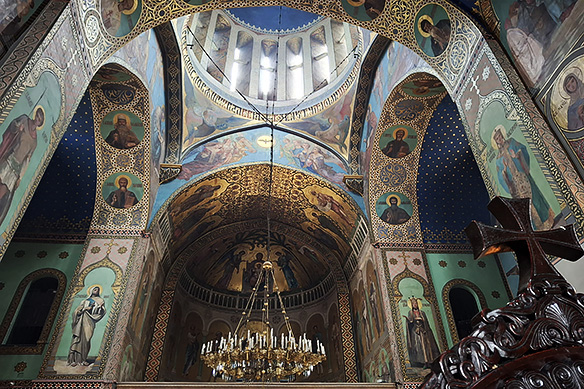
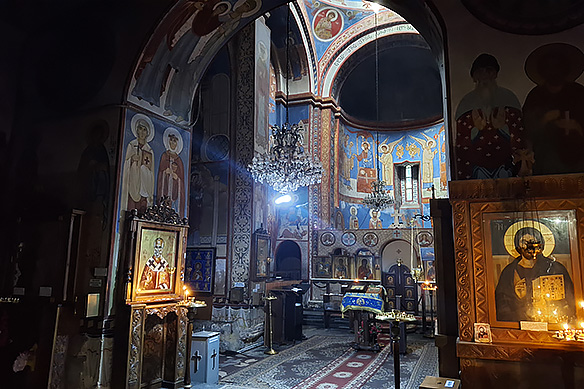
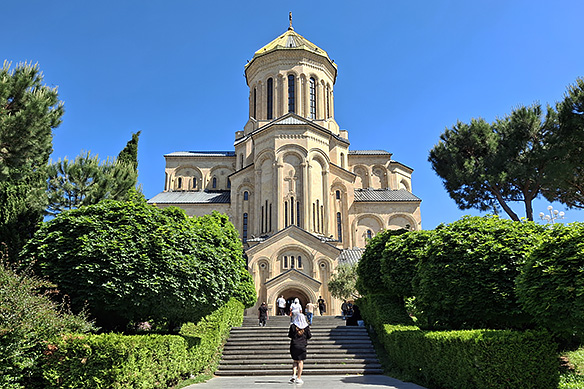
Orthodox Christianity is a big part of the Georgian psyche, and it is hard to separate the two. Even in a multicultural modern city like Tbilisi. No surprises, seeing that Georgia was the third country to officially adopt Christianity, after Armenia and Ethiopia, in the early-4th Century CE and there has been extensive religious revivalism post the fall of the Soviet Union.
Every Sunday, a string of churches within walking distance of each other in Tbilisi burst into soulful polyphonic singing and elaborate rituals during Mass. It is an experience not to miss. At other times, they are quieter, allowing for a gentle perusal of colourful frescoes and gleaming icons.
Start off at the popular 13th Century Metekhi Church with its tomb of St. Shushanik, a 5th Century Armenian Christian martyr queen, followed by the 6th Century Anchiskhati Basilica and 6th/7th Century Sioni Cathedral. Sioni houses the original St. Nino’s grapevine cross inside a silver shrine. Next take a detour to a hidden gem, the 17th Century Annunciation Church in the Father of Cross Church grounds. Wrap up your exploration with the Holy Trinity Cathedral [2004], one of the largest places of worship in the world, with its fabulous views of Tbilisi.
10. Dig into a traditional Georgian meal
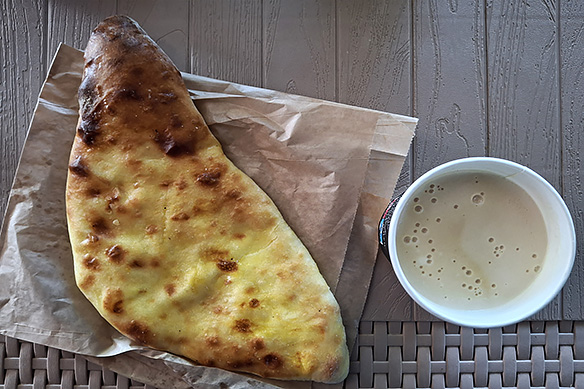
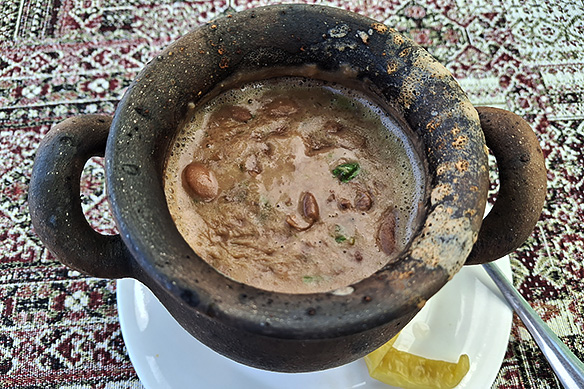
Georgian food has a formidable reputation with foodies swearing by it. Khinkali [soupy dumplings] and Khachapuri [cheesy pies] are the usual favourites. But there is one humble dish which caught my fancy and one I had multiple times during my travels. Especially since its specific recipe depended on which part of the country I was in, offering an insight into locally available ingredients.
I am talking about the Lobio—a red kidney bean stew cooked and served in a steaming-hot clay pot. Okay, maybe, because being a North Indian, where rajma chawal [red kidney bean stew served with basmati rice] is the ultimate soul food and the staple Sunday family lunch in all homes, it brought back many happy memories for me. Lobio is not rajma chawal, but a long-lost cousin for sure!
11. Listen to a world-class outdoor musical performance for free
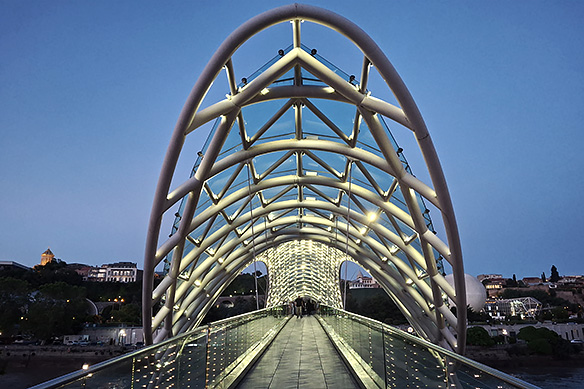
There is always music playing at Tbilisi’s Bridge of Peace over the Kura river, connecting the old city with the new in a shimmering spread of over 10,000 built-in LED lights. 240 motion sensors trigger light patterns as pedestrians walk across, including a Morse code of the chemical elements which make up the human body. The lights are switched on 90 minutes before sunset and stay on till 90 minutes after sunrise.
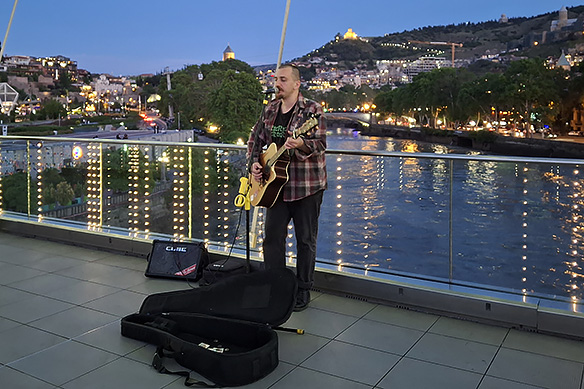
The music rarely stops here. One busker seamlessly replaces another, after being done with their repertoire of international and Georgian hits for the day. Often there are multiple performances simultaneously taking place along the bow-shaped 150-metre-length. Best time to go? At dusk. It is pure magic when the bridge’s lights reflect in the slate blue river, surrounded with a twinkling city—and everything is bathed in music.
Travel tip: Please do tip the buskers.
– – –
Ready to enjoy Tbilisi? I assure you, it is hard for a cultural buff to get bored in this city. ❤
Travel tips:
- Staying there: I stayed at the Holiday Inn Express Tbilisi Avlabari. Avlabari is a historical Armenian neighbourhood in the city centre.
- Getting to Tbilisi, and back: I took bus 337 from the airport to the city centre and back. Payment can be made by tapping bank cards on the reader inside.
- Getting around: I walked to most sights, and took a Bolt taxi for the museums further out.
[I travelled solo and independently across Georgia for 17 days in June 2026. To read more posts in my Georgia series, please click here.]
Note: There are NO affiliate links in this post, or in any of my posts. Links are provided only to help you with your plans or to give extra info. Neither is any of the content in this post or any of my posts sponsored. The services mentioned in this post are what I used and I am simply sharing them with you.


Tbilisi looks an amazing place! Out of curiosity, was any of the food vegetarian? It looked as though it might be.
LikeLiked by 1 person
Yes, lots of vegetarian food. 🙂 Tbilisi is amazing. Very much on my ‘I want to revisit’ list. 😀
LikeLiked by 2 people
Ooh, that makes it even more attractive!
LikeLiked by 2 people
If I may ask … are you a vegetarian?
LikeLiked by 1 person
Yes, I am.
LikeLiked by 1 person
Thank you for sharing. I only eat chicken, and try to avoid eating any meat [unless I have no other choice) when I travel which can become a bit complicated. Tbilisi was, thus, particularly travel friendly. 🙂
LikeLiked by 1 person
That sounds a good idea when travelling.
LikeLike
Yes to all the above but I’d add their red wine. Usually organic and exemplary.
LikeLiked by 1 person
Hehe. I wrote about the wine in a saperate post so skipped adding it here. Guess I should have. 😀 I liked their red wine too. Preferred it to the white. 🙂
LikeLike
Ha! truly kindred souls. 🙂
LikeLiked by 1 person
Hehe. I told you. 😀
LikeLike
Looks idyllic, Rama! Is love to visit some day. Strangely, Georgia also seems to be turning into a destination for Indian medical students that do not find seats in India under the infamous NEET. Some very unlikely kids from our nearest small town are studying there, and there is an agent who arranges entrance tests, visas, accommodation, etc!
LikeLiked by 1 person
Yup. Both Tbilisi and Batumi have lots of medical students. I met quite a few. Mainly from small towns, though I also met a group from Mumbai at the airport. Same story. No admission chances in India. First I was a little confused when I saw them. They were clearly not tourists from the ease with which they navigated the city. And too young to be working. It’s when I started talking to them I finally understood.
LikeLiked by 1 person
These are all fabulous! Since I had Georgian food for the first time in Cambodia back in 2022, this country has intrigued me more and more each day. Food is a window into the rich and long history of Georgia, and I’m definitely eager to explore this part of the world hopefully sooner than later. June looks like the perfect time to go, given how blue the skies were during your visit.
LikeLiked by 1 person
Yes, it was lovely weather. Georgia is both complicated and beautiful. So many layers. And where have you been? I missed having you on my blog. 🙂
LikeLiked by 1 person
With multiple trips (with the most recent one to Quebec) and work, it became a little challenging to keep up with the blogs I’ve been following. But I’m trying to catch up.
LikeLiked by 1 person
I read your posts on Quebec and Macau. Both looked fabulous and I have been to neither. Vancouver and Hong Kong are the closest I got to both places. Must have been a real long flight to Quebec. Well, welcome back. ❤️
LikeLiked by 1 person
BTW, this is a Caucasian thing — Georgia, Armenia, and Azerbaijan all do it. Namely, being super-generous with heart emojis. 😃
LikeLike
Thanks for the tour. This is a terrific city. I can tell I’d like it a lot if I ever found myself there.
LikeLiked by 1 person
Thank you. I think you’d like it a lot. 🙂 It is just your kind of place. City vibes, walkable, lots of art, and great food and music. Hope you make it to there some day.
LikeLiked by 1 person
I also spent several days visiting Georgia and Tbilisi. I particularly liked the old town, where the houses, whilst admittedly in need of maintenance, are all the more charming for their age and character.
LikeLiked by 1 person
Yup, that lived-in charm instead of plastic perfection. 🙂 If I ever go back I’d like to stay in the Old Town. Let’s see if life takes me back.
LikeLiked by 1 person
An great overview of the amazing variety of historical, architectural, cultural and culinary delights Tbilisi has to offer. I also loved the khachapuri, red wine and chacha – did you try that?! Your enjoyment of the city which is easily navigated came across. Both Georgia and Armenia (which you also visited recently) are such a change from the selfie-popular tourist locations (at least I hope so since its a few years since I visited)
LikeLiked by 1 person
Lovely to hear from you! Hehe. No, I did not have any chacha. It is too strong for me. Yes, these two countries have still not been spammed by selfie-taking tourists. For now at least they have more stunning ‘non-touristy’ sites which are part of the fabric of local life than ‘tourist’ attractions packaged for tourists. 🙂
LikeLike
This is a lovely guide, especially for someone who loves culture – most travel guides don’t include art, films, etc. The fact that you have listed a heritage walk first shows you are a seasoned traveler. Many well-traveled travelers that I have interacted with always do a heritage walk first. This, they say, helps them to understand the city better and gives them a basic understanding of the city and its history. It is only recently that Georgia has caught on with Indian travelers, although most of the ones I know stick to standard tours. But with this travel guide, one can understand the city, people, and culture very well.
LikeLiked by 1 person
Thank you for your super kind review of my post. Truly appreciate it. I am very much a city person. Love the cultural richness one finds in cities. And though I do not draw or paint anymore, I try and make up for it by writing about art whenever I can. People often say food is a window to a people. I like to think that art is. Art reveals so much about what a society thinks, feels, its pain points and dreams. 🙂
LikeLike
Cultural richness is the only thing that make a place unique. Sometimes I wonder, how beautiful the world must have been traveling 100 years ago before global trends and globalisation made everything similar. One could see unique attires, variety of food, so many language… The list is pretty long.
Food can connect people but art brings out uniqueness and shows the stage of a society as well as mindset of people
LikeLiked by 1 person
Must have been incredibly beautiful and interesting. True, globalisation has ‘samed’ out the world. It makes some travellers happy. The world is less foreign and different. But as you rightfully mention, it is those differences that make travel an adventure; that broaden our minds and hearts.
LikeLike
Absolutely, Rama. I’m happy to read about your travels. You pick some interesting places. Keep traveling.
LikeLiked by 1 person
I’ve never ooh-ed and aah-ed so much about anything! Such a satisfying read this one was for the museum-art-food enthusiast I me. Thank you for sharing your travels. 🫶
LikeLiked by 1 person
Thank you, Priyanca, for your lovely comment. Means a lot. Glad you liked the post. From one cultural buff to another. 🙂
LikeLike
Pingback: georgia: a story of war and faith | rama toshi arya's blog