This is the story of Colchis. A contemporary of the Sumerians and Ancient Egyptians, with references in Classical Greek mythology, this pre-Christian kingdom today lies somewhat in obscurity.
But three-and-a-half thousand years ago, Colchis was not some figment of literary imagination. It was Jason and the Argonauts actual gold-encased quest. Its peaks that touched the heavens, where narrative saga decided Zeus would chain Prometheus.
Deep inside the isthmus joining Europe and Asia, in valleys tightly sandwiched between the soaring peaks of the Greater and Lesser Caucasus Mountains were a people of immense wealth. Gold dust speckled its 25,000 rivers which when caught using sheepskin with shaggy hair, turned them into ‘golden fleece.’ The people there then transformed this gold into exquisite jewellery, typified by fine granulation, inlaid gems, and animal motifs.

Headdress with four deer, two lions and a pair of birds, made with cutting out portions of metal, Vani, Burial 24, end-4th Century BCE.
The Greeks called this kingdom Colchis, and that is what it has been known as since. Located across the eastern arm of the Black Sea in Georgia, its political centre was Aia [present-day Kutaisi] and Vani was the spiritual hub.
But these Ancient Colchians did not invent their goldsmithery. They inherited it from a yet older culture, the proto-Colchian Trialeti Great Barrows Culture who developed the archetypical Colchian style in the first half of the 2nd Millennium BCE.
For almost a millennium, from the middle of the 2nd Millennium BCE to the 8th Century BCE there was a lull in Colchis’ gold production. When goldsmithery emerged again, it simply took off from where it had been left off.
During these later years, the Colchians came in contact with the Greeks and Achaemenids [Persians], borrowing on a design element here or a process there. But never losing the unique goldsmithery techniques they had burnished to perfection. This quintessential style survived till the 4th Century CE, past the Greek and Roman colonisation of Colchis.
Excavations since 1947 have revealed multiple hoards in Colchian burial sites. The largest comprised 1,500 pieces of gold jewellery in burial 11 of a noble Colchian woman in Vani, dated mid-5th Century BCE. Another treasure unearthed was the famed 4th Century BCE Akhalgori hoard with pieces that would make many a jeweller gasp in awe.
Welcome to my photo essay on those very mountains from where the gold was sourced and the exquisite Colchian jewellery that was created from it. These pieces are today in the Archaeological Treasury of Tbilisi’s Simon Janashia Museum of Georgia. And though the rivers are no longer awash with gold, the mountains still echo the ancient wealthy Colchian world that called it home.
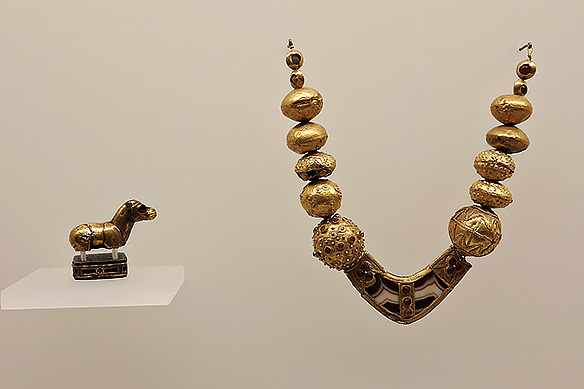
Necklace with agate centre-piece, Trialeti Great Barrows Culture, early-2nd Millennium BCE.
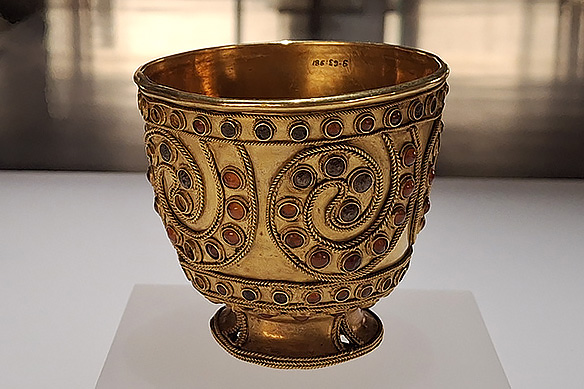
Trialeti Gold Cup, Trialeti Great Barrows Culture, 18th – 17th Centuries BCE.
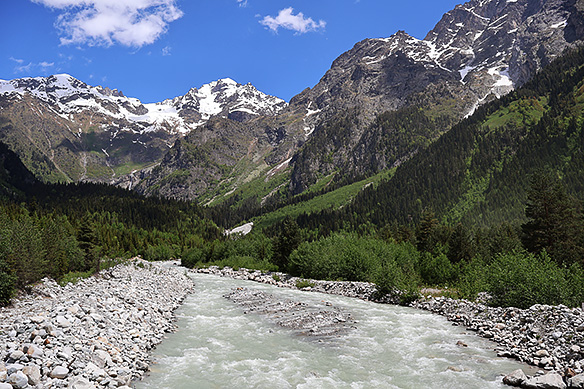
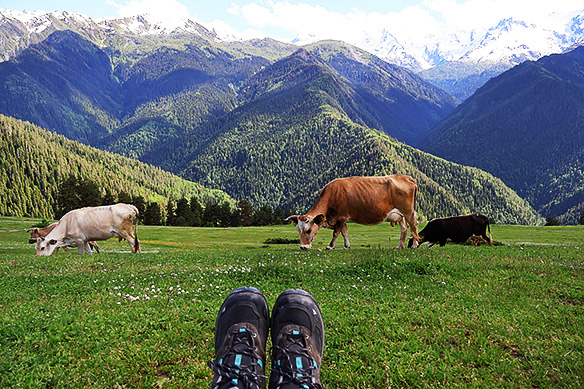
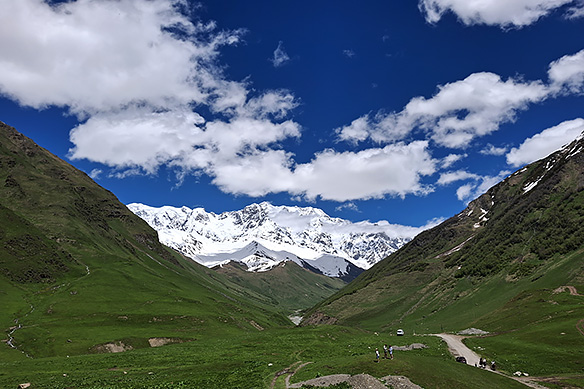
UNESCO-listed Svaneti, huddled in the upper reaches of the Greater Caucasus Mountains, is on this prestigious list for a reason. Towering ice-capped peaks and breath-taking scenery form the perfect backdrop for the proud and valiant Svans who remained unconquered up to the Kingdom of Georgia’s Golden Age [11th to 13th Century]. After the Golden Age, they went back to self-rule, fighting off the Ottomans, Persians, and Russians until 1858. A remarkable feat achieved because of fortified stone towers attached to each home.
Georgia’s tallest peaks stand with their heads in the clouds in this part of the country: Mt. Shkhara [5,203 meters], Mt. Janga [5,051 metres], Mt. Tetnuldi [4,858 metres], Mt. Ushba [4,737 metres]. Inaccessible for half the year, come spring, the melting glaciers fill Svaneti’s valleys with emerald meadows and millions of wildflowers.
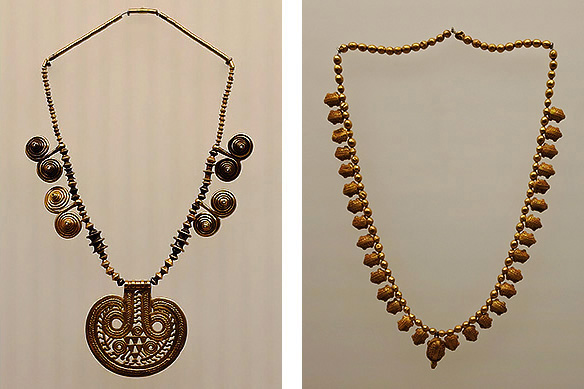
Left: Necklace, Trialeti Great Barrows Culture, late-3rd – early-2nd Millennium BCE; Right: Necklace with 31 turtle pendants decorated with granulation and glass eyes, Vani, Burial 11 of a noble Colchian woman, mid-5th Century BCE.
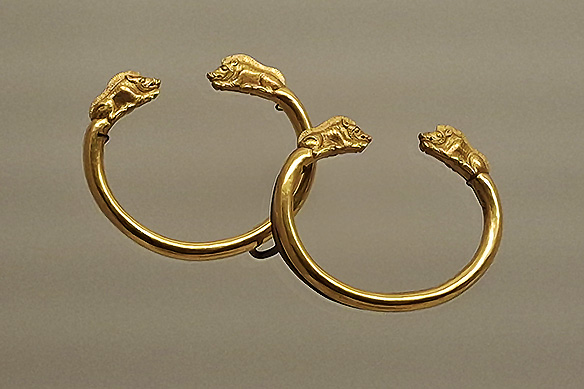
Lion Bracelet, Vani, Burial 11 of a noble Colchian woman, mid-5th Century BCE.
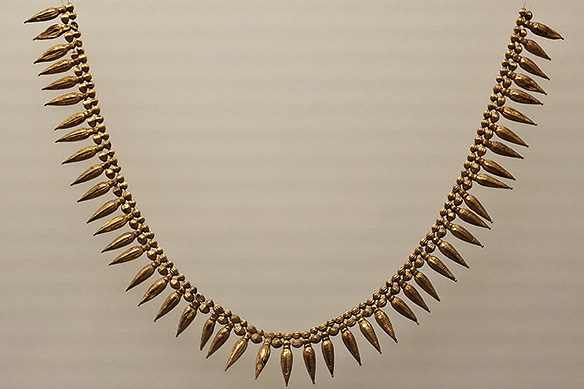
Necklace, Vani, Burial 11 of a noble Colchian woman, mid-5th Century BCE.
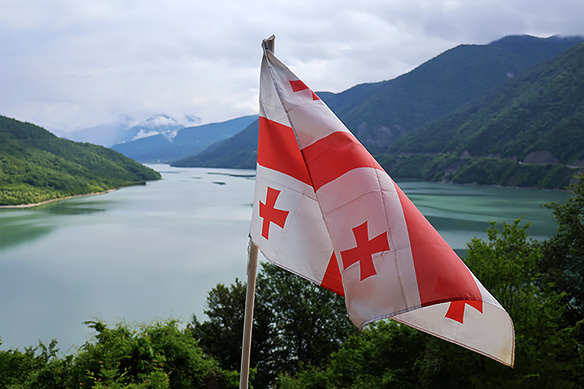
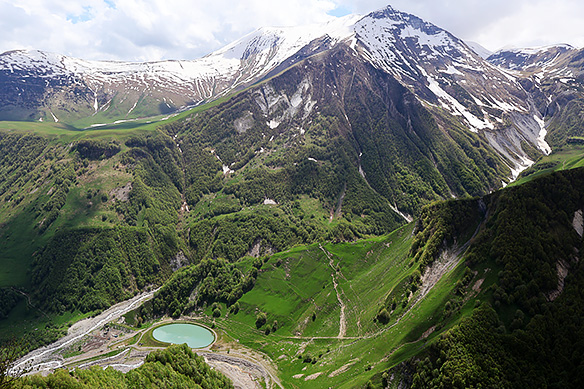
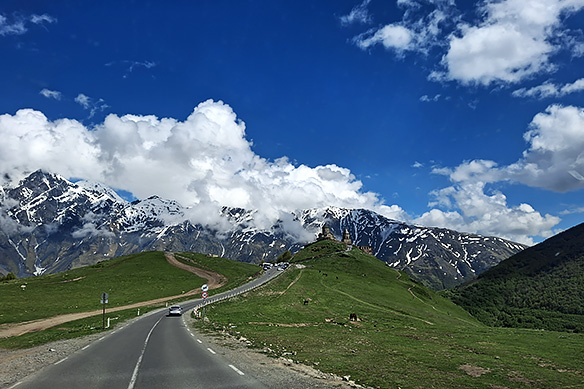
Military Highway, the road from Tbilisi to the Russian border in the country’s north, passes through some of Georgia’s most spectacular topography in the Greater Caucasus Mountains. It’s a roster of the who’s who in Georgia’s alpine landmarks.
First in line is the Zhinvali Reservoir, the perfect backdrop for the historical Ananuri Fortress. This is followed by the Gudauri ski-resort, Devil’s Valley with the famed Soviet-era Russia-Georgia Friendship Monument, and ends at Georgia’s third highest peak Mt. Kazbek [5,047 metres] where Prometheus, the Ancient Greek mythical hero was purportedly chained. The two overlook Gergeti Trinity Church, Georgia’s highest church that doubled as a medieval vault.
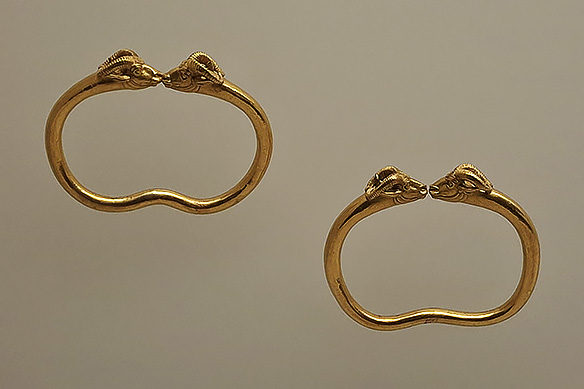
Ram-Headed Bracelet, Vani, Burial 11 of a noble Colchian woman, mid-5th Century BCE.
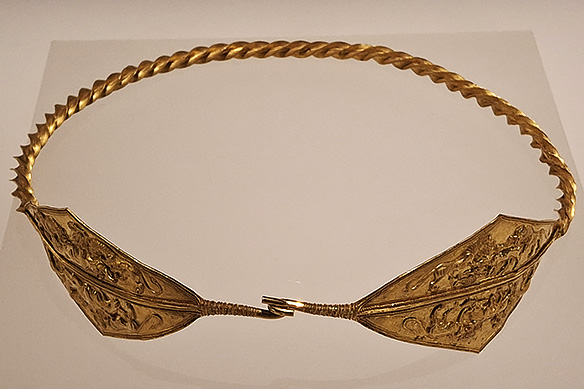
Diadem with lions fighting an ibex and bull, Vani, Burial 11 of a noble Colchian woman, mid-5th Century BCE.
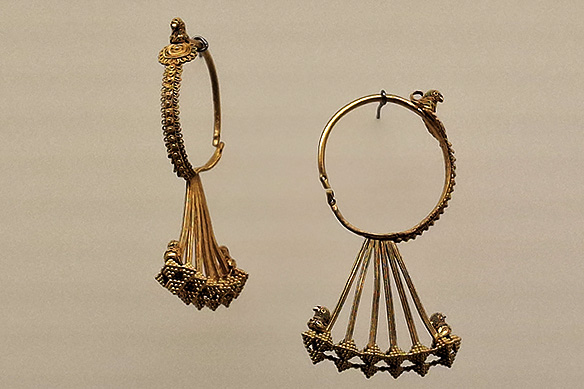
Temple Rings, Vani, Burial 11 of a noble Colchian woman, mid-5th Century BCE.
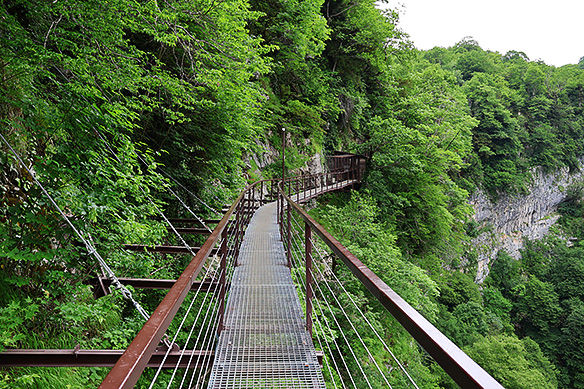
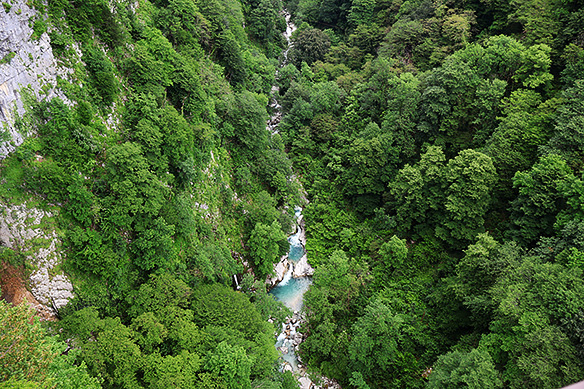
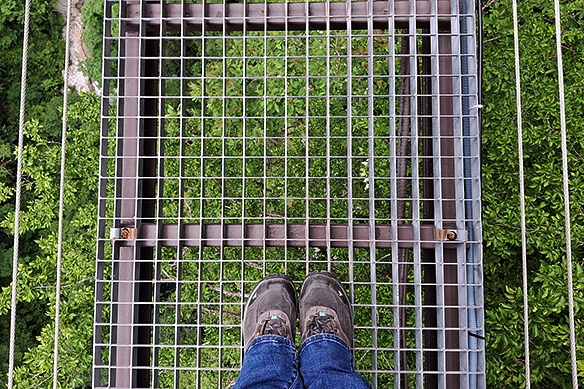
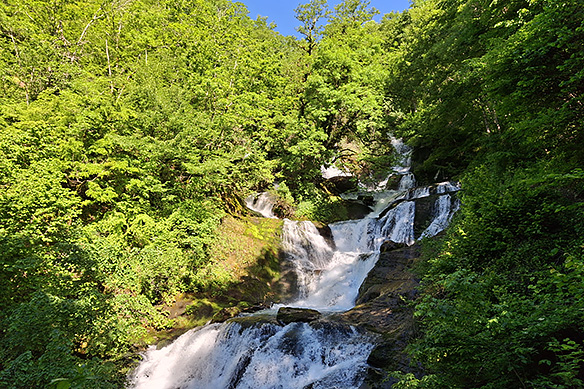
Not all of Georgia’s towering mountains are clad in ice. Some are wrapped in dense subtropical vegetation with gashes sliced through them. In these deep crevices, such as the Okatse Canyon, are mineral-rich rivers which still contain Ancient Georgia’s famed gold dust in its iridescent turquoise waters.
Want a bird’s eye view of this pristine landscape? Modern engineering has created a vertigo-inducing 780-metre-long walkway suspended 140 metres above the Okatse Canyon floor, with a 360-degree viewpoint jutting right across the canyon at the end of the trail. Be warned the walkway is closed in rainy weather.
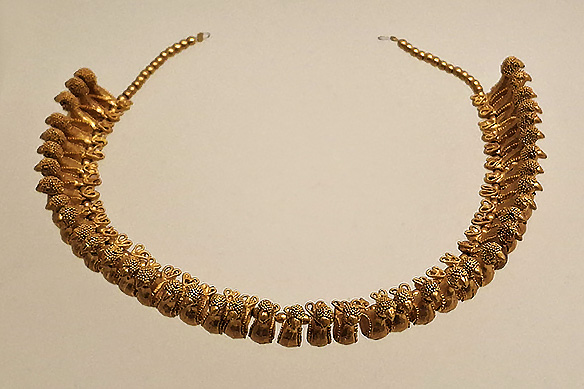
Necklace, Vani, Burial 6 of a noble Colchian woman, early-4th Century BCE.
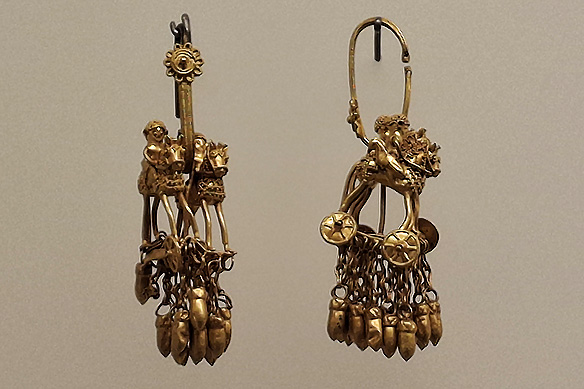
Temple Rings with riders related to the cult of the ‘Great Mother,’ Vani, Burial 6 of a noble Colchian woman, early-4th Century BCE.
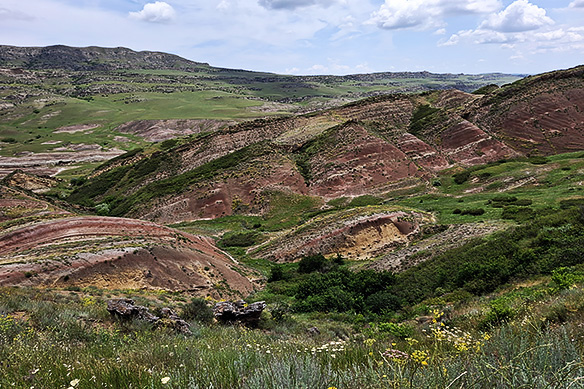
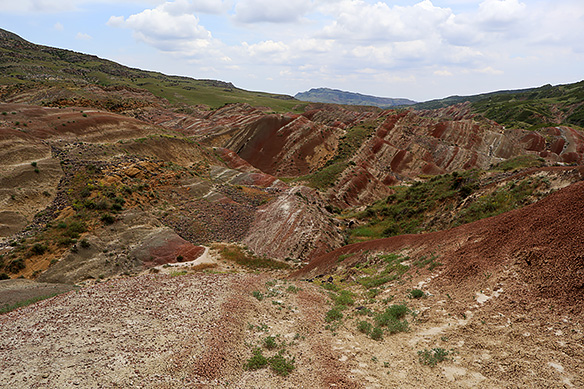
In stark contrast to Georgia’s predominantly alpine landscape is the semi-desert Rainbow Mountains in the country’s south-east, near the Azerbaijan border. Formed over millennia, the rolling hills were once part of a prehistoric seabed. Though a bit of a misnomer—the absence of the entire ROYGBIV spectrum—it comes close with its bands of red, taupe, and white soil amidst a sea of vegetation.
The coloured bacon-like bands are courtesy of the soil’s rich mineral content. Red and pink translate to iron oxide, taupe to aged clay, and white to limestone and chalk. Nope, there is no gold here.

Temple Rings, Akhalgori Hoard, 4th Century BCE.
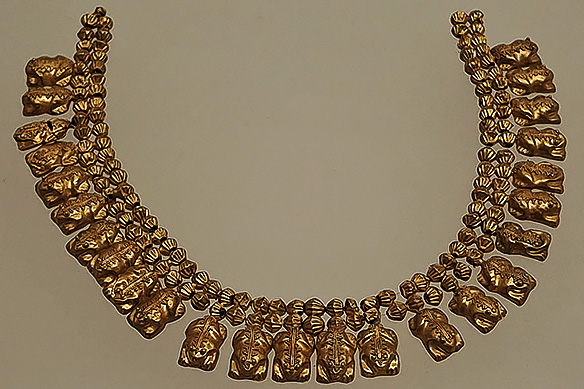
Necklace, Akhalgori Hoard, 4th Century BCE.
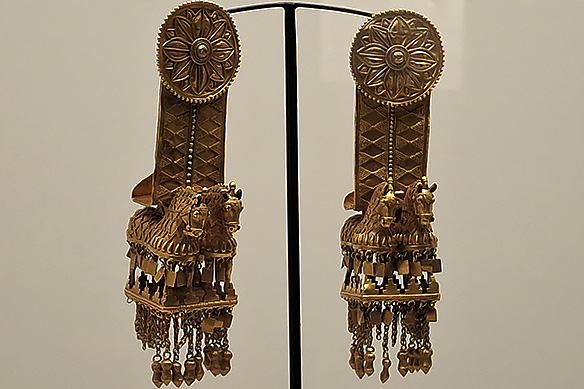
Temple Rings, Akhalgori Hoard, 4th Century BCE.
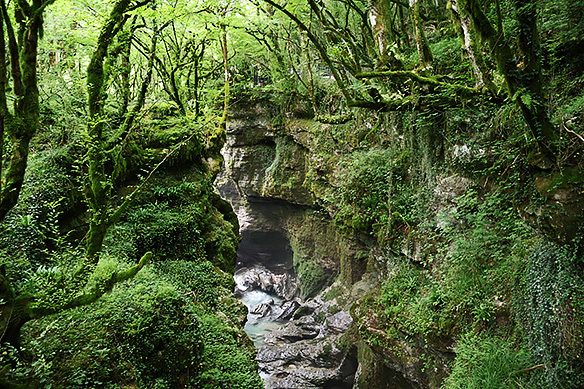
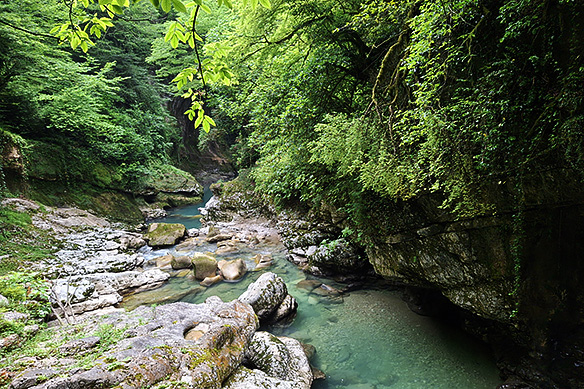
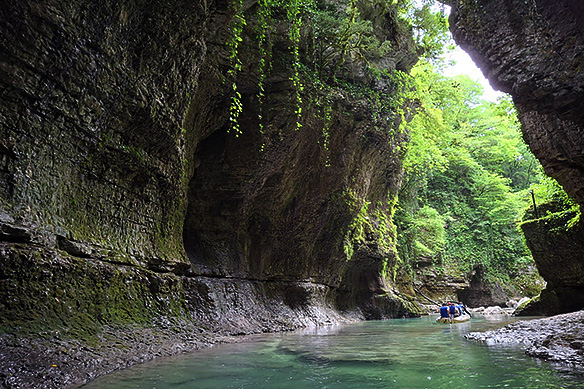
If Okatse Canyon offers a bird’s eye view of Georgia’s lush canyons, Martvili Canyon allows the traveller to explore the turquoise Abasha river, sparkling waterfalls, and verdant foliage at ground level. Up close at eye level. Part experienced through a hiking trail loop [700 metres] and part through a boat ride [300 metres one way], the canyon is considered to be one of Georgia’s most beautiful natural wonders.
In the 19th Century, Dadiani’s Pool, a natural pool in the canyon hemmed in with limestone boulders and accessed through a 30-step limestone staircase, was the private bathing place of the Dadiani family who then ruled the region.

Temple Rings, Akhalgori Hoard, 4th Century BCE.
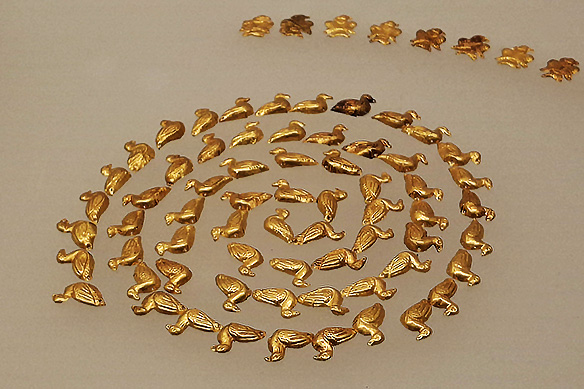
Plaques for sewing on to clothes, Vani, Burial 9 of a noble Colchian warrior, mid-4th Century BCE.
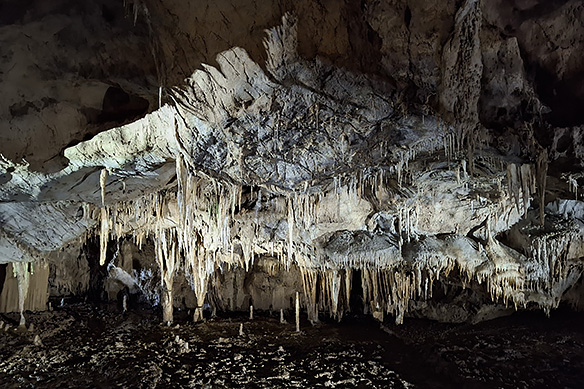
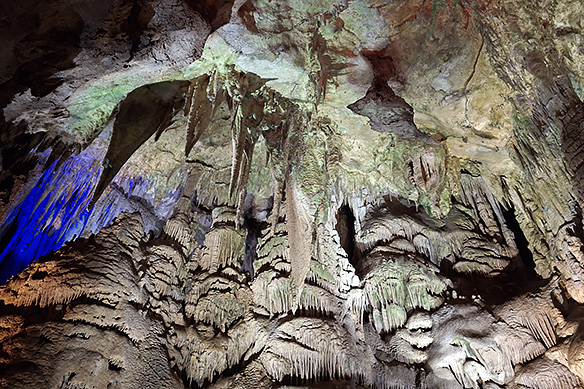
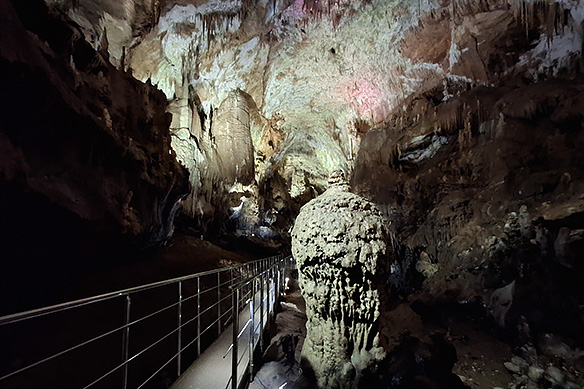
Georgia’s spectacular landscape is not limited to the terrestrial. It also extends to the subterranean—40 metres into the earth’s innards, as in the case of Prometheus Cave in Tskaltubo. A colossal karst cave 11 kilometres long comprising 22 halls, it is packed with fantastical stalagmites and stalactites. Of this, 1.8 kilometres and six halls are open to visitors.
Greek legends abound here too. The halls are named after various characters from the Jason and Argonauts myth. The cave itself gets its name from Prometheus, the Titan who stole fire from the Olympians and gave it to the humans. For this transgression, Zeus chained him to Georgia’s mountains, and devoured his liver by taking on the avatar of an eagle!
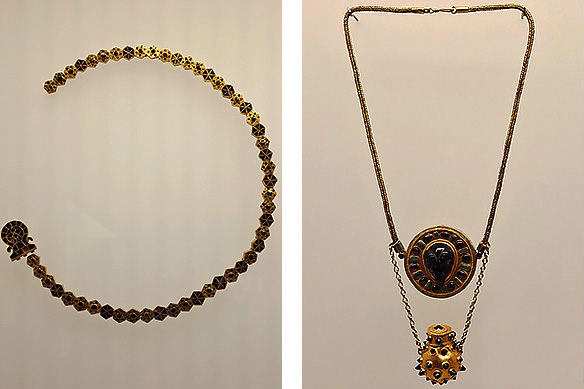
Left: Agraffe, Ureki Hoard, 1st – 4th Centuries CE; Right: Necklace with amethyst cameo and cloisonne inlays, Armaziskhevi, Burial 7, 2nd – 3rd Centuries CE.
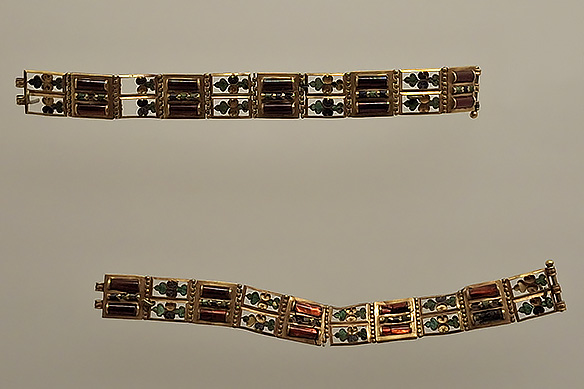
Composed bracelets inlaid with coloured gems and the gold serving only as separation strips, Armaziskhevi, 3rd – 4th Century CE.
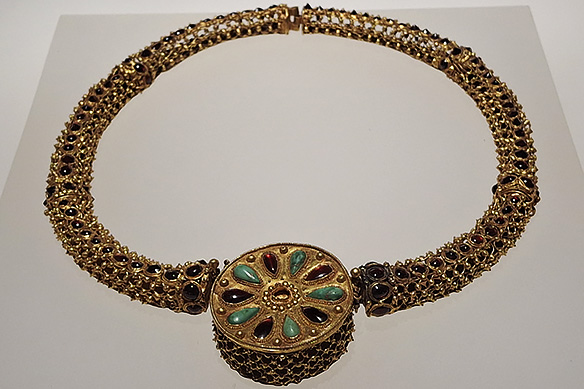
Open-work necklace decorated with granulation and inlaid with turquoise and almandine gems, Armaziskhevi, Burial 6, 2nd Century CE.
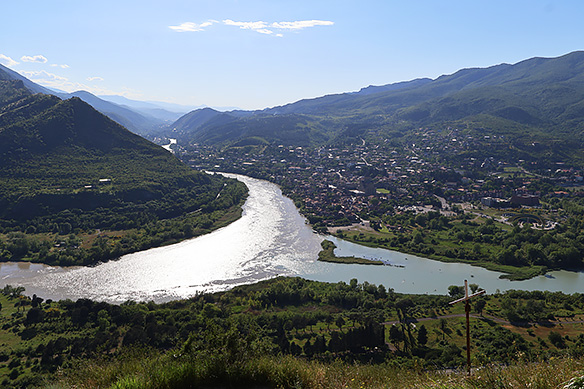
Pilgrims and visitors flock to Jvari Monastery for its historical significance. It is the site where Saint Nino, who introduced Christianity to Georgia, had pierced a pagan site with a cross in the early-4th Century, changing the country’s destiny from thenceforth.
But outside the church is something older than time: the confluence of the silt-heavy grey waters of Kura river and the icy-blue waters of Aragvi river. From this point on they flow as one, but here briefly, they hold on to their own identities, creating an awkward line between them. It is a view many gaze at in wonder, and perhaps the ancient Colchians did as well. ❤
– – –
[This blog post is part of a series from my travels to Georgia for 17 days in June 2026. To read more posts in my Georgia series, please click here.]


The jewellery is nice, but the scenery is magnificent!
LikeLiked by 1 person
It is quite something indeed! Georgia is beautiful, and for nature lovers, a veritable paradise. Locals claim some of the thousands of rivers still contain fine gold dust. 🙂
LikeLiked by 2 people
the jewellery exhibits!! The craftsmanship that went into it. Loved the ram headed bracelet in particular.. nd Okatse canyon has now landed on the bucket list..brilliantly lucid writing as always 🙂
LikeLiked by 2 people
Thank you so much for your kind words. I was blown away by the craftsmanship too. Imagine creating such beauty by hand all those millennia ago, and that these pieces have survived intact! Okatse Canyon is truly gorgeous. Like all of Georgia. Hope you make it to this beautiful country some day soon. 🙂
LikeLiked by 1 person
This story takes me back to when I too was mesmerized by the exhibit. Do you know of a curious explanation of the “fleece of gold”?
LikeLiked by 2 people
I read your Georgia posts. I especially liked the Vani one. 🙂 You mean there is another explanation for the ‘fleece of gold’ apart from the Colchians dipping sheepskin in the rivers to catch the gold dust? If yes, please do share.
LikeLiked by 1 person
So sorry I missed this before. Didn’t appear on my feed.
I don’t know if it’s true but sounds plausible to me:
LikeLiked by 1 person
Thank you for sharing this post. A lovely read with fabulous pictures!
LikeLiked by 1 person
Pingback: batumi: stories told and untold | rama toshi arya's blog
Pingback: a cultural buff’s guide to tbilisi | rama toshi arya's blog
Magnificent! This blog post is only the second article about Georgia’s lush valleys that I’ve stumbled across recently. Maybe that’s a sign that I should plan a visit to this country.
LikeLiked by 1 person
So, listen to the universe! Two articles by two unconnected travellers cannot lie. 🙂 Georgia’s valleys are bursting with foliage, and one is never far from a gushing river. It is said there are 25,000 rivers crisscrossing the country.
LikeLiked by 1 person
Pingback: georgia: a story of war and faith | rama toshi arya's blog