towering peaks and gold jewellery: georgia, land of the golden fleece

This is the story of Colchis. A contemporary of the Sumerians and Ancient Egyptians, with references in Classical Greek mythology, this pre-Christian kingdom today lies somewhat in obscurity.

But three-and-a-half thousand years ago, Colchis was not some figment of literary imagination. It was Jason and the Argonauts actual gold-encased quest. Its peaks that touched the heavens, where narrative saga decided Zeus would chain Prometheus.

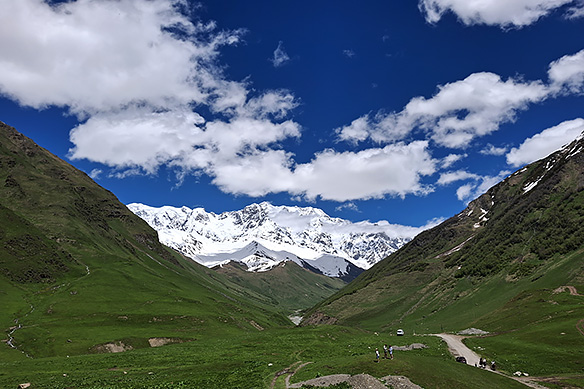
Deep inside the isthmus joining Europe and Asia, in valleys tightly sandwiched between the soaring peaks of the Greater and Lesser Caucasus Mountains were a people of immense wealth. Gold dust speckled its 25,000 rivers which when caught using sheepskin with shaggy hair, turned them into ‘golden fleece.’ The people there then transformed this gold into exquisite jewellery, typified by fine granulation, inlaid gems, and animal motifs.

Headdress with four deer, two lions and a pair of birds, made with cutting out portions of metal, Vani, Burial 24, end-4th Century BCE.
Headdress with four deer, two lions and a pair of birds, made with cutting out portions of metal, Vani, Burial 24, end-4th Century BCE.

Continue reading →

greece 2: ancient corinth and mycenae

Corinth Canal

The Corinth Canal, 6 kilometres long and 23 meters wide, was constructed in 1882-1893 by French and Greek engineers at the narrowest point of the Isthmus. I crossed the canal by bridge as I left Attica and entered the Peloponnese. The decision to build a canal on this spot was taken by many in antiquity: Periander, tyrant of Corinth and one of the seven sages of the ancient world, Julius Caesar, Nero, Hadrian, and Herodes Atticus. But it was only in the 19th Century that the idea received form. Nonetheless, the ancient Greeks had devised other means of bridging the gap between the two gulfs. In the late 7th or early 6th Century BC, they built a paved road called diolcus from the shores of the Gulf of Corinth to the shores of the Saronic, and ships were pulled on wheeled wagons from one side of the Isthmus to the other. Parts of the diolcus can still be seen today on the Gulf of Corinth.

Ancient Corinth

corinth1
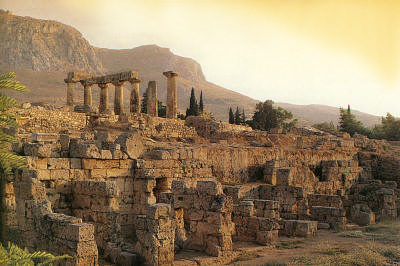
The ruins of ancient Corinth Continue reading →