It is the Islamic Hijri year 951. The Gregorian calendar knows it as 1544 CE. I am on my way to Kabul, laden with spices I plan to sell once there. I also have some silks I picked up on the way. It is a long journey from Delhi, but the profits would be better in Kabul instead of selling it to middlemen along the way. More Rupiyas.
However, I must confess just being on the road is an equal incentive. Distant lands, new stories, and the adventures, or should I say misadventures along the way. I chuckle as I recollect incidents. It’s my little secret. Being a wanderer in the guise of a trader.
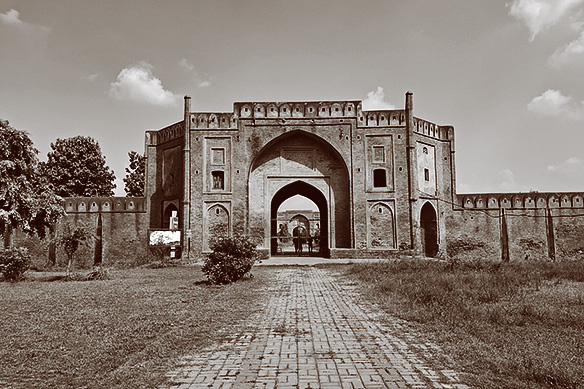
As the sun sets over the dusty plains, and the muezzin calls out the adhan for maghrib, our caravan weaves its way to the monumental fortified Shambhu caravanserai surrounded with lush green fields. It is our haven for the night—safe from the bandits who scavenge the dark roads once night falls.
I won’t need to pay, either for my own or my pack animals’ food and lodging. Our Sultan Sher Shah Suri, a Hindustan-born Afghan who had defeated and ousted Mughal Emperor Humayun four years ago, takes care of it all. Widely recognized as an able general and administrator, he has built 1,700 such serais along the 2,500-kilometre-long Sadak-e-Azam [Grand Road], connecting the Bay of Bengal to the Hindu Kush Mountains.
The road itself is older, dating back to Chandragupta Maurya in the 4th Century BCE who named it Uttarapatha. Sher Shah Suri expanded it into one of South Asia’s longest trade routes across his vast realm and punctuated it with inns, wells, and kos minars [distance markers]. With my own eyes I have seen him transform the ancient Mauryan artery into the blueprint of Hindustan’s first ever postal service, and eased trade along its length with the standardised currency he has introduced: the Rupiya.
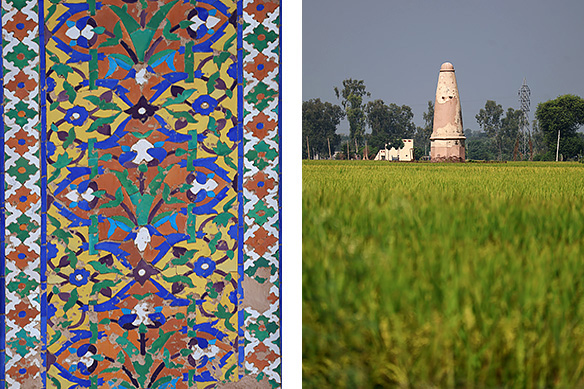
Left: Detail of glazed tile mosaic on Dakhni Caravanserai’s main gateway [1640 CE], Jalandhar; Right: Kos Minar, marker of a kos [2 miles], outside Dakhni Caravanserai, flags the turnoff for Kashmir.
Our caravan is a medley of traders, pilgrims, travellers, soldiers, and messengers. Transporting goods, services, and letters. On camels, horses, bullock carts, and often on one’s own two feet. Of various faiths and walks of life. There are some familiar faces, and some brand new.
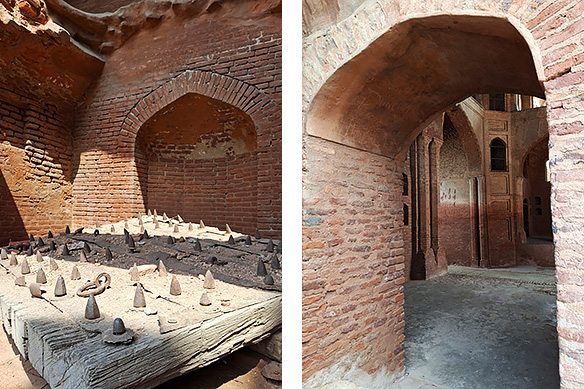
Once we are all inside the towering stone walls, the gates sheathed in colossal nails is closed. I go to my allotted chamber, feed my animals, offer namaz at the mosque, have a bath, and dig into a hearty meal with my fellow travellers. There is much laughter and banter, with a few philosophical exchanges thrown in for effect.
Tomorrow is another long day. I have many dreams for my future, and many miles to travel to make them come true. But for tonight, and every night, I have these caravanserais to rest my weary feet. Our Sultan is kind. I smile to myself and snuff out the wick.
– – –
Four hundred and eighty-two years later, in September 2026 CE, in another lifetime, I make the journey again, albeit a shorter one—from Delhi to Jalandhar. I stop at caravanserais added to the route by later Mughal rulers who had reconquered Hindustan, on tarmac laid out by the British who renamed it the Grand Trunk Road, and, thereafter, independent India who called it national highways NH 19 and NH 44.
All that remains of these caravanserais are now ruins, some albeit in better condition than others; their central courtyards transformed into landscaped gardens or scruffy squares overrun by overgrown weeds. No one lives in these serais anymore. Except for the lone Archaeological Survey of India’s security guards stationed at the sites.
I close my eyes, and I can hear the banter and laughter again from a distant past. I open my wallet. Sher Shah Suri’s Rupiya sits comfortably in its pocket. A reminder of a life five centuries ago.
Dear Reader, welcome to my photo essay on the Caravanserais of the Grand Trunk Road in Haryana and Punjab, and their story of history, time, and change.
Panipat. Not once. Not twice. But thrice the city, a hundred kilometres north of Delhi, served as a battle-ground that shaped the course of Indian history. It was almost as if the wars and victories were both destined.
At this very place, Babur, a Timurid warlord defeated Delhi’s Sultan Ibrahim Lodi to set up the Mughal empire in 1526 CE. Then in 1556 CE, Akbar defeated Hindu King Hemchandra Vikramaditya to restore Mughal rule in northern India. A devastating victory by Afghan Ahmad Shah Durrani against the Maratha empire prevented the latter’s expansion into northern India, but also created a power vacuum for the British East India Company to slide into in 1761 CE.
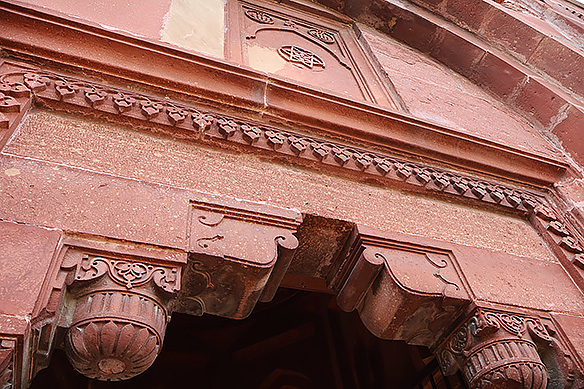
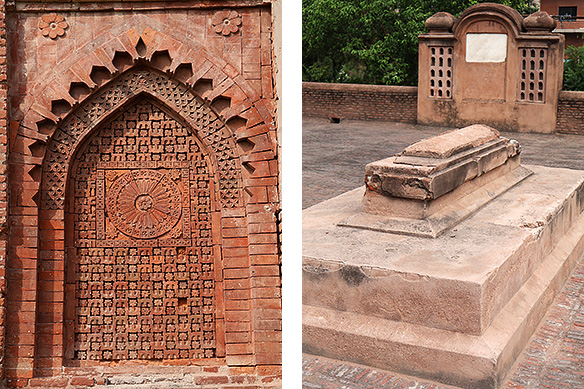
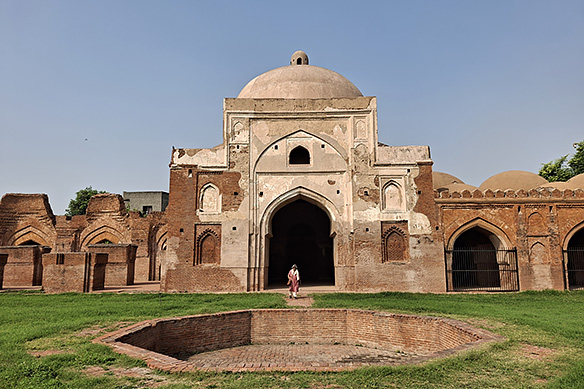
Though the battle-grounds have long given way to built-up areas, Babur’s Kabuli Bagh Mosque, built to commemorate his victory, and Ibrahim Lodi’s tomb in a gaudy park, stand as silent witnesses to the Mughal empire’s birth. The British relocated the tomb to its current location in 1866 CE when they rebuilt the Grand Trunk Road.
Look out for the lotus buds and kalash, the unmistakably Hindu motifs on the mosque’s doorway, which point towards an amalgamation that would become an Indian subcontinent quintessential over the subsequent centuries.
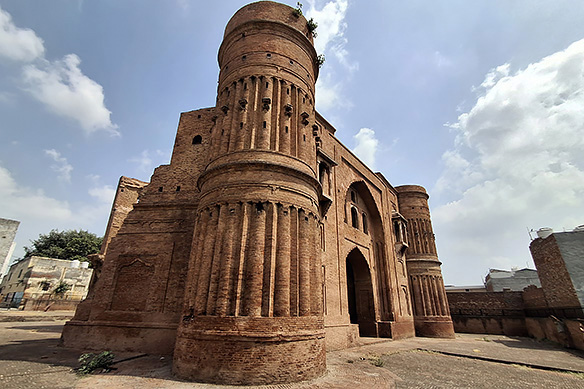
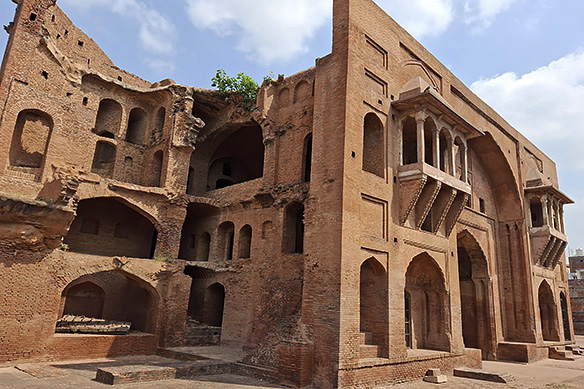
It is befitting that remnants of a caravanserai still survive at close-by Karnal. I say this, even though all that remains of Gharaunda Caravanserai, built by Khan Feroz in 1637 CE during Emperor Shah Jahan’s reign, are its three-storey high north and south gates made of lakhauri bricks.
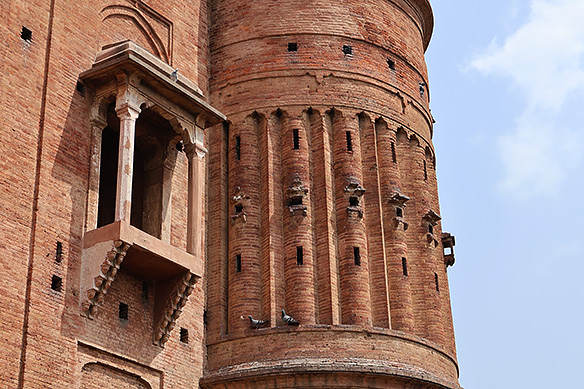
Evocative of Delhi’s Qutub Minar with semi-circular and angular flutes punctuated with gun-slits on its colossal towers, dainty stone jharokas, and cavernous chambers, they reveal the scale and attention to detail the entire serai must have possessed. In 1857, British forces destroyed the fortified quadrangle to quell the Indian revolutionaries stationed inside.
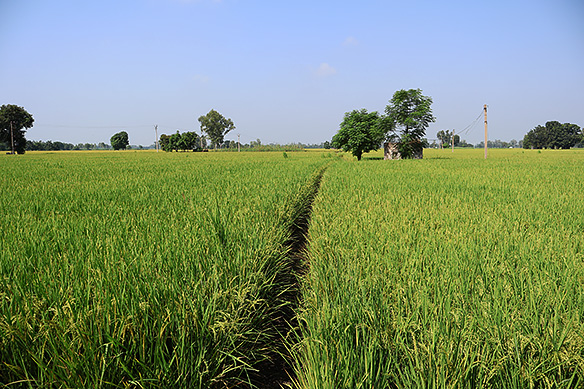
In a strategic administrative move, Sultan Sher Shah Suri had proclaimed produce from the adjacent farmlands be used to fund the caravanserais’ running and upkeep. Mughal rulers continued with the practice, thus ensuring the travellers’ meals and stay always remained free.
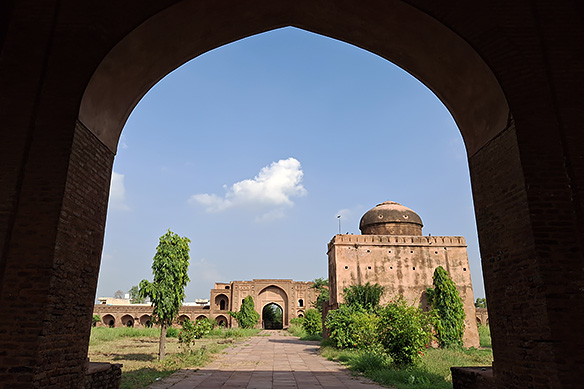
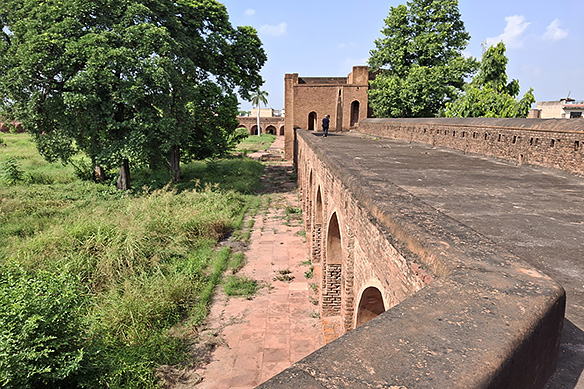
Five centuries changes many things. Shambhu Caravanserai, named after the village in Patiala in which it stands, is now termed a ‘monument.’ Much like all the other caravanserais in this post. For the longest time, until the 19th Century when the British expanded the railway network, these were idyllic resting stations for countless weary travellers.
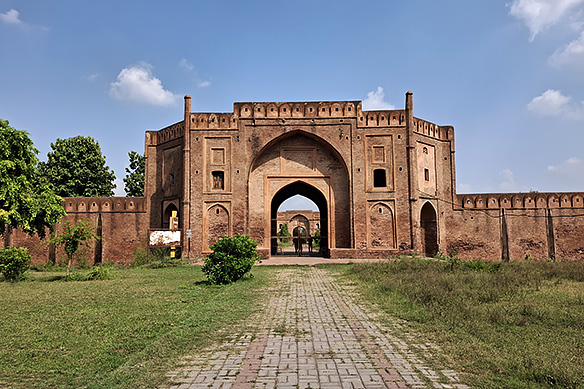
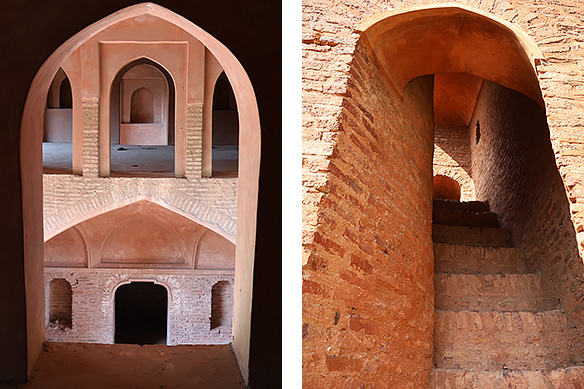
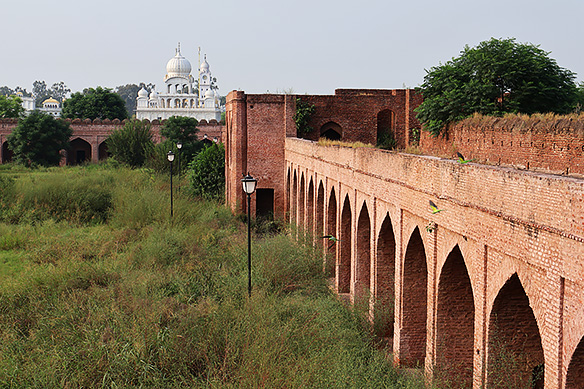
Despite its ruined state, Shambhu is one of the most complete caravanserais on Indian soil. I walk through the main gate, past its 70 chambers, into the mosque, and then over the ramparts. Originally built by Sultan Sher Shah Suri [r. 1540 – 1545 CE], and later renovated by Mughal rulers, it follows the stipulated architectural cannons to the tee. Functional. Yet beautiful.
Multi-storey gates face the four cardinal directions; the main gate is the most majestic and ornate of the four. High crenelated walls with armed bastions at the corners enclose a perfect quadrangle lined with chambers. The quadrangle itself is divided into a charbagh, with a mosque in the north-west square. Wells complete the ensemble.
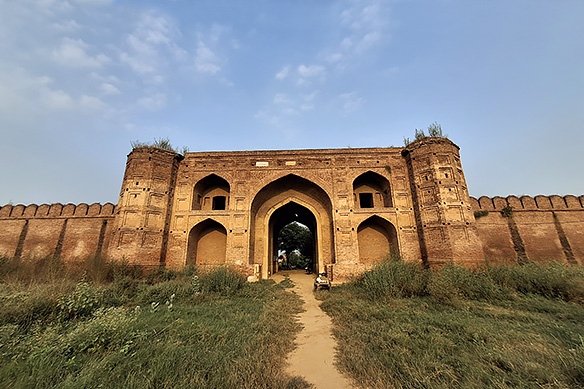
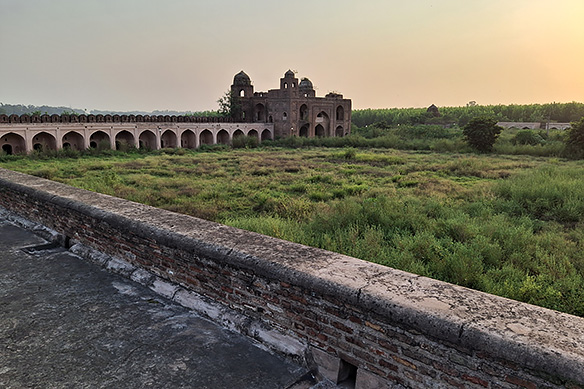
Even Mughal Emperor Aurangzeb [r. 1658 – 1707 CE], the self-proclaimed champion of austerity, could not stop his Military General Lashkari Khan from building a caravanserai in 1667 CE that veered towards the grandiose. Both their names appear on the main gateway’s façade.
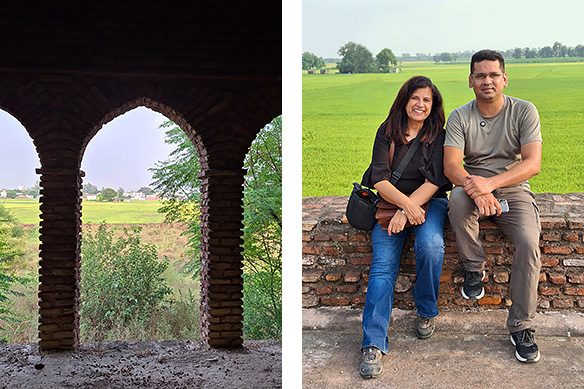
Located on the outskirts of Ludhiana, one can see Gurdwara Manji Sahib from Lashkari Khan Caravanserai’s ramparts. The above image [right] is of me with Yusuf [from Sair E Hind] seated on those very ramparts. He is the one who made this time-travel journey possible.
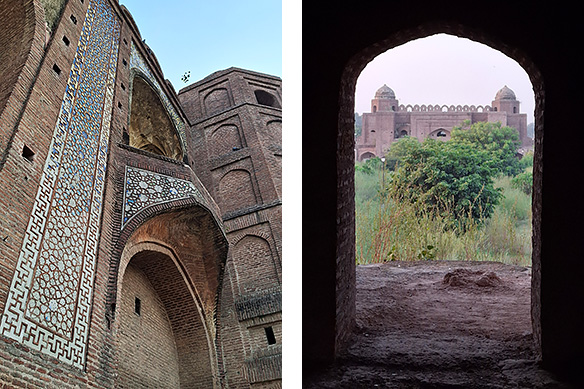
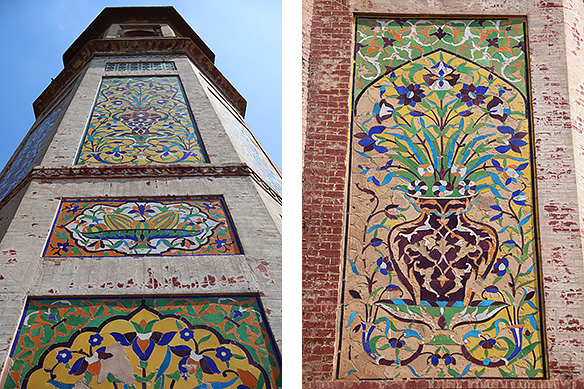
Trust Mughal Emperor Jahangir [r. 1605 – 1627 CE] to go a bit overboard when embellishing the Doraha Caravanserai he commissioned in Ludhiana District, a few kilometres from Lashkari Khan Caravanserai, or should I say kos. He enveloped its imposing gateways in exquisite glazed tile mosaics and had intricate frescoes painted on the plastered surfaces. It also came with a grand hammam.
Jahangir had always had a leaning towards Persian aesthetics, and this only got strengthened when he fell in love and married Nur Jahan, his 20th wife and chief consort, a Persian woman from Kandahar, in 1611.
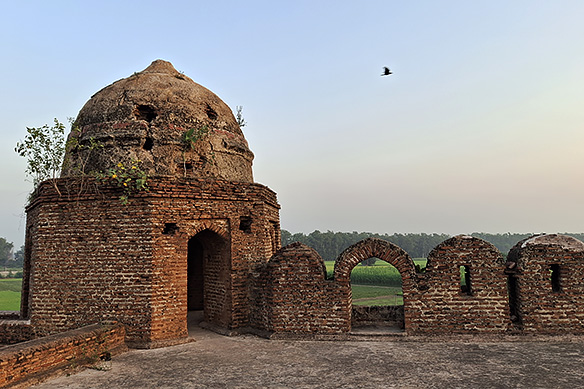
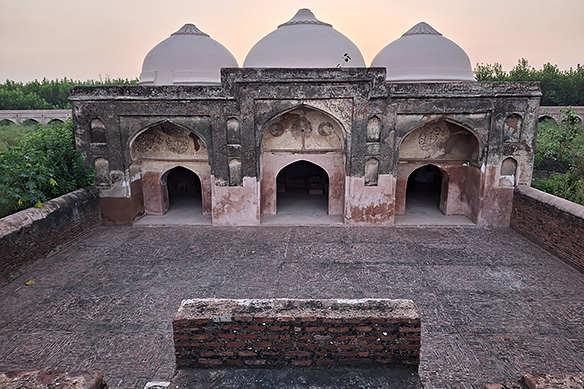
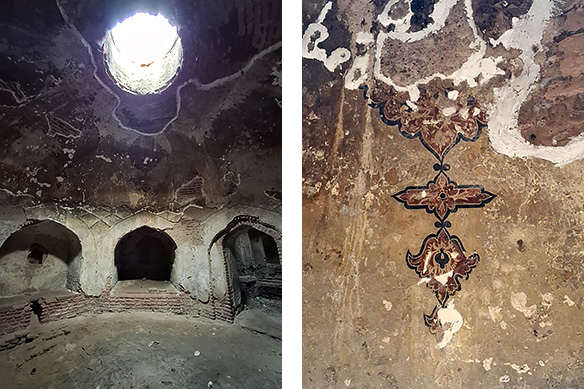
How could I resist a dekko at Jahangir’s once-upon-a-time sumptuous bathhouse in Doraha Caravanserai? So, I find myself wading through neck-high vegetation to reach a hammam which extends in multiple directions and includes cozy pitch-dark private bathing rooms and skylights. It is only as I am about to step out of the arched entrance into daylight, do I realize there were live beehives and grass snakes en-masse behind me.
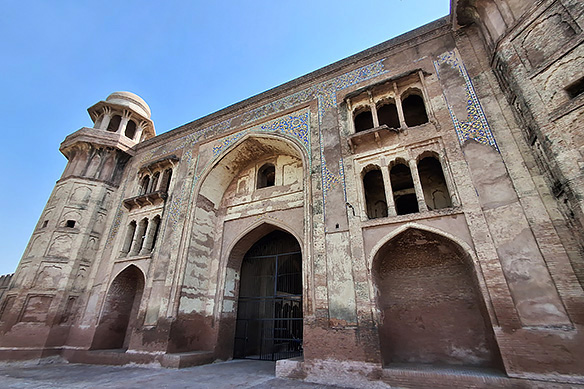
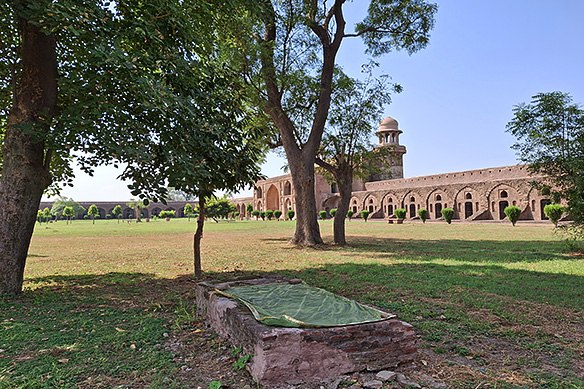
Built by Ali Mardan Khan in 1640 CE during Emperor Shah Jahan’s reign, Dakhni Caravanserai in Jalandhar District is lavishly decorated as well, despite four centuries of wear and tear. Its elegance unmistakable. Mosaics of arabesque designs in yellow, orange, green, turquoise, indigo, and white glazed tiles cover the majestic entrance. A green chador over a saint’s grave flutters in the wind, much like it perhaps always did.
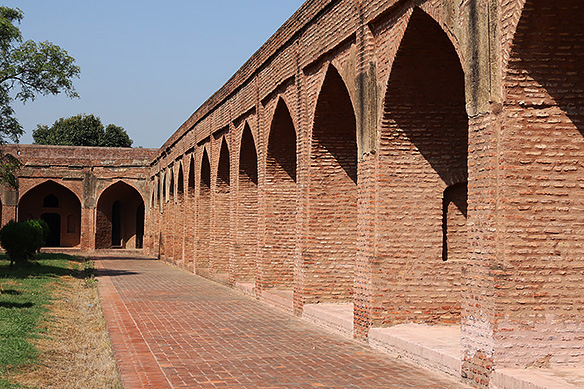
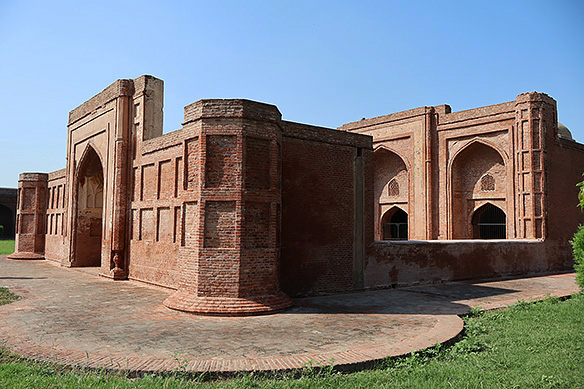
Born in Kandahar, Ali Mardan Khan, a Kurd, was the Governor of Kandahar in the Safavid Empire. His surrender of his territories to Shah Jahan in 1638 CE earned him the position of governor of Lahore, Kabul, and finally Kashmir. One of the largest serais built during Mughal rule, Dakhni Caravanserai contains 124 chambers, a walled mosque, and large well. A reflection of the immense wealth and power Ali Mardan Khan enjoyed in his new home.
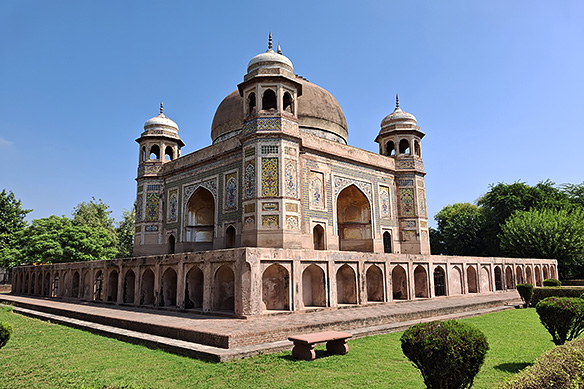
Truth is India is full of Taj Mahals. Before and after Emperor Shah Jahan’s magnum opus. The only architectural entities to surpass caravanserais and mosques by its sheer numbers, mausoleums swathed the Delhi Sultanate, Suri, and Mughal landscapes. I am not disappointed when I reach Nakodar on the Grand Trunk Road. There are a pair here so exquisite, I can only gawk.
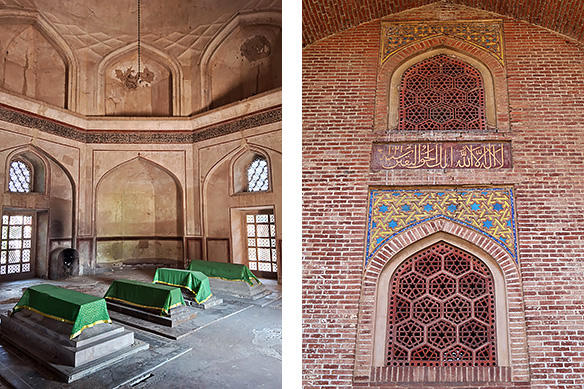
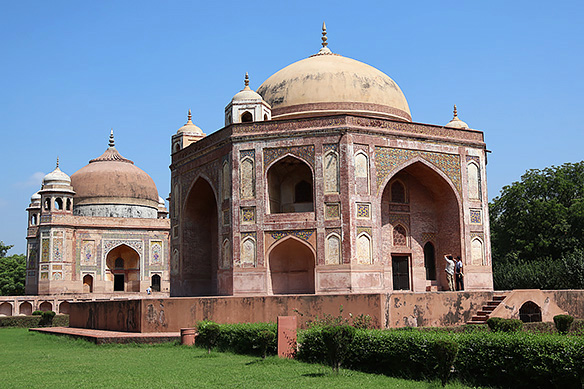
Muhammad Momin, the shagird or student, and Haji Jamal, the ustad or teacher, were tambura players in the 17th Century. The older mausoleum of the two [the one in the background in the above image] is covered in Persian glazed tile mosaics which depict bouquets of flowers and fruit baskets, with a fresco of apples to further enhance aesthetics and tantalize the viewer’s taste-buds. Muhammad Momin’s tomb makes do with Koranic verses and ethereal jaalis.
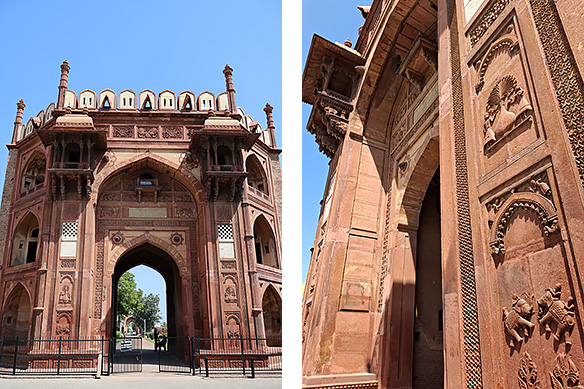
My last stop. Two years in the making, one can tell Nurmahal [Palace of Light] Caravanserai near Nakodar was commissioned by a woman. Mughal Emperor Jahangir’s consort, Empress Nur Jahan’s persona percolates through its minutest details, setting it apart from the other serais in its sheer feminine loveliness.
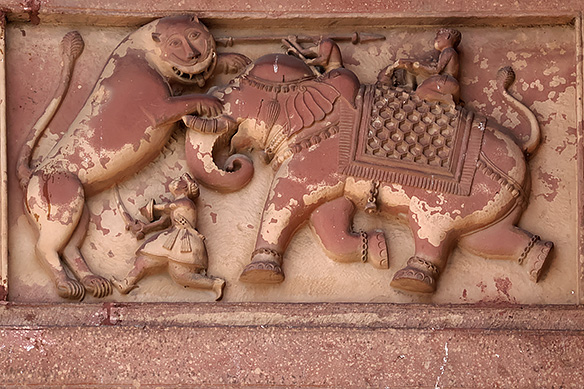
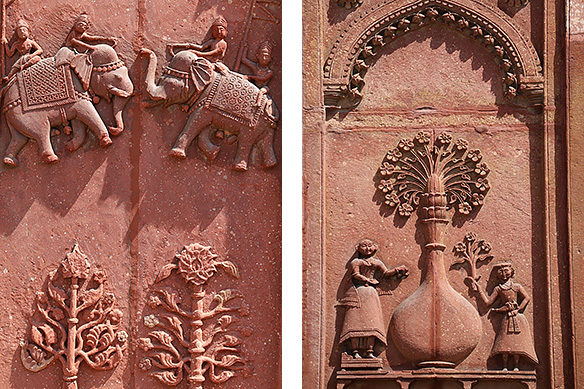
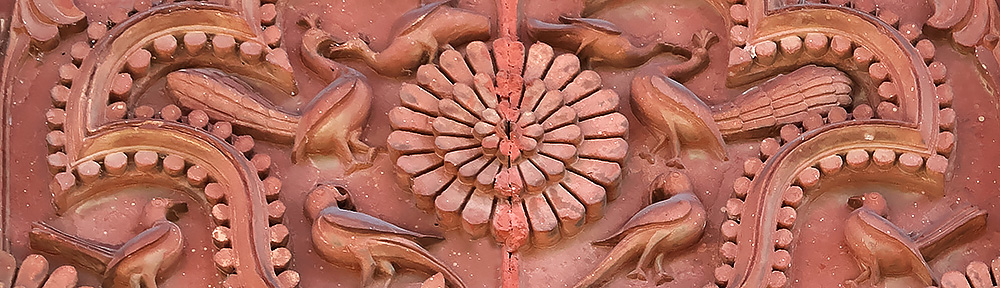
There is one other feature which makes the masterpiece, completed in 1621 CE, an anomaly—the profusion of human and animal figures on the secular edifice in an era wherein their portrayal was otherwise prohibited. Panels of elephants, fairies, peacocks, lions, camels, rhinos, men and women, along with foliated scrolls and birds on trees abound on the three-storeyed gateways encased in red sandstone. There are even scenes of polo and animal fights.
Inside the crenelated walls are 140 chambers, a mosque, hammam, and well that offered every conceivable comfort. Jahangir was so impressed by his stay here, he described it in Tuzk-e-Jahangiri, his autobiography. Today, part of the enclosure is encroached by residential buildings.
With this, it is time for me to return to Delhi, bringing to an end a peek into another lifetime and the vagaries of the epochs in-between. ❤
– – –
Acknowledgements:
I explored the Caravanserais of the Grand Trunk Road in Haryana and Punjab on an overnight trip from Delhi with Sair E Hind led by Syed Yusuf Shahab, Mohsin Akhtar, and Ishtiyaque Ahmad. They specialize in heritage walks and tours to off-the-beaten-path historical sites in India.
My deep-felt gratitude to Syed Yusuf Shahab for sharing, so very generously, his deep love and understanding of these caravanserais. And a special shout-out to Mohsin Akhtar for giving me a hand as I clambered through the snake and bee-infested hammam and climbed crumbling steep steps to walk the many ramparts. I could never have done it without you!

