By oneself indeed is evil done and
by oneself is one defiled, by oneself
is evil not done and by oneself is one
purified. Purity and impurity
depend entirely on oneself; no one
can purify another.~ Dhammapada, Verse 165
The story of Buddha’s Piprahwa relics is as unusual as the story of the man himself—a 6th/ 5th Century BCE prince, Siddhartha Gautama from the Indo-Gangetic plain, who renounced worldly life and possessions to find a faith built on compassion and self-discovery.
Throughout his life, he was adamant he be treated only as a teacher and not God. Because there was no God. Only our karma.
When Gautama Buddha [a Sanskrit term meaning the ‘enlightened’ or ‘awakened’ one], passed away in Kushinagar, his bodily remains were divided into eight initial portions amongst North India’s kings to be interred in stupas.
The part that went to his own clan, the Sakyas of Kapilavastu, was buried in a gigantic stupa in Piprahwa, close to Lumbini, his birthplace. Two centuries later, the newly converted Mauryan Emperor Ashoka added an offering of around 1,800 intricately carved gemstones and gold objects and further enlarged the stupa.
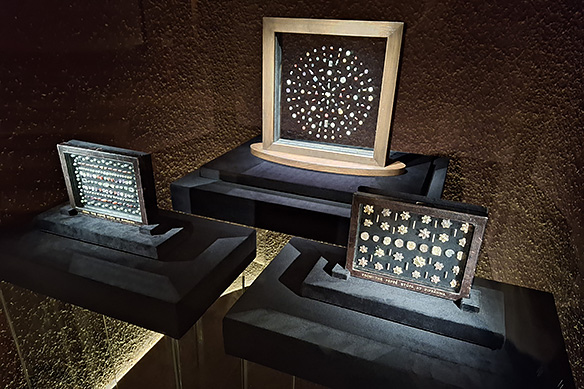
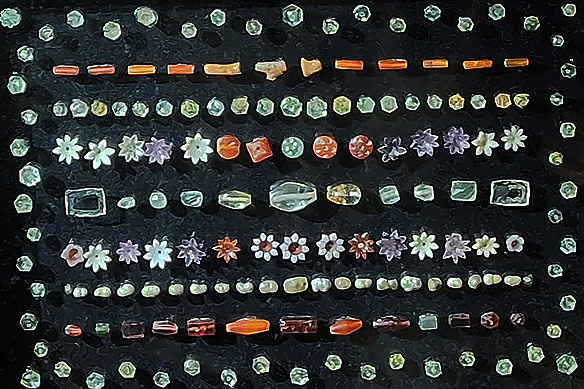
As Buddhism shifted eastwards, the stupa and its Mauryan treasures were forgotten. Only to be rediscovered 2,000 years later by William Claxton Peppé, a British colonial engineer and landowner, in 1898. The soapstone and crystal caskets and most of the jewels they contained were handed over to the British India government who deposited them with the Indian Museum in their capital, Kolkata. The bones and ashes were given to the King of Siam for redistribution in the Far East Buddhist world.
For himself, he kept one-fifth of the loot. 349 funerary gems.
In 2025, his family figured it better to auction the jewels at Sotheby’s in Hong Kong. As soon as the Indian government heard about this, it stalled the sale before it could go through with the help of the Mumbai-based Godrej Industries Group. The Peppé family was paid an undisclosed amount [which sources claim to be at least 100 million USD], and the relics repatriated to its roots after 127 years.
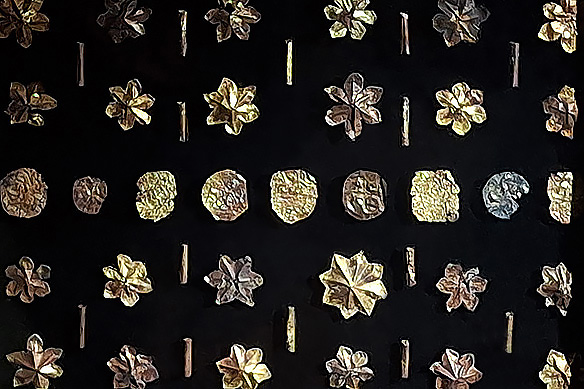
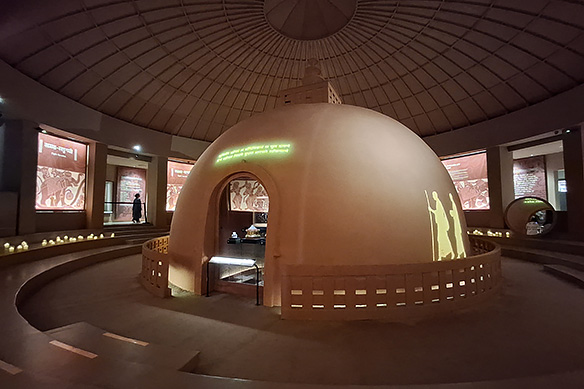
These relics are currently on display in a special exhibition titled ‘The Light and the Lotus: Relics of the Awakened One‘ in New Delhi together with some of the finest Buddhist artefacts from museums across the country. Recounting, both the Piprahwa and Siddhartha Gautama’s unusual story.
I leave you with some of the other highlights from this special exhibition and some verses from the Dhammapada, a collection of sayings by the Buddha.
![Left: Seated Buddha from Gandhara in Indo-Greek style depicts him teaching with serene expression and flowing drapery. 2nd Century CE, Loriyan Tangai [North-West part of Undivided India]. Right: Buddha in Abhaya mudra, gesture of fearlessness, standing on a dual lotus throne with a stepped base. The parasol is adorned with winged cherubs. 5th Century CE, Madhya Pradesh.](https://ramaarya.blog/wp-content/uploads/2026/04/buddha-light-and-lotus-7.jpg)
Left: Seated Buddha from Gandhara in Indo-Greek style depicts him teaching with serene expression and flowing drapery. 2nd Century CE, Loriyan Tangai [North-West part of Undivided India]. Right: Buddha in Abhaya mudra, gesture of fearlessness, standing on a dual lotus throne with a stepped base. The parasol is adorned with winged cherubs. 5th Century CE, Madhya Pradesh.
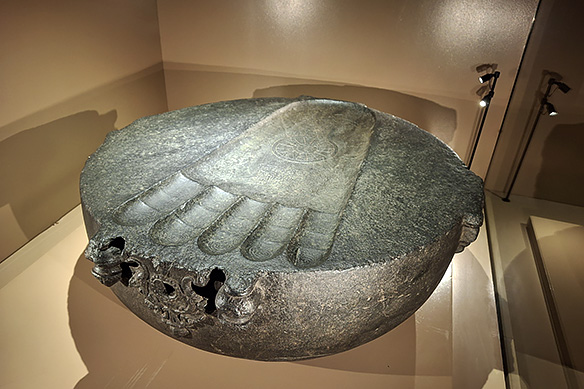
This black stone Buddhapada, or Footprint of the Buddha, is carved beneath the dome of a votive stupa. It features a socket for the insertion of the umbrella finial. 11th Century CE, Bodhgaya, Bihar.
“You are what you think. All that you are arises from your thoughts. With your thoughts you make your world.”
~ Dhammapada, Verse 1
![Kushana Gandhara relief depicting devotees venerating the sacred Tri-ratna which represents the three Buddhist 'jewels': Buddha, Dharma [teachings], and Sangha [community]. 2nd Century CE, Lower Monastery at Nathu [North-West part of Undivided India].](https://ramaarya.blog/wp-content/uploads/2026/04/buddha-light-and-lotus-9.jpg)
Kushana Gandhara relief depicting devotees venerating the sacred Tri-ratna which represents the three Buddhist ‘jewels’: Buddha, Dharma [teachings], and Sangha [community]. 2nd Century CE, Lower Monastery at Nathu [North-West part of Undivided India].
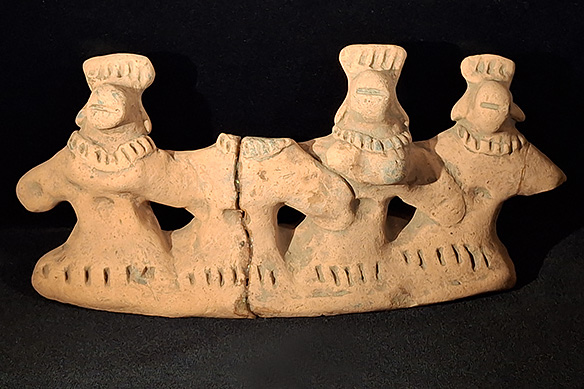
Four dancing anthropomorphic figures, one headless, wear decorative headgear and necklaces. 2nd Century CE, Piprahwa, Uttar Pradesh.
“Many do not realize that we here must die. For those who realize this, quarrels end.”
~ Dhammapada, Verse 6
![Left: The intricately carved Apsara [celestial dancer], repatriated from the USA, embodies traditional beauty in her graceful dancing pose. 11th Century CE, Madhya Pradesh. Right: A relief with the five principal episodes from the life of Sakyamuni Buddha—his birth, renunciation, enlightenment, first sermon, and Mahaparinirvana. 5th Century CE, Sarnath, Uttar Pradesh.](https://ramaarya.blog/wp-content/uploads/2026/04/buddha-light-and-lotus-11.jpg)
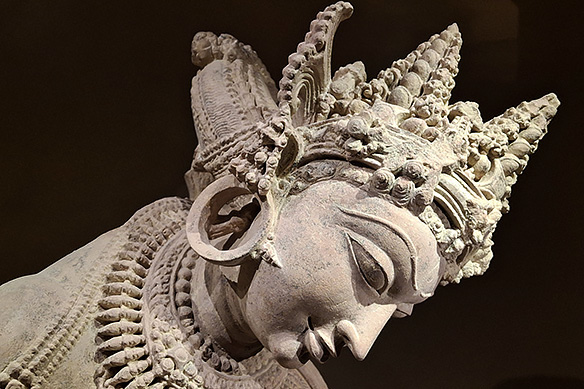
Left: The intricately carved Apsara [celestial dancer], repatriated from the USA, embodies traditional beauty in her graceful dancing pose. 11th Century CE, Madhya Pradesh. Right: A relief with the five principal episodes from the life of Sakyamuni Buddha—his birth, renunciation, enlightenment, first sermon, and Mahaparinirvana. 5th Century CE, Sarnath, Uttar Pradesh.
![The Great Departure shows Prince Siddhartha leaving his palace on his horse Kanthaka to seek enlightenment. 2nd Century CE, Loriyan Tangai [North-West part of Undivided India].](https://ramaarya.blog/wp-content/uploads/2026/04/buddha-light-and-lotus-12.jpg)
The Great Departure shows Prince Siddhartha leaving his palace on his horse Kanthaka to seek enlightenment. 2nd Century CE, Loriyan Tangai [North-West part of Undivided India].
“Give, even if you only have a little.”
~ Dhammapada, Verse 224
![In the Miracle of Sravasti, Buddha radiates flames from his body symbolizing divine power. 2nd Century CE, Kabul [North-West part of Undivided India].](https://ramaarya.blog/wp-content/uploads/2026/04/buddha-light-and-lotus-13.jpg)
In the Miracle of Sravasti, Buddha radiates flames from his body symbolizing divine power. 2nd Century CE, Kabul [North-West part of Undivided India].
![Schist relief panel showing the scene of the Mahaparinirvana—the Buddha's final passing and liberation from the cycle of rebirth. 2nd Century CE, Loriyan Tangai [North-West part of Undivided India].](https://ramaarya.blog/wp-content/uploads/2026/04/buddha-light-and-lotus-14.jpg)
Schist relief panel showing the scene of the Mahaparinirvana—the Buddha’s final passing and liberation from the cycle of rebirth. 2nd Century CE, Loriyan Tangai [North-West part of Undivided India].
“There never was, there never will be, nor is there now, a person who is wholly blamed or wholly praised.”
~ Dhammapada, Verse 228
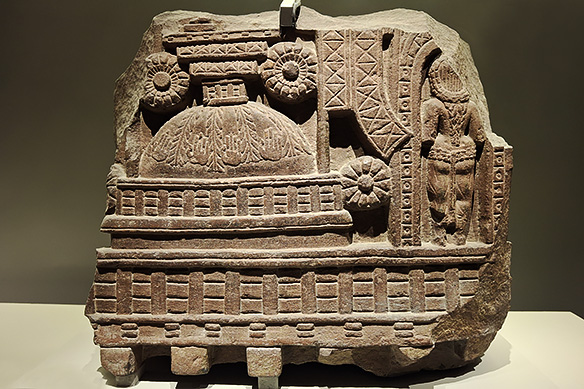
A female devotee is seen entering the stupa for worship. The circular dome is crowned by a harmika and flanked by a full-blown lotus. 2nd Century BCE, Bharhut, Madhya Pradesh.
“A man is not called wise because he talks and talks again; but if he is peaceful, loving and fearless then he is in truth called wise.”
~ Dhammapada, Verse 259
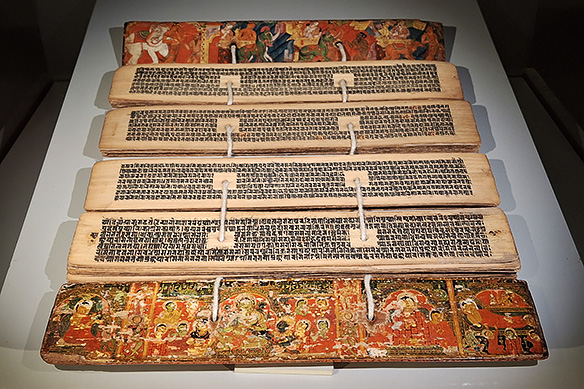
Ashtasahasrika Prajnaparamita Sutra is a 297-folio text transcribed by Vajracharya Bandhugupta. It features Buddha’s life on the front cover and the Vessantara Jataka on the rear cover. 1350 CE, Eastern India.
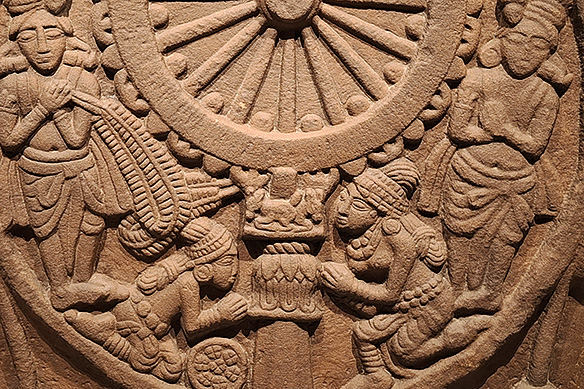
Red sandstone relief showing devotees reverently worship the Dharma Chakra, symbol of Buddha’s teaching. 2nd Century BCE, Bharhut, Madhya Pradesh.
– – –
Note: ‘The Light and the Lotus: Relics of the Awakened One’ exhibition of the Piprahwa relics is currently running at the Rai Pithora Cultural Complex, New Delhi. Entry is free. Museum timings: 9.00 am to 8.30 pm daily, except Monday and Wednesday.


Great blog, Rama. Do you know when the exhibition will finish?
LikeLiked by 1 person
Thank you. 🙂 I am told it is on till 3rd July.
LikeLike
Unfortunately, I won’t be able to make it then
LikeLike
Welcome to India. 🙏
LikeLike
Wonderful Rama!!
LikeLiked by 1 person
Thank you, Jyothi. Apologies for the late response. Am travelling. Yes, it is a fabulous exhibition. Very well curated.
LikeLike
Thank you for sharing this fascinating account of your museum visit and the Piprahwa relics. I appreciated how the article brings attention to the archaeological and spiritual importance of these sacred Buddhist remains and their connection with the early history of Buddhism. Seeing such relics preserved in a museum offers a powerful opportunity to reflect on the Buddha’s legacy and the long journey of the Dharma.
The article is a meaningful reminder of the importance of protecting and preserving Buddhist heritage for future generations. Thank you for sharing this thoughtful experience and for encouraging readers to learn more about the history, significance, and enduring spiritual value of the Piprahwa relics.
Regards,
Antique Buddhas
LikeLike