The National Museum, New Delhi makes the herculean task of experiencing India’s monumental heritage spanning 5,000 years—doable. You could always spend 3 minutes looking at each object in its 210,000 piece collection. But that would take 14.5 months with no sleep or meals inbetween. Or you could do an audio tour and spend a day exploring its glorious galleries through 64 masterpieces. And if you have just one and a half hours, then why not feast your eyes on its very best.
Earlier housed in the Rashtrapati Bhawan [President’s residence], the collection has its roots in 1947 when the Royal Academy, together with the governments of India and Britain, decided to hold an “Exhibition of Indian Art” in London. Selected artefacts from museums across India were collected for the showing.
Before returning the exhibits to their respective museums, it was decided to display the exhibition in Delhi as well. What a huge success it turned out to be! The overwhelming response led to the idea of a permanent National Museum being set up in the capital with its very own building by India Gate which it moved into in 1960.
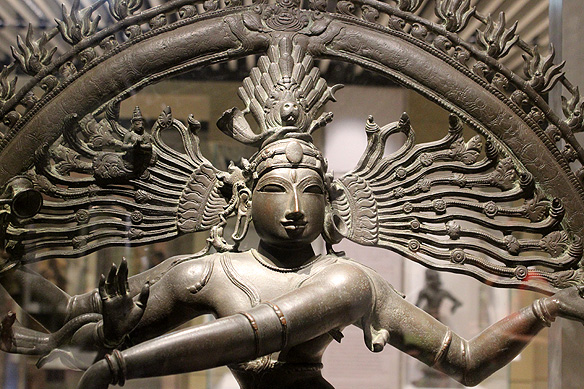
The National Museum has it all. From the iconic Harappan Dancing Girl to elegant Gandharan Buddhas, from exquisite miniature Mughal paintings to luscious Tanjore compositions, from Chola bronzes to 20th Century decorative arts, from medieval sculptures of voluptuous Hindu deities to diamond and emerald regalia of its once-upon-a-time royalty. The Museum has all these, and much much more.
Here are my 15 favourite pieces collated after rambling through its collections and meditating over its audio tour. Doable in 90 minutes. 🙂 Continue reading →