a self-guided walk through shimla, the british raj’s summer capital

1864. The British Crown was now directly in control of the Indian subcontinent. Five years had passed since they had squashed the Indian Mutiny. It had been a tough fight lasting nearly two years and two months, but they’d won in the end.

Summers in their new capital, Calcutta, were, however, brutal. Oh, how they longed for the grey overcast days back home, bathed in gentle drizzle.

Since the 1820s, the earlier British East India Company officers stationed in India had been escaping from the sun-baked plains to a hamlet in the middle hills of the Himalayas during such summers. The hamlet, comprising some 50 houses, was called Shayamala after a local Hindu goddess.

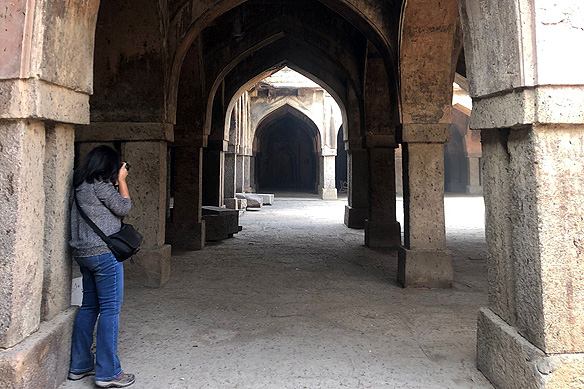
India’s new rulers decided to make this association more permanent. They renamed the hamlet ‘Shimla,’ and set up the British Raj’s ‘Summer Capital’ on its seven hills.

Every year, just before the sweltering heat clamped down on the Gangetic plains, the entire administrative machinery would move here, replete with traders, restaurateurs, and socialites. Once the heat cooled down, and snow started to peck its slopes, they would all move back again south-eastwards.

A mini-Britain was created in Shimla’s hills. Timber-strapped Tudor houses, soaring neo-Gothic churches, grand town halls, and a theatre for concerts and plays. On the Ridge, which offered rather splendid views, a bandstand was thrown in where military bands could play music and the gentry could indulge in leisurely strolls. Not too shabby now, perhaps they whispered to each other in relief.

Though it is now 77 years since the British have left, their summer capital’s remnants still dot Shimla, and more so on its main commercial pedestrian artery—Mall Road.

Here is a self-guided walk on what to watch out for should you ever be in the vicinity, with suggestions for eating and staying dating back to the colonial days. Take your time and savour its charms. After all, Shimla was always for the long haul. ❤

PS. Take the lift up to Mall Road, and on exiting the lift turn left towards Christ Church.
Continue reading

the complete travel guide to the treasures of sri lanka’s cultural triangle

Welcome to my travel guide on Sri Lanka’s Cultural Triangle told a bit differently—through short photo-essay chapters on the country’s ancient and medieval history.

Of the six UNESCO-listed cultural world heritage sites in Sri Lanka, five lie within the Cultural Triangle in the heart of the country. It is a region rooted in 2,500 years of history and heritage, both sacred and secular, from timeless Theravada Buddhist sites to splendid Sinhalese royal capitals. All surrounded in lush tropical jungles.

Before I write any further, I would like to briefly explain two terms used in this guide which are part of the warp and woof of the country. Theravada Buddhism and ‘Sinhalese.’ Theravada Buddhism is the oldest school of Buddhism and a direct offshoot of Buddha’s teachings. There are five countries in the world which have Theravada Buddhism as their official religion, and Sri Lanka is one of them. Sinhalese refers to the Indo-Aryan ethnic race native to Sri Lanka.

Whilst this guide covers the five UNESCO-listed sites, it also includes some gems scattered in-between. I hope you find it useful and it helps put the country’s Cultural Triangle as a seamless whole with all the dots connected. ❤

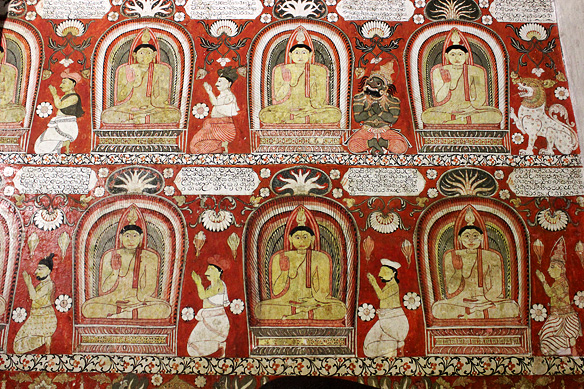
[Title photo: 18th Century Mural at Lankatilaka Vihara, Kandy.]

Table of Contents:

Continue reading

a heritage buff’s guide to the eight cities of delhi

Delhi, a city of 7 cities, 8 cities or 14 cities? It depends on which lens one is looking at the city from. But it surely is not one city!

India’s political centre has been around for a long time. 1,300 years as per historical records, in which it served as the capital city for different rulers over various periods.

Many set up their own capital, in their own name, for posterity’s sake in and around Delhi. For instance, Mubarak Shah, the second Sayyid dynasty ruler during the Delhi Sultanate period founded Mubarakabad in the 15th Century [included in the 14 cities list]; it is now a neighbourhood called Kotla Mubarakpur.

All together, 14 such cities were built over the centuries in this patch of strategically placed land in northern India with the fertile Gangetic plain to its east, the impenetrable Deccan plateau to the south, and the arid desert state of Rajasthan to the west. An area nourished by the river Yamuna and the monsoons.

Much smaller than present-day Delhi, these cities were often built a short distance away from an old one or incorporated earlier ones into its boundary walls, and at times even existed concurrently. Each of them has added a distinctive layer to Delhi, making Modern India’s capital quintessentially different from any other. Where else can you time travel across a millennium in an hour.

For this post, I am taking the ‘8 cities in a city’ theory. Seven historical cities in Delhi that still exist, and New Delhi, listed in chronological order.

It is a longish post. After all, we talking about 1,300 years and eight cities. 🙂 Hope you enjoy reading it as much as I enjoyed writing it.

Happy time travel! Continue reading

royal splendour in jaipur’s city palace

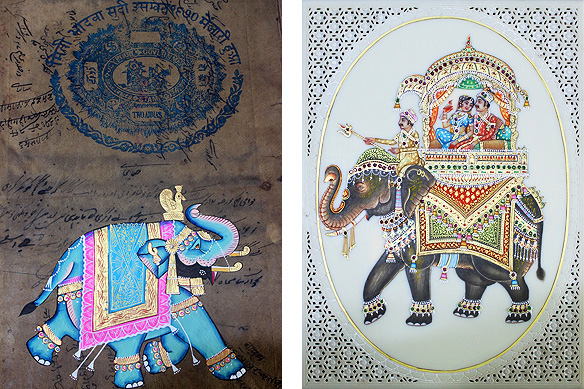
“When you have good luck [pointing towards the elephant in a painting], you find love. When you get love, you feel powerful. When powerful, you are happy. When happy, you are brave. And when brave, you are kind.”

With a broad smile and a tiny squirrel-hair brush held gently in his fingers, he pointed towards one of his favourite works, even as, with a mere few strokes, he also put together a miniature-styled portrait for me replete with a nose ring and odhni.

Hemant is one of the four award-winning Ramdev brothers patronised by Jaipur’s royal family; their studio perched on the fourth floor of Chandra Mahal which houses the royal residential apartments. His ancestors, Jaipur City Palace’s court painters, had spent their entire lives decorating the walls and ceilings of this royal abode and crafting flawless miniature landscapes and portraits since the city’s inception in 1727.

If you’ve been to Jaipur, the City Palace would, without a doubt, have been on your to-do, not-to-miss list. Did you notice the cream coloured, 7-storeyed building topped with a one-and-a-quarter flag which seemed to always loom in the background? Not many take the trouble of exploring this edifice. Yet it contains the palace’s most exquisite, most resplendent rooms. Continue reading

chettinad: opulent mansions and spicy chicken in sleepy villages

India is full of surprises. Do you agree?

There are the usual suspects in India’s travel mix: Temples, forts, palaces, beaches, the Himalayas, and wildlife reserves. Throw in some yummy food, colourful festivals and yoga, and one may well be duped into believing—India, aah! Been there, done that.

Then, almost out of the blue, is a collection of around 75 sleepy villages in southern Tamil Nadu filled with uber-rich villagers’ mansions dating from the 1850s to 1940. Often filled with a hundred-odd rooms, they span across two streets in the neat grid plans which swathe the villages.

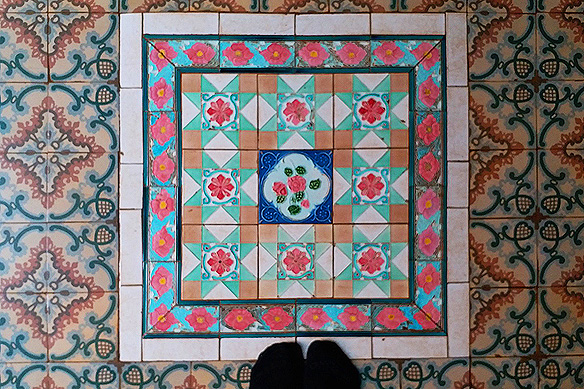
On their walls are massive mahogany framed mirrors all the way from Belgium while the floors are decorated with dainty English ceramic tiles spangled with roses, hand-made Athangudi tiles and Italian marble. Smooth Burmese teak pillars hold up ceilings from which enormous sparkling Venetian Murano glass chandeliers dangle. Continue reading

britannia and company : parsi food at its best : south bombay

britannia1

[This post is not a food or restaurant review, and has not been commissioned either. It is a place I have eaten at and fallen in love with, at times for the food, at times for the ambience, and often for both. And like me, countless others have been smitten by it too. Such, that it is today part of the very fabric of Bombay’s history and culture.]

– – –

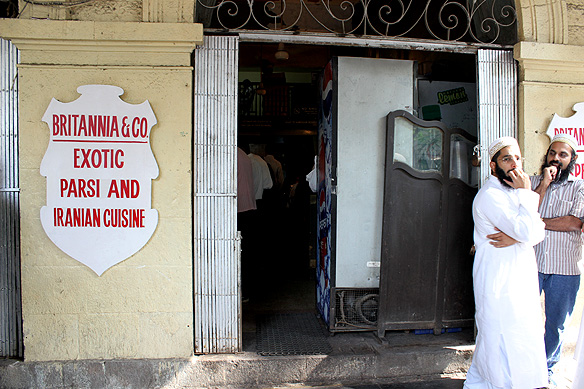
Ninety-three year old Boman Kohinoor comes to our table to take our order. Charming, suave and gentle, he is the owner of Britannia and Company, a Parsi restaurant founded by his father, Rashid Kohinoor, in 1923. His son, Romin, is the chef.

Britannia and Company has remained virtually unchanged from when it was set up 92 years ago. The peeling paint, crystal chandeliers and Polish Bentwood furniture within are evocative of another era; the Iranian flag draped across the side wall a proud acknowledgement of the restaurant’s heritage.

It would be fair to say that the restaurant is driven by emotion rather than profit. The nominally priced meals could easily go for small fortunes apiece, taking the restaurant’s global repute and heritage into consideration, but the Kohinoors are happy selling them for a few hundred Rupees instead.

The family-owned eatery on a quiet street in colonial Ballard Estate opens only for fours every day to a packed house and long queues. If you are not eating you have to leave. Its patrons come from far and wide, from the office crowd in the Fort District to Parsi NRIs on holiday yearning for a taste of home.

I am charmed, to say the least. 🙂 Continue reading