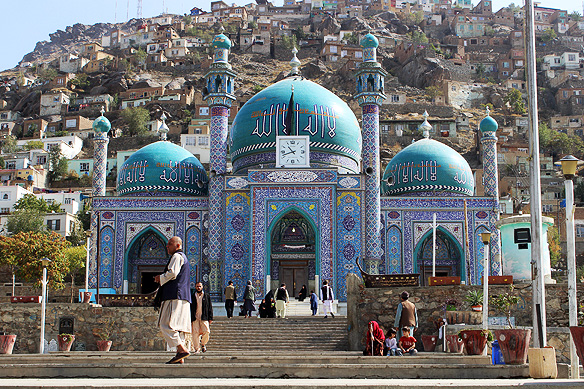
Afghanistan’s capital, Kabul, is not your regular city. Hemmed in by the Hindu Kush Mountains and Kabul River, it is beautiful. And broken.
The city traces itself back some 3,500 years and was a strategic trading centre on the Silk Road linking India with the Hellenic world. Over the centuries, the Who’s Who of Central Asia’s rulers and empires have ruled over it.
One of its earliest turning points was in the 9th Century when it was conquered and Islamised by the Abbasid Caliphate. Prior to this, Kabul was politically and culturally a part of India with a Buddhist and Hindu populace and rulers. Another major turning point was in 1776, when it officially became the capital of ‘Afghanistan,’ a nation the country’s founding father Ahmed Shah Durrani had established a decade earlier. Continue reading
 rama toshi arya's blog