If there is one man who single-handedly changed Russia’s course for keeps, it would be Peter I, better known as Peter the Great. His rule spanning 43 years opened Russia to Europe. By the time he died aged 52, he had made Russia Europe.
Peter the Great came to power early. He was just 10 when he became co-Tsar of all Russia, sharing the throne with his half-brother Ivan V in 1682. Once Ivan V died in 1696, there was no stopping Peter.
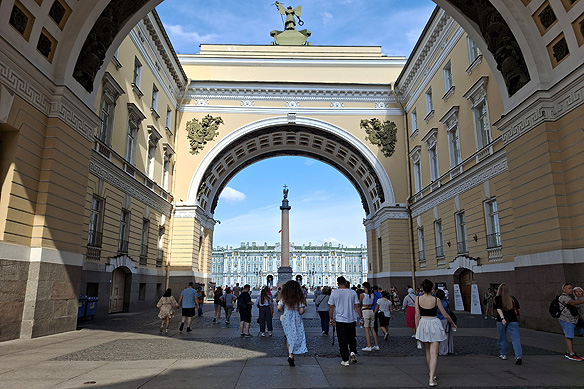
A giant, both physically, and metamorphically, he set about putting his vision of a European outward-looking Russian empire, built on marine trade and naval battles, into action. His capital St. Petersburg, which he built from scratch in 1703 on the marshlands of the Neva Delta in the Baltic Sea, was to be his launchpad for these dreams.
Multi-talented, he was just as adept at building ships as he was at stitching a pair of shoes. He was also equally comfortable executing in cold blood those guilty of wilful treason, including his own son Alexei Petrovich, as of intense loyalty to his friend Alexander Menshikov, a commoner, and deep love for his second wife Catherine I, a laundress from Poland-Lithuania.
After his death, for almost a century Russia was ruled by a string of women from St. Petersburg. First his widow Catherine I, then his niece Anna Ioannovna, followed by his daughter Elizabeth I, and finally Elizabeth I’s nephew’s wife Catherine II aka Catherine the Great. This period came to be known as the Petticoat Period, with each Empress embellishing the city with splendid palaces, monuments, and bridges in the Baroque and Neoclassical styles by French and Italian architects, which one sees today.
The arts thrived here. And so did literature. In its 300-year-old history, St. Petersburg has been home to some of Russia’s greatest writers. Alexander Pushkin, the founder of modern Russian literature, Fyodor Dostoyevsky who churned out one masterpiece after the other, Nikolai Gogol who doggedly destroyed romantic illusions, Anna Akhmatova, a rare poetess in a male-dominated field, and Vladimir Nabokov, author of ‘Lolita.’
These 300 years also saw St. Petersburg have its fair share of name changes reflecting changing geo-politics. From 1914 to 1924 it went by the name Petrograd, and from 1924 to 1991 it was known as Leningrad in honour of Lenin, during which for 2 years, 4 months and 19 days [from 1941 to 1944] it was subjugated to one of the deadliest sieges in history, but never captured. After the collapse of the Soviet Union in 1991, the city reverted to its original name St. Petersburg [meaning St. Peter’s City] given by Peter the Great. St. Peter’s City, because the keys the saint held to the heavens, herein represented the keys to the West.
Here is a photo essay of St. Petersburg which started off on a pragmatic note and ended up being sheer poetry, punctuated with quotes from its writers whose favourite muse was their city. ❤ Continue reading

 rama toshi arya's blog