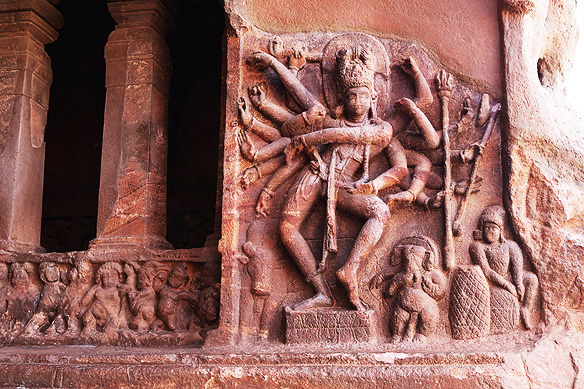
One of Badami Cave Temples’ most impressive sculptures: Shiva as the 18-armed Nataraja doing the Tandava Nritya—the cosmic dance of creation, preservation, and destruction.
One is never far from the gods in India. They are everywhere. Carved out of living rock. Carved into living rock. As far back as even 578 CE.
It is just after lunchtime, and I am at the foot of a gigantic red sandstone escarpment. Hundreds of school-children are racing down the steep uneven steps hewn into the cliff’s face. Their teachers shout behind them to slow down. Not that their wards pay any attention to the ominous warnings. Dressed in shiny tracksuits, they run in and out of the cavernous halls, doubled over in unstoppable giggles.
Slicing their way through this human avalanche are staid family groups. Their elderly matriarchs stomping ahead, undeterred by limps or wobbly canes.
“Aaj bahut bheed hai [It is very crowded today],” I observe to the security guard at the gate. “Roz aisa hai. Season hai na aaj kal [It is like this every day. It is the season nowadays],” he smiles back happily.
In a few months these cliffs will be deserted again, first under the scorching summer sun and then because of the monsoons which would make the stone steps a veritable death trap.
Yet such ominous weathers rarely affected pilgrims in the distant past. 1,400 years ago.
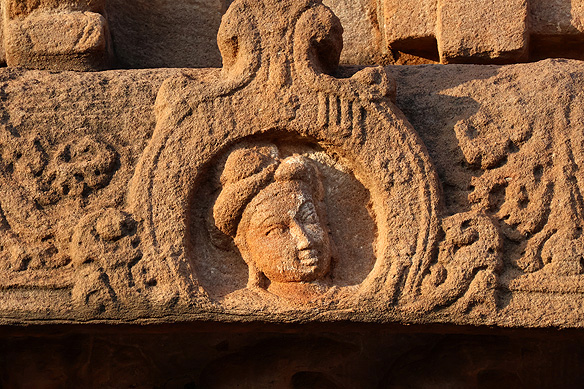
Portrait of a man in Ancient India. Ancient Hindu temples, by virtue of their depiction of both the sacred and secular, offer a fascinating insight into the then prevailing norms and societies.
 rama toshi arya's blog