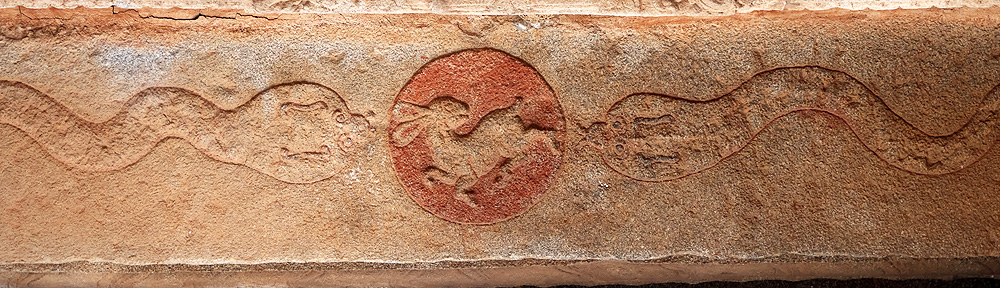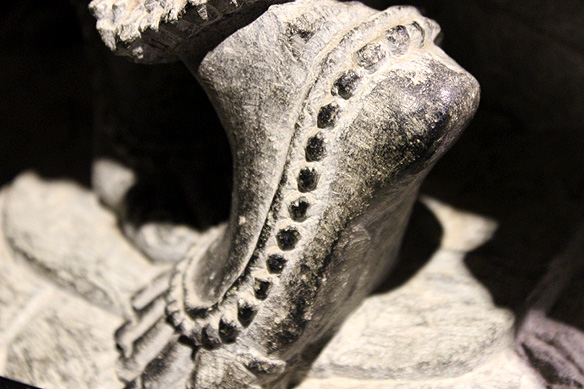
Inspired by Mumbai’s rock-cut cave temples, I set out this afternoon to explore the sculpture gallery at Chhatrapati Shivaji Maharaj Vastu Sangrahalaya. Yup, it’s a mouthful. 🙂 Formerly known as the Prince of Wales Museum of Western India, it is one of the finest museums in the country. The quiet, tasteful sculpture gallery—a crash course in Indian history, religion, and art all rolled into one—is its highlight. Continue reading
Tag Archives: Buddhism
mumbai’s ancient rock-cut cave temples

“Let’s explore the rock-cut cave temples of Mumbai this Sunday,” a friend suggests excitedly.
“Caves? I have been to Elephanta and Kanheri. Even written about them! Read my post. 🙂 ”
“Hey, there are more, a lot more in the city itself.”
More? I am confused. Where can there possibly be caves in Mumbai. The city is packed with concrete and people, with little space to walk, least of all millennia old caves to have survived. I am wrong.
Hidden within the crevices of Mumbai’s urban jungle is a pulsating vein of its ancient past. A series of rock-cut temples, connected to each other with tunnels and hidden passageways, lace the city’s basalt bed rock. Continue reading
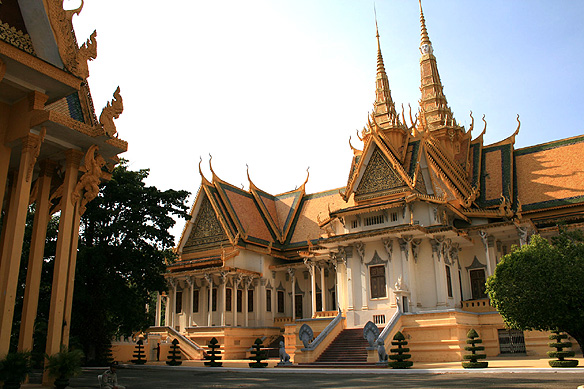
cambodia 3: phnom penh, “we don’t need to fight anymore”
Phnom Penh is where the Cambodians live, work, play and pray. Its attractions are low key, forming part of the fabric of local life. The city sits at the confluence of the three great rivers of Indochina—the Mekong, Tonle Sap and the Bassac—and is the country’s commercial and political capital. It is crowded, chaotic and most importantly necessary in order to understand the everyday real Cambodia.
Like Siem Reap and other towns in Cambodia, Phnom Penh too swarms with child beggars and amputated men and women trying to eek out a living from the country’s thriving tourism industry. After three decades of civil war, the country has only in the last 10 years opened its doors to the outside world with its sliver of calm and peace. All in all 539,000 tonnes of bombs have been dropped over the country and between four and six million land mines still dot the countryside. Huge billboards on the roads read, “Put down your weapons. We don’t need to fight anymore.” Continue reading
cambodia 1: the splendours of angkor
I am finally in Cambodia. Every traveller’s utopia. Peace has come to this beautiful yet scarred land after three decades of war and suffering, and a journey to this small kingdom is truly one of Asia’s most genuine adventures.
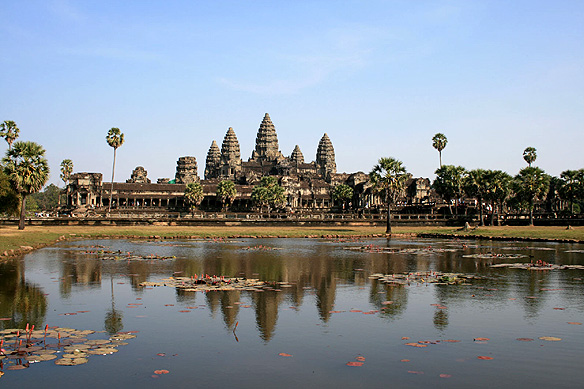
Present day Cambodia is the successor state to the mighty Khmer empire which during the Angkor Period (9th to 15th Century AD) ruled much of what is now Laos, Thailand and Vietnam. No matter how much you read about Angkor or see pictures of its monuments, the actuality of the place still takes you by surprise. The scale alone of the site is impressive, the detailed stone carvings on its temples only further adding to its incredible beauty. Continue reading
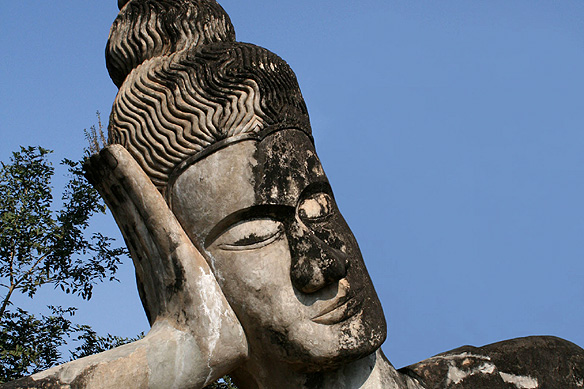
laos 3: sacred chants and harmony in luang prabang
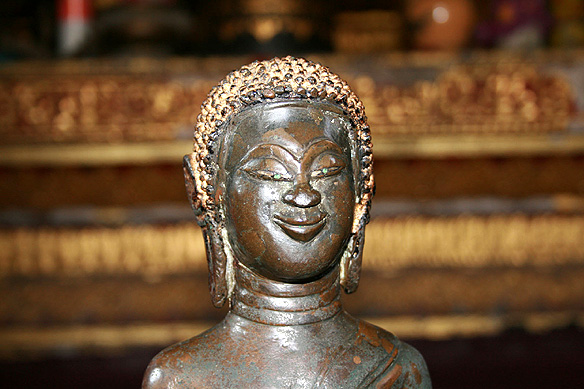
Luang Prabang resonates with sacred chants and harmony. The various layers of life in this charming, medieval, religious town blend seamlessly into each other to create a complete whole. From the saffron robed monks going about their daily tasks to the local Lao whose lives revolve around the wats; from the night market which sells indigenous handicrafts to the thronging tourists, to the tourists themselves, mature and sensitive to the spirit of Luang Prabang. Nothing jars here. Nothing irks. Every aspect of this palm fringed, sleepy, former royal capital by the Mekong is in peace with itself. Continue reading
laos 1: vientiane, first-last impressions
First impressions
I have to remind myself that I have been in Laos for less than 36 hours. It feels like a very long time. Everything and everyone is welcoming and simple. No traffic, no noise, no cell phones, no crowds, no garish modernisms. The pace quieter, the days longer, the moments richer. Continue reading
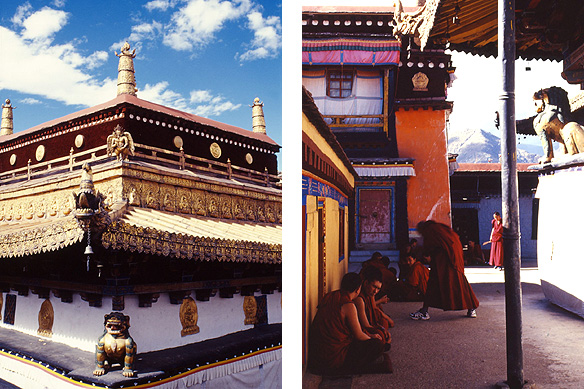
tibet 4: jokhang temple in lhasa, the spiritual center of tibet
In the 7th Century, Songtsen Gampo, the 33rd Yarlung king of Tibet, united the scattered tribes of Tibet and moved his capital from Tsedang to Lhasa. He was one of the first kings to be recognized as an incarnation of Avalokiteshwara, the boddhisattva of compassion. During his reign he had a group of 16 children sent to India to study Sanskrit. Only one child survived the journey and went on to live in India for seven years. His name was Tumi Sambhota. This child later became a prominent Minister in Songtsen’s court and was responsible for standardizing and forming the Tibetan script that is still in use today. He contributed immensely to the translation of the Buddhist Sanskrit scriptures as well, making them understandable to the many devout and faithful followers in the kingdom. Continue reading
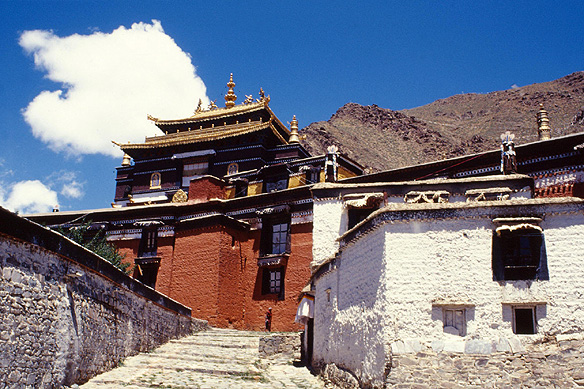
tibet 3: tashilhunpo monastery, shigatse—tibet’s heap of glory
Tashilhunpo Monastery, the seat of the Panchen Lama
Tashilhunpo Monastery, meaning ‘Heap of Glory’, is the seat of the Panchen Lama, the second most important spiritual leader of Tibet and was commissioned in 1447 by His Holiness the 1st Dalai Lama, Gyalwa Gendun Drup. The abbots of Tashilhunpo came to be known as Panchen, because of their scholarly reputation. The title Panchen derives from the Sanskrit word Pandita, which means ‘scholar’, and the Tibetan term Chen Po, which means ‘great’. Continue reading
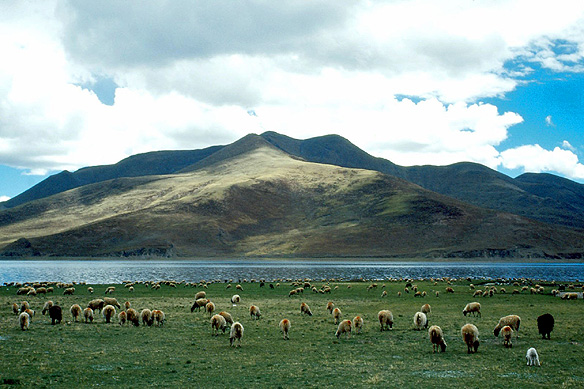
tibet 2: gyangtse, after three mountain passes and two lakes

Yamdrok lake, one of the four holy lakes of Tibet
The drive from Tsedang to Gyangtse covers a distance of 350 kilometers and weaves through three mountain passes and two lakes. The first part of the journey hits one with its sheer desolation. The terrain is dry and barren to the extent cracks tear up the mountains while a river bed glitters empty in the harsh sun; the landscape a monotonous shade of gold. Through ancient dirt roads clinging to mountain edges, I drove higher and higher, my SUV twisting and turning around crags of rock on to the first pass of the journey, Kambala pass, at a height of 4,794 meters. Draped in prayer flags the pass is breathtakingly beautiful. A nomad came from nowhere and placed a one day old little black goat in my arms. I could only look around me in awe, and at that little face with love. Continue reading
tibet 1: tsedang, the road less travelled … mountains and monasteries
[In 2004 I travelled to Tibet on my own. I hired a 4X4, got a driver and guide, and drove through the mountains for seven days, stopping at monasteries on the way. My Tibet series documents this journey.]
– – –
Tibet, a land of high plateaus and magnificent mountain peaks studded with monasteries in its remote folds, seems to be just that little closer to god. Welcomed with a smile and white silk Hada (holy scarf) wrapped around my shoulders, my soul stood on mountain passes where I could touch the skies. And monasteries and temples invited me in to spend a moment or two in god’s own abode. Come, travel with me on my journey of history, myths, the power of belief and Himalayan grandeur. 🙂 Continue reading