72 hours in ho chi minh city

Aah, the buzz of Ho Chi Minh City, better known simply as HCMC, as thousands of scooters whiz past towering colourful tube-houses. Whether you are here in search of elegant Saigon or Uncle Ho’s namesake, looking for Vietnamese modern art or Soviet brutalism, fancy a street-side noodle soup or the perfect quiche in a quiet patisserie, you won’t be disappointed in this fastest growing city on Vietnam’s southern end sliced by the Saigon river.

No other south-east Asian city has quite captured the imagination of travellers the way HCMC has done. And continues to do.

Part of a unified Vietnam under the Nguyen Lords and Nguyen Dynasty, the city on the fringes of the Mekong Delta became a French colonial stronghold from 1862 to 1954. Next in line was its role as the capital of US-backed South Vietnam. After being ripped apart by decades of war, the city finally fell to communist North Vietnam on 30 April, 1975, paving the way for a re-unified nation.

On 2 July 1976, Saigon was renamed Ho Chi Minh City, as a mark of respect to the man who had dreamt of a free and reunited Vietnam, and the dream that came true.

The city has seen it all, at close quarters. Yet there is no bitterness or anger or melancholy whatsoever. No vengeance or self-pity. Instead, it seems to waltz better, with a more experienced step and twirl.

One could easily spend a week in this frenzied fast-paced populous city which never seems to sleep, and still not be bored of it. Where does one start? How about 72 hours to see the best it has to offer? And then maybe a few more days to relish it further. ❀️

[Title photo: Detail, Central South and North Spring Garden by Nguyen Gia Tri, Lacquer on Wood, 540 cm x 200 cm, 1969 – 1989, HCMC Museum of Fine Arts.]

Table of Contents:
Continue reading

72 hours in baku

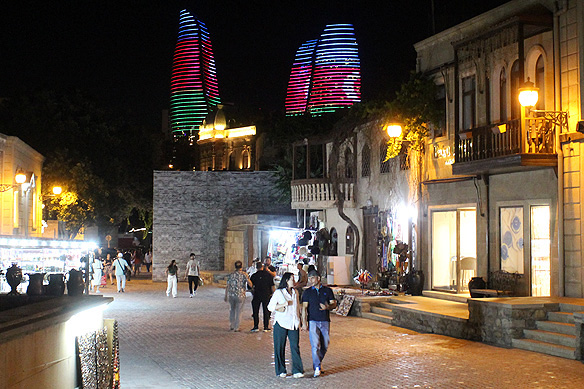
Baku is often described as one of the most beautiful cities in the world. It is a description that is not off the mark. The city’s rich heritage spanning three millennia can be invariably seen in a single line of vision. Now where else would you have such a splendid view!

But Baku is not only about pretty buildings. A world city in every respect, it abounds with museums and galleries wherein local meets international. Literature, art, and music thrive here, both at the esoteric and popular levels. Can the culinary be far behind in all this? With one-fourth of Azerbaijan’s population, Baku buzzes with life. Literally. Not in a chaotic haphazard way. But as a celebration.

Travellers have only recently started noticing this city on the shores of the Caspian Sea which comes with the moniker ‘Windy City.’ On its part, the Azerbaijan government is making every effort to ensure it is a memorable visit. The visa department sends out surveys to its tourists to find out what worked, what did not, and how Azerbaijan could be a better travel destination.

Here is a three day/ 72-hour itinerary with context, tips, and links to help you make the most of your stay. To go straight to the itinerary for a specific day, use the table of contents below. Wishing you happy travels, this time to Baku. πŸ™‚

Table of Contents:

Continue reading

the 5 untold treasures of abu dhabi and sharjah

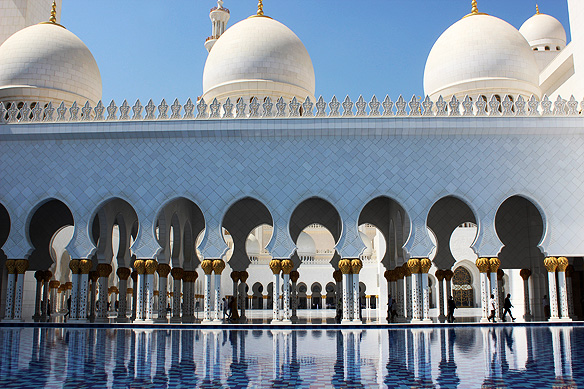
Think of the United Arab Emirates [UAE] and the one city that invariably pops up in our minds is Dubaiβ€”the city of steel, glass, and gold. But Dubai is not the only emirate. Notice the plural in the country’s name? There are six others, each with its own ruler, and of these, two are steadily vying with Dubai for a space in global tourism. For a reason: The incredible treasures they both hold which not many know about. They are Abu Dhabi and Sharjah.

Abu Dhabi is the richest emirate in the grouping and its city by the same name, Abu Dhabi, is the country’s capital. 96 percent of the UAE’s 100 billion barrels of proven oil reserves are within its borders, ranking it at number six worldwide. Abu Dhabi’s ruler is also the President of the UAE. Sharjah, on the other hand, is in a time-warp. It is older, more traditional, and regarded as the UAE’s cultural capital.

It was in 1958 when the UAE first discovered it had oil, and that too loads of it. Four years later, in 1962, Abu Dhabi, then a small fishing village on the edge of a desert, exported its first cargo of crude oil, and the country changed forever.

Supplying 4 percent of the world’s oil requirements with a production of 3.2 million barrels per day, the UAE has spiralled its way through progress at an astonishing speed. However, there is another side to the country that was formed on 2nd December, 1971. Its pre-oil era, swathed in a heritage that is beyond its oil. There is also a whole country that is beyond Dubai.

With ancient desert roots and a vision of unity through globalisation, here are some of UAE’s most spectacular treasures in its two lesser visited cities Abu Dhabi and Sharjah. For often the most beautiful sites are on the road less trodden. ❀ Continue reading

a self-guided walk through shimla, the british raj’s summer capital

1864. The British Crown was now directly in control of the Indian subcontinent. Five years had passed since they had squashed the Indian Mutiny. It had been a tough fight lasting nearly two years and two months, but they’d won in the end.

Summers in their new capital, Calcutta, were, however, brutal. Oh, how they longed for the grey overcast days back home, bathed in gentle drizzle.

Since the 1820s, the earlier British East India Company officers stationed in India had been escaping from the sun-baked plains to a hamlet in the middle hills of the Himalayas during such summers. The hamlet, comprising some 50 houses, was called Shayamala after a local Hindu goddess.

India’s new rulers decided to make this association more permanent. They renamed the hamlet ‘Shimla,’ and set up the British Raj’s ‘Summer Capital’ on its seven hills.

Every year, just before the sweltering heat clamped down on the Gangetic plains, the entire administrative machinery would move here, replete with traders, restaurateurs, and socialites. Once the heat cooled down, and snow started to peck its slopes, they would all move back again south-eastwards.

A mini-Britain was created in Shimla’s hills. Timber-strapped Tudor houses, soaring neo-Gothic churches, grand town halls, and a theatre for concerts and plays. On the Ridge, which offered rather splendid views, a bandstand was thrown in where military bands could play music and the gentry could indulge in leisurely strolls. Not too shabby now, perhaps they whispered to each other in relief.

Though it is now 77 years since the British have left, their summer capital’s remnants still dot Shimla, and more so on its main commercial pedestrian arteryβ€”Mall Road.

Here is a self-guided walk on what to watch out for should you ever be in the vicinity, with suggestions for eating and staying dating back to the colonial days. Take your time and savour its charms. After all, Shimla was always for the long haul. ❀

PS. Take the lift up to Mall Road, and on exiting the lift turn left towards Christ Church.

Continue reading

kullu manali and their 11 loadstones

Loadstone: Noun. A person or thing that is the focus of attention or attraction. In aplenty. In other wordsβ€”Kullu and Manali.

– – –

Two of India’s most popular hill stations’ names are often taken in the same breath. Even though they are separated by some 40-odd kilometres.

Welcome to Kullu Manali. Two towns located on the verdant Kullu valley in India’s Himachal Pradesh with the ice-blue Beas river gurgling past them.

Free of a colonial overprint, or the culture and faith of an invading ruler, these two towns have in the past, as well as today, continue to epitomize Himachal history, traditions, and heritage. In all its unadulterated richness.

Gods are in abundance here, and so are centuries-old beliefs. The lines between mythology and mundane reality are blurred with characters from the epics Mahabharata and Ramayana popping up everywhere. Ancient sages, mythical heroes, demons, and the proverbial Noah [in Hinduism’s case Manu] who set forth from his ark to kick-start the lineage of mankind. They are all somehow associated with the Kullu valley which has earned itself the moniker ‘Valley of Gods.’

There’s also tall graceful fir trees, rivers fed by melting glaciers punctuated with hot water springs, and wooden homes which have housed many a generation of pahari [mountain] folks inside their weathered walls.

You will need at least a few days to get acquainted with Kullu and Manali’s sites. Hotels and taxis are easily available. Let me not go into them here. Rather let this post be a roadmap of what makes these two towns attract pilgrims and tourists in their droves, always. ❀ Continue reading

exploring sri lanka’s coastal towns: from galle to trincomalee

Indian Ocean from the Galle Fort ramparts just after sunset.

Indian Ocean from the Galle Fort ramparts just after sunset.

For a country whose length and width are merely 435 kilometres and 240 kilometres respectively, Sri Lanka, the tear-drop-shaped Buddhist island in the Indian Ocean has a remarkable variety of coastal towns.

Starting at windswept Galle with its Dutch colonial vibes in the south-west, next in line is the cosmopolitan financial capital Colombo. Then on to Negombo, the sunny Catholic fishing town in the west, to Jaffna in the north which till recently was completely out of bounds to all and sundry. And finally, Trincomalee in the north-east steeped in ancient Tamil culture against the backdrop of surf-worthy waves.

Come along and explore with me Sri Lanka’s five coastal gems, their unique heritages, and what not to miss. ❀

Table of Contents:

Continue reading

jaffna: the unexplored north of sri lanka

Twenty-six years of civil war is a long time. A whole generation grows up exposed to the horrors of war, stripped of their right to education, health-care, and utilities. It is hard for one living in a β€˜secure’ country to even fathom such dreadfulness day in and day out, year in and year out.

Sri Lanka’s LTTE-Sinhalese civil war started on 23 July, 1983 and ended on 19 May, 2009, during which an estimated 40,000 civilians died according to a UN Experts Report. Those who could leave, left the country. Root causes of the civil war were a series of anti-Tamil riots following independence in 1948 and the 1956 Government Act which recognized Sinhalese as the only official language.

Fuelled further by the government’s citizenship and education policies, it led to the creation of the LTTE or Tamil Tigers, as they were known, and their demand for a separate Tamil state ‘Tamil Eelam.’

Suicide bombers were a trademark of the Tamil insurgency. Even India, Sri Lanka’s neighbour, could not be immune to it. India’s ex-Prime Minister Rajiv Gandhi was assassinated in 1991 by a 22-year-old female LTTE suicide bomber.

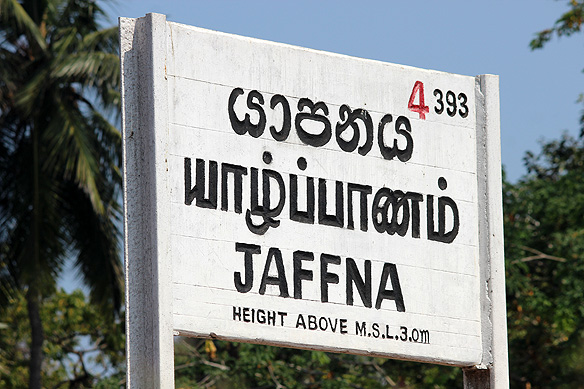
Jaffna [Yalpanam in Tamil] on the northern tip of Sri Lanka, was the epicentre of this civil war which spread across the island’s northern and eastern coastlines. Mutilated factories, bombed homes, and walls pock-marked with gunshots are still scattered throughout the city and its surrounds. An echo of its turbulent past.

Three things, by some miracle, have survived from the nearly three decades of fighting: One, the region’s places of worshipβ€”magnificent colourful Hindu temples, poignant grand churches, and sacred Buddhist sitesβ€”two, its bygone colonial ruins, and three, a bunch of remote sleepy isles on the Palk Strait in the Indian Ocean. Continue reading

photo essay: unravelling turkmenbasy, the rukhnama, and ashgabat


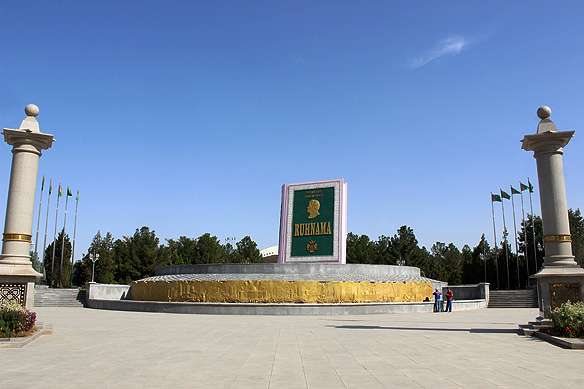
To know Ashgabat, Turkmenistan’s capital, is to know the country’s first President and dictator Saparmurat Niyazov. And to know the Rukhnama, his autobiography and ‘words of wisdom’ for his people, is to know both. πŸ™‚

Here is a photo essay of the three, with excerpts from the Rukhnama [the first and second volumes]. For no other threeβ€”a man, his book, and a cityβ€”are more closely intertwined than Turkmenbasy [Niyazov], the Rukhnama, and Ashgabat.

“When you read Rukhnama, you shall be purified, justified; your life and existence shall have a justification; your objectives and intentions shall be fulfilled. Your existence among the Turkmen shall be accepted!”

Continue reading

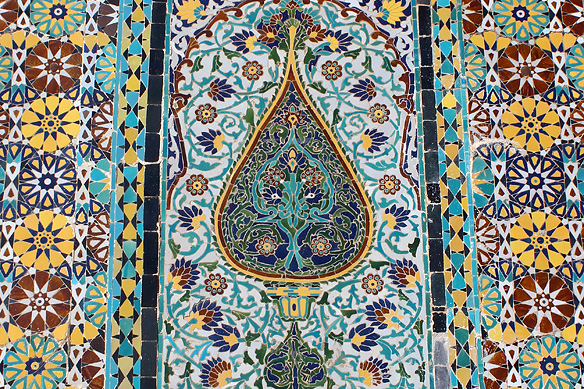
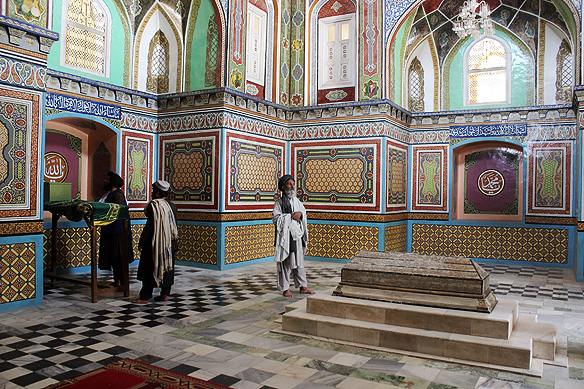
persian herat and its hidden wonders

Right at the very end of the battered and bruised road, cutting across the country from east to west, is the Persian historical city of Herat. Not many travellers come this far. It is way too out, perched near Afghanistan’s western border with Iran. Yet, it has always been of great importance, as is revealed by its architectural and cultural treasures to those who take the trouble to reach it.

Herat’s been around for a long time; 6th Century BC records describe it as a Persian city which went by the name Aria. Yes, the same pronunciation as my surname. πŸ™‚

Its strategic location on the Great Silk Road and the banks of the Hari River made it particularly appealing to conquerors and rulers. Alexander the Great defeated Herat’s Persian Achaemenids in 330 BC and put up a majestic citadel to celebrate his victory. He was followed by the Abbasid Caliphs in the 8th Century, Ghurids in 1175, the Mongol Genghis Khan who destroyed everything in 1221, the Kartids who then rebuilt it, and the Timurid Tamerlane who destroyed it once again in 1380.

When Tamerlane’s favourite son Shahrukh Mirza decided to move his capital from Samarkand to Herat, he was determined to make Herat the grandest city in the region. A vision shared by his wife Gawhar Shad and later descendent Husayn Bayqara.

The result was a city of much beauty and grace whose praise was extolled far and wide. Of its many buildings, 830 ‘cultural sites’ are still believed to survive today, warranting it a place in UNESCO’s tentative list in 2004.

It is a difficult combination. War and conservation. However, despite all the odds, both UNESCO and the Aga Khan Trust for Culture have consistently worked on Herat, ensuring its treasures, hidden from the world at large, manage to survive.

Come along with me on a virtual tour of Timurid Herat, the city on the Hari River, to see why it was called the β€˜Pearl of the Khorasan’ for the longest time! Continue reading

photo essay: in search of kandahar, the taliban’s former capital

Right up to 15 August, 2021, it was impossible for foreign tourists to visit Kandahar, least of all by road. The city, a Taliban stronghold in southern Afghanistan, was labelled the ‘kidnapping capital’ and lethal land mines infested the road to it every few metres. You had a far greater chance of being blown alive en-route than getting in. And if perchance you did make it in, the odds of staying alive were slim. But a lot has changed since then. I went by car to Kandahar this year in October and spent two nights in the city. And I live to write this post. πŸ™‚

Kandahar, founded by Alexander the Great in 330 BC, has been the spiritual headquarters of the Taliban since its inception in 1994. From 1996 to 2001, when the Taliban were first in control, it served as the capital of Afghanistan. Though Kabul is now the seat of government, the Taliban’s senior-most officials, including its supreme leader Hibatullah Akhundzada and his spiritual advisors, are based in Kandahar. All decisions that affect the lives of Afghans are made right here.

So, what’s Kandahar really like now? Let me take you on a visual journey of this much touted city as I went in search of it. Continue reading