a self-guided walk through shimla, the british raj’s summer capital

1864. The British Crown was now directly in control of the Indian subcontinent. Five years had passed since they had squashed the Indian Mutiny. It had been a tough fight lasting nearly two years and two months, but they’d won in the end.

Summers in their new capital, Calcutta, were, however, brutal. Oh, how they longed for the grey overcast days back home, bathed in gentle drizzle.

Since the 1820s, the earlier British East India Company officers stationed in India had been escaping from the sun-baked plains to a hamlet in the middle hills of the Himalayas during such summers. The hamlet, comprising some 50 houses, was called Shayamala after a local Hindu goddess.

India’s new rulers decided to make this association more permanent. They renamed the hamlet ‘Shimla,’ and set up the British Raj’s ‘Summer Capital’ on its seven hills.

Every year, just before the sweltering heat clamped down on the Gangetic plains, the entire administrative machinery would move here, replete with traders, restaurateurs, and socialites. Once the heat cooled down, and snow started to peck its slopes, they would all move back again south-eastwards.

A mini-Britain was created in Shimla’s hills. Timber-strapped Tudor houses, soaring neo-Gothic churches, grand town halls, and a theatre for concerts and plays. On the Ridge, which offered rather splendid views, a bandstand was thrown in where military bands could play music and the gentry could indulge in leisurely strolls. Not too shabby now, perhaps they whispered to each other in relief.

Though it is now 77 years since the British have left, their summer capital’s remnants still dot Shimla, and more so on its main commercial pedestrian artery—Mall Road.

Here is a self-guided walk on what to watch out for should you ever be in the vicinity, with suggestions for eating and staying dating back to the colonial days. Take your time and savour its charms. After all, Shimla was always for the long haul. ❤

PS. Take the lift up to Mall Road, and on exiting the lift turn left towards Christ Church.
Continue reading

the complete travel guide to the treasures of sri lanka’s cultural triangle

Welcome to my travel guide on Sri Lanka’s Cultural Triangle told a bit differently—through short photo-essay chapters on the country’s ancient and medieval history.

Of the six UNESCO-listed cultural world heritage sites in Sri Lanka, five lie within the Cultural Triangle in the heart of the country. It is a region rooted in 2,500 years of history and heritage, both sacred and secular, from timeless Theravada Buddhist sites to splendid Sinhalese royal capitals. All surrounded in lush tropical jungles.

Before I write any further, I would like to briefly explain two terms used in this guide which are part of the warp and woof of the country. Theravada Buddhism and ‘Sinhalese.’ Theravada Buddhism is the oldest school of Buddhism and a direct offshoot of Buddha’s teachings. There are five countries in the world which have Theravada Buddhism as their official religion, and Sri Lanka is one of them. Sinhalese refers to the Indo-Aryan ethnic race native to Sri Lanka.

Whilst this guide covers the five UNESCO-listed sites, it also includes some gems scattered in-between. I hope you find it useful and it helps put the country’s Cultural Triangle as a seamless whole with all the dots connected. ❤

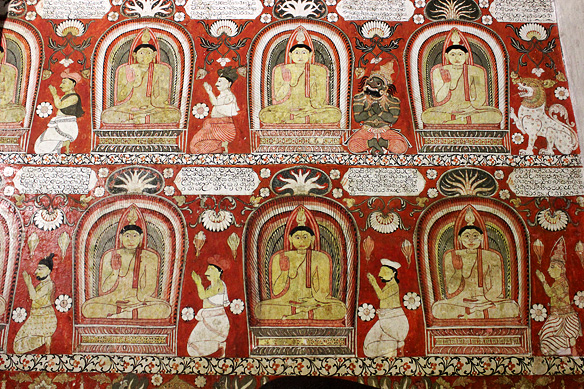
[Title photo: 18th Century Mural at Lankatilaka Vihara, Kandy.]

Table of Contents:

Continue reading

exploring sri lanka’s coastal towns: from galle to trincomalee

Indian Ocean from the Galle Fort ramparts just after sunset.

Indian Ocean from the Galle Fort ramparts just after sunset.

For a country whose length and width are merely 435 kilometres and 240 kilometres respectively, Sri Lanka, the tear-drop-shaped Buddhist island in the Indian Ocean has a remarkable variety of coastal towns.

Starting at windswept Galle with its Dutch colonial vibes in the south-west, next in line is the cosmopolitan financial capital Colombo. Then on to Negombo, the sunny Catholic fishing town in the west, to Jaffna in the north which till recently was completely out of bounds to all and sundry. And finally, Trincomalee in the north-east steeped in ancient Tamil culture against the backdrop of surf-worthy waves.

Come along and explore with me Sri Lanka’s five coastal gems, their unique heritages, and what not to miss. ❤

Table of Contents:

Continue reading

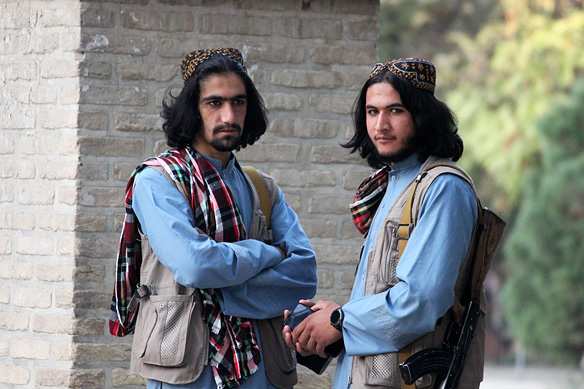
taliban afghanistan, a solo indian woman traveller, and help from unexpected quarters

An Australian tour company versus the Taliban. Who would you trust?

If I am not mistaken nearly everyone would choose the tour company. I did too.

After all, it is ‘white-owned’, from a ‘developed country,’ and the default conclusion is that ‘I would be safe with them’ in an otherwise unsafe country—in this case, Afghanistan under the Taliban.

Instead, as the only person of colour in a group of 10 led by two white Australian tour leaders, I was subjected to a barrage of India-bashing from the group. By the time one of the group, a Welshman living in Poland, crossed the lines on the seventh day of the tour, I’d had enough. I told them to stop. What happened next is what travel nightmares are made of. Continue reading

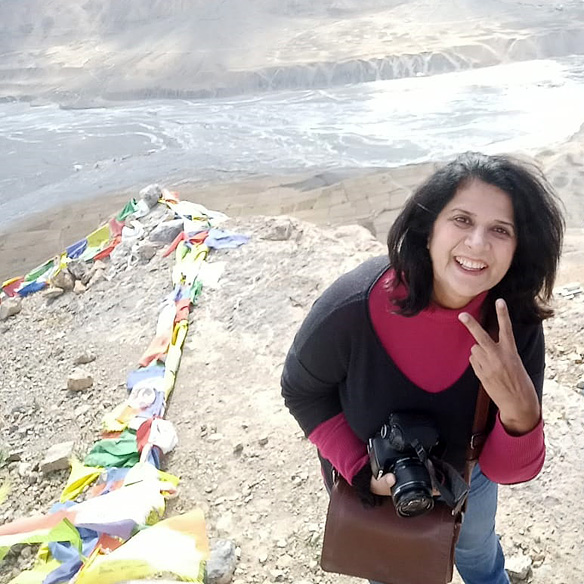
self-portrait: happy in spiti

Those of you who have been following my blog would be well aware that I rarely, if ever, post pictures of myself in my blog posts. The closest I get to is the inclusion of a photograph of my hand holding something I’d picked up at the site or that of my feet. There is neither a deep philosophical reason, nor an effort to create a sense of enigma, behind this. It is simply because I usually travel alone, and I am lousy at taking selfies.

So, when my driver offered to take a picture of me during a recent 15-day solo road trip though Kinnaur, Spiti and Lahaul, deep in the remote northern reaches of Himachal Pradesh, amongst the towering Himalayas, I jumped at it. It was a precious opportunity to make my joy whilst travelling to this part of the world achieve posterity. 🙂 Continue reading

a guide to independent travel in israel

Have my Israel posts been able to inspire you to make your way to one of the most fascinating [and historically and potentially volatile] countries in our world? I hope yes. Yes enough to add it to your bucket list, have day-dreams about it, and make plans for a journey post COVID-19.

Though I’ve ended each post on Israel with related travel tips, I thought I’d collate the important ones into one post and add a few extra. Just to make it easier for you.

I assure you this will be a short post. Most of my Israel posts have been on an average 2,500 words long. If you indeed read through them, credit goes to the country—it is beautiful—and to you. Thank you super much for giving me company through the series, for liking the posts, and for commenting on them. It has encouraged me and kept me focussed on writing the entire set.

So, here goes my last and 13th post in my Israel series, a country that was long on my wish-list and one I finally got to explore on a solo, independent, 15-day travel in November 2019. Wishing you happy travels too, someday soon.

[Please note there are NO affiliate links in this post, or in any of my posts. Links are provided only to help you with your plans or for you to get extra info. Neither is any of the content in this post or any other post sponsored. The services in this post are what I used and I am simply sharing them with you.] Continue reading

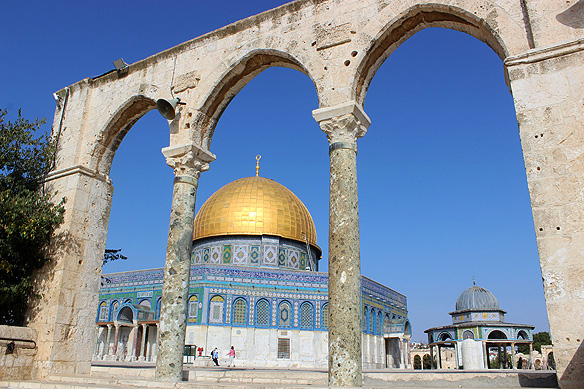
top 15 memorable things to do in jerusalem, capital of the holy land

If I forget you, O Jerusalem, let my right hand forget its skill!
Let my tongue stick to the roof of my mouth,
If I do not remember you,
If I do not set Jerusalem above my highest joy!
~ Psalm 137:5-6

For those who have made Jerusalem their home and those who find their way to it, across the seven seas, this verse sums up perfectly what the city in the Judaean Hills means to them.

One of the oldest cities in the world, Jerusalem is a holy city for all three monotheistic Abrahamic religions. Over the millennia, these three religions—Judaism, Christianity, and Islam—have all laid claim to the city as theirs. So have civilizations, empires, and kingdoms. It has been razed to the ground at least twice, laid siege to 23 times, captured 44 times, and attacked 52 times. Yet, through it all, it has survived. And always, been madly loved.

The current walls which surround the Old City date back to 1538 AD and were built by the Sultan of the Ottoman Empire, Suleiman the Magnificent. Inside its walls, the city is divided into four quarters: the Armenian, Christian, Jewish, and Muslim Quarters, and that’s the way it has traditionally been. A UNESCO World Heritage Site, Jerusalem is also on the List of World Heritage in Danger. Both Israel and Palestine consider it to be their capital.

Complicated? There’s more. Three Jerusalems comprise Modern-day Jerusalem. The Old City. West Jerusalem [the new city]. And East Jerusalem [the annexed city]. Pilgrim or traveller, the fact is, Jerusalem with its eclectic mix of heritage and sights, needs to be visited at least once in one’s lifetime.

There are countless unique experiences only to be had in Jerusalem because of its volatile history and spiritual role in the scheme of things. This is by no means an exhaustive, exclusive list. But these are my top 15 memorable things to do list! 🙂 Continue reading

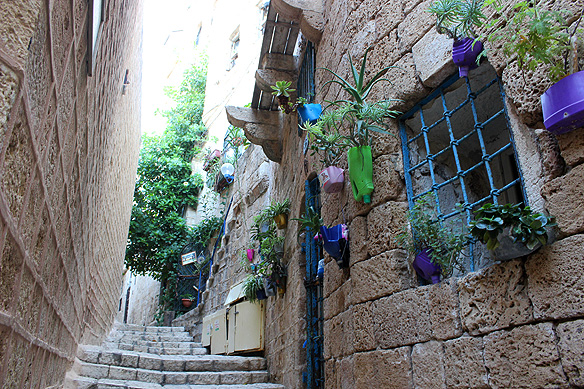
a self-guided walk through the yafo of tel aviv-yafo: old jaffa

On your travels in Tel Aviv, you may be lured into signing up for a ‘free’ walking tour of Old Jaffa along with 40 others only to realise at the end, a generous tip is mandatory or you run the risk of looking like a penny-pincher! Or, if your pockets are deep and well-lined, you may decide to go for a ‘private’ tour and pay through your nose for a couple of hours being shepherded from point A to B. If these are your cup of teas, do go for any of the two.

But the truth is—you don’t need either.

Old Jaffa is best explored on one’s own, at one’s own pace, getting lost and finding new delightful secrets instead.

The other half of Tel Aviv-Yafo, Israel’s pleasure-seeking city on the Mediterranean Sea, Yafo or Jaffa is everything Tel Aviv is not. Historic and steeped in ancient stories. Which makes for an interesting union between the two, signed and sealed in 1949. Read on and let me explain. Continue reading

poetry, myths and stone: the millennium-old sculpted hoysala temples of karnataka

[UPDATE: The ‘Sacred Ensembles of the Hoysalas’ made it to the UNESCO World Heritage Site list on 18 September, 2023. It is India’s 42nd UNESCO World Heritage Site.]

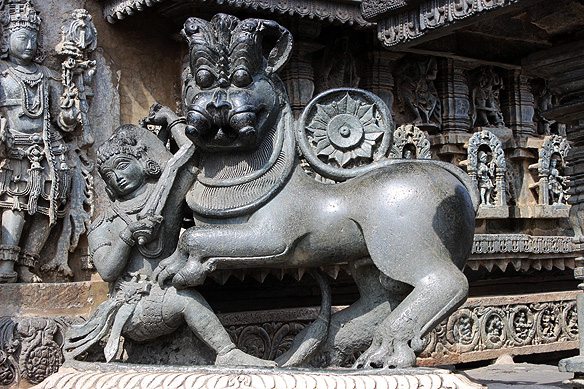
Cries of “Hoy, Sala” [Strike, Sala] rang out as Sala, a Jain youth, single-handed fought a tiger to save his guru. It was around 950 AD, in the Deccan plains of South India. He immortalised this cry in the name of the dynasty he founded—Hoysala—which ruled the region till 1355 AD. The incident became its emblem.

Sandwiched between the Chalukya dynasty in Badami and the ruling Cholas in Thanjavur, Sala and his descendants created a flourishing agrarian empire populated by a sophisticated society, and where the arts thrived. Their capital was Belur, then called Velapuri. Vishnuvardhana [1108 – 1152 AD], the 5th Hoysala king, later moved his capital to Halebidu, 17 kilometres away, where it stayed till the end.

Though Hoysala palaces and homes are long gone, their stone temples still stand. Even time and wars have not been able to diminish their exquisite beauty, a fascinating peek into a by-gone society’s values and aesthetics.

So, if you ever thought all temples in India look the same, think again. Every dynasty and empire in the Indian sub-continent created its own inimitable style through history. Hoysala temples are typified by being star-shaped, compact structures on a raised platform, ornate with a focus on dance and music, and carved out of soapstone. Continue reading

why tipu sultan’s dariya daulat bagh will take your breath away

Two-hundred-and-fifty years ago lived a man renowned for his opulence, and bravery. He was fearless. Nothing scared him. Or perturbed him. He also had a deep abhorrence for the British East India Company and its colonial inroads into India.

His name was Tipu Sultan, ruler of the Kingdom of Mysore. And his capital was Srirangapatna [spelt Seringapatam by the British], an island plonk in the middle of the mystical Cauvery River in present-day Karnataka.

It was to this tiny little, steeped in history, sleepy town that I found myself one day during my Mysore travels. Where.time.stood.still. And there were stories galore. Continue reading