photo essay: hampi, stories told and untold

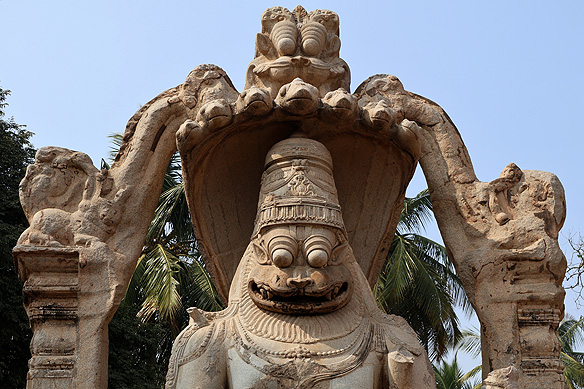
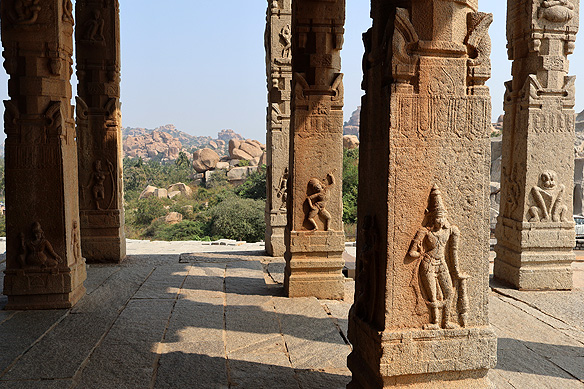
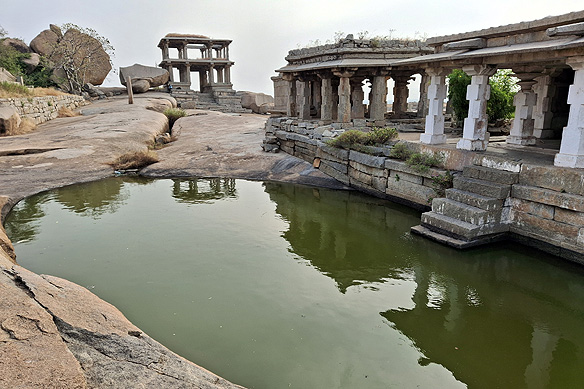
Don’t mistake the swarms of visitors at Hampi as tourists. Not all of them are. Most of them are pilgrims. For in Hampi, nestled in a surreal boulder-strewn landscape in north Karnataka, each stone is sacred.

Irrevocably tied to the Hindu epic Ramayana, Hampi traces itself back to a mystical past. Anegundi, the expanse across Hampi’s Tungabhadra river, was then known as the vanar [monkey] Kishkindha kingdom ruled by King Sugriva. In the epic, Sugriva’s commander Hanuman and army of monkeys helped Rama rescue his wife Sita from the demon Ravana.

Fast forward a few millennia from otherworldly mythology to historical facts substantiated by Kannada inscriptions and journals of Italian merchant Nicolo di Conti [1420], Persian diplomat Abdur Raazaq [1442], and Portuguese traveller Domingo Paes [1520].

Hampi, was now the capital of the wealthy, secular, and immensely powerful Hindu Vijayanagar empire. The richest city in the Indian subcontinent and the second biggest city in the world, it ruled a realm that encompassed modern-day Karnataka, Telangana, Andhra Pradesh, and Tamil Nadu.
Continue reading

travel guide: the six untold treasures of kazakhstan’s silk road heritage

Tucked away in the remote wind-swept folds of southern Kazakhstan are the ruins of a string of medieval Silk Road cities. A thousand years ago, these crumbling remains with their grand Sufi shrines were flourishing centres of trade, attracting merchants from far and wide; their glories held in awe across the golden steppes.

Welcome to Kazakhstan’s Silk Road heritage and its evocative treasures: The lost cities of Otrar and Sauran, and the cities of Turkestan, Taraz, and Shymkent which resolutely stood their ground.

The Silk Road, parts of which are UNESCO World Heritage Sites, was a trade route that operated from 114 BC to 1450 AD. Named after the primary product traded, the route comprised of a network of trails which cut across Central Asia, connecting the Far East with the Mediterranean. During its 1,600 years of existence, Chinese silk, along with spices, porcelain, and tea from the East were exchanged for horses, honey, and wine from the West.

It was a harsh terrain. Relentless. Fortified cities sprung up throughout the 6400-kilometre-long stretch to counter the bandits and uncertainty. Inside them, the traded goods changed hands, many times over, before reaching their destinations.

These cities were not just centres of trade, but also hubs of cultural exchange. A melting pot of ideas, philosophies, language, and faith. It is through the gatherings within their walls that Buddhism travelled from India to make a permanent home for itself in the Far East and Islamic science and knowledge fed into the western Renaissance.

Come along with me as I take you on a visual tour of this less visited, medieval side of Kazakhstan. On a journey back into time. 🙂

1. Mausoleum of Khoja Ahmed Yasawi, the jewel in Medieval Kazakhstan’s crown

Mausoleum of the 12th Century Sufi saint Khoja Ahmed Yasawi is Tamerlane's labour of love and the prototype for Timurid architecture.

Mausoleum of the 12th Century Sufi saint Khoja Ahmed Yasawi is Tamerlane’s labour of love and the prototype for Timurid architecture.

Continue reading