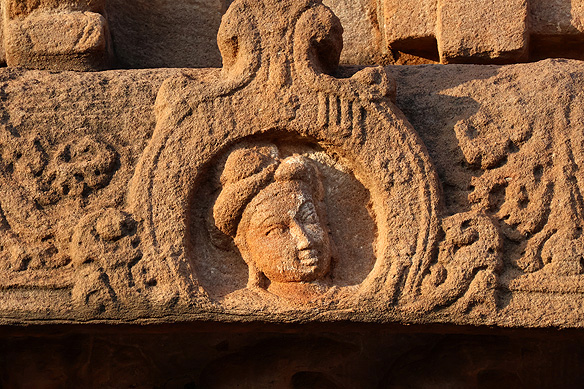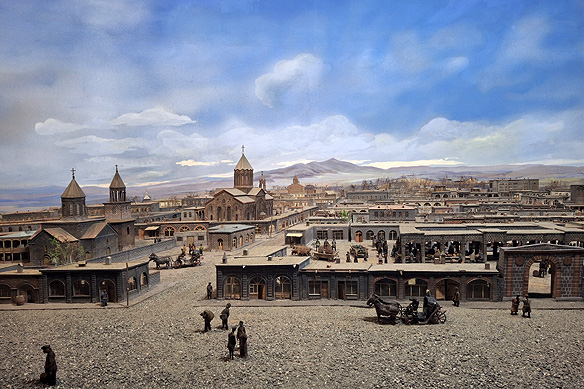
the 5 untold treasures of gyumri, city of 22,000 orphans

“Armenia, aah she is a prisoner of geography!” My guide Arpi exclaims as she narrates the country’s tumultuous history in a voice that any actor would envy. A professor in linguists, guiding is her second job.

We are on the way to Gyumri, Armenia’s second largest city in the country’s north-west, close to Turkey’s border. Built of local black and orange tuff [a volcanic porous rock], the city is known by various other names: cultural capital, city of arts and crafts, to name a few. But the most evocative is “city of orphans.” 22,000 orphans took refuge in Gyumri during the Armenian Genocide of 1915 – 1923, piecing together a new life in 170 orphanages across the city.

Founded as Kumayri in the 8th Century by the Urartians—the same kingdom which also established Erebuni, Yerevan’s ancestor—it has been renamed numerous times since 1837. Alexandropol on the orders of Russian Tsar Nicholas I after his wife, Leninakan in honour of Lenin, back to Kumayri on independence, and Gyumri in 1992.

A bustling industrial hub during the Soviet era [1922 – 1990], it came crashing down, literally, on 7 December, 1988 in a 6.8 magnitude earthquake. Everything turned to dust, except for Nicholas I’s Alexandropol in the Kumayri historic district. The area is a rare remnant of low-rise Armenian urban architecture in its original setting.

Tell your travel plans to an Armenian, and the first question that pops out is “Are you going to Gyumri?” Not many non-Armenians go up this far north, and if you are doing so, you will be instantly rewarded with an appreciative nod—transforming you from a flighty tourist to a traveller with gravitas.

Though its outskirts are all brand new, because of the earthquake’s devastation, the city holds its memories close to its bosom. The pain and hesitant optimism of its thousands of orphans; the filmmakers, authors, and actors who call Gyumri home; and the craftsmen who churned out masterpieces, and continue to do so, from seemingly insipid raw material.

All these and more whisper out of the black and orange tuff intrinsic to Gyumri. Here are five of Gyumri’s most magical treasures. Do not be surprised if you bookmark a few more of your own should you visit it. ❤ Continue reading

travel diaries: a tale of two capitals—nizwa and muscat

Nizwa, Oman’s 17th Century capital

I found myself blinking hard. And then blinking again. A little dazed. Bewildered is perhaps a better word. Was this for real? Was it indeed the 20th of December, 2024, or had I by some unexplained miracle time-travelled a good few centuries back?

Around me was a scene pulled right out of a medieval Arabian livestock souq. Sellers in pastel dishdashas were running around a ring. First with their goats, and then their cows, in tow. On either side of this parade were buyers in crisper, whiter dishdashas calling out if a particular animal caught their interest.

What followed next was a thorough examination of the selected livestock’s teeth, gums and hooves, and some hard-core bargaining. At times the seller won, at times the buyer, and the mute creature swapped masters. Often nothing materialised till another early Friday morning, when a display would again be put on show.

There were a handful of foreigners in the periphery, looking on, as amazed as me. Just like maybe a Marco Polo or Ibn Battuta did when witnessing a similar scene.

The business on hand was, however, completely unaffected by the cameras or gasps. There were more important things to focus on for these gentlemen. Would that goat be an asset? Would he be able to resell that cow for a profit? It’s a stock market in its most basic form wherein livestock are sold and resold every week.

In a couple of hours, the hullabaloo simmered down. The sellers and buyers dispersed. Showtime was over.

Did the end of the spectacle bring me back to the present? Not exactly. For next to the Friday traditional livestock souq were the 17th Century Nizwa Fort and Castle, the latter predating the fort by a few decades. Both built by the Ya’rubid dynasty, rulers of Oman from 1624 to 1742 who had made Nizwa, a historical city built over a stream and trade crossroads, their capital.

Nizwa Fort dates to the middle of the 17th Century. Built on the orders of Imam Sultan bin Saif Al Ya'rubi, the enormous earth-filled stone tower took 12 years to complete.

Nizwa Fort dates to the middle of the 17th Century. Built on the orders of Imam Sultan bin Saif Al Ya’rubi, the enormous earth-filled stone tower took 12 years to complete.

Continue reading

salalah: middle east’s anomaly

Tucked away on the Arabian Peninsula’s south-east coast is the Middle Eastern’s favourite getaway. Salalah.

Its very mention brings about a soft sweet smile to their otherwise calm controlled air, and a sparkle to dark eyes.

“Aah, Salalah!” followed with unbridled joy that I will be making the journey across a thousand kilometres from Muscat to this ‘haven.’

For two months in a year, July and August to be precise, Salalah in Southern Oman is engulfed in dense moist cloud and fog, with a light drizzle that amounts to less than a monthly average of an inch. This season is lovingly called ‘khareef,’ even though the term technically means autumn.

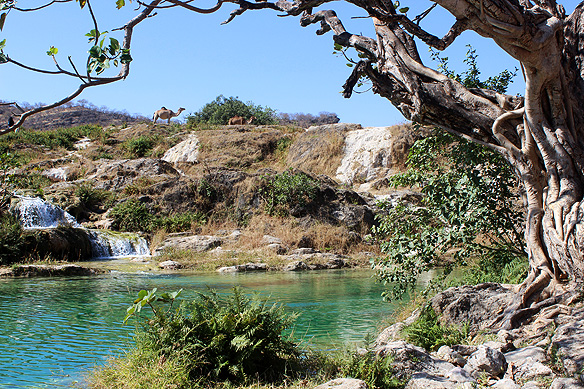
During these two monsoon months the barren shrivelled lunar landscape morphs into gushing waterfalls, turquoise-blue rivers, and lush green vegetation, replete with coconuts and bananas.

Whilst the rest of the Middle East swelters at 50 degrees, its populace flock to this anomaly in droves. Carnivals brighten the choppy sea-shores, and long queues together with packed car-parks peak to a frenzy.

Not your cup of tea?

Salalah is just as delightful in December when like the rest of Oman, it enjoys perfect weather. Continue reading

travel shorts: kazakhstan’s bronze age gallery with 5,000 petroglyphs

In search of the Arpauzen petroglyphs in southern Kazakhstan.

In search of the Arpauzen petroglyphs in southern Kazakhstan.

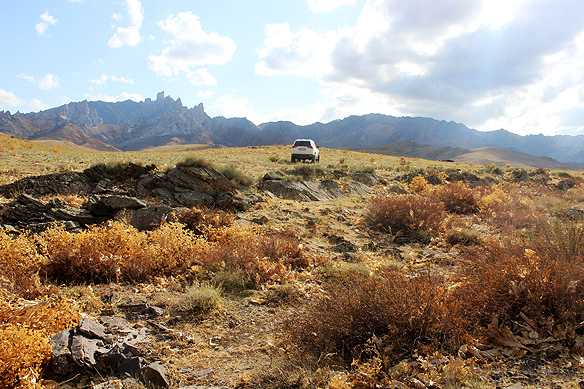
I wish I had some form of 360-degree vision and could see nature’s entire spread around me at the same go. On one side, the Prisyrdarya Karatau Mountains‘ dark craggy peaks encircled the isolated silent valley swathed in wild tulips and golden heather. On the other, colossal black chunks of rock glistening in the afternoon sun cascaded down the slopes. Pinch me, I whispered to myself. Is this really for real!

But this was all just half its magic …

“Come, look here. There are etchings of two double-humped Bactrian camels and a hunter with a bow and arrow.” My guide, Islam’s excited voice broke into my reverie, and the otherwise pin drop silence punctuated with the sound of our footsteps on crackling sun-dried tangled gorse, and neighing of wild horses grazing a mere stone’s throw away. Continue reading

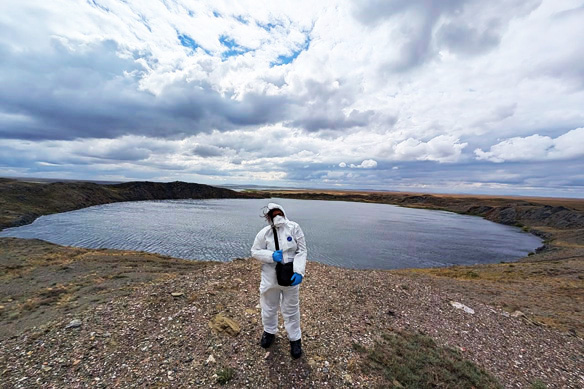
secrets of ussr’s polygon nuclear test site

Coast, Hope, Moscow 400, Semipalatinsk-21, Station Terminal.

No, these are not names of multiple places. Instead, they are the multiple names of one single place, now known as Kurchatov, which for over four decades was not to be found on any public map. Located in present-day north-east Kazakhstan, the names were a trap to maintain its secret whereabouts and mislead potential spies at a time when the region was still part of the USSR.

As if this were not enough, those brought here through stringent checkpoints were routed via Moscow. The city’s residents, mainly nuclear scientists, truly believed they were still somewhere near the Soviet Union capital, even though their new homes lay 3,400 kilometres away. Continue reading

travel shorts: delhi’s 800-year-old spiritual retreat for eunuchs

This slideshow requires JavaScript.

Delhi is full of tombs and gravestones. There are tombs for sultans and emperors, and their consorts. For wealthy nobles and ordinary folks. But gravestones, sorry not for one, but 50 revered eunuchs or transgender women who lived eight hundred years ago? Aaah, that can only happen in Delhi. 😊

Hijron Ka Khanqah, which literally translates to ‘a Sufi spiritual retreat for eunuchs’ is a collection of whitewashed gravestones fronted by a wall mosque in Mehrauli Village, a neighbourhood in Delhi continuously inhabited for the past one thousand years. Amidst these gravestones stands a marble tomb marked with a kalamdan, a raised ridge, typical of graves belonging to males in medieval India. Continue reading

travel shorts: the taj of haryana

This slideshow requires JavaScript.

In all likelihood, you have already been to the Taj Mahal in Agra. And most probably, also made your way to Bibi ka Maqbara in Aurangabad, often referred to as the ‘Taj of the Deccan’.

What if I tell you, there is one more marble-encased Taj, and that too in the rather understated state of Haryana. But with a difference. Unlike its two other counterparts, the ‘Taj in Haryana’, as it’s often called, is not an expression of a man’s deep devotion to his wife, but instead a tomb for a saint and teacher who passed away in 1660. Continue reading

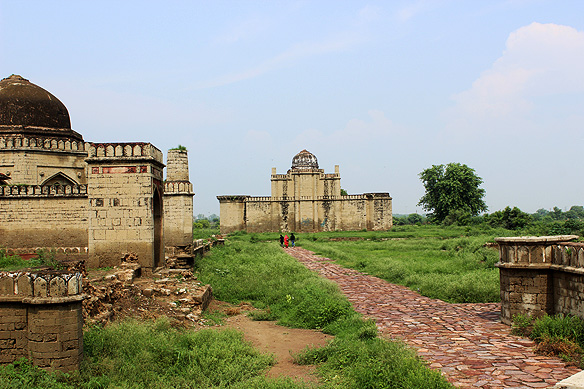
the treasures of farrukhnagar and jhajjar no guidebook tells you about

Farrukhnagar. Jhajjar.

The inevitable response should one mention these two places is, “where are they?”

As for the few who do know about their whereabouts [near Delhi’s satellite city Gurgaon in the neighbouring State of Haryana] the rejoinder is, “is there really anything to see there?”

Oh, yes, plenty! But despite having some of the loveliest monuments in Delhi’s vicinity, both towns lie in complete oblivion. There is no mention of them in guidebooks. Zilch. They are not even included in Delhi’s countless regular heritage tours. It is as if they simply did not exist.

Imagine my joy when I got a chance to explore the two. Not that I had ever heard of them before. I belonged to the first category. Then after some digging around, I was smitten. Completely. Continue reading

travel diaries: unravelling west bank’s area ‘a’

Was it Area A, B, or C. I struggled to get my head around them as the highway wound its way through all three, one into the other in a convoluted mix. At each crossroad and Area juncture there were checkpoints galore. Israeli soldiers behind bullet-proof glass and on watch towers pointed their guns at every vehicle and person that passed by on the road.

“Sit still please and no pointing.” Our Arab driver insisted as we slowed down at each checkpoint. I was torn between ducking under the seat and staring at the soldiers in warped fascination. Before I could decide, we had moved on. Only to be met by another checkpoint and red road signs.

“This road leads to Palestinian Village. The entrance for Israeli citizens is dangerous.”

“This road leads to Area ‘A’ under the Palestinian Authority. The entrance for Israeli citizens is forbidden, dangerous to your lives and is against the Israeli law.”

Area A turns out to be a string of typical Middle Eastern cities with markets, mosques, and a well-worn homely feel. To get from one to the other though, one needed to travel through the war zone highways. Makes for a difficult commute if one had to do intercity travel on a regular basis. Continue reading