kazakhstan’s natural wonders where lakes, canyons, and a dune meet

Kazakhstan, the world’s ninth largest country, is not all golden steppe land. The country boasts some of the most incredible geographical wonders as well, especially in its southern recesses.

Accessible from the country’s former capital Almaty, they consist of an eclectic array of lakes and canyons which would leave even the most jaded traveller starry-eyed. Yes, they are that beautiful. To ensure they stay beautiful, they are protected under the UNESCO national network of biosphere reserves.

Unless you have the luxury of unlimited time in the country, along with your own transport, it would not be possible to strike them all off a bucket list. Do not even try!

Those that are accessible, not because of any seamless public transport, but rather courtesy of a handful of day trips, are luckily the best of the lot.

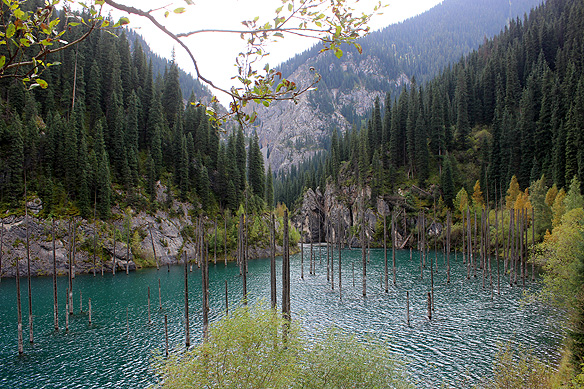
When it comes to lakes, Lake Kaindy, literally meaning both ‘birch tree’ lake and ‘landslide’ wins hands down. And it is not simply for its scenic beauty with bare birch tree trunks rising from deep turquoise-blue waters as a result of yes, you guessed right, a landslide. It also trumps the popularity list because of the adrenalin-filled journey needed to reach it.

This comes in the form of a hair-raising offroad adventure across rivers and boulders in Soviet-era vans accompanied with loud Russian rap, followed by a steep downhill walk to the lake’s shores. You could of course just hike the whole way or take a horse ride, but naa, that would be so tame.
Continue reading

part 3: the spiti trilogy: lahaul, the mystical side of life and himachal

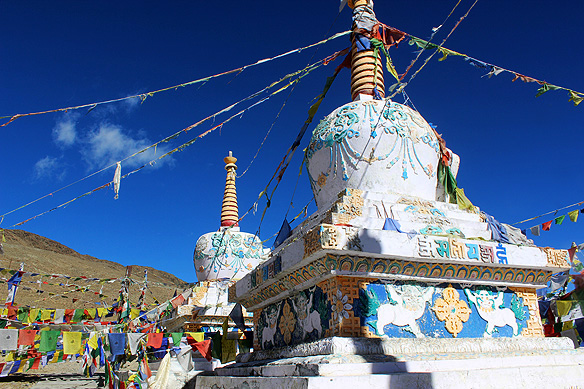
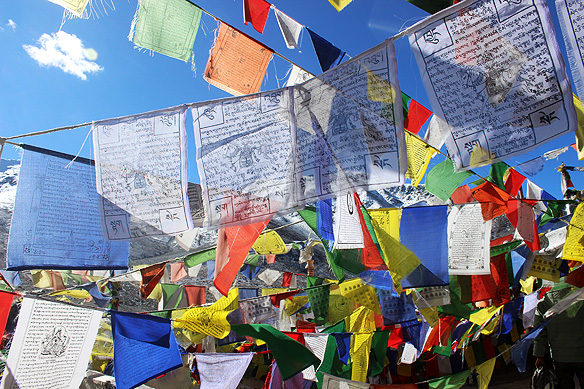
Prayer flags at Kunzum Pass. Because the gods live in the mountains.

Prayer flags at Kunzum Pass. Because the gods live in the mountains.

Welcome to part 3 of my photo diary trilogy on Kinnaur, Spiti, and Lahaul, high up in the Himalayas in India’s Himachal Pradesh.

If Kinnaur is all about the lush flourishing side of living, and Spiti the very opposite—about its barrenness, then Lahaul is the natural outcome of going through both sides of life. It is of tuning in with one’s inner self. I guess you could simply also describe it as meeting one’s Maker.

Here in Lahaul, Buddhist chants echo from monasteries perched atop peaks. Lakes contain deities and so do mountain passes. There is the sacred everywhere, and it is celebrated with much joy.

I would like to share my journey through Lahaul valley with you here. Maybe its magic captures your heart and soul too. 🙂

Continue reading

part 2: the spiti trilogy: spiti, the barren side of life and himachal

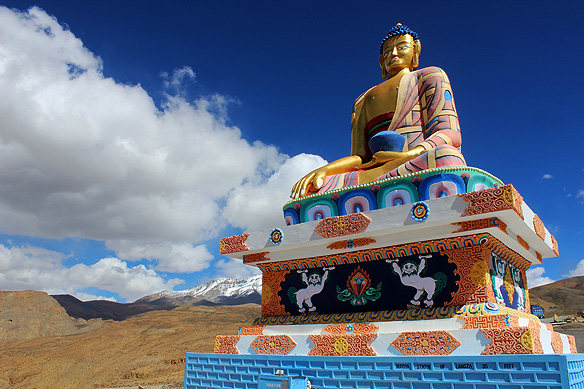
Buddha statue in Langza Village. Because the gods live in the mountains.

Buddha statue in Langza Village. Because the gods live in the mountains.

Welcome to part 2 of my photo diary trilogy on Kinnaur, Spiti, and Lahaul.

This week’s post is about Spiti, a cold desert biosphere in the rain shadow area of the Himalayas bordering Tibet. India’s monsoons do not reach here. Even if they do manage to squeeze their way past the soaring peaks, all they are able to muster is a drizzle. The summers are always dry. The winters are covered in thick snow and ice.

None of which is conducive to agriculture except if carried out on the banks of the Spiti river. The land is otherwise brown and barren, its moonscapes strewn with sand and boulders. Nestled in this arid bleakness are countless ancient monasteries, bedecked and bejewelled with Tibetan Tantric Buddhist iconography. These pockets of sanctity serve as places of refuge, giving strength and meaning beyond a difficult life.

Come along with me to Spiti.

Continue reading

part 1: the spiti trilogy: kinnaur, the verdant side of life and himachal

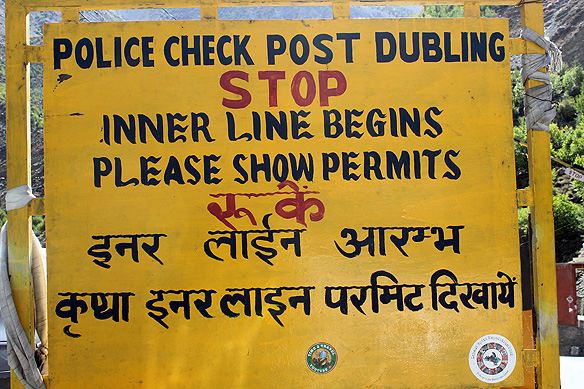
Sangla valley—Sangla means 'Pass of Light' in Tibetan language. Because the gods live in the mountains.

Sangla valley—Sangla means ‘Pass of Light’ in Tibetan language. Because the gods live in the mountains.

I have always seen myself as an ocean person. I love the rhythm of crashing waves, the smell of salt in the sea air, the white foam breaking into froth around my feet, and tugging me along as it leaves.

And then I went to the Lahaul and Spiti valleys and everything changed inside of me. I became a mountain soul. Those who have been there will understand what I mean.

The Lahaul and Spiti district in India’s northern state of Himachal Pradesh is one of the most beautiful places I have travelled to. Remote and untouched, its offroad route is accessed through neighbouring Kinnaur district if coming in from the Shimla side. When exiting, it continues to Manali to form a loop. Kinnaur and Lahaul are both verdant and green. Sandwiched between them, Spiti, in stark contrast, is a high mountain barren desert perched on the soaring Himalayan range, wild and windswept.

Starting with today, I will be posting a photo diary trilogy of Kinnaur, Spiti, and Lahaul over the coming three weeks. Care to join me and let your soul fall in love with the mountains too? ❤

Note: Lahaul and Spiti used to be two separate districts and were merged into one in 1960. For the purpose of this trilogy, they are treated separately because of their geographic distinctiveness.

Continue reading

at turkmenistan’s darvaza: the gates of hell

Wouldn’t you agree that some sites are synonymous with the country in which they are? Especially the iconic, larger-than-life epic ones. For instance, think of India, and the Taj Mahal leaps to mind. Likewise, think of South Africa, and it is Table Mountain. The list goes on.

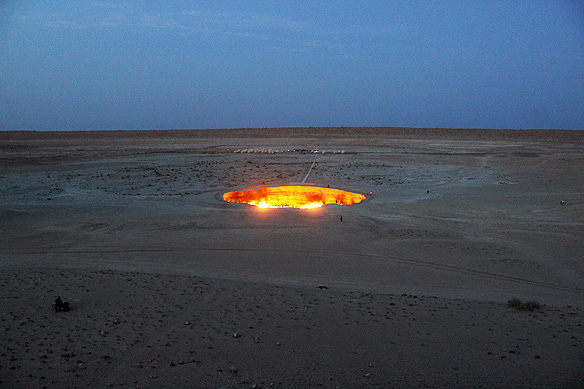
For Turkmenistan, it is Darvaza, the ‘Door to Hell’ or ‘Gates of Hell,’ a burning inferno in a massive pit, deep in the Karakum Desert.

And yes, it is an appropriate synonym. No, not the Hell part. That is the touristy moniker.

Darvaza encapsulates the country’s recent history, geography, and economy all rolled into a bizarre visual spectacle, befitting a country that is different from any other. In Turkmenistan’s official documentation, the site is called ‘Shining of Karakum.’ 😊

Two-hundred-and-sixty kilometres north of its capital Ashgabat, the 70-metre-wide, 30-metre-deep methane gas crater has been burning non-stop since 1971. Its raging flames whip into the air, becoming more menacing, yet beautiful, as the desert is engulfed in total darkness at night.

Neither a natural wonder nor of any particular historical significance, Darvaza is the result of, simply put, an oil exploration gone astray. Continue reading

travel diaries: from bamyan to herat via the minaret of jam

Be still, dear wild dancing heart! I chide it that it’s being ridiculous. I am no novice traveller. I have travelled all my life, been to countless countries, places many have not even heard of.

“But this is the first time to the Minaret of Jam,” it whispers gleefully.

Yes, true. And I let it dance away, and smile at it fondly. If it were not for this crazy heart of mine, I would be leading a pretty dull life.

Dear reader, I am about to start a 7-day road trip across Afghanistan’s remote heartland to see its most glorious treasures, including the 12th Century Minaret of Jam. The latter, the very reason why I had travelled all the way to Afghanistan in the first place.

It will take me one-and-a-half days through nothingness to reach the minaret, and then another one-and-a-half days off-road driving to reach civilization, namely Herat.

Here’s to once-in-a-lifetime journeys! ❤ Continue reading