4 sri lankan game reserves for 4 authentic safaris

What’s a visit to Sri Lanka without a safari in its iconic game reserves? Blessed with a rich heritage and oodles of natural beauty, the tropical island’s game reserves offer a peek into its third charm: a teeming wildlife. But which one should you go to? Here is a rundown of Sri Lanka’s four most famous ones, and what to expect from each, in no specific order. For not all game reserves are ever the same. 🙂

1. Udawalawe National Park

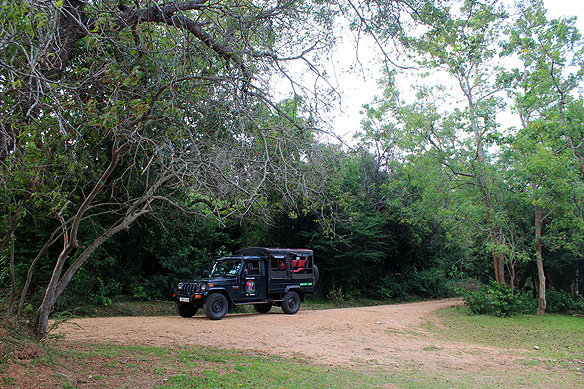
If elephants are what you are seeking, and that too in plenty, then head straight to the Udawalawe National Park. With a head count of around 500 and herds of 50-or-so roaming the grasslands, sighting of the wild Asian elephant is guaranteed in all its glory, all year round. In fact, be prepared to have multiple close encounters with the gigantic mammals who will oftentimes come right up to your safari vehicle. Smaller than their African counterparts, the Sri Lankan subspecies of the Asian Elephant you see is characterised by patches of depigmentation on its ears, face, trunk, and belly. Continue reading
global travel shot: seeing eye-to-eye with the sri lankan leopard at wilpattu

Image

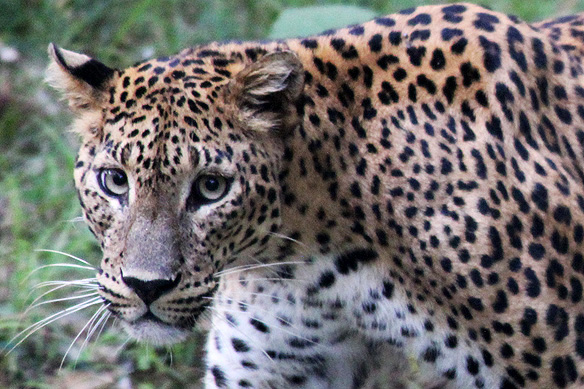
It was a bit hard for me to decide which to be more in awe of. The surreal deep red earth covered in lush jungle and sparkling pools [villu as they are locally called]. Or the Sri Lankan Leopard that sauntered past me, a mere hour into the game drive. Both, the leopard and I stared at each other. At some level, I guess, we saw eye-to-eye. He was the actual star of the show.

Wilpattu National Park on Sri Lanka’s north-west coast is not the country’s most popular game reserve. But, hands down, it provides the most authentic experience.

At 2 percent of the country’s land mass, it is Sri Lanka’s largest reserve. It is also one of the oldest—established in 1938 with around 40 Sri Lankan Leopards prowling through the heart of the national park. There are also Sri Lankan elephants, sloth bears, and a prolific bird-life, who I, however, think, fall a little short in comparison to the graceful feline. None of them stare back as piercingly as the latter.

– – –

[Note: This blog post is part of a series from my solo independent travels to Sri Lanka. To read more posts in my Sri Lanka series, click here.]

travel diaries: in search of the bengal tiger at ranthambore

It was pitch dark outside. I fumbled for my phone to switch off the alarm. My heart was heady with excitement at the day that lay ahead of me.

I was at Ranthambore National Park, and had an early morning game drive to catch in an hour. Shucks. There went my heart, dancing all over the place again.

Seeing wildlife is a hit-and-miss affair, I rationalised to my heart. There were no guarantees. I should know, having spent a large chunk of my life in Botswana and South Africa where visits to game parks were a quintessential part of one’s existence. But not in India. I had made a long drive from Jhalawar last night, just for this.

Whenever I enter game parks, it always strikes me that these lands are both, ruled and belong, to the animal kingdom. We, humans, are the outsiders here. It is their laws that govern its inhabitants. It is another world and we have no place in it.

I felt exactly the same way as we crossed the gates of Zone 2 into a world of dense forests and hiding eyes. There was silence everywhere except for the occasional shriek of a chital or monkey. A warning that the Kings of this Kingdom, the Royal Bengal Tigers, were out in search of prey.

Deep in the Park’s depths an hour later, we were straining for a sound, any sound, that would give a hint on the exact whereabouts of its grandest residents. Scouring the earth for some lead. Waiting patiently, with bated breath, our eyes darting in all directions. Continue reading

south africa 6: kwazulu-natal adventure—from sani pass to its game reserves

sanipass1

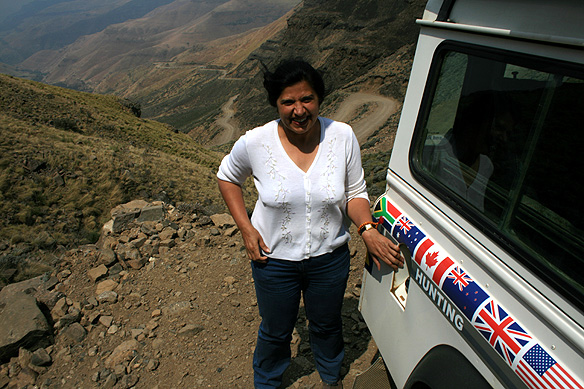
The thrill of Sani Pass

Aah, that adrenalin rush! That sense of adventure in exploring unchartered, gruelling terrains and then coming back to tell the tale. For many travelling to South Africa, and to me, it simply means the Sani Pass.

Once a rough mule trail, Sani Pass is now a notoriously dangerous mountain road to Lesotho via the Drakensberg Mountains which can only be traversed by a 4X4. Lying between the border controls of South Africa and Lesotho, the 8-kilometre-long gravel road through no-man’s land starts at 1,968 metres above sea level and ends near the summit at 2,873 metres. The journey is marked with steep ascents, hairpin bends appropriately named “suicide bend” and “big wind corner”, loose gravel, and beautiful views. Some walk this road. For the adventurous, the thrill is in the 4X4 drive. Continue reading