As the plane got ready to land in Yerevan, Armenia’s capital, I looked through the window and was met with a snow-capped Mt. Ararat reaching out to the skies. Armenia’s most beloved national symbol and site of the proverbial Noah’s Ark, Mt. Ararat became part of Turkey in 1921. Yet for Armenians, seeing the mountain looming over their capital city is a sign of good tidings. Just like it has been for the past two millennia.
In a strange twist of fate, the very geopolitics that gave Mt. Ararat away, also created Modern Yerevan. One of the oldest inhabited cities in the world, Yerevan’s current avatar is a product of the Soviet Union. 2,800 years ago, it used to go by the name Erebuni.
When Alexander Tamanian was assigned the task of drawing up Yerevan’s city-plan, he was first at a complete loss. He had no idea how he was going to convert the laid-back provincial town, previously under the Russian empire, into a cultural, political, and industrial centre befitting its new role as a Soviet Socialist Republic capital.
But creativity soon followed. Tamanian ingeniously combined neoclassical design, Armenian motifs, and local tuff stone in a graceful radial layout. Unfortunately, he also razed many of the earlier churches, mosques, and bazaars in the process so there is very little remaining from the pre-1920s in the city.
Off-the-beaten-path? True. Lacking in things to see and do? No ways.
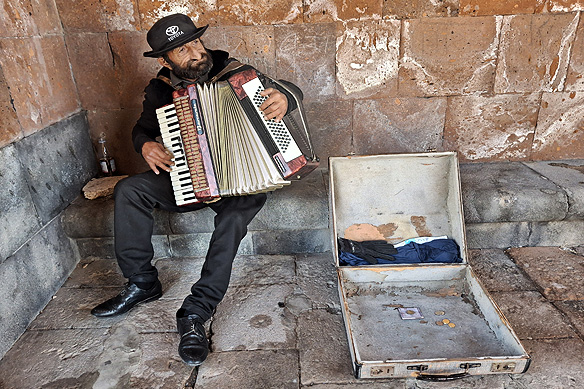
Yerevan today is filled with museums, art galleries, roadside cafes, and buskers churning out fabulous music. Come nighttime, the city transforms into a riot of curated lighting, with fountains dancing to classics.
Here is a 3-day itinerary for Yerevan, a city swarming with intrepid travellers eager to explore its heady mix of Soviet and Armenian charms.
Have you been to Yerevan? What did you like most about it? Do share in the comments. I would love to read them. 🙂 Continue reading
 rama toshi arya's blog