Unknown's avatar

About Rama Arya

I travel for the love of travelling. I blog for the love of blogging. About Me: ramaarya.com My Personal [Travel and Art] Blog: ramaarya.blog My Work: thecommunique.co.in

china 3: great wall of china and summer palace in beijing

beijing_greatwall1

The Great Wall

One of the greatest building enterprises in the history of the world is the Great Wall of China. Not so much one wall as a collection of ramparts, the punctuated Great Wall straddles China from the Yellow Sea in the east to its crumbling finale in the Gobi Desert. In its entirety, it is 6,430 kilometres long. Continue reading

china 2: the forbidden city of beijing

Tiananmen Square

Fronting the Forbidden City, the sweeping square of the Gate of Heavenly Peace—Tiananmen Square—is the soul of China and the world’s largest square. The vast expanse of paving stones covering 100 acres is a colossal statement of state power. Chairman Mao is interred here and the monolithic Chinese parliament overlooks the square.

Tiananmen Gate with its huge portrait of Mao is the viewing stand for military parades. In the centre of the square stands the Monument to the People’s Heroes. South of this is the Mao Zedong Mausoleum, where the waxen-faced great helmsman lies in state. The hall was constructed the year after Mao’s death in 1976.

The square doubles as a huge park, with couples strolling languidly hand in hand, children playing, and enthusiastic kite flying.

The Forbidden City

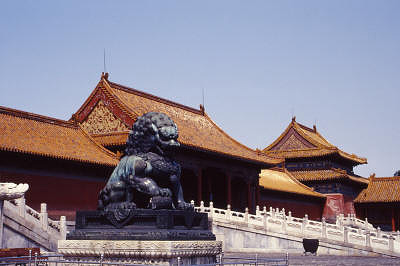
beijing_forbiddencity1 Continue reading

china 1: yanjing, dadu, beiping, peking—also known as beijing

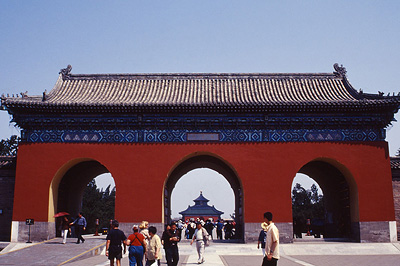
beijing_templeheaven
The Temple of Heaven is believed to be the site where heaven and earth meet

Nihal! [hello]

Every heart that listens to the call of the distant shore wishes, fantasises of travelling through the mysteries of the Forbidden City, climbing the impregnable ramparts of the Great Wall, basking in the suaveness of Shanghai, and cruising through the mist-clad gorges of the Yangtze, but at least once in their lives. My month long solo journey through China was an answer to such a call.

Beijing

Beijing, or Northern Capital has a powerful allure. The seat of power in China and proud capital of the Middle Kingdom was not at all what I expected it to be. I had arrived anticipating blue-attired homogeneous masses frantically cycling through a cluttered, crowded, chaotic city. Beijing instead was the complete antithesis. Wide tree-lined avenues, colossal squares, and huge palaces left me in awe. Blond-haired Chinese youths complete with earrings left me a wee bit amazed. Harmony and elegance were the order of the day. Continue reading

italy 10: renaissance florence and medieval siena

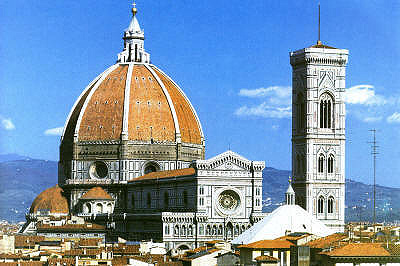
florence1
The grand Duomo and bell tower (© Casa Editrice Bonechi)

Florence, Firenze

Firenze, the ‘lily’, the ‘city that blooms’ was named by Julius Caesar who used it as a camp. With the fall of the Roman empire the city too, however, fell into decline. It was only after the 13th and 14th Centuries when wealthy important landowner families started moving in that Florence bloomed again. The most important and powerful of these was the Medici family. Under their patronage, Italy reached its second great pinnacle of achievement. The first glorious achievements in language, art and knowledge had centred around Rome. But it was Florence that was the site for the revival of classical ideals in the Middle Ages. It was here that masters like Leonardo, Michelangelo, Raphael and Donatello produced their finest works. Continue reading

italy 9: from genoa to florence, across the tuscan green

Genoa and Christopher Columbus

As I approach the west coast, the Apennine mountains lead directly into the sea, covered in spring flowers with rivers snuggled in its deep crevices. Bridges on huge pillars stand over deep valleys. One of these most spectacular engineering feats bridges over the city of Genoa. Apartment blocks built directly into the face of the rocks seem to jut out from the hills. There is a three to four year waiting period for these homes. Genoa is the largest port in Italy and the centre for its cruising industry. Its population of one million is mainly involved in activities related to the harbour. Once a maritime republic, the city lays claim to one of the most famous captains through time, Christopher Columbus, who after being exiled from Genoa, went to Monaco and found himself a new home there. It was very difficult for Columbus to get funding as no one believed his theory that the earth was round and not flat. Despite numerous obstacles he departed from Barcelona and visited the new world twice. The captain died a complete pauper. Continue reading

italy 8: verona, milan, and lake maggiore

Romeo and Juliet in Verona

Verona dates back to the Romans when their soldiers used it as a stop to rest and exercise a bit on their way up north. They built an arena here to train on how to fight the Germanic tribes, east of the Rhine, whom they were never able to conquer. This arena still stands in impeccable condition and is used for matches and concerts today. The economy of Verona is heavily food based; the annual national food fair is held here.

The Middle Ages was a time of rivalry and intense fighting between Italy’s many city-states. There were two main groups, namely, the guelphs [supporters of the pope] and ghibellines [supporters of the emperor]. In 1302, the backdrop for the most beautiful and poignant love story in history, rivalry between these two groups was at an all time high. Continue reading

italy 7: venice, la serenissima, the most serene

venice1
venice2
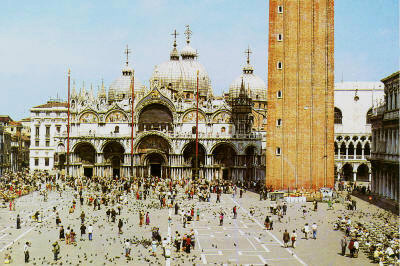
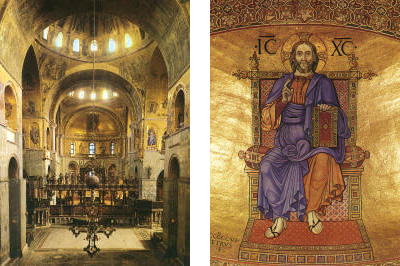
Basilica di San Marco is one of the most beautiful churches in Europe (© Storti Edizioni)

Also called La Serenissima, literally meaning ‘the most serene’, Venice was one of the four maritime republics in Italy, the other three being Amalfi, Genoa, and Pisa. The term ‘Serene Republic’, however, more successfully suggests the enormous power and majesty of this city that was for centuries the unrivalled mistress of trade between Europe and the Orient. It suggests too the extraordinary beauty of the city, its lavishness and fantasy, which is the result not just of its remarkable buildings but of the fact that Venice is a city built on water, a city created more than 1,000 years ago by men who dared defy the sea, implanting their splendid palaces and churches on mud banks in a swampy and treacherous lagoon. Continue reading

italy 6: monastic umbria and the churches of assisi, ravenna, pomposa

etruscan1
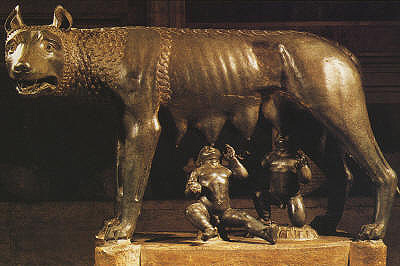
Capitoline She-Wolf, Etruscan, 500 BC (© Museo Capitolino, Rome)

Central Italy: the Etruscans and Umbria

The Etruscans inhabited central Italy from 1000 to 700 BC, building 12 city-states in the region, all near metal deposits. The first city-state established by them and their stronghold was Perugia. An extremely civilised, happy, peace loving people, they ate abundantly, twice a day. The women were treated equal and were present at debates, sporting functions and festivities. A large part of Etruscan life was spent preparing for afterlife. They built barrel tombs five to six meters under the ground with shafts leading down to them. These tombs were discovered later totally by accident and till date much of their civilisation and why it came to an end remain a mystery. Continue reading

italy 5: roman pompeii and isle of capri

pompeii1
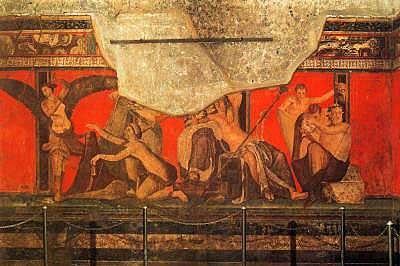
Dionysiac Mystery Cult, Villa of the Mysteries, wall painting frieze, Pompeii, 50 BC (© Art Resource)

Roman Pompeii

Pompeii, a world frozen in time
tears, hopes, thoughts, dreams and smiles
over four days and three nights
everyone forced to take their final last sighs

Mt. Vesuvius is the only active volcano in continental Europe, the others being on the islands. The mountain’s eruption on 24 August 79 AD completely buried Pompeii and Herculaneum, destroying and yet preserving the two cities for posterity. Its most recent and famous eruptions have been those in 1631 and 1944. Said to erupt every 30 years, it is 4,200 feet high and has the oldest observatory on its rims [161 years old]. Volcano and lava are in fact Italian words. With two summits, Mt. Vesuvius proper is the summit to the right. In a survey done by Time magazine, Mt. Vesuvius was placed at 6th position as the most dangerous volcano in the world based on the theory that the longer the period of inactivity, the greater could be the destruction caused. Despite all these alarming figures, there are 700,000 to 800,000 people currently living on its slopes. Continue reading

italy 4: italy and the italian … young country in an ancient nation

This and that about the Italian

Though Italy is a Catholic country and 90 percent of the population is Roman Catholic, only 18 percent are practising Catholics. Their relationship with the Church is limited to that of attending family events and the local priests blessing their homes during Easter. When faced with a problem, the Italians do not turn to religion to resolve their problems. Their  strongest social structure and support system is the ‘family’. A fountain head of love and affection, the family is also the ultimate home and source for jobs and money. It always comes through, in good times and bad. Italian families get together often and at all times remain in contact. To be a noble family in Italy one needs to be related to the Pope. There are now only four to five such families left in the country. A predominant characteristic in the Italian personality is ‘charm’. It is a way of life. And did you know that Pinocchio was in fact a character from Italian fables. Continue reading