the complete travel guide to the wonders of shekhawati

This slideshow requires JavaScript.

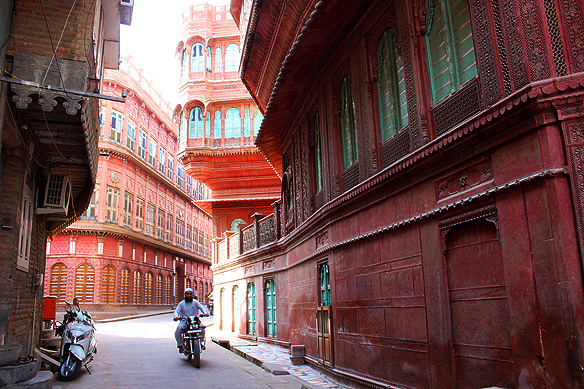
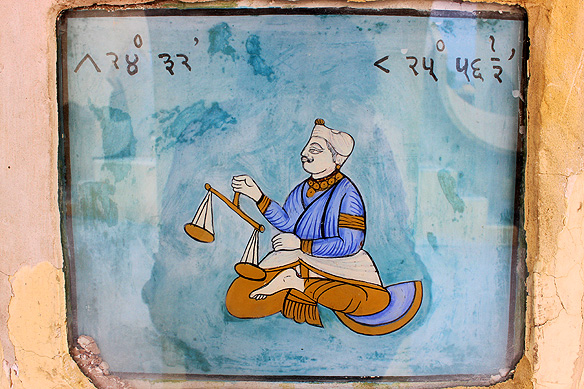
Welcome to my blog’s very first ‘Travel Guide’. I have chosen to write it on the colourful historical world of Shekhawati in north-east Rajasthan, and tried my level best to keep it relevant from a traveller’s point of view.

It covers four suggested full day routes with Mandawa as a base and what to focus on in each of the towns derived from personal experience. Rajasthan’s Shekhawati region can be pretty overwhelming. It is not uncommon for travellers to be haveli-id out when faced with hundreds of painted havelis [Indian mansions], one after the other. In addition, many are crumbling to dust, being painted over, or turned into ‘heritage’ hotels. This post is a humble attempt to add value to a visit to this open-air art gallery which is a wonder in itself, a region unlike anything else, anywhere else.

Time required: 6 days. These include 1 day to explore Mandawa [the base], and 4 full day itineraries to discover the region at a relaxed, yet in-depth pace. Happy travels! 🙂

Note: This blog post has been written with valued inputs from Om Singh Shekhawat, my guide during my stay in the region.

Table of Contents
[This is a long blog post. If you would like to go straight to any particular section, please click on the links below.]

  1. Putting the Shekhawati Region into Context: History, Wealth, and Heritage
  2. Mandawa: Base Camp for Exploring Shekhawati
  3. Southern Route: Mandawa > Lohargal > Nawalgarh > Dundlod > Mukundgarh > Mandawa
  4. South-West Route: Mandawa > Fatehpur > Laxmangarh > Mandawa
  5. Northern Route: Mandawa > Ramgarh > Mahansar > Bissau > Churu > Mandawa
  6. North-East Route: Mandawa > Jhunjhunu > Alsisar > Malsisar > Mandawa
Continue reading

bikaner: the forgotten jewel of the thar desert

Encircled by Rajasthan’s harsh and dusty Thar Desert is the medieval city of Bikaner. Once upon a time Bikaner was one of the most powerful cities on the Great Silk Road, opulent and exotic, its people wealthy beyond compare. Silks, spices, precious metals, and opium were traded here. Culture and ideas from east and west met and merged within its streets. But when trade routes shifted and other centres were created by the vagaries of time—Bikaner was forgotten. But never destroyed.

Wise enough to realise that the gains of peace were more enduring than the booty of war, diplomacy and the desert kept Bikaner safe from battles and conquests. There are no mutilated temples in Bikaner. Nor abandoned crumbling forts and palaces. Neither have modernism and commercialism dived through the desert yet to deafen its individuality. Off the tourist circuit, Bikaner is rarely visited, and when so, only by the intrepid.

Rajasthan’s forgotten jewel in the Thar Desert traces itself back to 1488. Prior to it, the area was a desolate wasteland called Jangladesh. And it may have remained a wasteland were it not for the ambitions of a young Rajput prince. Continue reading

global travel shot: silk road opulence in bikaner

Image

Ever wondered what the homes of the Great Silk Road merchants looked like? Please look at the image above this paragraph. All the monumental edifices lining the pronged road belonged to one such family—the three Rampuria brothers—the wealthiest merchants in Bikaner.

A small princely state deep in the deserts of northern Rajasthan, Bikaner’s strategic location on the Great Silk Road promised, and delivered, immense wealth to its people through the taxes imposed on the wares that passed through it and access to markets for Indian commodities. Silk, spices, precious stones, metals, and opium made the people of Bikaner into billionaires of their era. Continue reading

travel diaries: jaigarh and nahargarh: 2 forts and 1 traveller

The tuk-tuk rattled and heaved as we drove higher up the jungle-clad deserted hill. We were just a few kilometres north of Jaipur, yet there was not a soul around. Or any sound. Except for the chirping of the birds and my noisy mode of transport.

In the distance I could make out the Jaipur State’s flag—the famous panchranga representative of the five Afghan tribes Mirza Raja Man Singh I, the Kachhwaha Rajput ruler, defeated in 1585 on behalf of the Mughals. A gentle reminder that the fort on which it was hoisted, Jaigarh Fort, still belonged to the Jaipur royal family.

Unlike the Amer Fort, Jaigarh Fort built by Maharaja Sawai Jai Singh II in 1720 served as a military fort and a hideout for the royal family in the event of war. It’s a stark and functional piece of military architecture. But with such stories inside its walls! Continue reading

8 hours in eclectic ajmer, rajasthan’s centre for sufism

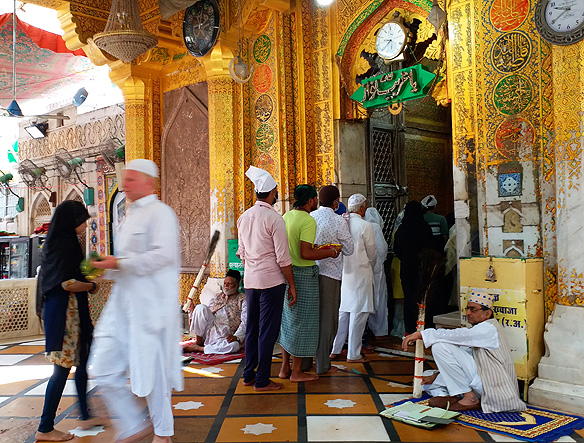
Rose essence from Hinduism’s holy city of Pushkar fills the air of Sufi Islam’s sacred dargah in Ajmer. The courtyard reverberates with qawwalis in praise of the 13th Century saint from Iran, as the faithful shuffle past his grave in deep reverence, heads bowed, eyes lowered, a prayer or two on their lips.

It is 9ish in the morning and I am at the Khwaja Moinuddin Chishti Dargah deep in the heart of Ajmer’s Muslim quarter. As far back as I can remember, I had wanted to visit the tomb-shrine. Now actually standing here, it feels unreal. Surreal.

– – –

Just 15 kilometres from Pushkar, separated by Nag Pahar an ancient hill in the Aravalli range, is Ajmer—Pushkar’s antithesis. Continue reading

pushkar: where the gods and seekers meet

Pushkar.

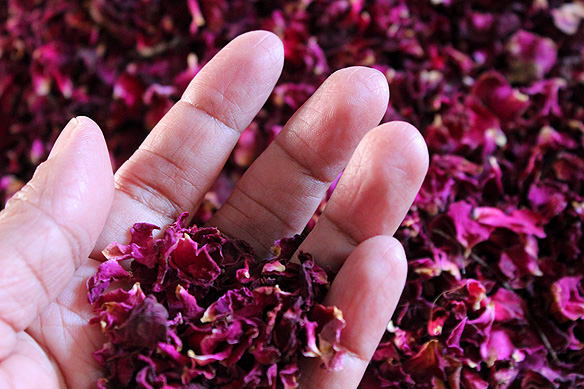
No Hindu pilgrimage is believed to be complete without a stop at Pushkar, Rajasthan’s rose garden. A polestar for the seeker within since ancient times, it is apt that the little town’s rose essences have been exported far and wide through the centuries.

Not that Pushkar’s spirituality washes over one like a massive tumultuous wave, creating an instant transformation. Nope. Nothing like that at all. It is instead subtle and gentle, with a consistent, tangible peace hanging around the 52 ghats and 500 or so temples which line its very soul—Pushkar Sarovar, Sarovar meaning ‘Lake’.

Yet, this devout peaceful haven, a mere two-and-a-half-hour drive from Jaipur, is inexorably tied to an eclectic mix of myths and traditions which range from a first wife’s wrath to being the seat of the Hindu god of creation. Continue reading

15 memorable experiences only to be had in the world heritage city of jaipur

18 November, 1727.

Maharaja Sawai Jai Singh II, the Kachhwaha Rajput ruler at the helm of the Amer Kingdom for the past 28 years, knew he had to make a crucial decision.

Amer Fort, his administrative seat and residence, was becoming too small to meet the needs of his growing kingdom. Water was scarce, and because of it, other resources were being affected.

He needed a new city. A city that reflected his ideas, values, and plans for his kingdom. Continue reading

photo essay: amer, the unesco-listed fort and beyond

“This heaven like place was completed in the Hijri year 1008 [1599 AD], being built in a period of 25 years, having been most meticulously designed and expertly decorated. Just as the heavens should always be laden with rain, so also this stately building, the foundation of the Maharaj’s longevity and wealth, be preserved from any kind of damage.”
~ Excerpt from the English translation of a Persian plaque inside the Zenana, Amer Fort.

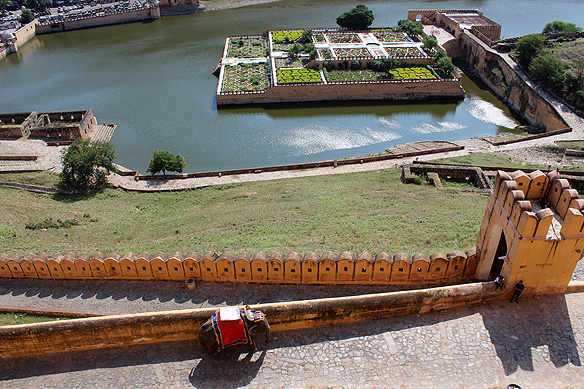
Part of the six ‘Hill Forts of Rajasthan’ UNESCO World Heritage Site, Amer Fort rises high above the placid waters of Maota Lake. Its magnificent Rajput-Mughal edifices reminiscent of the power of the Kachhwaha Rajputs and their strategic ties with the Mughal empire. For 128 years, Mirza Raja Man Singh I’s labour of love served as the administrative base and royal residence of the Amber kingdom. That is, until 1727 when Maharaja Sawai Jai Singh II decided to move the capital to Jaipur some 15 kilometres away.

Most travellers simply visit the fort, gush in wonder, and leave. But there is more to Amer than just this glorious marvel. Much more, beyond the fort. Continue reading

royal splendour in jaipur’s city palace

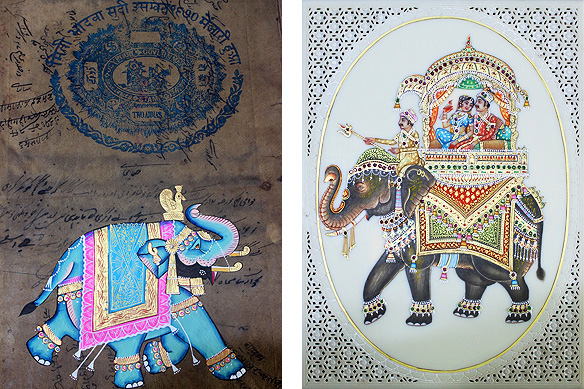
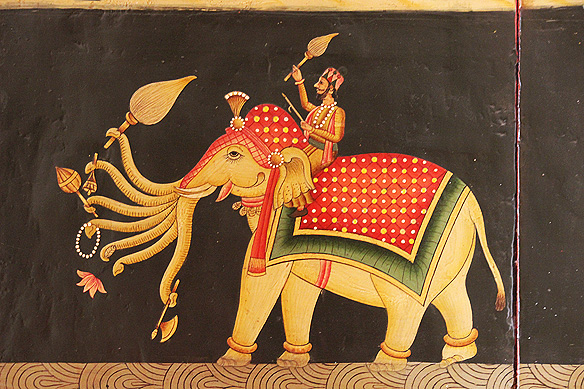
“When you have good luck [pointing towards the elephant in a painting], you find love. When you get love, you feel powerful. When powerful, you are happy. When happy, you are brave. And when brave, you are kind.”

With a broad smile and a tiny squirrel-hair brush held gently in his fingers, he pointed towards one of his favourite works, even as, with a mere few strokes, he also put together a miniature-styled portrait for me replete with a nose ring and odhni.

Hemant is one of the four award-winning Ramdev brothers patronised by Jaipur’s royal family; their studio perched on the fourth floor of Chandra Mahal which houses the royal residential apartments. His ancestors, Jaipur City Palace’s court painters, had spent their entire lives decorating the walls and ceilings of this royal abode and crafting flawless miniature landscapes and portraits since the city’s inception in 1727.

If you’ve been to Jaipur, the City Palace would, without a doubt, have been on your to-do, not-to-miss list. Did you notice the cream coloured, 7-storeyed building topped with a one-and-a-quarter flag which seemed to always loom in the background? Not many take the trouble of exploring this edifice. Yet it contains the palace’s most exquisite, most resplendent rooms. Continue reading

the epic solo rajasthan road trip: because travel heals pain

This slideshow requires JavaScript.

[Updated on 30 November 2021]

My mother passed away on 19 July this year from old age. She was 84. It is now almost four months since she’s been gone, yet the pain is still raw. She went too fast. I knew she was going to go to the other side one day. One day. Just that one day was some distant occurrence which I naively believed was not going to happen in my lifetime. We all believe our parents will live forever.

If you are a follower of my blog, you would have noticed the change in the title. I have added ‘Toshi’ in it. Toshi was my mother’s maiden pet name. By adding it to my blog it keeps her alive for me.

We were chalk and cheese. Fought and hugged. She was the most loving human being I had ever come across. And through all of life’s trials and tribulations, she was my constant best friend.

More than anyone else, she also knew my need to travel. To wander. To explore. She understood travel was my one source of inspiration, as well as escape. A source of pragmatic knowledge and elusive wisdom.

It is no surprise then that as I struggled, and still struggle, to cope with my loss, my sister, as if in serendipity, suggested I turn to travel. Continue reading