travel diaries: moscow to vladivostok, sleepless on the trans-siberian railway

Siberia. View from my train window.

Siberia. View from my train window.

PROLOGUE

The Trans-Siberian Railway. From Moscow to Vladivostok. 9,289 kilometres across the vast expanse of Russia, and eight time zones. The longest railway line in the world. Now, how can one resist a journey of such epic proportions!

I had first heard about the railway service laid out between 1891 and 1916 by two Tsars—Alexander III and his son Nicholas II—when I just started working. Something inside me then and there decided I had to undertake this voyage. No, not because I am a train buff. Hardly. But because then, and today, a few decades later when the dream is being realized, it is the epitome of travel.

Dear Diary, here’s my 14 days of travel on the Trans-Siberian Railway with stops at the historical cities en-route. A journey that turns out to be one of my most authentic travel experiences to date. ❤ Continue reading →

karelia: when russia met finland

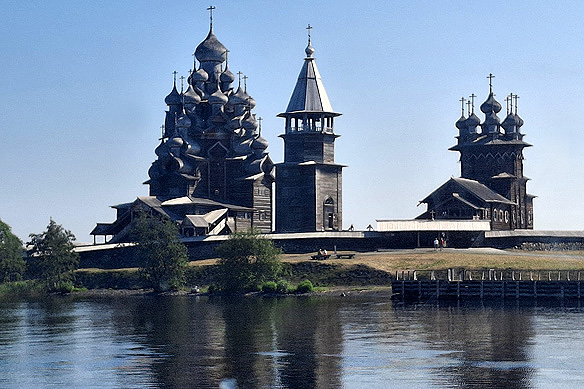
Surrounded by 1,650 islands, the 22 Aspen shingle domes tumbling down the Church of the Transfiguration on Lake Onega’s Kizhi Island seems straight out of a fairytale. Just when you expect a goblin to peep out from behind a carved gable, the church bells on the nearby bell tower break into a peal of lilting musical notes. Inside the church itself built of pine logs in 1714, a four-tiered wooden iconostasis with 102 icons recounts tales of prophets and feasts in colourful gilded, recently restored glory.

Together with the equally unique nine-domed Church of the Intercession built in 1764 and 19th Century Bell Tower, it forms the Kizhi Pogost, a UNESCO-listed ensemble of medieval Russia’s grandest wooden churches. They are evocative of the country’s archetypal onion-domed cathedrals, but are made completely out of wood, sans any nails except to hold the domes’ shingles in place, in keeping with local building traditions. There are other buildings on the island including the tiny 14th Century Resurrection of Lazarus Church, and numerous houses, barns, and windmills.

Kizhi Island is the centrepiece of the Republic of Karelia, a region which has found itself amidst a tug-of-war between neighbouring Finland and Russia through much of its history. This has resulted in a heady mix of Russian Orthodoxy laced with rituals and superstitions rooted in Finnish folklore which stubbornly live on.

Though Peter the Great [r. 1682 – 1725] and Catherine II [r. 1762 – 1796] turned Karelia’s iron-rich fields into a ‘factory’ at Petrozavodsk to produce ammunition for their wars against the Swedes and Turkey respectively, and the Soviets made it the site for their infamous White Sea Canal gulag camp, Karelia still retains its goblin Finnish charm. Look closely, it is hiding under the eaves of those quaint wooden homes and mythical churches scattered across the verdant isles and meadows.


Church of the Intercession and Church of the Transfiguration. Continue reading →

travel shorts: jewelled eggs and quirky surprises fit for a tsarina

When common Russian folks were painting Easter eggs, getting them blessed at the local church, and then sharing them with friends and family, the Tsars did things a little differently. They had Easter eggs of pure gold inlaid with diamonds and precious gems made by the House of Fabergé, the most famed jeweller in the Russian empire. These they gifted to their royal better halves. Befitting a Tsarina, each was a standalone work of art and contained a ‘surprise’ element to amuse and pique the lady’s curiosity. Continue reading →

travel guide: the five untold unesco-listed treasures of western russia

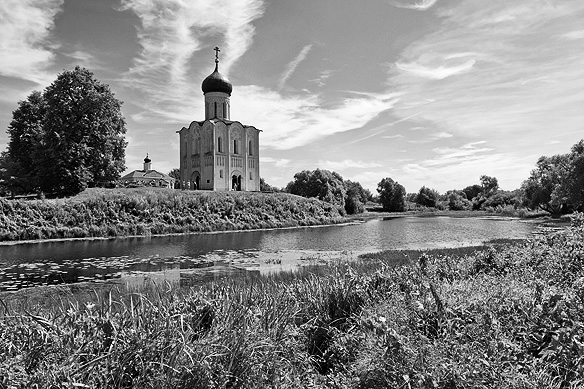
Not far from Moscow lies a ring of UNESCO-listed historical towns where the Russian nation, religion, arts, and architecture first took shape a thousand years ago under the rule of the Rurik dynasty. Frozen in time, these towns are a far cry from the enormity of Moscow. But their legacy has survived a millennium, through the cold-blooded Mongol onslaught and despite Soviet industrial atheism, forming the blueprint of what is intrinsically ‘Russia.’

Here are the finest of those towns. Achingly beautiful, and steeped in history and traditions, no visit to Russia is truly complete without them. And it is not just me who thinks so. The locals will vouch for it too. ❤️ Continue reading →

praha, the royal bohemian city of 500 spires—photo essay

prague1

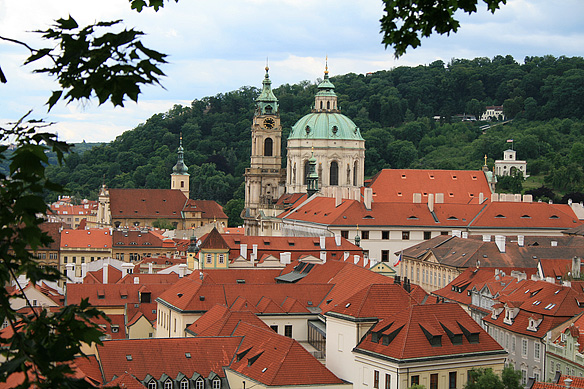
One of my wanderings in Central and Eastern Europe was through Prague—or Praha in Czech—the economic, political, and cultural centre of Central Europe for most of its 1,100 years of existence. Generally acclaimed as one of the most beautiful cities in the world, it is after London, Paris, Istanbul, and Rome, the fifth most visited European city.

An overnight train from Budapest in a dark, panelled, velvet-clad train compartment took me to the “City of a Hundred Spires” [based on the count of a 19th Century mathematician]; a statistic which has now increased to 500 spires piercing its ethereal skyline. Praha was left largely untouched by the second World War unlike other European cities since Hitler made it a Nazi Germany protectorate in 1939. The result is a precinct pulled straight from the pages of a mythical past: Those that are romanticized and reminiscenced about, and are a treasure trove of art and architectural styles. Continue reading →

36 hours in krakow

krakow_4

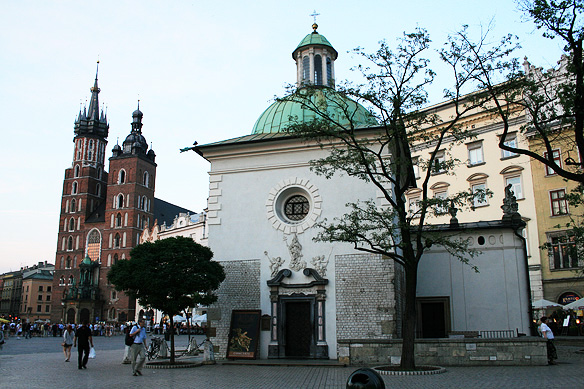
Krakow is my last stop as I travel through Central Eastern Europe.

The royal capital of Poland, the city is unlike any other I have visited. And yes, this may well sound clichéd, but its past justifies the claim. The Old Town with its Jewish Quarter and Auschwitz II-Birkenau were one of the first to go on UNESCO’s World Heritage List.

Pronounced “Krakuf” in Polish, the medieval city of Krakow is straight from a mythical tale replete with dragons and princes. According to legend the 1,000-year-old city was founded by Krakus, a Polish prince who slayed the evil Wawel Dragon, and went on to build his castle and city over its lair on Wawel Hill by the banks of the River Vistula.

A set of bones of a pleistocene creature hangs over the Wawel Cathedral entrance. I am told they belong to the dragon and “The world will come to its end when the bones will fall on the ground.” Continue reading →

global travel shot: remembering german nazi auschwitz, 70 years on

Image

auschwitz

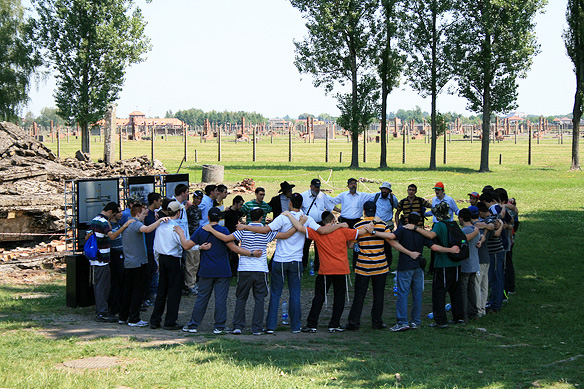
When the bus dropped me off at Auschwitz II–Birkenau—a former German Nazi concentration and extermination camp on the outskirts of Krakow in Poland—on a summer day in 2012, I was not sure what to expect.

I was no stranger to scenes of debased humanity, having wandered through the Killing Fields in Cambodia, and explored the corridors of Robben Island in South Africa. I knew I would see pain, suffering, and the manifestation of an absolute ruthless version of humankind. But to what extent and how it was mourned 70 years on in Auschwitz II–Birkenau gave me both the jitters and hope. It still does. Continue reading →

once upon a time, there was a fairy tale called buda-pest

budapest_1

“Once upon a time I was young and beautiful. I flirted. I was brash. I was elegant. Time changed me. History scarred me. Will you love me still?”

Lying on the banks of the Danube, the twin cities of Buda and Pest are a bygone romantic fairytale draped in swaths of 60 years of communism, and at present the capital of a nation struggling to find its place in a capitalist world. Budapest demands and deserves delving beyond the obvious as one of Europe’s most popular holiday destinations and beautiful cities; if for no other reason than to just believe in fairy-tales again. Continue reading →

empress sisi’s vienna – today

“I am a seagull, of no land,
I call no shore my home,
I am bound to no place,
I fly from wave to wave.”
~ Empress Elisabeth of Austria aka Sisi (1837-1898)

A fervent traveler, the Empress of Austria and Queen of Hungary, Sisi, born Elizabeth, the Duchess of Bavaria, was a beautiful, lonely, reclusive woman. An adamant non-conformist and free spirit, she married her cousin Franz Joseph I, Emperor of Austria (1848–1867) at 17, and spent the rest of her life refusing to carry out the traditional roles of empress, wife or mother expected of her. The death of her eldest child at two, and the suicide of Rudolf, her fourth child, pushed her deeper into her shell. She was assassinated by an Italian anarchist in 1898. Continue reading →

medieval squares of eastern europe


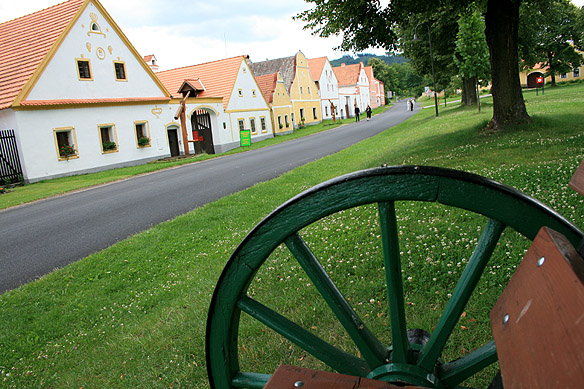
On my way to Český Krumlov – South Bohemian folk Baroque architecture (18th-19th Century) around the village green of Holašovice

The fairy tale continued as I traveled deeper into Eastern Europe, the castles becoming more romantic, the squares prettier and the churches more quaint. Meandering cobbled streets worn over the centuries, red tiled roofs competing with the surrounding green hills, and the lone church spire characterize these pockets of history frozen in time, many of them today UNESCO World Heritage Sites. Continue reading →