36 hours in alwar, the road less travelled

Have a long weekend coming up?

Alwar comes with the distinction of being one of India’s oldest cities, as well as the capital of one of Rajasthan’s newest Rajput kingdoms. Part of Delhi’s National Capital Region [NCR], it scores high on Delhiites’ weekend destination lists. For those travelling deep and wide in Rajasthan [as in my case], the town perched on Rajasthan’s eastern border offers a welcome, albeit last taste of the wonders the State is famed for.

Back in 1500 BC, Alwar was part of the Kingdom of Matsyadesh. According to the Hindu epic Mahabharata, this is where the Pandavas spent the last year of their 13-year exile incognito. As a Rajput kingdom, it was formed in 1770 by the Kachhwaha Rajput Pratap Singh.

Unlike Rajasthan’s other treasures, Alwar can appear somewhat bland at the outset. But, behind this front is a rich mix of travel experiences just waiting to be enjoyed.

So, I repeat my question. Got a long weekend coming up? Here’s how to make the most of it in Alwar, with one day devoted to its popular sights and unknown secrets, and one day for an excursion back in time. Happy travels. ❤ Continue reading

travel diaries: in search of the bengal tiger at ranthambore

It was pitch dark outside. I fumbled for my phone to switch off the alarm. My heart was heady with excitement at the day that lay ahead of me.

I was at Ranthambore National Park, and had an early morning game drive to catch in an hour. Shucks. There went my heart, dancing all over the place again.

Seeing wildlife is a hit-and-miss affair, I rationalised to my heart. There were no guarantees. I should know, having spent a large chunk of my life in Botswana and South Africa where visits to game parks were a quintessential part of one’s existence. But not in India. I had made a long drive from Jhalawar last night, just for this.

Whenever I enter game parks, it always strikes me that these lands are both, ruled and belong, to the animal kingdom. We, humans, are the outsiders here. It is their laws that govern its inhabitants. It is another world and we have no place in it.

I felt exactly the same way as we crossed the gates of Zone 2 into a world of dense forests and hiding eyes. There was silence everywhere except for the occasional shriek of a chital or monkey. A warning that the Kings of this Kingdom, the Royal Bengal Tigers, were out in search of prey.

Deep in the Park’s depths an hour later, we were straining for a sound, any sound, that would give a hint on the exact whereabouts of its grandest residents. Scouring the earth for some lead. Waiting patiently, with bated breath, our eyes darting in all directions. Continue reading

a self-guided temple and craft trail from udaipur

To the north of Udaipur are a group of small towns and villages famed for their temples and centuries-old handicrafts. They make for a delightful leisurely excursion filled with opportunities galore of experiencing colourful local religious practices and interacting with artists and artisans, away from touristy sights.

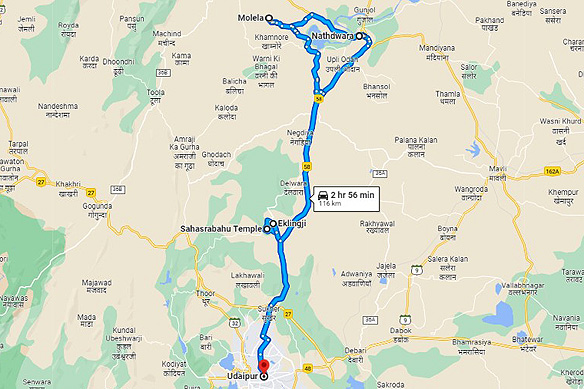
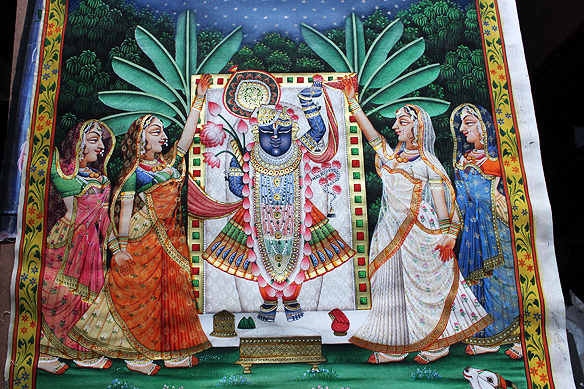
The trail starts from Udaipur with stops at Sahasra Bahu Temple, Eklingji Temple, Nathdwara Temple, the Pichwai painters’ neighbourhood in Nathdwara, and the small-scale terracotta workshops in Molela Village, and finally back to Udaipur.

It is easily doable on one’s own. All you would need to do is hire a cab for the 116-kilometre-long journey which amounts to some three hours of driving time.

Here is a visual [where photography is allowed] guide on what to see and do along the trail, an introduction to some of the artisans and artists, together with some tips to make the most of the day trip. Happy travels!

Continue reading

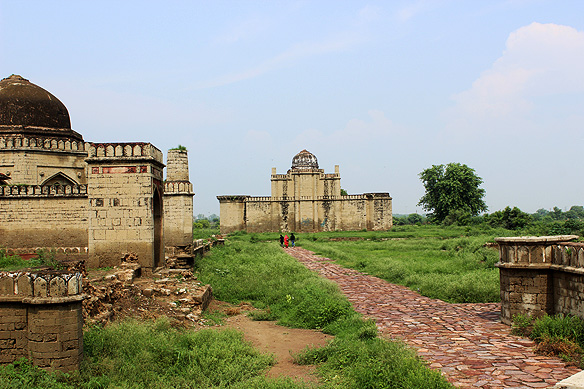
the treasures of farrukhnagar and jhajjar no guidebook tells you about

Farrukhnagar. Jhajjar.

The inevitable response should one mention these two places is, “where are they?”

As for the few who do know about their whereabouts [near Delhi’s satellite city Gurgaon in the neighbouring State of Haryana] the rejoinder is, “is there really anything to see there?”

Oh, yes, plenty! But despite having some of the loveliest monuments in Delhi’s vicinity, both towns lie in complete oblivion. There is no mention of them in guidebooks. Zilch. They are not even included in Delhi’s countless regular heritage tours. It is as if they simply did not exist.

Imagine my joy when I got a chance to explore the two. Not that I had ever heard of them before. I belonged to the first category. Then after some digging around, I was smitten. Completely. Continue reading

the glories of mewar: impregnable kumbhalgarh and exquisite ranakpur

There was an invincible grandeur associated with the Kingdom of Mewar in Rajasthan, of which Udaipur was the capital. Traits which reflected in not just the larger-than-life personas of its rulers but its impregnable forts and exquisite places of faith too.

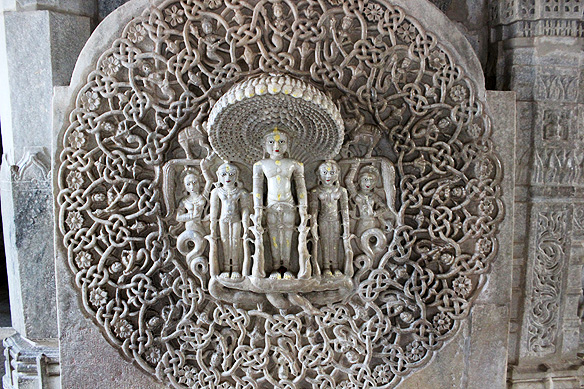
Deep in the wooded Aravalli Hills are two such places: Kumbhalgarh and Ranakpur. Whilst one is a fort of a king remembered to this day for his valour and indomitable spirit, the other is a temple carved out of marble to give shape to a divine dream, with the blessings of the same king.

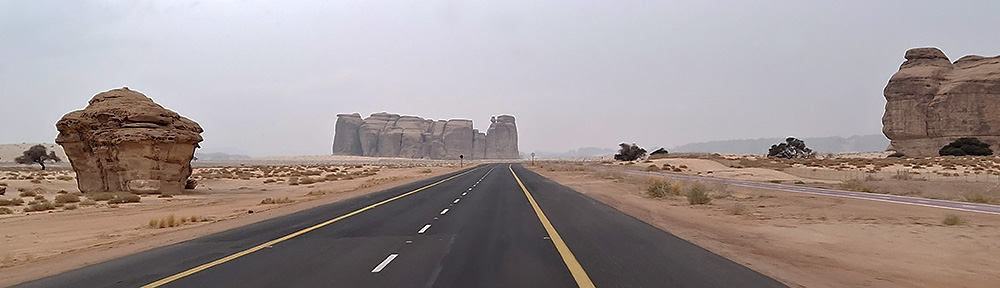
The route leading to them is treacherous in parts, cutting through the dark, unlit, uninhabited jungle in the form of a rather worn-out pot-holed narrow road. At others, it rises and falls in tune with the hills, passing tiny hamlets and endless herds of livestock. But the rewards for this journey are priceless.

Come, let me show you Maharana Kumbha’s Mewar. ❤ Continue reading

11 reasons udaipur needs to be on every travel bucket list

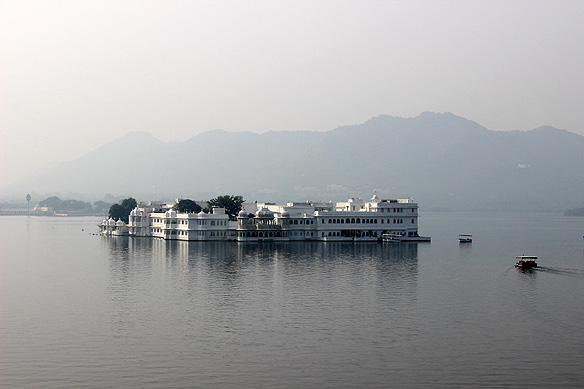
Udaipur. The very name is evocative of ethereal clear lakes and romantic palaces, encircled by a ring of lush hills.

Known by various monikers such as City of Lakes, White City, and Venice of the East—all equally valid—it is unlike any other city in the State, or even the country. It is also Rajasthan’s most popular tourist destination so be prepared for the crowds.

Udaipur was founded in 1553 by Maharana Udai Singh II, ruler of the Mewar Kingdom, who named it Udayapura. Chittorgarh, the old capital had been laid siege to by the Mughal Emperor Akbar. A new capital was needed. What better place than the hilly banks of a medieval freshwater lake in the midst of a fertile valley, separated from the Thar Desert by the Aravalli Range.

To protect his city, Udai Singh II built a six-kilometre-long wall punctuated with seven gates around it. Within were palaces, temples, havelis and courtyards, which still stand, largely intact. The precinct today is called the Old City.

Mewar has always stood apart from other Rajput States with its insistence to not bow down before the Mughals or for that matter any other kingdom. The few times treaties were signed, it was always on Mewar’s terms. Stories of its heroes’ bravery and sacrifices echo throughout the city. Maharana Kumbha, Maharana Sanga, and Maharana Pratap are household legends. But more of them in later posts.

For now, let me share with you the wonders of Rajasthan’s jewel. Have you been to Udaipur? If not, here are 11 reasons why it should be on every travel bucket list. ❤ Continue reading

an urban monk’s guide to delhi’s spiritual oases

This post is for all those Urban Monks who are not tied to any dogma, are secular, and are more focussed on the spiritual in the chaos of the material. Why do I say this? It’s because that’s what being an Urban Monk is all about. Isn’t it? Finding the sacred, everywhere, in our urban contexts.

This lofty lifestyle goal becomes pretty doable in a city like Delhi. 😊

Tsk tsk. Do I see you shake your head in disbelief? Let me explain.

Delhi’s rich history has been crafted by devout Hindus, Sufi pirs, Sikh saints, secular and rigid Central Asian Muslims, and Christian British colonizers. Add to this mix, ancient creeds like Zoroastrianism, Jainism and Buddhism, and modern religions like the Baha’i faith. They have all contributed to the warp and woof of the city’s fabric, turning it into a melting pot of beliefs.

Surrounded by the chaos of a metropolitan city, some of their places of worship are veritable oases of peace and calm. Silent, deep, and serene. As a bonus, they also ooze of history, heritage, and stories galore.

Next time you need to take a breather, there is no need to go rushing to a retreat or to the hills. I mean, you can, but you don’t have to. There is enough in Delhi to rejuvenate you and connect you with the divine. ❤

Here are my seven personal favourites, in no specific order. What are your favourites? Do share in the comments section. Continue reading

global art shot: kampani kalam, when east met west

Image

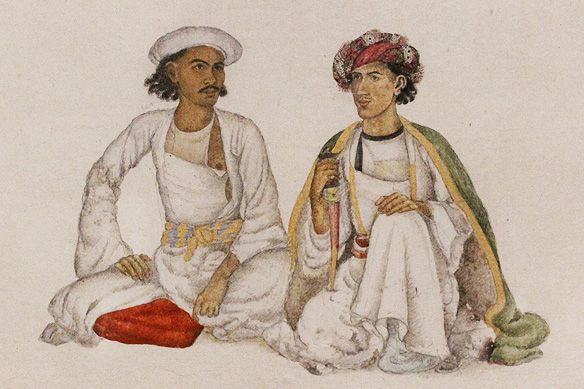
Two friends seated in discussion. Way back in the year 1810-12 in Delhi. Two very real, very ordinary people. Just like you and me. And if it weren’t for an art form that went by the name Kampani Kalam in the local Indian lingua franca, or Company Paintings in English, these two gentlemen would have been forgotten in the pages of time.

But they survived. The two, not meeting my eye, but seemingly fully aware of being the focus of my attention last Sunday, were part of a special exhibition at Delhi’s National Museum. Some two hundred other paintings hung around me, but this hung in the spectrum of time. Their true-to-life faces, their elaborate local costumes, even the hair on their arms and chest.

Through them, I could travel back 210 years. In a flash. Continue reading

a culture vulture’s guide to delhi’s 7 best heritage parks

Culture vulture.
Noun INFORMAL
a person who is very interested in the arts.

Are you one? I like to think I am. Culture gets me all starry-eyed. Whether it be museums, art, or theatre. And somewhere in this mix, for me, is heritage, which places culture in a continuum of time. I see culture and heritage as part and parcel of the same mix, one incomplete without the other.

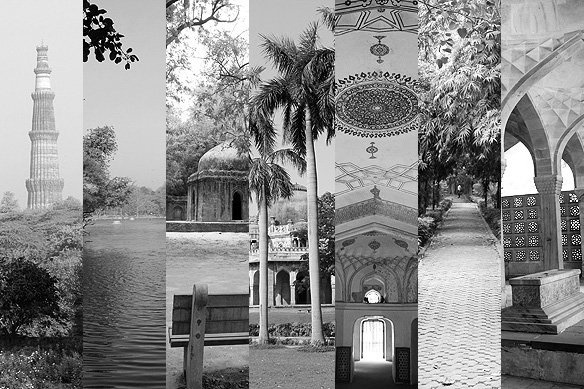
Luckily for my present location, Delhi oozes of heritage. Both tangible and intangible. And one of the many ways the city protects its built heritage is through heritage parks—a delightful combination of monuments and gardens, each unique and with a narrative of its own.

Here are its seven finest that I came across in my explorations of the city and which I would like to share with you in their historical order. If you are in Delhi, do make your way to them.

I have also included tips on how to add some present-day culture to the visits, to make them that much more memorable. Remember … continuum. Happy exploring. 😊 Continue reading

national crafts museum, new delhi – 90 minutes at the museum

“A glass pitcher, a wicker basket, a tunic of coarse cloth. Their beauty is inseparable from their function. Handicrafts belong to a world existing before the separation of the useful and the beautiful.”
~ Octavio Paz, Mexican poet

I love this quote by Octavio Paz for it captures the sheer ethos of handicrafts.

Whilst art is pure expression, craft on the other hand is purely utilitarian. Shape, proportion, and colour—all serve a purpose. To be useful.

But just because it is useful, it does not mean it needs to be ugly or even plain. The craftsperson, since time immemorial, has imbued craft with a sense of aesthetics, following a deep-seated human instinct to create beauty. Continue reading