jaffna: the unexplored north of sri lanka

Twenty-six years of civil war is a long time. A whole generation grows up exposed to the horrors of war, stripped of their right to education, health-care, and utilities. It is hard for one living in a ‘secure’ country to even fathom such dreadfulness day in and day out, year in and year out.

Sri Lanka’s LTTE-Sinhalese civil war started on 23 July, 1983 and ended on 19 May, 2009, during which an estimated 40,000 civilians died according to a UN Experts Report. Those who could leave, left the country. Root causes of the civil war were a series of anti-Tamil riots following independence in 1948 and the 1956 Government Act which recognized Sinhalese as the only official language.

Fuelled further by the government’s citizenship and education policies, it led to the creation of the LTTE or Tamil Tigers, as they were known, and their demand for a separate Tamil state ‘Tamil Eelam.’

Suicide bombers were a trademark of the Tamil insurgency. Even India, Sri Lanka’s neighbour, could not be immune to it. India’s ex-Prime Minister Rajiv Gandhi was assassinated in 1991 by a 22-year-old female LTTE suicide bomber.

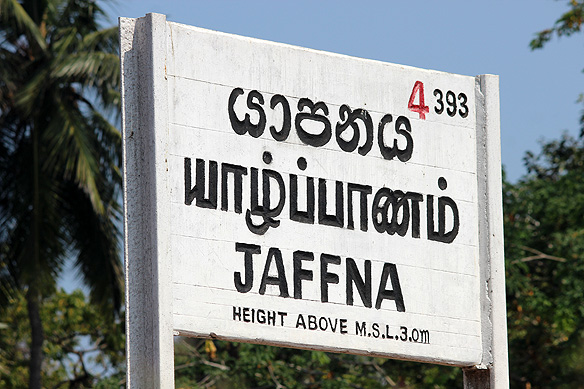
Jaffna [Yalpanam in Tamil] on the northern tip of Sri Lanka, was the epicentre of this civil war which spread across the island’s northern and eastern coastlines. Mutilated factories, bombed homes, and walls pock-marked with gunshots are still scattered throughout the city and its surrounds. An echo of its turbulent past.

Three things, by some miracle, have survived from the nearly three decades of fighting: One, the region’s places of worship—magnificent colourful Hindu temples, poignant grand churches, and sacred Buddhist sites—two, its bygone colonial ruins, and three, a bunch of remote sleepy isles on the Palk Strait in the Indian Ocean. Continue reading
a self-guided walk through biblical mount of olives

Caution: This post is for travellers. Not tourists.

Whew. Now that I have got that out of the way, let me write on. Comforted by the thought you and I are on the same page.

Some of us like to wander. To immerse ourselves at a particular site just because, inexplicably, it touches a chord within us. To gaze at the details. Behind and under the obvious. To look at all versions of history and legends with an open mind.

The reason I bring it up particularly for my post on the Mount of Olives is because one cannot not visit the Mount of Olives while in Jerusalem. For that would be blasphemy. But you’d like to do it at your own pace.

Why? Because you are in the Holy Land. And Jesus Christ spent his last night before his crucifixion as well as ascended to heaven from here. Christian communities from around the globe have built a string of lovely churches down a near perpendicular street between these two key sites. Because you do not have to be believers of the Old or New Testament to believe in a higher sacred self. Or Roman Catholic or Eastern Orthodox. But also, because the view from the top and the walk to the bottom is what memories, which make you all starry-eyed once back home, are made of. 🙂 Continue reading

nazareth, in search of jesus christ’s hometown

“Can anything good come out of Nazareth?”

“Come and see.”

The above conversation took place between two of Jesus Christ’s would-be disciples, Nathanael and Philip, some 2,000 years ago and has been recounted many times over through the Bible.

Nazareth back then was a city steeped in vice. Against a backdrop of crime and derelict morals, a young innocent virgin was told she would give birth to the son of god. This son went on to spend his childhood and youth in Nazareth’s by-lanes and eventually lead a religion that has 2.4 billion followers today or almost one-third of the global population.

Though Bethlehem is more closely associated with Christ during Christmas, I thought I’d write about his hometown instead this festive season, and the sites connected with his home and family—for is that not what Christmas is about? A time for celebration with family. 😊 Continue reading