kullu manali and their 11 loadstones

Loadstone: Noun. A person or thing that is the focus of attention or attraction. In aplenty. In other words—Kullu and Manali.

– – –

Two of India’s most popular hill stations’ names are often taken in the same breath. Even though they are separated by some 40-odd kilometres.

Welcome to Kullu Manali. Two towns located on the verdant Kullu valley in India’s Himachal Pradesh with the ice-blue Beas river gurgling past them.

Free of a colonial overprint, or the culture and faith of an invading ruler, these two towns have in the past, as well as today, continue to epitomize Himachal history, traditions, and heritage. In all its unadulterated richness.

Gods are in abundance here, and so are centuries-old beliefs. The lines between mythology and mundane reality are blurred with characters from the epics Mahabharata and Ramayana popping up everywhere. Ancient sages, mythical heroes, demons, and the proverbial Noah [in Hinduism’s case Manu] who set forth from his ark to kick-start the lineage of mankind. They are all somehow associated with the Kullu valley which has earned itself the moniker ‘Valley of Gods.’

There’s also tall graceful fir trees, rivers fed by melting glaciers punctuated with hot water springs, and wooden homes which have housed many a generation of pahari [mountain] folks inside their weathered walls.

You will need at least a few days to get acquainted with Kullu and Manali’s sites. Hotels and taxis are easily available. Let me not go into them here. Rather let this post be a roadmap of what makes these two towns attract pilgrims and tourists in their droves, always. ❤ Continue reading

pushkar: where the gods and seekers meet

Pushkar.

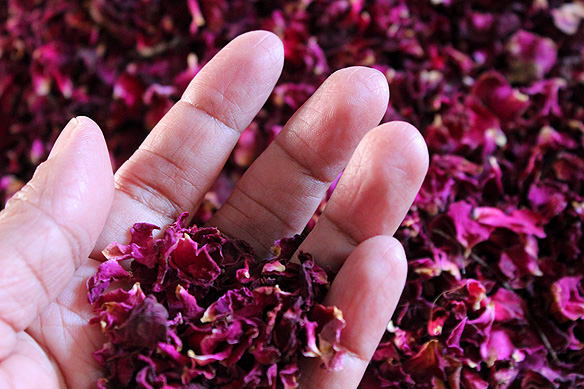
No Hindu pilgrimage is believed to be complete without a stop at Pushkar, Rajasthan’s rose garden. A polestar for the seeker within since ancient times, it is apt that the little town’s rose essences have been exported far and wide through the centuries.

Not that Pushkar’s spirituality washes over one like a massive tumultuous wave, creating an instant transformation. Nope. Nothing like that at all. It is instead subtle and gentle, with a consistent, tangible peace hanging around the 52 ghats and 500 or so temples which line its very soul—Pushkar Sarovar, Sarovar meaning ‘Lake’.

Yet, this devout peaceful haven, a mere two-and-a-half-hour drive from Jaipur, is inexorably tied to an eclectic mix of myths and traditions which range from a first wife’s wrath to being the seat of the Hindu god of creation. Continue reading

an urban monk’s guide to rishikesh and haridwar

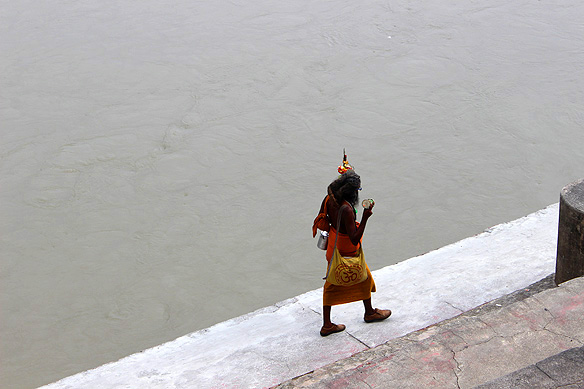
Are you an urban monk? I am. Or at least that is how I perceive myself. Ok, that is how I like to perceive myself—not unlike many others who love the city life and its dynamic vibrancy but are equally at ease with spirituality, restraint, and minimalism. Is that not the new order? And when we go to places that are hubs of spirituality, well, we just tend to experience them a tad differently. 😀 Continue reading

photo essay: tamil nadu’s colourful gopurams, stories told and untold

This is the part of Tamil Nadu I was most smitten by. Colourful and packed with gods, goddesses, myths and secular life, its gopurams are a peculiar feature unique to the state. True, gopurams or entrance towers are a part of temple architecture across southern India. But in Tamil Nadu, they have a life of their own, larger in design and scale than the overshadowed holy sanctums inside the temple complexes. They are pure art. And I loved them.

I visited scores of temples during my week-long exploration of the southern state’s temple towns. From the incredible Meenakshi Amman Temple in Madurai celebrating the town’s beautiful and gracious patron goddess to the ancient Pillaiyarpatti Temple in Chettinad, site of an electrifying abhishek ceremony of the god Ganesha.

From the Nataraja Temple in Chidambaram, the only Hindu temple to worship Shiva as Nataraja, the Lord of Dance, to Thirukadaiyur Temple on the outskirts of Tranquebar where married couples celebrate their 60th, 70th, and 80th wedding anniversaries for it is renowned to defy death!

From the monumental Sri Ranganathaswamy Temple in Tiruchirappalli, India’s largest functioning temple and a mini-city in itself with a whopping 21 gopurams, to the string of lively temples lining the streets of Kumbakonam where I temple-hopped from one to the other for a different kind of night-life.

Dedicated to various deities, one architectural feature yet bound them all together. Their animated, multi-coloured, towering gopurams. Continue reading

koteshwar temple, kutch: an 1820 ode to shiva

koteshwar_temple2

I am not one for religious rituals for the simple reason that I am quite ignorant of most of them, whether it be what one is supposed to say and do in a temple, church, mosque, synagogue or gurdwara. But that has in no way diluted my love for religious places. 🙂 Yes, god is everywhere—Next to me, as well as you. But within certain sacred walls, in the culmination of art and the faith of followers, He (or to be a feminist She—God doesn’t really care; we are the ones with all the issues) is a bit more tangible. Almost visible in his invisibility. Continue reading

temples of bhuj: the grand and the familial

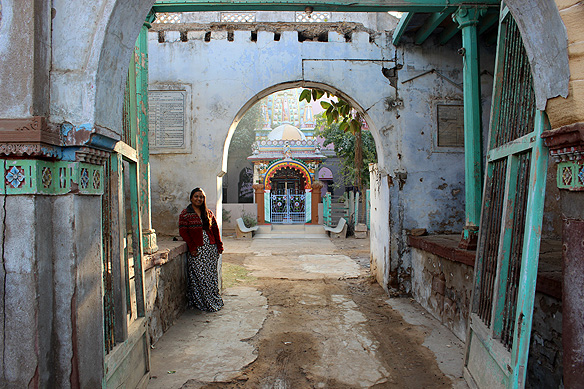
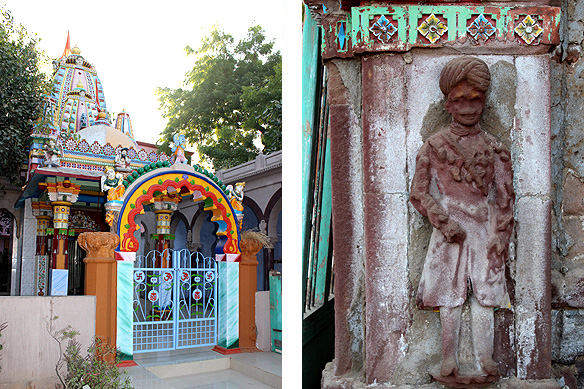
bhuj_temples1
bhuj_temples2
Above: The Soni family temple

Every day as I set off to explore one corner or another of Kutch I would pass a dazzling white edifice in Bhuj, my base during my travels in north-west Gujarat. And my eyes would hold on to it, till it disappeared from sight. It was the Swaminarayan Temple of Bhuj. I knew I could not leave without visiting it. Call it faith. Call it the traveller’s call. But I found myself waking up at the crack of dawn this morning and finding my way towards it. Continue reading

the 18th century kamangari wall paintings of kutch

kamangari1

With this post I digress to another side of Kutch—the ornamental wall paintings which decorate the walls of homes, temples and work places in the vast salt pans’ midst. An art form sadly extinct, and least known of Kutch art and crafts.

Dating back to the 18th Century, the Kamangari School of Painting, painted on scrolls and walls, and unique to Kutch, is now a vanished tradition—its remnants found in a couple of Bhuj’s museums, a few random surviving homes, and a portico in the decaying monastery of the Kanphata yogis that I visited in Than. Continue reading

art focus – samiksha (commentary) – shahed pasha


Fairies taking away the Books

The fantasy-tical world of Shahed Pasha.

It is a world where millennia old Hindu mythological stories are portrayed in modern contexts in miniature painting style, by a born and bred Muslim, across mammoth canvases. Continue reading